

Favourite Spots
All of Jacks videos from Instagram
692 places · curated by Living London History
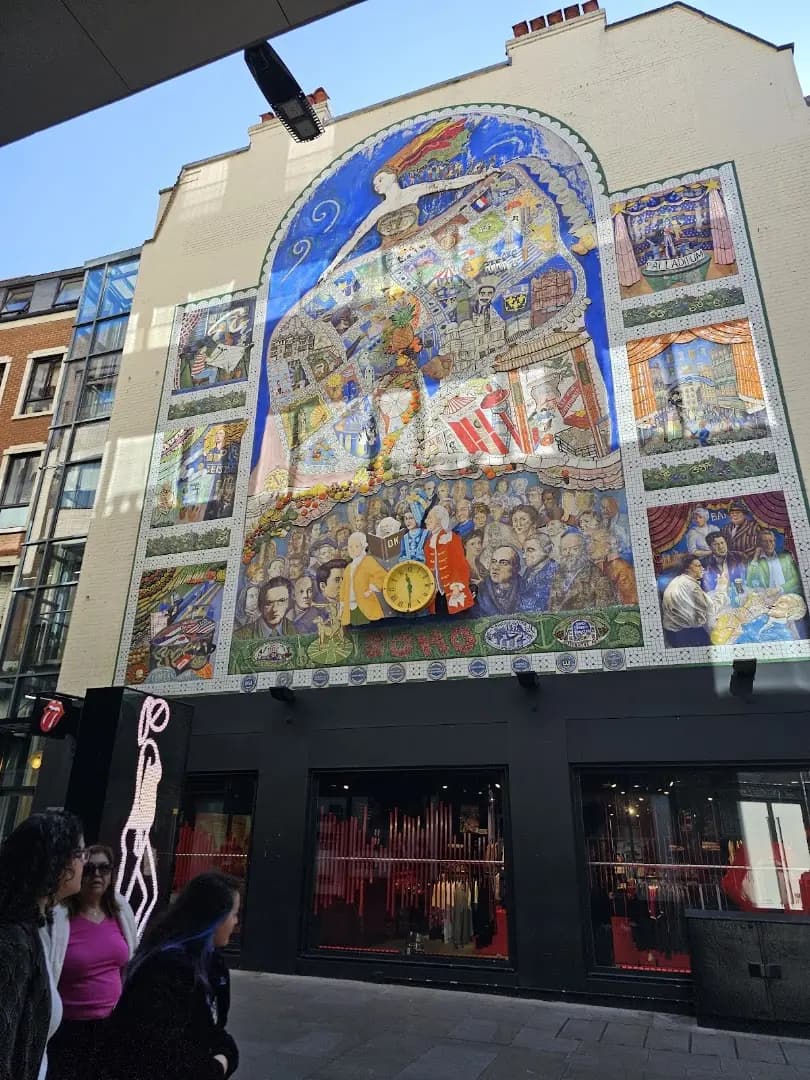
Spirit of Soho Mural
Soho · Culture
Have you seen the Spirit of Soho mural? It is a brilliant, colourful and exuberant commemoration of Soho’s rich and vibrant history . It has also been recently restored I have written up a blog post covering more details and including a key of who all the characters are- link in my bio for that one. thisissoho #london #londonhistory #soholondon #londontravel #londontrip
Gresham College
Holborn · Culture
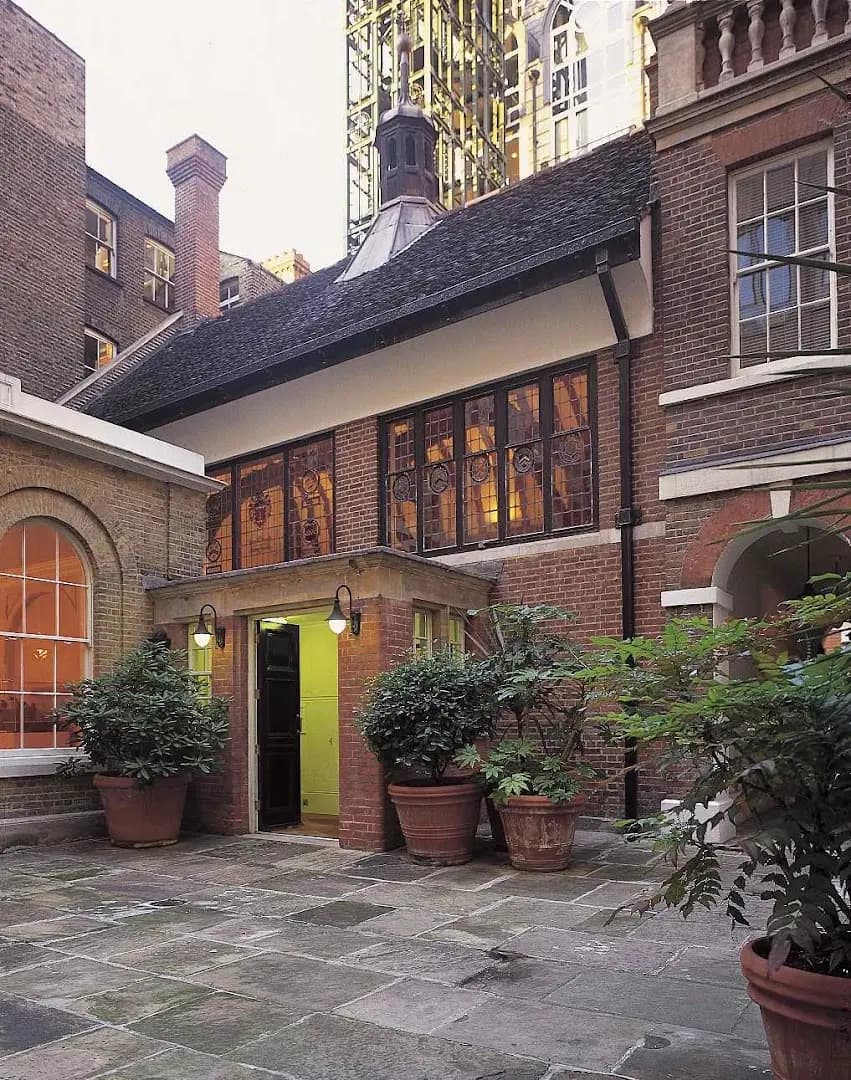
Tucked behind the more modern buildings in Holborn is an incredible medieval survivor Barnard’s Inn Hall dates back to the 14th century, was part of a residence, before becoming an Inn of Chancery and then a school. Since 1991 it has been home to greshamcollege. Gresham College was founded in 1597 from the will of merchant Thomas Gresham. He wanted for the citizens of London to have free education and make learning accessible to all. Remarkably the college is still doing what it was founded to do over four centuries ago. Isn’t that just brilliant? The entrance shown in the video is actually out of order at the moment and the entrance is temporarily around the corner! #london #londonhistory #hiddenlondon #secretlondon #londoneducation
Gabriel's Wharf
Covent Garden · Shop
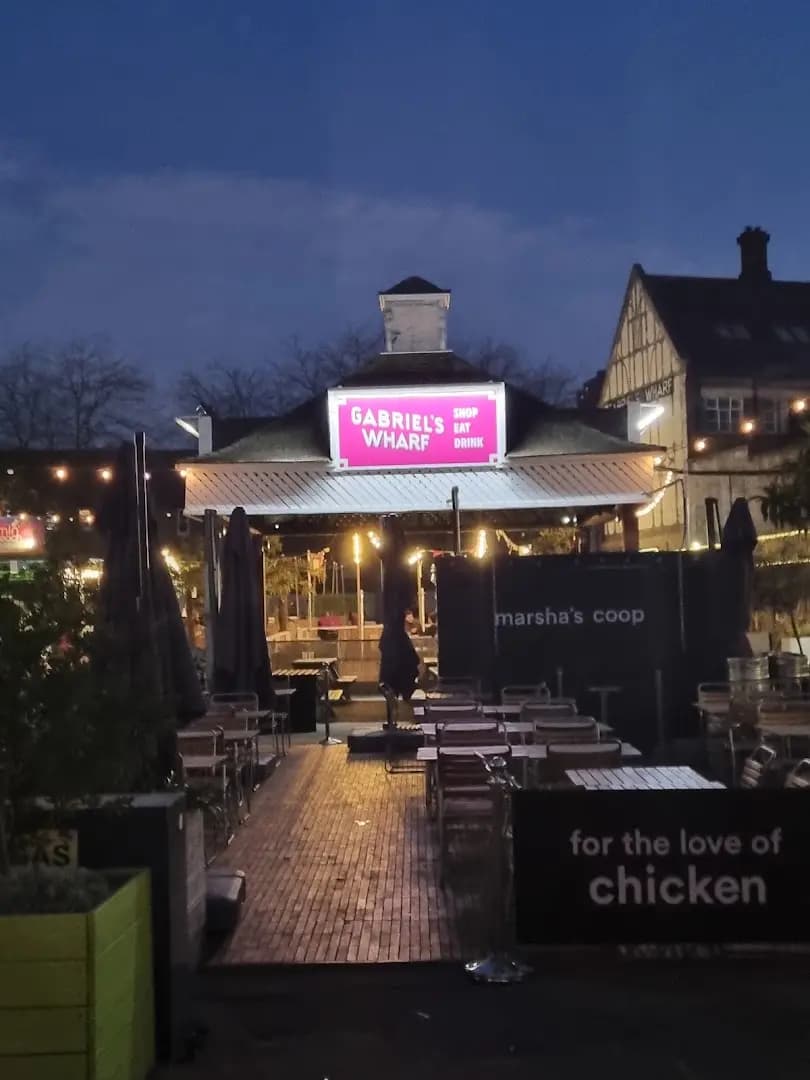
A unique hub of independent businesses on the South Bank are at risk of being closed down for good. Gabriel’s Wharf is an unusual thing in London: an enclave of makers, creatives, artists and independent businesses, able to exist in one of the city’s most touristy areas. Give gabrielswharfta a follow to keep up to date. They also have a petition in their bio if you would like to support their cause. And if you have never visited, perhaps now is a good time! #london #londonart #londonshopping #londoncreatives #londonhistory
Barnard's Inn Hall
Holborn · Culture
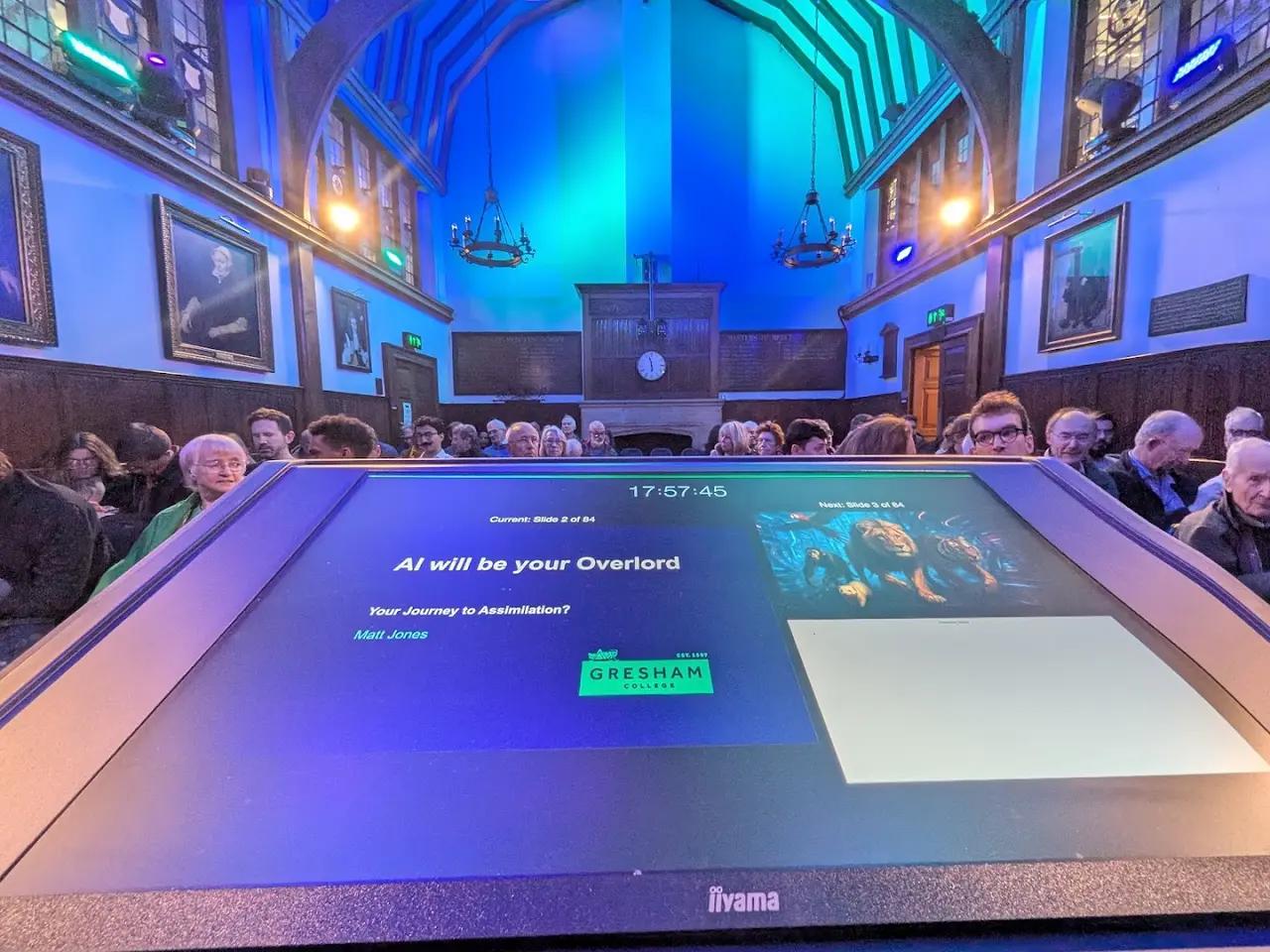
Tucked behind the more modern buildings in Holborn is an incredible medieval survivor Barnard’s Inn Hall dates back to the 14th century, was part of a residence, before becoming an Inn of Chancery and then a school. Since 1991 it has been home to greshamcollege. Gresham College was founded in 1597 from the will of merchant Thomas Gresham. He wanted for the citizens of London to have free education and make learning accessible to all. Remarkably the college is still doing what it was founded to do over four centuries ago. Isn’t that just brilliant? The entrance shown in the video is actually out of order at the moment and the entrance is temporarily around the corner! #london #londonhistory #hiddenlondon #secretlondon #londoneducation
- T
Turnbull & Asser Jermyn Street
Soho · Shop
Ad I visited London’s oldest cheese shop oldest pharmacy and James Bond’s tailor, all in the wonderful, and ever fascinating area of St James’s. They have all been serving Londoners for centuries but also have something in common... stjameslondon turnbull_asser paxtonscheese drharrislondon #london #londonhistory #londonshopping #jamesbond #britishroyals
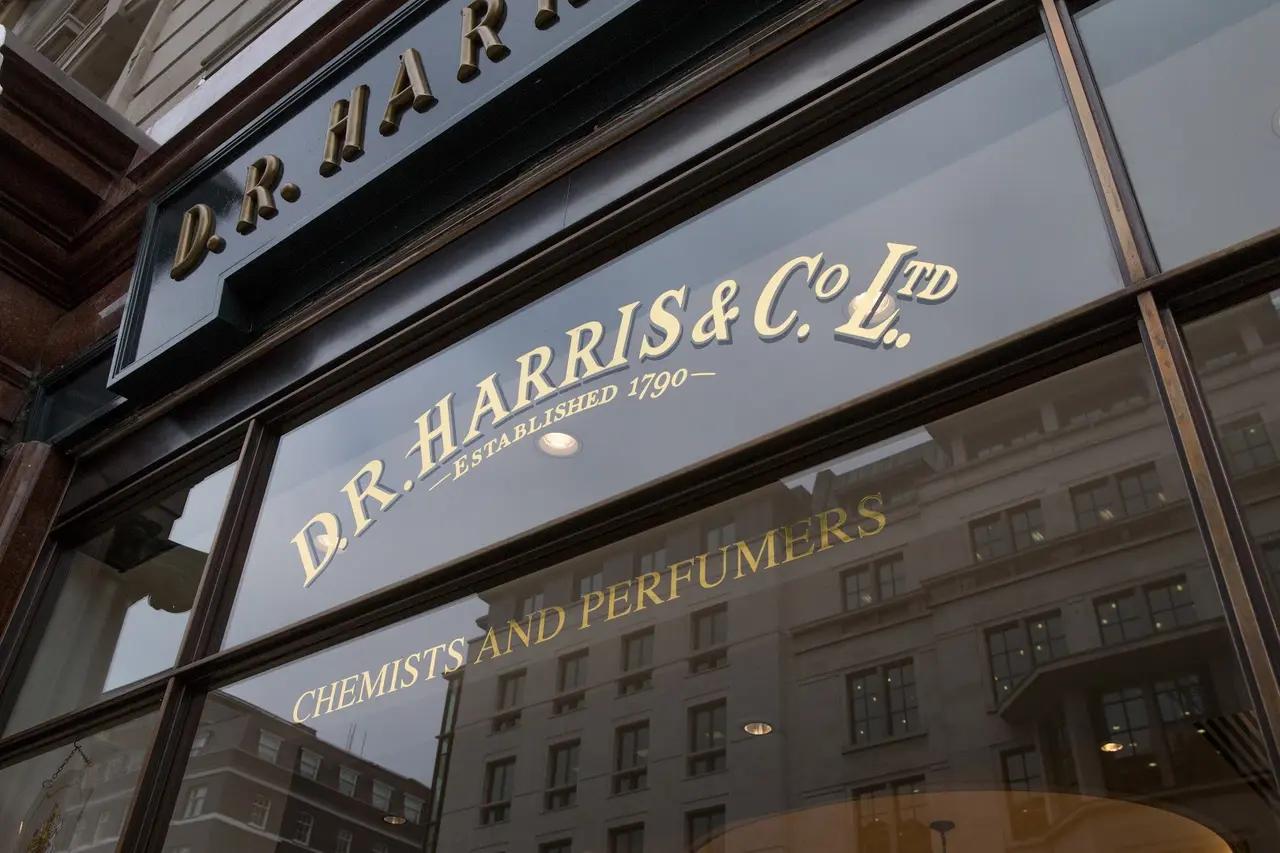
D. R. Harris & Co.
Soho · Shop
Ad I visited London’s oldest cheese shop oldest pharmacy and James Bond’s tailor, all in the wonderful, and ever fascinating area of St James’s. They have all been serving Londoners for centuries but also have something in common... stjameslondon turnbull_asser paxtonscheese drharrislondon #london #londonhistory #londonshopping #jamesbond #britishroyals
- P
Paxton & Whitfield Ltd
Soho · Shop
Ad I visited London’s oldest cheese shop oldest pharmacy and James Bond’s tailor, all in the wonderful, and ever fascinating area of St James’s. They have all been serving Londoners for centuries but also have something in common... stjameslondon turnbull_asser paxtonscheese drharrislondon #london #londonhistory #londonshopping #jamesbond #britishroyals
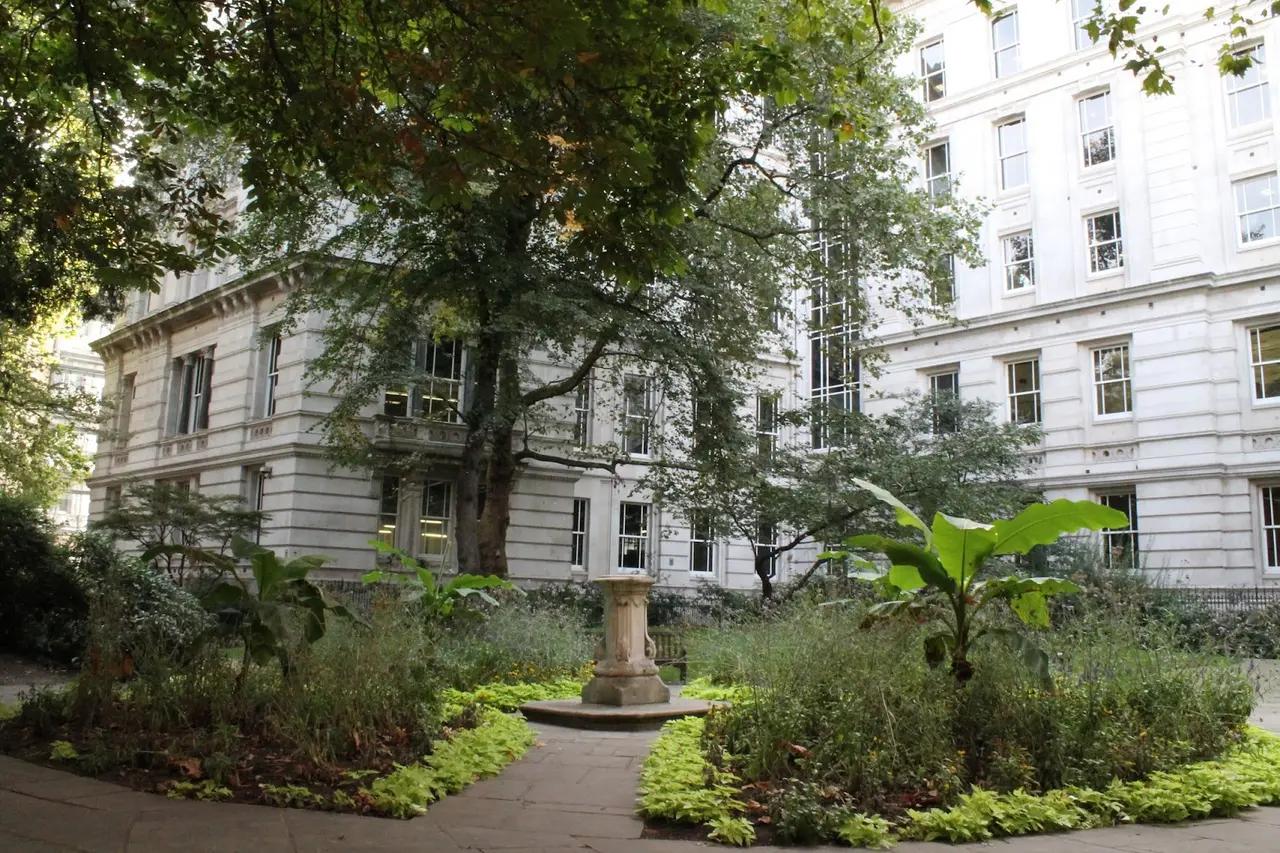
Postman's Park
The City of London · Outdoors
I have released a brand new self-guided audio tour! It has taken a good few months to put together and make sure it all works perfectly, so I am delighted to reveal Symbols of the City: Decoding Two Thousand Years of London. The City is the oldest part of the metropolis, such a fascinating area to simply walk around and covered in little historic details... It is a self-guided version of my guided tour and can be found on the VoiceMap app. It is GPS triggered so you just press play at the start, put your phone in your pocket and I guide you with my voice the whole way. I hope you enjoy! There is a link in my bio if you would like to download it. Please make sure to leave me a review on the app if you do #london #londonhistory #cityoflondon #londontravel #londontour
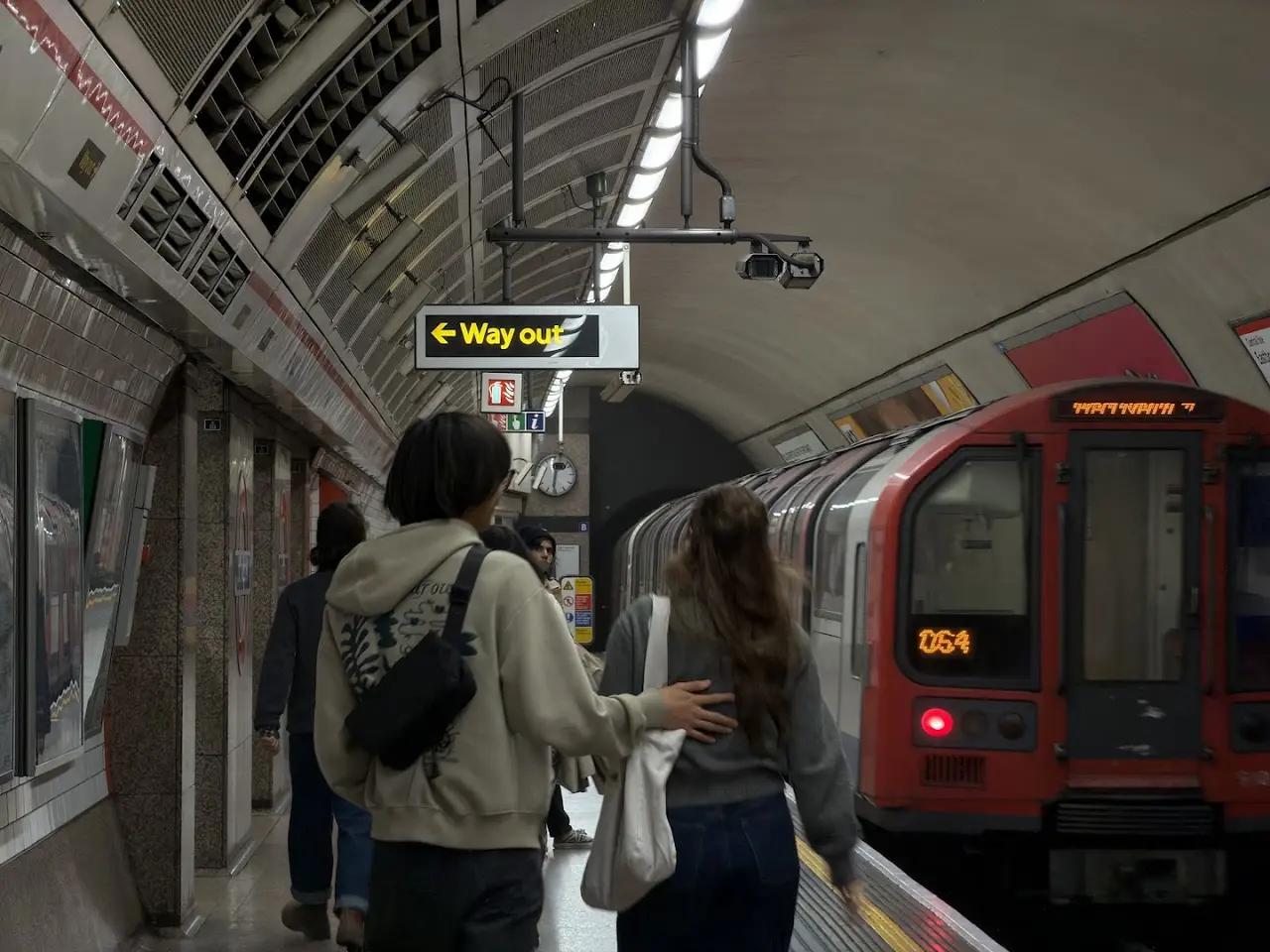
St. Paul's Station
The City of London · Activities
I have released a brand new self-guided audio tour! It has taken a good few months to put together and make sure it all works perfectly, so I am delighted to reveal Symbols of the City: Decoding Two Thousand Years of London. The City is the oldest part of the metropolis, such a fascinating area to simply walk around and covered in little historic details... It is a self-guided version of my guided tour and can be found on the VoiceMap app. It is GPS triggered so you just press play at the start, put your phone in your pocket and I guide you with my voice the whole way. I hope you enjoy! There is a link in my bio if you would like to download it. Please make sure to leave me a review on the app if you do #london #londonhistory #cityoflondon #londontravel #londontour
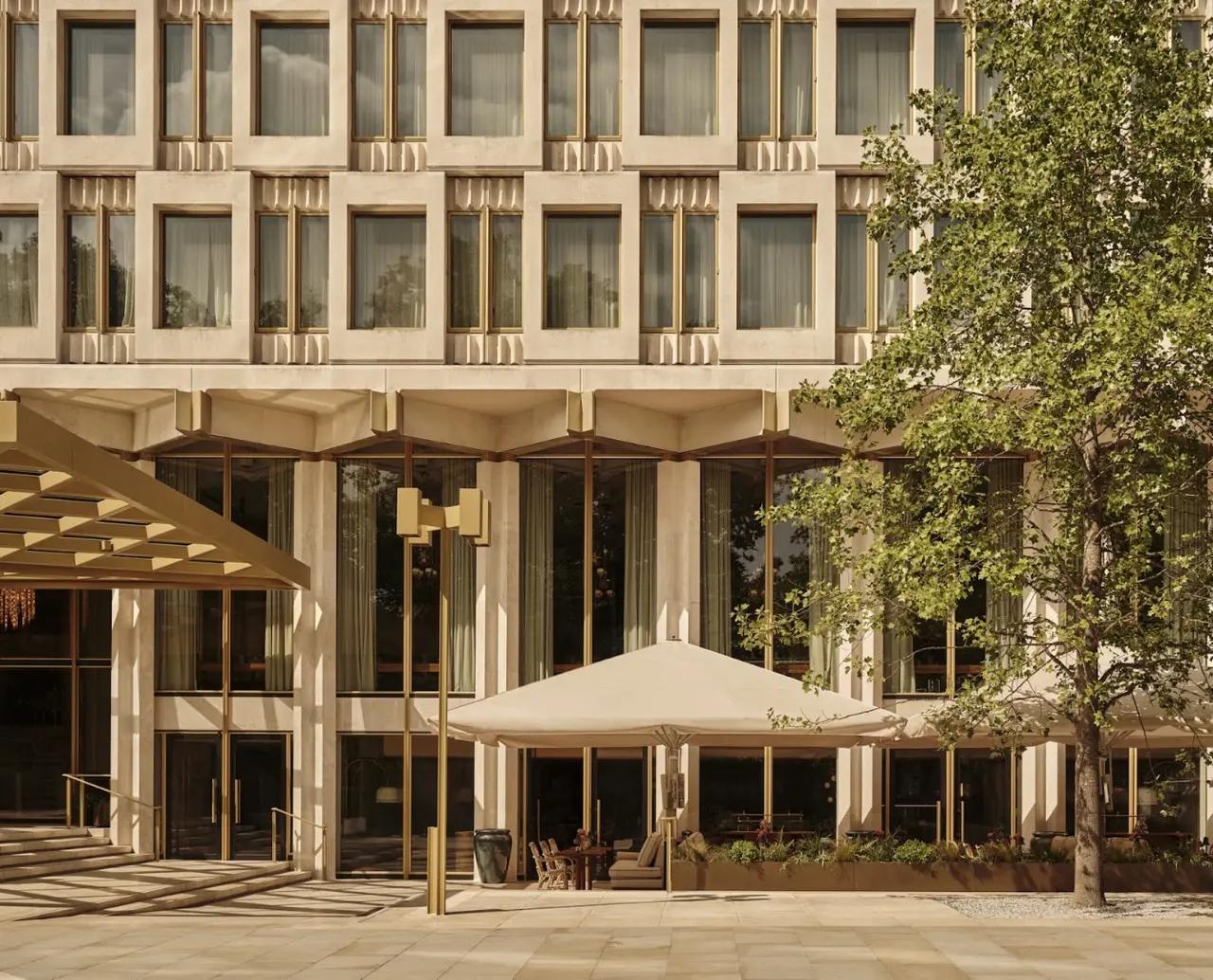
The Chancery Rosewood
Mayfair · Stay
One of London’s most historic squares has just undergone a major transformation to create a green, biodiverse haven in the centre of the city. But whilst also highlighting and enhancing its fascinating history. Let me know what you think in the comments! #london #londonhistory #mayfair #greencities #londontravel
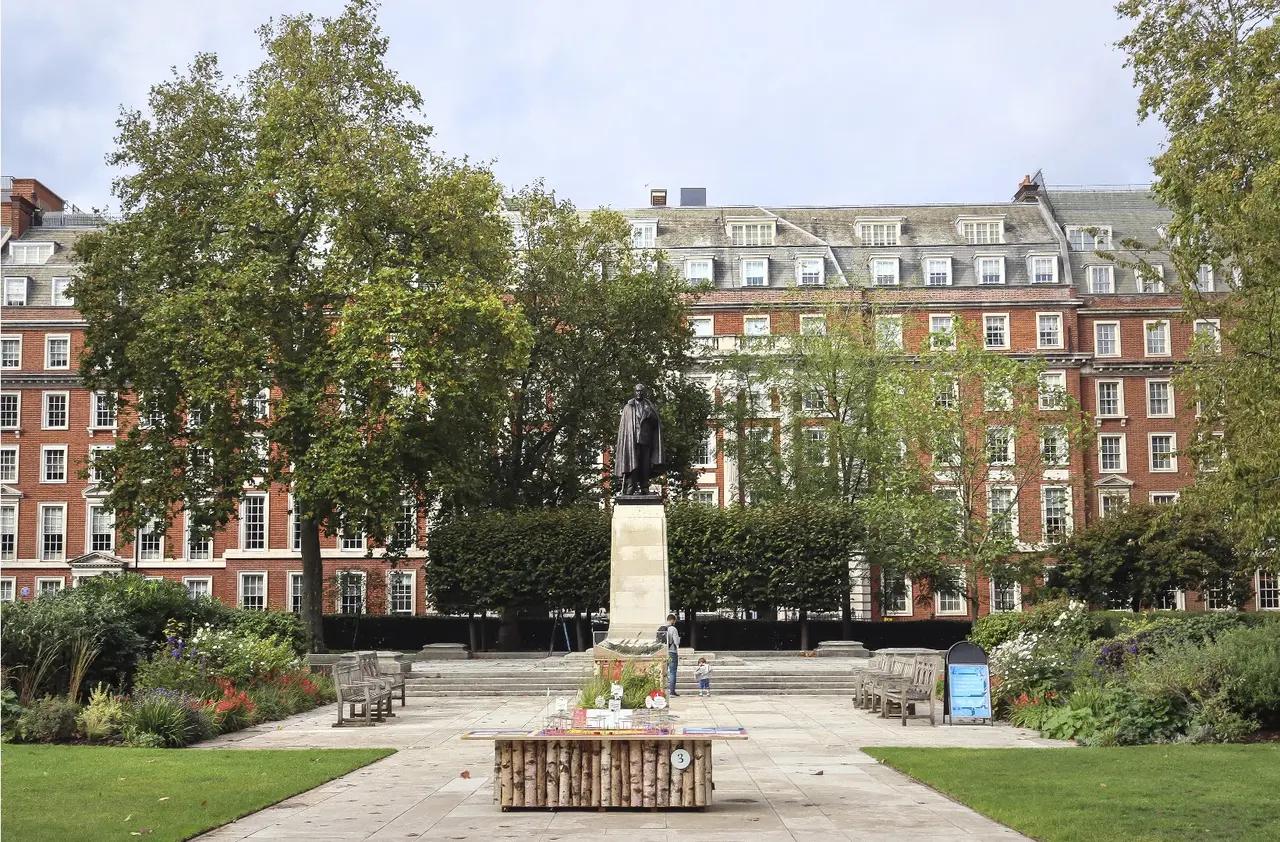
Grosvenor Square
Mayfair · Outdoors
One of London’s most historic squares has just undergone a major transformation to create a green, biodiverse haven in the centre of the city. But whilst also highlighting and enhancing its fascinating history. Let me know what you think in the comments! #london #londonhistory #mayfair #greencities #londontravel
- T
The Imperial Hotel
Holborn · Stay
Ad theimperialbloomsbury is a family run hotel with a history stretching back over 120 years. Who won ‘Bottom of the Year’ here in 1976 and what did a quick thinking chambermaid do with a bomb in World War One? The Imperial has just undergone a once-in-a-generation refurbishment and it is a great base for exploring the fascinating wider Bloomsbury area! #london #londonhistory #londontravel #londonhotel
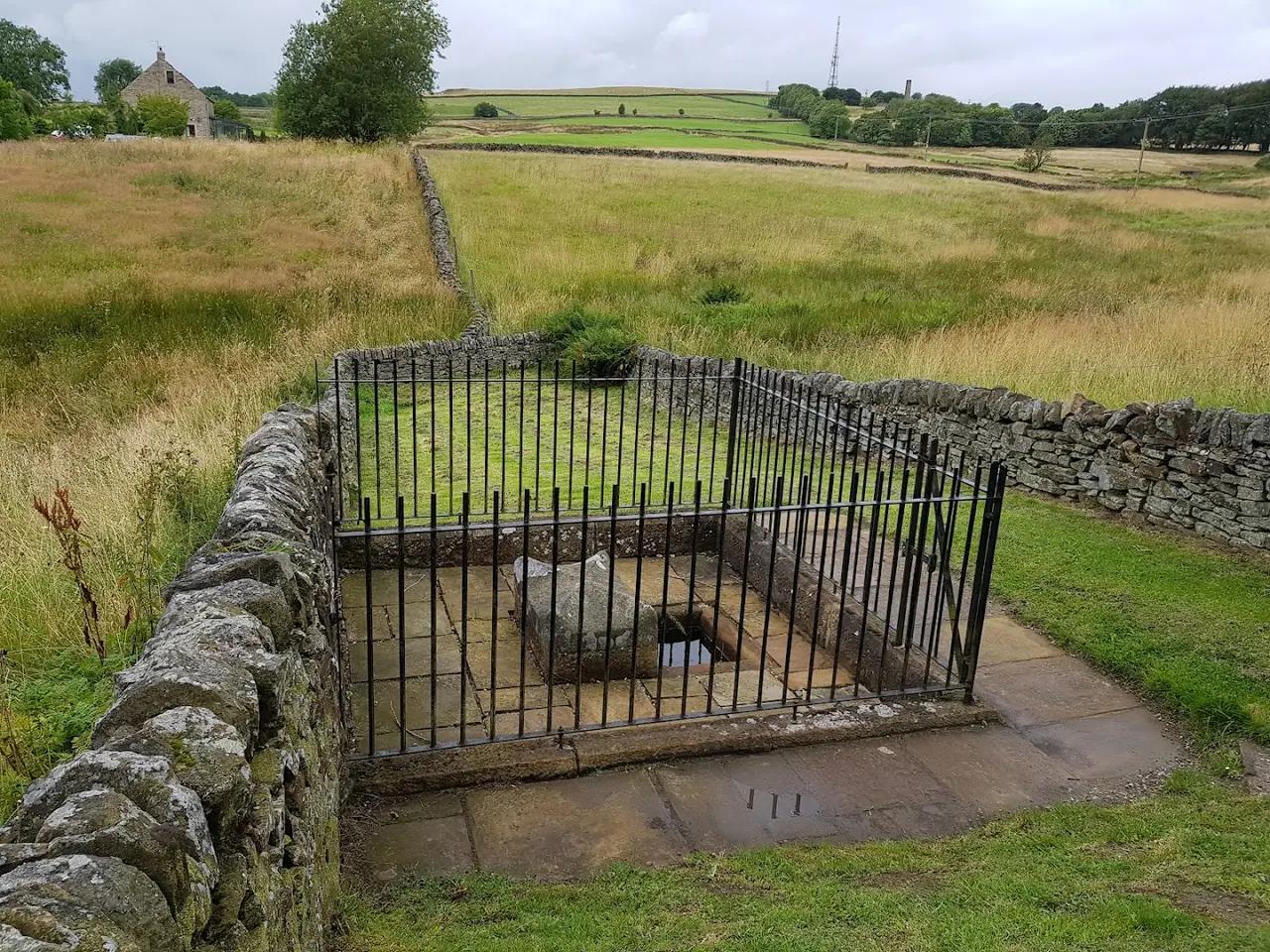
Mompesson's Well
Culture
A moving and fascinating visit to the ‘Plague Village’ of Eyam in Derbyshire... Have you heard or been to Eyam before? #ukhistory #derbyshire #london #uktravel #peakdistrictnationalpark
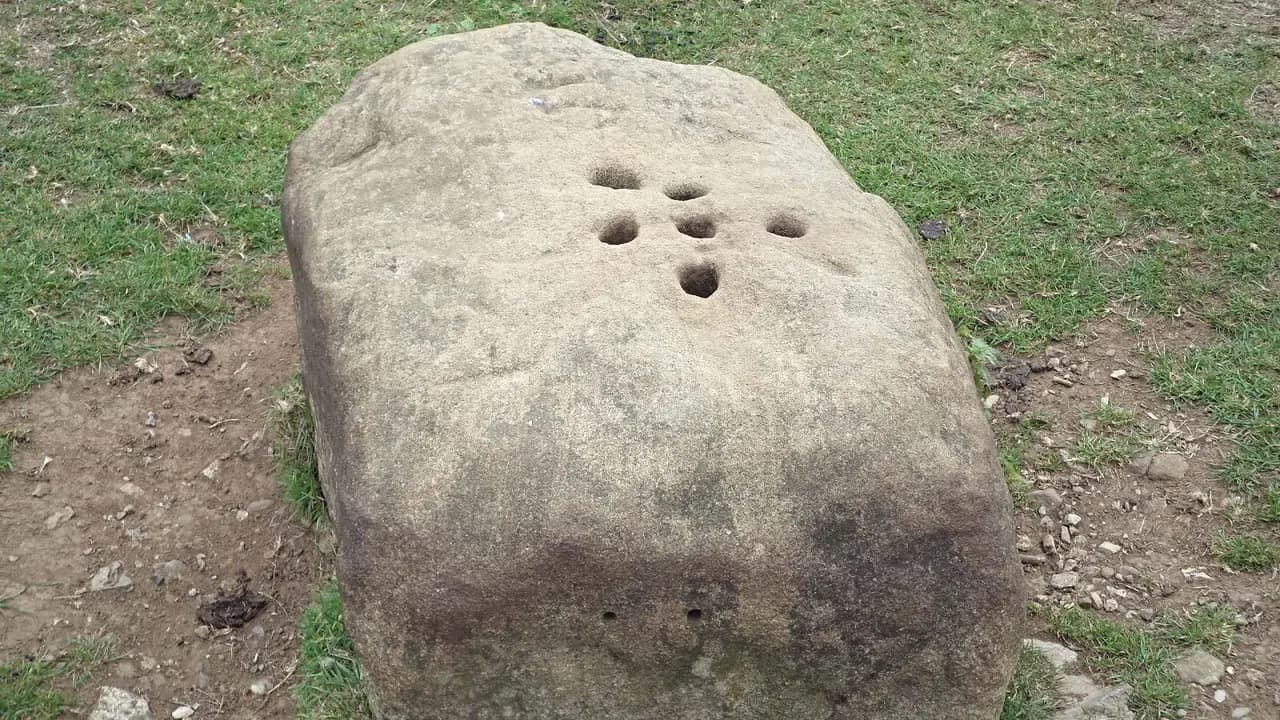
Eyam Boundary Stone
Culture
A moving and fascinating visit to the ‘Plague Village’ of Eyam in Derbyshire... Have you heard or been to Eyam before? #ukhistory #derbyshire #london #uktravel #peakdistrictnationalpark
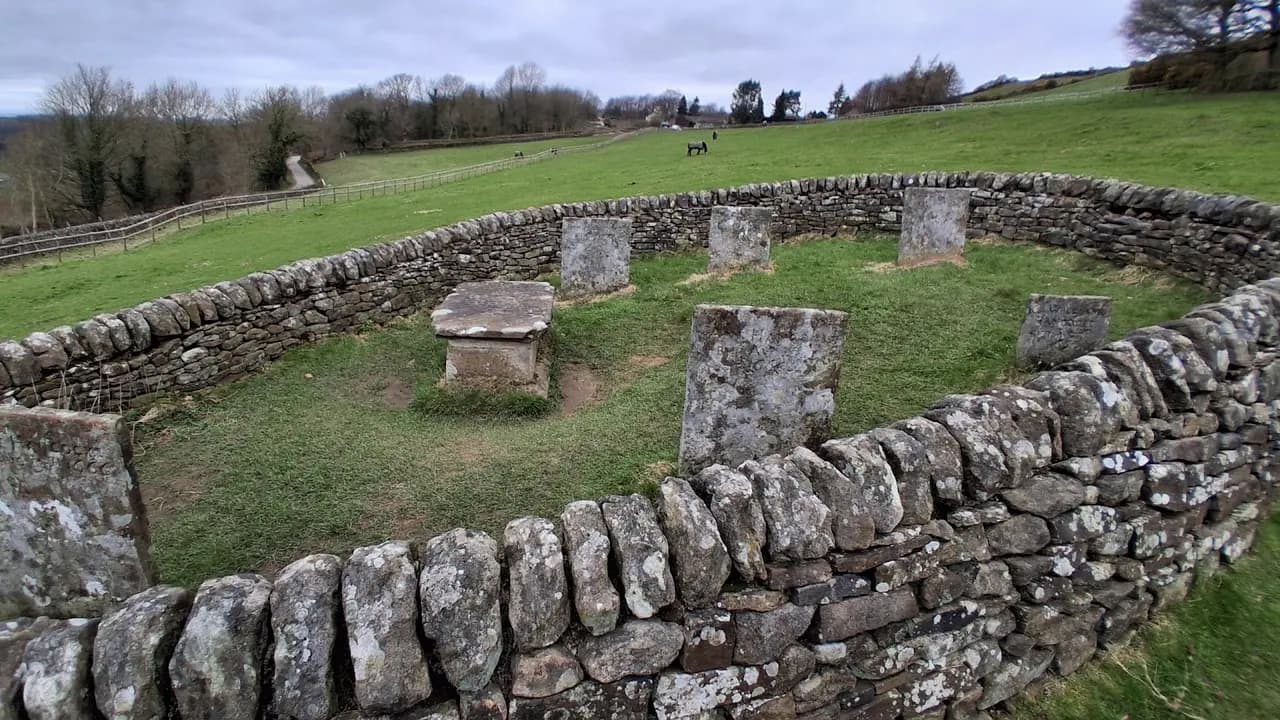
Riley Graves
Culture
A moving and fascinating visit to the ‘Plague Village’ of Eyam in Derbyshire... Have you heard or been to Eyam before? #ukhistory #derbyshire #london #uktravel #peakdistrictnationalpark
- E
Eyam Museum
Culture
A moving and fascinating visit to the ‘Plague Village’ of Eyam in Derbyshire... Have you heard or been to Eyam before? #ukhistory #derbyshire #london #uktravel #peakdistrictnationalpark
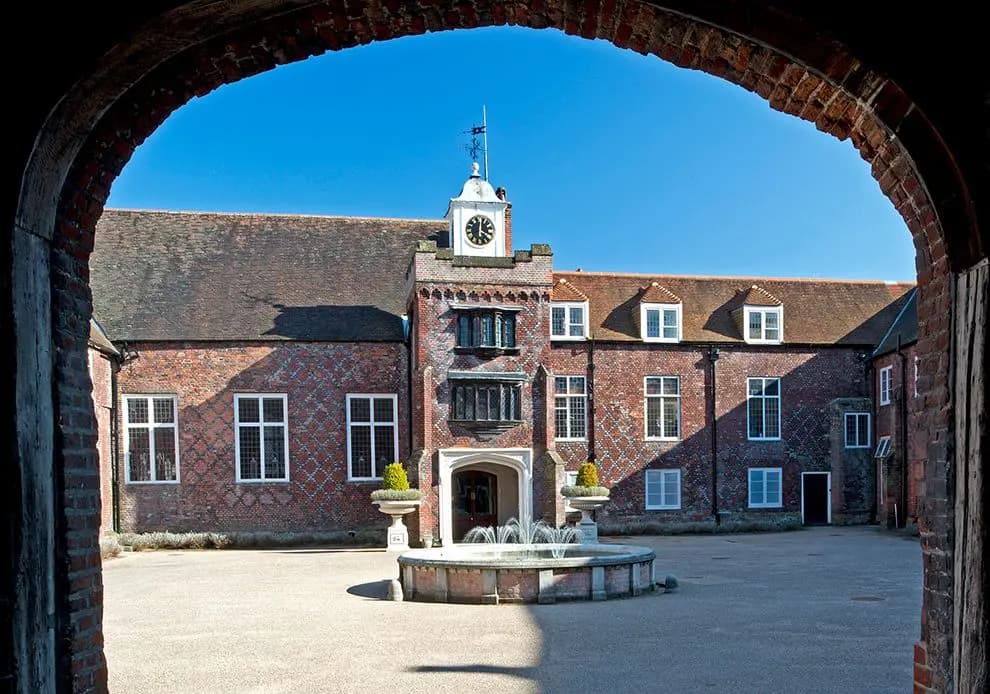
Fulham Palace
Fulham · Culture
Fulham Palace is one of London’s overlooked historic treasures I would argue. It is free to visit, is an architectural amalgamation of the centuries and has stunning gardens, perfect for relaxing this summer. fulhampalace #london #londonhistory #londontravel #freelondon #hiddenlondon
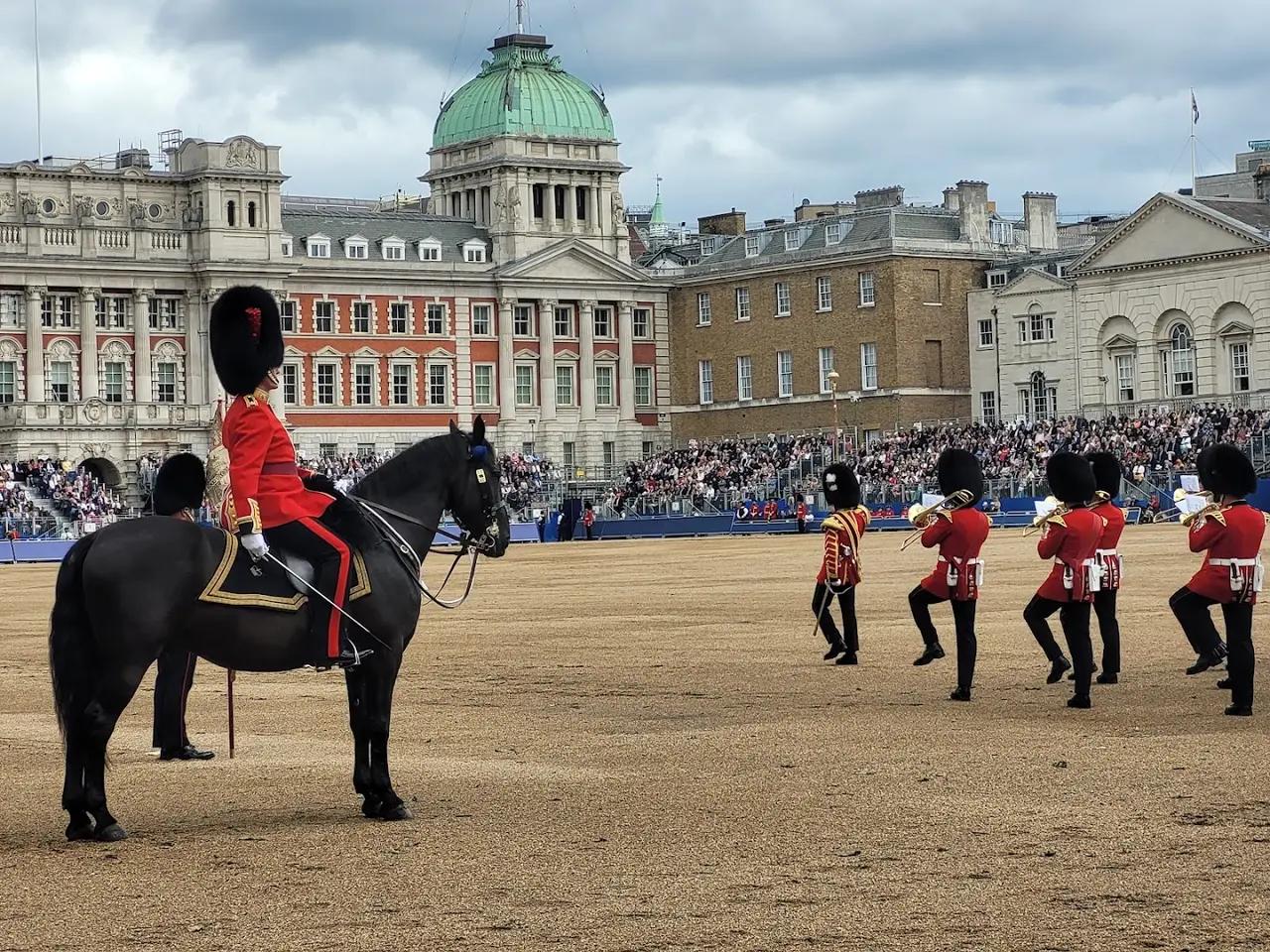
Horse Guards Parade
Covent Garden · Outdoors
Have you ever wondered what this odd concrete building right next to Horse Guards Parade is? It is essentially a not-so-secret secret bunker in the heart of London... The images of the roof are from the 31st July 1948 edition of Illustrated News, courtesy of Exact Editions. #london #londonhistory #secretlondon #londonarchitecture #londontravel
- S
Sackville House
Culture
Why do medieval and Tudor buildings often have overhanging upper floors? Well, there are a few different reasons/theories! Are there any others that you have heard of? Thank you again to the landmarktrust for a lovely stay at Sackville House in East Grinstead a few months ago. #londonhistory #britisharchitecture #medievalarchitecture #uktravel #architecturelover
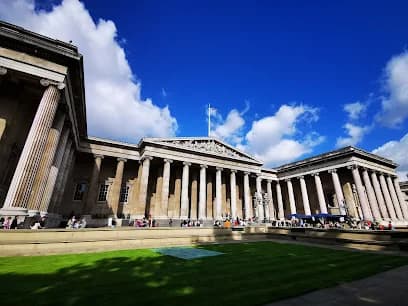
The British Museum
Holborn · Outdoors
What famous Tudor figure once prayed at this London church before meeting his unfortunate end? This is also just one of the stories of this amazing church. There’s a link in my bio for my full write up. #london #londonhistory #chelsea #tudorhistory #thetudors
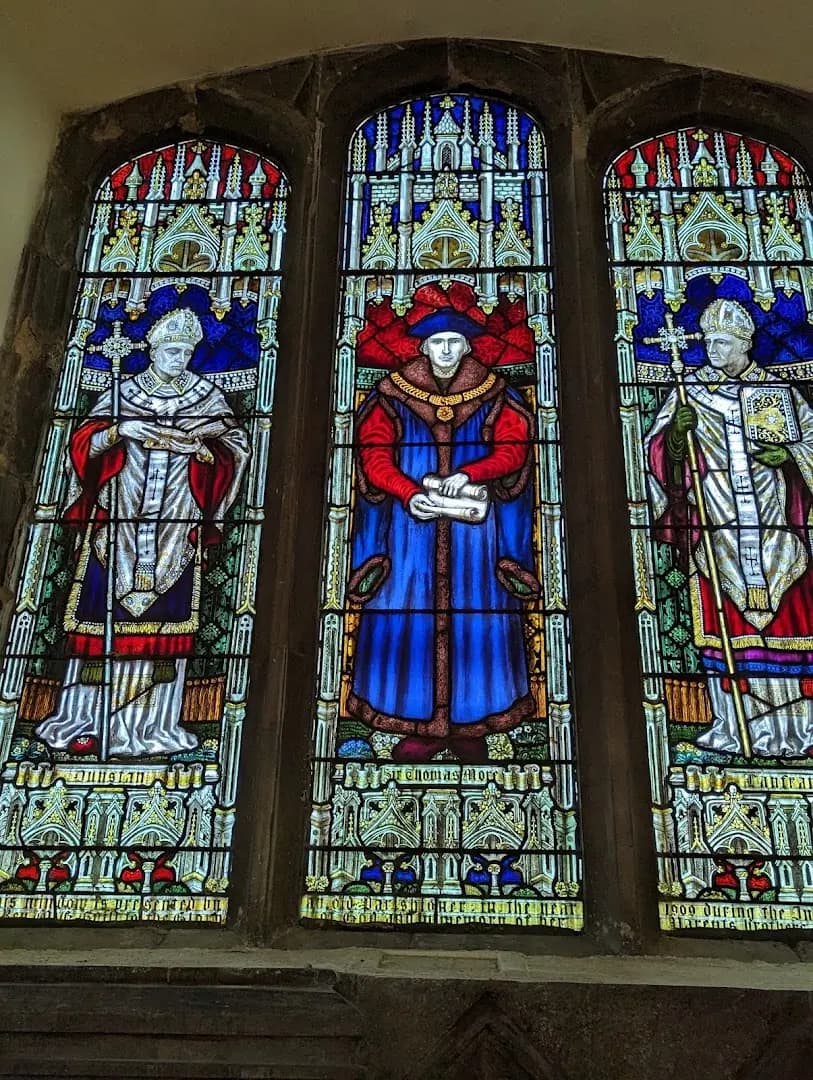
St Dunstan's Church, Canterbury
Culture
What famous Tudor figure once prayed at this London church before meeting his unfortunate end? This is also just one of the stories of this amazing church. There’s a link in my bio for my full write up. #london #londonhistory #chelsea #tudorhistory #thetudors
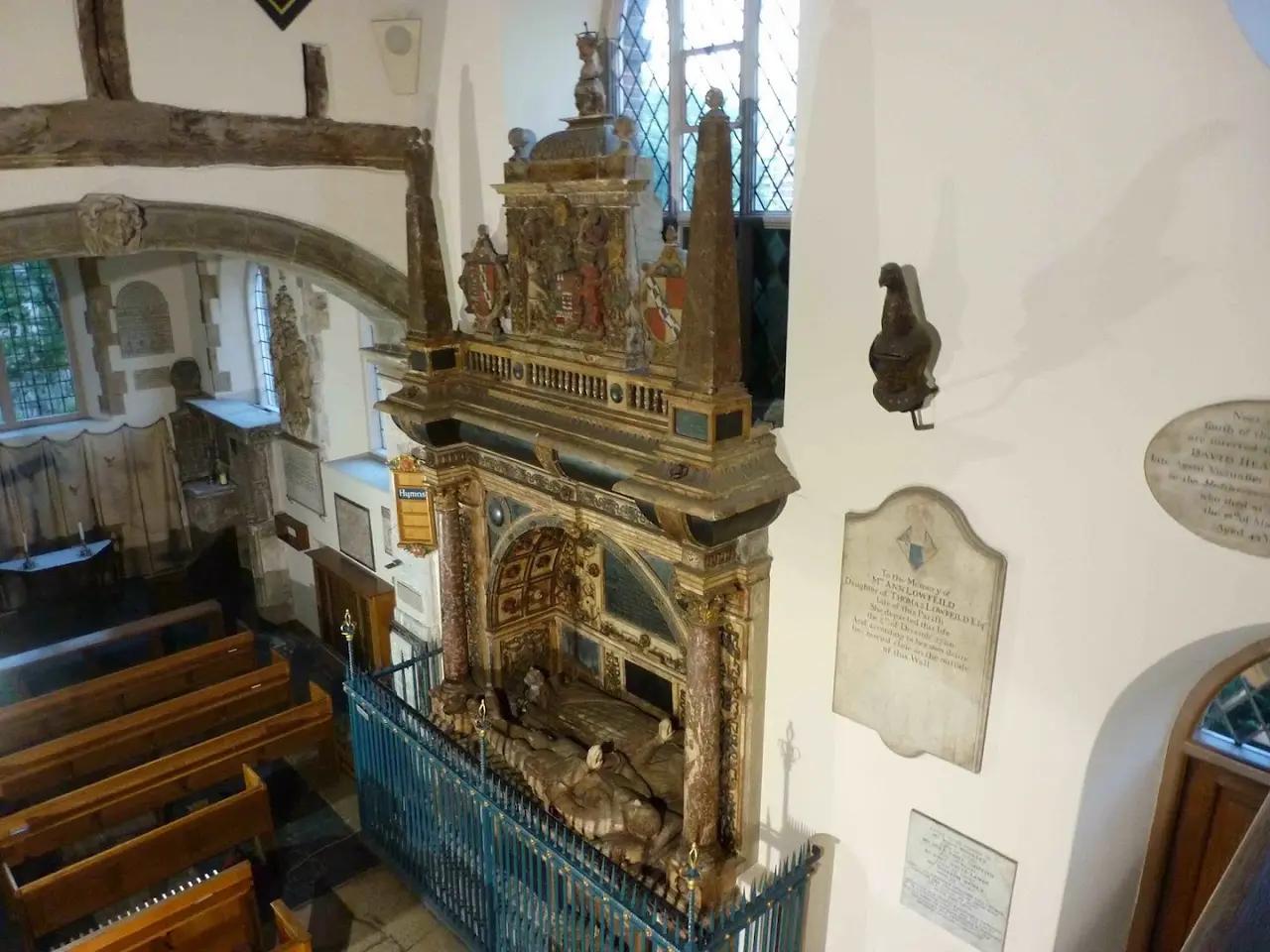
Chelsea Old Church
Chelsea · Culture
What famous Tudor figure once prayed at this London church before meeting his unfortunate end? This is also just one of the stories of this amazing church. There’s a link in my bio for my full write up. #london #londonhistory #chelsea #tudorhistory #thetudors
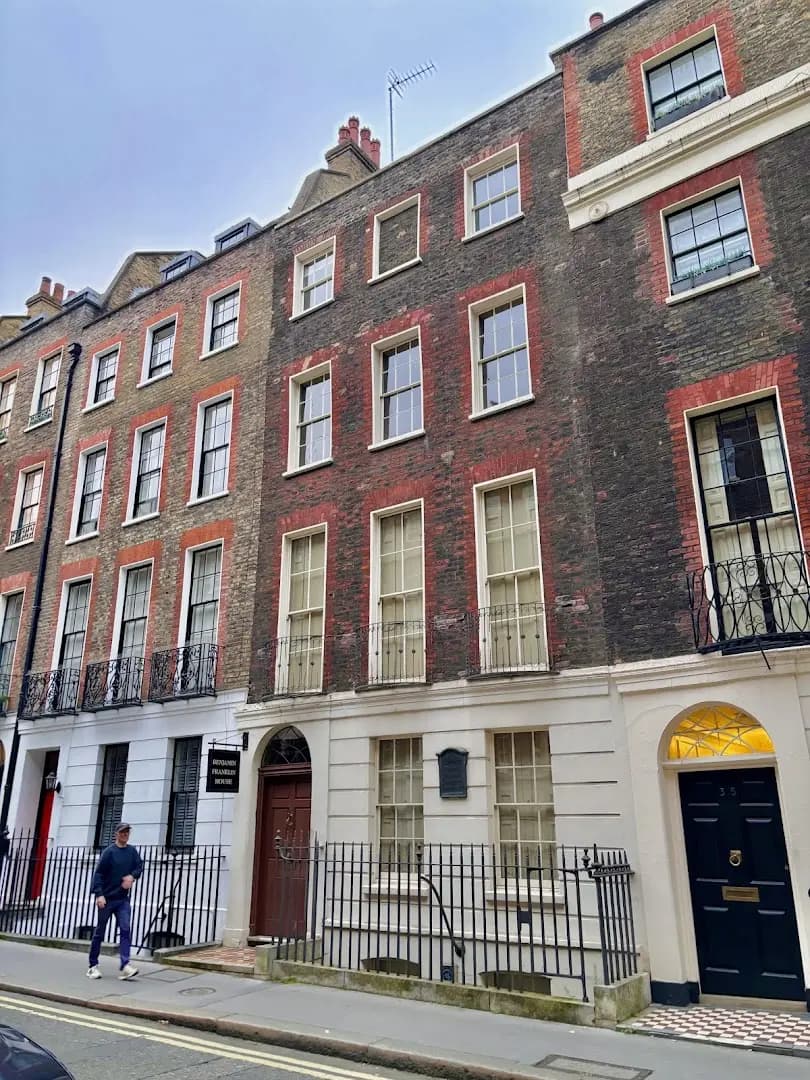
Benjamin Franklin House
Covent Garden · Outdoors
This Grade I listed London townhouse is full of surprises... This is benjaminfranklinhouse, the only surviving residence of founding father Benjamin Franklin. It is here that he would tinker with his bizarre and ingenious inventions and take his famous ‘air baths’. He was not the strangest thing about the house however, something shocking was found in the basement in the late 1990s. #usa #londonhistory #londontravel #america250 #usahistory
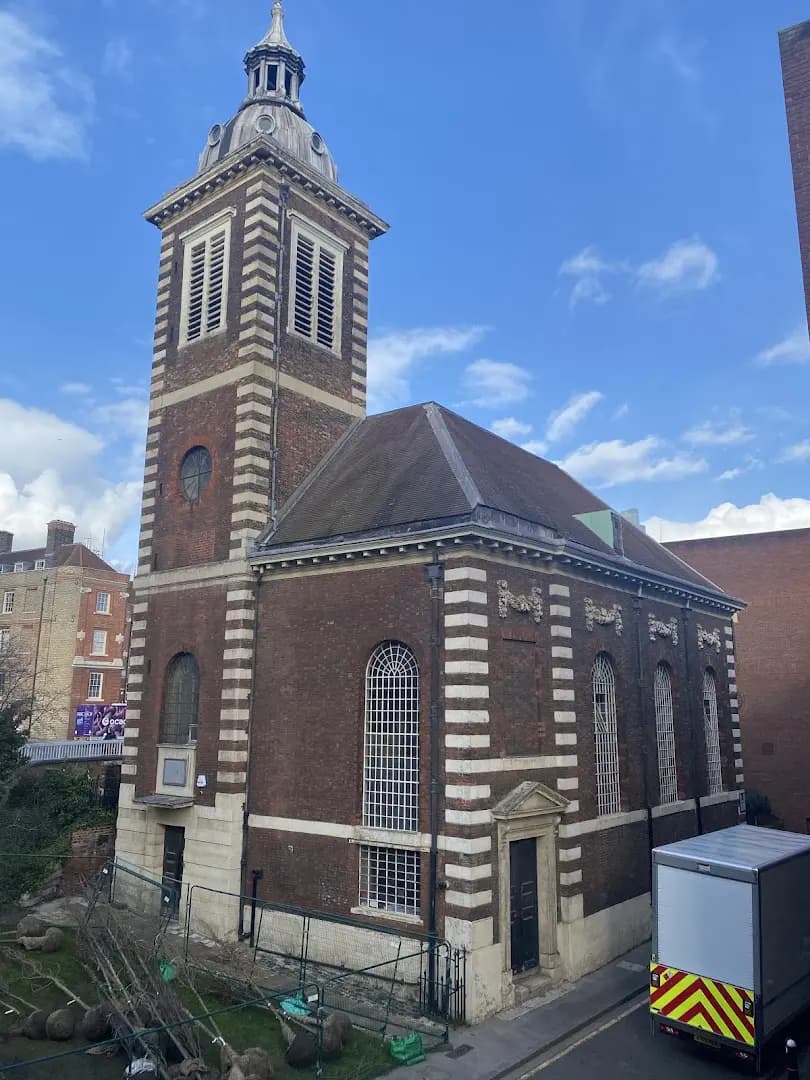
St Benet, Paul's Wharf
The City of London · Culture
Who are London’s ‘Church Watchers’? 👀 Wandering around the City of London in the week you may well see one of these signs the ‘Church Watchers Are Here Today’. Well, if you do, you’re in luck because you can have a look inside one of the often fascinating and beautiful City churches. #london #londonhistory #churchofengland #londontravel #secretlondon
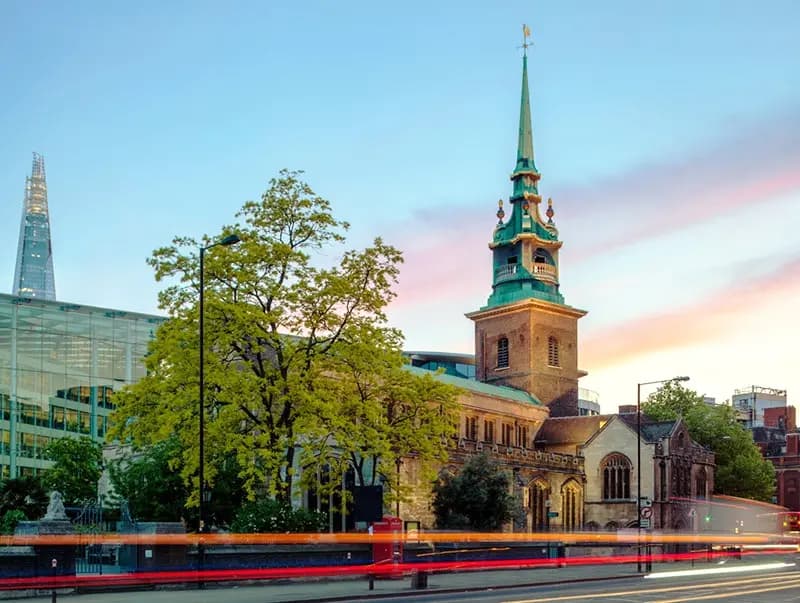
All Hallows by the Tower
The City of London · Culture
Have you seen this historical treasure trove, just minutes from the Tower of London? It can be found in the crypt of All Hallows by the Tower church and is free to visit (although I would encourage you to donate if you can to help keep it free and open). I posted this originally at the beginning of 2025, but it is one of my favourite spots in the City, so I thought it was due a repost. #london #londonhistory #londontravel #londonmuseum #romanhistory allhallowstower
Windsor Castle
Culture
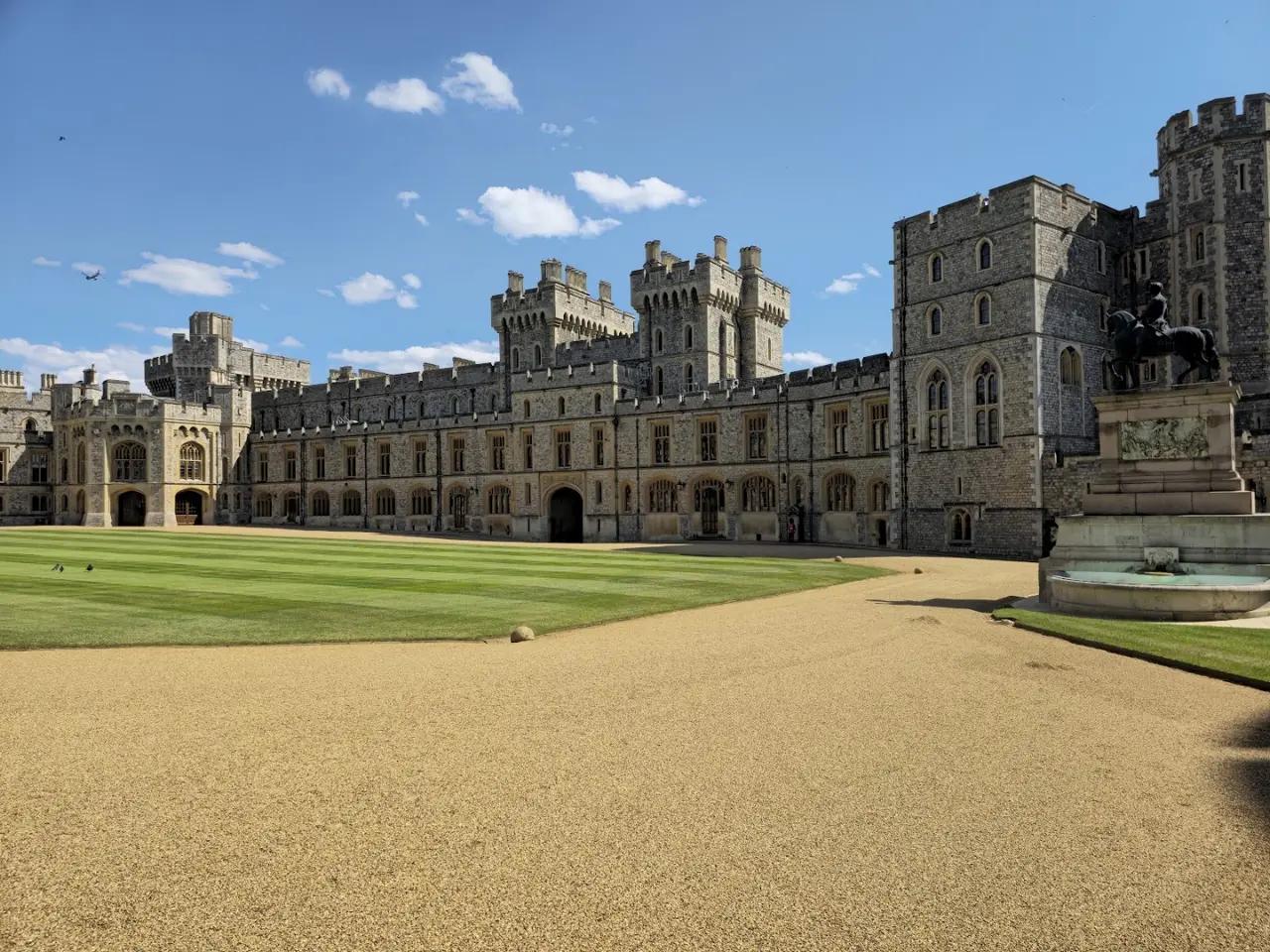
Two historic treasures to look out for on a visit to Windsor Castle! royalcollectiontrust theroyalfamily #tudorhistory #henryviii #windsorcastle #royalhistory #londontravel
Bethlem Museum of the Mind
Culture
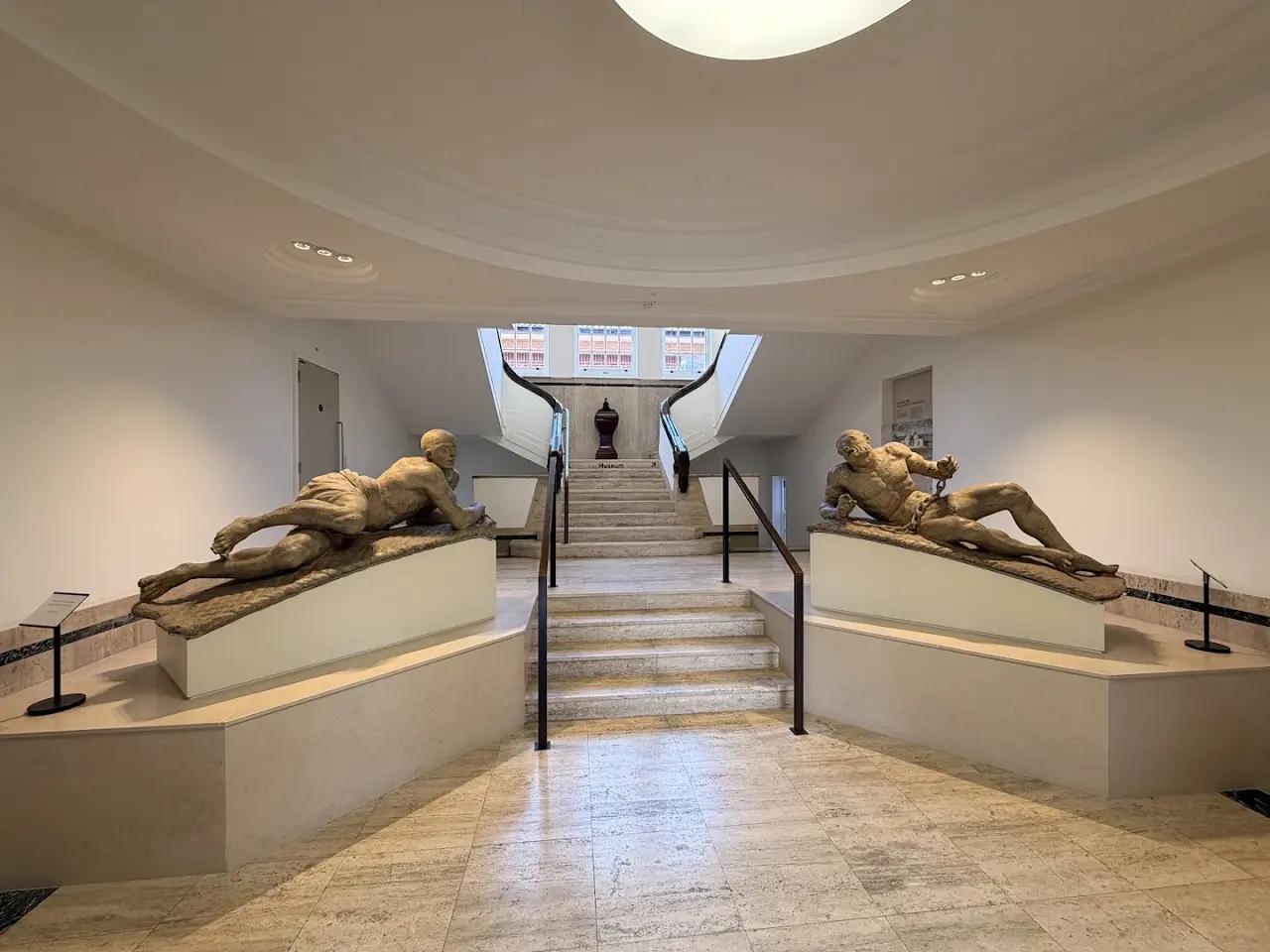
‘Raving Madness’ and ‘Melancholy Madness’ statues once adorned the front gates of Bethlem psychiatric hospital. The hospital is still going today in Bromley and is the oldest such institution the world. You can visit, for free, the Bethlem Museum of the Mind on site, a really eye-opening experience. bethlem_museum bethlemgallery #london #londonhistory #londonmuseum #londontravel #londonlife
- T
Tower Bridge
Bermondsey · Outdoors
It’s here!!! My brand new book, London: The Hidden Corners for Curious Wanderers is officially out. 150 secret gardens, hidden pubs and historic alleyways are covered, all with fascinating stories to tell. Thank you to everyone who has been so supportive and amazing in getting this book out there. Most notably katharinefraser.design for the FANTASTIC illustrations and quartobooksuk for all your hard work. There is, naturally, a link in my bio if you would like a copy for yourself, your mum, dad, nan, dog, teacher etc etc. #london #londonhistory #ivinglondonhistory #londontravel #hiddenlondon #secretlondon #londonbook #cityoflondon #londonlife
Leinster Gardens
Notting Hill · Culture
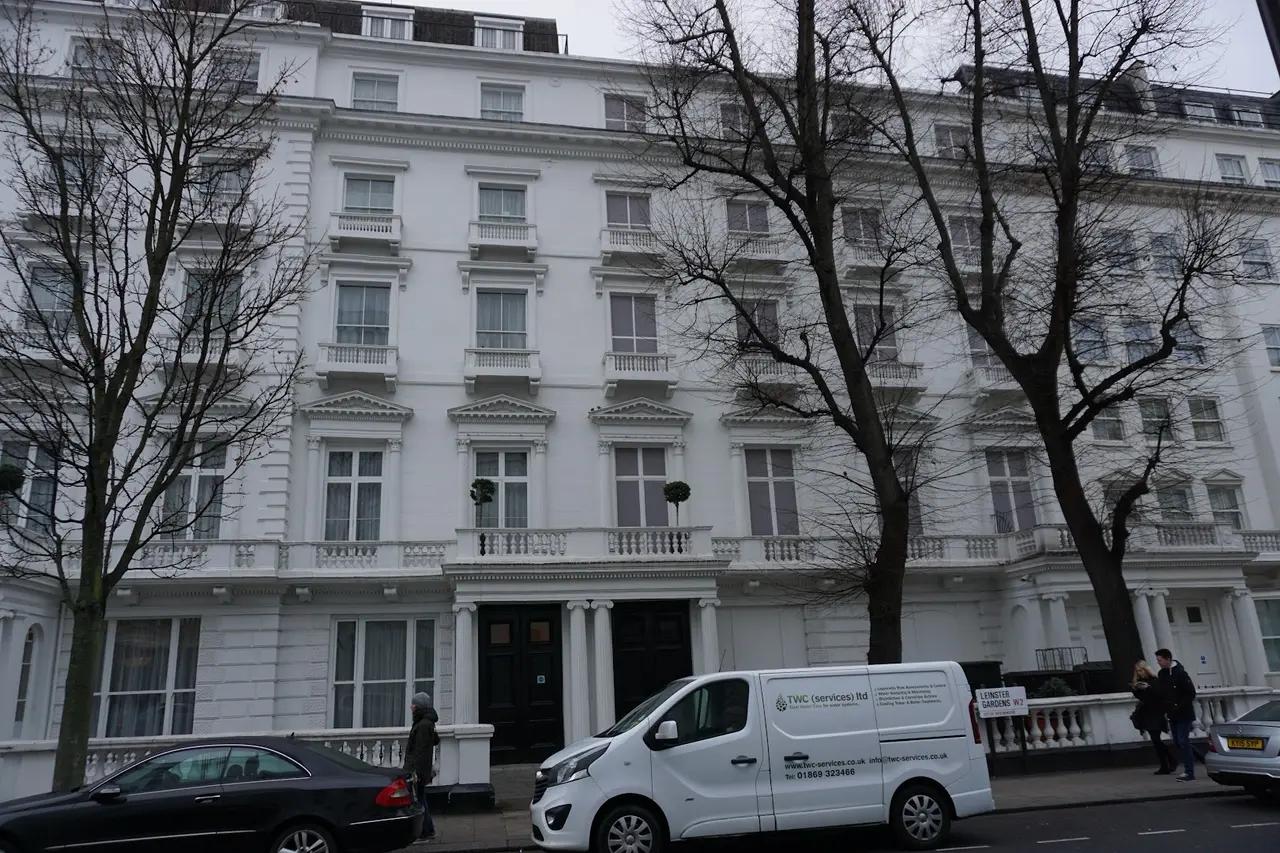
Did you know that Paris is covered with fake buildings? I have covered before the buildings in Leinster Gardens in London that are just facades and the story behind the Paris ones is similar. #paris #london #parishistory #parisarchitecture #londonarchitecture
Horselydown stairs
Bermondsey · Outdoors
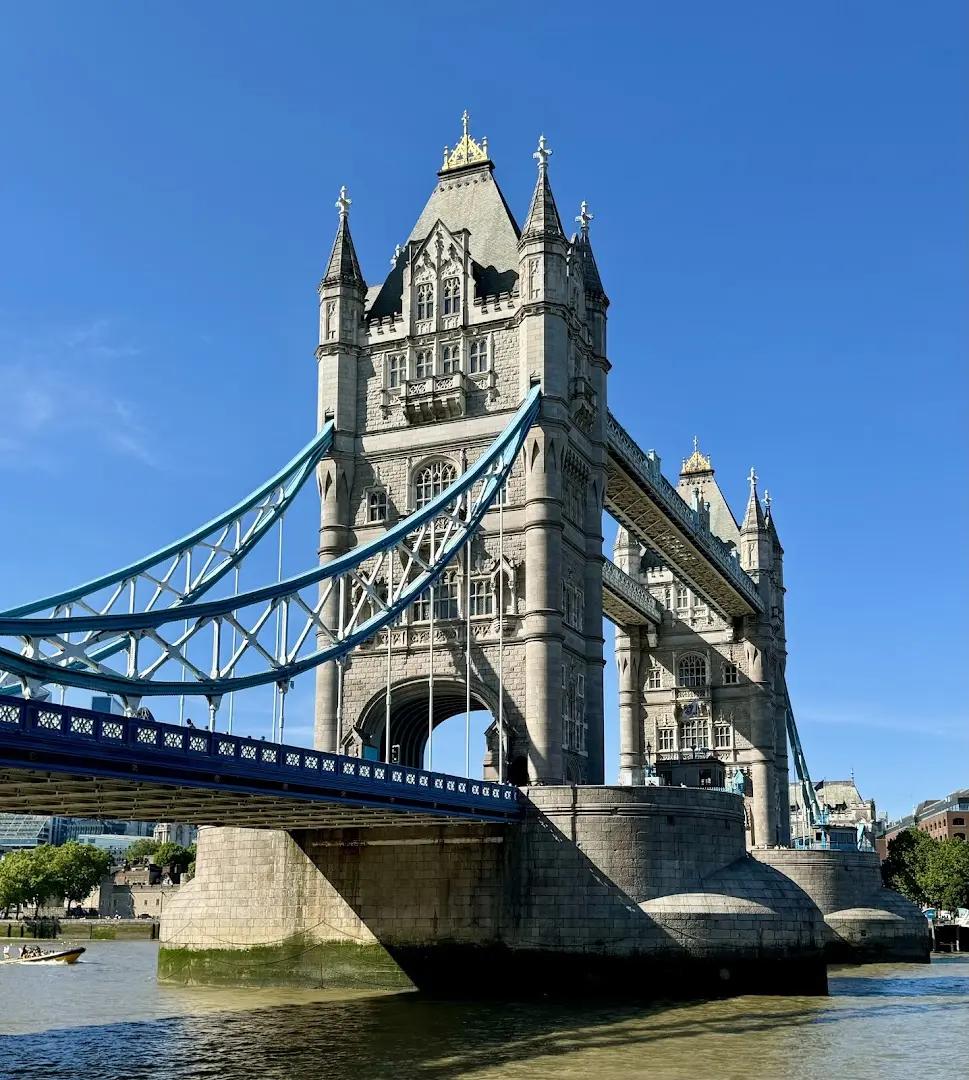
Just by Tower Bridge is a spot that most people miss… Horselydown Old Stairs are some of the last surviving sets of old river stairs that would have once lined this stretch of the river. When London was a busy port, these river stairs and alleyways would have been some of the liveliest places in the city. #london #londonhistory #secretlondon #towerbridge #riverthames
- S
St Katharine Cree
The City of London · Culture
Who are London’s ‘Church Watchers’? 👀 Wandering around the City of London in the week you may well see one of these signs the ‘Church Watchers Are Here Today’. Well, if you do, you’re in luck because you can have a look inside one of the often fascinating and beautiful City churches. #london #londonhistory #churchofengland #londontravel #secretlondon
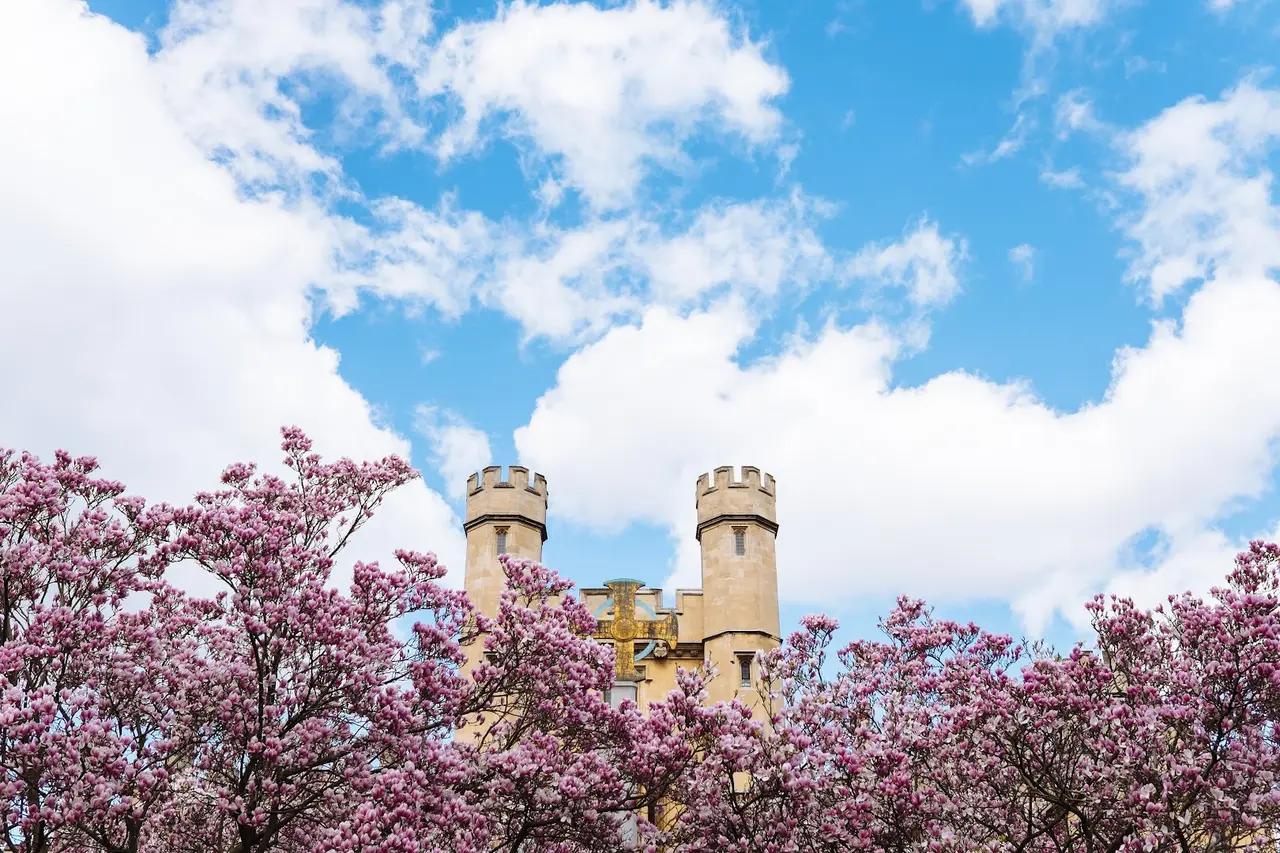
Lambeth Palace
Westminster · Culture
Hidden away in this 15th century tower in South London is a prison cell for heretics, almost untouched from the time when it was in use… This is not one of the spaces on the public tours of Lambeth Palace but lots of the rest of the amazing building is available to see at those events. There’s in a link in my bio for my full post or check out @visitlambethpalace 🙌 #london #londonhistory #londontravel #southlondon #churchofengland
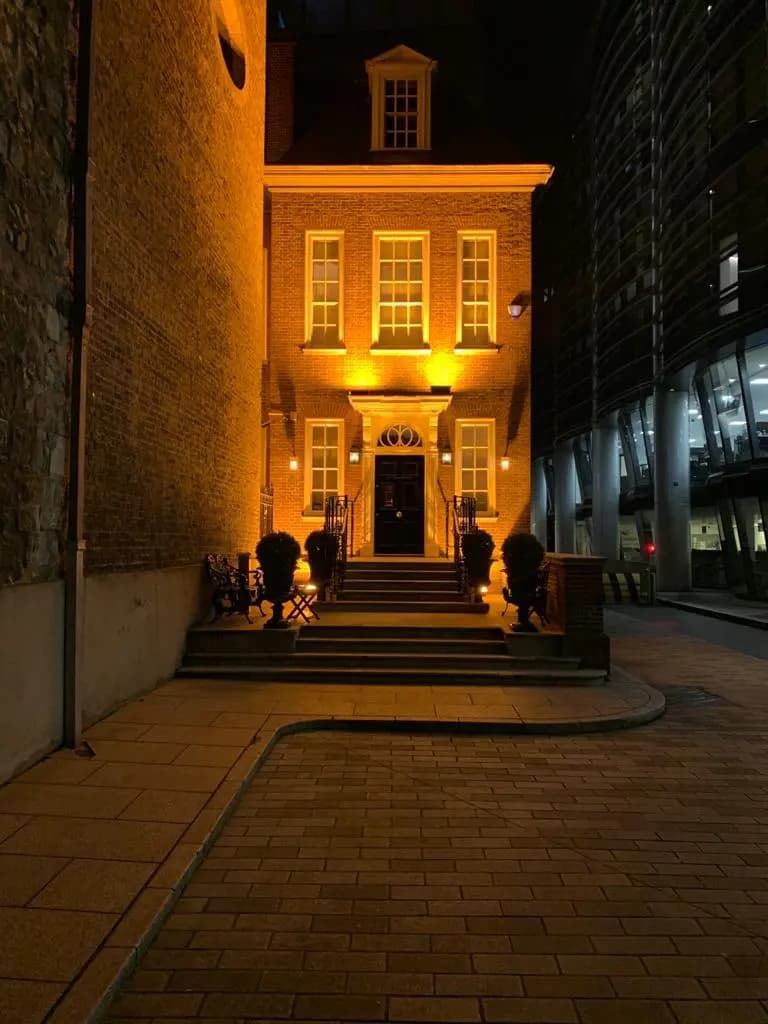
The Walbrook Club
The City of London · Eat
What is this odd little building in the City of London? 🧐 It can be found sandwiched between a 17th century church, two modern office blocks and is up the road from the ruins of a Roman temple… I was invited to have a peek inside! #london #londonhistory #londonarchitecture #londonstyle @thewalbrookclub
- D
De Vere Horsley Estate
Stay
Did you know that less than an hour from London is a fairytale-like mansion? 👀 Not only that, it was once the home of Ada Lovelace, the world’s first computer programmer and an aviation pioneer. There’s a link in my bio if you would like to find out more. Thank you to @deverehorsleyestate for the gifted stay! #surrey #london #londonhistory #londontravel hoteldesign
- P
Philip Mould & Co
Soho · Culture
There is a new exhibition in London all about Queen Elizabeth I! 👑 Elizabeth I: Queen and Court is a brilliant new exhibition at the @philip_mould_gallery on Pall Mall. It centres around four portraits of the Queen in different stages of her life and looks out how portraiture was a tool of power and propaganda. The exhibition is free and on until the 10th July. #london #londonhistory #thetudors #tudorhistory #londongallery
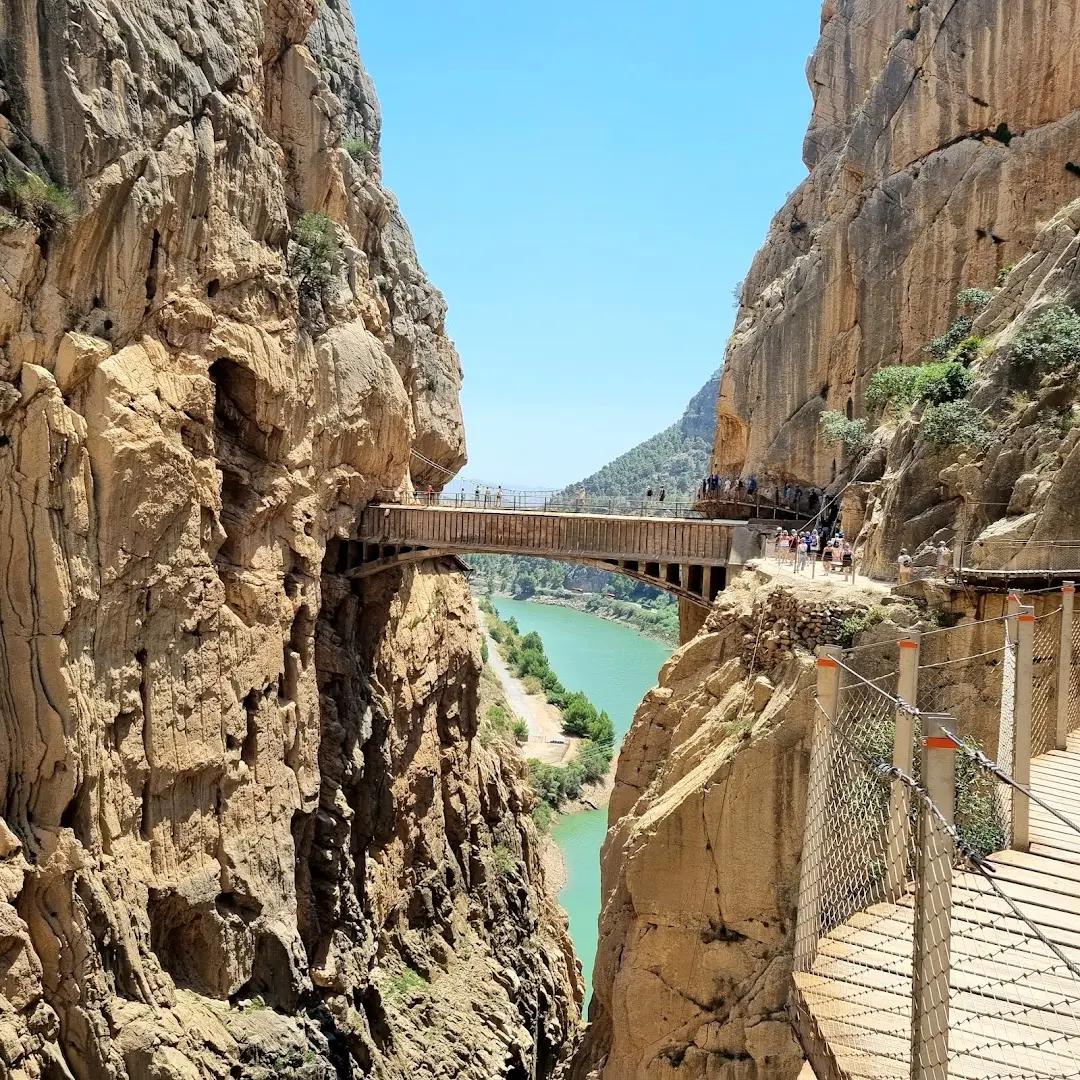
Caminito del Rey . North Access
Outdoors
You may well have walked past or even through this London garden before, but do you know the very inspiring story behind it?! 🌱 @coinstreet_se1 #london #londonhistory #londontravel #hiddenlondon #secretlondon
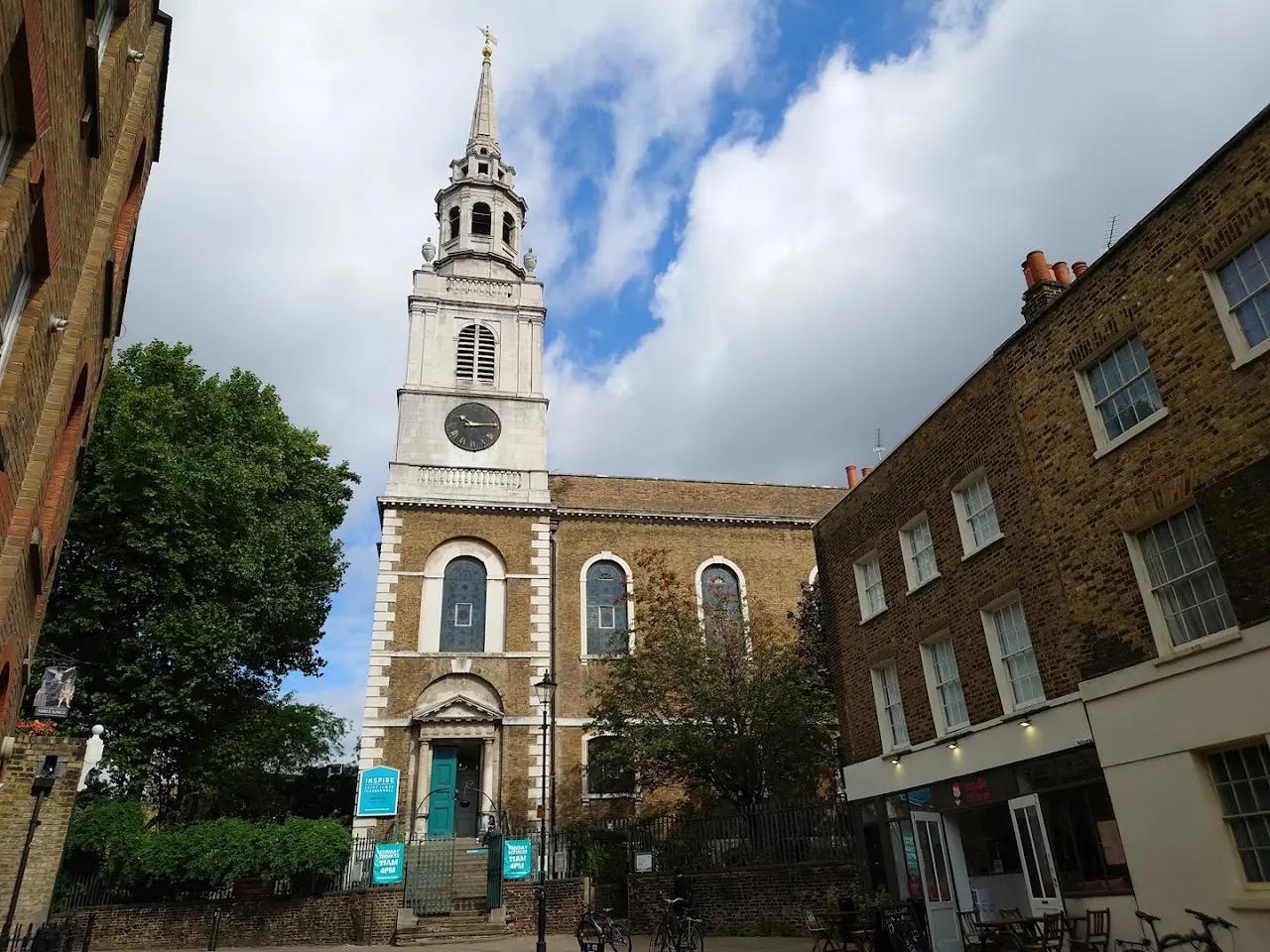
Clerkenwell Prison
Angel · Culture
Hidden beneath the streets of Clerkenwell you will find something very surprising… 👀 I was invited to explore what are known as the ‘Clerkenwell Catacombs’, a series of eerie vaults, which are all that remain of a Victorian prison. There is a rare opportunity for members of the public to see them for free as part of @clerkenwelldesignweek clerkenwelldesignweek from the 19th-21st May. There is a link in my bio to find out more!
- T
The Tenement House
Culture
Stepping inside this tenement flat in Glasgow is like stepping back in time to early 20th century… The fascinating Tenement House is run by the @nationaltrustforscotland and is absolutely worth a visit if you find yourself in Glasgow. It was one of the highlights of my Scotland trip last year! 🏴 #scottishhistory #glasgowcity #scotland #britishhistory
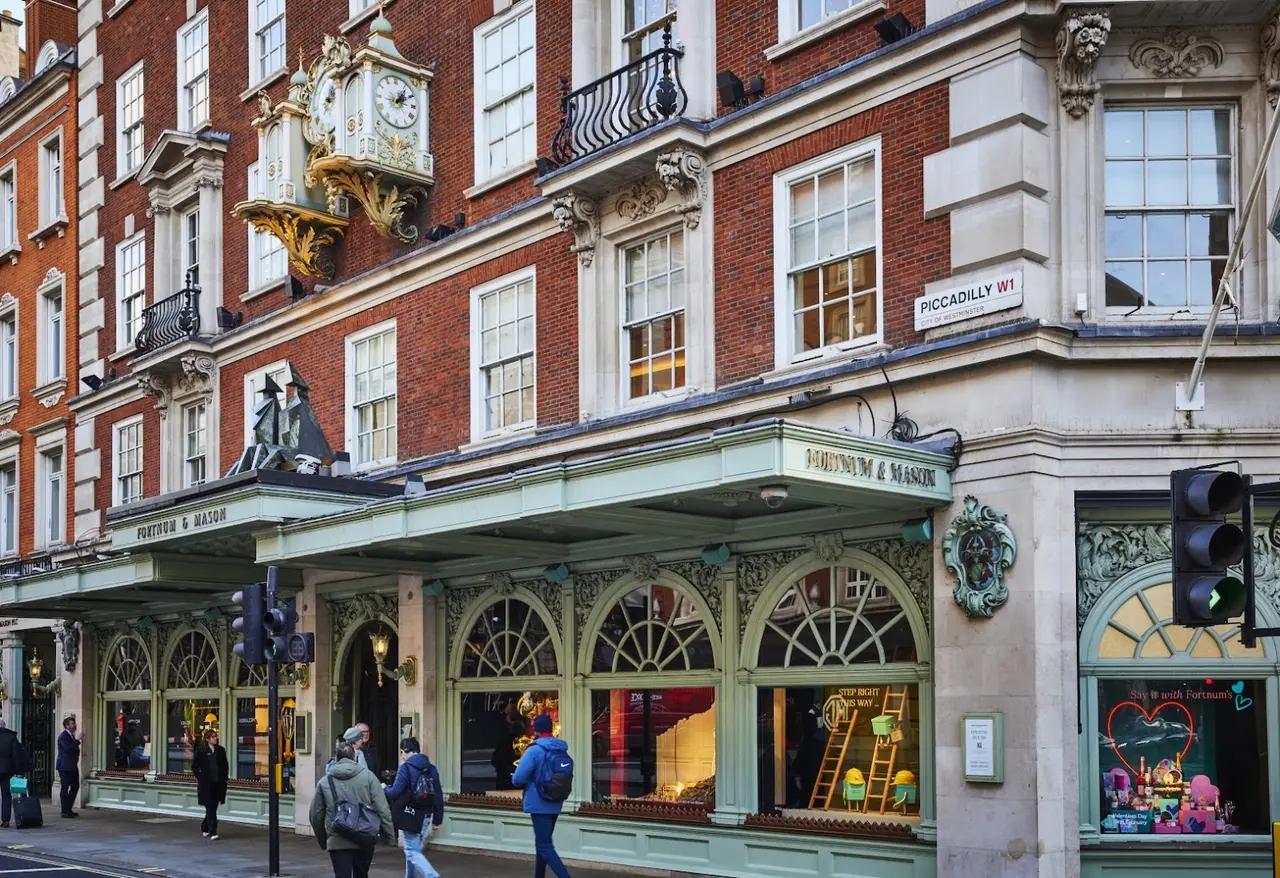
Fortnum & Mason
Soho · Shop
ad Do you know what secret lies beneath Fortnum & Mason? 👀 Fortnums is one of London's most iconic shops, but there is so much more to discover than you might initially think. There is a strange space hidden just off the wines and spirits department and they are thought to have invented a classic British snack... If you would like to read more I have written up a full blog post on my website (link in bio). #london #londonshop #londonhistory #piccadilly #londonluxury
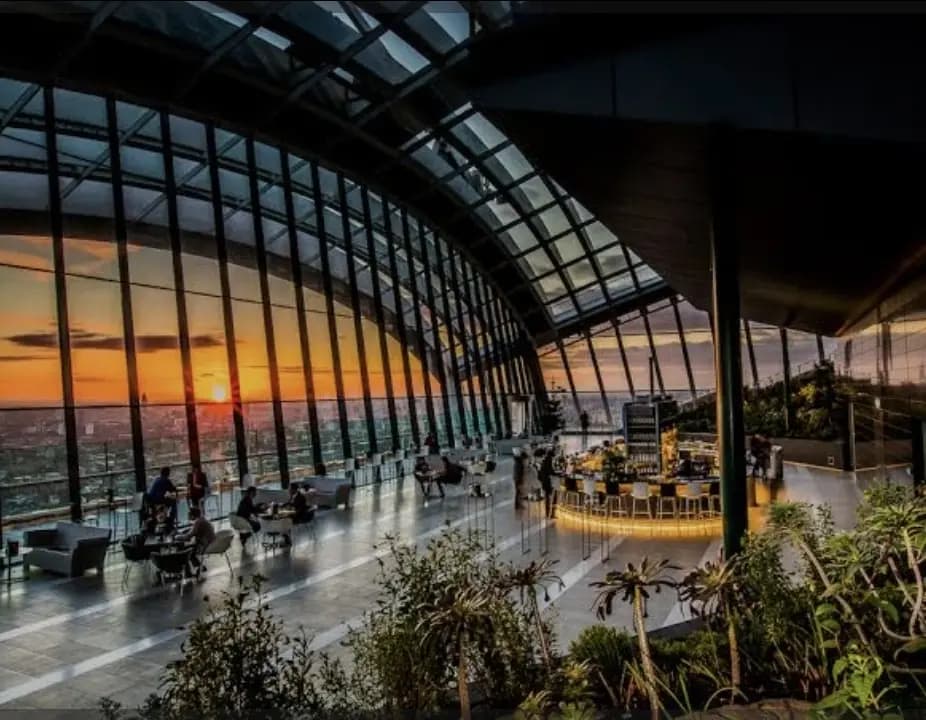
Sky Garden
The City of London · Outdoors
Have you seen London's smallest sculpture? 👀 It can be found on Philpot Lane in the City of London and has a dramatic local story to explain its origins. It is right next to the Walkie Talkie and entrance to the Sky Garden so you could combine it with a visit there. For copies of my first book, there is a link in my bio. #london #londonhistory #hiddenlondon #londontravel #secretlondon
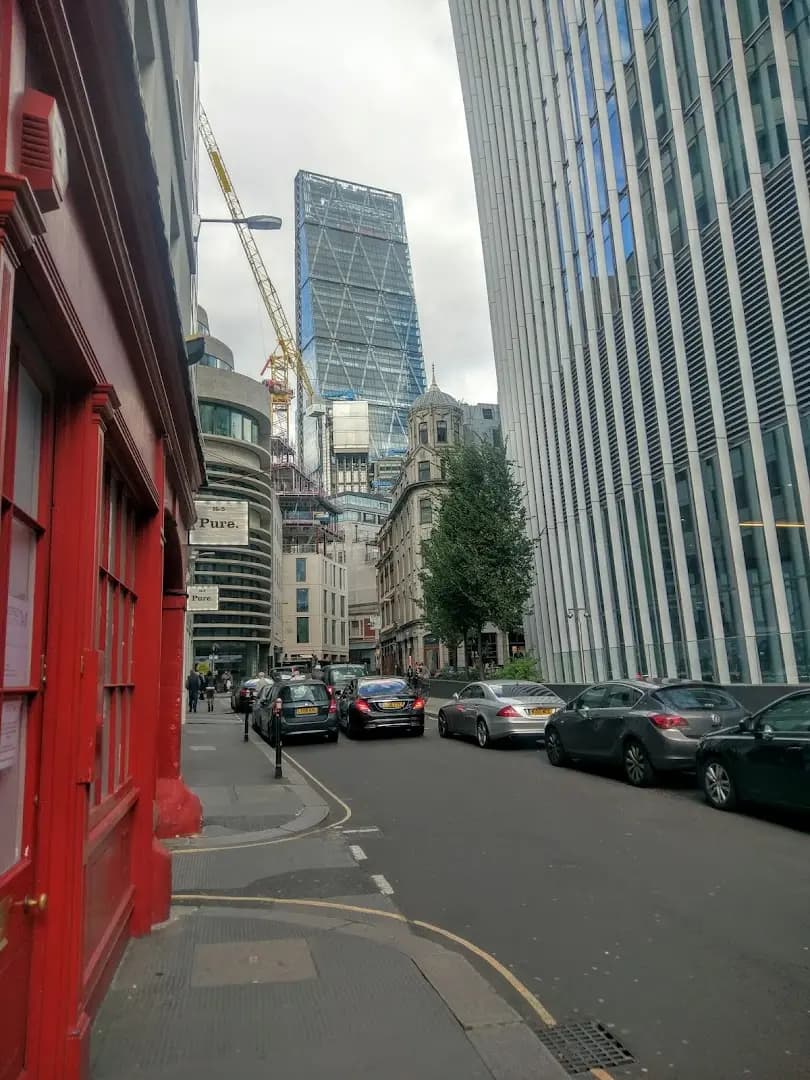
Philpot Ln
The City of London · Culture
Have you seen London's smallest sculpture? 👀 It can be found on Philpot Lane in the City of London and has a dramatic local story to explain its origins. It is right next to the Walkie Talkie and entrance to the Sky Garden so you could combine it with a visit there. For copies of my first book, there is a link in my bio. #london #londonhistory #hiddenlondon #londontravel #secretlondon
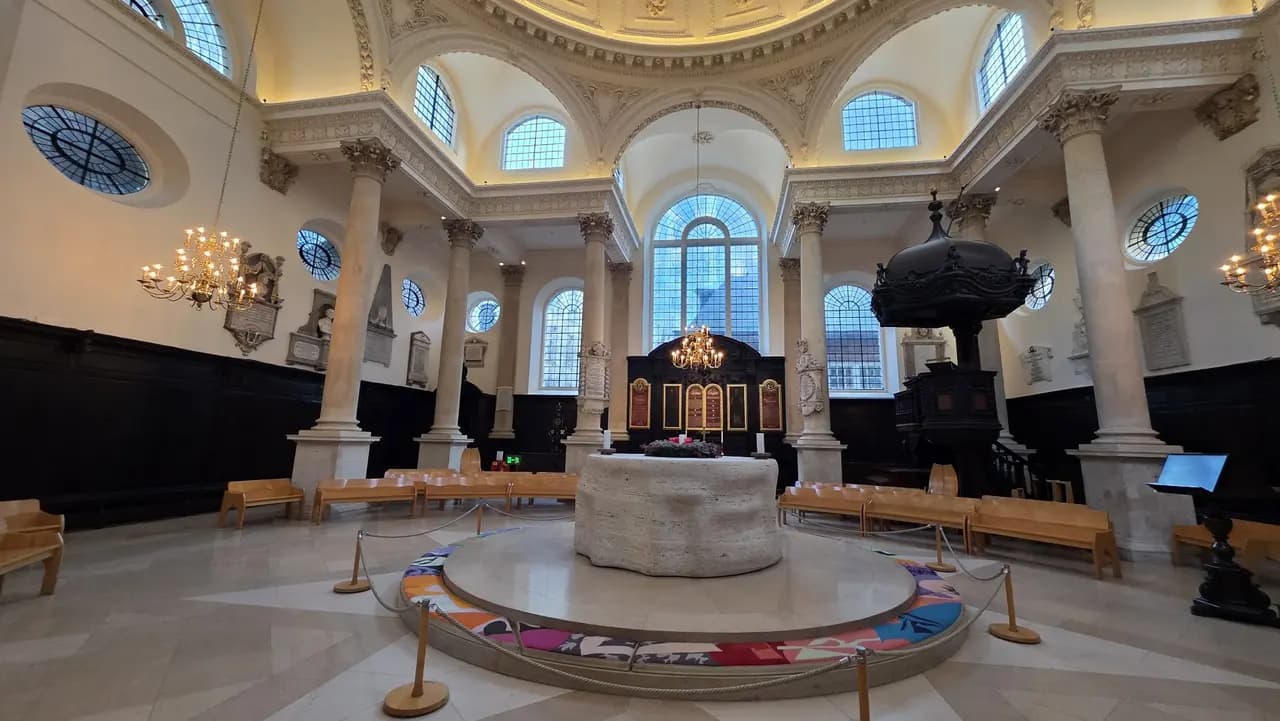
St Stephen Walbrook
The City of London · Culture
What Is This Odd Little Building In The City Of London? The City of London is very much a patchwork of the centuries. Each era jostles for space in the tightly-packed financial district, where the Romans established Londinium, nearly two thousand years ago. Not far from the Bank of England, wedged between a 17th century church and a 21st century glass office block you will find a curious little building. it is towered over today and many compare it to the house from the films Up or Stuart Little. But what is inside? It is, in fact, the home of the City of London’s only family-run private members� club, The Walbrook Club. It is not as old as it might initially seem, it is a pastiche, but is indicative of the rich tapestry of lives, whims and tussles that make up London’s history and cityscape. I have walked past it many times and have always been intrigued by it, so I was delighted to be invited to have a nose around. A Lost River The building sits just off a street called Walbrook. This nods to one of London’s �lost rivers�, the River Walbrook, that once flowed along this route, through the heart of Roman London and into the Thames. A map of London in 1300, wiht the Walbrook running through the middle of the city. Image from wikimedia commons, licensed under CC by SA 3.0. The Walbrook was eventually culverted and built over in the 15th and 16th centuries. On the banks of the Walbrook in the Roman period was the Temple of Mithras, a underground Roman cult temple. The remains of these can be seen today underneath the ultra-modern Bloomberg Building opposite the Walbrook Club. I have written a blog post about it before here. The remains of the temple were discovered in the rubble of the Blitz, during post-war rebuilding. This brings me on to the origins of the Walbrook Club building itself. Post-War Origins The City of London was extremely heavily bombed during the Blitz. As you can see from the bomb damage map below, the area around Walbrook was largely destroyed, purple designating �damaged beyond repair�. The night of the 10th-11th May 1941, was particularly devastating, often referred to as the �Second Great Fire of London� due to the sweeping destruction caused by incendiary bombs. 1,000 tons of bombs were dropped on London by the Luftwaffe that night, claiming 1,486 lives and destroying 11,000 houses. The tide was low in the river and broken water mains deprived the firefighters of water. Buildings ablaze on Queen Victoria Street, very close to Walbrook on the night of the 10th/11th May 1941. Image from wikimedia commons. The Walbrook Club building was constructed in the early 1950s on this bombsite, nestled up against the side of Wren’s 17th century St Stephen Walbrook church. the walbrook club The building was designed and built for property developer Rudolph Palumbo as the family offices. It was designed in the style of a Queen Anne townhouse, to give it a homely feel. Rudolph was born in London in 1901 to Italian immigrant parents Pasquale and Gaetana Palumbo, who ran a cafe on nearby Lower Thames Street. rudolph palumbo A painting of Rudolph Palumbo over the fireplace in the dining room He made a fortune before the war through his property development company City Acre and then after the war by developing bombsites. He was buried in the churchyard of St Stephen Walbrook after his death in 1987. His son, Peter Palumbo, also became a property developer. A Controversial Development Peter Palumbo in 1974, image from wikimedia commons Peter Palumbo’s career was not without controversy. From 19621985, Palumbo commissioned and pushed for a 19-storey modernist office tower designed by German-born pioneering modernist architect Ludwig Mies van der Rohe on the corner of Poultry and Queen Victoria Street. The proposal was highly contentious, with modernist architecture enthusiasts pitted against conservationists. Prince Charles notoriously described the design as a �glass stump�. A model of the Mies Van Der Rohe tower in the bar of the club. Part of the plan was a public square, outside what is now the Ned. The plan was eventually quashed. An alternative scheme, that did get approved, was the post-modernist Number One Poultry by James Stirling, completed in 1997. The site was previously occupied by a Victorian Neo-Gothic Mappin and Webb building, which was controversially demolished in 1994. number one poultry mappin and webb building The Victorian Mappin and Webb building that it replaced, photograph from 1902. Image from wikimedia commons. Number One Poultry received a Grade II* listing in 2016 for its unique architecture, making it one of the youngest listed buildings in the country. number one poultry view The view from the rooftop of Number One Poultry Peter was heavily involved in the arts, being the last Chairman of the unified Arts Council of Great Britain. He was also a Trustee of the Tate Gallery from 1978-85, as well as chairing, or being the trustee for, various other arts and architecture organisations: the Whitechapel Art Gallery, Natural History Museum, Architecture Foundation and more. St Stephen Walbrook st stephen walbrook As I mentioned, the club is nestled up against the side of St Stephen Walbrook church, one of Sir Christopher Wren’s most magnificent post-Great Fire of London churches. Completed in 1672, St Stephen’s was used by Wren to practice designs he then implemented in St Paul’s Cathedral. st stephen walbrook Peter Palumbo was a churchwarden and led a restoration of the church from 1978-87, strengthening the foundations and installing a new altar designed by Henry Moore. The central, circular design was meant to represent the Eucharist at the heart of the community, shifting away from the traditional orientation of a church. Again, this was highly controversial requiring approval from the Court of Ecclesiastical Cases Reserved. The Rector of the church from 1953 until his retirement in 2003 was Chad Varah. He retired at the age of 92, making him the Church of England’s oldest incumbent at the time. He was also the family chaplain to the Palumbo family and is best known for setting up the Samaritans in the crypt in 1953. You can still see the original black telephone inside the church today. The Walbrook Club After a meeting between Peter (Lord Palumbo by this point as Margaret Thatcher gave him a peerage in 1991), and Mark Birley, socialite and founder of Annabel’s club in Mayfair in 1963, he decided to turn the building into a member’s club. entrance hall walbrook club The entrancehall and staircase The Walbrook Club opened officially in the year 2000, housed in the old family offices, after a significant restoration. The interiors were designed by Birley with a focus on comfortable luxury. In 2018 the running of the club was taken on by Peter’s son Philip Palumbo, who I met and showed me around the building. Philip has modernised the club, relaxing the dress code and bringing in younger members. He has also expanded the speaker program and added to the quirky art collection. The interiors are eclectic with a mixture of memorabilia, art works and family photographs giving it a comfortable, individualistic feel. the bar walbrook club The bar of the Walbrook Club the bar ship saturnia Behind the bar is a model of the 1920s luxury Italian liner the Saturnia. the dining room The dining room. You can see the �broken plates� on display by Richard Wentworth, the design replicated across the ceiling. the oak room The Oak Room. The furniture was designed by Mies van der Rohe, there is Beatles memorabilia on the walls and Yayoi Kusama’s Pumpkins hanging on the far wall. the green room The Green Room with its William Morris wallpaper. You can find out more about the various rooms here, as well as more information about the club. Though the building itself is no great relic, more pastiche than strictly historical, it nevertheless speaks to the incredible layered architecture of the City. Each era sits side by side with Roman remains beneath glass towers, next to 17th-century churches and everything in between.
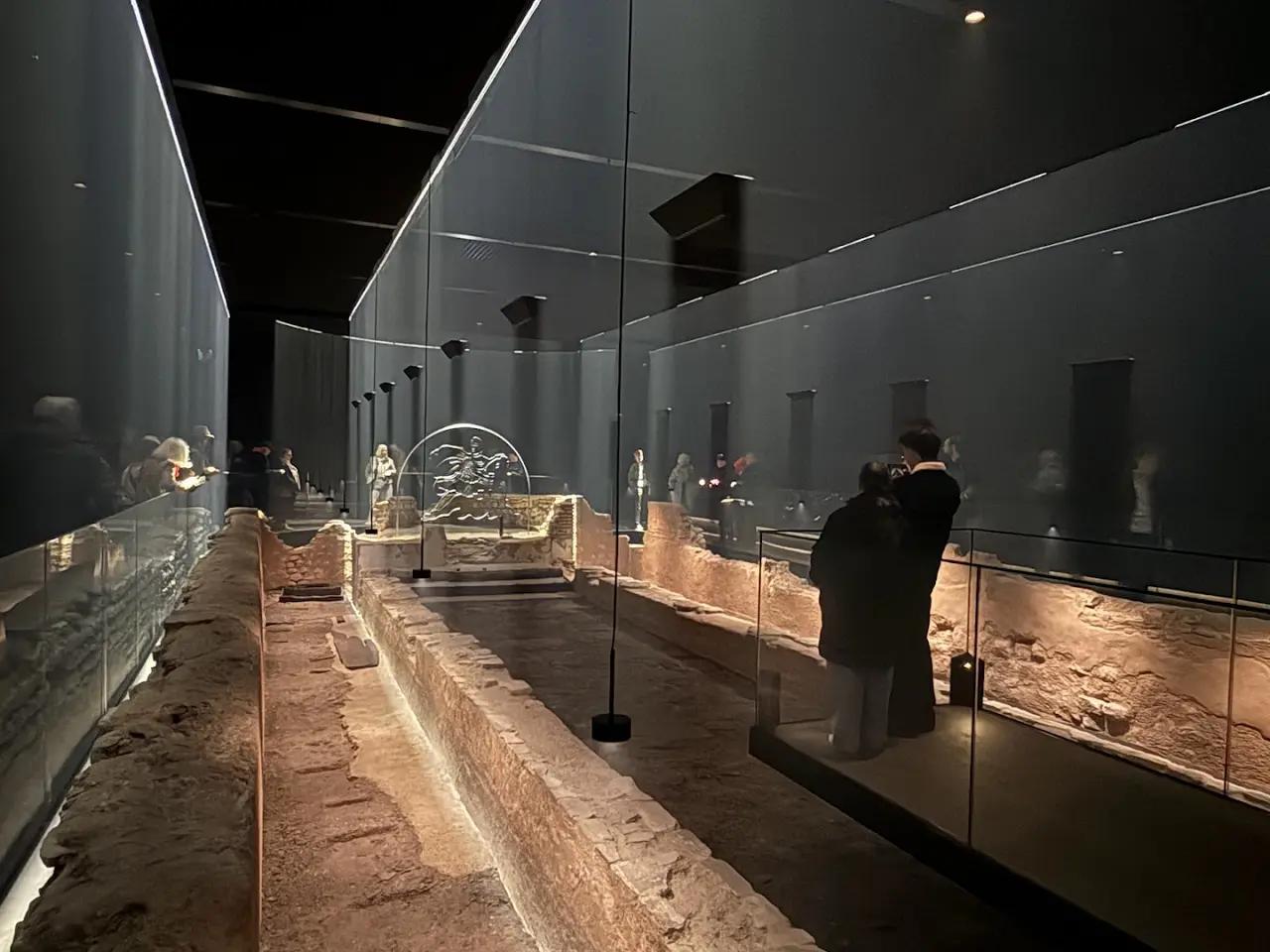
London Mithraeum | Bloomberg SPACE
The City of London · Culture
What Is This Odd Little Building In The City Of London? The City of London is very much a patchwork of the centuries. Each era jostles for space in the tightly-packed financial district, where the Romans established Londinium, nearly two thousand years ago. Not far from the Bank of England, wedged between a 17th century church and a 21st century glass office block you will find a curious little building. it is towered over today and many compare it to the house from the films Up or Stuart Little. But what is inside? It is, in fact, the home of the City of London’s only family-run private members� club, The Walbrook Club. It is not as old as it might initially seem, it is a pastiche, but is indicative of the rich tapestry of lives, whims and tussles that make up London’s history and cityscape. I have walked past it many times and have always been intrigued by it, so I was delighted to be invited to have a nose around. A Lost River The building sits just off a street called Walbrook. This nods to one of London’s �lost rivers�, the River Walbrook, that once flowed along this route, through the heart of Roman London and into the Thames. A map of London in 1300, wiht the Walbrook running through the middle of the city. Image from wikimedia commons, licensed under CC by SA 3.0. The Walbrook was eventually culverted and built over in the 15th and 16th centuries. On the banks of the Walbrook in the Roman period was the Temple of Mithras, a underground Roman cult temple. The remains of these can be seen today underneath the ultra-modern Bloomberg Building opposite the Walbrook Club. I have written a blog post about it before here. The remains of the temple were discovered in the rubble of the Blitz, during post-war rebuilding. This brings me on to the origins of the Walbrook Club building itself. Post-War Origins The City of London was extremely heavily bombed during the Blitz. As you can see from the bomb damage map below, the area around Walbrook was largely destroyed, purple designating �damaged beyond repair�. The night of the 10th-11th May 1941, was particularly devastating, often referred to as the �Second Great Fire of London� due to the sweeping destruction caused by incendiary bombs. 1,000 tons of bombs were dropped on London by the Luftwaffe that night, claiming 1,486 lives and destroying 11,000 houses. The tide was low in the river and broken water mains deprived the firefighters of water. Buildings ablaze on Queen Victoria Street, very close to Walbrook on the night of the 10th/11th May 1941. Image from wikimedia commons. The Walbrook Club building was constructed in the early 1950s on this bombsite, nestled up against the side of Wren’s 17th century St Stephen Walbrook church. the walbrook club The building was designed and built for property developer Rudolph Palumbo as the family offices. It was designed in the style of a Queen Anne townhouse, to give it a homely feel. Rudolph was born in London in 1901 to Italian immigrant parents Pasquale and Gaetana Palumbo, who ran a cafe on nearby Lower Thames Street. rudolph palumbo A painting of Rudolph Palumbo over the fireplace in the dining room He made a fortune before the war through his property development company City Acre and then after the war by developing bombsites. He was buried in the churchyard of St Stephen Walbrook after his death in 1987. His son, Peter Palumbo, also became a property developer. A Controversial Development Peter Palumbo in 1974, image from wikimedia commons Peter Palumbo’s career was not without controversy. From 19621985, Palumbo commissioned and pushed for a 19-storey modernist office tower designed by German-born pioneering modernist architect Ludwig Mies van der Rohe on the corner of Poultry and Queen Victoria Street. The proposal was highly contentious, with modernist architecture enthusiasts pitted against conservationists. Prince Charles notoriously described the design as a �glass stump�. A model of the Mies Van Der Rohe tower in the bar of the club. Part of the plan was a public square, outside what is now the Ned. The plan was eventually quashed. An alternative scheme, that did get approved, was the post-modernist Number One Poultry by James Stirling, completed in 1997. The site was previously occupied by a Victorian Neo-Gothic Mappin and Webb building, which was controversially demolished in 1994. number one poultry mappin and webb building The Victorian Mappin and Webb building that it replaced, photograph from 1902. Image from wikimedia commons. Number One Poultry received a Grade II* listing in 2016 for its unique architecture, making it one of the youngest listed buildings in the country. number one poultry view The view from the rooftop of Number One Poultry Peter was heavily involved in the arts, being the last Chairman of the unified Arts Council of Great Britain. He was also a Trustee of the Tate Gallery from 1978-85, as well as chairing, or being the trustee for, various other arts and architecture organisations: the Whitechapel Art Gallery, Natural History Museum, Architecture Foundation and more. St Stephen Walbrook st stephen walbrook As I mentioned, the club is nestled up against the side of St Stephen Walbrook church, one of Sir Christopher Wren’s most magnificent post-Great Fire of London churches. Completed in 1672, St Stephen’s was used by Wren to practice designs he then implemented in St Paul’s Cathedral. st stephen walbrook Peter Palumbo was a churchwarden and led a restoration of the church from 1978-87, strengthening the foundations and installing a new altar designed by Henry Moore. The central, circular design was meant to represent the Eucharist at the heart of the community, shifting away from the traditional orientation of a church. Again, this was highly controversial requiring approval from the Court of Ecclesiastical Cases Reserved. The Rector of the church from 1953 until his retirement in 2003 was Chad Varah. He retired at the age of 92, making him the Church of England’s oldest incumbent at the time. He was also the family chaplain to the Palumbo family and is best known for setting up the Samaritans in the crypt in 1953. You can still see the original black telephone inside the church today. The Walbrook Club After a meeting between Peter (Lord Palumbo by this point as Margaret Thatcher gave him a peerage in 1991), and Mark Birley, socialite and founder of Annabel’s club in Mayfair in 1963, he decided to turn the building into a member’s club. entrance hall walbrook club The entrancehall and staircase The Walbrook Club opened officially in the year 2000, housed in the old family offices, after a significant restoration. The interiors were designed by Birley with a focus on comfortable luxury. In 2018 the running of the club was taken on by Peter’s son Philip Palumbo, who I met and showed me around the building. Philip has modernised the club, relaxing the dress code and bringing in younger members. He has also expanded the speaker program and added to the quirky art collection. The interiors are eclectic with a mixture of memorabilia, art works and family photographs giving it a comfortable, individualistic feel. the bar walbrook club The bar of the Walbrook Club the bar ship saturnia Behind the bar is a model of the 1920s luxury Italian liner the Saturnia. the dining room The dining room. You can see the �broken plates� on display by Richard Wentworth, the design replicated across the ceiling. the oak room The Oak Room. The furniture was designed by Mies van der Rohe, there is Beatles memorabilia on the walls and Yayoi Kusama’s Pumpkins hanging on the far wall. the green room The Green Room with its William Morris wallpaper. You can find out more about the various rooms here, as well as more information about the club. Though the building itself is no great relic, more pastiche than strictly historical, it nevertheless speaks to the incredible layered architecture of the City. Each era sits side by side with Roman remains beneath glass towers, next to 17th-century churches and everything in between.
- L
London Stone (remaining part)
The City of London · Culture
The stories and legends of the mysterious London Stone. This block of oolitic limestone has possibly been in this area of London going back to the Roman period, perhaps even further… It is mentioned in Shakespeare, the works of William Blake and legend has it that London's prosperity depends on its survival. Have you seen it and what do you think of this unique London landmark? #london #londonhistory #londontravel #hiddenlondon #secretlondon
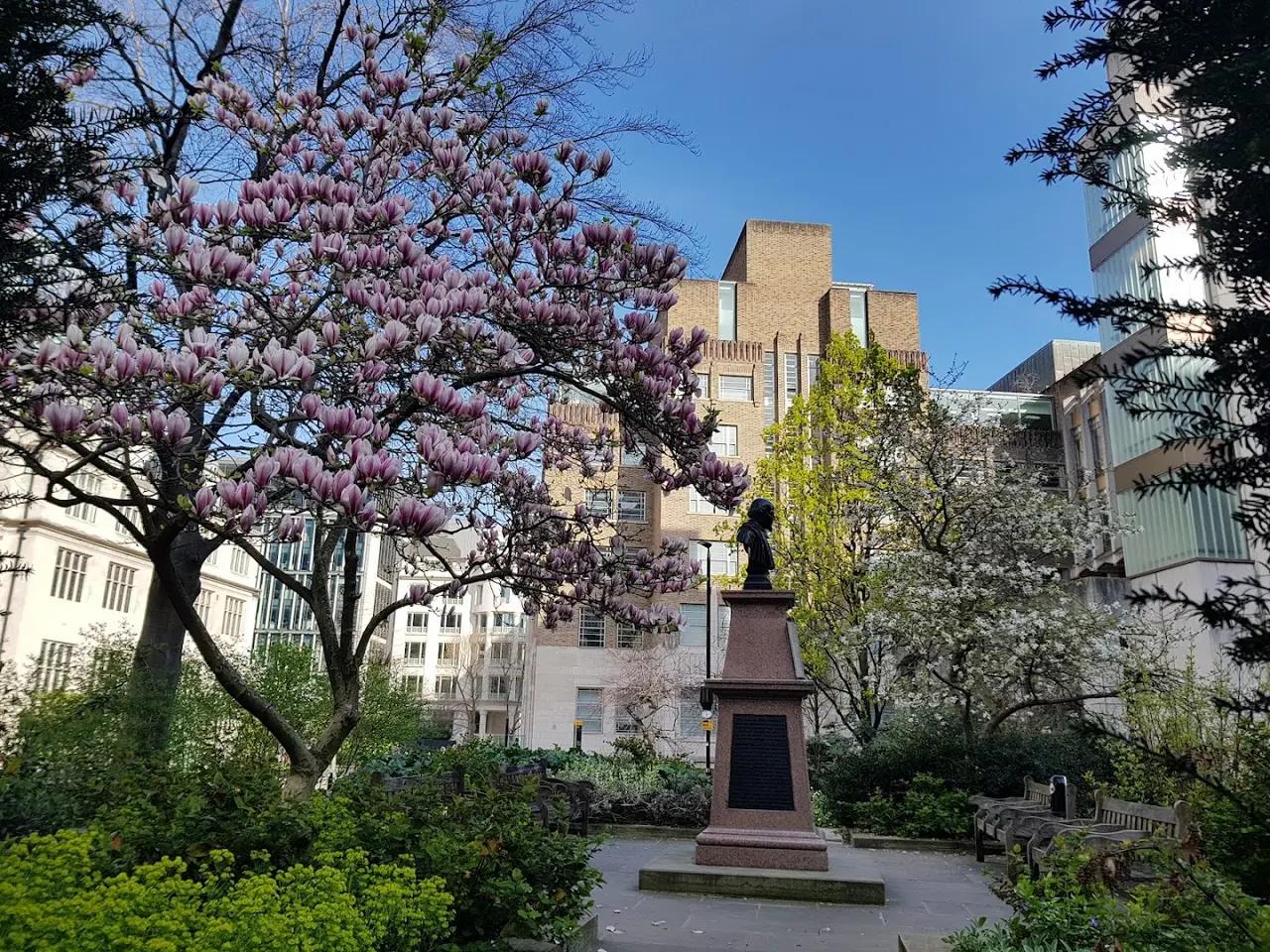
St Mary Aldermanbury Garden
The City of London · Culture
Have you heard about the time a City of London church was sold to the United States of America? St Mary Aldermanbury was a medieval church, that burnt down in the Great Fire before being subsequently rebuilt by Sir Christopher Wren. The church was then gutted in the Blitz and the ruins shipped over the Atlantic and rebuilt to commemorate a very specific event. #london #londonhistory #usahistory #londontravel #ww2history
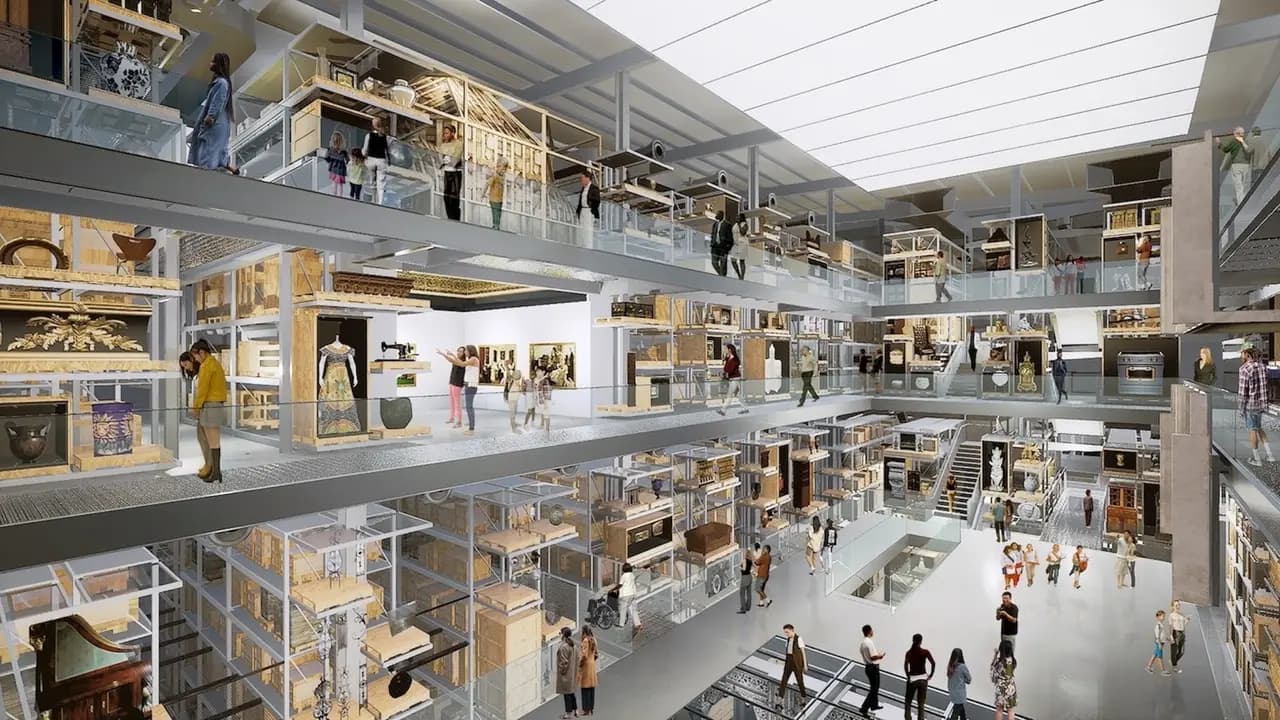
V&A East Storehouse
Culture
Nine Highlights From The V and A Storehouse I finally got round to visiting one of London’s newest galleries: the V and A Storehouse. The Storehouse was set up after the V and A’s previous storage facility, Blythe House in Kensington, was sold by the Government in 2024. Instead of seeing this merely as a logistical challenge, they also spied an opportunity. The V and A Storehoue opened in May 2025 in Stratford’s Here East and is really quite unique, a space that is both a working storage facility but also a free, public immersive museum. v and a storehouse v and a storehouse As a living archive the displays are in flux, so each time you go you may have a different experience. I loved the random and eclectic nature of it, with items from across cultures and centuries displayed together. You can look up basic information about each item on your phone by typing in numbers or scanning QR codes. It took me a moment to get used to there not being many plaques or curated themes, but actually I found it is quite relaxing not trying to absorb lots of information and, in some ways, makes you simply focus more on the craftsmanship and beauty of the items, ranging from the ordinary to the extraordinary. Below are just a few of my highlights. Let me know in the comments if you have been and if there are any you particularly remember. canal hackney wick It was also a pleasant walk over the canal from Hackney Wick Station The Torrijos Ceiling torrijos ceiling The stunning Torrijos Ceiling dates from around 1490-1500 and was once part of a palace in Torrijos, just outside Toledo in Spain. It is an example of Spanish Mudejar carpentry, which was a style blending Islamic, Romanesque, Gothic, and Renaissance influences. The ceiling uses strapwork carpentry, which creates patterns from interlacing strips of wood. The room below was probably an entertainment space, as there is an Arabic phrase carved into the wood meaning �you drink from happiness�. It was purchased by the V and A in 1905 as the palace was being dismantled and demolished. torrijos ceiling This is the view of the ceiling from the exterior. The layout of the Storehouse means that parts of items are exposed that you might not necessarily traditionally have seen. A Fragment Of A Defining Post-War Estate robin hood gardens Robin Hood Gardens in Poplar was a defining Brutalist social housing estate, built in 1972 and designed by Alison and Peter Smithson. It was based around a �Streets in the Sky�, idea, with communal elevated walkways, meant to foster community. It was controversially demolished from 2017-2025, despite fierce campaigns from groups such as the Twentieth Century Society to get it listed and protected, due to its architectural significance. The site is now under development to replace the 252 flats with over 1,500 new homes. The V and A acquired a three-storey section of the estate to preserve, including exterior and interior. robin hood gardens Treasures of the David Bowie Collection The David Bowie Centre houses an archive of over 90,000 items, with a curated and rotating selection on display for the public to see, including costumes, handwritten lyrics, instruments and more. The collection was acquired by the V&A following their 2013 �David Bowie Is� exhibition. This is the suit designed by Freddie Buretti for Bowie’s Life on Mars music video. david bowie collection They have various notes from unrealised projects, such as this handwritten sketch and storyboard notes for his unrealised 1974 film project called Diamond Dogs, which was initially intended as a musical stage adaption of George Orwell� s Nineteen Eighty Four. Bowie was however denied the rights by Sonia Orwell, the author’s widow. david bowie collection Below you can see his handwritten lyrics for Heroes. david bowie collection Finally, these are the metal wings designed by Diana Moseley for his Glass Spider tour in 1987. david bowie collection A King’s rocking Horse? charles i rocking horse This is a rocking horse, likely dating from the early 17th century. The story goes that this was possibly the rocking horse used by Charles I when he was a child. Charles apparently had difficulty walking and talking as a child and the rocking horse was perhaps given to him to help strengthen his legs. It was purchased in 1906 at Cheshunt House in Hertfordshire. Cheshunt House was close to Theobalds Palace, a favourite residence of James I, demolished in the 18th century. An Office Designed By Frank Lloyd Wright frank lloyd wright office frank lloyd wright office This is a whole office, designed by Frank Lloyd Wright (1867-1959), considered the most influential American architect of the 20th century. It is the only complete interior of Lloyd Wright’s on display outside of the USA. Designed in the mid-1930s for department store owner Edgar J Kauffman, it is made from Cypress Plywood and plays with ideas around geometry, typical of Lloyd Wright’s work. Above the desk is an unusual decorative relief mural, a demonstration of his interest in diamonds and triangular forms. Edgar Kauffman’s son, Edgar Kauffman Junior, who has spent six months as Lloyd Wright’s apprentice, donated the office to the V and A after his father’s death in 1974. An Arts And Crafts Doorbell doorbell arts and crafts This very random doorbell caught my eye. It was part of a small collection of decorative elements from the fronts of houses. It is from the home of Charles Robert Ashbee (1863-1942) who was a central figure of the Arts and Crafts movement. In the 1890s he designed a house on Cheyne Walk in Chelsea, as his home and architectural office. It was known locally as the �Magpie and Stump� because of a pub once on the site with that name. Many of the furnishings were designed and made by the Guild of Handicraft, Ashbee’s Arts and Crafts organisation founded in 1888. In 1969 the house was demolished, but the V&A was invited to rescue some of the decorative and smaller elements. A 1940s Television 1940s television This is an Dynatron TV23A Falcon television, from 1949. This was a television targeting the luxury market with it encased in a wooden cabinet to enhance the home�. As you can see the screen is only about the size of a moden day iPad. Case 15 v and a storehouse visit This little display is a good example of the wide-ranging selection of items on display next to each other. In here you have a relief panel from 10th cetntury India (top left). Below that is a �shaffron� from 1540s Germany, the decorative armour plate for a horse’s head. Next to that is a 16th century mask from Japan. Below them is a late 19th century glazed earthenware cistern by Minton, depicting flower bearers at either end. In the top right you have a 15th century depiction of the Virgin Mary and Child from Florence. Below that is a decorative dish from 2004 by Deborah Cocks in Australia. Finally, below that is a 19th century vase from S�vres porcelain factory in France. One Of The Greatest 20th Century Dancers Vaslav Nijinsky plaster cast This striking plaster cast depicts the dancer Vaslav Nijinsky as the faun in the ballet L�apr’s-midi d�un faune (The Afternoon of a Faun). Modelled in 1912, it was created by Lady Una Vincenzo Troubridge. Nijiksky (1889-1950) was born in Kiev to Polish parents and is considered one of the greatest male dancers of the early 20th century. I hope the above has persuaded you to pay the V and A Storehouse a visit, if you have not already. You can also have a browse of many of the items on their website by having a play around here. Opening hours are 10am-6pm everyday and then late opening until 10pm on Thursdays and Saturdays.
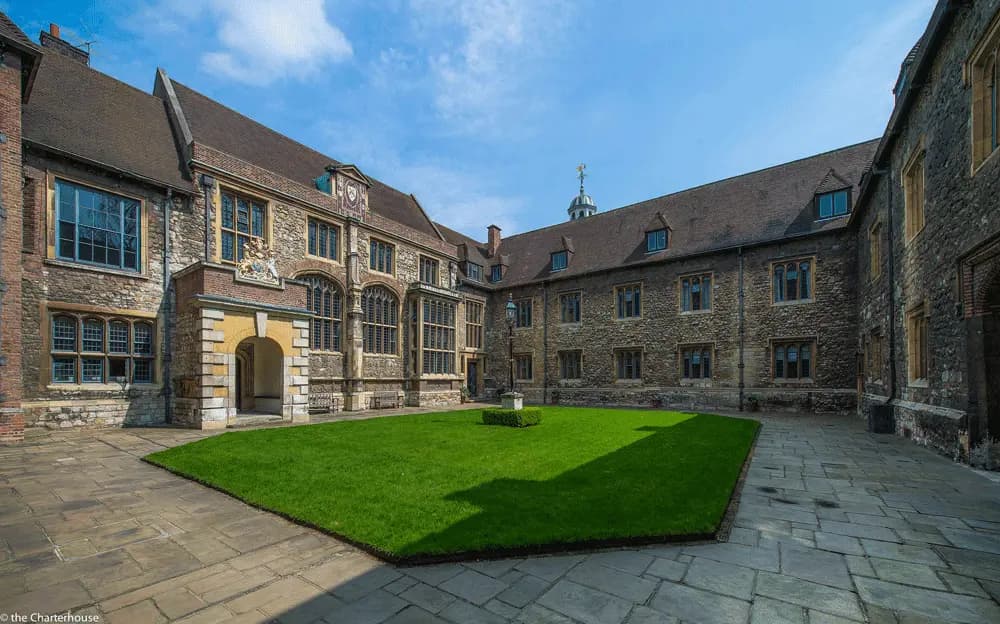
The Charterhouse
The City of London · Culture
This historic spot in London is a true tapestry of the centuries and goes overlooked by many. The Charterhouse dates back to the 14th century when it was established as a monastery, built beside a plague burial ground. It was then dissolved, turned into a Tudor mansion before being turned into an almshouse and a school. Make sure to pay @charterhouselondon a visit! #london #medievalhistory #londontravel #londontrip #londonmuseum
- B
Banqueting House
Covent Garden · Culture
Power, Pageantry and A King’s Final Moments: Inside Banqueting House Walk along Whitehall and you will undoubtedly see an eager cluster of tourists around Horse Guards, admiring the King’s Life Guard poised on their horses. Yet, opposite, is a building that many pass by without a second glance and one that holds a far more dramatic place in history: Banqueting House. This striking structure is the only surviving major fragment of the vast, long-lost Palace of Whitehall. Step inside, and you’ll find not only architectural and artistic brilliance, but a space that was once at the very centre of 17th-century royal power. Banqueting House has witnessed the splendour of Stuart court masques to a split second moment outside its walls on 30th January 1649, that shook the nation: the execution of a king. Now, after an extensive restoration project that started in May 2024, Banqueting House will be reopening fully in August 2026. There are also a few open days in the meantime, a great chance to have a look inside this unique survivor. A Great Lost Royal Palace The Palace of Whitehall was the primary royal residence and centre of power in London from 1530 until 1698. With origins going back to the 13th century, the site was originally called York Place and was the London residence of the Archbishops of York. From 1514, it was the residence of Archbishop Thomas Wolsey, Henry VIII’s Lord Chancellor, until his downfall in 1529. Following Wolsey’s fall from favour, Henry appropriated the palace for himself. The Palace of Westminster had largely burnt down in a fire in 1512 and Henry wanted a new palace to rival the grandeur of those lived in by his European counterparts. In one way he succeeded, because it became the largest palace in Europe, a 23 acre site with over 1500 rooms. �Grand�, however, is perhaps not the right word because it was essentially a sprawling royal suburb, a collection of buildings, rather than an architecturally coherent palace. It was also used for lavish entertainments, ceremonies and favourite pastimes such as hunting, jousting and tennis. The Palace of Whitehall by Hendrick Danckerts, with Banqueting House on the left. Image from wikimedia commons Plan of Whitehall Palace in 1680, image from wikimedia commons Banqueting House A new Banqueting House was commissioned by King James I in 1619, after the previous one had burnt down. Architect of the hour Inigo Jones was brought in to design it. Inigo Jones had travelled around Europe, particularly Italy and was the first architect to bring back to England the ideals in architecture from the classical world. He was especially influenced by the work of Andrea Palladio and what became known as Palladian architecture. Inigo Jones (1573-1652) by William Hogarth Jones was already working on The Queen’s House in Greenwich, but this would not be completed until 1635. The Banqueting House was therefore the first completed neo-classical building in Britain. Today London is covered with neo-classical architecture, but you have to imagine this as looking so different to everything around it, with its perfect proportion, symmetry and neo-classical details such as columns and pilasters. It certainly would have stood out from the Tudor, red-brick Gothic of the rest of the palace. The Portland stone facade that you see today was added by Sir John Soane in 1829. It would have originally been more colourful with alternating honey-coloured and pinkish-brown stone. On the interior, the hall is a perfect double cube (110x55x55 feet). It is also adorned with Ionic half-columns and Corinthian pilasters, inspired by the design of Roman basilicas. Masques Banqueting House was used for a variety of purposes. Despite the name, it was generally used for masques, rather than what we would think of as �banqueting� today. Masques were an extravagant event combining music, dancing, singing and theatre, sometimes with elaborate sets and special effects. Courtiers and royals would often disguise themselves and perform in the show, with characters including gods and goddesses. The purpose was to demonstrate the glory and God-given right to rule of the Stuart monarchs. Before Inigo Jones became a renowned architect, he was actually a pioneering stage and costume designer for masques. He worked with playwright Ben Jonson on over 500 performances and is credited with introducing moveable scenery and the proscenium arch to English theatre. Below is a costume and stage design by Jones for two different masques. Ceremonies And Services Banqueting House was also where the �Royal Maundy� often took place. This involved the giving out money, clothes and food to the poor on the Thursday before Easter. This was to emulate Jesus taking the role of a servant and washing the feet of his disciples at the Last Supper. The monarch was also expected to wash the feet of the paupers who approached them, however said feet had already been scrubbed three times by various officials in preparation for the ceremony. The Banqueting House was last used for the giving out of alms in 1890, with Queen Victoria. From James I until Queen Anne, Banqueting House was often for the �Touching for the King’s Evil� ceremony. The �King’s Evil� was likely scrofula or leprosy, which caused growths on the face and neck. Since the medieval period, monarchs had claimed to be able to heal this ailment with their touch and so the afflicted would approach the monarch to be touched on the infected points. Lexicographer Dr Samuel Johnson, for example, who had scrofula as a child, was touched by Queen Anne there in 1712. Charles II touching a patient for the King’s Evil in Banqueting House The Undercroft Underneath the main hall is the undercroft. This was originally a more intimate �den� for James I to host drinking and parties. At one end there was a �grotto�, a space decorated with shells. These artificial caves were popular in Ancient Rome and Greece and saw a revival in the Renaissance era in Italy. This fashion was then brought back to Britain and they became very fashionable amongst the upper classes. I have written about Grotto Passage in Marylebone before here. The rubens Ceiling The most spectacular part of Banqueting House is the carved and gilded ceiling. Since 1636 it has been home to nine paintings by the preeminent Flemish Baroque painter Peter Paul Rubens. They had been commissioned in 1629 by Charles I to pay homage to the reign of his father James I. The total area he was working with was 2420 square feet (225 square metres). The smaller sections were painted in his studio in Antwerp, but the three larger canvases were too large and had to be painted in the Antwerp Exchange, or nearby Carmelite monastery. Rubens had a team of assistants, who generally painted the less complicated sections of the painting, such as the armour. When the canvasses arrived in England, in the charge of Rubens assistants, they realised, to their horror, that they were not the correct size for the spaces. This was because feet and inches were different lengths in England and Belgium. They therefore had to be trimmed slightly to fit in. They were also removed and taken to safe keeping during World War Two. This was a hastily carried out job and you can still today see the lines from where the wood-backed canvasses were sawn into smaller segments, to make them easier to transport. Look closely and you can see the lines where the boards were sawn What Do They Depict? The three largest canvases include portraits of James I. One of those either side of the central oval depicts a younger King James as a wise and peaceful ruler. The other shows James uniting the crowns of England and Scotland. The central canvas is the final apotheosis of King James I and depicts him being carried to heaven. This particularly was aiming to symbolise his and his descendants� divine right to rule. The four corner ovals and side panels represent the triumph of virtues over vice. Wisdom, temperance and liberality are all depicted, as well as allegorical figures such as Hercules and Minerva. The Final Walk Of Charles I Considering what the paintings aim to portray about the sacred and untouchable power of monarchs, it is ironic and symbolic that this ceiling was one of the last sights King Charles I would have had before his execution. They represented everything he believed in and everything that ultimately led to his downfall. Bust of Charles I over the entranceway to Banqueting House After losing the Civil War, Charles I was condemned to death for High Treason. On the 30th January 1649 Charles walked from St James’s Palace, where he had spent his final night, through St James’s Park to Whitehall. It was a bitterly cold day and Charles requested two shirts to help stop any shivering, which he worried could be misconstrued as cowardice. He then spent time in prayer in the bedchamber in Whitehall Palace before being summoned to the scaffold. Charles walked through Banqueting House, beneath the Rubens paintings he had commissioned twenty years earlier showing his father being raised to heaven after a great and glorious reign. He then exited through one of the windows onto a specially-built, raised scaffold. He then delivered a speech to the crowd declaring his innocence. Charles then lowered his neck onto the block. After Charles signalled, his head was swiftly severed from his shoulders in one single swing of the axe. A collective groan is said to have rippled through the crowd and his head was held up for the crowd to see. The execution of Charles I outside Banqueting House The End of Whitehall Palace Most of Whitehall Palace was destroyed in a fire in 1698, started after a servant left drying linen on a charcoal brazier in one of the bedchambers. Most of the complex was destroyed. King William III saved Banqueting House by ordering that the southern window be bricked up to prevent the flames from reaching the interior. St James’s Palace became the official residence of the monarch, until Queen Victoria moved to Buckingham Palace. The area that Whitehall Palace had occupied was gradually turned into a Government and residential area. I have written about the Old War Office, just up the road, in another blog post. Visiting Banqueting House As you have seen, Banqueting House is, in many ways, at the heart of the story of 17th century Britain. It is also architecturally pioneering and is home to Rubens� stunning Baroque paintings. Hopefully the above rundown of its remarkable story has persuaded you to pay them a visit. The recent renovations have included the replacement of a 1960s floor with a new English oak floor, new heating systems, lighting and a discreet lift, to offer step-free access. The Banqueting House will reopen fully for visits over the summer from 03 Aug 20 September 2026. There are also public open days that can be booked on 03 April, 01 May, 29 May, 26 June 2026. Find out more on their website here.
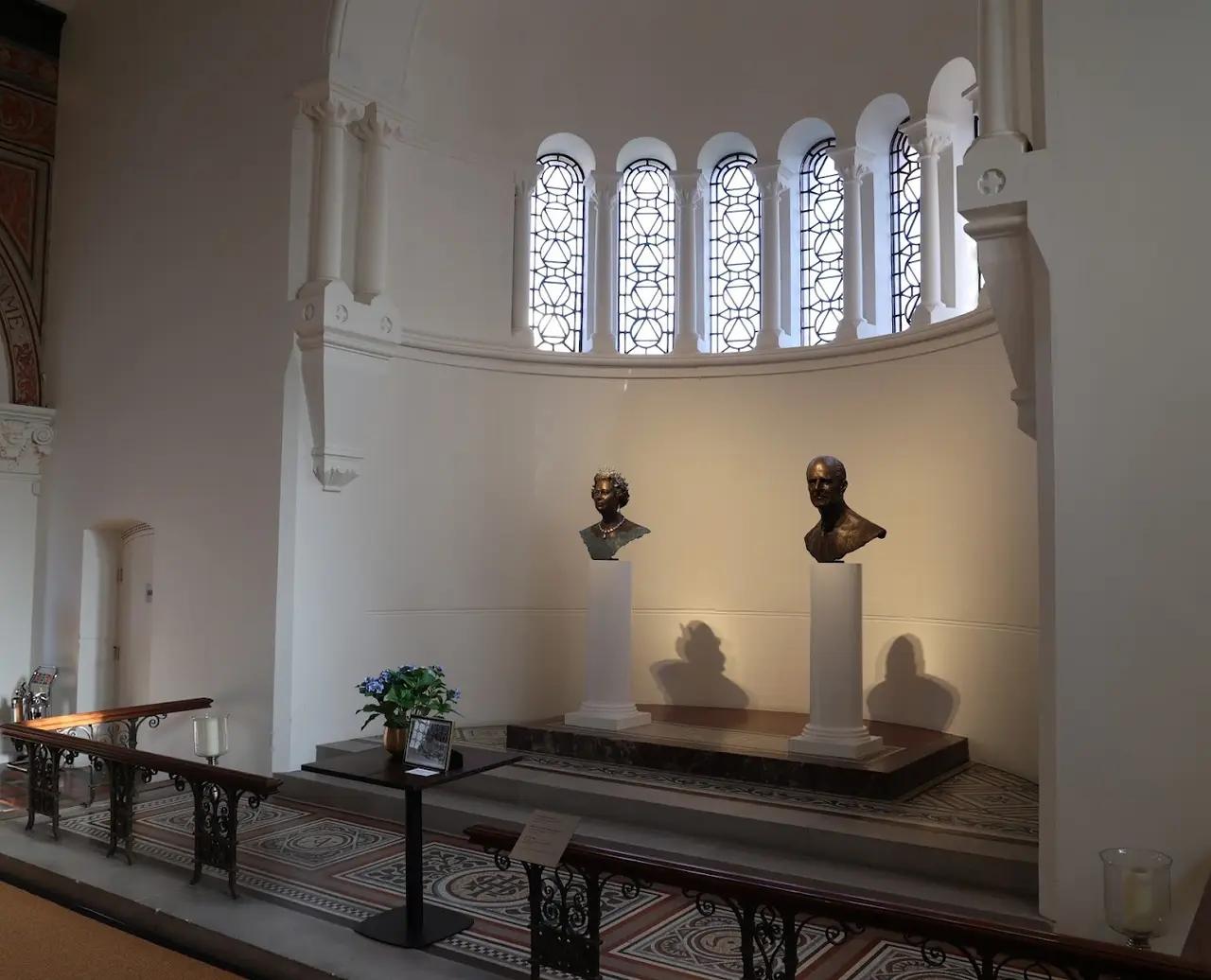
Garrison Chapel, Chapel Barracks
Sloane Square · Culture
Did you know about this small art gallery in an old Victorian army chapel? 👀 The Garrison Chapel only opened a few years ago in 2022, is free to visit and is the exhibition space for the @kingsfoundation, that focuses on supporting traditional arts. It was a very lovely quiet, calm escape for me on a very wet day back in February I have to say 😅☔️ There is a link in my bio for my full blog post. #london #londonhistory #londonartgallery #londonart #londonartscene
- A
Arena Square
Activities
AD Did you know that Table Tennis has its origins right here in London! ?? It started as a Victorian parlour game, a way for the upper classes to amuse themselves and now is a world-wide sport. The first ever World Table Tennis Championships were held in London in 1926 and they are returning this May for the centenary year. There is a link in my bio for the full (7 minute) YouTube video and to book tickets for this year’s Championships. @ittfworld @tabletenniseng #london #tabletennis #londonhistory #londonsport
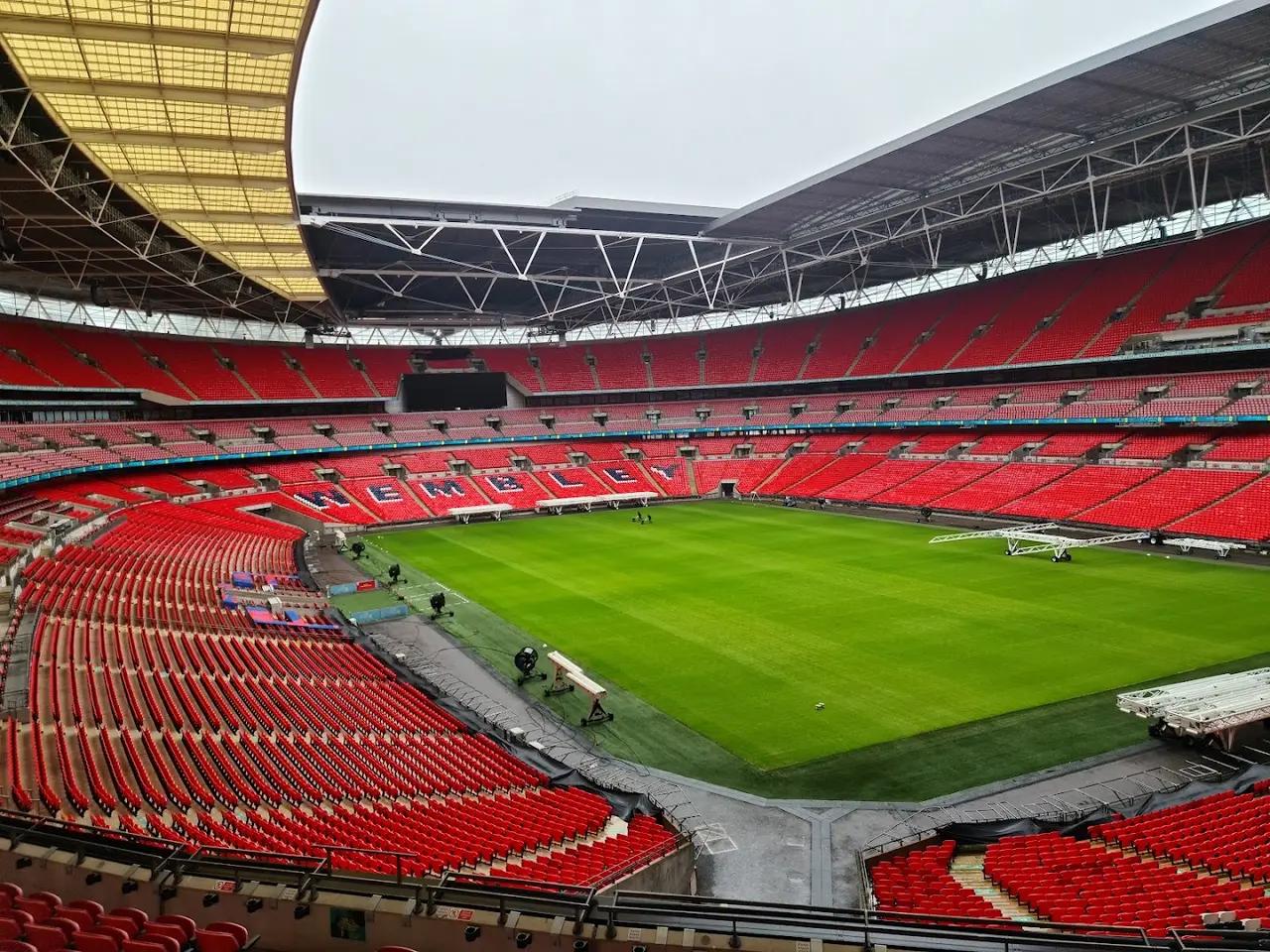
Wembley Stadium
Activities
AD Did you know that Table Tennis has its origins right here in London! ?? It started as a Victorian parlour game, a way for the upper classes to amuse themselves and now is a world-wide sport. The first ever World Table Tennis Championships were held in London in 1926 and they are returning this May for the centenary year. There is a link in my bio for the full (7 minute) YouTube video and to book tickets for this year’s Championships. @ittfworld @tabletenniseng #london #tabletennis #londonhistory #londonsport
- Q
Queenhithe
The City of London · Outdoors
Have you seen this wonderful monument to London history on the North bank of the Thames? For one, it is located at Queenhithe, the oldest surviving Anglo-Saxon dock in the country. You will also find a 30 metre long mosaic covering London's nearly two thousand year history, incorporating pottery and shells found on the foreshore. It was made by @tessahunkin as part of the London School of Mosaics with around 300 volunteers. One to add to the London list! #london #londonhistory #londontravel #londontrip #londonart
- A
Ashdown Forest
Outdoors
I Stayed In A Tudor House In East Grinstead I was recently treated by the lovely team at The Landmark Trust, a conservation charity, to have a few days staying at one of their historic properties. The Landmark Trust was founded in 1965 by Sir John and Lady Smith. The charity takes on at-risk historic buildings, before restoring and preserving them. They are then let out as holiday lets, with the profits going back into the maintenance of these unique buildings. Many are smaller, potentially overlooked buildings that others might see as �too desperate, troublesome or unfashionable�. They also often organise free public open days, for example as part of the Open House festival in September. I have written here about another property previously that they own on Princelet Street in Spitalfields. I will tell you all about this incredible survivor as well as the wider history of East Grinstead and what else you can see in area. Sackville House sackville house history Sackville House was constructed in around 1525, during the reign of King Henry VIII and it can be found right on East Grinstead High Street. East Grinstead developed as a town in the early 13th century, as an important stop of point for those travelling from London to the South coast, particularly, prior to the Reformation, to the great Priory at Lewes. I have also written previously about a day trip to Lewes here. Sackville house is part of a stretch of 14th-16th century properties, said to be the longest continuous stretch of properties of this age in Britain. east grinstead high street sackville house history As you can see, the house is timber-framed, with traditional wattle-and-daub in-filling. It is also jettied, i.e. the upper floor overhangs the street. This was to maximise space on the upper floors, whilst keeping within the footprint of the property on the ground floor. It also protected the lower floors from the elements and damp. There were other structural factors but they were also symbols of wealth and status with jettying being a relatively expensive and high skilled technique. The house is a wonderful, creaky warren of little nooks, corridors, low doorways and beams. sackville house history sackville house history sackville house In this one alcove there is a surviving original brocade wall painting that has been discovered, probably once part of a wider scheme. brocade wall painting There is also a surviving pattern on one of the beams in the sitting room. decoration on sitting room beam The Garden And Layout What is truly remarkable about Sackville House however lies behind. The original Tudor layout of the property and grounds are very well preserved. It still, for example, has its carriage entrance leading to the yard at the back. sackville house entrance well A surviving well in the yard sackville house history From the yard you then enter into the beautiful garden. They seem to go on and on, stretching for a whopping 630ft. sackville house garden This speaks to the original way medieval towns were often laid out. The high street in East Grinstead, used originally as the market place, was laid out in the 13th century and was flanked by 48 plots or �burgages�. Each burgage had a house on it and a plot of town land or �portland� at the back for keeping animals and growing food for the occupants. Owning a burgage meant that you received special rights and privileges. For example, you could trade in the market place outside their houses before non-burgage holders, �forestalling� them. The right to vote for your MP also depended on owning a burgage and so acquiring them became a way of gaining and exerting power. In the 17th century, the Sackville family, from nearby Knole, started to acquire burgages. It is from this connection that the house got its name, although it does not appear to have been known as Sackville House until the late 19th century. The House Saved From Dereliction In the early 20th century the house was in a state of decay. It was acquired by Geoffrey Webb, a renowned stained glass artist, and his wife Joan. His uncle was the architect Aston Webb, who designed Admiralty Arch, the East front of Buckingham Palace and the main building of the Victoria and Albert Museum. Geoffrey would work in the studio at the top of the house. There are a couple of examples of his work in the little chapel area. sackville house studio Geoffrey’s stained glass studio sackville house chapel The chapel, with Geoffrey’s stained glass Geoffrey and Joan fully restored the property and it was their daughter Ursula who bequeathed the house to the Landmark Trust in 1995 at her death. You can see the listing for the property on the Landmark trust website here. What Else To See In East Grinstead Not only was Sackville House an inspiring and comfortable place to stay, it was also the perfect base for exploring the wider historic area. Practically opposite Sackville House is St Swithin’s church. It has roots going back to the 11th century, with the current building a rebuild from 1793 by James Wyatt. st swithin's church One detail to spot are these three graves by the front door. st swithin's protestant graves They are the graves of Anne Tree, Thomas Dunngate, and John Forman, Protestants burnt at the stake on July 18, 1556, during the the reign of Mary I, after refusing to denounce their faith. I enjoyed this stained glass window of St Cuthbert, wheeling his ailing mother in a wheelbarrow. st cuthbert stained glass There is also a memorial to Henry Standen, who was part of the �Guinea Pig Club�. This was a social club and support group founded in 1941 for severely burned Allied aircrew treated by pioneering surgeon Sir Archibald McIndoe at the Queen Victoria Hospital in East Grinstead. henry standen memorial You can also visit the East Grinstead museum, sadly shut for renovations whilst I was in town. Just off the High Street is the Grade I listed Sackville College. This was constructed in 1619, founded by Robert Sackville, 2nd Earl of Dorset, as an almshouse for the elderly. It still operates as a charity providing homes for residents today. sackville college Wider Sussex Not far away is the picturesque village of West Hoathly. Here you can find the Priest House Museum and Garden. priest house museum Housed in a 15th century building, it was once the estate office used to manage local land for Lewes Priory. After the Reformation it passed largely through royal hands from Henry VIII to Elizabeth I, before passing into private hands in 1560. It was opened as a museum in 1908 and features a collection of local curios and items related to Sussex history. priest house museum One item that caught my eye was this embroidered handkerchief. suffragette handerkerchief The names were embroidered by Suffragettes in Holloway prison in 1912. The handkerchief was amazingly rescued from a jumble sale in the village in the 1960s. Make sure to pop into the Grade I listed St Margaret’s Church, which has parts dating back to the 11th century. st margaret's church west hoathly Two National Trusts Only a ten minute drive away or so is Standen House, a lovely National Trust property. standen housr history Built in 1894, it was designed by architect Philip Webb for wealthy solicitor James Beale and his wife Margaret. It is of the Arts and Crafts style and features lots of Morris and Co interiors. standen house standen house Another nearby National Trust is Scotney Castle, roughly a 45 minute drive away. Scotney Castle is really two buildings, firstly, Old Scotney Castle, which partially dates back to the 14th century. old scotney castle old scotney castle It is a fairytale-like, moated castle, that was deliberately turned into a romantic ruin in the 19th century. A new mansion was constructed at the top of the hill in 1843, designed by Anthony Salvin in the Picturesque style. scotney castle Since 1778 the estate had been owned by the Hussey family and in 1970 Christopher Hussey left it to the National Trust. The gardens have been open since 1971 and the main house since 2007 after the death of Christopher’s widow Elizabeth. The �Hundred Acre Wood� Finally, you can walk around Ashdown Forest. This area of ancient woodland and heathland became a Royal hunting forest after the Norman conquest. It was used regularly for hunting for example by King Henry VIII. The author A.A. Milne lived at Cotchford Farm, on the edge of the forest and it was the inspiration for the Hundred Acre Wood in the Winnie-the-Pooh stories. i hope you enjoyed that soujourn into Sussex and surrounding areas. Thank you again to the Landmark Trust for the truly wonderful stay, I can highly recommend booking with them if you have an opportunity. You can see all of their properties here.
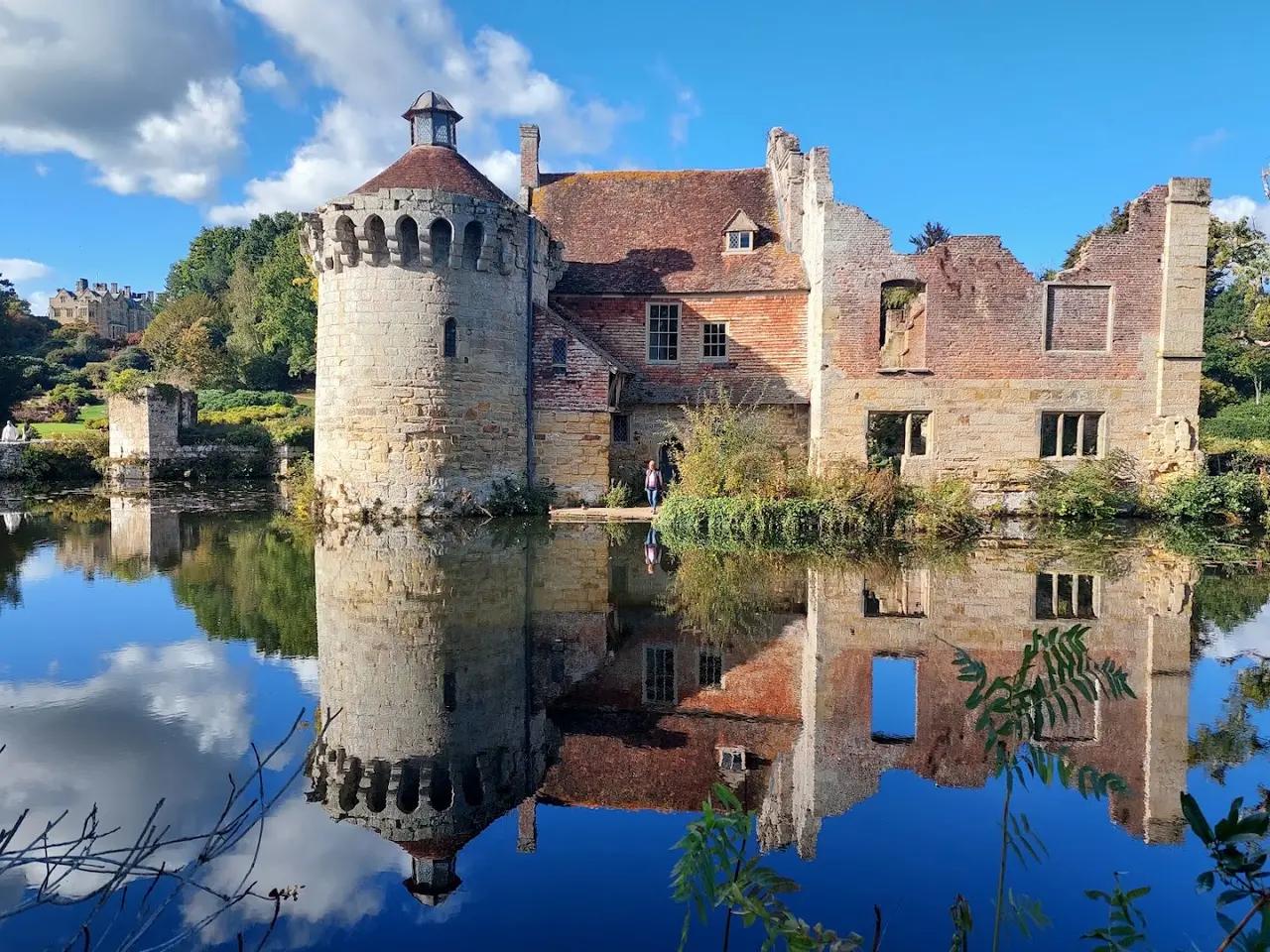
National Trust - Scotney Castle
Culture
I Stayed In A Tudor House In East Grinstead I was recently treated by the lovely team at The Landmark Trust, a conservation charity, to have a few days staying at one of their historic properties. The Landmark Trust was founded in 1965 by Sir John and Lady Smith. The charity takes on at-risk historic buildings, before restoring and preserving them. They are then let out as holiday lets, with the profits going back into the maintenance of these unique buildings. Many are smaller, potentially overlooked buildings that others might see as �too desperate, troublesome or unfashionable�. They also often organise free public open days, for example as part of the Open House festival in September. I have written here about another property previously that they own on Princelet Street in Spitalfields. I will tell you all about this incredible survivor as well as the wider history of East Grinstead and what else you can see in area. Sackville House sackville house history Sackville House was constructed in around 1525, during the reign of King Henry VIII and it can be found right on East Grinstead High Street. East Grinstead developed as a town in the early 13th century, as an important stop of point for those travelling from London to the South coast, particularly, prior to the Reformation, to the great Priory at Lewes. I have also written previously about a day trip to Lewes here. Sackville house is part of a stretch of 14th-16th century properties, said to be the longest continuous stretch of properties of this age in Britain. east grinstead high street sackville house history As you can see, the house is timber-framed, with traditional wattle-and-daub in-filling. It is also jettied, i.e. the upper floor overhangs the street. This was to maximise space on the upper floors, whilst keeping within the footprint of the property on the ground floor. It also protected the lower floors from the elements and damp. There were other structural factors but they were also symbols of wealth and status with jettying being a relatively expensive and high skilled technique. The house is a wonderful, creaky warren of little nooks, corridors, low doorways and beams. sackville house history sackville house history sackville house In this one alcove there is a surviving original brocade wall painting that has been discovered, probably once part of a wider scheme. brocade wall painting There is also a surviving pattern on one of the beams in the sitting room. decoration on sitting room beam The Garden And Layout What is truly remarkable about Sackville House however lies behind. The original Tudor layout of the property and grounds are very well preserved. It still, for example, has its carriage entrance leading to the yard at the back. sackville house entrance well A surviving well in the yard sackville house history From the yard you then enter into the beautiful garden. They seem to go on and on, stretching for a whopping 630ft. sackville house garden This speaks to the original way medieval towns were often laid out. The high street in East Grinstead, used originally as the market place, was laid out in the 13th century and was flanked by 48 plots or �burgages�. Each burgage had a house on it and a plot of town land or �portland� at the back for keeping animals and growing food for the occupants. Owning a burgage meant that you received special rights and privileges. For example, you could trade in the market place outside their houses before non-burgage holders, �forestalling� them. The right to vote for your MP also depended on owning a burgage and so acquiring them became a way of gaining and exerting power. In the 17th century, the Sackville family, from nearby Knole, started to acquire burgages. It is from this connection that the house got its name, although it does not appear to have been known as Sackville House until the late 19th century. The House Saved From Dereliction In the early 20th century the house was in a state of decay. It was acquired by Geoffrey Webb, a renowned stained glass artist, and his wife Joan. His uncle was the architect Aston Webb, who designed Admiralty Arch, the East front of Buckingham Palace and the main building of the Victoria and Albert Museum. Geoffrey would work in the studio at the top of the house. There are a couple of examples of his work in the little chapel area. sackville house studio Geoffrey’s stained glass studio sackville house chapel The chapel, with Geoffrey’s stained glass Geoffrey and Joan fully restored the property and it was their daughter Ursula who bequeathed the house to the Landmark Trust in 1995 at her death. You can see the listing for the property on the Landmark trust website here. What Else To See In East Grinstead Not only was Sackville House an inspiring and comfortable place to stay, it was also the perfect base for exploring the wider historic area. Practically opposite Sackville House is St Swithin’s church. It has roots going back to the 11th century, with the current building a rebuild from 1793 by James Wyatt. st swithin's church One detail to spot are these three graves by the front door. st swithin's protestant graves They are the graves of Anne Tree, Thomas Dunngate, and John Forman, Protestants burnt at the stake on July 18, 1556, during the the reign of Mary I, after refusing to denounce their faith. I enjoyed this stained glass window of St Cuthbert, wheeling his ailing mother in a wheelbarrow. st cuthbert stained glass There is also a memorial to Henry Standen, who was part of the �Guinea Pig Club�. This was a social club and support group founded in 1941 for severely burned Allied aircrew treated by pioneering surgeon Sir Archibald McIndoe at the Queen Victoria Hospital in East Grinstead. henry standen memorial You can also visit the East Grinstead museum, sadly shut for renovations whilst I was in town. Just off the High Street is the Grade I listed Sackville College. This was constructed in 1619, founded by Robert Sackville, 2nd Earl of Dorset, as an almshouse for the elderly. It still operates as a charity providing homes for residents today. sackville college Wider Sussex Not far away is the picturesque village of West Hoathly. Here you can find the Priest House Museum and Garden. priest house museum Housed in a 15th century building, it was once the estate office used to manage local land for Lewes Priory. After the Reformation it passed largely through royal hands from Henry VIII to Elizabeth I, before passing into private hands in 1560. It was opened as a museum in 1908 and features a collection of local curios and items related to Sussex history. priest house museum One item that caught my eye was this embroidered handkerchief. suffragette handerkerchief The names were embroidered by Suffragettes in Holloway prison in 1912. The handkerchief was amazingly rescued from a jumble sale in the village in the 1960s. Make sure to pop into the Grade I listed St Margaret’s Church, which has parts dating back to the 11th century. st margaret's church west hoathly Two National Trusts Only a ten minute drive away or so is Standen House, a lovely National Trust property. standen housr history Built in 1894, it was designed by architect Philip Webb for wealthy solicitor James Beale and his wife Margaret. It is of the Arts and Crafts style and features lots of Morris and Co interiors. standen house standen house Another nearby National Trust is Scotney Castle, roughly a 45 minute drive away. Scotney Castle is really two buildings, firstly, Old Scotney Castle, which partially dates back to the 14th century. old scotney castle old scotney castle It is a fairytale-like, moated castle, that was deliberately turned into a romantic ruin in the 19th century. A new mansion was constructed at the top of the hill in 1843, designed by Anthony Salvin in the Picturesque style. scotney castle Since 1778 the estate had been owned by the Hussey family and in 1970 Christopher Hussey left it to the National Trust. The gardens have been open since 1971 and the main house since 2007 after the death of Christopher’s widow Elizabeth. The �Hundred Acre Wood� Finally, you can walk around Ashdown Forest. This area of ancient woodland and heathland became a Royal hunting forest after the Norman conquest. It was used regularly for hunting for example by King Henry VIII. The author A.A. Milne lived at Cotchford Farm, on the edge of the forest and it was the inspiration for the Hundred Acre Wood in the Winnie-the-Pooh stories. i hope you enjoyed that soujourn into Sussex and surrounding areas. Thank you again to the Landmark Trust for the truly wonderful stay, I can highly recommend booking with them if you have an opportunity. You can see all of their properties here.
- N
National Trust - Standen House and Garden
Culture
I Stayed In A Tudor House In East Grinstead I was recently treated by the lovely team at The Landmark Trust, a conservation charity, to have a few days staying at one of their historic properties. The Landmark Trust was founded in 1965 by Sir John and Lady Smith. The charity takes on at-risk historic buildings, before restoring and preserving them. They are then let out as holiday lets, with the profits going back into the maintenance of these unique buildings. Many are smaller, potentially overlooked buildings that others might see as �too desperate, troublesome or unfashionable�. They also often organise free public open days, for example as part of the Open House festival in September. I have written here about another property previously that they own on Princelet Street in Spitalfields. I will tell you all about this incredible survivor as well as the wider history of East Grinstead and what else you can see in area. Sackville House sackville house history Sackville House was constructed in around 1525, during the reign of King Henry VIII and it can be found right on East Grinstead High Street. East Grinstead developed as a town in the early 13th century, as an important stop of point for those travelling from London to the South coast, particularly, prior to the Reformation, to the great Priory at Lewes. I have also written previously about a day trip to Lewes here. Sackville house is part of a stretch of 14th-16th century properties, said to be the longest continuous stretch of properties of this age in Britain. east grinstead high street sackville house history As you can see, the house is timber-framed, with traditional wattle-and-daub in-filling. It is also jettied, i.e. the upper floor overhangs the street. This was to maximise space on the upper floors, whilst keeping within the footprint of the property on the ground floor. It also protected the lower floors from the elements and damp. There were other structural factors but they were also symbols of wealth and status with jettying being a relatively expensive and high skilled technique. The house is a wonderful, creaky warren of little nooks, corridors, low doorways and beams. sackville house history sackville house history sackville house In this one alcove there is a surviving original brocade wall painting that has been discovered, probably once part of a wider scheme. brocade wall painting There is also a surviving pattern on one of the beams in the sitting room. decoration on sitting room beam The Garden And Layout What is truly remarkable about Sackville House however lies behind. The original Tudor layout of the property and grounds are very well preserved. It still, for example, has its carriage entrance leading to the yard at the back. sackville house entrance well A surviving well in the yard sackville house history From the yard you then enter into the beautiful garden. They seem to go on and on, stretching for a whopping 630ft. sackville house garden This speaks to the original way medieval towns were often laid out. The high street in East Grinstead, used originally as the market place, was laid out in the 13th century and was flanked by 48 plots or �burgages�. Each burgage had a house on it and a plot of town land or �portland� at the back for keeping animals and growing food for the occupants. Owning a burgage meant that you received special rights and privileges. For example, you could trade in the market place outside their houses before non-burgage holders, �forestalling� them. The right to vote for your MP also depended on owning a burgage and so acquiring them became a way of gaining and exerting power. In the 17th century, the Sackville family, from nearby Knole, started to acquire burgages. It is from this connection that the house got its name, although it does not appear to have been known as Sackville House until the late 19th century. The House Saved From Dereliction In the early 20th century the house was in a state of decay. It was acquired by Geoffrey Webb, a renowned stained glass artist, and his wife Joan. His uncle was the architect Aston Webb, who designed Admiralty Arch, the East front of Buckingham Palace and the main building of the Victoria and Albert Museum. Geoffrey would work in the studio at the top of the house. There are a couple of examples of his work in the little chapel area. sackville house studio Geoffrey’s stained glass studio sackville house chapel The chapel, with Geoffrey’s stained glass Geoffrey and Joan fully restored the property and it was their daughter Ursula who bequeathed the house to the Landmark Trust in 1995 at her death. You can see the listing for the property on the Landmark trust website here. What Else To See In East Grinstead Not only was Sackville House an inspiring and comfortable place to stay, it was also the perfect base for exploring the wider historic area. Practically opposite Sackville House is St Swithin’s church. It has roots going back to the 11th century, with the current building a rebuild from 1793 by James Wyatt. st swithin's church One detail to spot are these three graves by the front door. st swithin's protestant graves They are the graves of Anne Tree, Thomas Dunngate, and John Forman, Protestants burnt at the stake on July 18, 1556, during the the reign of Mary I, after refusing to denounce their faith. I enjoyed this stained glass window of St Cuthbert, wheeling his ailing mother in a wheelbarrow. st cuthbert stained glass There is also a memorial to Henry Standen, who was part of the �Guinea Pig Club�. This was a social club and support group founded in 1941 for severely burned Allied aircrew treated by pioneering surgeon Sir Archibald McIndoe at the Queen Victoria Hospital in East Grinstead. henry standen memorial You can also visit the East Grinstead museum, sadly shut for renovations whilst I was in town. Just off the High Street is the Grade I listed Sackville College. This was constructed in 1619, founded by Robert Sackville, 2nd Earl of Dorset, as an almshouse for the elderly. It still operates as a charity providing homes for residents today. sackville college Wider Sussex Not far away is the picturesque village of West Hoathly. Here you can find the Priest House Museum and Garden. priest house museum Housed in a 15th century building, it was once the estate office used to manage local land for Lewes Priory. After the Reformation it passed largely through royal hands from Henry VIII to Elizabeth I, before passing into private hands in 1560. It was opened as a museum in 1908 and features a collection of local curios and items related to Sussex history. priest house museum One item that caught my eye was this embroidered handkerchief. suffragette handerkerchief The names were embroidered by Suffragettes in Holloway prison in 1912. The handkerchief was amazingly rescued from a jumble sale in the village in the 1960s. Make sure to pop into the Grade I listed St Margaret’s Church, which has parts dating back to the 11th century. st margaret's church west hoathly Two National Trusts Only a ten minute drive away or so is Standen House, a lovely National Trust property. standen housr history Built in 1894, it was designed by architect Philip Webb for wealthy solicitor James Beale and his wife Margaret. It is of the Arts and Crafts style and features lots of Morris and Co interiors. standen house standen house Another nearby National Trust is Scotney Castle, roughly a 45 minute drive away. Scotney Castle is really two buildings, firstly, Old Scotney Castle, which partially dates back to the 14th century. old scotney castle old scotney castle It is a fairytale-like, moated castle, that was deliberately turned into a romantic ruin in the 19th century. A new mansion was constructed at the top of the hill in 1843, designed by Anthony Salvin in the Picturesque style. scotney castle Since 1778 the estate had been owned by the Hussey family and in 1970 Christopher Hussey left it to the National Trust. The gardens have been open since 1971 and the main house since 2007 after the death of Christopher’s widow Elizabeth. The �Hundred Acre Wood� Finally, you can walk around Ashdown Forest. This area of ancient woodland and heathland became a Royal hunting forest after the Norman conquest. It was used regularly for hunting for example by King Henry VIII. The author A.A. Milne lived at Cotchford Farm, on the edge of the forest and it was the inspiration for the Hundred Acre Wood in the Winnie-the-Pooh stories. i hope you enjoyed that soujourn into Sussex and surrounding areas. Thank you again to the Landmark Trust for the truly wonderful stay, I can highly recommend booking with them if you have an opportunity. You can see all of their properties here.
- S
St Margaret's Church
Culture
I Stayed In A Tudor House In East Grinstead I was recently treated by the lovely team at The Landmark Trust, a conservation charity, to have a few days staying at one of their historic properties. The Landmark Trust was founded in 1965 by Sir John and Lady Smith. The charity takes on at-risk historic buildings, before restoring and preserving them. They are then let out as holiday lets, with the profits going back into the maintenance of these unique buildings. Many are smaller, potentially overlooked buildings that others might see as �too desperate, troublesome or unfashionable�. They also often organise free public open days, for example as part of the Open House festival in September. I have written here about another property previously that they own on Princelet Street in Spitalfields. I will tell you all about this incredible survivor as well as the wider history of East Grinstead and what else you can see in area. Sackville House sackville house history Sackville House was constructed in around 1525, during the reign of King Henry VIII and it can be found right on East Grinstead High Street. East Grinstead developed as a town in the early 13th century, as an important stop of point for those travelling from London to the South coast, particularly, prior to the Reformation, to the great Priory at Lewes. I have also written previously about a day trip to Lewes here. Sackville house is part of a stretch of 14th-16th century properties, said to be the longest continuous stretch of properties of this age in Britain. east grinstead high street sackville house history As you can see, the house is timber-framed, with traditional wattle-and-daub in-filling. It is also jettied, i.e. the upper floor overhangs the street. This was to maximise space on the upper floors, whilst keeping within the footprint of the property on the ground floor. It also protected the lower floors from the elements and damp. There were other structural factors but they were also symbols of wealth and status with jettying being a relatively expensive and high skilled technique. The house is a wonderful, creaky warren of little nooks, corridors, low doorways and beams. sackville house history sackville house history sackville house In this one alcove there is a surviving original brocade wall painting that has been discovered, probably once part of a wider scheme. brocade wall painting There is also a surviving pattern on one of the beams in the sitting room. decoration on sitting room beam The Garden And Layout What is truly remarkable about Sackville House however lies behind. The original Tudor layout of the property and grounds are very well preserved. It still, for example, has its carriage entrance leading to the yard at the back. sackville house entrance well A surviving well in the yard sackville house history From the yard you then enter into the beautiful garden. They seem to go on and on, stretching for a whopping 630ft. sackville house garden This speaks to the original way medieval towns were often laid out. The high street in East Grinstead, used originally as the market place, was laid out in the 13th century and was flanked by 48 plots or �burgages�. Each burgage had a house on it and a plot of town land or �portland� at the back for keeping animals and growing food for the occupants. Owning a burgage meant that you received special rights and privileges. For example, you could trade in the market place outside their houses before non-burgage holders, �forestalling� them. The right to vote for your MP also depended on owning a burgage and so acquiring them became a way of gaining and exerting power. In the 17th century, the Sackville family, from nearby Knole, started to acquire burgages. It is from this connection that the house got its name, although it does not appear to have been known as Sackville House until the late 19th century. The House Saved From Dereliction In the early 20th century the house was in a state of decay. It was acquired by Geoffrey Webb, a renowned stained glass artist, and his wife Joan. His uncle was the architect Aston Webb, who designed Admiralty Arch, the East front of Buckingham Palace and the main building of the Victoria and Albert Museum. Geoffrey would work in the studio at the top of the house. There are a couple of examples of his work in the little chapel area. sackville house studio Geoffrey’s stained glass studio sackville house chapel The chapel, with Geoffrey’s stained glass Geoffrey and Joan fully restored the property and it was their daughter Ursula who bequeathed the house to the Landmark Trust in 1995 at her death. You can see the listing for the property on the Landmark trust website here. What Else To See In East Grinstead Not only was Sackville House an inspiring and comfortable place to stay, it was also the perfect base for exploring the wider historic area. Practically opposite Sackville House is St Swithin’s church. It has roots going back to the 11th century, with the current building a rebuild from 1793 by James Wyatt. st swithin's church One detail to spot are these three graves by the front door. st swithin's protestant graves They are the graves of Anne Tree, Thomas Dunngate, and John Forman, Protestants burnt at the stake on July 18, 1556, during the the reign of Mary I, after refusing to denounce their faith. I enjoyed this stained glass window of St Cuthbert, wheeling his ailing mother in a wheelbarrow. st cuthbert stained glass There is also a memorial to Henry Standen, who was part of the �Guinea Pig Club�. This was a social club and support group founded in 1941 for severely burned Allied aircrew treated by pioneering surgeon Sir Archibald McIndoe at the Queen Victoria Hospital in East Grinstead. henry standen memorial You can also visit the East Grinstead museum, sadly shut for renovations whilst I was in town. Just off the High Street is the Grade I listed Sackville College. This was constructed in 1619, founded by Robert Sackville, 2nd Earl of Dorset, as an almshouse for the elderly. It still operates as a charity providing homes for residents today. sackville college Wider Sussex Not far away is the picturesque village of West Hoathly. Here you can find the Priest House Museum and Garden. priest house museum Housed in a 15th century building, it was once the estate office used to manage local land for Lewes Priory. After the Reformation it passed largely through royal hands from Henry VIII to Elizabeth I, before passing into private hands in 1560. It was opened as a museum in 1908 and features a collection of local curios and items related to Sussex history. priest house museum One item that caught my eye was this embroidered handkerchief. suffragette handerkerchief The names were embroidered by Suffragettes in Holloway prison in 1912. The handkerchief was amazingly rescued from a jumble sale in the village in the 1960s. Make sure to pop into the Grade I listed St Margaret’s Church, which has parts dating back to the 11th century. st margaret's church west hoathly Two National Trusts Only a ten minute drive away or so is Standen House, a lovely National Trust property. standen housr history Built in 1894, it was designed by architect Philip Webb for wealthy solicitor James Beale and his wife Margaret. It is of the Arts and Crafts style and features lots of Morris and Co interiors. standen house standen house Another nearby National Trust is Scotney Castle, roughly a 45 minute drive away. Scotney Castle is really two buildings, firstly, Old Scotney Castle, which partially dates back to the 14th century. old scotney castle old scotney castle It is a fairytale-like, moated castle, that was deliberately turned into a romantic ruin in the 19th century. A new mansion was constructed at the top of the hill in 1843, designed by Anthony Salvin in the Picturesque style. scotney castle Since 1778 the estate had been owned by the Hussey family and in 1970 Christopher Hussey left it to the National Trust. The gardens have been open since 1971 and the main house since 2007 after the death of Christopher’s widow Elizabeth. The �Hundred Acre Wood� Finally, you can walk around Ashdown Forest. This area of ancient woodland and heathland became a Royal hunting forest after the Norman conquest. It was used regularly for hunting for example by King Henry VIII. The author A.A. Milne lived at Cotchford Farm, on the edge of the forest and it was the inspiration for the Hundred Acre Wood in the Winnie-the-Pooh stories. i hope you enjoyed that soujourn into Sussex and surrounding areas. Thank you again to the Landmark Trust for the truly wonderful stay, I can highly recommend booking with them if you have an opportunity. You can see all of their properties here.
- T
The Priest House
Culture
I Stayed In A Tudor House In East Grinstead I was recently treated by the lovely team at The Landmark Trust, a conservation charity, to have a few days staying at one of their historic properties. The Landmark Trust was founded in 1965 by Sir John and Lady Smith. The charity takes on at-risk historic buildings, before restoring and preserving them. They are then let out as holiday lets, with the profits going back into the maintenance of these unique buildings. Many are smaller, potentially overlooked buildings that others might see as �too desperate, troublesome or unfashionable�. They also often organise free public open days, for example as part of the Open House festival in September. I have written here about another property previously that they own on Princelet Street in Spitalfields. I will tell you all about this incredible survivor as well as the wider history of East Grinstead and what else you can see in area. Sackville House sackville house history Sackville House was constructed in around 1525, during the reign of King Henry VIII and it can be found right on East Grinstead High Street. East Grinstead developed as a town in the early 13th century, as an important stop of point for those travelling from London to the South coast, particularly, prior to the Reformation, to the great Priory at Lewes. I have also written previously about a day trip to Lewes here. Sackville house is part of a stretch of 14th-16th century properties, said to be the longest continuous stretch of properties of this age in Britain. east grinstead high street sackville house history As you can see, the house is timber-framed, with traditional wattle-and-daub in-filling. It is also jettied, i.e. the upper floor overhangs the street. This was to maximise space on the upper floors, whilst keeping within the footprint of the property on the ground floor. It also protected the lower floors from the elements and damp. There were other structural factors but they were also symbols of wealth and status with jettying being a relatively expensive and high skilled technique. The house is a wonderful, creaky warren of little nooks, corridors, low doorways and beams. sackville house history sackville house history sackville house In this one alcove there is a surviving original brocade wall painting that has been discovered, probably once part of a wider scheme. brocade wall painting There is also a surviving pattern on one of the beams in the sitting room. decoration on sitting room beam The Garden And Layout What is truly remarkable about Sackville House however lies behind. The original Tudor layout of the property and grounds are very well preserved. It still, for example, has its carriage entrance leading to the yard at the back. sackville house entrance well A surviving well in the yard sackville house history From the yard you then enter into the beautiful garden. They seem to go on and on, stretching for a whopping 630ft. sackville house garden This speaks to the original way medieval towns were often laid out. The high street in East Grinstead, used originally as the market place, was laid out in the 13th century and was flanked by 48 plots or �burgages�. Each burgage had a house on it and a plot of town land or �portland� at the back for keeping animals and growing food for the occupants. Owning a burgage meant that you received special rights and privileges. For example, you could trade in the market place outside their houses before non-burgage holders, �forestalling� them. The right to vote for your MP also depended on owning a burgage and so acquiring them became a way of gaining and exerting power. In the 17th century, the Sackville family, from nearby Knole, started to acquire burgages. It is from this connection that the house got its name, although it does not appear to have been known as Sackville House until the late 19th century. The House Saved From Dereliction In the early 20th century the house was in a state of decay. It was acquired by Geoffrey Webb, a renowned stained glass artist, and his wife Joan. His uncle was the architect Aston Webb, who designed Admiralty Arch, the East front of Buckingham Palace and the main building of the Victoria and Albert Museum. Geoffrey would work in the studio at the top of the house. There are a couple of examples of his work in the little chapel area. sackville house studio Geoffrey’s stained glass studio sackville house chapel The chapel, with Geoffrey’s stained glass Geoffrey and Joan fully restored the property and it was their daughter Ursula who bequeathed the house to the Landmark Trust in 1995 at her death. You can see the listing for the property on the Landmark trust website here. What Else To See In East Grinstead Not only was Sackville House an inspiring and comfortable place to stay, it was also the perfect base for exploring the wider historic area. Practically opposite Sackville House is St Swithin’s church. It has roots going back to the 11th century, with the current building a rebuild from 1793 by James Wyatt. st swithin's church One detail to spot are these three graves by the front door. st swithin's protestant graves They are the graves of Anne Tree, Thomas Dunngate, and John Forman, Protestants burnt at the stake on July 18, 1556, during the the reign of Mary I, after refusing to denounce their faith. I enjoyed this stained glass window of St Cuthbert, wheeling his ailing mother in a wheelbarrow. st cuthbert stained glass There is also a memorial to Henry Standen, who was part of the �Guinea Pig Club�. This was a social club and support group founded in 1941 for severely burned Allied aircrew treated by pioneering surgeon Sir Archibald McIndoe at the Queen Victoria Hospital in East Grinstead. henry standen memorial You can also visit the East Grinstead museum, sadly shut for renovations whilst I was in town. Just off the High Street is the Grade I listed Sackville College. This was constructed in 1619, founded by Robert Sackville, 2nd Earl of Dorset, as an almshouse for the elderly. It still operates as a charity providing homes for residents today. sackville college Wider Sussex Not far away is the picturesque village of West Hoathly. Here you can find the Priest House Museum and Garden. priest house museum Housed in a 15th century building, it was once the estate office used to manage local land for Lewes Priory. After the Reformation it passed largely through royal hands from Henry VIII to Elizabeth I, before passing into private hands in 1560. It was opened as a museum in 1908 and features a collection of local curios and items related to Sussex history. priest house museum One item that caught my eye was this embroidered handkerchief. suffragette handerkerchief The names were embroidered by Suffragettes in Holloway prison in 1912. The handkerchief was amazingly rescued from a jumble sale in the village in the 1960s. Make sure to pop into the Grade I listed St Margaret’s Church, which has parts dating back to the 11th century. st margaret's church west hoathly Two National Trusts Only a ten minute drive away or so is Standen House, a lovely National Trust property. standen housr history Built in 1894, it was designed by architect Philip Webb for wealthy solicitor James Beale and his wife Margaret. It is of the Arts and Crafts style and features lots of Morris and Co interiors. standen house standen house Another nearby National Trust is Scotney Castle, roughly a 45 minute drive away. Scotney Castle is really two buildings, firstly, Old Scotney Castle, which partially dates back to the 14th century. old scotney castle old scotney castle It is a fairytale-like, moated castle, that was deliberately turned into a romantic ruin in the 19th century. A new mansion was constructed at the top of the hill in 1843, designed by Anthony Salvin in the Picturesque style. scotney castle Since 1778 the estate had been owned by the Hussey family and in 1970 Christopher Hussey left it to the National Trust. The gardens have been open since 1971 and the main house since 2007 after the death of Christopher’s widow Elizabeth. The �Hundred Acre Wood� Finally, you can walk around Ashdown Forest. This area of ancient woodland and heathland became a Royal hunting forest after the Norman conquest. It was used regularly for hunting for example by King Henry VIII. The author A.A. Milne lived at Cotchford Farm, on the edge of the forest and it was the inspiration for the Hundred Acre Wood in the Winnie-the-Pooh stories. i hope you enjoyed that soujourn into Sussex and surrounding areas. Thank you again to the Landmark Trust for the truly wonderful stay, I can highly recommend booking with them if you have an opportunity. You can see all of their properties here.
- S
Sackville College
Culture
I Stayed In A Tudor House In East Grinstead I was recently treated by the lovely team at The Landmark Trust, a conservation charity, to have a few days staying at one of their historic properties. The Landmark Trust was founded in 1965 by Sir John and Lady Smith. The charity takes on at-risk historic buildings, before restoring and preserving them. They are then let out as holiday lets, with the profits going back into the maintenance of these unique buildings. Many are smaller, potentially overlooked buildings that others might see as �too desperate, troublesome or unfashionable�. They also often organise free public open days, for example as part of the Open House festival in September. I have written here about another property previously that they own on Princelet Street in Spitalfields. I will tell you all about this incredible survivor as well as the wider history of East Grinstead and what else you can see in area. Sackville House sackville house history Sackville House was constructed in around 1525, during the reign of King Henry VIII and it can be found right on East Grinstead High Street. East Grinstead developed as a town in the early 13th century, as an important stop of point for those travelling from London to the South coast, particularly, prior to the Reformation, to the great Priory at Lewes. I have also written previously about a day trip to Lewes here. Sackville house is part of a stretch of 14th-16th century properties, said to be the longest continuous stretch of properties of this age in Britain. east grinstead high street sackville house history As you can see, the house is timber-framed, with traditional wattle-and-daub in-filling. It is also jettied, i.e. the upper floor overhangs the street. This was to maximise space on the upper floors, whilst keeping within the footprint of the property on the ground floor. It also protected the lower floors from the elements and damp. There were other structural factors but they were also symbols of wealth and status with jettying being a relatively expensive and high skilled technique. The house is a wonderful, creaky warren of little nooks, corridors, low doorways and beams. sackville house history sackville house history sackville house In this one alcove there is a surviving original brocade wall painting that has been discovered, probably once part of a wider scheme. brocade wall painting There is also a surviving pattern on one of the beams in the sitting room. decoration on sitting room beam The Garden And Layout What is truly remarkable about Sackville House however lies behind. The original Tudor layout of the property and grounds are very well preserved. It still, for example, has its carriage entrance leading to the yard at the back. sackville house entrance well A surviving well in the yard sackville house history From the yard you then enter into the beautiful garden. They seem to go on and on, stretching for a whopping 630ft. sackville house garden This speaks to the original way medieval towns were often laid out. The high street in East Grinstead, used originally as the market place, was laid out in the 13th century and was flanked by 48 plots or �burgages�. Each burgage had a house on it and a plot of town land or �portland� at the back for keeping animals and growing food for the occupants. Owning a burgage meant that you received special rights and privileges. For example, you could trade in the market place outside their houses before non-burgage holders, �forestalling� them. The right to vote for your MP also depended on owning a burgage and so acquiring them became a way of gaining and exerting power. In the 17th century, the Sackville family, from nearby Knole, started to acquire burgages. It is from this connection that the house got its name, although it does not appear to have been known as Sackville House until the late 19th century. The House Saved From Dereliction In the early 20th century the house was in a state of decay. It was acquired by Geoffrey Webb, a renowned stained glass artist, and his wife Joan. His uncle was the architect Aston Webb, who designed Admiralty Arch, the East front of Buckingham Palace and the main building of the Victoria and Albert Museum. Geoffrey would work in the studio at the top of the house. There are a couple of examples of his work in the little chapel area. sackville house studio Geoffrey’s stained glass studio sackville house chapel The chapel, with Geoffrey’s stained glass Geoffrey and Joan fully restored the property and it was their daughter Ursula who bequeathed the house to the Landmark Trust in 1995 at her death. You can see the listing for the property on the Landmark trust website here. What Else To See In East Grinstead Not only was Sackville House an inspiring and comfortable place to stay, it was also the perfect base for exploring the wider historic area. Practically opposite Sackville House is St Swithin’s church. It has roots going back to the 11th century, with the current building a rebuild from 1793 by James Wyatt. st swithin's church One detail to spot are these three graves by the front door. st swithin's protestant graves They are the graves of Anne Tree, Thomas Dunngate, and John Forman, Protestants burnt at the stake on July 18, 1556, during the the reign of Mary I, after refusing to denounce their faith. I enjoyed this stained glass window of St Cuthbert, wheeling his ailing mother in a wheelbarrow. st cuthbert stained glass There is also a memorial to Henry Standen, who was part of the �Guinea Pig Club�. This was a social club and support group founded in 1941 for severely burned Allied aircrew treated by pioneering surgeon Sir Archibald McIndoe at the Queen Victoria Hospital in East Grinstead. henry standen memorial You can also visit the East Grinstead museum, sadly shut for renovations whilst I was in town. Just off the High Street is the Grade I listed Sackville College. This was constructed in 1619, founded by Robert Sackville, 2nd Earl of Dorset, as an almshouse for the elderly. It still operates as a charity providing homes for residents today. sackville college Wider Sussex Not far away is the picturesque village of West Hoathly. Here you can find the Priest House Museum and Garden. priest house museum Housed in a 15th century building, it was once the estate office used to manage local land for Lewes Priory. After the Reformation it passed largely through royal hands from Henry VIII to Elizabeth I, before passing into private hands in 1560. It was opened as a museum in 1908 and features a collection of local curios and items related to Sussex history. priest house museum One item that caught my eye was this embroidered handkerchief. suffragette handerkerchief The names were embroidered by Suffragettes in Holloway prison in 1912. The handkerchief was amazingly rescued from a jumble sale in the village in the 1960s. Make sure to pop into the Grade I listed St Margaret’s Church, which has parts dating back to the 11th century. st margaret's church west hoathly Two National Trusts Only a ten minute drive away or so is Standen House, a lovely National Trust property. standen housr history Built in 1894, it was designed by architect Philip Webb for wealthy solicitor James Beale and his wife Margaret. It is of the Arts and Crafts style and features lots of Morris and Co interiors. standen house standen house Another nearby National Trust is Scotney Castle, roughly a 45 minute drive away. Scotney Castle is really two buildings, firstly, Old Scotney Castle, which partially dates back to the 14th century. old scotney castle old scotney castle It is a fairytale-like, moated castle, that was deliberately turned into a romantic ruin in the 19th century. A new mansion was constructed at the top of the hill in 1843, designed by Anthony Salvin in the Picturesque style. scotney castle Since 1778 the estate had been owned by the Hussey family and in 1970 Christopher Hussey left it to the National Trust. The gardens have been open since 1971 and the main house since 2007 after the death of Christopher’s widow Elizabeth. The �Hundred Acre Wood� Finally, you can walk around Ashdown Forest. This area of ancient woodland and heathland became a Royal hunting forest after the Norman conquest. It was used regularly for hunting for example by King Henry VIII. The author A.A. Milne lived at Cotchford Farm, on the edge of the forest and it was the inspiration for the Hundred Acre Wood in the Winnie-the-Pooh stories. i hope you enjoyed that soujourn into Sussex and surrounding areas. Thank you again to the Landmark Trust for the truly wonderful stay, I can highly recommend booking with them if you have an opportunity. You can see all of their properties here.
- E
East Grinstead Museum
Culture
I Stayed In A Tudor House In East Grinstead I was recently treated by the lovely team at The Landmark Trust, a conservation charity, to have a few days staying at one of their historic properties. The Landmark Trust was founded in 1965 by Sir John and Lady Smith. The charity takes on at-risk historic buildings, before restoring and preserving them. They are then let out as holiday lets, with the profits going back into the maintenance of these unique buildings. Many are smaller, potentially overlooked buildings that others might see as �too desperate, troublesome or unfashionable�. They also often organise free public open days, for example as part of the Open House festival in September. I have written here about another property previously that they own on Princelet Street in Spitalfields. I will tell you all about this incredible survivor as well as the wider history of East Grinstead and what else you can see in area. Sackville House sackville house history Sackville House was constructed in around 1525, during the reign of King Henry VIII and it can be found right on East Grinstead High Street. East Grinstead developed as a town in the early 13th century, as an important stop of point for those travelling from London to the South coast, particularly, prior to the Reformation, to the great Priory at Lewes. I have also written previously about a day trip to Lewes here. Sackville house is part of a stretch of 14th-16th century properties, said to be the longest continuous stretch of properties of this age in Britain. east grinstead high street sackville house history As you can see, the house is timber-framed, with traditional wattle-and-daub in-filling. It is also jettied, i.e. the upper floor overhangs the street. This was to maximise space on the upper floors, whilst keeping within the footprint of the property on the ground floor. It also protected the lower floors from the elements and damp. There were other structural factors but they were also symbols of wealth and status with jettying being a relatively expensive and high skilled technique. The house is a wonderful, creaky warren of little nooks, corridors, low doorways and beams. sackville house history sackville house history sackville house In this one alcove there is a surviving original brocade wall painting that has been discovered, probably once part of a wider scheme. brocade wall painting There is also a surviving pattern on one of the beams in the sitting room. decoration on sitting room beam The Garden And Layout What is truly remarkable about Sackville House however lies behind. The original Tudor layout of the property and grounds are very well preserved. It still, for example, has its carriage entrance leading to the yard at the back. sackville house entrance well A surviving well in the yard sackville house history From the yard you then enter into the beautiful garden. They seem to go on and on, stretching for a whopping 630ft. sackville house garden This speaks to the original way medieval towns were often laid out. The high street in East Grinstead, used originally as the market place, was laid out in the 13th century and was flanked by 48 plots or �burgages�. Each burgage had a house on it and a plot of town land or �portland� at the back for keeping animals and growing food for the occupants. Owning a burgage meant that you received special rights and privileges. For example, you could trade in the market place outside their houses before non-burgage holders, �forestalling� them. The right to vote for your MP also depended on owning a burgage and so acquiring them became a way of gaining and exerting power. In the 17th century, the Sackville family, from nearby Knole, started to acquire burgages. It is from this connection that the house got its name, although it does not appear to have been known as Sackville House until the late 19th century. The House Saved From Dereliction In the early 20th century the house was in a state of decay. It was acquired by Geoffrey Webb, a renowned stained glass artist, and his wife Joan. His uncle was the architect Aston Webb, who designed Admiralty Arch, the East front of Buckingham Palace and the main building of the Victoria and Albert Museum. Geoffrey would work in the studio at the top of the house. There are a couple of examples of his work in the little chapel area. sackville house studio Geoffrey’s stained glass studio sackville house chapel The chapel, with Geoffrey’s stained glass Geoffrey and Joan fully restored the property and it was their daughter Ursula who bequeathed the house to the Landmark Trust in 1995 at her death. You can see the listing for the property on the Landmark trust website here. What Else To See In East Grinstead Not only was Sackville House an inspiring and comfortable place to stay, it was also the perfect base for exploring the wider historic area. Practically opposite Sackville House is St Swithin’s church. It has roots going back to the 11th century, with the current building a rebuild from 1793 by James Wyatt. st swithin's church One detail to spot are these three graves by the front door. st swithin's protestant graves They are the graves of Anne Tree, Thomas Dunngate, and John Forman, Protestants burnt at the stake on July 18, 1556, during the the reign of Mary I, after refusing to denounce their faith. I enjoyed this stained glass window of St Cuthbert, wheeling his ailing mother in a wheelbarrow. st cuthbert stained glass There is also a memorial to Henry Standen, who was part of the �Guinea Pig Club�. This was a social club and support group founded in 1941 for severely burned Allied aircrew treated by pioneering surgeon Sir Archibald McIndoe at the Queen Victoria Hospital in East Grinstead. henry standen memorial You can also visit the East Grinstead museum, sadly shut for renovations whilst I was in town. Just off the High Street is the Grade I listed Sackville College. This was constructed in 1619, founded by Robert Sackville, 2nd Earl of Dorset, as an almshouse for the elderly. It still operates as a charity providing homes for residents today. sackville college Wider Sussex Not far away is the picturesque village of West Hoathly. Here you can find the Priest House Museum and Garden. priest house museum Housed in a 15th century building, it was once the estate office used to manage local land for Lewes Priory. After the Reformation it passed largely through royal hands from Henry VIII to Elizabeth I, before passing into private hands in 1560. It was opened as a museum in 1908 and features a collection of local curios and items related to Sussex history. priest house museum One item that caught my eye was this embroidered handkerchief. suffragette handerkerchief The names were embroidered by Suffragettes in Holloway prison in 1912. The handkerchief was amazingly rescued from a jumble sale in the village in the 1960s. Make sure to pop into the Grade I listed St Margaret’s Church, which has parts dating back to the 11th century. st margaret's church west hoathly Two National Trusts Only a ten minute drive away or so is Standen House, a lovely National Trust property. standen housr history Built in 1894, it was designed by architect Philip Webb for wealthy solicitor James Beale and his wife Margaret. It is of the Arts and Crafts style and features lots of Morris and Co interiors. standen house standen house Another nearby National Trust is Scotney Castle, roughly a 45 minute drive away. Scotney Castle is really two buildings, firstly, Old Scotney Castle, which partially dates back to the 14th century. old scotney castle old scotney castle It is a fairytale-like, moated castle, that was deliberately turned into a romantic ruin in the 19th century. A new mansion was constructed at the top of the hill in 1843, designed by Anthony Salvin in the Picturesque style. scotney castle Since 1778 the estate had been owned by the Hussey family and in 1970 Christopher Hussey left it to the National Trust. The gardens have been open since 1971 and the main house since 2007 after the death of Christopher’s widow Elizabeth. The �Hundred Acre Wood� Finally, you can walk around Ashdown Forest. This area of ancient woodland and heathland became a Royal hunting forest after the Norman conquest. It was used regularly for hunting for example by King Henry VIII. The author A.A. Milne lived at Cotchford Farm, on the edge of the forest and it was the inspiration for the Hundred Acre Wood in the Winnie-the-Pooh stories. i hope you enjoyed that soujourn into Sussex and surrounding areas. Thank you again to the Landmark Trust for the truly wonderful stay, I can highly recommend booking with them if you have an opportunity. You can see all of their properties here.
- S
St Swithun's Church
Culture
I Stayed In A Tudor House In East Grinstead I was recently treated by the lovely team at The Landmark Trust, a conservation charity, to have a few days staying at one of their historic properties. The Landmark Trust was founded in 1965 by Sir John and Lady Smith. The charity takes on at-risk historic buildings, before restoring and preserving them. They are then let out as holiday lets, with the profits going back into the maintenance of these unique buildings. Many are smaller, potentially overlooked buildings that others might see as �too desperate, troublesome or unfashionable�. They also often organise free public open days, for example as part of the Open House festival in September. I have written here about another property previously that they own on Princelet Street in Spitalfields. I will tell you all about this incredible survivor as well as the wider history of East Grinstead and what else you can see in area. Sackville House sackville house history Sackville House was constructed in around 1525, during the reign of King Henry VIII and it can be found right on East Grinstead High Street. East Grinstead developed as a town in the early 13th century, as an important stop of point for those travelling from London to the South coast, particularly, prior to the Reformation, to the great Priory at Lewes. I have also written previously about a day trip to Lewes here. Sackville house is part of a stretch of 14th-16th century properties, said to be the longest continuous stretch of properties of this age in Britain. east grinstead high street sackville house history As you can see, the house is timber-framed, with traditional wattle-and-daub in-filling. It is also jettied, i.e. the upper floor overhangs the street. This was to maximise space on the upper floors, whilst keeping within the footprint of the property on the ground floor. It also protected the lower floors from the elements and damp. There were other structural factors but they were also symbols of wealth and status with jettying being a relatively expensive and high skilled technique. The house is a wonderful, creaky warren of little nooks, corridors, low doorways and beams. sackville house history sackville house history sackville house In this one alcove there is a surviving original brocade wall painting that has been discovered, probably once part of a wider scheme. brocade wall painting There is also a surviving pattern on one of the beams in the sitting room. decoration on sitting room beam The Garden And Layout What is truly remarkable about Sackville House however lies behind. The original Tudor layout of the property and grounds are very well preserved. It still, for example, has its carriage entrance leading to the yard at the back. sackville house entrance well A surviving well in the yard sackville house history From the yard you then enter into the beautiful garden. They seem to go on and on, stretching for a whopping 630ft. sackville house garden This speaks to the original way medieval towns were often laid out. The high street in East Grinstead, used originally as the market place, was laid out in the 13th century and was flanked by 48 plots or �burgages�. Each burgage had a house on it and a plot of town land or �portland� at the back for keeping animals and growing food for the occupants. Owning a burgage meant that you received special rights and privileges. For example, you could trade in the market place outside their houses before non-burgage holders, �forestalling� them. The right to vote for your MP also depended on owning a burgage and so acquiring them became a way of gaining and exerting power. In the 17th century, the Sackville family, from nearby Knole, started to acquire burgages. It is from this connection that the house got its name, although it does not appear to have been known as Sackville House until the late 19th century. The House Saved From Dereliction In the early 20th century the house was in a state of decay. It was acquired by Geoffrey Webb, a renowned stained glass artist, and his wife Joan. His uncle was the architect Aston Webb, who designed Admiralty Arch, the East front of Buckingham Palace and the main building of the Victoria and Albert Museum. Geoffrey would work in the studio at the top of the house. There are a couple of examples of his work in the little chapel area. sackville house studio Geoffrey’s stained glass studio sackville house chapel The chapel, with Geoffrey’s stained glass Geoffrey and Joan fully restored the property and it was their daughter Ursula who bequeathed the house to the Landmark Trust in 1995 at her death. You can see the listing for the property on the Landmark trust website here. What Else To See In East Grinstead Not only was Sackville House an inspiring and comfortable place to stay, it was also the perfect base for exploring the wider historic area. Practically opposite Sackville House is St Swithin’s church. It has roots going back to the 11th century, with the current building a rebuild from 1793 by James Wyatt. st swithin's church One detail to spot are these three graves by the front door. st swithin's protestant graves They are the graves of Anne Tree, Thomas Dunngate, and John Forman, Protestants burnt at the stake on July 18, 1556, during the the reign of Mary I, after refusing to denounce their faith. I enjoyed this stained glass window of St Cuthbert, wheeling his ailing mother in a wheelbarrow. st cuthbert stained glass There is also a memorial to Henry Standen, who was part of the �Guinea Pig Club�. This was a social club and support group founded in 1941 for severely burned Allied aircrew treated by pioneering surgeon Sir Archibald McIndoe at the Queen Victoria Hospital in East Grinstead. henry standen memorial You can also visit the East Grinstead museum, sadly shut for renovations whilst I was in town. Just off the High Street is the Grade I listed Sackville College. This was constructed in 1619, founded by Robert Sackville, 2nd Earl of Dorset, as an almshouse for the elderly. It still operates as a charity providing homes for residents today. sackville college Wider Sussex Not far away is the picturesque village of West Hoathly. Here you can find the Priest House Museum and Garden. priest house museum Housed in a 15th century building, it was once the estate office used to manage local land for Lewes Priory. After the Reformation it passed largely through royal hands from Henry VIII to Elizabeth I, before passing into private hands in 1560. It was opened as a museum in 1908 and features a collection of local curios and items related to Sussex history. priest house museum One item that caught my eye was this embroidered handkerchief. suffragette handerkerchief The names were embroidered by Suffragettes in Holloway prison in 1912. The handkerchief was amazingly rescued from a jumble sale in the village in the 1960s. Make sure to pop into the Grade I listed St Margaret’s Church, which has parts dating back to the 11th century. st margaret's church west hoathly Two National Trusts Only a ten minute drive away or so is Standen House, a lovely National Trust property. standen housr history Built in 1894, it was designed by architect Philip Webb for wealthy solicitor James Beale and his wife Margaret. It is of the Arts and Crafts style and features lots of Morris and Co interiors. standen house standen house Another nearby National Trust is Scotney Castle, roughly a 45 minute drive away. Scotney Castle is really two buildings, firstly, Old Scotney Castle, which partially dates back to the 14th century. old scotney castle old scotney castle It is a fairytale-like, moated castle, that was deliberately turned into a romantic ruin in the 19th century. A new mansion was constructed at the top of the hill in 1843, designed by Anthony Salvin in the Picturesque style. scotney castle Since 1778 the estate had been owned by the Hussey family and in 1970 Christopher Hussey left it to the National Trust. The gardens have been open since 1971 and the main house since 2007 after the death of Christopher’s widow Elizabeth. The �Hundred Acre Wood� Finally, you can walk around Ashdown Forest. This area of ancient woodland and heathland became a Royal hunting forest after the Norman conquest. It was used regularly for hunting for example by King Henry VIII. The author A.A. Milne lived at Cotchford Farm, on the edge of the forest and it was the inspiration for the Hundred Acre Wood in the Winnie-the-Pooh stories. i hope you enjoyed that soujourn into Sussex and surrounding areas. Thank you again to the Landmark Trust for the truly wonderful stay, I can highly recommend booking with them if you have an opportunity. You can see all of their properties here.
- E
East Grinstead
Stay
I Stayed In A Tudor House In East Grinstead I was recently treated by the lovely team at The Landmark Trust, a conservation charity, to have a few days staying at one of their historic properties. The Landmark Trust was founded in 1965 by Sir John and Lady Smith. The charity takes on at-risk historic buildings, before restoring and preserving them. They are then let out as holiday lets, with the profits going back into the maintenance of these unique buildings. Many are smaller, potentially overlooked buildings that others might see as �too desperate, troublesome or unfashionable�. They also often organise free public open days, for example as part of the Open House festival in September. I have written here about another property previously that they own on Princelet Street in Spitalfields. I will tell you all about this incredible survivor as well as the wider history of East Grinstead and what else you can see in area. Sackville House sackville house history Sackville House was constructed in around 1525, during the reign of King Henry VIII and it can be found right on East Grinstead High Street. East Grinstead developed as a town in the early 13th century, as an important stop of point for those travelling from London to the South coast, particularly, prior to the Reformation, to the great Priory at Lewes. I have also written previously about a day trip to Lewes here. Sackville house is part of a stretch of 14th-16th century properties, said to be the longest continuous stretch of properties of this age in Britain. east grinstead high street sackville house history As you can see, the house is timber-framed, with traditional wattle-and-daub in-filling. It is also jettied, i.e. the upper floor overhangs the street. This was to maximise space on the upper floors, whilst keeping within the footprint of the property on the ground floor. It also protected the lower floors from the elements and damp. There were other structural factors but they were also symbols of wealth and status with jettying being a relatively expensive and high skilled technique. The house is a wonderful, creaky warren of little nooks, corridors, low doorways and beams. sackville house history sackville house history sackville house In this one alcove there is a surviving original brocade wall painting that has been discovered, probably once part of a wider scheme. brocade wall painting There is also a surviving pattern on one of the beams in the sitting room. decoration on sitting room beam The Garden And Layout What is truly remarkable about Sackville House however lies behind. The original Tudor layout of the property and grounds are very well preserved. It still, for example, has its carriage entrance leading to the yard at the back. sackville house entrance well A surviving well in the yard sackville house history From the yard you then enter into the beautiful garden. They seem to go on and on, stretching for a whopping 630ft. sackville house garden This speaks to the original way medieval towns were often laid out. The high street in East Grinstead, used originally as the market place, was laid out in the 13th century and was flanked by 48 plots or �burgages�. Each burgage had a house on it and a plot of town land or �portland� at the back for keeping animals and growing food for the occupants. Owning a burgage meant that you received special rights and privileges. For example, you could trade in the market place outside their houses before non-burgage holders, �forestalling� them. The right to vote for your MP also depended on owning a burgage and so acquiring them became a way of gaining and exerting power. In the 17th century, the Sackville family, from nearby Knole, started to acquire burgages. It is from this connection that the house got its name, although it does not appear to have been known as Sackville House until the late 19th century. The House Saved From Dereliction In the early 20th century the house was in a state of decay. It was acquired by Geoffrey Webb, a renowned stained glass artist, and his wife Joan. His uncle was the architect Aston Webb, who designed Admiralty Arch, the East front of Buckingham Palace and the main building of the Victoria and Albert Museum. Geoffrey would work in the studio at the top of the house. There are a couple of examples of his work in the little chapel area. sackville house studio Geoffrey’s stained glass studio sackville house chapel The chapel, with Geoffrey’s stained glass Geoffrey and Joan fully restored the property and it was their daughter Ursula who bequeathed the house to the Landmark Trust in 1995 at her death. You can see the listing for the property on the Landmark trust website here. What Else To See In East Grinstead Not only was Sackville House an inspiring and comfortable place to stay, it was also the perfect base for exploring the wider historic area. Practically opposite Sackville House is St Swithin’s church. It has roots going back to the 11th century, with the current building a rebuild from 1793 by James Wyatt. st swithin's church One detail to spot are these three graves by the front door. st swithin's protestant graves They are the graves of Anne Tree, Thomas Dunngate, and John Forman, Protestants burnt at the stake on July 18, 1556, during the the reign of Mary I, after refusing to denounce their faith. I enjoyed this stained glass window of St Cuthbert, wheeling his ailing mother in a wheelbarrow. st cuthbert stained glass There is also a memorial to Henry Standen, who was part of the �Guinea Pig Club�. This was a social club and support group founded in 1941 for severely burned Allied aircrew treated by pioneering surgeon Sir Archibald McIndoe at the Queen Victoria Hospital in East Grinstead. henry standen memorial You can also visit the East Grinstead museum, sadly shut for renovations whilst I was in town. Just off the High Street is the Grade I listed Sackville College. This was constructed in 1619, founded by Robert Sackville, 2nd Earl of Dorset, as an almshouse for the elderly. It still operates as a charity providing homes for residents today. sackville college Wider Sussex Not far away is the picturesque village of West Hoathly. Here you can find the Priest House Museum and Garden. priest house museum Housed in a 15th century building, it was once the estate office used to manage local land for Lewes Priory. After the Reformation it passed largely through royal hands from Henry VIII to Elizabeth I, before passing into private hands in 1560. It was opened as a museum in 1908 and features a collection of local curios and items related to Sussex history. priest house museum One item that caught my eye was this embroidered handkerchief. suffragette handerkerchief The names were embroidered by Suffragettes in Holloway prison in 1912. The handkerchief was amazingly rescued from a jumble sale in the village in the 1960s. Make sure to pop into the Grade I listed St Margaret’s Church, which has parts dating back to the 11th century. st margaret's church west hoathly Two National Trusts Only a ten minute drive away or so is Standen House, a lovely National Trust property. standen housr history Built in 1894, it was designed by architect Philip Webb for wealthy solicitor James Beale and his wife Margaret. It is of the Arts and Crafts style and features lots of Morris and Co interiors. standen house standen house Another nearby National Trust is Scotney Castle, roughly a 45 minute drive away. Scotney Castle is really two buildings, firstly, Old Scotney Castle, which partially dates back to the 14th century. old scotney castle old scotney castle It is a fairytale-like, moated castle, that was deliberately turned into a romantic ruin in the 19th century. A new mansion was constructed at the top of the hill in 1843, designed by Anthony Salvin in the Picturesque style. scotney castle Since 1778 the estate had been owned by the Hussey family and in 1970 Christopher Hussey left it to the National Trust. The gardens have been open since 1971 and the main house since 2007 after the death of Christopher’s widow Elizabeth. The �Hundred Acre Wood� Finally, you can walk around Ashdown Forest. This area of ancient woodland and heathland became a Royal hunting forest after the Norman conquest. It was used regularly for hunting for example by King Henry VIII. The author A.A. Milne lived at Cotchford Farm, on the edge of the forest and it was the inspiration for the Hundred Acre Wood in the Winnie-the-Pooh stories. i hope you enjoyed that soujourn into Sussex and surrounding areas. Thank you again to the Landmark Trust for the truly wonderful stay, I can highly recommend booking with them if you have an opportunity. You can see all of their properties here.

Spitalfields Market
Shoreditch · Outdoors
This historic area of London was very close to being almost entirely demolished in the 1970s� It was only because of a plucky group of historians, architects and residents that meant that it was largely saved. Thank goodness for the @spitalfields_trust for their brilliant ongoing work protecting history and heritage ?? #london #londonhistory #spitalfields #eastlondon #londonarchitecture
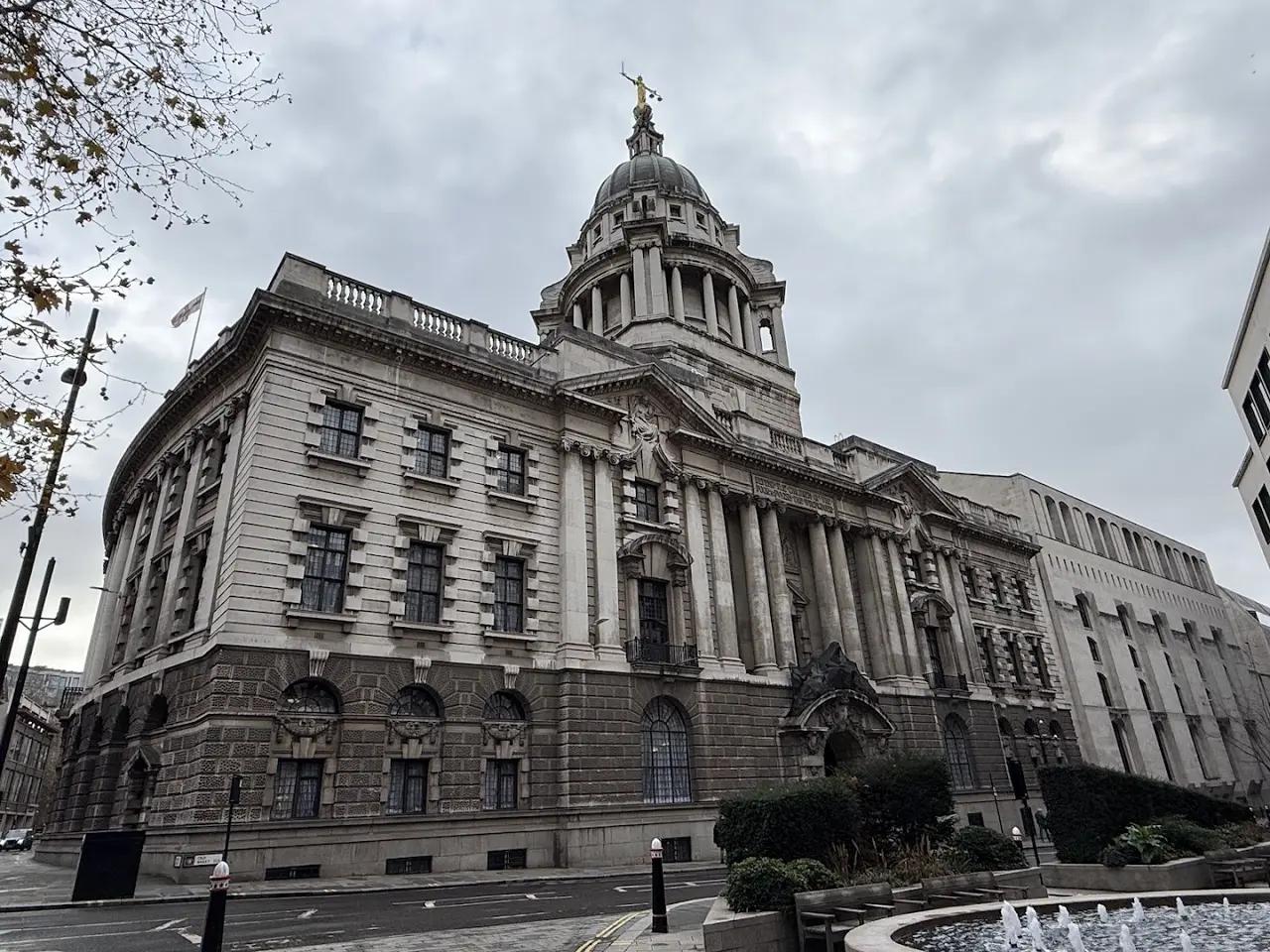
Central Criminal Court
The City of London · Culture
A look inside Britain’s most famous courthouse: The Old Bailey. The phrase “if walls could talk” comes to mind, this building has witnessed many of the most famous and infamous court cases in British history. Oscar Wilde, the Kray Twins, Dr Crippen, Ruth Ellis, Dennis Nilsen, the list goes on. But did you know you can go on a tour of it? The Old Bailey, or the Central Criminal Court of England and Wales, dates from 1907, but as is often the case with London it has a history that stretches back much further. You are taken in to see the spectacular Grand Hall, two court rooms, the court cells and the judge’s dining room. It is amazing and slightly unsettling to be seated in a room where some of the most notorious criminals as well as the unjustly convicted have been tried. There is a link in my bio for my full blog post as always and links to book. #london #londonhistory #londontravel #londonarchitecture #secretlondon
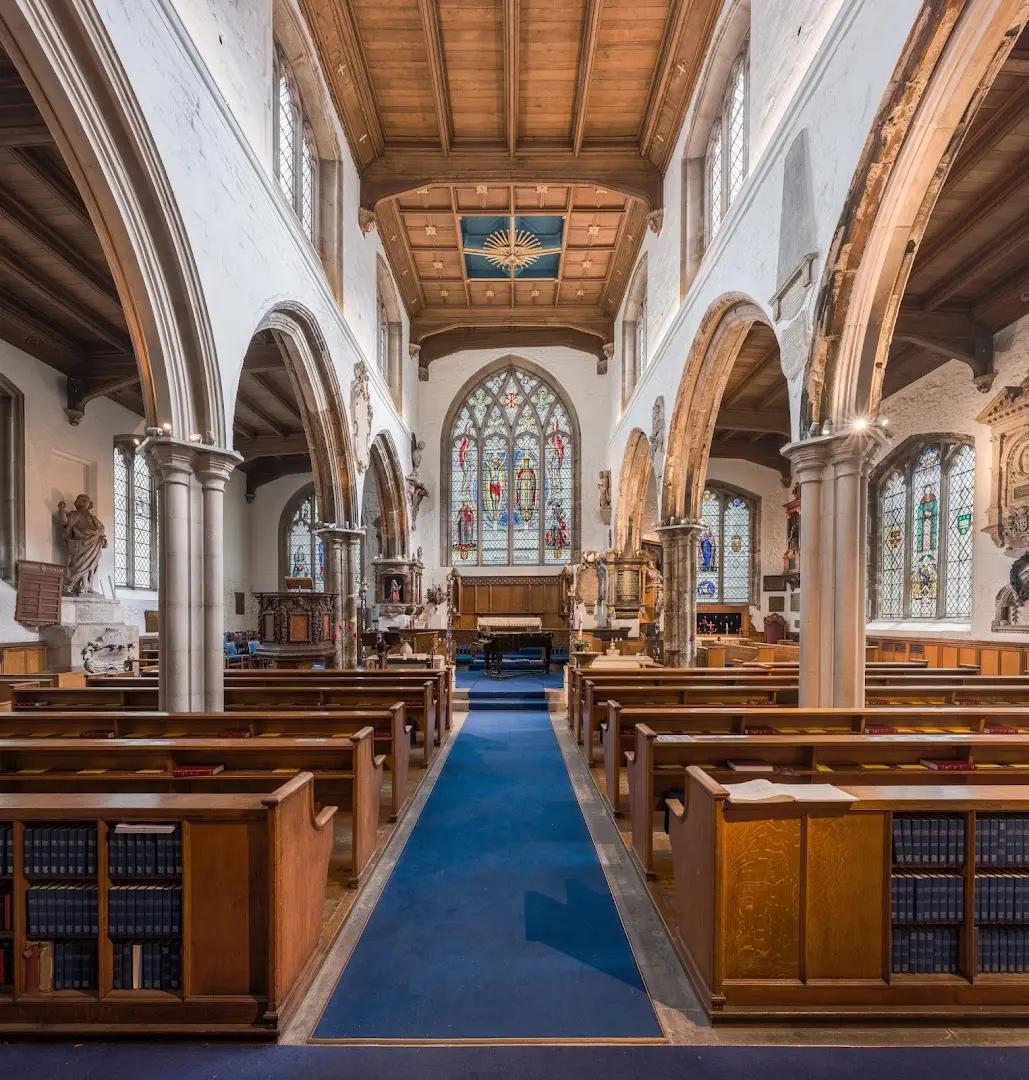
St Olave's Church, Hart Street
The City of London · Culture
A Country Church In The Heart Of The City: St Olave Hart Street Nestled amongst the skyscrapers and ceaseless energy of the City of London, the nation’s financial heart, lies a small pocket of stillness, steeped in history. On the corner of Seething Lane and Hart Street you will find what almost looks and feels like a countryside parish church, St Olave Hart Street. Indeed, John Betjeman, poet laureate and great heritage campaigner, described it as a �country church in the world of Seething Lane�. st olave hart street Just like the City itself it has endured and been reborn through invasion, fire, plague and bombs. It is an architectural tapestry of the centuries it has lived through, is a cradle for the city’s stories and is still resolutely holding its ground against the ever accelerating world around it. Origins St Olave Hart Street likely has 11th century origins, built first as a simple wooden structure. It is named after Olaf II Haraldsson (995-1030) who was King of Norway from 1015-1028. He was the son of Haral Groenske, a distant descendant of the first King of Norway. In around 999AD Sweyn Forkbeard, King of Denmark, took the Norwegian throne and then in 1013 conquered England. Ethelred the Unready, the exiled English King then challenged Danish rule and Olaf (anglicised to Olave) was one of his supporters. In 1014 Olave sailed up the Thames to help recapture London. The story goes that the Norwegians tied cables around the supporting piles of London Bridge and rowed hard downstream to bring the bridge crashing down bringing many of the Danish defenders with it. This is one of the proposed origin stories for the �London Bridge is Falling Down rhyme�. After helping Ethelred retake London Olave returned to Norway and eventually became King of Norway and, most likely, encouraged the spread of Christianity across the country. He was canonised in Norway in 1031. There were numerous churches built and named after St Olave in London. I have written about St Olave Silver Street previously here. st olaf A stained glass depiction of St Olave in the church. He stands on a dragon-like creature with his own head, representing his victory over his own sins Rebuilding and The Blitz The original wooden church was likely rebuilt in stone in the late 12th or early 13th century. It was then rebuilt again, the current building you see today, in the 1460s. The upper brick section of the tower was added in the 18th century The church suffered devastating damage during the Blitz. Most of the windows were lost when a bomb landed nearby in 1940 and then, in the Spring of 1941, the church was gutted by incendiary bombs. Thankfully, many of the church’s treasures and monuments had been stored safely elsewhere. st olave hart street blitz The devastation of the Blitz st olave hart street blitz The church was restored and rebuilt from 1951-54, designed by Ernest Glanfield. In 1951 King Haakon VII of Norway, who was exiled in London during the war, laid the restoration stone at the entrance to the chancel. st olave hart street norwegian prince Crown Prince Olav of Norway (right) in the ruins of the church, in conversation with Revd Augustus Powell-Miller Samuel Pepys samuel pepys Samuel Pepys in 1666, painted by John Hayles St Olave Hart Street’s most notable historic connection is with the 17th century diarist Samuel Pepys, best known for writing about his experiences in the Great Plague of 1665 and the Great Fire of 1666. Pepys moved into the parish with his wife Elizabeth on 17th July 1660. A couple of weeks earlier he had been given the post of Clerk of the Acts to the Navy Board, a pivotal role in which he oversaw royal dockyards, naval contracts. He later became Surveyor General of the Victualling Office and then Secretary to the Admiralty. He moved into lodgings on Seething Lane, adjoining the Navy Office and St Olave’s became �own our church�. During the Great Fire of London in 1666, Pepys, with the help of Admiral William Penn (father of William Penn, founder of Pennsylvania) saved the Navy Office and the church from destruction by employing dockyard workers to pull down houses and create fire breaks. It is, therefore, one of only a few churches to have survived the Great Fire. Pepy’s wife Elizabeth died of typhoid in 1669 and was buried at St Olave’s and so was his brother John in 1676. Samuel Pepys himself was buried here after he died in 1703. elizabeth pepys memorial The memorial to Elizabeth Pepys, looking towards where Samuel Pepys would sit in church The memorial to him in the church today was commissioned and erected in 1884. It is located where the special Navy Office pew was located in the South gallery. samuel pepys memorial The memorial to Samuel Pepys erected in 1884 entrance to south gallery plaque The tablet on the outside of the church, where the entrance to the South Gallery was located via an external walkway The Churchyard st olave hart street churchyard The churchyard has this rather ominous entranceway. It dates from 1658, the skulls being a �memento mori� symbol, translating from latin as �remember you must die�. Underneath are the words �Christus vivere Mors mihi lucrum�, words of St Paul, translated as �For me to live is Christ, and to die is gain�. This macabre display lead Charles Dickens many years later to refer to it as �one of my best beloved churchyards, I call the churchyard of St Ghastly Grim�. st olave hart street churchyard churchyard steps The churchyard is raised above the entranceway of the church, said to be because of the centuries worth of bodies. For example, 357 victims of the Great Plague of 1665 were buried here. The Great Plague killed roughly 100,000 Londoners, which was around 15-20% of the population of the city. Burials at St Olave’s includes that of a lady called Mary Ramsay on 24th July 1665, who it seems was blamed, without evidence, for introducing the plague to the City of London. Another burial is that of someone called �Mother Goose� in 1586. This is often associated with the 19th century pantomime character, but is likely just someone who had the surname �goose�. A rare Women’s Window In the Lady Chapel is a lovely stained glass window which represents the three parishes now united under St Olave’s. women's wondow In the centre is the Virgin and Child for St Olave’s, on the left is Queen Elizabeth I for All Hallows Staining (because she attended a Thanksgiving service here after her release from the Tower of London in May 1554) and St Katherine of Alexandria for St Catherine Coleman church. Above are more modern women, including Florence Nightingale, Elizabeth Fry, Josephine Butler and Edith Cavell. women's stained glass window Monuments and Memorials There are numerous interesting monuments and memorials to look out for. They can be seen almost as a microcosm of the City’s complicated history. This one, for example, is to Sir Andrew Riccard, a wealthy merchant and politician. sir andrew riccard memorial Riccard was Chairman of the East India Company and of the Turkey Company, as well as Alderman and Sheriff of the City. He later became the MP for the City in the First Protectorate Parliament of 1654/55. Below is a wonderful, carved monument of Peter Capponi, who was an Italian merchant, who fled to London after plotting against the Medici. He started working for Francis Walsingham, Elizabeth I’s spymaster and died of the plague in 1582. peter capponi memorial One of the most attractive is the monument dedicated to brothers Andrew and Paul Bayning who died in 1610 and 1616 respectively. They were both Aldermen depicted in their red robes and were both closely involved in the Levant Company. bayning brothers memorial Finally, this one is easy to miss, but is also worth noting. william turner memorial It is the memorial plaque for William Turner (died 1568), the Dean of Wells Cathedral and Naturalist. He published �A New Herball� in 1551, the first authoritative treatise on the use of plants in the English language. He is sometimes referred to as the �Father of English botany� because of his contributions to the field. The Crypt And The Vestry Make sure if you visit to not miss the crypt. Descending down a tight stone staircase you emerge into the crypt, partially dating from the 12th/13th century. There are various archaeological finds displayed in one room. st olave hart street crypt In another you will find the atmospheric crypt chapel. crypt chapel There are carvings in the stone, thought to possibly be symbols to ward off evil spirits, such as this one of a bishop’s mitre. witch mark There is also a well that is thought to date back to the Saxon period. saxon well saxon well. Someone excavating the crypt chapel after the war Another little space people often miss (e.g. me on numerous occasions until it was pointed out to me), is the vestry. vestry This little room was constructed in 1661-62, just a year after Pepys moved to the parish and a few years before the Great Fire. It has an attractive plastered ceiling and a painting of Faith, Hope and Charity. The stout wooden door is thought to date back over 600 years. vestry door Visiting St Olave Hart Street Hopefully the above has persuaded you, if you have not been before, to visit this unique and fascinating church. You can see the opening hours (at time of writing below): Monday- Wednesday: 10:30am to 5pm Thursday: 8:30am to 5:45pm Friday: 10:30am to 5pm Saturday: Closed Sunday: 10:50am to 1pm They have lunchtime recitals at 1pm on Wednesdays and Thursdays and of course regular services as well. You can see all the details on their website here.
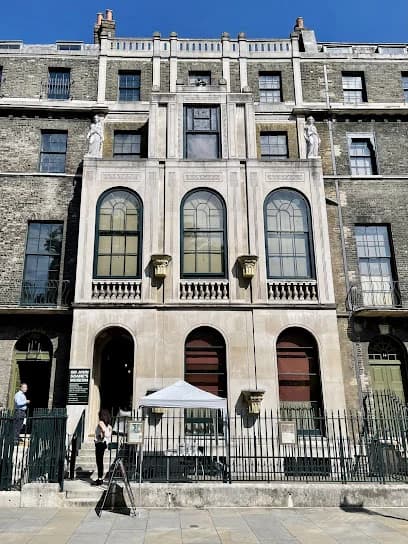
Sir John Soane's Museum
Holborn · Culture
Step inside the mind of a genius by visiting Sir John Soane’s house in Holborn! This living museum is unlike anything else in London. It was the home of innovative 19th century architect Sir John Soane’s house, who packed it with artefacts, paintings and drawings but also designed the house itself with boundless inspiration and creativity. I visited as part of an evening organised by @originaltravel to celebrate Agatha Christie’s legacy and to showcase Steam Ship Sudan, the brand’s flagship travel experience in Egypt. She sailed about that very ship and it was the inspiration for her novel Death on the Nile. We were therefore shown many of Soane’s Egyptian collection. It sounds like an amazing trip and one I would love to go on at some point! Thank you to @soanemuseum for hosting us, it was a wonderful evening. The house is free but I would highly recommend booking one of their Highlights tours to see all the secrets and treasures of the house. #london #londonhistory #londontravel #londonmuseum #hiddenlondon
- S
St John Baptist Church
Culture
Britain’s Almost Exact Replica Of The Bayeux Tapestry� Later this year, in 2026, the Bayeux Tapestry will be on loan from France to the UK and displayed at The British Museum. Did you know though that the UK has its very own, almost exact, replica created by an industrious group of Victorian women? It can be found in Reading Museum, only half an hour on the train from London Paddington. The Real Bayeux Tapestry: origins Firstly, a quick background to the real Bayeux Tapestry. Its origins, interestingly, are mysterious. The first recorded evidence of the Bayeux Tapestry is only in 1476 in an inventory of Bayeux Cathedral. Historians, however, have strong theories about where it came from. It is thought to have been created in England, likely somewhere in or near Canterbury, after William the Conqueror defeated Harold Godwinson at the Battle of Hastings in 1066. Many historians believe it was commissioned by Bishop Odo, William the Conqueror’s half brother, because of the oversized role he seems to play in the story depicted on the Bayeux Tapestry. Bishop Odo was also the Bishop of Bayeux Cathedral, where the tapestry was first recorded in the 15th century and it had been consecrated in the year 1077, so the timing matches up with the likely creation date of the tapestry. odo battle of hastings tapestry Bishop Odo, William’s half-brother, rallying the Norman troops at the Battle of Hastings. This a photograph of the original Bayeux Tapestry. What Does It Depict? It is 70 metres long and is actually an embroidered cloth (not a tapestry), hand-stitched using woollen yarns onto a linen backdrop. The Battle of Hastings itself is only about 20-25 metres worth, the rest covers the build up to the Battle, including Harold journeying to Normandy in 1064 and the death, in January 1066, of Edward the Confessor. reading bayeux tapestry The first scene of The Bayeux Tapestry (the replica pictured). It shows Edward the Confessor in 1064 giving instructions to his brother-in-law Harold Godwinson, possibly to go over to France and offer the succession to William. bayeux tapestry start Edward the Confessor depicted on his deathbed in January 1066, on the Victorian replica The borders contain various images of animals and mythological creatures. It also contains occasionally depictions of legends and stories that relate to the action above it. Here you can see a depiction of the Fox and the Crow from Aesop’s Fables, a moral tale about the dangers of succumbing to flattery. The Bayeux Tapestry thankfully managed to survive World War Two. French authorities stored it in a zinc-lined crate in the basement of the H�tel du Doyen to protect it from German forces. In 1941 it was moved to the National Museums repository in Sourches for safer keeping and studied by German experts. Two small fragments were even removed and only very recently discovered. They were returned to France in January 2026. Since 1983, the tapestry has been displayed in the Bayeux Museum. The Victorian Replica The copy that you can now see in the Reading Museum was the idea of a lady called Elizabeth Wardle. She was an accomplished embroideress and the wife of silk-dyer Sir Thomas Wardle. elizabeth wardle Elizabeth Wardle thomas wardle Sir Thomas Wardle In 1879 they had founded the Leek Embroidery Society, originally called the Leek Sewing Circle. In 1885 Elizabeth and Thomas organised the Society to create a full scale replica of the Bayeux Tapestry. Elizabeth had been to see the real one and felt that England should have its own. The Wardles were friends with William Morris, the key figure of the Arts and Crafts movement, so it can very much be seen as fitting in with that style and a Victorian enthusiasm for any medieval. reading museum bayeux tapestry The full-scale replica today in Reading Museum It took the thirty-five ladies of the Leek Embroidery Society just over a year to create the replica Bayeux Tapestry. It then travelled around the country and was put on display in various locations. It has been to the USA, Germany, South Africa and was even viewed by Queen Victoria herself at Windsor Castle. The replica is often creditted with sparking renewed interest in the actual Bayeux Tapestry in the 19th century. reading bayeux tapestry The Norman knights at the Battle of Hastings reading bayeux tapestry Harold’s Anglo-Saxon soldiers at The Battle of Hastings reading bayeux tapestry The famous scene on the tapestry of a figure, most likely depicting Harold Godwinson (although there is debate) being struck in the eye with an arrow. There is also debate about whether the arrow was even part of the original 11th century depiction or was added in a 19th century restoration. How Does It Differ? The Reading version is slightly taller because it includes a panel at the bottom where the names of the woman who embroidered that particular section is recorded. As we have no idea who created the original, their names lost to history, it is lovely that we get the individual names of these Victorian women below their section. reading bayeux tapestry All the names of the ladies who worked on the replica Some of the colours are more vivid and uniform on the replica. They used wool dyed by Thomas Wardle’s natural dyes. Unsurprisingly, also, many of the signs of the wear and tear on the over 900 year old original, such as rips, are not on the replica. reading bayeux tapestry The original also had a few naked men displayed in it, with rather prominent genitalia. In true prudish Victorian style these figures were given undergarments/trousers in the replica. Contrary to popular legend, it was not the women that made this decision. They were working on photographs of the original, amended to be more �suitable� by the male photographers working at the South Kensington Museum (now the V and A). reading bayeux tapestry One of the figures on the replica that were given some extra clothing to protect their modesty How did it get to Reading? The replica was purchased for Reading by Arthur Hill, who was a former Mayor of Reading and philanthropist. He was the half-brother of Octavia Hill, a great social reformer and co-founder of the National Trust. The tapestry was one of the first exhibits in the Museum’s new Art Gallery when it opened in 1897. reading museum Reading Town Hall and Museum today It travelled around the country and world until its current, permanent gallery was created at Reading Museum in 1993. A quick sidenote, Reading is, despite its size, a town and not a city. It has applied for city status four times but been rejected because it does not have a Royal Charter. It is, in fact, the UK’s largest town. Reading’s replica is absolutely worth a visit because it is a fascinating historical piece in and of itself. It can be viewed in a quiet, well-lit space, with plenty of extra information around it to enhance the experience. conan ii escaping You can spend time admiring all of the little details. This is Conan II, Duke of Brittany abseiling to escape the attack of Harold and William during the early campaign. harold godwinson rescuing two men This is a depiction of Harold Godwinson saving two men from quicksand. The idea here was portray Harold as a noble and strong warrior, a worthy opponent to William the Conqueror. Entry to the museum is free, but they also run a very interesting hour long tour of the tapestry to explain and point out the details. They are on Tuesdays and Thursday at 2.30pm and Saturdays at 2pm. They cost 8 and you can find out more here. Another Replica Being Created There is also, by the way, someone else currently creating another full-sized replica! In Wisbech in Cambridgeshire, a lady called Mia Hansson has spent the last nine and a half years creating her own replica. She has apparently set herself a deadline of October 2027. It is a stitch by stitch copy and she started this ambitious project because: �I just wanted something to do and needed a project I couldn’t finish in a hurry�. You can follow her progess here on Facebook. Exploring Reading I visited the museum as part of a press morning and we were also taken on a walking tour to see a couple of the other sights in Reading. You can wander around the ruins of Reading Abbey. reading abbey Reading Abbey was constructed after Henry I ordered its building in 1121 and was officially opened by Thomas Becket, the Archbishop of Canterbury in 1164. Henry I was buried beneath the high altar after he died in 1136. His grave has been lost to history sadly. king henry i burial plaque reading abbey ruins In the background of the image above, you can see Reading Gaol. This was where Oscar Wilde was imprisoned with �hard labour� from 1895-1897 for homosexual acts or �gross indecency� as it was in law at the time. The building shown below has a plaque on it that tells you that this area was struck by a bomb on 10th February 1943. It was the deadliest incident in Reading in World War Two killing 29 people. A building called the People’s Pantry, a restaurant offering cheap off-ration meals largely collapsed. blandy and blandy michael bond The attic space remarkably stayed relatively intact and, thank goodness it did, because a 17 year old boy called Michael Bond had been in there working as an assistant at the BBC. Michael Bond would go onto, in 1958 write his first Paddington Bear book, A Bear Called Paddington. hospitium of st john the baptist Finally, above is the Hospitium of St John the Baptist, next to St Laurence’s churchyard, founded in the 12th century. This was once a medieval dormitory for pilgrims visiting Reading Abbey. Today is home to a nursery. I thought I would put together a Google map of the spots below, should you want to find them on a visit.
- R
Reading Central Library
Culture
Britain’s Almost Exact Replica Of The Bayeux Tapestry� Later this year, in 2026, the Bayeux Tapestry will be on loan from France to the UK and displayed at The British Museum. Did you know though that the UK has its very own, almost exact, replica created by an industrious group of Victorian women? It can be found in Reading Museum, only half an hour on the train from London Paddington. The Real Bayeux Tapestry: origins Firstly, a quick background to the real Bayeux Tapestry. Its origins, interestingly, are mysterious. The first recorded evidence of the Bayeux Tapestry is only in 1476 in an inventory of Bayeux Cathedral. Historians, however, have strong theories about where it came from. It is thought to have been created in England, likely somewhere in or near Canterbury, after William the Conqueror defeated Harold Godwinson at the Battle of Hastings in 1066. Many historians believe it was commissioned by Bishop Odo, William the Conqueror’s half brother, because of the oversized role he seems to play in the story depicted on the Bayeux Tapestry. Bishop Odo was also the Bishop of Bayeux Cathedral, where the tapestry was first recorded in the 15th century and it had been consecrated in the year 1077, so the timing matches up with the likely creation date of the tapestry. odo battle of hastings tapestry Bishop Odo, William’s half-brother, rallying the Norman troops at the Battle of Hastings. This a photograph of the original Bayeux Tapestry. What Does It Depict? It is 70 metres long and is actually an embroidered cloth (not a tapestry), hand-stitched using woollen yarns onto a linen backdrop. The Battle of Hastings itself is only about 20-25 metres worth, the rest covers the build up to the Battle, including Harold journeying to Normandy in 1064 and the death, in January 1066, of Edward the Confessor. reading bayeux tapestry The first scene of The Bayeux Tapestry (the replica pictured). It shows Edward the Confessor in 1064 giving instructions to his brother-in-law Harold Godwinson, possibly to go over to France and offer the succession to William. bayeux tapestry start Edward the Confessor depicted on his deathbed in January 1066, on the Victorian replica The borders contain various images of animals and mythological creatures. It also contains occasionally depictions of legends and stories that relate to the action above it. Here you can see a depiction of the Fox and the Crow from Aesop’s Fables, a moral tale about the dangers of succumbing to flattery. The Bayeux Tapestry thankfully managed to survive World War Two. French authorities stored it in a zinc-lined crate in the basement of the H�tel du Doyen to protect it from German forces. In 1941 it was moved to the National Museums repository in Sourches for safer keeping and studied by German experts. Two small fragments were even removed and only very recently discovered. They were returned to France in January 2026. Since 1983, the tapestry has been displayed in the Bayeux Museum. The Victorian Replica The copy that you can now see in the Reading Museum was the idea of a lady called Elizabeth Wardle. She was an accomplished embroideress and the wife of silk-dyer Sir Thomas Wardle. elizabeth wardle Elizabeth Wardle thomas wardle Sir Thomas Wardle In 1879 they had founded the Leek Embroidery Society, originally called the Leek Sewing Circle. In 1885 Elizabeth and Thomas organised the Society to create a full scale replica of the Bayeux Tapestry. Elizabeth had been to see the real one and felt that England should have its own. The Wardles were friends with William Morris, the key figure of the Arts and Crafts movement, so it can very much be seen as fitting in with that style and a Victorian enthusiasm for any medieval. reading museum bayeux tapestry The full-scale replica today in Reading Museum It took the thirty-five ladies of the Leek Embroidery Society just over a year to create the replica Bayeux Tapestry. It then travelled around the country and was put on display in various locations. It has been to the USA, Germany, South Africa and was even viewed by Queen Victoria herself at Windsor Castle. The replica is often creditted with sparking renewed interest in the actual Bayeux Tapestry in the 19th century. reading bayeux tapestry The Norman knights at the Battle of Hastings reading bayeux tapestry Harold’s Anglo-Saxon soldiers at The Battle of Hastings reading bayeux tapestry The famous scene on the tapestry of a figure, most likely depicting Harold Godwinson (although there is debate) being struck in the eye with an arrow. There is also debate about whether the arrow was even part of the original 11th century depiction or was added in a 19th century restoration. How Does It Differ? The Reading version is slightly taller because it includes a panel at the bottom where the names of the woman who embroidered that particular section is recorded. As we have no idea who created the original, their names lost to history, it is lovely that we get the individual names of these Victorian women below their section. reading bayeux tapestry All the names of the ladies who worked on the replica Some of the colours are more vivid and uniform on the replica. They used wool dyed by Thomas Wardle’s natural dyes. Unsurprisingly, also, many of the signs of the wear and tear on the over 900 year old original, such as rips, are not on the replica. reading bayeux tapestry The original also had a few naked men displayed in it, with rather prominent genitalia. In true prudish Victorian style these figures were given undergarments/trousers in the replica. Contrary to popular legend, it was not the women that made this decision. They were working on photographs of the original, amended to be more �suitable� by the male photographers working at the South Kensington Museum (now the V and A). reading bayeux tapestry One of the figures on the replica that were given some extra clothing to protect their modesty How did it get to Reading? The replica was purchased for Reading by Arthur Hill, who was a former Mayor of Reading and philanthropist. He was the half-brother of Octavia Hill, a great social reformer and co-founder of the National Trust. The tapestry was one of the first exhibits in the Museum’s new Art Gallery when it opened in 1897. reading museum Reading Town Hall and Museum today It travelled around the country and world until its current, permanent gallery was created at Reading Museum in 1993. A quick sidenote, Reading is, despite its size, a town and not a city. It has applied for city status four times but been rejected because it does not have a Royal Charter. It is, in fact, the UK’s largest town. Reading’s replica is absolutely worth a visit because it is a fascinating historical piece in and of itself. It can be viewed in a quiet, well-lit space, with plenty of extra information around it to enhance the experience. conan ii escaping You can spend time admiring all of the little details. This is Conan II, Duke of Brittany abseiling to escape the attack of Harold and William during the early campaign. harold godwinson rescuing two men This is a depiction of Harold Godwinson saving two men from quicksand. The idea here was portray Harold as a noble and strong warrior, a worthy opponent to William the Conqueror. Entry to the museum is free, but they also run a very interesting hour long tour of the tapestry to explain and point out the details. They are on Tuesdays and Thursday at 2.30pm and Saturdays at 2pm. They cost 8 and you can find out more here. Another Replica Being Created There is also, by the way, someone else currently creating another full-sized replica! In Wisbech in Cambridgeshire, a lady called Mia Hansson has spent the last nine and a half years creating her own replica. She has apparently set herself a deadline of October 2027. It is a stitch by stitch copy and she started this ambitious project because: �I just wanted something to do and needed a project I couldn’t finish in a hurry�. You can follow her progess here on Facebook. Exploring Reading I visited the museum as part of a press morning and we were also taken on a walking tour to see a couple of the other sights in Reading. You can wander around the ruins of Reading Abbey. reading abbey Reading Abbey was constructed after Henry I ordered its building in 1121 and was officially opened by Thomas Becket, the Archbishop of Canterbury in 1164. Henry I was buried beneath the high altar after he died in 1136. His grave has been lost to history sadly. king henry i burial plaque reading abbey ruins In the background of the image above, you can see Reading Gaol. This was where Oscar Wilde was imprisoned with �hard labour� from 1895-1897 for homosexual acts or �gross indecency� as it was in law at the time. The building shown below has a plaque on it that tells you that this area was struck by a bomb on 10th February 1943. It was the deadliest incident in Reading in World War Two killing 29 people. A building called the People’s Pantry, a restaurant offering cheap off-ration meals largely collapsed. blandy and blandy michael bond The attic space remarkably stayed relatively intact and, thank goodness it did, because a 17 year old boy called Michael Bond had been in there working as an assistant at the BBC. Michael Bond would go onto, in 1958 write his first Paddington Bear book, A Bear Called Paddington. hospitium of st john the baptist Finally, above is the Hospitium of St John the Baptist, next to St Laurence’s churchyard, founded in the 12th century. This was once a medieval dormitory for pilgrims visiting Reading Abbey. Today is home to a nursery. I thought I would put together a Google map of the spots below, should you want to find them on a visit.
- R
Reading Museum
Culture
Britain’s Almost Exact Replica Of The Bayeux Tapestry� Later this year, in 2026, the Bayeux Tapestry will be on loan from France to the UK and displayed at The British Museum. Did you know though that the UK has its very own, almost exact, replica created by an industrious group of Victorian women? It can be found in Reading Museum, only half an hour on the train from London Paddington. The Real Bayeux Tapestry: origins Firstly, a quick background to the real Bayeux Tapestry. Its origins, interestingly, are mysterious. The first recorded evidence of the Bayeux Tapestry is only in 1476 in an inventory of Bayeux Cathedral. Historians, however, have strong theories about where it came from. It is thought to have been created in England, likely somewhere in or near Canterbury, after William the Conqueror defeated Harold Godwinson at the Battle of Hastings in 1066. Many historians believe it was commissioned by Bishop Odo, William the Conqueror’s half brother, because of the oversized role he seems to play in the story depicted on the Bayeux Tapestry. Bishop Odo was also the Bishop of Bayeux Cathedral, where the tapestry was first recorded in the 15th century and it had been consecrated in the year 1077, so the timing matches up with the likely creation date of the tapestry. odo battle of hastings tapestry Bishop Odo, William’s half-brother, rallying the Norman troops at the Battle of Hastings. This a photograph of the original Bayeux Tapestry. What Does It Depict? It is 70 metres long and is actually an embroidered cloth (not a tapestry), hand-stitched using woollen yarns onto a linen backdrop. The Battle of Hastings itself is only about 20-25 metres worth, the rest covers the build up to the Battle, including Harold journeying to Normandy in 1064 and the death, in January 1066, of Edward the Confessor. reading bayeux tapestry The first scene of The Bayeux Tapestry (the replica pictured). It shows Edward the Confessor in 1064 giving instructions to his brother-in-law Harold Godwinson, possibly to go over to France and offer the succession to William. bayeux tapestry start Edward the Confessor depicted on his deathbed in January 1066, on the Victorian replica The borders contain various images of animals and mythological creatures. It also contains occasionally depictions of legends and stories that relate to the action above it. Here you can see a depiction of the Fox and the Crow from Aesop’s Fables, a moral tale about the dangers of succumbing to flattery. The Bayeux Tapestry thankfully managed to survive World War Two. French authorities stored it in a zinc-lined crate in the basement of the H�tel du Doyen to protect it from German forces. In 1941 it was moved to the National Museums repository in Sourches for safer keeping and studied by German experts. Two small fragments were even removed and only very recently discovered. They were returned to France in January 2026. Since 1983, the tapestry has been displayed in the Bayeux Museum. The Victorian Replica The copy that you can now see in the Reading Museum was the idea of a lady called Elizabeth Wardle. She was an accomplished embroideress and the wife of silk-dyer Sir Thomas Wardle. elizabeth wardle Elizabeth Wardle thomas wardle Sir Thomas Wardle In 1879 they had founded the Leek Embroidery Society, originally called the Leek Sewing Circle. In 1885 Elizabeth and Thomas organised the Society to create a full scale replica of the Bayeux Tapestry. Elizabeth had been to see the real one and felt that England should have its own. The Wardles were friends with William Morris, the key figure of the Arts and Crafts movement, so it can very much be seen as fitting in with that style and a Victorian enthusiasm for any medieval. reading museum bayeux tapestry The full-scale replica today in Reading Museum It took the thirty-five ladies of the Leek Embroidery Society just over a year to create the replica Bayeux Tapestry. It then travelled around the country and was put on display in various locations. It has been to the USA, Germany, South Africa and was even viewed by Queen Victoria herself at Windsor Castle. The replica is often creditted with sparking renewed interest in the actual Bayeux Tapestry in the 19th century. reading bayeux tapestry The Norman knights at the Battle of Hastings reading bayeux tapestry Harold’s Anglo-Saxon soldiers at The Battle of Hastings reading bayeux tapestry The famous scene on the tapestry of a figure, most likely depicting Harold Godwinson (although there is debate) being struck in the eye with an arrow. There is also debate about whether the arrow was even part of the original 11th century depiction or was added in a 19th century restoration. How Does It Differ? The Reading version is slightly taller because it includes a panel at the bottom where the names of the woman who embroidered that particular section is recorded. As we have no idea who created the original, their names lost to history, it is lovely that we get the individual names of these Victorian women below their section. reading bayeux tapestry All the names of the ladies who worked on the replica Some of the colours are more vivid and uniform on the replica. They used wool dyed by Thomas Wardle’s natural dyes. Unsurprisingly, also, many of the signs of the wear and tear on the over 900 year old original, such as rips, are not on the replica. reading bayeux tapestry The original also had a few naked men displayed in it, with rather prominent genitalia. In true prudish Victorian style these figures were given undergarments/trousers in the replica. Contrary to popular legend, it was not the women that made this decision. They were working on photographs of the original, amended to be more �suitable� by the male photographers working at the South Kensington Museum (now the V and A). reading bayeux tapestry One of the figures on the replica that were given some extra clothing to protect their modesty How did it get to Reading? The replica was purchased for Reading by Arthur Hill, who was a former Mayor of Reading and philanthropist. He was the half-brother of Octavia Hill, a great social reformer and co-founder of the National Trust. The tapestry was one of the first exhibits in the Museum’s new Art Gallery when it opened in 1897. reading museum Reading Town Hall and Museum today It travelled around the country and world until its current, permanent gallery was created at Reading Museum in 1993. A quick sidenote, Reading is, despite its size, a town and not a city. It has applied for city status four times but been rejected because it does not have a Royal Charter. It is, in fact, the UK’s largest town. Reading’s replica is absolutely worth a visit because it is a fascinating historical piece in and of itself. It can be viewed in a quiet, well-lit space, with plenty of extra information around it to enhance the experience. conan ii escaping You can spend time admiring all of the little details. This is Conan II, Duke of Brittany abseiling to escape the attack of Harold and William during the early campaign. harold godwinson rescuing two men This is a depiction of Harold Godwinson saving two men from quicksand. The idea here was portray Harold as a noble and strong warrior, a worthy opponent to William the Conqueror. Entry to the museum is free, but they also run a very interesting hour long tour of the tapestry to explain and point out the details. They are on Tuesdays and Thursday at 2.30pm and Saturdays at 2pm. They cost 8 and you can find out more here. Another Replica Being Created There is also, by the way, someone else currently creating another full-sized replica! In Wisbech in Cambridgeshire, a lady called Mia Hansson has spent the last nine and a half years creating her own replica. She has apparently set herself a deadline of October 2027. It is a stitch by stitch copy and she started this ambitious project because: �I just wanted something to do and needed a project I couldn’t finish in a hurry�. You can follow her progess here on Facebook. Exploring Reading I visited the museum as part of a press morning and we were also taken on a walking tour to see a couple of the other sights in Reading. You can wander around the ruins of Reading Abbey. reading abbey Reading Abbey was constructed after Henry I ordered its building in 1121 and was officially opened by Thomas Becket, the Archbishop of Canterbury in 1164. Henry I was buried beneath the high altar after he died in 1136. His grave has been lost to history sadly. king henry i burial plaque reading abbey ruins In the background of the image above, you can see Reading Gaol. This was where Oscar Wilde was imprisoned with �hard labour� from 1895-1897 for homosexual acts or �gross indecency� as it was in law at the time. The building shown below has a plaque on it that tells you that this area was struck by a bomb on 10th February 1943. It was the deadliest incident in Reading in World War Two killing 29 people. A building called the People’s Pantry, a restaurant offering cheap off-ration meals largely collapsed. blandy and blandy michael bond The attic space remarkably stayed relatively intact and, thank goodness it did, because a 17 year old boy called Michael Bond had been in there working as an assistant at the BBC. Michael Bond would go onto, in 1958 write his first Paddington Bear book, A Bear Called Paddington. hospitium of st john the baptist Finally, above is the Hospitium of St John the Baptist, next to St Laurence’s churchyard, founded in the 12th century. This was once a medieval dormitory for pilgrims visiting Reading Abbey. Today is home to a nursery. I thought I would put together a Google map of the spots below, should you want to find them on a visit.
- m
memorial hall, Maldon Rd, London N9 9QP, United Kingdom
Outdoors
AD Did you know that Table Tennis has its origins right here in London! ?? It started as a Victorian parlour game, a way for the upper classes to amuse themselves and now is a world-wide sport. The first ever World Table Tennis Championships were held in London in 1926 and they are returning this May for the centenary year. There is a link in my bio for the full (7 minute) YouTube video and to book tickets for this year’s Championships. @ittfworld @tabletenniseng #london #tabletennis #londonhistory #londonsport
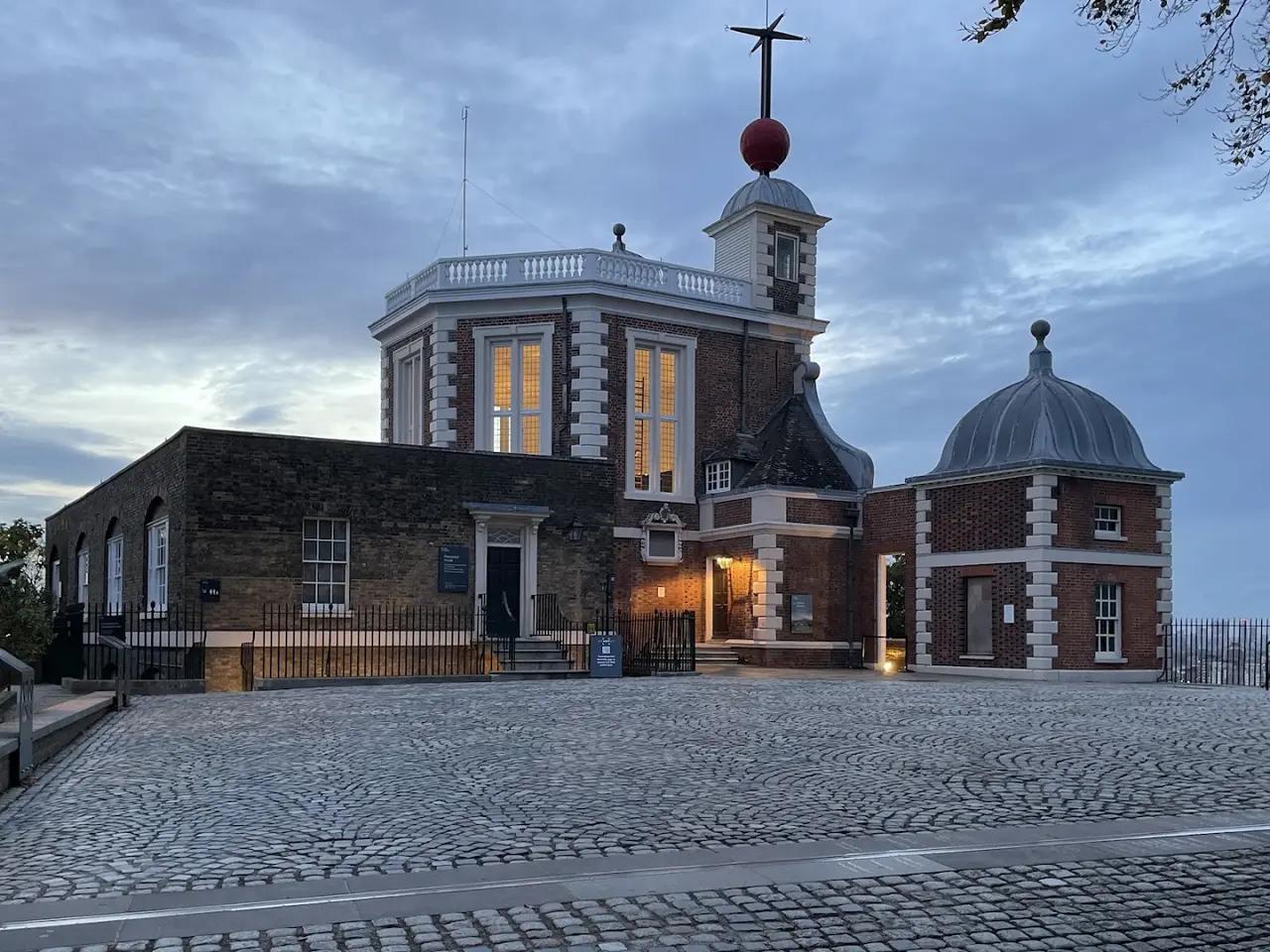
Royal Observatory Greenwich
Greenwich · Culture
Why does this red ball in London drop everyday at 1pm? ?? I paid a visit to the fascinating Royal Observatory in Greenwich. The story around longitude is a complicated one, I have written up a more full history on the blog. There is a link in my bio if you would like to read that! #london #londonhistory #greenwichpark #greenwich #londonmuseum
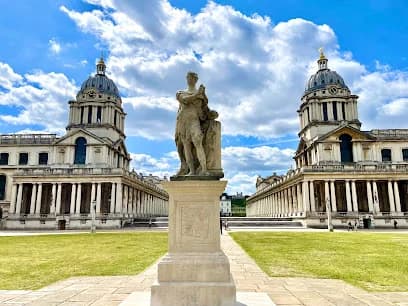
Old Royal Naval College
Greenwich · Culture
A Visit To The Royal Observatory: Where Time Begins The Royal Observatory sits proudly atop the hill in Greenwich Park, overlooking the spectacular Old Royal Naval College and, beyond that, the mighty River Thames, meandering its way around the Isle of Dogs. It may not be a particularly large or grand building, although its architecture is very elegant, but in terms of British and even world history, it is one of the most important buildings in London. I paid The Royal Observatory a visit and in this blog post I will cover its story, from its 17th century founding, its pivotal role in the advancement of maritime navigation and timekeeping, as well as showing you what you can see there today. view from royal observatory The view towards the river from The Royal Observatory The Founding Of The Royal Observatory The Royal Observatory was founded in 1675 by King Charles II, making it Britain’s first state-sponsored scientific institution. charles ii Charles II, founder of the Royal Observatory, by John Michael Wright. Image from wikimedia commons. Charles II was deeply interested in science, but the founding of The Royal Observatory was part of a bid to solve one very specific problem: how to determine longitude at sea. Seaborne trade and exploration was crucial to European nations in the 17th century, for empire-building and commerce. Determining latitude (North-South position) aboard a ship was relatively easy, because it could be determined by measuring the angle of fixed stars such as Polaris (the North Star) above the horizon. Longitude however (East-West) was far more complicated. The Longitude Problem Where latitude has fixed celestial markers with predictable positions relative to the horizon, longitude is trickier because the sun and stars move with the Earth’s rotation on its axis. This made navigation at sea complicated and highly dangerous. scilly disaster An engraving of the Scilly naval disaster of 1707. Four British naval ships hit the rocks off the Isles of Scilly and 1400-2000 sailors perished in the sea. This was due to the navigators being unable to accurately determine their location. Image from wikimedia commons. The Sun reaches its highest point at local midday, but that occurs at different times depending on your position East or West. Longitude could therefore be determined if you could compare your time with whatever time it was from a fixed other point or �meridian�. The Earth rotates 360 degrees every day and there are 24 hours in a day, so every hour difference denotes 15 degrees of difference in longitudinal position. Therefore if you were in a ship and it was midday but it was 5pm (PM meaning �post-meridian�) in London, you would know you were 75 degrees of longitude West. 75 degrees West of London would be roughly on the longitude of New York City. The challenge though, of course, was knowing what time it was at that fixed point, when you could not go on the internet or speak to someone in real time over the telephone. Two Competing Solutions Two methods of determining longitude were proposed: the astronomical method and the time method. Charles II appointed John Flamsteed as the first Astronomer Royal to compile the most accurate star tables and lunar charts ever created from The Royal Observatory. john flamsteed John Flamsteed, 1712 by Thomas Gibson, his hand resting on his volume of stellar observations. Image from wikimedia commons. Flamsteed and his successors, Edmund Halley (of comet fame), James Bradley and many more spent decades meticulously mapping and recording the movements of stars and the moon. The hope was that these charts could be used by maritime avigators to determine longitude, particularly by comparing the movement of the moon relative to certain stars. The other proposed method of working out longitude was to create an accurate, portable sea-going timekeeper that could effectively carry the time of the starting point, or meridian, with the ship. We will come to back to this further down. Why Greenwich? the royal observatory The reason Greenwich was chosen as the location of The Royal Observatory was partly because of the elevated position on the hill, but mostly because it was royal land, therefore would cost nothing and permission did not need to be sought. Greenwich Palace has its origins back in the 15th century and was a favourite of King Henry VIII. Today it is the site of the Old Royal Naval College, which I have written about before here. The Queen’s House is also a fascinating visit. The other main reason was because it was close to the scientific community in London. The building you can see today is known as Flamsteed House and was designed by Sir Christopher Wren, likely with the help of Robert Hooke. the royal observatory history Flamsteed House today It was designed as the home of the Astronomer Royal, but also purpose-built for astronomical observations. The Octagon Room for example is an eight-sided chamber built above the residential rooms and offered a wide view of the sky and space for advanced instruments. octagon room The Octagon Room, designed by Sir Christopher Wren It was also though designed for a bit of �pomp�, a space for visitors to do some amateur observations in elegant surroundings. It housed two clocks, the 13 foot long pendulums hidden behind the paneling to keep accurate time. These clocks proved that the Earth turns at a constant rate throughout the year. The original building had extra rooms then added to it in the 18th and 19th centuries. flamsteed's quadrant Flamsteed’s mural quadrant, used to measure the altitude of stars as they crossed his meridian A prize The Longitude Act of 1714 established the Board of Longitude and offered a financial prize of 20,000 to anyone who could solve the longitude problem. In 1767 the Astronomer Royal Nevil Maskelyne began publishing The Nautical Almanac, essentially the product of the decades of astronomical observations from Greenwich. This astronomical data, although very complicated, could be used by navigators with the right equipment and knowledge to try and determine longitude at sea. A Clockmaker From Lincolnshire The timekeeper method, as mentioned above, was the other proposed solution. Up until the mid 18th century however, a clock that worked to counterbalance the swing and sway of ships and could keep time accurately during the harsh, salty conditions at sea had never been created. By 1726 the news of the longitude prize had reached a clockmaker and carpenter from West Yorkshire called John Harrison. Harrison is, I would argue, one of the great, relatively unsung, pioneers of British history. john harrison A painting of John Harrison by Thomas King, circa 1796 Harrison spent the next 45 years of his life developing sea clocks (chronometers). They have the four clocks he designed (H1, H2, H3 and H4) at The Royal Observatory to see. Each one was more brilliant and revolutionary than the last. H4 particularly, for which Harrison eventually won the prize, is really one of the most important scientific instruments in world history. It is a beautiful item for one but also, through significantly improving navigation, changed world history. The Four Clocks h1 harrison clock H1 created by Harrison from 1730-1735. It used a �spring bar balance system� instead of a pendulum to cope with a ship’s motion, and incorporated �lignum vitae� (a self-lubricating tropical wood) and brass/steel rods to combat friction and temperature changes. h2 harrison clock H2 created by Harrison from 1737-1739. It was designed to be more compact and robust than the H1, it featured something called a �remontoire� to ensure uniform power to the balances and improved temperature compensation. Harrison detected a flaw with the balance wheels so it was never tested at sea. h3 harrison clock H3 created by Harrison from 1740-1759 (nearly twenty years!). H3 incorporated bimetallic strips for temperature regulation and caged roller bearings to minimise friction. We have Harrison to thank also then for bimetallic strips which are used so many of our modern electrical items and caged roller bearings, used regularly in modern engineering. h4 harrison clock H4 created by Harrison from 1755-1759 (alongside H3), considered the first true marine chronometer. It featured a high-frequency balance, temperature compensation, and a friction-reducing design. John and his son William, who was also crucial in the journey, realised that a smaller, faster-ticking clock was superior at sea. There is so much more to the amazing story of Harrison and the creation of his clocks. I would highly recommend reading the short, but fascinating, book by Dava Sobel called Longitude: The True Story of a Lone Genius Who Solved the Greatest Scientific Problem of His Time. Greenwich Mean Time In the 19th century the industrial and particularly railway revolution meant that accurate and standardised time across the country became even more important. In 1833 the red time ball was fitted at The Royal Observatory. red ball royal observatory The red ball, image from wikimedia commons, licensed under CC by SA 4.0. This red ball dropped and still does today at 1pm on the dot. This could then be observed by navigators aboard ships on the river and compared to their own chronometers on board. In 1880 Greenwich Mean Time was adopted as Britain’s standardised time. shepherd gate clock The Shepherd 24 hour gate clock, installed in 1852 showing Greenwich Mean Time (GMT) to the public. It was one of the earliest electrically driven public clocks. The Prime Meridian In 1884 the International Meridian Conference was held in Washington DC between 25 nations to agree on where the global Prime Meridian should be. Up until this point countries had generally used their own varied reference points/meridians. international meridian conference Delegates at the 1884 conference in Washington DC. Image from wikimedia commons. The Greenwich meridian was chosed as the global Prime Meridian. This was predominantly because 70% of the world’s shipping at this time used the charts produced from observations from The Royal Observatory. Those charts naturally used Greenwich as their meridian. Astronomers Royal at the Royal Observatory had used a few ever so slightly different meridians over the centuries, but the line used today was finally cemented in 1851 by Astronomer Royal Sir George Biddell Airy. His �transit circle� telescope at The Royal Observatory pinpointed the precise longitude. the prime meridian greenwich Obligatory photo stood over the Prime Meridian line, one foot in the Eastern hemisphere and one in the West. the royal observatory The buildings that house the various �transit� rooms of different Astronomer Royals. It is worth adding that the GPS based International Reference Meridian today is actually located just over 100 metres East of the original line. This is because of the uneven density of the Earth, which Victorian astronomers could not account for. 19th Century To Today Over the course of the 19th century, newer, larger and more powerful telescopes were installed at The Royal Observatory. Below, for example, is the Great Equatorial Telescope installed in 1893. Research staff numbers increased, such as the addition of five �Lady computers� , as they were known, from 1890-1895 to take observations and photographs: Isabella Clemes, Alice Everett, Harriet Furniss, Edith Rix and Annie Russell. Due to urban development and light pollution, the skies in Greenwich became unsuitable for astronomical observations and in 1948 the National observatory facilities were moved to Herstmonceux Castle in East Sussex. The buildings were then incorporated into the National Maritime Museum. It opened as a museum in 1960 and has educated and delighted visitors ever since. Visiting The Royal Observatory The Royal Observatory is open 10am-5pm everyday. The exhibits are interesting, but to get the most out of a visit I would highly recommend listening to the free regular talks that they put on throughout the day. This is where, I think, you can get a much better understanding of the building’s history and significance. The cost for an adult ticket is 24 but there are also various concessions.
- M
Mua cave
Outdoors
I thought that I would add my historical highlights from my recent trip to Vietnam into a grid post for those interested! ????. I would love to hear in the comments if you have been, what your highlights were or if you would like to go! Vietnam I found to be an incredibly enjoyable and fascinating country. It has had to fight tooth and nail for its independence and freedom over the centuries against, in theory, far superior powers. It has come out the other side proud, resilient and welcoming. These are not necessarily in the order that I visited them. 1. My Son Sanctuary 2. Marble Mountains 3. Hue Imperial City 4. War Remnants Museum 5. The Pink Church 6. Ho Chi Minh Mausoleum 7. Cat Ba Island 8. Hoa Lo Prison 9. F52 Plane 10. Mua Cave #vietnamtravel #vietnamhistory #vietnamcharm #vietnamwar
- H
Hoa Lo Prison
Culture
I thought that I would add my historical highlights from my recent trip to Vietnam into a grid post for those interested! ????. I would love to hear in the comments if you have been, what your highlights were or if you would like to go! Vietnam I found to be an incredibly enjoyable and fascinating country. It has had to fight tooth and nail for its independence and freedom over the centuries against, in theory, far superior powers. It has come out the other side proud, resilient and welcoming. These are not necessarily in the order that I visited them. 1. My Son Sanctuary 2. Marble Mountains 3. Hue Imperial City 4. War Remnants Museum 5. The Pink Church 6. Ho Chi Minh Mausoleum 7. Cat Ba Island 8. Hoa Lo Prison 9. F52 Plane 10. Mua Cave #vietnamtravel #vietnamhistory #vietnamcharm #vietnamwar
- C
Cát Bà Island
Outdoors
I thought that I would add my historical highlights from my recent trip to Vietnam into a grid post for those interested! ????. I would love to hear in the comments if you have been, what your highlights were or if you would like to go! Vietnam I found to be an incredibly enjoyable and fascinating country. It has had to fight tooth and nail for its independence and freedom over the centuries against, in theory, far superior powers. It has come out the other side proud, resilient and welcoming. These are not necessarily in the order that I visited them. 1. My Son Sanctuary 2. Marble Mountains 3. Hue Imperial City 4. War Remnants Museum 5. The Pink Church 6. Ho Chi Minh Mausoleum 7. Cat Ba Island 8. Hoa Lo Prison 9. F52 Plane 10. Mua Cave #vietnamtravel #vietnamhistory #vietnamcharm #vietnamwar
- H
Ho Chi Minh Mausoleum
Culture
I thought that I would add my historical highlights from my recent trip to Vietnam into a grid post for those interested! ????. I would love to hear in the comments if you have been, what your highlights were or if you would like to go! Vietnam I found to be an incredibly enjoyable and fascinating country. It has had to fight tooth and nail for its independence and freedom over the centuries against, in theory, far superior powers. It has come out the other side proud, resilient and welcoming. These are not necessarily in the order that I visited them. 1. My Son Sanctuary 2. Marble Mountains 3. Hue Imperial City 4. War Remnants Museum 5. The Pink Church 6. Ho Chi Minh Mausoleum 7. Cat Ba Island 8. Hoa Lo Prison 9. F52 Plane 10. Mua Cave #vietnamtravel #vietnamhistory #vietnamcharm #vietnamwar
- F
First Presbyterian Church of Pompano Beach, The Pink Church
Culture
I thought that I would add my historical highlights from my recent trip to Vietnam into a grid post for those interested! ????. I would love to hear in the comments if you have been, what your highlights were or if you would like to go! Vietnam I found to be an incredibly enjoyable and fascinating country. It has had to fight tooth and nail for its independence and freedom over the centuries against, in theory, far superior powers. It has come out the other side proud, resilient and welcoming. These are not necessarily in the order that I visited them. 1. My Son Sanctuary 2. Marble Mountains 3. Hue Imperial City 4. War Remnants Museum 5. The Pink Church 6. Ho Chi Minh Mausoleum 7. Cat Ba Island 8. Hoa Lo Prison 9. F52 Plane 10. Mua Cave #vietnamtravel #vietnamhistory #vietnamcharm #vietnamwar
- W
War Remnants Museum
Culture
I thought that I would add my historical highlights from my recent trip to Vietnam into a grid post for those interested! ????. I would love to hear in the comments if you have been, what your highlights were or if you would like to go! Vietnam I found to be an incredibly enjoyable and fascinating country. It has had to fight tooth and nail for its independence and freedom over the centuries against, in theory, far superior powers. It has come out the other side proud, resilient and welcoming. These are not necessarily in the order that I visited them. 1. My Son Sanctuary 2. Marble Mountains 3. Hue Imperial City 4. War Remnants Museum 5. The Pink Church 6. Ho Chi Minh Mausoleum 7. Cat Ba Island 8. Hoa Lo Prison 9. F52 Plane 10. Mua Cave #vietnamtravel #vietnamhistory #vietnamcharm #vietnamwar
- H
Hue Imperial City
Culture
I thought that I would add my historical highlights from my recent trip to Vietnam into a grid post for those interested! ????. I would love to hear in the comments if you have been, what your highlights were or if you would like to go! Vietnam I found to be an incredibly enjoyable and fascinating country. It has had to fight tooth and nail for its independence and freedom over the centuries against, in theory, far superior powers. It has come out the other side proud, resilient and welcoming. These are not necessarily in the order that I visited them. 1. My Son Sanctuary 2. Marble Mountains 3. Hue Imperial City 4. War Remnants Museum 5. The Pink Church 6. Ho Chi Minh Mausoleum 7. Cat Ba Island 8. Hoa Lo Prison 9. F52 Plane 10. Mua Cave #vietnamtravel #vietnamhistory #vietnamcharm #vietnamwar
- T
The Marble Mountains
Outdoors
I thought that I would add my historical highlights from my recent trip to Vietnam into a grid post for those interested! ????. I would love to hear in the comments if you have been, what your highlights were or if you would like to go! Vietnam I found to be an incredibly enjoyable and fascinating country. It has had to fight tooth and nail for its independence and freedom over the centuries against, in theory, far superior powers. It has come out the other side proud, resilient and welcoming. These are not necessarily in the order that I visited them. 1. My Son Sanctuary 2. Marble Mountains 3. Hue Imperial City 4. War Remnants Museum 5. The Pink Church 6. Ho Chi Minh Mausoleum 7. Cat Ba Island 8. Hoa Lo Prison 9. F52 Plane 10. Mua Cave #vietnamtravel #vietnamhistory #vietnamcharm #vietnamwar
- M
My Son Sanctuary
Culture
I thought that I would add my historical highlights from my recent trip to Vietnam into a grid post for those interested! ????. I would love to hear in the comments if you have been, what your highlights were or if you would like to go! Vietnam I found to be an incredibly enjoyable and fascinating country. It has had to fight tooth and nail for its independence and freedom over the centuries against, in theory, far superior powers. It has come out the other side proud, resilient and welcoming. These are not necessarily in the order that I visited them. 1. My Son Sanctuary 2. Marble Mountains 3. Hue Imperial City 4. War Remnants Museum 5. The Pink Church 6. Ho Chi Minh Mausoleum 7. Cat Ba Island 8. Hoa Lo Prison 9. F52 Plane 10. Mua Cave #vietnamtravel #vietnamhistory #vietnamcharm #vietnamwar
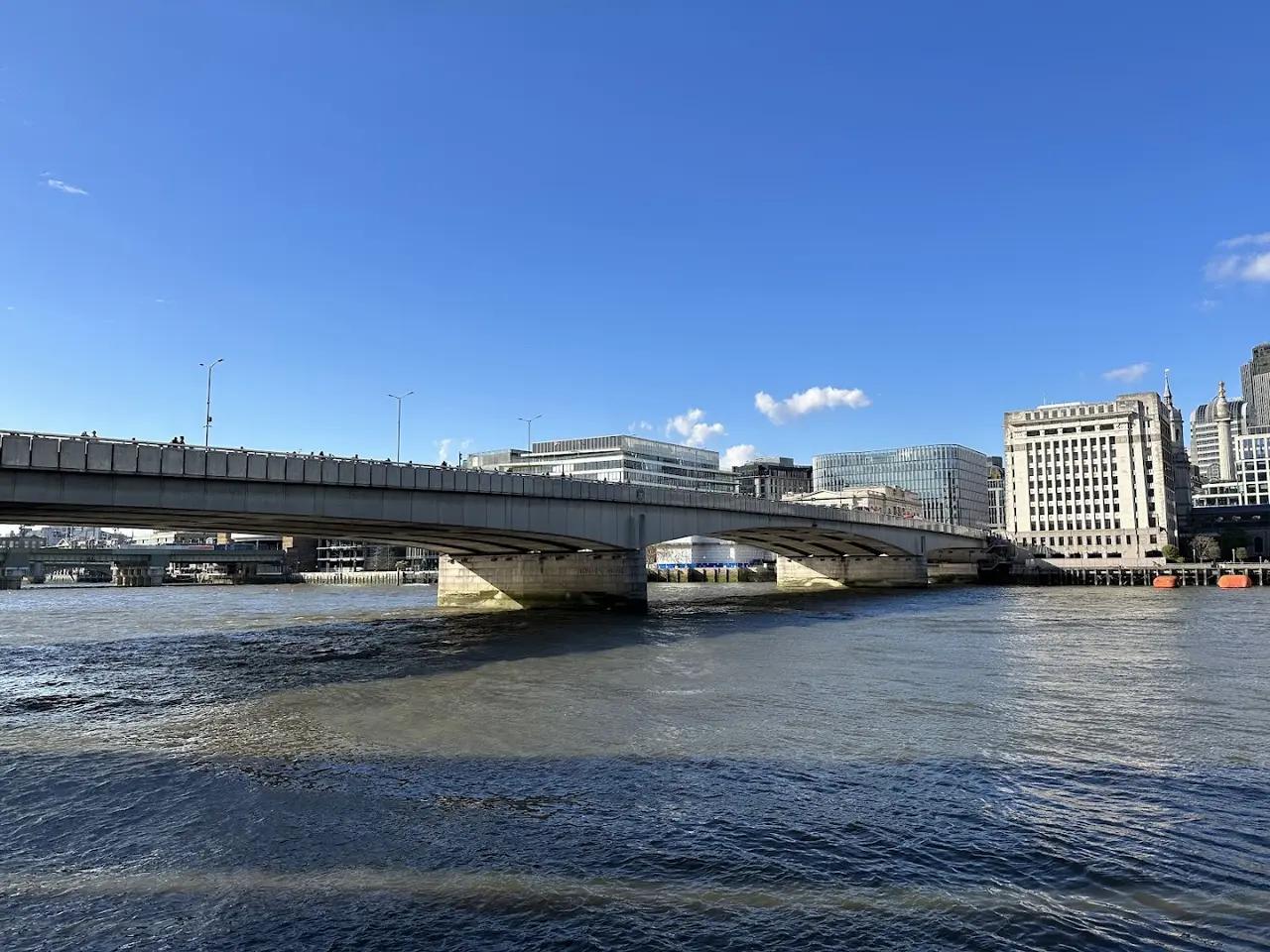
London Bridge
The City of London · Culture
ad From a wooden Roman construction, to a medieval wonder of the world, to being sold to an American in the 19th century, London Bridge has a fascinating history and one that goes right to the heart of London’s story... @citybridgefoundation is a charity that has been around for over 900 years. The money raised to build and maintain the very first stone London Bridge were the catalyst for the charity’s establishment. Today they look after five of London’s bridges at absolutely no cost to the taxpayer and give grants to London charities. In this video I cover the history of the bridge itself, for a more detailed history behind City Bridge Foundation, I posted another reel on the 5th January. #london #londonbridge #londonhistory #londontravel #londonarchitecture
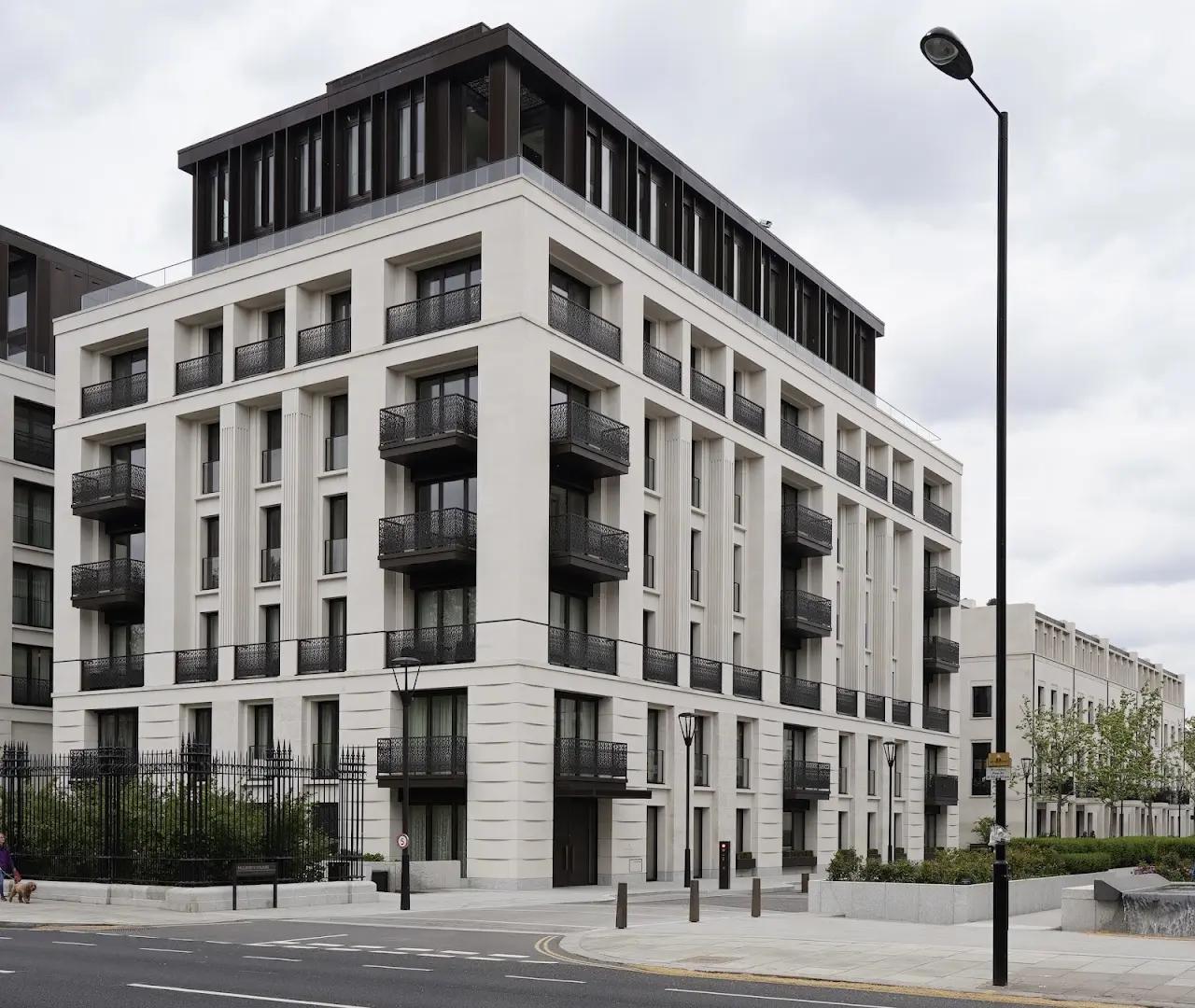
Chelsea Barracks
Sloane Square · Culture
The Garrison Chapel: A Spiritual Home For Traditional Arts Not too far from Sloane Square station you will find a relatively new kid-on-the-block of London’s art scene. The Garrison Chapel, housed in a converted Victorian army chapel, only opened its doors in 2022. Today it sits amongst a new luxury housing development, but was once the chapel for Chelsea Barracks. Chelsea Barracks Chelsea Barracks was established in 1862 on a relatively underdeveloped 13 acre site sandwiched between Chelsea, Pimlico and Belgravia. chelsea barracks history A map from 1897 After the Crimean War (1853-1856) British Army facilities were deemed unsuitable and unsanitary. Reports, such as the Royal Commission on the Sanitary Condition of the Army in 1858, revealed severe issues with the existing infrastructure. They were generally filthy, unhygienic and unventilated. The work of Florence Nightingale in improving conditions in barracks in the Crimean War and her subsequent �Notes on Matters Affecting the Health, Efficiency and Hospital Administration of the British Army�, were a key contributor to this drive. A brand new barracks were therefore built in Chelsea. Chelsea had a longstanding link to the British army through the Royal Hospital Chelsea and the Chelsea Pensioners, which I have written about previously here. Chelsea Barracks was designed by George Morgan as a British Army base for Guards regiments. It largely consisted of a long brick structure along Chelsea Bridge Road, designed to house two battalions. One battalion was housed in each wing, dining quarters were moved out of sleeping quarters and it was well ventilated with windows on opposite sides of the building. As you can see from the image below, it was broken up by two central towers. chelsea barracks history Chelsea Barracks in the late 19th century, image from wikimedia commons In 1897, it was an important part of Queen Victoria’s Diamond Jubilee celebrations. The barracks became home to over one thousand soldiers from India and across the globe to be a part of the parade and other celebrations. queen victoria diamond jubilee The Royal Service at St Paul’s Cathedral for Queen Victoria’s Diamond Jubilee, 1897. Image from wikimedia commons. chelsea barracks history Lord Roberts presenting Shamrock to the Irish Guards at Chelsea Barracks 1904-5. Image from wikimedia commons The Original Buildings Demolished After World War Two the Victorian barracks buildings were again deemed unsuitable. They were therefore demolished in place of two 1960s 13-storey towers, built to accommodate four companies of Guards. chelea barracks 1960s The two 1960s tower blocks, image from wikimedia commons, licensed under CC by SA 2.0 Only the barracks chapel and the iron railings were left from the original Victorian development. On 10th October 1981 members of the British Army Irish Guards regiment at the barracks were targeted by an IRA bomb. A remotely controlled bomb was hidden in a laundry van close to the Barracks at the corner of Ebury Bridge Road and St Barnabus Street. It was detonated as a bus passed by carrying 23 Irish Guards towards the barracks. Two civilians were killed and forty people were injured, twenty-three of whom were soldiers. The Site Sold In 2005 John Reid, the Secretary of Defence, announced that the site would be sold. It was apparently outdated and needed extensive renovations. The money from the sale was then �ring-fenced� be used to improve facilities elsewhere. The site was vacated by 2008 and the soldiers moved initially to the Royal Artillery Barracks at Woolwich. The Government initially hoped to get around 250 million for the site, but the eventual sale price was a whopping 959 million. It was sold to Qatari Diar, a subsidiary of the Qatar Investment Authority. A plan for the site by Squire and Partners was approved in 2011 with 448 residential units, around seven garden squares. They are mostly hyper-luxury, with prices for flats starting at 3.3 million. There is also a members club called the Garrison Club. It looks like there are 41 �affordable� apartments for social rent, a new NHS centre and shops as part of the development. chelsea barracks The Garrison Chapel The original Victorian chapel was at risk of being demolished along with everything else, but thankfully was saved after it was given a Grade II listing in 2011. The Victorian railings mentioned previously were given a Grade II listing in 2009. The chapel was designed by George Morgan in a simple Romanesque-Byzantine style, with the contrasting colours in the brickwork. garrison chapel Since 2022, the chapel has been home to a wonderful little art gallery called the Garrison Chapel. It is the exhibition space for the King’s Foundation, previously called the Prince’s Foundation. The King’s Foundation was founded by King Charles III in 1990, with the aim to promote sustainable communities, education in traditional skills, and environmental harmony. Part of what the charity does is provide training in traditional skills such as stonemasonry and fine art, through the School of Traditional Arts. the garrison chapel When I visited the chapel there was an exhibition on Icon Painting, using traditional methods and materials such as egg tempera. garrison chapel exhibition An icon painting of St Giles by Alan Hudson. I bumped into Alan, one of the artists whose works were being exhibited, and he was very kind to spend a bit of time giving me an overview of the exhibition. There is currently an exhibition on (until 22nd February 2026) celebrating the 20th anniversary of another charity founded by the King called Turquoise Mountain. The charity was founded in 2006 in Afghanistan to support artisans and communities to protect and revitalise cultural heritage. The display includes the work of master artisans and their work such as hand-woven carpets and textiles, embroidery, jewellery, hand-blown glass, woodwork, ceramics, tilework, stonework, miniature painting and lacquerware. Details To Spot There are a couple of details to spot in the gallery relating to the history of the building itself. Around where the altar would have once been is original tilework. This area now contains busts of Queen Elizabeth II and Prince Philip. garrison chapel history There are also surviving tiled memorials in memory of individual private soldiers. garrison chapel history I was really pleasantly surprised by my visit. I was the only visitor when I went (although it was a very wet and rainy day), which made it a very nice, relaxing experience. The chapel and its details are also a great surviving reminder of the story of the area and its historic links to the military. Visiting Garrison Chapel The Garrison Chapel is free to visit and is open from 11am-5pm Monday-Friday and 11am-4pm on Saturdays and Sundays. The address is: Chelsea Barracks, 8 Garrison Square, London, SW1W 8BG. You can find out more about visiting and their exhibitions here.
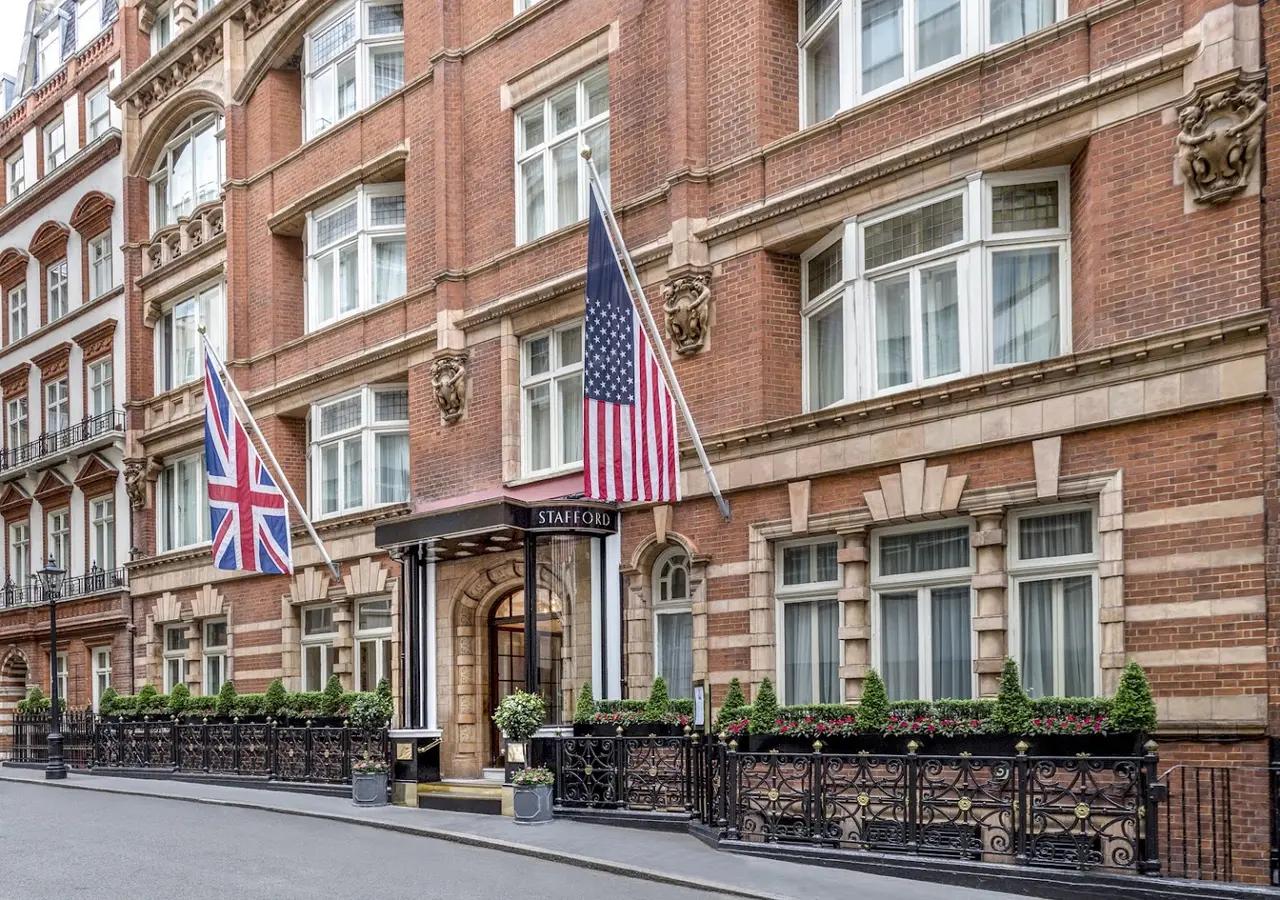
The Stafford London
Mayfair · Stay
Beneath the streets of St James’s lies something rather surprising� @thestaffordlondon dates from 1912, but sits over the 17th century wine cellars of the original aristocratic townhouse on the site. Right at the back of the wine cellars is, bizarrely, a World War Two time capsule. If you would like to read more, there is a link in my bio to my full blog post. #london #londonhistory #londonhotel #londontravel #ww2history
- W
Whittlesey Street
Covent Garden · Culture
Want to step back in time in London? One of the best places to do this is just minutes from the busy Waterloo Station� Roupell Street and the neighbouring Theed and Whittlesey Streets and an amazingly well preserved pocket of early 19th century London. These charming streets appear regularly in TV shows and films and although being built as workers cottages initially, today usually sell for over 2 million. There are also a few little details to spot, which I cover in the video. #london #londonhistory #londonstreets #beautifullondon #londontravel
- T
Theed Street
Covent Garden · Culture
Want to step back in time in London? One of the best places to do this is just minutes from the busy Waterloo Station� Roupell Street and the neighbouring Theed and Whittlesey Streets and an amazingly well preserved pocket of early 19th century London. These charming streets appear regularly in TV shows and films and although being built as workers cottages initially, today usually sell for over 2 million. There are also a few little details to spot, which I cover in the video. #london #londonhistory #londonstreets #beautifullondon #londontravel
- R
Roupell St, London, UK
Covent Garden · Culture
Want to step back in time in London? One of the best places to do this is just minutes from the busy Waterloo Station� Roupell Street and the neighbouring Theed and Whittlesey Streets and an amazingly well preserved pocket of early 19th century London. These charming streets appear regularly in TV shows and films and although being built as workers cottages initially, today usually sell for over 2 million. There are also a few little details to spot, which I cover in the video. #london #londonhistory #londonstreets #beautifullondon #londontravel
- R
Roman city wall
The City of London · Culture
This rather nondescript door in the City of London hides an ancient treasure� ?? It can be found at the top of Coleman Street. Head through it, down the stairs, along the corridor and you emerge into an underground carpark. Head along to Bay 53 and you will find, not a car, but an old section of London�a roman city wall! This was constructed by the Romans in around 200AD, so is over 1800 years old and has survived fire, war and Blitz. Pretty amazing! #london #londonhistory #londontravel #romanhistory #theromans
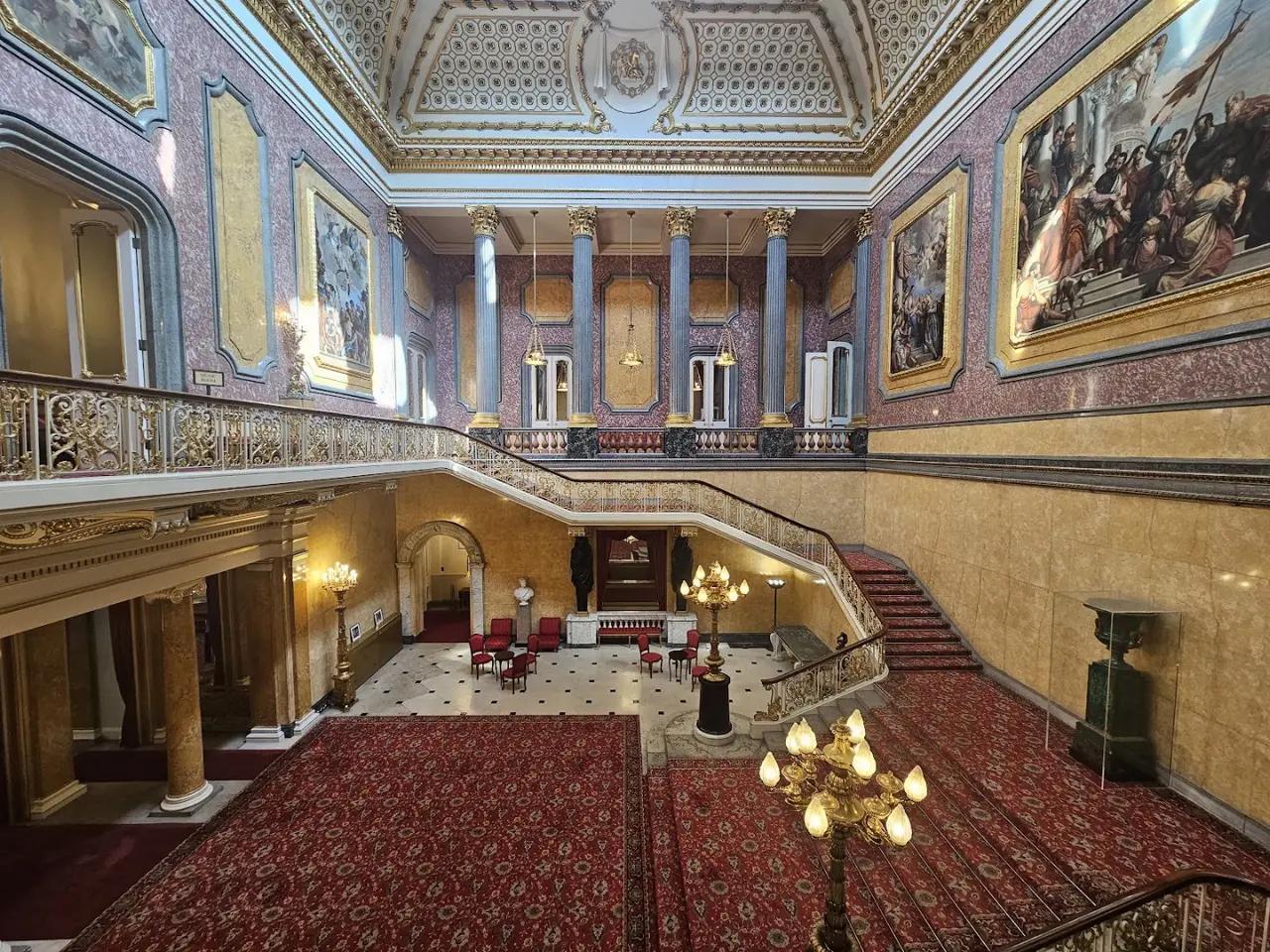
Lancaster House
Westminster · Culture
Most people have not been inside this London building, but you may well recognise it! It has featured in numerous TV shows and films such as The Crown, Downton Abbey, the King’s Speech and Bridgerton. I was delighted recently to be invited for an exclusive look around Lancaster House. It was once an aristocratic home and today it is mostly used for Government hosting, summits and diplomatic events. Here is the story behind it! There is a link in my bio for the full blog post should you want to find out more. #london #londonhistory #architecture #britishpolitics #londontravel
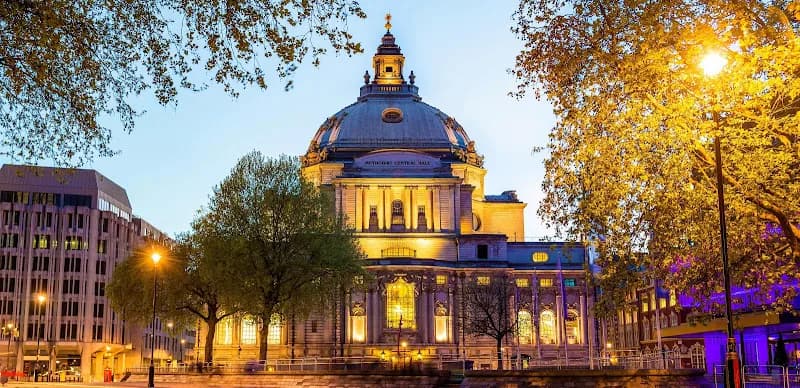
Central Hall Westminster, Storey's Gate, London, UK
Westminster · Culture
Six local Historical Treasures Of Islington Museum Islington Museum can be found in a fairly uninspiring looking building on St John Street. Do not be put off by the austere exterior however, it is absolutely worth popping in if you are at all interested in London’s history. Walking in you are met with a few information boards giving you a bit of background about how Islington has developed over the centuries. The exhibits however are generally much more specific, focussing in on individuals or singular addresses. There is a display case, for example, of objects found around, below the floorboards and in the garden of just one house (53 Cross Street) from the Victorian period until the modern day. It shows you the layers of history that can build up in a single home over the centuries. The exhibits are split into eight themes: Childhood, Food and Drink, Fashion, Leisure, Healthcare, Radicals, Caring, Home and War. It might not have the big hitters of other museums, it does not have the Rosetta Stone or Van Gogh’s Sunflowers, but it is a treasure trove of charming, endearing, fascinating local items that give a great sense of the rich tapestry of lives that have made Islington what it is today. Below, I have picked out six of my favourites. 1. Postcards from The Front These embroidered silk postcards, located in a pull out drawer, are a must-see. These were sent by Leonard Mansfield from the trenches in World War One back to his girlfriend and mother. They were made at home by French and Belgian women and depict designs specifically chosen to appeal to different groups of soldiers. Leonard was only 18 when he left for the front in 1916. He was badly injured in a gas attack but survived the war and married his girlfriend, Margaret in 1925. They lived happily in Islington for the rest of their lives. 2. The School Punishment Book This is something quite simple really, a school punishment book, but it is, I think, a little insight into the lives of school children in the 1950s. It is from Penton Junior Mixed School which was on Ritchie Street, just off Liverpool Road. You can see the date of the punishment, name of child, the �offence� and then �amount� of punishment. The amount in all cases is the number of lashings of the cane to either the hands or seat. One punishment you can see is 4 on hands� for �Dangerous conduct�. You can see five children getting 2 on hand� for �Disobedience and disgusting behaviour�. They immediately conjure up images in the mind about what these offences entails� Another is �Continual impertinence, kicked 3 members of staff�, the punishment for which was 3 (light) on seat�. My personal favourite: �misuse of water� 3. A Lifetime Of Standing Up A very personal set of items again here that are a window into the life of one Islington resident. They also though give a sense of the struggles, hopes and conflicts of the wider world. This is the badge collection of Martin King, born in 1959 and an Islington resident from 1989. He started collecting badges in the 1970s when he became active in left-wing and gay politics. In there is a badge relating to the fightback against Clause 28 of the Local Government Act in 1988 to stop councils and schools promoting positive images of lesbians and gay men, repealed in 2003. There is a �No War With Iraq� badge, a Free Nelson Mandela badge from the 1980s and many more. 4. A Heartbreaking Letter There was a whole corner dedicated to the closing of Holloway Prison. Holloway opened in 1852 as a mixed-sex prison but became England’s first female only prison in 1903, eventually becoming Europe’s largest female prison. It shut in 2016 with the site currently being redeveloped into housing by the Peabody Trust. Displayed was the reproduction of a letter from 1940 from a young girl to Eva to her mother. Eva, aged 8, came to the UK with her parents and were interned as �enemy aliens� because they were Jewish refugees from Nazi Germany. Women were kept at Holloway Prison before being taken to an internment camp on the Isle of Man. Children were kept in children’s homes. Eva tells her mum, food is �not at all like you said� and �we don’t wear our own frocks�, capturing the confusion she must have felt. She also, as you can see, wrote �When will I see you again? in the middle of the letter. You can imagine the worry and stress that her mother must have been feeling. 5. the Famous Defaced Library Books We have the items that I was told entice most people into the library, the Islington Public Library books defaced by Joe Orton and Kenneth Halliwell from 1959-1962. Playwright Joe Orton lived at 25 Noel Road in Islington with his partner Kenneth Halliwell from 1959 until their deaths in 1967. It is where he wrote pretty much all of his successful plays, such as Entertaining Mr Sloane, Loot, What The Butler Saw and more. Orton and Halliwell were sentenced to six months in prison in 1962 for stealing and causing malicious damage to seventy-two library books. They added different images and illustrations to the covers and even sometimes wrote in new bits of texts and endings, picking out books they considered mainstream and dull. They also removed illustrations from library art books to wallpaper their flat. Orton felt the harsh sentence was partly because of their sexuality. Orton was murdered in the flat by Haliwell on the 9th August 1967, with nine hammer blows to the head. It is said to have been fuelled by jealousy for Orton’s success and that Orton was planning to end their relationship. Halliwell then ended his own life with a drug overdose. Above are two they had on display, but my understanding is that they regularly swap round different books and covers. 6. A Skull And A Badge Finally, I have picked out this small exhibit with items relating to the links between the meat industry and Islington. Smithfield Market was London’s livestock and meat market for centuries, as I wrote about recently here. In the 19th century the livestock market moved up into Islington to where Caledonian Clock Tower Park is today. Many of the sheep, cattle and other animals came through Islington on their way to market. This would be sheep from East Anglia and cows from Wales and Scotland. Men called �drovers� would then walk them to London. From the 1500s they had to be licensed and were given numbered badges. You can see one dating from 1917 in the case above. The skull is of a long-horn cow, most likely from the 17th or 18th century. It was found in an old pond on Holloway Road, so it was likely being driven to market at Smithfield before it died. Visiting Islington Museum I hope that has persuaded you to pay a visit to Islington Museum! It is totally free and can be found at 245 St John Street, EC1V 4NB. The museum is open everyday except Wednesdays and Sundays, from 10am-5pm. It is worth bearing in mind as well that they shut for an hour for lunch from 1-2pm.
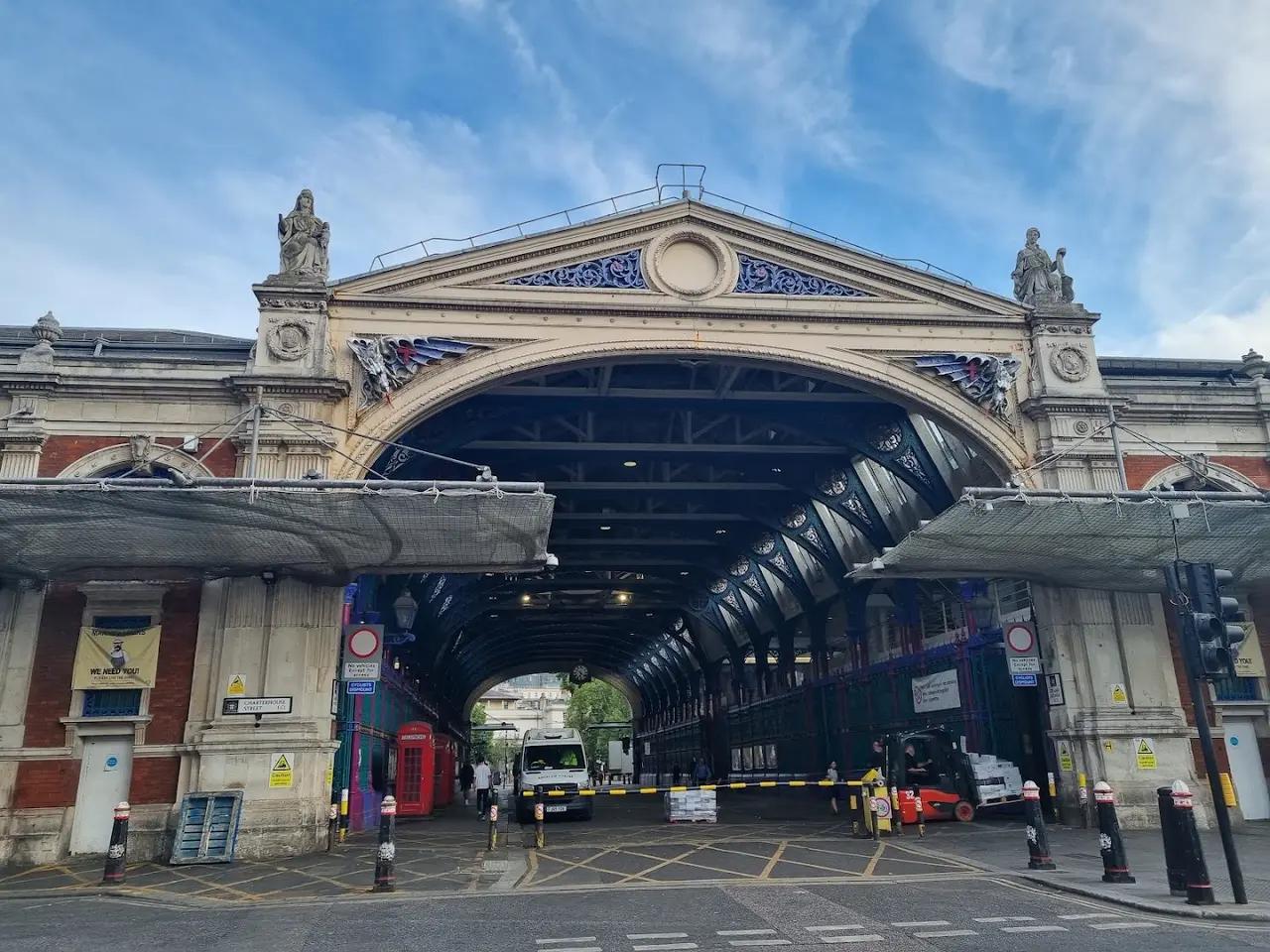
Smithfield Market
The City of London · Shop
Six local Historical Treasures Of Islington Museum Islington Museum can be found in a fairly uninspiring looking building on St John Street. Do not be put off by the austere exterior however, it is absolutely worth popping in if you are at all interested in London’s history. Walking in you are met with a few information boards giving you a bit of background about how Islington has developed over the centuries. The exhibits however are generally much more specific, focussing in on individuals or singular addresses. There is a display case, for example, of objects found around, below the floorboards and in the garden of just one house (53 Cross Street) from the Victorian period until the modern day. It shows you the layers of history that can build up in a single home over the centuries. The exhibits are split into eight themes: Childhood, Food and Drink, Fashion, Leisure, Healthcare, Radicals, Caring, Home and War. It might not have the big hitters of other museums, it does not have the Rosetta Stone or Van Gogh’s Sunflowers, but it is a treasure trove of charming, endearing, fascinating local items that give a great sense of the rich tapestry of lives that have made Islington what it is today. Below, I have picked out six of my favourites. 1. Postcards from The Front These embroidered silk postcards, located in a pull out drawer, are a must-see. These were sent by Leonard Mansfield from the trenches in World War One back to his girlfriend and mother. They were made at home by French and Belgian women and depict designs specifically chosen to appeal to different groups of soldiers. Leonard was only 18 when he left for the front in 1916. He was badly injured in a gas attack but survived the war and married his girlfriend, Margaret in 1925. They lived happily in Islington for the rest of their lives. 2. The School Punishment Book This is something quite simple really, a school punishment book, but it is, I think, a little insight into the lives of school children in the 1950s. It is from Penton Junior Mixed School which was on Ritchie Street, just off Liverpool Road. You can see the date of the punishment, name of child, the �offence� and then �amount� of punishment. The amount in all cases is the number of lashings of the cane to either the hands or seat. One punishment you can see is 4 on hands� for �Dangerous conduct�. You can see five children getting 2 on hand� for �Disobedience and disgusting behaviour�. They immediately conjure up images in the mind about what these offences entails� Another is �Continual impertinence, kicked 3 members of staff�, the punishment for which was 3 (light) on seat�. My personal favourite: �misuse of water� 3. A Lifetime Of Standing Up A very personal set of items again here that are a window into the life of one Islington resident. They also though give a sense of the struggles, hopes and conflicts of the wider world. This is the badge collection of Martin King, born in 1959 and an Islington resident from 1989. He started collecting badges in the 1970s when he became active in left-wing and gay politics. In there is a badge relating to the fightback against Clause 28 of the Local Government Act in 1988 to stop councils and schools promoting positive images of lesbians and gay men, repealed in 2003. There is a �No War With Iraq� badge, a Free Nelson Mandela badge from the 1980s and many more. 4. A Heartbreaking Letter There was a whole corner dedicated to the closing of Holloway Prison. Holloway opened in 1852 as a mixed-sex prison but became England’s first female only prison in 1903, eventually becoming Europe’s largest female prison. It shut in 2016 with the site currently being redeveloped into housing by the Peabody Trust. Displayed was the reproduction of a letter from 1940 from a young girl to Eva to her mother. Eva, aged 8, came to the UK with her parents and were interned as �enemy aliens� because they were Jewish refugees from Nazi Germany. Women were kept at Holloway Prison before being taken to an internment camp on the Isle of Man. Children were kept in children’s homes. Eva tells her mum, food is �not at all like you said� and �we don’t wear our own frocks�, capturing the confusion she must have felt. She also, as you can see, wrote �When will I see you again? in the middle of the letter. You can imagine the worry and stress that her mother must have been feeling. 5. the Famous Defaced Library Books We have the items that I was told entice most people into the library, the Islington Public Library books defaced by Joe Orton and Kenneth Halliwell from 1959-1962. Playwright Joe Orton lived at 25 Noel Road in Islington with his partner Kenneth Halliwell from 1959 until their deaths in 1967. It is where he wrote pretty much all of his successful plays, such as Entertaining Mr Sloane, Loot, What The Butler Saw and more. Orton and Halliwell were sentenced to six months in prison in 1962 for stealing and causing malicious damage to seventy-two library books. They added different images and illustrations to the covers and even sometimes wrote in new bits of texts and endings, picking out books they considered mainstream and dull. They also removed illustrations from library art books to wallpaper their flat. Orton felt the harsh sentence was partly because of their sexuality. Orton was murdered in the flat by Haliwell on the 9th August 1967, with nine hammer blows to the head. It is said to have been fuelled by jealousy for Orton’s success and that Orton was planning to end their relationship. Halliwell then ended his own life with a drug overdose. Above are two they had on display, but my understanding is that they regularly swap round different books and covers. 6. A Skull And A Badge Finally, I have picked out this small exhibit with items relating to the links between the meat industry and Islington. Smithfield Market was London’s livestock and meat market for centuries, as I wrote about recently here. In the 19th century the livestock market moved up into Islington to where Caledonian Clock Tower Park is today. Many of the sheep, cattle and other animals came through Islington on their way to market. This would be sheep from East Anglia and cows from Wales and Scotland. Men called �drovers� would then walk them to London. From the 1500s they had to be licensed and were given numbered badges. You can see one dating from 1917 in the case above. The skull is of a long-horn cow, most likely from the 17th or 18th century. It was found in an old pond on Holloway Road, so it was likely being driven to market at Smithfield before it died. Visiting Islington Museum I hope that has persuaded you to pay a visit to Islington Museum! It is totally free and can be found at 245 St John Street, EC1V 4NB. The museum is open everyday except Wednesdays and Sundays, from 10am-5pm. It is worth bearing in mind as well that they shut for an hour for lunch from 1-2pm.
- I
Islington Museum
Angel · Culture
Six local Historical Treasures Of Islington Museum Islington Museum can be found in a fairly uninspiring looking building on St John Street. Do not be put off by the austere exterior however, it is absolutely worth popping in if you are at all interested in London’s history. Walking in you are met with a few information boards giving you a bit of background about how Islington has developed over the centuries. The exhibits however are generally much more specific, focussing in on individuals or singular addresses. There is a display case, for example, of objects found around, below the floorboards and in the garden of just one house (53 Cross Street) from the Victorian period until the modern day. It shows you the layers of history that can build up in a single home over the centuries. The exhibits are split into eight themes: Childhood, Food and Drink, Fashion, Leisure, Healthcare, Radicals, Caring, Home and War. It might not have the big hitters of other museums, it does not have the Rosetta Stone or Van Gogh’s Sunflowers, but it is a treasure trove of charming, endearing, fascinating local items that give a great sense of the rich tapestry of lives that have made Islington what it is today. Below, I have picked out six of my favourites. 1. Postcards from The Front These embroidered silk postcards, located in a pull out drawer, are a must-see. These were sent by Leonard Mansfield from the trenches in World War One back to his girlfriend and mother. They were made at home by French and Belgian women and depict designs specifically chosen to appeal to different groups of soldiers. Leonard was only 18 when he left for the front in 1916. He was badly injured in a gas attack but survived the war and married his girlfriend, Margaret in 1925. They lived happily in Islington for the rest of their lives. 2. The School Punishment Book This is something quite simple really, a school punishment book, but it is, I think, a little insight into the lives of school children in the 1950s. It is from Penton Junior Mixed School which was on Ritchie Street, just off Liverpool Road. You can see the date of the punishment, name of child, the �offence� and then �amount� of punishment. The amount in all cases is the number of lashings of the cane to either the hands or seat. One punishment you can see is 4 on hands� for �Dangerous conduct�. You can see five children getting 2 on hand� for �Disobedience and disgusting behaviour�. They immediately conjure up images in the mind about what these offences entails� Another is �Continual impertinence, kicked 3 members of staff�, the punishment for which was 3 (light) on seat�. My personal favourite: �misuse of water� 3. A Lifetime Of Standing Up A very personal set of items again here that are a window into the life of one Islington resident. They also though give a sense of the struggles, hopes and conflicts of the wider world. This is the badge collection of Martin King, born in 1959 and an Islington resident from 1989. He started collecting badges in the 1970s when he became active in left-wing and gay politics. In there is a badge relating to the fightback against Clause 28 of the Local Government Act in 1988 to stop councils and schools promoting positive images of lesbians and gay men, repealed in 2003. There is a �No War With Iraq� badge, a Free Nelson Mandela badge from the 1980s and many more. 4. A Heartbreaking Letter There was a whole corner dedicated to the closing of Holloway Prison. Holloway opened in 1852 as a mixed-sex prison but became England’s first female only prison in 1903, eventually becoming Europe’s largest female prison. It shut in 2016 with the site currently being redeveloped into housing by the Peabody Trust. Displayed was the reproduction of a letter from 1940 from a young girl to Eva to her mother. Eva, aged 8, came to the UK with her parents and were interned as �enemy aliens� because they were Jewish refugees from Nazi Germany. Women were kept at Holloway Prison before being taken to an internment camp on the Isle of Man. Children were kept in children’s homes. Eva tells her mum, food is �not at all like you said� and �we don’t wear our own frocks�, capturing the confusion she must have felt. She also, as you can see, wrote �When will I see you again? in the middle of the letter. You can imagine the worry and stress that her mother must have been feeling. 5. the Famous Defaced Library Books We have the items that I was told entice most people into the library, the Islington Public Library books defaced by Joe Orton and Kenneth Halliwell from 1959-1962. Playwright Joe Orton lived at 25 Noel Road in Islington with his partner Kenneth Halliwell from 1959 until their deaths in 1967. It is where he wrote pretty much all of his successful plays, such as Entertaining Mr Sloane, Loot, What The Butler Saw and more. Orton and Halliwell were sentenced to six months in prison in 1962 for stealing and causing malicious damage to seventy-two library books. They added different images and illustrations to the covers and even sometimes wrote in new bits of texts and endings, picking out books they considered mainstream and dull. They also removed illustrations from library art books to wallpaper their flat. Orton felt the harsh sentence was partly because of their sexuality. Orton was murdered in the flat by Haliwell on the 9th August 1967, with nine hammer blows to the head. It is said to have been fuelled by jealousy for Orton’s success and that Orton was planning to end their relationship. Halliwell then ended his own life with a drug overdose. Above are two they had on display, but my understanding is that they regularly swap round different books and covers. 6. A Skull And A Badge Finally, I have picked out this small exhibit with items relating to the links between the meat industry and Islington. Smithfield Market was London’s livestock and meat market for centuries, as I wrote about recently here. In the 19th century the livestock market moved up into Islington to where Caledonian Clock Tower Park is today. Many of the sheep, cattle and other animals came through Islington on their way to market. This would be sheep from East Anglia and cows from Wales and Scotland. Men called �drovers� would then walk them to London. From the 1500s they had to be licensed and were given numbered badges. You can see one dating from 1917 in the case above. The skull is of a long-horn cow, most likely from the 17th or 18th century. It was found in an old pond on Holloway Road, so it was likely being driven to market at Smithfield before it died. Visiting Islington Museum I hope that has persuaded you to pay a visit to Islington Museum! It is totally free and can be found at 245 St John Street, EC1V 4NB. The museum is open everyday except Wednesdays and Sundays, from 10am-5pm. It is worth bearing in mind as well that they shut for an hour for lunch from 1-2pm.
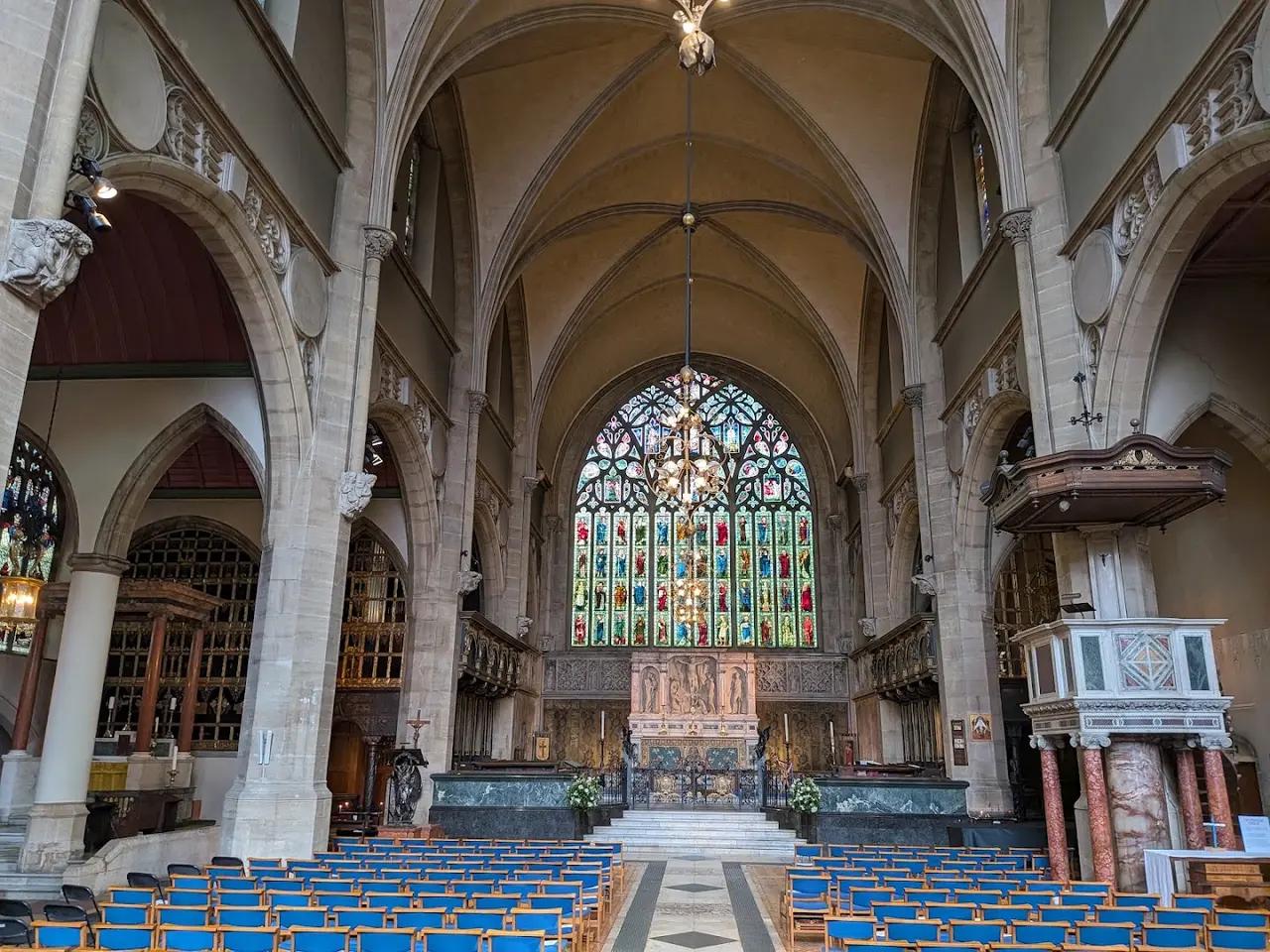
Holy Trinity Church, Sloane Square
Sloane Square · Culture
Holy Trinity, Sloane Square: �A Cathedral Of The Arts And Crafts Movement� Just a couple of minutes from Sloane Square underground station you can find a beautiful, historic church. It holds the title of the widest church in London (9 inches wider than St Paul’s Cathedral), but also is very architecturally significant. It is a real artistic jewel in the crown of West London. holy trinity sloane square A New Church For A Growing Congregation Holy Trinity Sloane Square was constructed from 1888-1890. It was built on the site of a smaller Gothic church that had been constructed in 1828. It was commissioned by the 5th Earl of Cadogan to cater for the spiritual needs of the growing population on the Cadogan Estate. The architect John Dando Sedding was the man assigned the task. Sedding designed a church that was later described by John Betjeman as a �Cathedral of the Arts and Crafts Movement�. jd sedding J.D. Sedding (1838-1891), image from wikimedia commons. An Arts And Crafts Masterpiece Sedding was a founding member and Master of the Art Workers Guild. Arts and Crafts, beginning in the 1860s, championed traditional methods and good quality materials over mass-produced, machine produced items. It was essentially a rejection of and pushback against the industrialisation of the Victorian period. It was also all about incorporating art into life, with beautiful but functional objects. Sedding trained under G.E. Street, who designed and restored over 100 churches in his career, as well as the Gothic Revival Royal Courts of Justice on the Strand. William Morris is, of course, the most famous and central figure to this movement, he had also trained in the offices of G.E. Street. John Ruskin was a foundational intellectual figure of the movement, promoting the dignity of labour, critical of industrialisation and linking good design to moral health. john ruskin A bust of John Ruskin in the church william morris A bust of William Morris Holy Trinity Sloane Square is a late 19th century Gothic church, but also incorporates elements from early medieval, Byzantine and pre-Renaissance Italian. As well as an architect, Sedding was a sculptor, metalworker and designer of wallpaper and textiles. Through his work he aimed to revive the relationship between architect and craftsman. holy trinity sloane square J.D. Sedding sadly died in April 1891, just after the main body of the church had been completed, with some of the interior decorations then finished by his assistant Henry Wilson. Details To Spot Walking in, you are immediately struck by the stunning East stained glass window. stained glass morris This was designed by Edmund Burne-Jones and made by William Morris and Co. It is considered the largest Arts and Crafts stained glass window ever created and depicts biblical scenes, virtues such as Wisdom and Faith and various Saints. stained glass holy trinity There are also other stained glass windows to the North and South by William Blake Richmond and Christopher Whall. stained glass There are various sculptures, for example F.W Pomeroy’s bronze angels on the chancel screen and his sculptured reliefs above and on the choir stalls. pomeroy angels One of Pomeroy’s paired angels The beautiful marble reredos was carved by John Tweed. marble reredos The bronze angel lecturn is by Henry Hugh Armstead. lecturn The pulpit, with its intricate multi-coloured marble, was designed by Sedding. pulpit holy trinity sloane square All of the little details combine to make the church a work of art in and of itself. This is reflected in its Grade I listing with Historic England, giving it maximum protection from any changes. It is apparently one of the few churches in Britain that can be considered a �gesamtkunstwerk�, a German word for a total work of art, incorporating different art forms. Nikolaus Pevsner described the church as a �a museum of 1890s design�. Parishioners over the decades have included political figures such as William Gladstone and artists such as Oscar Wilde, who lived nearby. Survival And rescue The church was hit by several incendiary bombs during the Blitz. The roof of the nave was totally destroyed and the church exposed to the elements. Services crammed into the Lady Chapel for around ten years until the roof was finally replaced. The stained glass remarkably survived the bombs. Photographs of the church being restored from 1949-51 In the 1960s and 70s, church authorities tried to have the church demolished and replaced with a smaller building. This plan was thankfully stopped by a campaign led by John Betjeman and the Victorian Society. Betjeman, who also famously saved what is now the St Pancras Renaissance Hotel, even wrote a poem about the church during the campaign: �Bishop, archdeacon, rector, wardens, mayor Guardians of Chelsea’s noblest house of prayer. You your church’s vastness deplore �Should we not sell and give it to the poor? Recall, despite your practical suggestion Which the disciple was who asked that question. Memorials I always like to browse and spend a bit of time reading the memorials around the walls of churches. They are little insights into individual lives but also often link in with broader histories and world events as well. Here are a few I saw, that stood out to me. Mr and Mrs Tickle. Their son Harold John Robert Tickle died aged twenty, as part of the Royal Air Force Volunteer Reserve. Sir William Edward Maxwell, a colonial officer, who served as Governor of the colony of the Gold Coast in Australia Robert Nathaniel Dudley Ryder, a Major who died aged 34 in World War One, killed instaneously by a sniper. You can read more about him here. How To Visit It is absolutely worth paying Holy Trinity, Sloane Square church a visit, particularly if you are interested in church architecture. The church is open for general viewing Monday-Saturday 10am-5pm. The current services are an 11am Choral Eucharist and a 6pm Choral Evensong every Sunday and 6.30pm Eucharist, every Wednesday.
- M
Methodist Central Hall Westminster
Westminster · Outdoors
A Visit To Methodist Central Hall: Where History Happened There are so many incredible historic buildings in a relatively small area in Westminster. Many, quite reasonably, are focussed on Westminster Abbey and the Houses of Parliament and do not pay a huge amount of attention to Methodist Central Hall. It is just on the other side of the road from Westminster Abbey and is worth a second look, because it has an important history, not just to London, but the world. Methodist Central Hall opened in 1912, but previously on the site was a building called the �Royal Aquarium�. The Royal Aquarium royal aquarium The Royal Aquarium, Summer Garden and Winter Garden, to give it its full name, opened in 1876. It was, as you can see from the illustration above, highly ornamental in design and was huge, measuring 340ft long and 160ft wide, designed by Alfred Bedborough. It was also never really an aquarium. The building was intended as a sort of variety entertainment venue, with art exhibitions, concerts, competitions and more, all around a central hall. royal aquarium The central hall was decorated with palm trees, statues and sculptures. The hall also contained thirteen water tanks. These were intended to contain sea creatures, but due to very high operating costs, they were never stocked. In 1877 a whale was brought over but died shortly after arrival, so they just displayed the dead whale instead. dead whale The proprietors wanted to achieve the ??moral elevation of the people by the contemplation of the wonders of nature�. It ended up being rather more low-brow than they had intended. Human Cannonballs To Shaving Competitions Instead of scientific lectures and classical music, sensational circus acts were performed. One of the most famous was Zazel, the first ever human cannonball. Real name Rossa Matilda Richter, aged 17, she was the first person to be fired out of a cannon in 1877. zazal human cannonball Zazel at the beginning of her act at the Royal Aquarium. She would be fired out of the cannon, across the hall, landing in a net on the other side. Image from wikimedia commons. Below are a few artworks that give you an impression of the wide-ranging entertainments. These gentlemen appear horrified by this scantily dressed acrobat A cyclist attempting a loop-the-loop shaving competitions A shaving competition, with participants trying to shave people in record time The building also incorporated a theatre, initially called the Aquarium Theatre, later the Imperial Theatre. The Royal Aquarium also apparently got a slightly dodgy reputation as a pick up joint, �unaccompanied� ladies promenading through the hall in search for male companionship. By the early 1900s the owners went bankrupt and the place closed. The Royal Aquarium was demolished in 1903, the theatre kept going until 1907. Methodist Central Hall In 1904 the site of the Aquarium was purchased for the construction of Methodist Central Hall. In 1891 the Wesleyan Methodist Twentieth Century Fund was launched to mark the centenary of founder John Wesley’s death in 1791. The aim was to fund a new hall to commemorate this. It became known as the Million Guinea Fund, launched at Wesley’s Chapel on City Road in Islington. It aimed to raise one million guineas from one million Methodists across the world. The idea was that regardless of wealth, an individual was only allowed to donate one guinea. They ended up raising 1,075,727. methodist central hall The Historic Roll, recording the names of all who donated a Guinea to the fund The building was completed in 1912, designed by Edwin Alfred Rickards in this Viennese baroque style, contrasting with the Gothic of Westminster Abbey. methodist central hall architecture Some of the decorative sculpture on the outside of the building methodist central hall architecture The Grand Staircase of the hall At its heart is the grand domed hall. methodist central hall history Rickards used new reinforced concrete and iron ribs running through the dome. It is therefore self-supporting and was the largest of its kind in Europe. grand dome The view of Westminster Abbey and the Elizabeth Tower from the balcony of Methodist Central Hall. This was, unsurprisingly, a key spot for the film crews, during the King’s coronation and the Queen’s funeral. 80 Years Since A Pivotal Meeting It was of course intended primarily as a church, but also as a public meeting space for all people regardless of religious persuasion. Some of the meetings of the Suffragettes took place here for example, in 1914. Most notably, it is where the first ever meeting of the General Assembly of the United Nations took place from the 10th January 1946. 2026 therefore marks the 80th anniversary of this historic moment. The world was emerging from the Second World War, 100 million were dead and many cities and towns lay in ruins. It was decided that the first meeting of the UN should be in war-torn London, so that the devastation of war was clear to those attending, starkly displaying what the meeting hoped to stop from happening in the future. Delegates were taken on tours of bomb-damaged areas and even given temporary ration books and clothing coupons. Why Was Methodist Central Hall Chosen? methodist central hall history Methodist Central Hall was chosen because it was not badly damaged, it had even sheltered people in its basement regularly during the Blitz and a church, a place of peace and worship, was seen as an appropriate venue. Ernest Bevin, the UK Foreign Secretary said, �there could be no better place than a House of God, with the atmosphere of prayer already there�. 51 delegates and around 800 journalists from around the world gathered. Enemies often sitting side by side, relations fragile, but determined to stop something like this ever happening again. first un meeting Delegates entering Methodist Central Hall, image courtesy of the UN Photo Collection first un meeting The First Session in the Central Hall, image courtesy of the UN Photo Collection first un meeting UK Prime Minister Clement Attlee addresses the General Assembly, image courtesy of the UN Photo Collection The meetings went on until the 14th February. The first President and Secretary-General were elected and immediate issues were addressed such as atomic energy and refugees. The history of the world emerging from the devastation of World War Two and countries coming together to avoid conflict and solve issues cooperatively feels ever more important in today’s world. A Trophy Lost And Found! As many of you will know, the Football World Cup was last held in London in 1966. A few months before the tournament, the Jules Rimet trophy was on display at the Methodist Central Hall for people to be able to see it. On Sunday 20th March 1966, the security guard went on a circuit of the building at around midday. They returned to find the rear doors to the building open, the display case broken and trophy gone. world cup trophy stolen The room in Methodist Central Hall from which the Jules Rimet trophy was stolen. The head of the Football Association received a call and a ransom note, demanding 15,000 in return for the trophy. An undercover police officer went to meet a man called Edward Betchley, who had been calling himself Jackson, with a briefcase full of fake money. They arrested Betchley, however he denied being the brains behind the operation and that he was just a middle man. He also did not have the cup on him. The trophy turned up a week later wrapped in newspaper under the wheel of a car in South London. It was found by a black and white dog called Pickles, snuffling around on a walk with his owner David Corbett. Corbett was given a financial reward, Pickles was given a silver medal by the National Canine Defence League, a year’s free supply of dog food and became a bit of a celebrity, even appearing in a film. Pickles, the �Spy with the cold nose�, image from wikimedia commons England went on, of course, to win the World Cup that year. Methodist Central Hall told me that they would be very happy to host the World Cup Trophy again in the future as it is clearly a good omen� Other Purposes The building has hosted many famous speakers over the decades from Mahatma Ghandi, to Winston Churchill to Nelson Mandela. Bizarrely in 1968, the hall hosted the first ever performance of Andrew Lloyd Webber’s Joseph and the Amazing Technicoloured Dreamcoat. His father William Lloyd Webber was the organist at the church. methodist central hall history It also used to host the BBC’s New Year’s Eve concerts, so Robbie Williams, Queen, Nile Rogers have all performed here. Visiting Methodist Central Hall If you are keen to visit Methodist Central Hall, they do offer tours on Thursdays. I am told you should email church@mchw.org.uk if you would like to organise that. Wesley’s Cafe on the ground floor can visited from 8am-4pm on weekdays and 10am-4pm on weekends. Find out more here. Otherwise they always open for one weekend of the Open House festival in September, run by Open City, so keep an eye out for that.
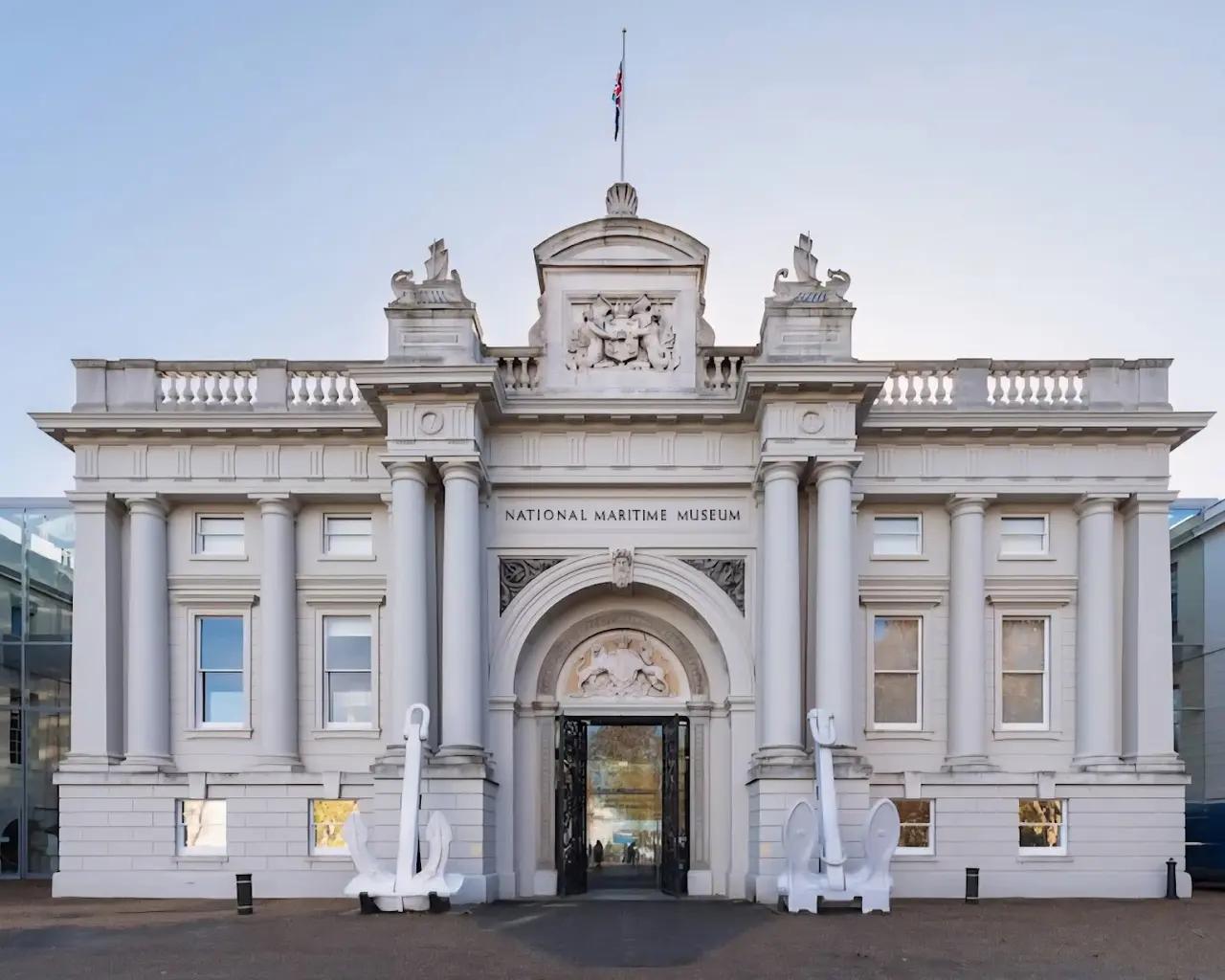
National Maritime Museum
Greenwich · Culture
History news! The flag that led the British fleet at the Battle of Trafalgar has gone on sale for 450,000 ???? It is currently privately owned and an export ban has been put in place until the end of March 2026 to give a UK institution of gallery time to acquire it. #london #londonhistory #londonmuseum #navalhistory #londontravel
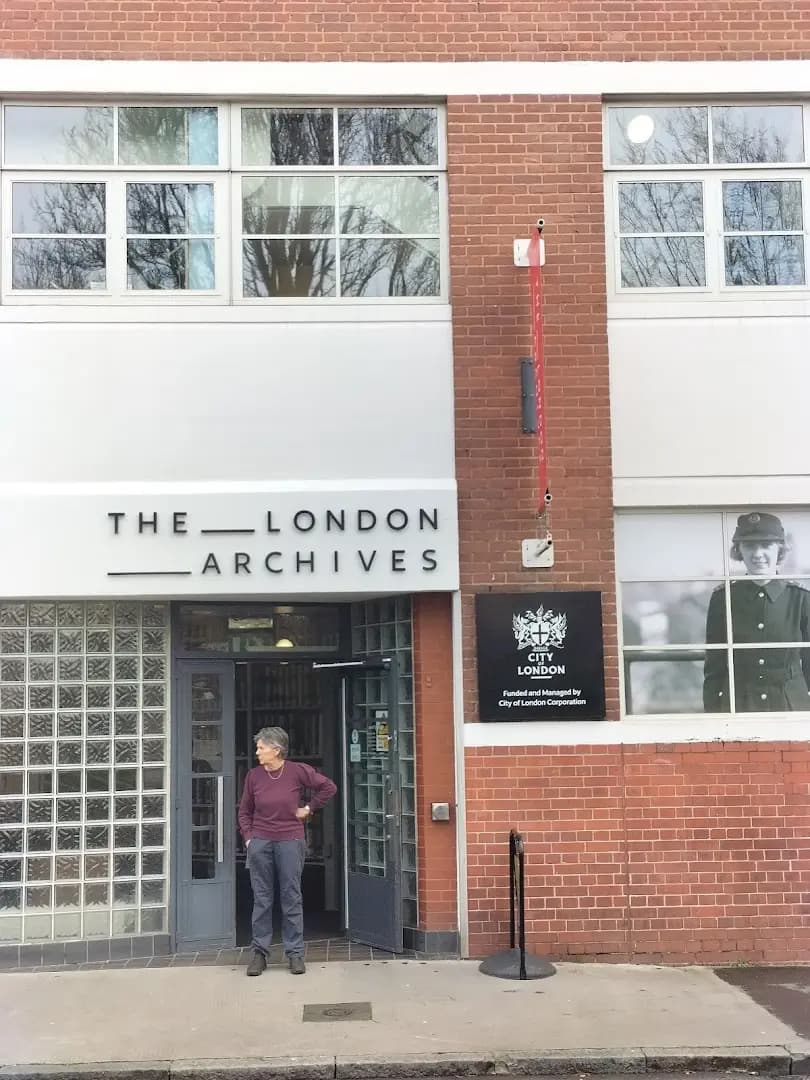
The London Archives
Angel · Culture
ad What links these five London bridges? ?? Tower Bridge, London Bridge, Southwark Bridge, Millennium Bridge and Blackfriars Bridge are all maintained by a charity at no cost to the taxpayer! The @citybridgefoundation has been going for over 900 years, working away behind the scenes and since 1995 have supported charities across London with grants to tackle inequality and injustice. I was also lucky enough to visit to @the_london.archives to see some of the incredible items in their collection. #london #londonhistory #cityoflondon #towerbridge londonbridge
- B
Blackfriars Bridge
The City of London · Culture
ad What links these five London bridges? ?? Tower Bridge, London Bridge, Southwark Bridge, Millennium Bridge and Blackfriars Bridge are all maintained by a charity at no cost to the taxpayer! The @citybridgefoundation has been going for over 900 years, working away behind the scenes and since 1995 have supported charities across London with grants to tackle inequality and injustice. I was also lucky enough to visit to @the_london.archives to see some of the incredible items in their collection. #london #londonhistory #cityoflondon #towerbridge londonbridge
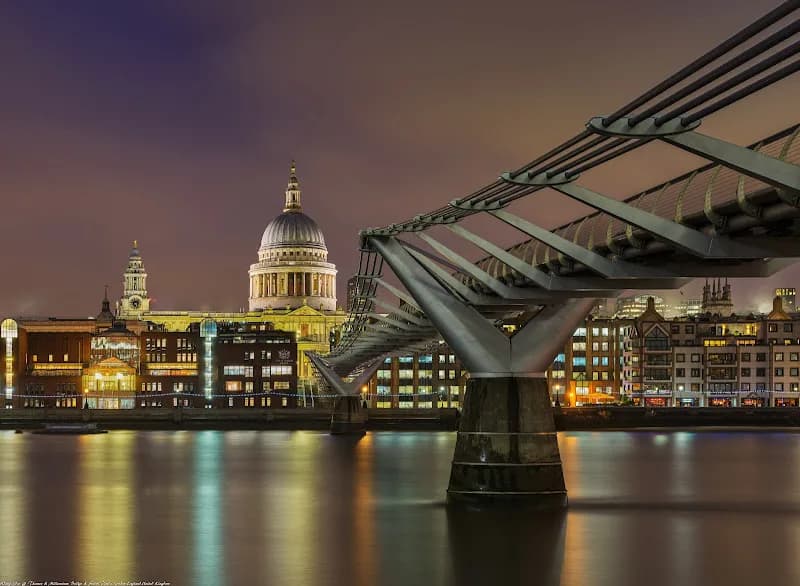
Millennium Bridge
The City of London · Culture
ad What links these five London bridges? ?? Tower Bridge, London Bridge, Southwark Bridge, Millennium Bridge and Blackfriars Bridge are all maintained by a charity at no cost to the taxpayer! The @citybridgefoundation has been going for over 900 years, working away behind the scenes and since 1995 have supported charities across London with grants to tackle inequality and injustice. I was also lucky enough to visit to @the_london.archives to see some of the incredible items in their collection. #london #londonhistory #cityoflondon #towerbridge londonbridge
- S
Southwark Bridge
The City of London · Outdoors
ad What links these five London bridges? ?? Tower Bridge, London Bridge, Southwark Bridge, Millennium Bridge and Blackfriars Bridge are all maintained by a charity at no cost to the taxpayer! The @citybridgefoundation has been going for over 900 years, working away behind the scenes and since 1995 have supported charities across London with grants to tackle inequality and injustice. I was also lucky enough to visit to @the_london.archives to see some of the incredible items in their collection. #london #londonhistory #cityoflondon #towerbridge londonbridge
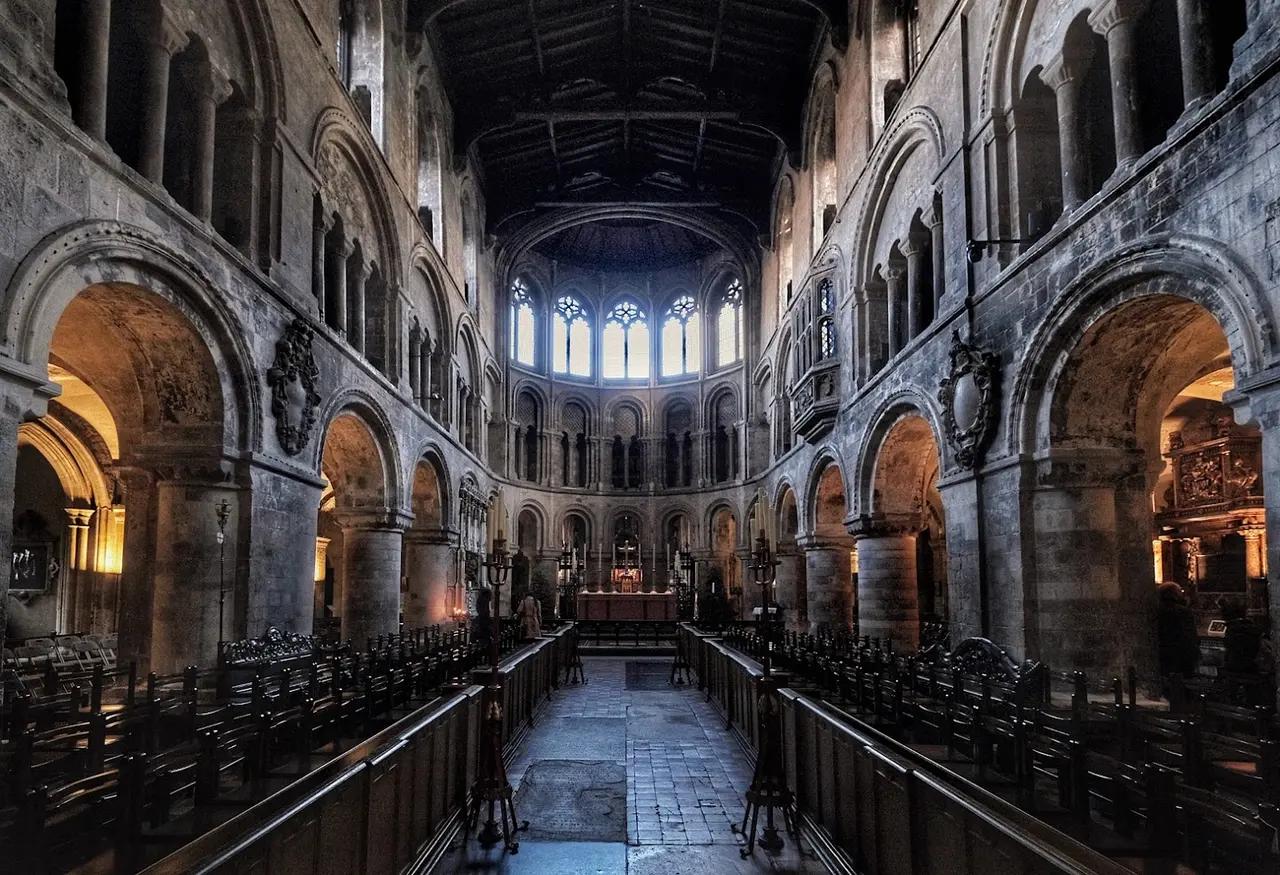
St Bartholomew the Great
The City of London · Culture
An Early Morning Tour Of Smithfield Meat Market If we are talking about living history, one of the places that is most emblematic of that in London is Smithfield Market. It is London’s oldest wholesale market, tracing its roots back over 800 years and still operating from the same site. It is, however, sadly, going to be shutting down in the next few years. Part of the site is currently being turned into the new Museum of London, rebranded as the London Museum (which, by the way, is going back to its original name from when it was first established in 1911- it was only known as the Museum of London from 1976-2024). As a wholesale meat market, the real action takes place over night from midnight until about 6.30am. Go there during the day and you can admire the beautiful Victorian architecture in relative peace and quiet. There are a few people milling around wheeling bins or cleaning the floors. At night though, as much of the rest of the city snores, the market comes alive. Butchers, restaurant owners and members of the public all visit the market in the early hours to get their chops, steaks and offal. You can do an early morning guided tour of the market, to visit it at about 6.30am, right at the tail end of the market’s activities. So, that is what I did, dragging myself out of bed to get to Barbican Station by 6.20am. I will share some photographs, whilst taking you through the history of the market. early morning tour smithfield market Following our brilliant guide Courtney through the dark streets on our way to the market early morning tour smithfield market The History of Smithfield Market Let’s go right back to the beginning. The name �Smithfield� for this area that was once just outside the city walls, comes from �Smooth Field�. This related to the smooth, grassy fields that once lay here, on the banks of the River Fleet, one of London’s �lost rivers�, that still flows underground beneath Farringdon Road. Smithfield was a popular in the medieval period for various activities, including football, wrestling, archery, jousting tournaments and executions. It was where Sir William Wallace was hanged, drawn and quartered in 1305 and where 29 Protestants were burnt at the stake under the reign of Mary I. Smithfield on the Agas map of 1561 It also was the location of a weekly livestock market. The first written record we have of a market is in 1174, although it will most likely have older roots. William Fitzstephen described the area as �A smooth field where every Friday there is a celebrated rendezvous of fine horses to be sold� swine with deep flanks, and cows and oxen of immense bulk. Animals would be walked to Smithfield from across the country, fattened up and sold. Originally the slaughtering would then take place inside the City walls, at Newgate Shambles or Eastcheap, but in the 1300s the slaughter of animals moved out to Smithfield as well. The Market Swells Over the centuries, as the city’s population grew, the market also grew. By the mid 19th century, 2 million sheep and 200,000 cows were annually being driven to Smithfield. This unsurprisingly was causing severe noise, incredibly unsanitary conditions and congestion, often overflowing into the narrow, winding surrounding streets. Smithfield on the Greenwood map of 1827 by Mark Annand The market was described evocatively by Charles Dickens in Oliver Twist. He said: �The ground was covered nearly ankle-deep with filth and mire; and a thick steam perpetually rising from the reeking bodies of the cattle, and mingling with the fog, which seemed to rest upon the chimney-tops, hung heavily above� Countrymen, butchers, drovers, hawkers, boys, thieves, idlers, and vagabonds of every low grade, were mingled together in a dense mass: the whistling of drovers, the barking of dogs, the bellowing and plunging of beasts, the bleating of sheep, and grunting and squeaking of pigs; the cries of hawkers, the shouts, oaths, and quarrelling on all sides, the ringing of bells, and the roar of voices that issued from every public-house; the crowding, pushing, driving, beating, whooping, and yelling� rendered it a stunning and bewildering scene which quite confused the senses�. smithfield market victorian Smithfield livestock Market in its final days, 1855, image from wikimedia commons The livestock market was eventually considered unsustainable in this location and in 1852 an Act of Parliament, the Smithfield Market Removal Act, was passed. The livestock market moved to where Caledonian Clock Tower Park is today in Islington, then called Copenhagen Fields. I have written previously about climbing up the clock tower in the park here. The New Market Building Smithfield remained as a �dead meat� market, i.e. no live animals anymore. A new, state-of-the art market building was required. The man commissioned to design it was Horace Jones, the City of London’s Architect and Surveyor. He would also go on to design the old Billingsgate Market building, Leadenhall Market and then, most notably, Tower Bridge. horace jones Horace Jones in 1886 by Walter William Ouless, image from wikimedia commons In true Victorian style, the market he designed was not just functional but beautiful, with its intricate and colourful design. The East and West market buildings were designed first, opening in 1868. smithfield market history gates smithfield market The ornate gates leading to the Buyer’s Walk in the East Market building commenced 1867 A Cutting-Edge Design The design was also state-of-the-art for the time. It used a lot of cast iron and glass to keep the market cool and ventilated, crucial for meat and maintaining the cleanliness of the market. The most revolutionary aspect of the market was that it was built over the world’s first underground railway line. Metropolitan Line freight trains could then deliver meat into a huge basement of brick arches and iron girders designed by Jones. The meat would be then brought up to ground level via hydraulic lift, or the spiral ramp outside, for sale. It sits over a cross-section of three railway lines, one coming from the Chatham and Dover Railway, and another heading Eastwards. ramp rotunda smithfield The impressive ramp now leads down to the underground carpark below the rotunda. Its distinctive design has appeared in films including the James Bond film Skyfall, as the entranceway to the temporary MI6 headquarters. The Poultry Market building followed in 1875 (although rebuilt after a devastating fire in 1958) and the General Market building in 1883. Both of these are going to be home to the new London Museum, opening at the end of 2026. new museum of london The Poultry Market building undergoing a restoration to become part of the new London Museum smithfield market map A map of the various parts of the market by DarTar, image from wikimedia commons Exploring the Halls You head through a doorway of clear, plastic flaps into the Buyers� Walk. Both sides are lined with the various vendors and their signs displaying their specialities. smithfield market history smithfield market The market was definitely petering out by the time we were in there but, as part of the tour, we chatted to a couple of the sellers. Below are the very friendly pair at Channel Meats Ltd, who spoke to us largely about offal, which they are apparently doing a roaring trade in at the moment. This included a full display of various organs. smithfield market workers We also spoke to one of the sellers at Tom Hixon of Smithfield, founded in 1963, third generation master butchers, who spoke to us about their steaks and very popular Wagyu Beef. tom hixon smithfield tom hixon smithfield You also see various other elements of the market’s operation including walking past the cutting rooms and market constabulary, who enforce the market’s rules. cutting room smithfield market You certainly come face to face with a significant portion of the process of where our meat comes from market constabulary Lots of the businesses are family run and have been for generations. The oldest family business in Smithfield is D Andrade and Sons, the current workers here being the fifth generation. They have been here in some form since 1868. d andrade and sons smithfield market tour G Lawrence, established in 1968. Again it is family run, today run by, I kid you not, Greg Lawrence, Greg Lawrence Junior and Greg Lawrence Junior Junior. Everyone we spoke to was enthusiastic, jovial and happy to answer any questions. You get the sense there is a camaraderie between the workers at Smithfield. You can see a fantastic set of photographs by Orlando Gill on the Gentle Author’s Spitalfields Life blog here. The Tour Continues We also ventured out into the historic streets and lanes of Smithfield, so atmospheric at that time in the morning. east passage The winding East Passage st bartholomew the great Looking down Cloth Fair with a beautiful morning sky. On the left is St Bartholomew the Great, London’s oldest parish church, dating from 1123. I have written a blog post about the church here. In the light of the morning, as hurrying commuters in their suits started emerging, you could then also admire some of the details of the market. smithfield market tour smithfield market cupola At each corner is an tower with a domed, green cupola, showcasing the grandeur of Victorian architecture smithfield market building The dragon, the symbol of the City of London, is represented twice above each entranceway into the central hall statues, smithfield market The four statues represent the four major UK cities for the meat trade: London, Dublin, Liverpool and Edinburgh. This is Liverpool, with an allegorical figure with her foot on the prow of a ship and holding a rudder. smithfield market clock The four-faced drum clock by Thwaites and Reed in Clerkenwell, dating from 1870, wound by hand for almost a century smithfield market phone boxes Smithfield Market is a good spot to see both type of red telephone box side by side! The K2 is the larger designed by Sir Giles Gilbert Scott in 1924. The K6 is the slightly smaller one, with horizontal windows from 1935, also by Gilbert Scott. The early start is absolutely worth it for this fascinating and unique tour, particularly before the market shuts for good. The tour starts at 6.20am outside Barbican Station and it currently looks like they are running a monthly tour. You can find out more here. The Market’s Future There was initially a plan to move the market to Dagenham, which has been cancelled due to rising costs. The market’s future and the workers, as far as I can tell, is up in the air at the moment. The East and West market buildings are not going to be part of the museum, as far as I am aware. They are Grade II * listing giving it a high level of protection from any changes to the historic fabric. I suspect it may become a bit like Spitalfields Market with offices, shops and craft/food stalls, but we shall have to wait and see.
- B
Barbican Station
The City of London · Culture
An Early Morning Tour Of Smithfield Meat Market If we are talking about living history, one of the places that is most emblematic of that in London is Smithfield Market. It is London’s oldest wholesale market, tracing its roots back over 800 years and still operating from the same site. It is, however, sadly, going to be shutting down in the next few years. Part of the site is currently being turned into the new Museum of London, rebranded as the London Museum (which, by the way, is going back to its original name from when it was first established in 1911- it was only known as the Museum of London from 1976-2024). As a wholesale meat market, the real action takes place over night from midnight until about 6.30am. Go there during the day and you can admire the beautiful Victorian architecture in relative peace and quiet. There are a few people milling around wheeling bins or cleaning the floors. At night though, as much of the rest of the city snores, the market comes alive. Butchers, restaurant owners and members of the public all visit the market in the early hours to get their chops, steaks and offal. You can do an early morning guided tour of the market, to visit it at about 6.30am, right at the tail end of the market’s activities. So, that is what I did, dragging myself out of bed to get to Barbican Station by 6.20am. I will share some photographs, whilst taking you through the history of the market. early morning tour smithfield market Following our brilliant guide Courtney through the dark streets on our way to the market early morning tour smithfield market The History of Smithfield Market Let’s go right back to the beginning. The name �Smithfield� for this area that was once just outside the city walls, comes from �Smooth Field�. This related to the smooth, grassy fields that once lay here, on the banks of the River Fleet, one of London’s �lost rivers�, that still flows underground beneath Farringdon Road. Smithfield was a popular in the medieval period for various activities, including football, wrestling, archery, jousting tournaments and executions. It was where Sir William Wallace was hanged, drawn and quartered in 1305 and where 29 Protestants were burnt at the stake under the reign of Mary I. Smithfield on the Agas map of 1561 It also was the location of a weekly livestock market. The first written record we have of a market is in 1174, although it will most likely have older roots. William Fitzstephen described the area as �A smooth field where every Friday there is a celebrated rendezvous of fine horses to be sold� swine with deep flanks, and cows and oxen of immense bulk. Animals would be walked to Smithfield from across the country, fattened up and sold. Originally the slaughtering would then take place inside the City walls, at Newgate Shambles or Eastcheap, but in the 1300s the slaughter of animals moved out to Smithfield as well. The Market Swells Over the centuries, as the city’s population grew, the market also grew. By the mid 19th century, 2 million sheep and 200,000 cows were annually being driven to Smithfield. This unsurprisingly was causing severe noise, incredibly unsanitary conditions and congestion, often overflowing into the narrow, winding surrounding streets. Smithfield on the Greenwood map of 1827 by Mark Annand The market was described evocatively by Charles Dickens in Oliver Twist. He said: �The ground was covered nearly ankle-deep with filth and mire; and a thick steam perpetually rising from the reeking bodies of the cattle, and mingling with the fog, which seemed to rest upon the chimney-tops, hung heavily above� Countrymen, butchers, drovers, hawkers, boys, thieves, idlers, and vagabonds of every low grade, were mingled together in a dense mass: the whistling of drovers, the barking of dogs, the bellowing and plunging of beasts, the bleating of sheep, and grunting and squeaking of pigs; the cries of hawkers, the shouts, oaths, and quarrelling on all sides, the ringing of bells, and the roar of voices that issued from every public-house; the crowding, pushing, driving, beating, whooping, and yelling� rendered it a stunning and bewildering scene which quite confused the senses�. smithfield market victorian Smithfield livestock Market in its final days, 1855, image from wikimedia commons The livestock market was eventually considered unsustainable in this location and in 1852 an Act of Parliament, the Smithfield Market Removal Act, was passed. The livestock market moved to where Caledonian Clock Tower Park is today in Islington, then called Copenhagen Fields. I have written previously about climbing up the clock tower in the park here. The New Market Building Smithfield remained as a �dead meat� market, i.e. no live animals anymore. A new, state-of-the art market building was required. The man commissioned to design it was Horace Jones, the City of London’s Architect and Surveyor. He would also go on to design the old Billingsgate Market building, Leadenhall Market and then, most notably, Tower Bridge. horace jones Horace Jones in 1886 by Walter William Ouless, image from wikimedia commons In true Victorian style, the market he designed was not just functional but beautiful, with its intricate and colourful design. The East and West market buildings were designed first, opening in 1868. smithfield market history gates smithfield market The ornate gates leading to the Buyer’s Walk in the East Market building commenced 1867 A Cutting-Edge Design The design was also state-of-the-art for the time. It used a lot of cast iron and glass to keep the market cool and ventilated, crucial for meat and maintaining the cleanliness of the market. The most revolutionary aspect of the market was that it was built over the world’s first underground railway line. Metropolitan Line freight trains could then deliver meat into a huge basement of brick arches and iron girders designed by Jones. The meat would be then brought up to ground level via hydraulic lift, or the spiral ramp outside, for sale. It sits over a cross-section of three railway lines, one coming from the Chatham and Dover Railway, and another heading Eastwards. ramp rotunda smithfield The impressive ramp now leads down to the underground carpark below the rotunda. Its distinctive design has appeared in films including the James Bond film Skyfall, as the entranceway to the temporary MI6 headquarters. The Poultry Market building followed in 1875 (although rebuilt after a devastating fire in 1958) and the General Market building in 1883. Both of these are going to be home to the new London Museum, opening at the end of 2026. new museum of london The Poultry Market building undergoing a restoration to become part of the new London Museum smithfield market map A map of the various parts of the market by DarTar, image from wikimedia commons Exploring the Halls You head through a doorway of clear, plastic flaps into the Buyers� Walk. Both sides are lined with the various vendors and their signs displaying their specialities. smithfield market history smithfield market The market was definitely petering out by the time we were in there but, as part of the tour, we chatted to a couple of the sellers. Below are the very friendly pair at Channel Meats Ltd, who spoke to us largely about offal, which they are apparently doing a roaring trade in at the moment. This included a full display of various organs. smithfield market workers We also spoke to one of the sellers at Tom Hixon of Smithfield, founded in 1963, third generation master butchers, who spoke to us about their steaks and very popular Wagyu Beef. tom hixon smithfield tom hixon smithfield You also see various other elements of the market’s operation including walking past the cutting rooms and market constabulary, who enforce the market’s rules. cutting room smithfield market You certainly come face to face with a significant portion of the process of where our meat comes from market constabulary Lots of the businesses are family run and have been for generations. The oldest family business in Smithfield is D Andrade and Sons, the current workers here being the fifth generation. They have been here in some form since 1868. d andrade and sons smithfield market tour G Lawrence, established in 1968. Again it is family run, today run by, I kid you not, Greg Lawrence, Greg Lawrence Junior and Greg Lawrence Junior Junior. Everyone we spoke to was enthusiastic, jovial and happy to answer any questions. You get the sense there is a camaraderie between the workers at Smithfield. You can see a fantastic set of photographs by Orlando Gill on the Gentle Author’s Spitalfields Life blog here. The Tour Continues We also ventured out into the historic streets and lanes of Smithfield, so atmospheric at that time in the morning. east passage The winding East Passage st bartholomew the great Looking down Cloth Fair with a beautiful morning sky. On the left is St Bartholomew the Great, London’s oldest parish church, dating from 1123. I have written a blog post about the church here. In the light of the morning, as hurrying commuters in their suits started emerging, you could then also admire some of the details of the market. smithfield market tour smithfield market cupola At each corner is an tower with a domed, green cupola, showcasing the grandeur of Victorian architecture smithfield market building The dragon, the symbol of the City of London, is represented twice above each entranceway into the central hall statues, smithfield market The four statues represent the four major UK cities for the meat trade: London, Dublin, Liverpool and Edinburgh. This is Liverpool, with an allegorical figure with her foot on the prow of a ship and holding a rudder. smithfield market clock The four-faced drum clock by Thwaites and Reed in Clerkenwell, dating from 1870, wound by hand for almost a century smithfield market phone boxes Smithfield Market is a good spot to see both type of red telephone box side by side! The K2 is the larger designed by Sir Giles Gilbert Scott in 1924. The K6 is the slightly smaller one, with horizontal windows from 1935, also by Gilbert Scott. The early start is absolutely worth it for this fascinating and unique tour, particularly before the market shuts for good. The tour starts at 6.20am outside Barbican Station and it currently looks like they are running a monthly tour. You can find out more here. The Market’s Future There was initially a plan to move the market to Dagenham, which has been cancelled due to rising costs. The market’s future and the workers, as far as I can tell, is up in the air at the moment. The East and West market buildings are not going to be part of the museum, as far as I am aware. They are Grade II * listing giving it a high level of protection from any changes to the historic fabric. I suspect it may become a bit like Spitalfields Market with offices, shops and craft/food stalls, but we shall have to wait and see.
- B
Buckingham Street
Covent Garden · Culture
This little alleyway right by Charing Cross Station used to have the unusual name “Of Alley” ?? Why? Well, the answer takes us back over 700 years. This stretch of the river into the late 17th century was lined with the mansions and palaces of the rich and wealthy. Next to where Charing Cross is today was the site of York House. It was sold in 1682 by its owner at the time George Villiers, Duke of Buckingham, for it be knocked down and new roads laid out on the site. He sold it off though on one condition and that is that the roads laid out on the site were to be named after him! Also, at the end of Buckingham Street is the last surviving remnant of York House. #london #londonhistory #londontravel #secretlondon #londonstreets
- C
Charing Cross station
Covent Garden · Culture
This little alleyway right by Charing Cross Station used to have the unusual name “Of Alley” ?? Why? Well, the answer takes us back over 700 years. This stretch of the river into the late 17th century was lined with the mansions and palaces of the rich and wealthy. Next to where Charing Cross is today was the site of York House. It was sold in 1682 by its owner at the time George Villiers, Duke of Buckingham, for it be knocked down and new roads laid out on the site. He sold it off though on one condition and that is that the roads laid out on the site were to be named after him! Also, at the end of Buckingham Street is the last surviving remnant of York House. #london #londonhistory #londontravel #secretlondon #londonstreets
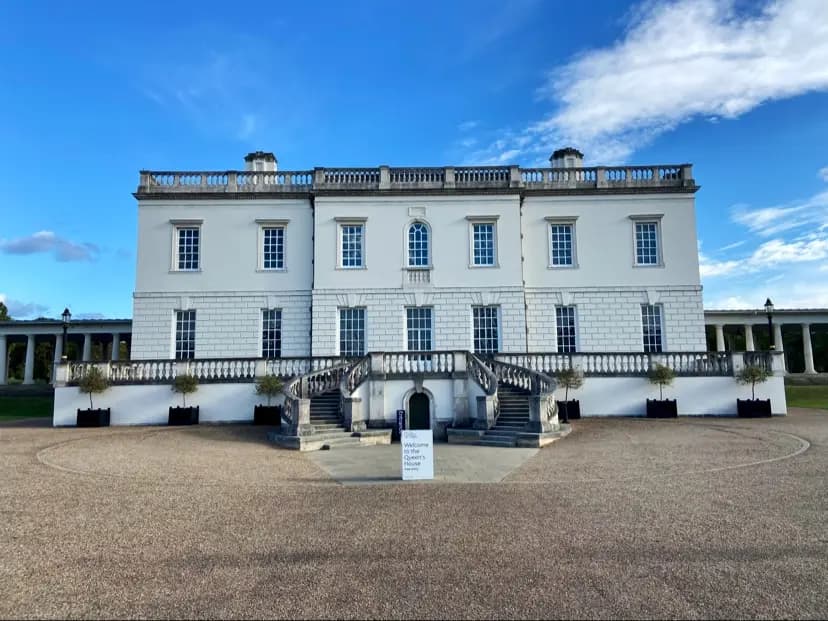
Queen's House
Greenwich · Culture
History news! The flag that led the British fleet at the Battle of Trafalgar has gone on sale for 450,000 ???? It is currently privately owned and an export ban has been put in place until the end of March 2026 to give a UK institution of gallery time to acquire it. #london #londonhistory #londonmuseum #navalhistory #londontravel
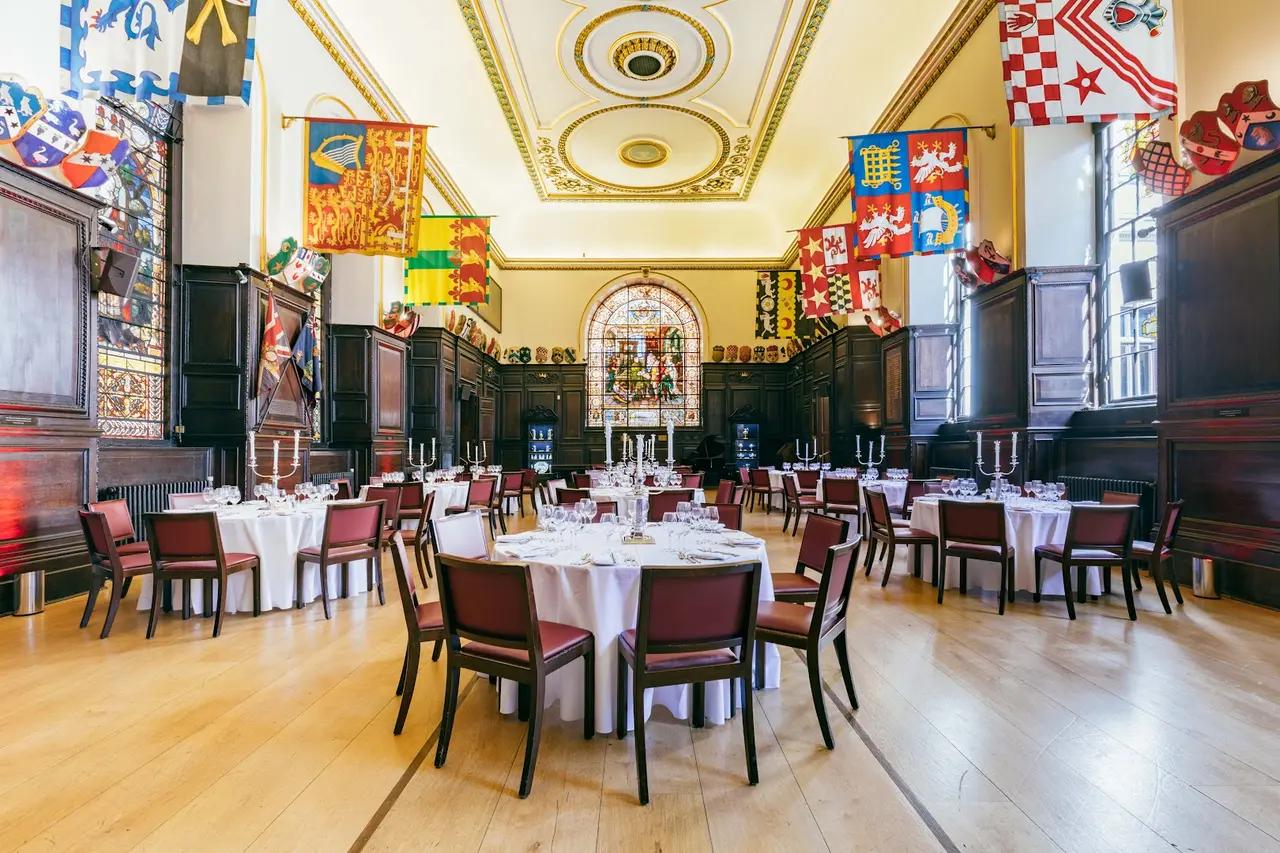
Stationers' Hall
The City of London · Culture
Where does the word �stationery� come from? ?? To answer that question I was lucky enough to have a look round Stationers� Hall, a hidden historic gem very close to St Paul’s Cathedral. Dating back to 1673, it is one of the City’s oldest livery halls and is crucial to the history of publishing and printing. For my full blog post there is a link in my bio! #london #londonhistory #hiddenlondon #secretlondon #londontravel
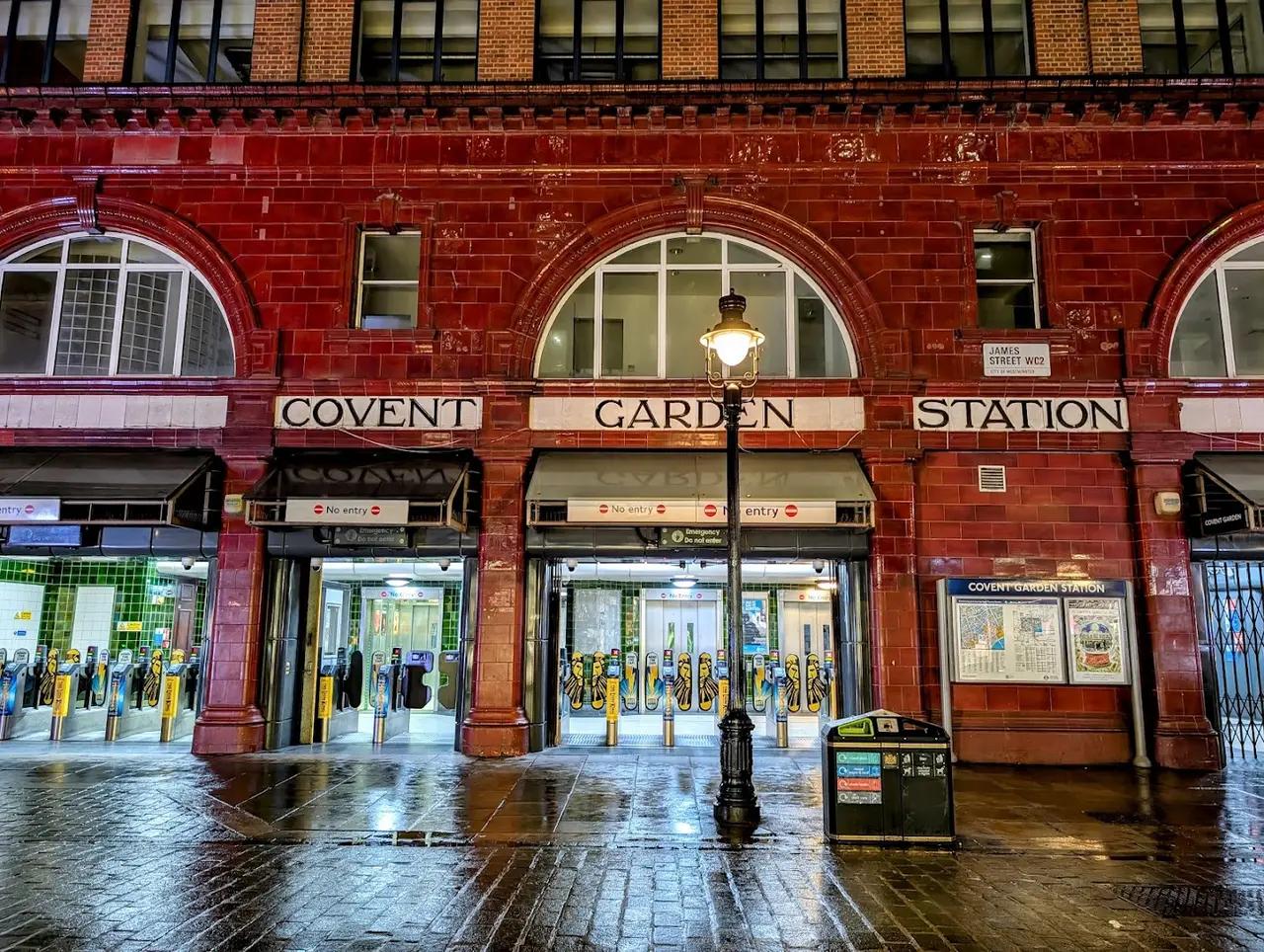
Covent Garden
Covent Garden · Activities
The Wonderful Soho Christmas Lights Designed By School Children London is famous for its impressive and spectacular Christmas lights displays: Regent Street, the windows of Selfridges, Covent Garden piazza. Dotted around the streets of Soho however are a series of lights that quite possibly best them all� Since 2021 the children at Soho Primary School have worked with an architect called Antonio Capelao to create light displays. Antonio is a design tutor at Cardiff University’s Welsh School of Architecture and the co-founder of Architecture for Kids CIC. Each year they add a selection of new ones, so 2025 saw the addition of six more. They are just brilliant, with so many different and imaginative designs. I went on a wander around Soho, here are a selection of some that I saw. A snowman in a boat A Christmas croissant! A marching band A smiley snowman Gloves (I think) with �Recto, Verso� written on them: �Front and Back� A snowglobe A bit blurry this one, but what I think is a skateboarding elf! A fun and festive crab High five! A duck with a hat on, because why on earth not Finally, a Christmassy tub of icecream
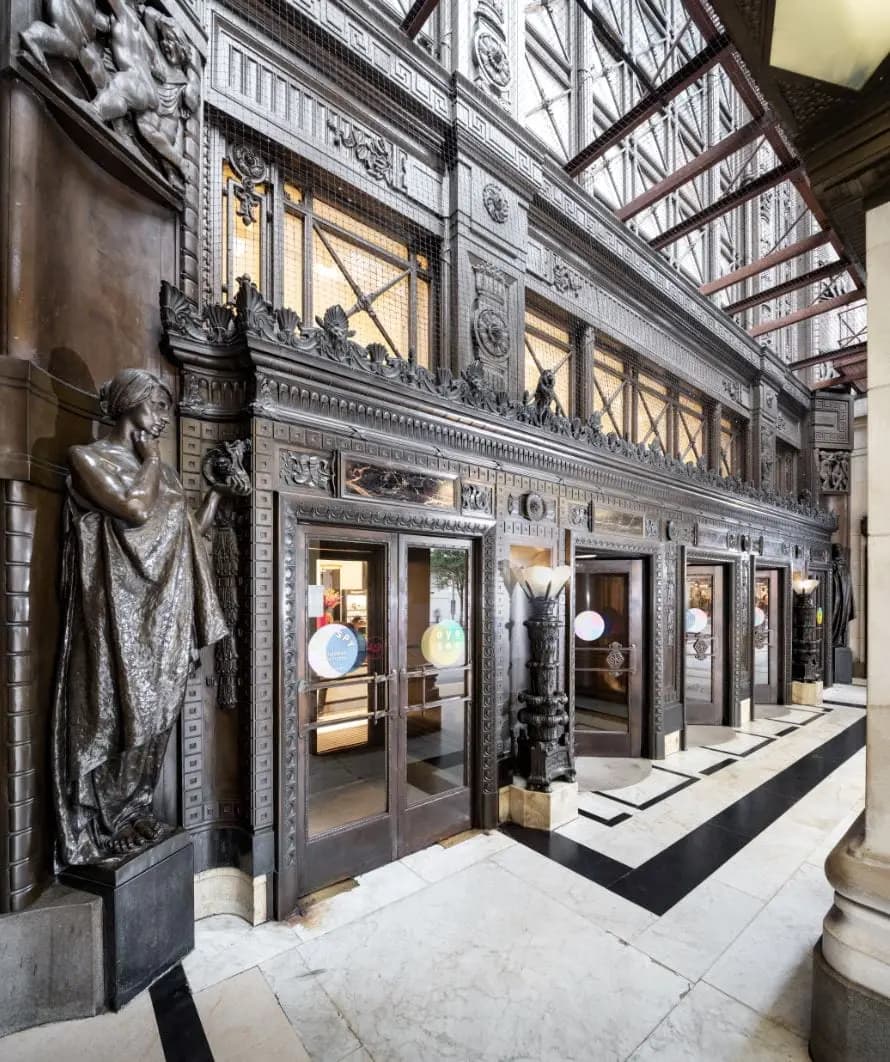
Selfridges
Marylebone · Eat
The Wonderful Soho Christmas Lights Designed By School Children London is famous for its impressive and spectacular Christmas lights displays: Regent Street, the windows of Selfridges, Covent Garden piazza. Dotted around the streets of Soho however are a series of lights that quite possibly best them all� Since 2021 the children at Soho Primary School have worked with an architect called Antonio Capelao to create light displays. Antonio is a design tutor at Cardiff University’s Welsh School of Architecture and the co-founder of Architecture for Kids CIC. Each year they add a selection of new ones, so 2025 saw the addition of six more. They are just brilliant, with so many different and imaginative designs. I went on a wander around Soho, here are a selection of some that I saw. A snowman in a boat A Christmas croissant! A marching band A smiley snowman Gloves (I think) with �Recto, Verso� written on them: �Front and Back� A snowglobe A bit blurry this one, but what I think is a skateboarding elf! A fun and festive crab High five! A duck with a hat on, because why on earth not Finally, a Christmassy tub of icecream
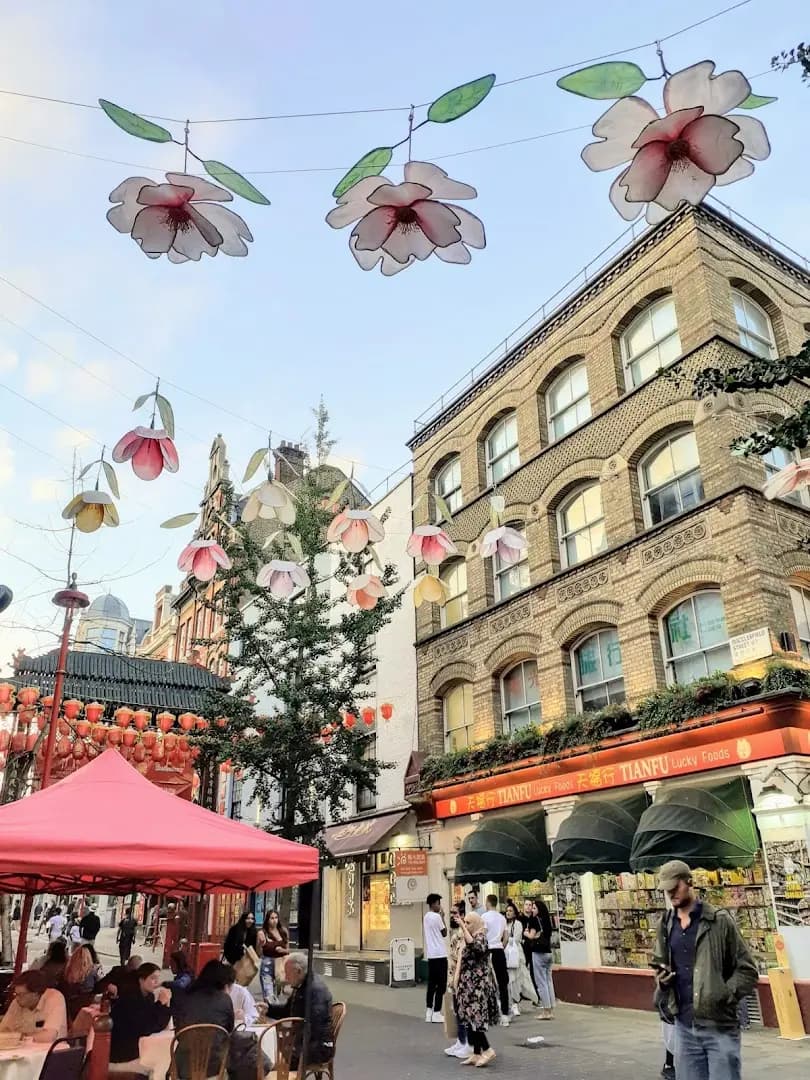
Soho
Soho · Shop
The Wonderful Soho Christmas Lights Designed By School Children London is famous for its impressive and spectacular Christmas lights displays: Regent Street, the windows of Selfridges, Covent Garden piazza. Dotted around the streets of Soho however are a series of lights that quite possibly best them all� Since 2021 the children at Soho Primary School have worked with an architect called Antonio Capelao to create light displays. Antonio is a design tutor at Cardiff University’s Welsh School of Architecture and the co-founder of Architecture for Kids CIC. Each year they add a selection of new ones, so 2025 saw the addition of six more. They are just brilliant, with so many different and imaginative designs. I went on a wander around Soho, here are a selection of some that I saw. A snowman in a boat A Christmas croissant! A marching band A smiley snowman Gloves (I think) with �Recto, Verso� written on them: �Front and Back� A snowglobe A bit blurry this one, but what I think is a skateboarding elf! A fun and festive crab High five! A duck with a hat on, because why on earth not Finally, a Christmassy tub of icecream
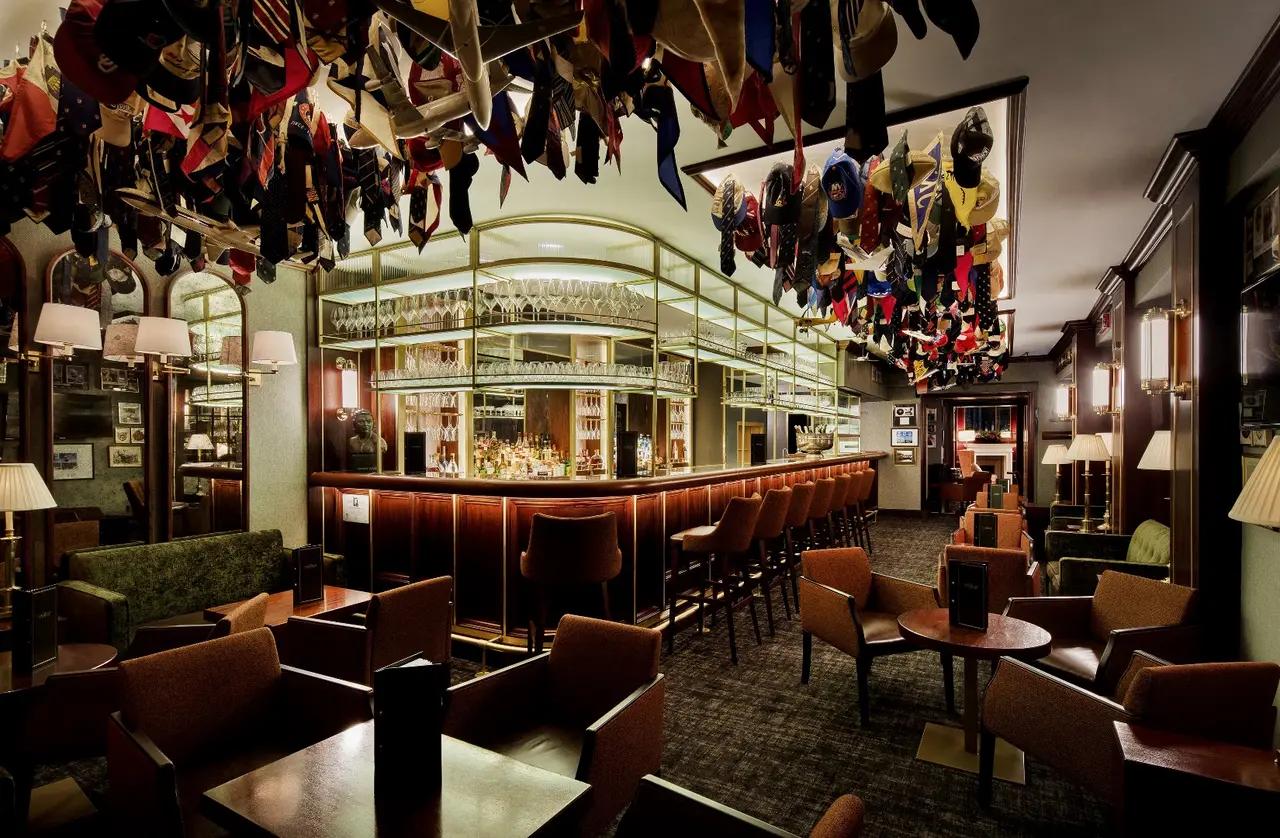
The American Bar
Mayfair · Stay
The Stafford Hotel: A War Legend And 17th Century Wine Cellars Memorials and Monuments the stafford hotel history Picture the scene. It is 2001 and you wander off the streets of St James’s into the American Bar of the Stafford Hotel. You grab a drink and sit at the bar. At the other end of the bar is an elderly lady, with an enraptured crowd around her, gathered to listen as she regales them with tales of espionage from her past. You are looking at a woman who was once at the top of the Gestapo’s most-wanted list and one of the most formidable and dedicated secret agents of World War Two. We will return to her later, but first let’s look at the history of The Stafford Hotel, a staple of the London hotel scene since 1912. the stafford hotel history The building dates predominantly from the early 20th century, however it also hides a couple of historic treasures, including an old 18th century stable yard and 17th century wine cellars, indicative, as always, of the incredible layers of history in London. History The Stafford Hotel can be found on a quiet street, St James’s Place, set just back from Green Park. St James’s started being developed significantly from the late 17th century as an upper class enclave. Townhouses and mansions were constructed by those wishing to be close to the monarch at St James’s Palace. The street was laid out in the late 17th century on land that had once partially been part of the gardens of Cleveland House. Cleveland House later became Bridgewater House. the stafford hotel history A map of the area from 1720. The site of the hotel circled in orange and you can see Cleveland House at the bottom, labelled Cleveland Court. Map from Layers of London. Where the hotel stands today was the site of two 17th century aristocratic townhouses, 16-17 St James’s Place. Number 16 St James’s Place was the home of Elizabeth Godolphin and her husband (and cousin) Charles Godolphin. It was possibly rebuilt for Sir John Evelyn (grandson of the 17th century diarist) in the mid 18th century. Occupants at number 17 included the fantastically named John Wallop, Viscount Lymington and 1st Earl of Portsmouth. 16-17 were demolished from 1899-1900 for the building we see today, by builder Henry Lovatt and supervised by architect H.H. Collins. It was used as a block of flats or chambers until 1910 and then converted into a hotel in 1912. the stafford hotel history the stafford hotel history The Old Stable Yard Behind the hotel today, you can find what was once the old stable yard for the aristocratic townhouses. blue ball yard history It is called Blue Ball Yard, named after a pub that was once located here in the 18th century. Amazingly you can still see the old surviving stable buildings, constructed in the 1740s. bleu ball yard old stables They were later converted into garages and in 1990 were converted into luxury accommodation by The Stafford. Each door has the name of a famous horse on it, such as Phar Lap, an Australian racehorse (born in New Zealand) and Copenhagen, the Duke of Wellington’s horse. copenhagen door The Wine Cellars Below the building, a remnant of the original 17th century buildings also survives: the original wine cellars. the stafford hotel wine cellars the stafford hotel wine cellars They are wonderfully cavernous and winding, the temperature dropping as you descend into the depths of the building. They contain around 8000 bottles of wine. the stafford hotel wine cellars Today they can also be hired out for events the stafford hotel wine cellars World War Two Memorabilia the stafford hotel wine cellars Right at the back of the old wine cellars is something very surprising, a World War Two time-capsule. During World War Two the wine cellars were used as a bomb shelter by the customers of the hotel. Customers of the hotel towards the end of the war consisted of lots of Canadian and American soldiers stationed in London. They used The Stafford as a sort of club and also used the cellars as a shelter. They left various items, which have been preserved here and added to over the decades. world war two the stafford hotel world war two museum world war two poster world war two museum the stafford gas mask world war two news article The American Bar The bar of the hotel is called The American Bar and you will find the ceiling adorned with caps, scarfs and other tokens left by North American visitors over the years. the american bar american bar the stafford The name changed to The American Bar in the 1930s to attract the growing numbers of American tourists in London. Many hotels did this, however only a couple have kept the name. The walls are also covered in photos, letters and other documents. american bar the stafford ronald reagan letter The Inspiring Story Of Nancy Wake On the bar you will find a defiant looking bust of the woman I mentioned at the top of the post, Nancy Wake. nancy wake bust Nancy Wake was born in New Zealand in 1912 and then raised in Sydney. She ran away from home aged 16 and started working as a nurse. With an inheritance she then received from an Aunt she travelled to New York and London where she trained as a journalist. nancy wake Nancy Wake in 1945, image from wikimedia commons In 1937 she met a French industrialist called Henri Fiocca and they married. Nancy was living in Marseilles when war arrived, working as an ambulance driver. After the Germans occupied France, she started working for the French Resistance helping refugees and military personnel escape to England. The Germans were aware of her but were never able to nab her. She evaded so effectively, the Gestapo nicknamed her the �White Mouse� and put a reward of five million Francs on her head. After her network was compromised she had to eventually flee herself to England. Her husband was captured, tortured and killed by the Gestapo for not giving up information about her. She only became aware of this after the war. Nancy Joins The SOE She ended up joining the SOE, the Special Operations Executive. The SOE was a secret organisation set up in 1940 to carry out sabotage missions, reconnaissance and work with resistance movements across Europe. Winston Churchill famously is said to have instructed them to �set Europe ablaze�. The SOE was also the first time that women were given front-line roles. Her code name was H�l�ne and in April 1944, less than a year afterr she had left, Nancy was parachuted back into occupied France. She participated in and coordinated battles between resistance groups and the Germans. Nancy was apparently level-headed and a good shot. One of her proudest wartime achievements was cycling 310 miles (500km) in under 72, over mountainous terrain, to acquire new codebooks from another Resistance cell after a German raid had destroyed theirs. She rose up to the rank of Captain and is widely considered the most highly decorated woman of World War Two, receiving the George Cross in the UK and various other international accolades. After The War In 1957 she married an RAF officer called John Forward and in 1985 she published her autobiography called The White Mouse. John died in 1997 and Nancy sold her medals to return to London from Australia. From 2001-2003 she took up residence in The Stafford and would regularly enthral the other customers of the American Bar with tales from her past. She also was known to return regularly to the bar after she had moved to the Royal Star and Garter Home for ex-service personnel in Richmond. Nancy Wake died aged 98 in 2011 at Kingston Hospital. Her ashes were then scattered in France, near the village of Verneix, as per her wishes. She wanted to return to the region where she carried out her vital war work. You can read an article about that and see a photograph of her in her later years here. Visiting the Stafford So there we have it, The Stafford Hotel, a place with amazing historic survivors and stories to tell. If you would like to visit, the opening hours for the American Bar are as follows: Monday Sunday: 10am 12pm for teas and coffees only. Monday Wednesday: 12pm midnight Thursday Saturday: 12pm 1am Sunday: 12pm midnight
- C
Catholic Church of the Most Precious Blood, Borough/London Bridge.
The City of London · Culture
In South London, not far from Borough Market, you can find “The Scoop”! At 50-52 Union Street is an office block development. Completed in 2024, it was started by Lipton Plant Architects and finished by Corstorphine and Wright. It has a specially designed cut-out from the building to highlight the rose window of the Victorian church behind. A traditional development would have completely blocked the view of the church from multiple angles, but this design was put in place with the aim to protect and enhance the view of the church. It, I think, does a great job of drawing attention to a heritage building that might otherwise go overlooked and creating a local landmark. The church dates from 1891 and is a Roman Catholic Church called The Church of the Most Precious Blood. Let me know what you think of this design in the comments! #london #londonhistory #livinglondonhistory #londonarchitecture #architecturephotography #architecturelover
- 5
50, The Scoop Office Building, 52 Union Street, London SE1 1TD, United Kingdom
The City of London · Culture
In South London, not far from Borough Market, you can find “The Scoop”! At 50-52 Union Street is an office block development. Completed in 2024, it was started by Lipton Plant Architects and finished by Corstorphine and Wright. It has a specially designed cut-out from the building to highlight the rose window of the Victorian church behind. A traditional development would have completely blocked the view of the church from multiple angles, but this design was put in place with the aim to protect and enhance the view of the church. It, I think, does a great job of drawing attention to a heritage building that might otherwise go overlooked and creating a local landmark. The church dates from 1891 and is a Roman Catholic Church called The Church of the Most Precious Blood. Let me know what you think of this design in the comments! #london #londonhistory #livinglondonhistory #londonarchitecture #architecturephotography #architecturelover
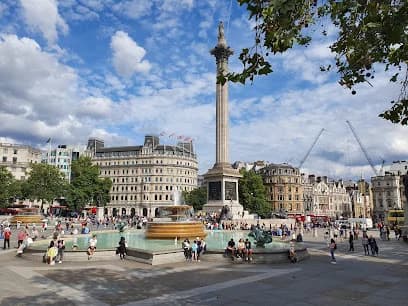
Trafalgar Square
Covent Garden · Culture
The London Coliseum: The People’s Palace Of Entertainment the london coliseum history Walking along St Martin’s Lane, not far from Trafalgar Square, you cannot help but pay attention to the tower of the London Coliseum. It is one of the capital’s most distinctive theatrical landmarks and has played a central role to London’s theatre scene now for over a century. I was delighted to pay them a visit this Christmas to see the English National Ballet’s version of Tchaikovsky’s The Nutcracker, set partly in Edwardian London. Oswald Stoll: Theatre Manager At Fourteen oswald stoll Oswald Stoll, 1922, image from wikimedia commons The London Coliseum was the creation of a man called Oswald Stoll. Stoll was born in Melbourne in 1866 as Oswald Gray. His mother was Adelaide Gray, an Irish dancer who had emigrated to Australia to marry an aristocrat. As a child he came to the UK with his mother after the death of his father. She married again and he took his stepfather, John Stoll’s, surname. Oswald Stoll was thrown into the deep end of theatre management from a young age. His stepfather was the owner of the Parthenon Rooms Theatre in Liverpool. From the age of 14 he essentially managed the theatre alongside his mother and step-father. He said �I was three months past fourteen and had for a time to manage as best I could (or mismanage, whatever you like) a theatre in Liverpool�. It was apparently a bit embarrassing, because he was so young, if someone asked to speak to the manager he would go backwards and forwards between the customer and a �fictitious manager� in the back of the office, so that he would not be taken advantage of. Taking The Theatre World By Storm In 1886 he and his mother bought the lease for �Levino’s Museum of Varieties� in Cardiff and turned it into a music hall. By 1892 they had added three more theatres and went from success to success. He wanted to make theatre more of a family friendly activity rather than the rowdy crowds it could previously attract. He once apparently walked onto the stage in Cardiff with a hose threatening to douse a particularly misbehaving crowd. In 1895 a new company was formed with H E Moss, of the Moss and Thornton Circuit and by 1905 they had 37 variety theatres around the UK. Oswald would apparently make sure his mother was in the box office for the opening night of each theatre to take the first ticket sale. Bigger and Better A caricature of Stoll in Vanity Fair, 1911, image from wikimedia commons The Coliseum was his crowning achievement and he engaged the prolific theatre architect Frank Matcham to design it. Matcham also designed the Hackney Empire (1901), the London Hippodrome (1900) and the London Palladium (1910). the london coliseum history It was designed in an exuberant and opulent Edwardian baroque style. Stoll wanted to build the largest and most comfortable theatre in London: a �People’s Palace of Entertainment�. The seating capacity was originally 2,939 and now is at 2,359, making it still the largest theatre in London. The stage is huge at 52 feet wide and 92 feet deep. It also has the widest proscenium arch in the West End. the london coliseum history The interior is equally grand. The auditorium has a vast domed ceiling, intricate plasterwork, sculptures and gilding. Image from wikimedia commons, licensed under CC by SA 4.0 the london coliseum history Image from wikimedia commons, licensed under CC by SA 4.0 Unique Design the london coliseum history One of the most eye-catching elements of its design is the globe. Stoll, as a bit of a marketing genius, wanted a revolving dome atop his theatre, with the Coliseum name up there in lights. The revolve was unfortunately deemed illegal at the time, possibly because of perceived dangers to low-flying aircraft. Instead the lights created the illusion of movement. After a major restoration project from 2000-2004 however, it does now actually rotate: 2 minutes and 14 seconds for a full rotation. The whole globe weighs 5 tonnes and is depicted as being held up by statues of enslaved people. the london coliseum globe It was also at the cutting edge of technology and comfort. For example it was one of the first theatres to include customer lifts and electric lighting throughout. It was also the first theatre in the country to have a revolving stage. In a pioneering feat of engineering, Matcham installed three huge independently operated concentric rings. They were powered by electric motors and operated from the raised gallery. The revolving stage was removed in the 1970s during works to modernise the theatre. The decorative foyer with its marble mosaic floor Looking up through the lightwell that pierces through the levels of the theatre, with the beautiful stained glass dome at the top The wonderful, original, wooden doors The London Coliseum Of Varieties Opens! The theatre opened on the 24th December, Christmas Eve, 1904. The show was a Grand Variety Show featuring a musical spectacle called �Port Arthur�. Initially the shows were a mixture of music hall acts and variety performances. It gained a reputation for its eclectic offerings, including organ recitals, indoor rodeos, performing elephants and ballets. The idea was for it to not be a standard music hall, but also not entertainment specifically aimed at only the richest in society. One level up you can find this little balcony looking over the main entranceway, again highly decorative. Oswald was apparently so obsessed with the number of people coming into the building that he would stand on this balcony overlooking the south foyer and count everyone going in and out. He also is said to have made the balcony very low to make himself look taller. His mother was installed at the box office, where she worked for twenty years and became known as the �lady of the pay-box�. Again Stoll was always looking for opportunities to make his customer’s visits as comfortable, interesting and novel as possible. The London Coliseum, along with Selfridges, was one of the first places to regularly sell coca-cola, from a soda fountain. Cricket and King Kong In February 1908 the theatre even hosted a cricket match. Stoll wanted to bring the summer game to the people of London in the winter. It was Midlesex vs Surrey and despite the stage being very large, the stumps could only be placed 15 yards apart and only four players were allowed per side. Behind the players was apparently a painted backdrop depicting a tree-lined cricket pitch and ground. A net was put up to protect the audience and scorecards were sold in the foyer instead of programmes. The Theatre carried on putting on plays during World War One, fulfilling its role as the �people’s palace� and keeping morale up with four daily performances. Stoll also held fundraising events at the theatre to raise money for war charities. After the arrival of �talkies� in the 1930s, the theatre started showing films. When the original King Kong film came out in 1933, a huge screen and projector were set up in the theatre and they played it multiple times a day for months. Around 10,000 people watched the film at The Coliseum every day. A Home For Opera and Ballet In 1968 the Sadlers Wells Opera Company moved into the theatre, later, in 1974, becoming the English National Opera. They then purchased the freehold to the theatre in 1992 and it has been their permanent home ever since. It is also the base for London performances of English National Ballet. As mentioned at the top of the post, they very kindly invited me to see their brilliant version of the Nutcracker this year, which is set in Edwardian London, featuring chimney sweeps and Suffragettes. You can find out more here.
London Coliseum
Covent Garden · Culture
The London Coliseum: The People’s Palace Of Entertainment the london coliseum history Walking along St Martin’s Lane, not far from Trafalgar Square, you cannot help but pay attention to the tower of the London Coliseum. It is one of the capital’s most distinctive theatrical landmarks and has played a central role to London’s theatre scene now for over a century. I was delighted to pay them a visit this Christmas to see the English National Ballet’s version of Tchaikovsky’s The Nutcracker, set partly in Edwardian London. Oswald Stoll: Theatre Manager At Fourteen oswald stoll Oswald Stoll, 1922, image from wikimedia commons The London Coliseum was the creation of a man called Oswald Stoll. Stoll was born in Melbourne in 1866 as Oswald Gray. His mother was Adelaide Gray, an Irish dancer who had emigrated to Australia to marry an aristocrat. As a child he came to the UK with his mother after the death of his father. She married again and he took his stepfather, John Stoll’s, surname. Oswald Stoll was thrown into the deep end of theatre management from a young age. His stepfather was the owner of the Parthenon Rooms Theatre in Liverpool. From the age of 14 he essentially managed the theatre alongside his mother and step-father. He said �I was three months past fourteen and had for a time to manage as best I could (or mismanage, whatever you like) a theatre in Liverpool�. It was apparently a bit embarrassing, because he was so young, if someone asked to speak to the manager he would go backwards and forwards between the customer and a �fictitious manager� in the back of the office, so that he would not be taken advantage of. Taking The Theatre World By Storm In 1886 he and his mother bought the lease for �Levino’s Museum of Varieties� in Cardiff and turned it into a music hall. By 1892 they had added three more theatres and went from success to success. He wanted to make theatre more of a family friendly activity rather than the rowdy crowds it could previously attract. He once apparently walked onto the stage in Cardiff with a hose threatening to douse a particularly misbehaving crowd. In 1895 a new company was formed with H E Moss, of the Moss and Thornton Circuit and by 1905 they had 37 variety theatres around the UK. Oswald would apparently make sure his mother was in the box office for the opening night of each theatre to take the first ticket sale. Bigger and Better A caricature of Stoll in Vanity Fair, 1911, image from wikimedia commons The Coliseum was his crowning achievement and he engaged the prolific theatre architect Frank Matcham to design it. Matcham also designed the Hackney Empire (1901), the London Hippodrome (1900) and the London Palladium (1910). the london coliseum history It was designed in an exuberant and opulent Edwardian baroque style. Stoll wanted to build the largest and most comfortable theatre in London: a �People’s Palace of Entertainment�. The seating capacity was originally 2,939 and now is at 2,359, making it still the largest theatre in London. The stage is huge at 52 feet wide and 92 feet deep. It also has the widest proscenium arch in the West End. the london coliseum history The interior is equally grand. The auditorium has a vast domed ceiling, intricate plasterwork, sculptures and gilding. Image from wikimedia commons, licensed under CC by SA 4.0 the london coliseum history Image from wikimedia commons, licensed under CC by SA 4.0 Unique Design the london coliseum history One of the most eye-catching elements of its design is the globe. Stoll, as a bit of a marketing genius, wanted a revolving dome atop his theatre, with the Coliseum name up there in lights. The revolve was unfortunately deemed illegal at the time, possibly because of perceived dangers to low-flying aircraft. Instead the lights created the illusion of movement. After a major restoration project from 2000-2004 however, it does now actually rotate: 2 minutes and 14 seconds for a full rotation. The whole globe weighs 5 tonnes and is depicted as being held up by statues of enslaved people. the london coliseum globe It was also at the cutting edge of technology and comfort. For example it was one of the first theatres to include customer lifts and electric lighting throughout. It was also the first theatre in the country to have a revolving stage. In a pioneering feat of engineering, Matcham installed three huge independently operated concentric rings. They were powered by electric motors and operated from the raised gallery. The revolving stage was removed in the 1970s during works to modernise the theatre. The decorative foyer with its marble mosaic floor Looking up through the lightwell that pierces through the levels of the theatre, with the beautiful stained glass dome at the top The wonderful, original, wooden doors The London Coliseum Of Varieties Opens! The theatre opened on the 24th December, Christmas Eve, 1904. The show was a Grand Variety Show featuring a musical spectacle called �Port Arthur�. Initially the shows were a mixture of music hall acts and variety performances. It gained a reputation for its eclectic offerings, including organ recitals, indoor rodeos, performing elephants and ballets. The idea was for it to not be a standard music hall, but also not entertainment specifically aimed at only the richest in society. One level up you can find this little balcony looking over the main entranceway, again highly decorative. Oswald was apparently so obsessed with the number of people coming into the building that he would stand on this balcony overlooking the south foyer and count everyone going in and out. He also is said to have made the balcony very low to make himself look taller. His mother was installed at the box office, where she worked for twenty years and became known as the �lady of the pay-box�. Again Stoll was always looking for opportunities to make his customer’s visits as comfortable, interesting and novel as possible. The London Coliseum, along with Selfridges, was one of the first places to regularly sell coca-cola, from a soda fountain. Cricket and King Kong In February 1908 the theatre even hosted a cricket match. Stoll wanted to bring the summer game to the people of London in the winter. It was Midlesex vs Surrey and despite the stage being very large, the stumps could only be placed 15 yards apart and only four players were allowed per side. Behind the players was apparently a painted backdrop depicting a tree-lined cricket pitch and ground. A net was put up to protect the audience and scorecards were sold in the foyer instead of programmes. The Theatre carried on putting on plays during World War One, fulfilling its role as the �people’s palace� and keeping morale up with four daily performances. Stoll also held fundraising events at the theatre to raise money for war charities. After the arrival of �talkies� in the 1930s, the theatre started showing films. When the original King Kong film came out in 1933, a huge screen and projector were set up in the theatre and they played it multiple times a day for months. Around 10,000 people watched the film at The Coliseum every day. A Home For Opera and Ballet In 1968 the Sadlers Wells Opera Company moved into the theatre, later, in 1974, becoming the English National Opera. They then purchased the freehold to the theatre in 1992 and it has been their permanent home ever since. It is also the base for London performances of English National Ballet. As mentioned at the top of the post, they very kindly invited me to see their brilliant version of the Nutcracker this year, which is set in Edwardian London, featuring chimney sweeps and Suffragettes. You can find out more here.
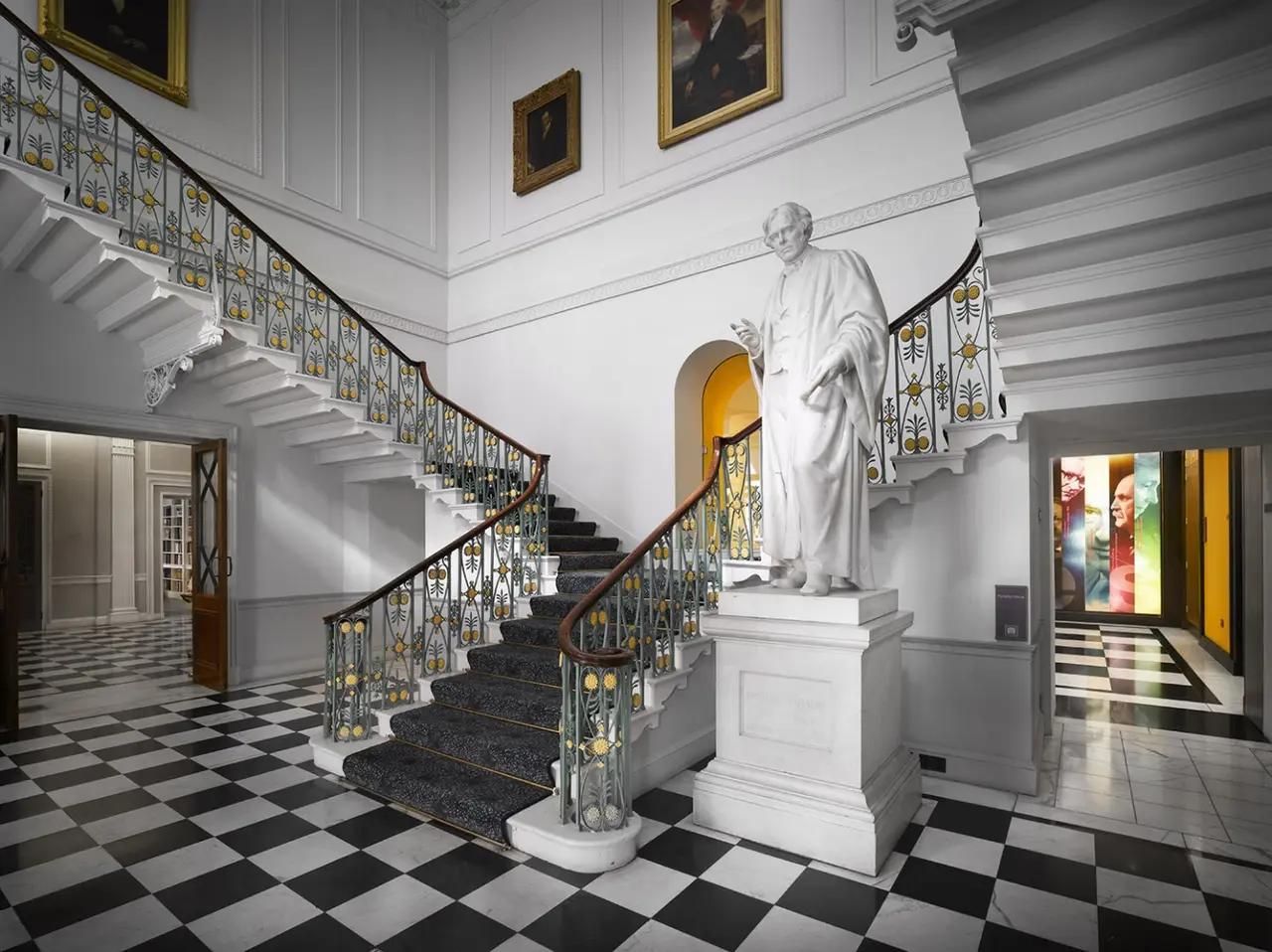
The Royal Institution
Mayfair · Culture
Why was Albemarle Street in Mayfair the first one-way street in London? ?? This year is the 200th anniversary of the Royal Institution’s Christmas lectures! This year Dame Maggie Aderin-Pocock will be taking the audience in an epic voyage through space and time. Check out @ri_science for more! ?? #london #londonhistory #livinglondonhistory #sciencehistory #londonmuseum #londontravel
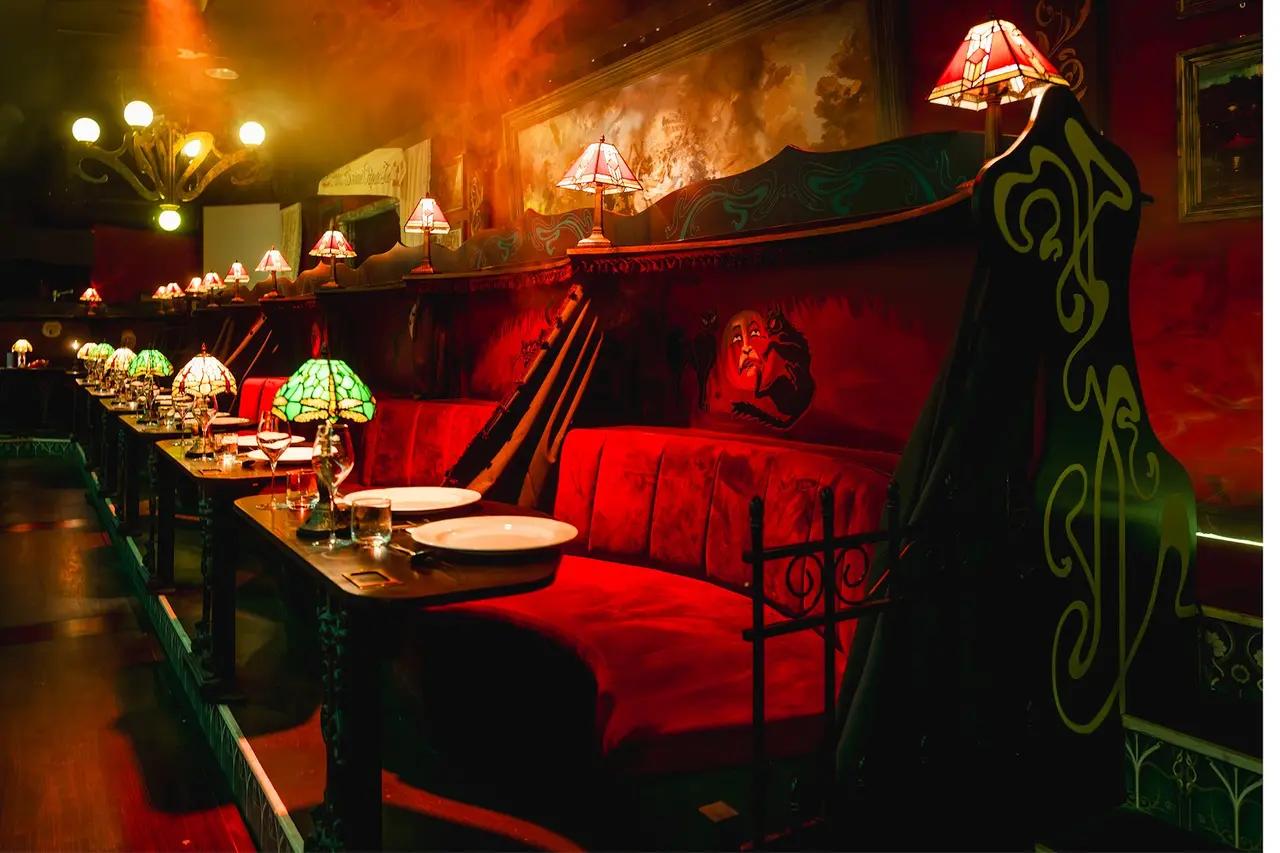
The Lost Estate
Fulham · Activities
|AD| Would you like to step back in time to Victorian London this Christmas? ?? Well, you can experience that at The Great Christmas Feast!?? You are transported back to 1843, to the home of Charles Dickens, at the moment that A Christmas Carol is born� Most shows before Christmas are sold out, there is currently still availability after Christmas but book asap! Check out @lostestateofficial for more information. #london #charlesdickens #londonhistory #londonchristmas #londonevents #whattodoinlondon #londontravel
- T
Tate Modern
The City of London · Culture
A stubborn little survivor on Hopton Street, not far from the Tate Modern ?? This house, dating from 1702, has managed to survive two world wars and perhaps more impressively the post-war demolition and development of great swathes of the city. Did the owner refuse to sell up? Or perhaps it was just lucky. Today it has a Grade II listing from Historic England, so hopefully is protected for future generations ?? #london #londonhistory #livinglondonhistory #londontravel #londontrip #hiddenlondon #secretlondon #londonarchitecture #
- H
Hopton Street
The City of London · Culture
A stubborn little survivor on Hopton Street, not far from the Tate Modern ?? This house, dating from 1702, has managed to survive two world wars and perhaps more impressively the post-war demolition and development of great swathes of the city. Did the owner refuse to sell up? Or perhaps it was just lucky. Today it has a Grade II listing from Historic England, so hopefully is protected for future generations ?? #london #londonhistory #livinglondonhistory #londontravel #londontrip #hiddenlondon #secretlondon #londonarchitecture #
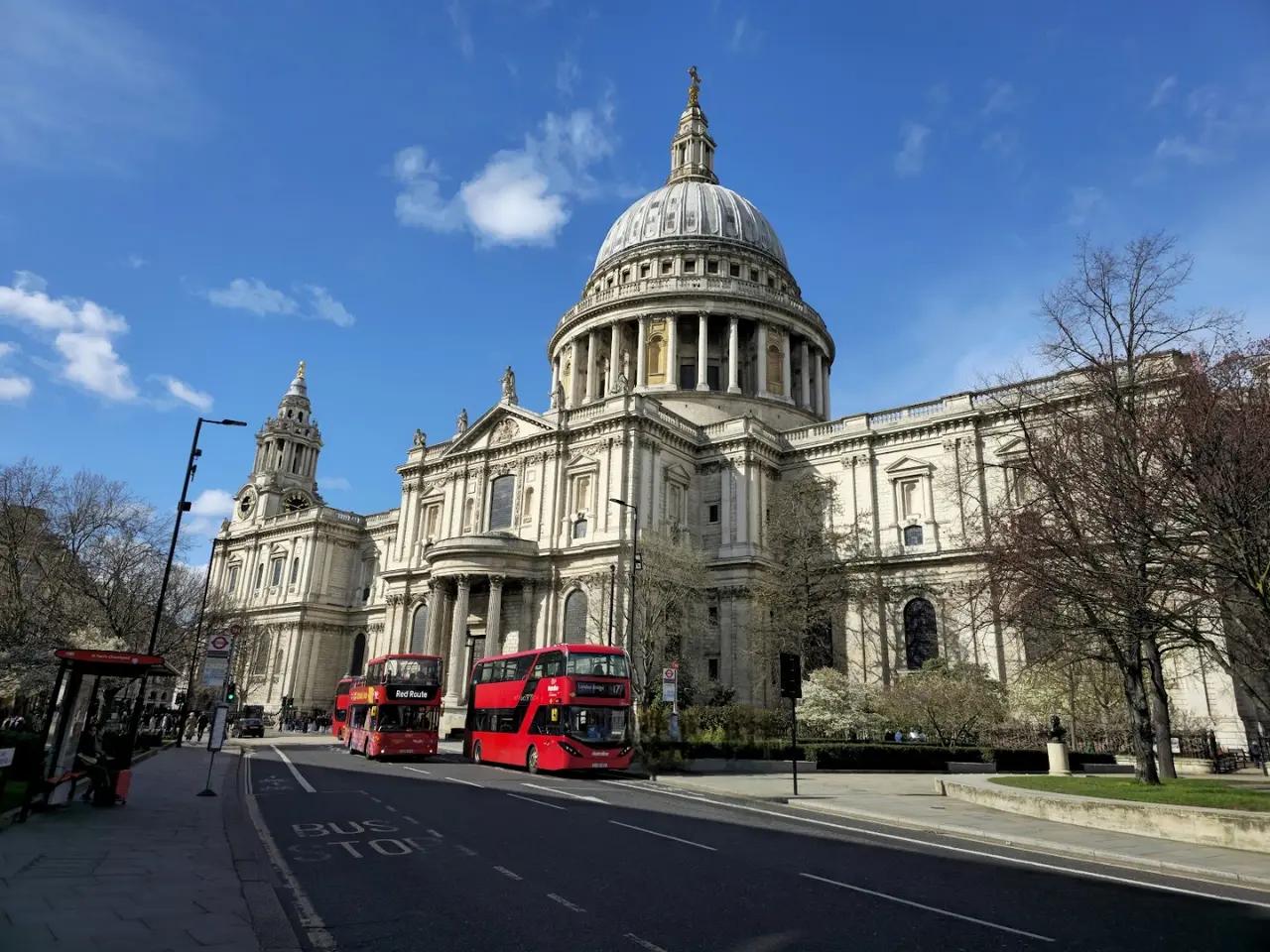
St. Paul's Cathedral
The City of London · Outdoors
I always love visiting the livery halls of the City of London. They are buildings that are generally not open to the public, but are usually full of interesting stories, artefacts and often are central to key elements of London and the country’s history. Going through their doors often feels like delving into a hidden treasure trove. I was delighted therefore recently to be invited to look round Stationers� Hall, home to the Worshipful Company of Stationers and Newspaper Makers. It can be found just off Ave Maria Lane or Ludgate Hill, very close to St Paul’s Cathedral. stationers hall visit The City of London has 113 livery companies. Many have their origins in the medieval period, when they acted as trading guilds for merchants and tradesmen: fishmongers, goldsmiths, drapers etc. Today they are largely charitable, social and educational institutions that still play a crucial role in the election of Lord/Lady Mayors in the City. I have written previously here about Ironmongers� Hall, Coopers� Hall, Brewers� Hall and Plaisterers� Hall. I have also visited Goldsmiths� Hall. The Origins of the Stationers� Company The Stationers� Company was officially formed in 1403 as a guild for those in the book trade. This included bookbinders, booksellers and writers. As is often the case in London’s history the etymology is interesting. Often in the medieval period, craftsmen were itinerant, moving around wherever their trade took them. Manuscript writers and illuminators however decided to stay in one place, in the area just North of St Paul’s Cathedral. They set up stalls or �stations�, i.e. were stationary, and therefore became known as �stationers�. Stationery, the items they sold, also got their name from this origin. A Charter From �Bloody Mary� The Stationers received their Royal Charter in 1557, the only Royal Charter given out by Queen Mary I, sometimes known as �Bloody Mary�. mary i A portrait of Mary I in Stationers� Hall, by Marianne von Eschenburg (1856-1937) As part of their charter, they were given the powers to search for, seize and destroy pirated or censored works. Mary I briefly returned England to being a Catholic country, after the switch to Protestantism under Henry VIII and Edward VI. They therefore became in charge of destroying a lot of Protestant literature and manuscripts. At the current Stationers� Hall site, the documents would be burnt behind the hall in their courtyard. courtyard stationers hall The courtyard has a wonderful old London plane tree planted in 1837 for Queen Victoria’s coronation. The story goes that the potash created from the burning of books and papers is why the tree has always grown healthily and happily. The Birth Of Copyright From 1562, members would have to obtain a licence to print a work and this would then be entered into the Company’s register. Disputes over the rights to print something were always then referred back to the register at Stationers� Hall. They therefore started the first system of modern copyright in the world. shakespeare's first folio The register showing the entry for Shakespeare’s First Folio in 1623. It was registered by bookseller Edward Blount and printers William and Isaac Jaggard and the plays were split, for the first time, into comedies, tragedies and histories. In 1710, the Statute of Anne changed the legal landscape. Considered the first official copyright law in the world, it instead recognised authors� rights for the first time rather than the printer. It granted a fixed term of 14 years for new books, with an option to renew for another 14 years. Compulsory registration with the Stationers finally terminated in 1923. In 1937, a royal charter amalgamated the Stationers� Company and the Newspaper Makers� Company. stationers' hall The coat of arms on the outside of the hall, featuring three books A Series Of Halls In 1554 the company purchased a property called Peter’s College near St Paul’s Deanery and then in 1606 acquired Abergavenny House, the site on which the present hall stands. 52 livery halls were lost in the Great Fire of London in September 1666. In fact the Stationers were partly to blame for St Paul’s Cathedral going up in flames so spectacularly. As I mentioned, they were generally based in the area just North of the Cathedral and as the flames approached many rushed to store their papers and manuscripts in the crypt. Most believed the cathedral would never burn down, as it was made in large part out of stone. This all just added to the kindling when the fire finally made it to Ludgate Hill on the 4th September 1666. The fire engulfing the nearby Ludgate, with St Paul’s in the background, 1670, unknown artist. Image from wikimedia commons. The quick-thinking Clerk at the time, George Tokefield, managed to save most of the records and the Company’s register from the flames, by moving them to his own house in Clerkenwell. Thanks to him, the Stationers have an archive, including copyright registers, going back to 1557. clerks A list of the Company’s Clerks, including George Tokefield from 1663 After the Fire, in 1670, construction began on a new hall, with the building completed in 1673. The Stationers boast the second oldest livery hall in the City. The Apothecaries pip them to the post, having finished their hall in 1672. livery hall stationers The Main Hall Later Modifications The hall was given its current neo-classical frontage in 1800, designed by Robert Mylne, the Surveyor to the Company. The building has then been added to and remodelled in sections over the course of the 19th and 20th centuries. stationers hall court The hall was badly damaged by enemy action in 1940. The ceiling of the Main Hall was re-erected to the same design of 1800 after the war and the Court Room was restored. livery hall stationers court room The Court Room, with its spectacular 18th century carved mantlepiece on the right stock room The Stock Room, named after the Company’s own publishing venture launched in 1603. Much of the oak panelling and carvings date back to the 17th century and displayed are the armorial shields of past Masters of the Company In 2020, they were given permission to add modern day conference facilities, air-cooling and step free access to its historic rooms Today the building is Grade I listed, giving it the maximum level of protection from any changes to the historic fabric. The hall is used today for the company’s own lunches, dinners, and charitable events. It is also an events venue for corporate functions, weddings and conferences. Details To Look Out For Stained Glass There are lots of stained glass windows throughout the building dating from the Victorian period up to the modern day. The most impressive is the Caxton Window in the Main Hall, dating from around 1885. It depicts William Caxton, the man who introduced the printing press to England in 1476, presenting his printing to King Edward IV. You can see Caxton’s printing press in the background. caxton window caxton window Other stained glass windows in the hall, which remarkably survived the Blitz bomb damage, include depictions of other figures important to the history of printing, manuscripts or writing. tyndale stained glass William Tyndale, the man who first translated and printed the New Testament in the English language. shakespeare stained glass William Shakespeare Tables and Screen The hall and adjoining Stock Room contain a lot of original 17th century wood carvings and details. The impressive oak screen is attributed to joiner Henry Foord. It survived the 1940 bomb damage but had to be restored, in part, after a fire in 2010. oak screen oak screen There are a number of original 17th century wooden tables and benches, supplied in 1674 by a �Mr Coffen�. table mr coffen Paintings As is always the case with livery halls, the walls are covered in paintings of masters, royals and honorary members. Below is a portrait of ex-Prime Minister Harold Macmillan, painted in 1985 by Gandee Vasan. His roots are in his family publishing business, which he chaired for ten years until 1974 after stepping down as Prime Minister. harold macmillan Below is a portrait of Luke Hansard (1780-1859), by Samuel Lane. Hansard was the printer for the Journals of the House of Commons from 1774 until his death in 1828. luke hansard The most important painting in their collection is below. It is Alfred the Great Dividing His Last Loaf with the Pilgrim by the famous painter Benjamin West, 1779. The space it is in today was created specially for the painting. Alfred the Great Dividing His Last Loaf with the Pilgrim Registers On Display They had a couple of interesting registers on display in the Stock Room. This one below, for example, is the record of the printing of �The Interesting Narrative Of The Life of Olaudah Equiano, Or Gustavus Vass, The African�., published 1789. It recounts his life and being sold into slavery aged 11. He was eventually able to purchase his own freedom and moved to London. His books helped exposed the horrors of the slave trade, sold thousands of copies and were a key part of the Abolitionist Movement. register olaudah equinao register olaudah equinao The Garden I mentioned the garden previously, with its lovely plane tree. In the garden you will also find the Tokefield Centre, the Company’s old warehouse building constructed in the late 17th century, making it probably the oldest warehouse in the City of London. It is now home to their archive. courtyard stationers hall warehouse There is also a door that leads directly into their neighbouring church, St Martin within Ludgate. It is a church I have written about before, one of the best preserved Wren post-Great Fire churches. Stationers� Hall is not open to the public on a daily basis. They do, however, run occasional tours, which you can find out more about here.
- S
St Conan’s Kirk
Culture
The unique and enchanting St Conan’s Kirk, one of the architectural treasures of the Scottish Highlands ?????????????? It was the passion project of a man called Walter Douglas Campbell and incorporates elements from Scottish church styles across the centuries. @visitscotland @stconanskirk . . . #scottishhistory #scotland #scotlandtravel #britishhistory #churcharchitecture #churchesofinstagram #lovescotland
- A
Australian High Commission
Holborn · Culture
There is something rather surprising below this building in central London� This is Australia House ????. Built in 1918, it is the longest occupied diplomatic mission in the country. It has a stunning interior, that many viewers may well recognise from a famous film franchise and the building itself has a fascinating history. For my full blog post, there is a link in my bio. #london #londonhistory #livinglondonhistory #londontravel #australianhistory #hiddenlondon #secretlondon #lovelondon
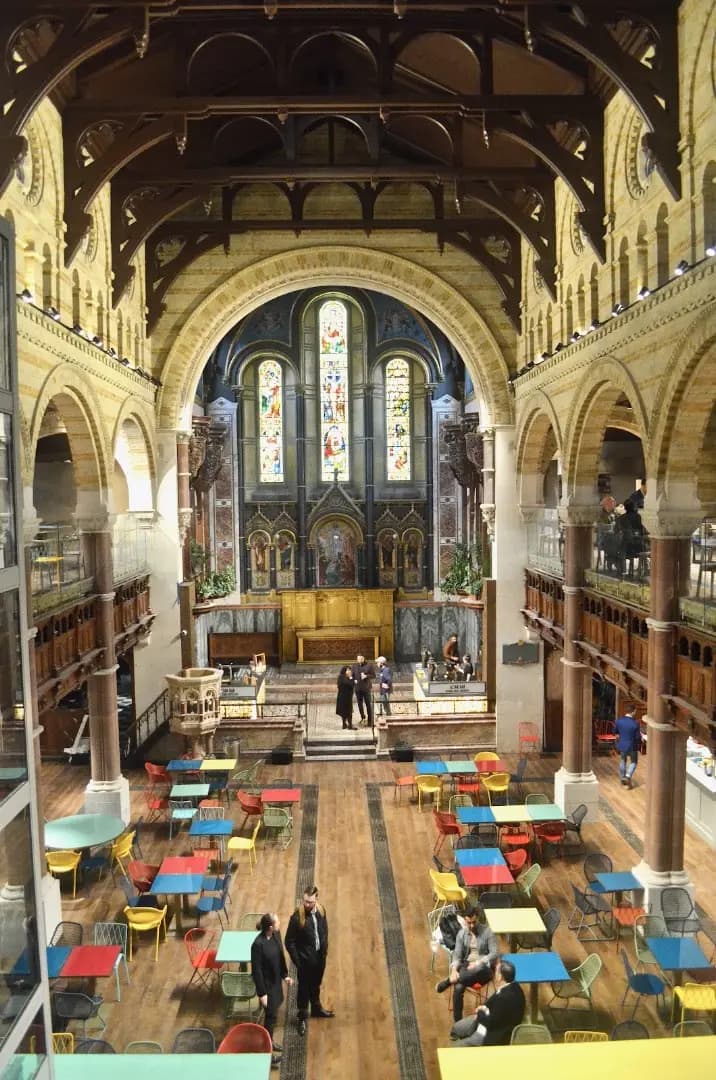
Mercato Mayfair
Mayfair · Drink
In Mayfair you can find a bustling market inside a beautiful Grade I listed, deconsecrated church. St Mark’s was deconsecrated in the 1970s after its congregation dwindled after the war. It was on English Heritage’s Buildings at Risk register for over 20 years before a 5 million restoration project in 2019 by the Grosvenor Estate. Today it is home to Mercato Mayfair, an artisan food market, as well as being a location for events, workshops and a community space, free to use for local groups. The heritage at the same time is maintained and restored to a high standard. Some might find it sad to not see it used for its original religious purpose but, I think, this is far better than it decaying and going unseen. There is a link in my bio for the full blog post. @mercatometropolitano @christmasbymercato #london #londonhistory #livinglondonhistory #londontravel #christmas #christmaslondon #londonchristmas #hiddenlondon #mayfair
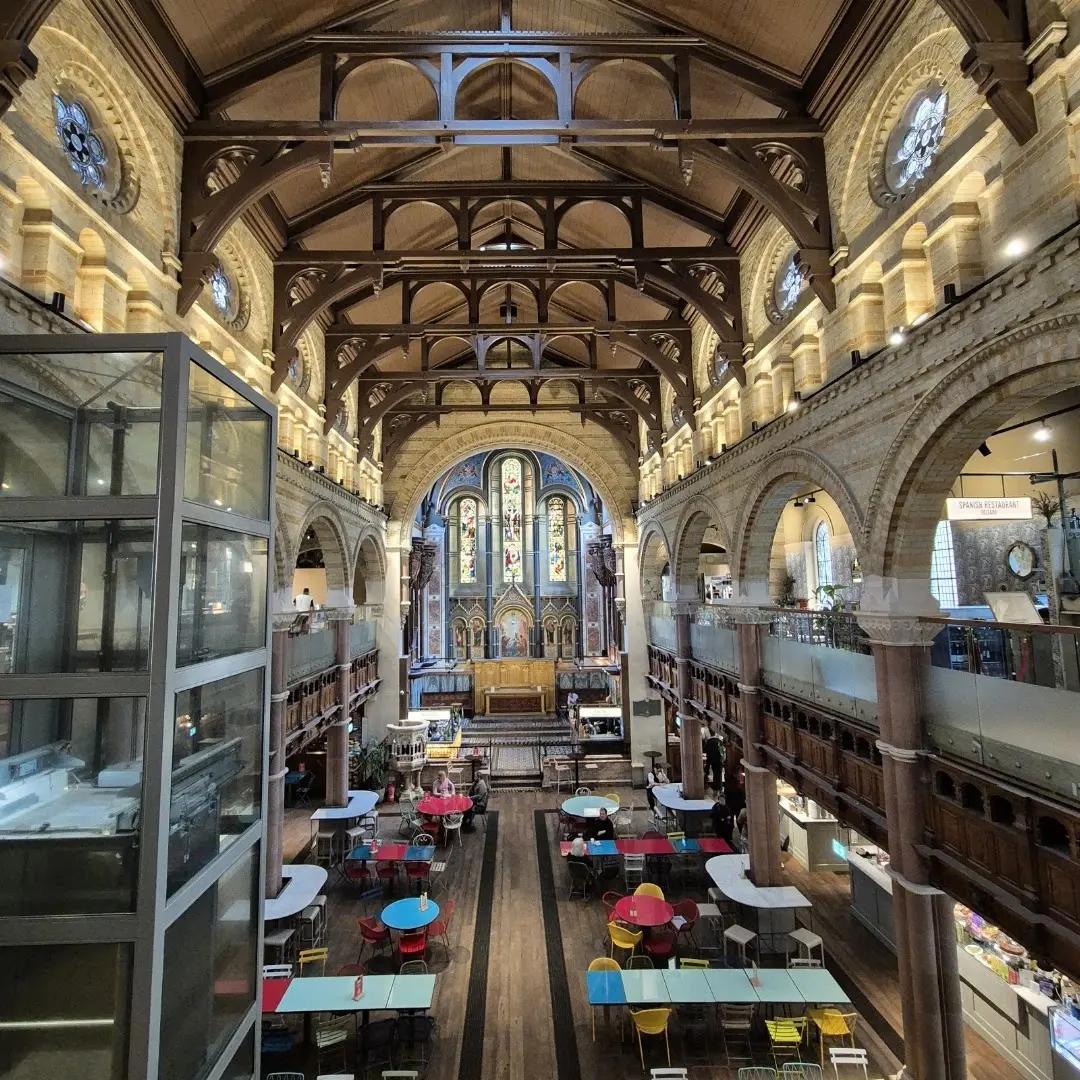
St Mark’s Church, Mayfair
Mayfair · Culture
In Mayfair you can find a bustling market inside a beautiful Grade I listed, deconsecrated church. St Mark’s was deconsecrated in the 1970s after its congregation dwindled after the war. It was on English Heritage’s Buildings at Risk register for over 20 years before a 5 million restoration project in 2019 by the Grosvenor Estate. Today it is home to Mercato Mayfair, an artisan food market, as well as being a location for events, workshops and a community space, free to use for local groups. The heritage at the same time is maintained and restored to a high standard. Some might find it sad to not see it used for its original religious purpose but, I think, this is far better than it decaying and going unseen. There is a link in my bio for the full blog post. @mercatometropolitano @christmasbymercato #london #londonhistory #livinglondonhistory #londontravel #christmas #christmaslondon #londonchristmas #hiddenlondon #mayfair
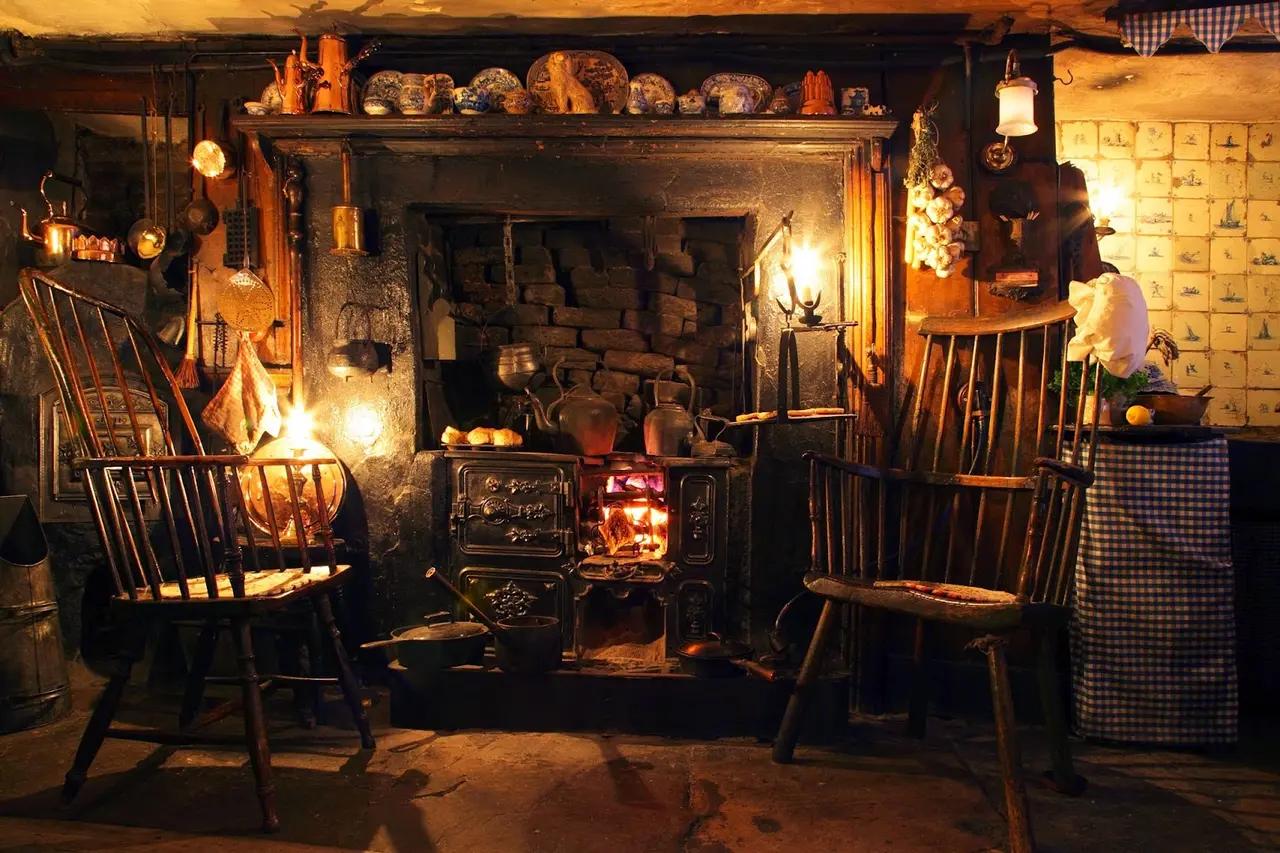
Dennis Severs' House
Shoreditch · Culture
In Spitalfields you can visit an extraordinary 18th century house. It is part time capsule, part one man’s unique vision of the past� Dennis Severs� House was constructed in 1724 but in 1979 was lovingly and meticulously restored by a man called Dennis Severs. There is a link in my bio if you would like to read my full blog post on this most unusual of historic houses. You can also find more over at @dennissevershouse. #london #londonhistory #livinglondonhistory #londontravel #hiddenlondon #secretlondon #eastlondon #londonmuseum
- R
Royal Collection Trust, Marlborough Road, London, UK
Westminster · Outdoors
History And Highlights: An Exclusive Visit To Windsor castle I had the great privilege recently to be invited to have a look around Windsor Castle on a day that it was shut to the public. It was incredible to be able to soak up the atmosphere of the oldest inhabited castle in the world. It is naturally packed with history, artefacts and wonderful architecture, both historic and modern, keeping the castle up to date as a working royal palace. windsor castle visit The castle Through The Ages Windsor Castle was constructed initially from 1070-1086 on the orders of William the Conqueror, as a royal residence and as a fortification to guard the Western approach to London. Henry II converted the castle into a splendid royal palace in the late 12th century, constructing two sets of royal apartments. Since then it has been home to 40 monarchs. Henry II also replaced the wooden walls with stone and had the Round tower constructed where the Norman keep once stood. round tower In the mid 14th century Edward III spent huge sums again to convert the building further from a military fortification into a gothic palace. An inner gatehouse with cylindrical towers was added and royal apartments on the North side of the Quadrangle. norman gate The Inner Gatehouse built by Edward III henry viii gate The Henry VIII Gate, constructed in 1511 A carving of a Tudor rose and a concerned looking grotesque Remodelled and Restored Charles II remodelled the castle from the 1670s, directed by architect Hugh May, giving it grand baroque interiors and creating the Long Walk. the long walk Charles II was inspired by the formal avenues he saw at Versailles. Land was purchased by the King, buildings demolished and 1,864 elm trees planted in double rows. George III gave some of the rooms a neo-classical dressing and then in 1796 appointed James Wyatt to transform the exterior of the palace. He added more gothic elements and the Grand Stair. George IV continued this work, employing architect Jeffry Wyatville to give the castle a more impressive appearance by raising the height of the Round Tower, adding towers, battlements and cladding it in the masonry that we see today. He also extensively remodelled many of the interiors, including St George’s Hall. On 20th November 1992, Queen Elizabeth II’s �annus horribilis�, a fire broke out in what had been Queen Victoria’s private chapel. The ceilings of St George’s Hall and the Grand Reception Room were destroyed. The private chapel, the State Dining Room and the Crimson Drawing Room were all gutted. A huge restoration project was carried out and completed in 1997. The 1992 fire, image courtesy of the Royal Collection Trust State Visits Windsor Castle is still, as I mentioned, a Royal residence, but is often used for ceremonies, investitures, banquets and State Visits, such as Emmanuel Macron in July 2025 and Donald Trump in September 2025. In December 2025 the German President Frank-Walter Steinmeier will be arriving for a State Visit. Guests approach the castle via the Long Walk and enter the Quadrangle through the George IV gate. They will then, with the monarch, inspect a Guard of Honour. The Quadrangle was largely established in the 14th century but gained its current form in the early 19th century. quadrangle windsor The Quadrangle, with the large George IV Gate on the right. The spectacular arrival ceremony during the State Visit of Emmanuel Macron in July 2025 Inspecting a Guard of Honour. Images courtesy of Royal.uk. A banquet is then laid on in the evening in St George’s Hall. Let’s have a look inside St George’s Hall and some of the other incredible rooms I saw on my visit. There was not time to look at every room or visit St George’s Chapel this time around, but I will make sure to in the future and write it up in a future blog post. St George’s Hall st george's hall windsor The magnificent St George’s Hall was originally constructed from 1353-4, as a medieval banqueting hall. It did have an English oak hammerbeam roof, but the hall was initally smaller than we see it today. It has had a rather turbulent history and been remodelled and rebuilt, on a number of occasions. In the 1670s, under Charles II the hall was rebuilt, along with a private chapel alongside it. They were both given spectacular Baroque interiors with Grinling Gibbons woodcarvings and paintings by Antonio Verrio. The hall was then rebuilt again during George IV’s changes to the castle and the private chapel and hall merged to create the impressive space we see today. George IV wanted the hall to act as a secular centre of the Order of the Garter, St George’s Chapel being its spiritual centre. st george's hall windsor Around the hall today are various statues and coats of arms of those who have received the Order of the Garter. prince albert Bust of Prince Albert, who was a member of the Order of the Garter from 1839 until his death in 1861 The Order of the Garter is the oldest and most senior order of chivalry in Britain, founded by Edward III in 1348. The order consists of the monarch, the Prince of Wales as �A Royal Knight Companion� and then just 24 other members. St George’s Hall was very badly damaged in the 1992 fire and the roof had to be entirely replaced. fire st george's hall St George’s Hall after the 1992 fire, image courtesy of the Royal Collection Trust The hall was rebuilt to the original medieval appearance, but with some 20th century reinterpretations. For example, the roof was replaced with sustainable green oak, using traditional methods and tools. Prince Phillip chaired the Restoration Committee and Donald Insall Architects led the project. st george's hall ceiling Coats of Arms The blank shields on the ceiling are those who have been expelled from the order. They are arranged in chronological order and there are lots of blanks clustered around the turbulent and bloody 16th and 17th centuries. ceiling st george's hall elizabeth ii coat of arms The Royal Coat of Arms for the Queen Mother. Her name was Elizabeth Bowes-Lyon, therefore her coat of arms features bows and a lion. winston churchill coat of arms The coat of arms of Sir Winston Churchill, who was a member from 1953 until his death in 1965 Below is the Coat of Arms of Lady Mary Elizabeth Peters, who was made a Lady Companion of the Order of the Garter in 2019. She is a Northern Irish former professional Olympic athlete, therefore has incorporated the Olympic rings into her coat of arms. lady mary elizabeth peters coat of arms Below is the coat of arms of ex Prime Minister Sir John Major, who has a love of politics but also cricket. He has therefore combined the portcullis, the symbol of Parliament, with cricket balls and a wicket. sir john major coat of arms You can see a timelapse here of the table being set up for a State Banquet in St George’s Hall. You can also see here a video all about the preparation that goes into a State Visit. The Lantern Lobby lantern lobby windsor Just off St George’s Hall you will find the Lantern Lobby. This was built where the 1992 fire started, in what had once been the private chapel. The octagonal room was designed by Giles Downes in a modern Gothic style, featuring an oak framed lantern, with Gothic vaulting inspired by European cathedrals. The private chapel after the 1992 fire lantern lobby windsor The same view today In here today you can see a plaque marking where the fire started. 1992 fire plaque You can also see a suit of armour made for King Henry VIII. It was made in 1540, around the time he married Anne of Cleves. henry viii suit of armour henry viii suit of armour Known as a �garniture�, it includes interchangeable plates so that it can be adapted for activities, such as sporting tournaments and battle. 6ft tall and 138cm wide around the waist it gives you a good sense of his imposing physical presence. The back plate was adjustable to accommodate the king’s increasing size. The Garter Throne Room the garter throne room The Garter Throne Room was created as part of George IV’s remodelling of the castle. This is where Knights and Ladies of the Order of the Garter are invested by the monarch. It also became Queen Victoria’s principal throne room. At the back of the room is a throne and footstool made from carved ivory and decorated with gold, silver and gemstones. travancore ivory throne They were the centrepiece of the Indian section of the Great Exhibition in 1851 and was presented to Queen Victoria to advertise the carving skills of the region of Travancore in Southern India. Queen Victoria invests Napoleon III into the Order of the Garter in the Garter Throne Room. Image from the Royal Collection Trust. You can also see the original Coronation portrait of Queen Elizabeth II. Painted by Herbert James Gunn from 1953-54. elizabeth ii original coronation portrait This image was then copied, replicated and can be found all over the globe. The Grand Reception Room grand reception room The splendid Grand Reception Room, in its current form, dates back again to George IV’s remodelling. It was originally the King’s Guard Chamber and contained lots of trophies and other items from the Royal Collection. It was also once the main ballroom for the castle. The Grand Reception Room also had to be extensively restored after the 1992 fire, predominantly the intricate gilded ceiling. grand reception room fire The Grand Reception Room after the fire and following the restoration. Image courtesy of the Royal Collection Trust grand reception room ceiling It is used for ceremonial occasions and investitures, when royal family members award honours. It is where, for example, David Beckham recently received his knighthood from the King. You can see him receiving his knighthood here. Below is one of the Chairs of Estate, two chairs used by Queen Elizabeth II and Prince Philip at the Queen’s coronation in 1953. chairs of estate They are part of the crowning ceremony, used during the homage, for the monarch to receive the Oath of Allegiance. At the end of the room is this magnificent urn. malachite urn It is made of Malachite and was presented to Queen Victoria by Tsar Nicholas I. It was intact after the 1992 fire, but needed four years of conservation work as it was badly damaged by the water used to fight the fire. The Grand Vestibule the grand vestibule The Grand Vestibule, historically, has served as the reception hall for honoured guests from across the world. The cases display many items from world cultures, most presented as gifts, some acquired in the context of conflict. They aim to represent how the monarchy has interacted with the world whether that is through diplomacy, empire or exploration. The Bullet That Killed Admiral Lord Nelson This is the Queen’s Guard Chamber, today used to display royal arms, armour and military artefacts. queen's guard chamber You can see, for example, rather remarkably, the bullet that killed Admiral Lord Nelson at the Battle of Trafalgar. admiral nelson bullet locket Nelson was shot through the shoulder, damaging his lung and spine by a French marine at around 1.15pm on the 21st October 1805, aboard HMS Victory. By 4.30pm he was dead. The shot was extracted from the wound by the ship’s surgeon, William Beatty. It was mounted for him in a locket, which he apparently wore for the rest of his life. The locket and bullet were then presented to Queen Victoria in 1844 by the family, after he died. The bullet still even has some of the gold lace fused to it from the epaulette of Nelson’s jacket. Other Artefacts I loved this door lock from 1761, created by William Walls and presented to King George III in 1765. william walls lock guns It incorporates two flintlock pistols that would fire at anyone trying to tamper with the lock. This is the Waterloo Chair, a 19th-century elm wood armchair carved by Thomas Chippendale the Younger. waterloo elm chair It was made from a tree that stood on the ridge on the battlefield of Waterloo, where the Duke of Wellington observed Napoleon’s final advance. It was presented to George IV in 1821. There is also always a French flag hanging in this room. It is presented every year by the descendants of the Duke of Wellington to pay a symbolic annual rent to the monarch for the Stratfield Saye estate in Hampshire. It is presented and hung on the anniversary of the Battle of Waterloo. french flag dukes of wellington Visiting Windsor Castle Windsor Castle is generally open to visitors Thursday-Monday 10am-4.15pm or 5.15pm, depending on time of year. You can see more details here. To get there by train, you can go from Paddington to Slough and then transfer to a local train to Windsor & Eton Central. This is the fastest option, taking around 45 minutes. Or you can go from London Waterloo, by taking a direct train to Windsor & Eton Riverside, which takes about 55 minutes.
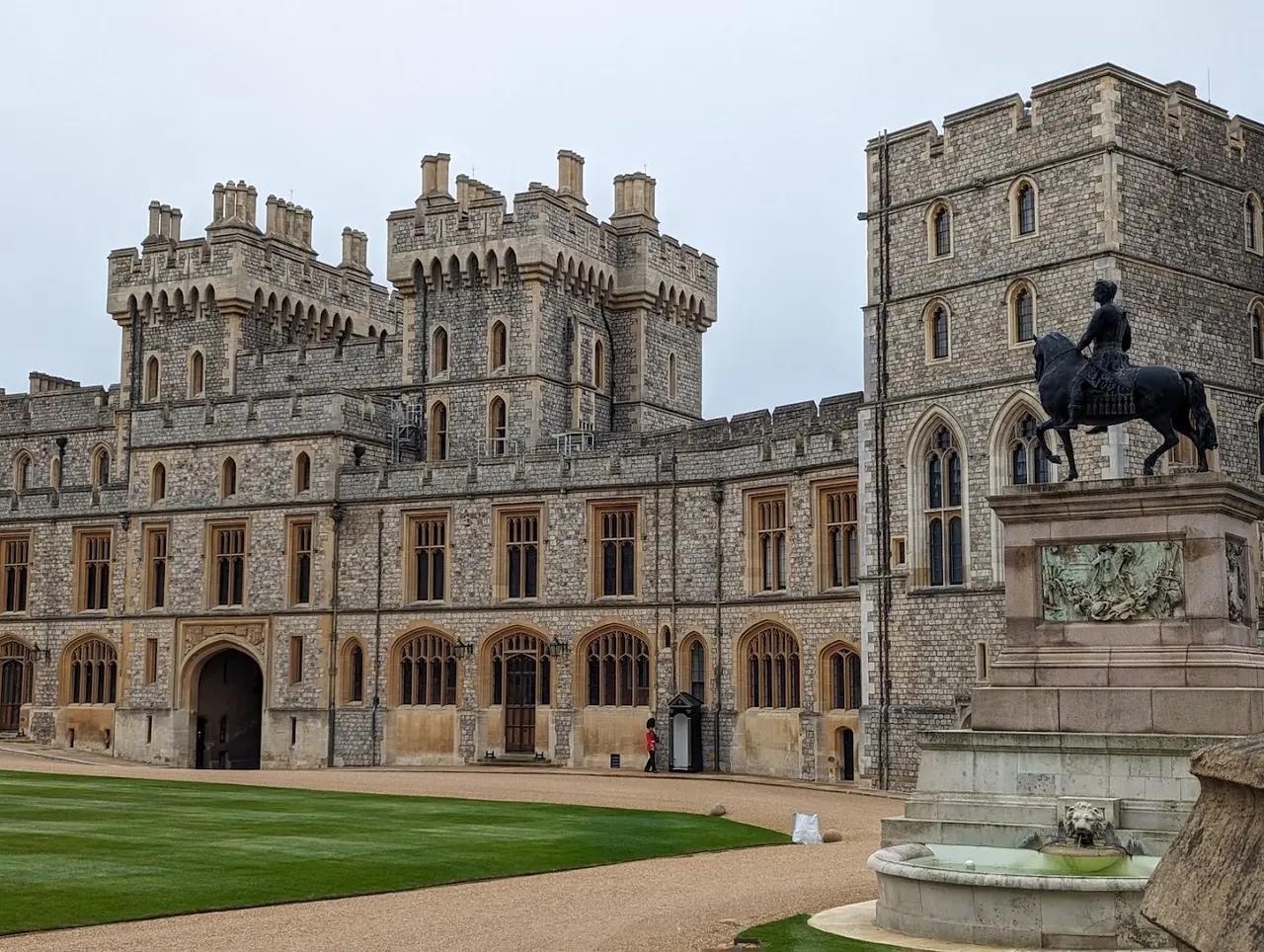
Windsor Castle Quadrangle
Culture
History And Highlights: An Exclusive Visit To Windsor castle I had the great privilege recently to be invited to have a look around Windsor Castle on a day that it was shut to the public. It was incredible to be able to soak up the atmosphere of the oldest inhabited castle in the world. It is naturally packed with history, artefacts and wonderful architecture, both historic and modern, keeping the castle up to date as a working royal palace. windsor castle visit The castle Through The Ages Windsor Castle was constructed initially from 1070-1086 on the orders of William the Conqueror, as a royal residence and as a fortification to guard the Western approach to London. Henry II converted the castle into a splendid royal palace in the late 12th century, constructing two sets of royal apartments. Since then it has been home to 40 monarchs. Henry II also replaced the wooden walls with stone and had the Round tower constructed where the Norman keep once stood. round tower In the mid 14th century Edward III spent huge sums again to convert the building further from a military fortification into a gothic palace. An inner gatehouse with cylindrical towers was added and royal apartments on the North side of the Quadrangle. norman gate The Inner Gatehouse built by Edward III henry viii gate The Henry VIII Gate, constructed in 1511 A carving of a Tudor rose and a concerned looking grotesque Remodelled and Restored Charles II remodelled the castle from the 1670s, directed by architect Hugh May, giving it grand baroque interiors and creating the Long Walk. the long walk Charles II was inspired by the formal avenues he saw at Versailles. Land was purchased by the King, buildings demolished and 1,864 elm trees planted in double rows. George III gave some of the rooms a neo-classical dressing and then in 1796 appointed James Wyatt to transform the exterior of the palace. He added more gothic elements and the Grand Stair. George IV continued this work, employing architect Jeffry Wyatville to give the castle a more impressive appearance by raising the height of the Round Tower, adding towers, battlements and cladding it in the masonry that we see today. He also extensively remodelled many of the interiors, including St George’s Hall. On 20th November 1992, Queen Elizabeth II’s �annus horribilis�, a fire broke out in what had been Queen Victoria’s private chapel. The ceilings of St George’s Hall and the Grand Reception Room were destroyed. The private chapel, the State Dining Room and the Crimson Drawing Room were all gutted. A huge restoration project was carried out and completed in 1997. The 1992 fire, image courtesy of the Royal Collection Trust State Visits Windsor Castle is still, as I mentioned, a Royal residence, but is often used for ceremonies, investitures, banquets and State Visits, such as Emmanuel Macron in July 2025 and Donald Trump in September 2025. In December 2025 the German President Frank-Walter Steinmeier will be arriving for a State Visit. Guests approach the castle via the Long Walk and enter the Quadrangle through the George IV gate. They will then, with the monarch, inspect a Guard of Honour. The Quadrangle was largely established in the 14th century but gained its current form in the early 19th century. quadrangle windsor The Quadrangle, with the large George IV Gate on the right. The spectacular arrival ceremony during the State Visit of Emmanuel Macron in July 2025 Inspecting a Guard of Honour. Images courtesy of Royal.uk. A banquet is then laid on in the evening in St George’s Hall. Let’s have a look inside St George’s Hall and some of the other incredible rooms I saw on my visit. There was not time to look at every room or visit St George’s Chapel this time around, but I will make sure to in the future and write it up in a future blog post. St George’s Hall st george's hall windsor The magnificent St George’s Hall was originally constructed from 1353-4, as a medieval banqueting hall. It did have an English oak hammerbeam roof, but the hall was initally smaller than we see it today. It has had a rather turbulent history and been remodelled and rebuilt, on a number of occasions. In the 1670s, under Charles II the hall was rebuilt, along with a private chapel alongside it. They were both given spectacular Baroque interiors with Grinling Gibbons woodcarvings and paintings by Antonio Verrio. The hall was then rebuilt again during George IV’s changes to the castle and the private chapel and hall merged to create the impressive space we see today. George IV wanted the hall to act as a secular centre of the Order of the Garter, St George’s Chapel being its spiritual centre. st george's hall windsor Around the hall today are various statues and coats of arms of those who have received the Order of the Garter. prince albert Bust of Prince Albert, who was a member of the Order of the Garter from 1839 until his death in 1861 The Order of the Garter is the oldest and most senior order of chivalry in Britain, founded by Edward III in 1348. The order consists of the monarch, the Prince of Wales as �A Royal Knight Companion� and then just 24 other members. St George’s Hall was very badly damaged in the 1992 fire and the roof had to be entirely replaced. fire st george's hall St George’s Hall after the 1992 fire, image courtesy of the Royal Collection Trust The hall was rebuilt to the original medieval appearance, but with some 20th century reinterpretations. For example, the roof was replaced with sustainable green oak, using traditional methods and tools. Prince Phillip chaired the Restoration Committee and Donald Insall Architects led the project. st george's hall ceiling Coats of Arms The blank shields on the ceiling are those who have been expelled from the order. They are arranged in chronological order and there are lots of blanks clustered around the turbulent and bloody 16th and 17th centuries. ceiling st george's hall elizabeth ii coat of arms The Royal Coat of Arms for the Queen Mother. Her name was Elizabeth Bowes-Lyon, therefore her coat of arms features bows and a lion. winston churchill coat of arms The coat of arms of Sir Winston Churchill, who was a member from 1953 until his death in 1965 Below is the Coat of Arms of Lady Mary Elizabeth Peters, who was made a Lady Companion of the Order of the Garter in 2019. She is a Northern Irish former professional Olympic athlete, therefore has incorporated the Olympic rings into her coat of arms. lady mary elizabeth peters coat of arms Below is the coat of arms of ex Prime Minister Sir John Major, who has a love of politics but also cricket. He has therefore combined the portcullis, the symbol of Parliament, with cricket balls and a wicket. sir john major coat of arms You can see a timelapse here of the table being set up for a State Banquet in St George’s Hall. You can also see here a video all about the preparation that goes into a State Visit. The Lantern Lobby lantern lobby windsor Just off St George’s Hall you will find the Lantern Lobby. This was built where the 1992 fire started, in what had once been the private chapel. The octagonal room was designed by Giles Downes in a modern Gothic style, featuring an oak framed lantern, with Gothic vaulting inspired by European cathedrals. The private chapel after the 1992 fire lantern lobby windsor The same view today In here today you can see a plaque marking where the fire started. 1992 fire plaque You can also see a suit of armour made for King Henry VIII. It was made in 1540, around the time he married Anne of Cleves. henry viii suit of armour henry viii suit of armour Known as a �garniture�, it includes interchangeable plates so that it can be adapted for activities, such as sporting tournaments and battle. 6ft tall and 138cm wide around the waist it gives you a good sense of his imposing physical presence. The back plate was adjustable to accommodate the king’s increasing size. The Garter Throne Room the garter throne room The Garter Throne Room was created as part of George IV’s remodelling of the castle. This is where Knights and Ladies of the Order of the Garter are invested by the monarch. It also became Queen Victoria’s principal throne room. At the back of the room is a throne and footstool made from carved ivory and decorated with gold, silver and gemstones. travancore ivory throne They were the centrepiece of the Indian section of the Great Exhibition in 1851 and was presented to Queen Victoria to advertise the carving skills of the region of Travancore in Southern India. Queen Victoria invests Napoleon III into the Order of the Garter in the Garter Throne Room. Image from the Royal Collection Trust. You can also see the original Coronation portrait of Queen Elizabeth II. Painted by Herbert James Gunn from 1953-54. elizabeth ii original coronation portrait This image was then copied, replicated and can be found all over the globe. The Grand Reception Room grand reception room The splendid Grand Reception Room, in its current form, dates back again to George IV’s remodelling. It was originally the King’s Guard Chamber and contained lots of trophies and other items from the Royal Collection. It was also once the main ballroom for the castle. The Grand Reception Room also had to be extensively restored after the 1992 fire, predominantly the intricate gilded ceiling. grand reception room fire The Grand Reception Room after the fire and following the restoration. Image courtesy of the Royal Collection Trust grand reception room ceiling It is used for ceremonial occasions and investitures, when royal family members award honours. It is where, for example, David Beckham recently received his knighthood from the King. You can see him receiving his knighthood here. Below is one of the Chairs of Estate, two chairs used by Queen Elizabeth II and Prince Philip at the Queen’s coronation in 1953. chairs of estate They are part of the crowning ceremony, used during the homage, for the monarch to receive the Oath of Allegiance. At the end of the room is this magnificent urn. malachite urn It is made of Malachite and was presented to Queen Victoria by Tsar Nicholas I. It was intact after the 1992 fire, but needed four years of conservation work as it was badly damaged by the water used to fight the fire. The Grand Vestibule the grand vestibule The Grand Vestibule, historically, has served as the reception hall for honoured guests from across the world. The cases display many items from world cultures, most presented as gifts, some acquired in the context of conflict. They aim to represent how the monarchy has interacted with the world whether that is through diplomacy, empire or exploration. The Bullet That Killed Admiral Lord Nelson This is the Queen’s Guard Chamber, today used to display royal arms, armour and military artefacts. queen's guard chamber You can see, for example, rather remarkably, the bullet that killed Admiral Lord Nelson at the Battle of Trafalgar. admiral nelson bullet locket Nelson was shot through the shoulder, damaging his lung and spine by a French marine at around 1.15pm on the 21st October 1805, aboard HMS Victory. By 4.30pm he was dead. The shot was extracted from the wound by the ship’s surgeon, William Beatty. It was mounted for him in a locket, which he apparently wore for the rest of his life. The locket and bullet were then presented to Queen Victoria in 1844 by the family, after he died. The bullet still even has some of the gold lace fused to it from the epaulette of Nelson’s jacket. Other Artefacts I loved this door lock from 1761, created by William Walls and presented to King George III in 1765. william walls lock guns It incorporates two flintlock pistols that would fire at anyone trying to tamper with the lock. This is the Waterloo Chair, a 19th-century elm wood armchair carved by Thomas Chippendale the Younger. waterloo elm chair It was made from a tree that stood on the ridge on the battlefield of Waterloo, where the Duke of Wellington observed Napoleon’s final advance. It was presented to George IV in 1821. There is also always a French flag hanging in this room. It is presented every year by the descendants of the Duke of Wellington to pay a symbolic annual rent to the monarch for the Stratfield Saye estate in Hampshire. It is presented and hung on the anniversary of the Battle of Waterloo. french flag dukes of wellington Visiting Windsor Castle Windsor Castle is generally open to visitors Thursday-Monday 10am-4.15pm or 5.15pm, depending on time of year. You can see more details here. To get there by train, you can go from Paddington to Slough and then transfer to a local train to Windsor & Eton Central. This is the fastest option, taking around 45 minutes. Or you can go from London Waterloo, by taking a direct train to Windsor & Eton Riverside, which takes about 55 minutes.
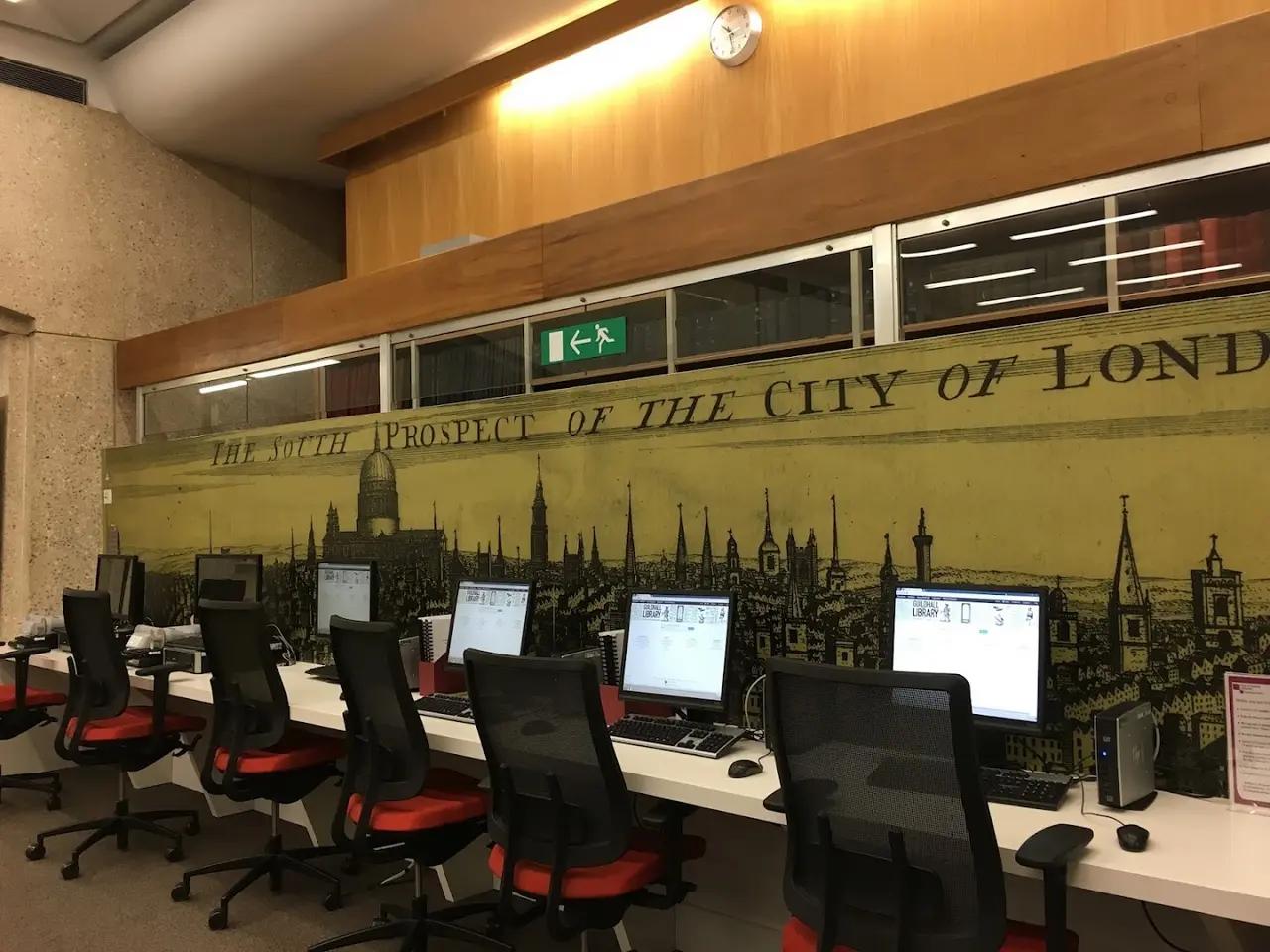
Guildhall Library
The City of London · Culture
The amazing scale models of London at the London Centre! There are three models, created for @nlalondon (New London Architecture). There is one of lots of Greater London (1:2000), one of the docks (1:1000) and one of the City (1:500). The model of the City I think is particularly interesting because it shows just how much the city has changed, particularly in the last half a century but also because it includes buildings that have been given planning permission. The models are free to visit and are open Tuesday-Saturday 11am-5pm. There is a link in bio for the full blog post on the models! . . . . . #london #londonhistory #livinglondonhistory #cityoflondon #londonarchitecture, #architecturelovers #architecturedesign #londontravel #londontrip
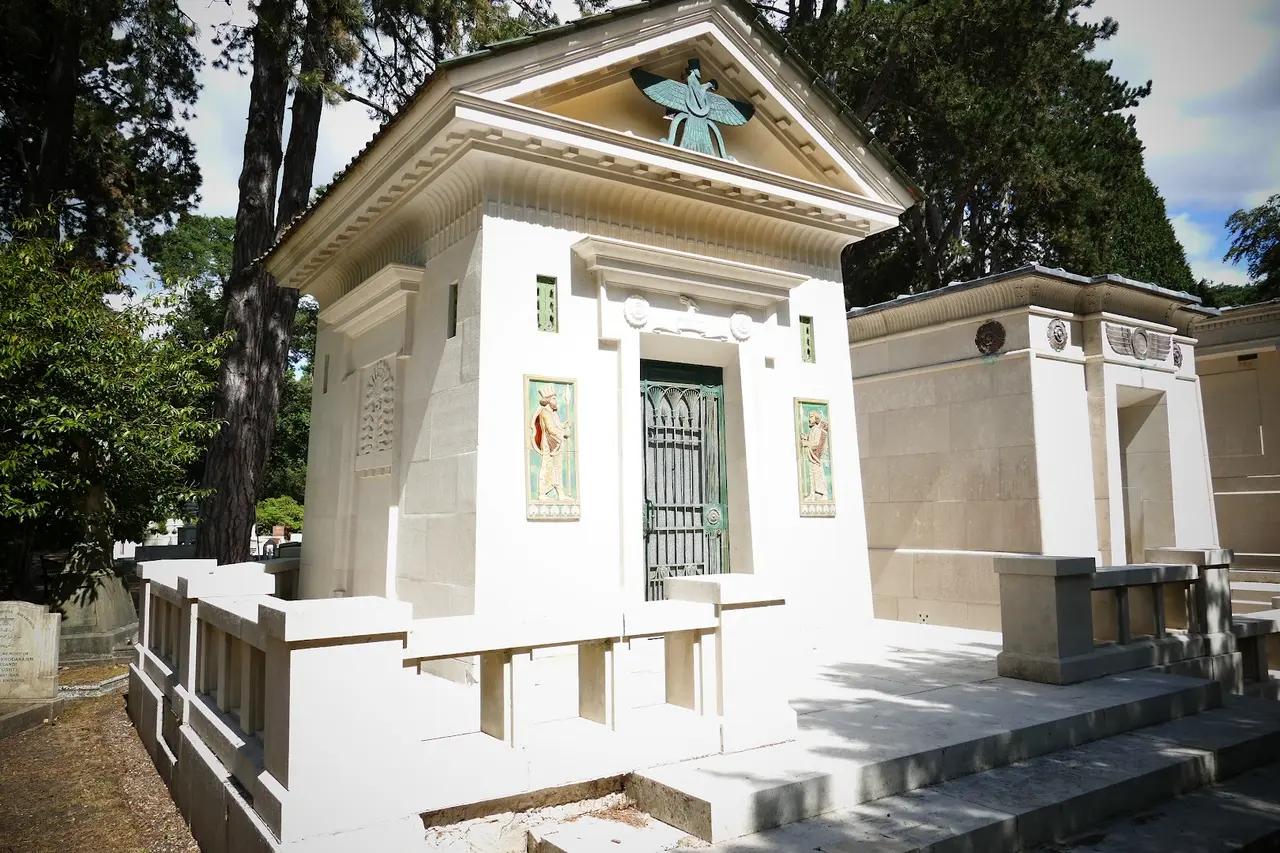
Brookwood Cemetery
Culture
The London Necropolis Railway and A Visit To Brookwood Cemetery If you walk along Westminster Bridge Road, not far from Waterloo Station, you will pass by an unusual looking building, one that very much stands out from its neighbours. necropolis railway building history It goes overlooked by many but this is one of the only surviving remnants of one of the strangest chapters in London’s history. Built in 1900, this was constructed as the grand entrance-way to the London Necropolis Railway, or Victorian London’s �Railway for the Dead�. Read on for the history of the railway, as well as what I saw when I visited the UK’s largest cemetery. 19th Century London London’s population exploded in the 19th century. In 1800 the population was roughly 1 million, by 1850 this was just under 2.5 million. By 1900 it had grown to 6 million. Thousands were moving from the countryside into cities with the enclosure of traditional farmland and the accelerating industrial revolution led to a huge demand for labour in factories. This was supplemented by large numbers coming from places like Ireland after the potato famine and elsewhere in the growing British Empire. By the 1840s and 50s London’s inner-city churchyards and graveyards were full. Cholera outbreaks, particularly those in 1848-49, only exacerbated the problem. From the 1830s the Government had encouraged private enterprise to step in and help solve the problem of where to bury people. This is when we have the establishment of what became known as the �Magnificent Seven� cemeteries, dotted around the city. The first was Kensal Green in 1832 and the last being Tower Hamlets in 1841. I have written about Highgate Cemetery before here. Brookwood Cemetery In 1852 the London Necropolis and National Mausoleum Company was established by an Act of Parliament. The not at all morbid logo of the London Necropolis and National Mausoleum Company. Image from wikimedia commons. That same year the company purchased a roughly 2000 acre tract of land, formerly Woking Common, from the Earl of Onslow. They then used 500 acres of that to set up a huge cemetery. At the time it was the largest cemetery in the world, known initially as Woking Necropolis and later known as Brookwood Cemetery. That was, in a way, the first problem solved, there was now plenty of room for burials. The next challenge was transporting mourners and the dead the 23 miles out to Surrey for the burials and funerals. They therefore set up a specific new railway line called the London Necropolis Railway, running from Waterloo to Brookwood. The London Necropolis Railway The railway ran predominantly on the railway lines that already existed, but had a spur off at each end. Diagram of the route by Irisdescent� image from wikimedia commons. This diagram includes the �Magnificent Seven� and two never realised large cemeteries. They had their own trains and carriages and their own entrance building at Waterloo Station. The original entrance to the Necropolis Railway at Waterloo Station, image from wikimedia commons. This was roughly where Leake Street can be found today. It had waiting rooms for mourners, a hydraulic lift to take coffins up to platform level and the railway arches, despite the protestations of local residents, were used to store bodies awaiting burial. In 1899 the Necropolis Railway building was blocking the expansion of Waterloo Station. London and South Western Railway (LSWR) purchased the land back and built the London Necropolis Railway a new station on Westminster Bridge Road. The new terminus on Westminster Bridge Road opened in 1902. necropolis railway building Class Segregation In true Victorian style you could book a First, Second or Third class funeral. A First class funeral allowed you to select the grave-site in the cemetery. Second class allowed you some control over the burial location and Third class meant that your friend or relative was buried in a pauper’s section of the cemetery. There were also First, Second and Third class carriages for mourners, as well as separate carriages for different religions. The 1852 Burial Act required that all new cemeteries should include a �non-consecrated� section, providing burial space for people not part of the Church of England. There were also, bizarrely, separate carriages for First, Second and Third class coffins. Before the railway was in operation, the Bishop of London, Charles Blomfield, was worried. He said �persons of opposite characters might be carried in the same conveyance� For instance, the body of some profligate spendthrift might be placed in a conveyance with the body of some respectable member of the church, which would shock the feelings of his friends. His terrrible fears were not realised and the coffins were indeed separated by class. necropolis railway history A Third class coffin ticket, image from wikimedia commons Spirited Away The train would depart at 11.35am (11.20am on Sundays) and it would, leaving the smog of the metropolis, steam through the green countryside and arrive at �Necropolis Junction� at 12. 25pm. Brookwood was unusual in offering Sunday burials. It, therefore, became popular for those who could not afford to take a day off work. It was also popular for the funerals of actors, because theatre was traditionally banned on Sundays, so that would be their day off and actor friends and colleagues could attend. At its height the railway was transporting around 2,000 bodies a year to Brookwood, taking roughly 200,000 bodies in total over 87 years. Famous Funerals One of the funerals with the highest attendance at the cemetery was that of MP Charles Bradlaugh. He was a Liberal MP and a staunch atheism campaigner, founding the National Secular Society in 1866. He was also a key supporter of Indian self-governance, so his funeral, after he died on the 20th January 1891, was attended by around 3,000 people, including many Indians, among them a 21 year old Mahatma Ghandi. Charles Bradlaugh, image from wikimedia commons Woking Crematorium, not far from the cemetery, was established in 1878. The LNC therefore had an agreement that mourners could use the railway to attend cremations there as well. Occasionally due to personal or religious reasons a funeral would not be able to take place in a church. One of the waiting rooms of the terminus could in these circumstances be turned into a makeshift funeral chapel. This was the case for the funeral of Friedrich Engels, co-author of the Communist Manifesto with Karl Marx, on the 10th August 1895. He was then taken on the train to Woking Crematorium to be cremated. Eleanor Marx, Karl Marx’s daughter, also interestingly had her funeral in the waiting room of the station in 1898 and was also cremated at Woking Crematorium. Friedrich Engels Eleanor Marx The Railway Shuts Down In the 20th century, demand for the Necropolis Railway started to decline. This was due to a number of factors: the growth in the number of municipal cemeteries in London, the advent of the motor car and the increase in demand for cremation. On the 16th/17th April 1941 a Blitz bombing raid destroyed much of the infrastructure of the railway. It was decided, after the War, to not reopen the railway. The terminus building on Westminster Bridge Road survived and went through a variety of purposes, mostly as offices. It has been unused for quite a few years now, but recently sold for 3 million. You can see its Rightmove listing here, sold, it looks like, to become, to the surprise of no-one, luxury apartments. If you look at the building on Google Maps, you can see the railway track coming into the back of it. entrance to necropolis railway The view through the gates of the old terminus building today necropolis railway terminus building A Visit To Brookwood I also paid a visit to Brookwood, to see what clues there are to the railway. It is still the largest cemetery in the UK, so I was only able to get round a small portion of it. brookwood cemetery history There is a special entrance from the train station straight into the cemetery. brookwood station Immediately on the left is a brand new, as of 2025, reflective memorial garden. reflective garden brookwood This was set up as part of the Railway 200 (200 years of Network Rail) celebrations. It is a memorial to the London Necropolis Railway, as well as lost railway colleagues and friends. It is made from old railway sleepers and there is a section of old railway track. reflective garden brookwood reflective garden brookwood One of the walkways in the cemetery is called Railway Avenue. It runs along the top of a bank of earth that marks the route of the old spur of railway track that once ran into the cemetery. Diagram of where the train track ran in the cemetery, image from wikimedia commons The North station inside Brookwood in 1907, image from wikimedia commons. The North station was demolished in the 1960s and the South in the 1970s. Notable Graves Some of the graves have a sign saying �Notable Grave� and a QR to find out more. For example, below is the mausoleum of Daniel Nichols, a French-born restaurateur who founded the Caf� Royal, later Hotel Caf� Royal, on Regent Street. He had to flee France due to bankruptcy and arrived in London with just 5 to his name. His restaurant though became the place to be seen in the 1890s, with clientele including Oscar Wilde, Virginia Woolf, Winston Churchill, Noel Coward and many more. Brookwood Military Cemetery You can also see the Brookwood Military Cemetery, the largest Commonwealth war cemetery in the UK. brookwood military cemetery Part of it is the American Cemetery. Here you can find the graves of nearly 470 American servicemen and women who were killed in World War One. american cemetery At one end is this white stone chapel. Inside are names of over 560 Americans who were missing at sea and therefore do not have marked graves. american cemetery memorial One of the great tragedys of the war was the sinking of the US Coastguard cutter Tampa. It went down with the loss of all hands on 26th September 1918, after an attack from a German submarine. It was the largest American naval loss of the war. coastguard tampa memorial The heartbreaking list of 131 names of those who went down with the USCGC Tampa Brookwood also had the first Muslim Cemetery in Britain, as well as the only Zoroastrian burial ground in Britain. It therefore has a really amazing variety of religions and different sections. It also therefore has so many different styles of grave and mausoleum. The striking mausoleum below for example, with its golden dome, is the burial place of HRH Sharif Al-Hussein Ben Ali (1919-1998), a member of the Iraqi royal family which was ousted in 1958. sharif al-hussein ben ali mausoleum Other notable burials include those of John Singer Sargent and Dr Richard Pankhurst, lawyer and husband of Suffragette Emmeline Pankhurst. Visiting Brookwood If you would like to visit Brookwood, you get train from Waterloo Station out to Brookwood. As mentioned previously, there is a special entrance straight from the station into the cemetery. Opening hours are 8am-5pm everyday. You can find out more on their website here. It also looks like the Brookwood Cemetery Society run regular guided tours.
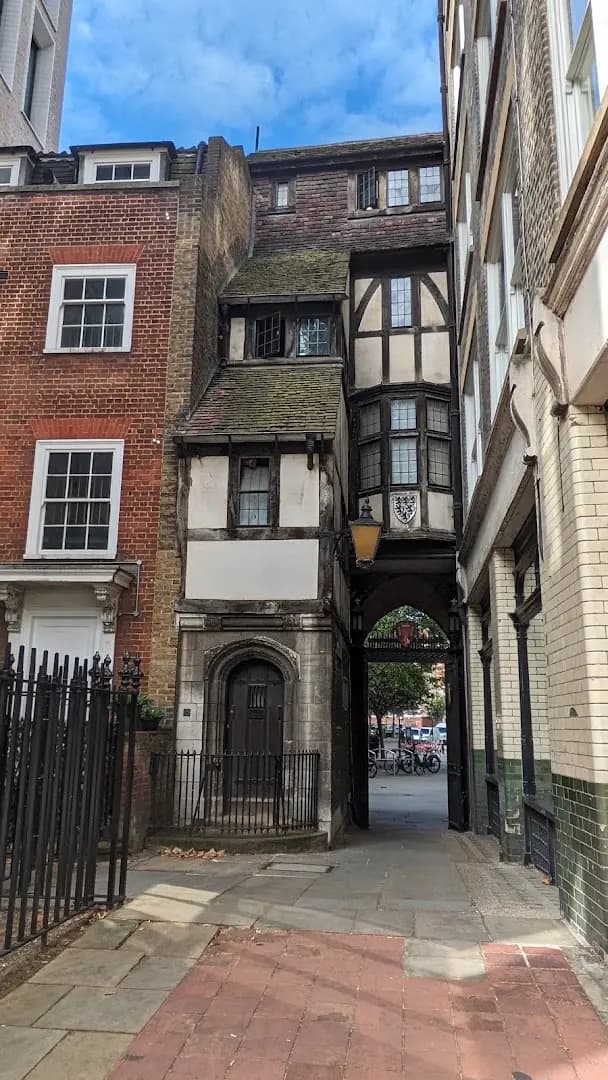
St Bartholomew's Gatehouse
The City of London · Culture
Is This The Oldest House In The City Of London? Tucked amongst the alleyways and winding lanes of Smithfield you will find a number of historic survivors. cloth fair One of the buildings that has survived fire, bombs and development is 41-42 Cloth Fair, a house that is often said to be the oldest house in the City of London. Read on for its story and why the title of �oldest house� in the City might be misattributed� An Atmospheric Enclave 41-42 Cloth Fair can be found right by St Bartholomew the Great church, London’s oldest parish church, established in 1123. It was established as the Priory of St Bartholomew and, before the Reformation and Henry VIII’s Dissolution of the Monasteries, the building was roughly double the size that it is now. st bartholomew the great church The semi-circular apse of St Bartholomew the Great, a church where history practically oozes from the walls Half of the church was demolished, including three sides of the monastic cloister, in 1539. What was once the nave became the churchyard. churchyard of st bartholomew the great The churchyard of St Bartholomew the Great, raised above ground level due to the bodies buried within I have written a full blog post about St Bartholomew the Great church here. The street called Cloth Fair runs alongside the churchyard and down past the side of the church itself. The name Cloth Fair relates to the annual cloth fair that was held in the grounds of the priory from 1133. Cloth merchants from across the country sell their goods, from the eve of St Bartholomew’s Day (24th August). Over the centuries, side entertainments started to be added such as circus acts, puppet shows and dancing bears. It became known as the Bartholomew Fair and ran until 1855 when it was banned by the City authorities for encouraging public disorder and debauchery. bartholomew fair The Bartholomew Fair by 1808, image from wikimedia commons 41-42 Cloth Fair Constructed 41-42 cloth fair After the Dissolution, the priory was acquired by Sir Richard Rich. He was Thomas Cromwell’s right hand man and the Chancellor of the Court of Augmentations, i.e. the position in charge of overseeing the Dissolution of the Monasteries. It is unsurprising then that he gained rather substantially from the process and he started living in the old prior’s quarters of the church. His grandson, Robert, 3rd Baron Rich, and then his son Henry, began to build extensively on the priory grounds later in the 16th century. From 1597-1614 a block of 11 houses was constructed by the church, around a small courtyard. 41-42 Cloth Fair is the only one surviving of these properties. The square was known as �the Square in Launders Green�, the name a nod to the fact that this used to be the site of the priory’s laundry. 41-42 cloth fair 41-42 cloth fair Certain architectural details, such as the timber-framed windows are indicators of its 17th century origins. It also has lots of original 17th century details on the interior, such as the staircase from the 2nd floor to the attic and a fine-panelled room on the second floor. Today it is Grade II* listed, you read its Historic England listing here. The House Through The Centuries Anything in London prior to 1666 is, of course, very rare. From the 2nd-6th September 1666 roughly four fifths of the old medieval city went up in flames when the Great Fire of London struck. The fire stopped not far away at a spot then called Pye Corner, today the corner of Giltspur and Cock Lane, marked by a sculpture called The Golden Boy of Pye Corner. The houses on Cloth Fair therefore remained safe. There seems to be a theory that the high walls of the priory saved them from the fire, but it does not seem to have actually got near enough for that to be the case. A map of the destruction caused by the Great Fire and the church and houses circled in orange 41-42 Cloth Fair went through various purposes over the centuries. After its construction, for example, the building was leased from Rich by a business called William Chapman. He turned the ground floor and cellar into an alehouse called The Eagle and Child. In the 18th century it was a wool drapers for a period and then a tobacconists from 1829, run by a Mrs Corram. From the early 20th century until 1927, Markham & Co wholesale cutlers and electro-platers were based here. 41-42 cloth fair Another Fortunate Escape In 1929 the City of London carried out a �slum clearance� programme in the area. cloth fair history Cloth Fair in the early 20th century prior to the slum clearance scheme, with 41-42 seen on the left 41-42 Cloth Fair was due to be demolished in that scheme, but thankfully it was saved by two architects called Paul Paget (1901-1985) and John Seely (1899-1963). The pair met at university and in their 20s became business partners, but also life partners. They apparently referred to each other simply as �the partner�. The pair bought the Cloth Fair house for 3,000 in 1930 and it became their office and home. They also ended up buying and looking after lots of the other buildings on Cloth Fair. Theirs was one of the main architectural firms of the Interwar period and they are probably best known for transforming Eltham Palace into the Art Deco masterpiece that it is today. You can read more about them and see some photographs here. They had twin baths in the bathroom, so that they could chat with each other whilst bathing. John Seely was appointed as surveyor of St Paul’s Cathedral, a position Paget took on when Seely died in 1963. Seely and Paget were also very involved in restoring buildings after World War Two. They, for example, restored the Westminster Abbey precinct and the Charterhouse. Various famous faces called in over the years and they would encourage visitors to etch their names into the upper storey windows, into the glass, with a diamond pen. So, still today, if you look up at the first floor windows you can see a series of little etchings. Famous visitors have included the Queen Mother and Winston Churchill. windows of 41-42 cloth fair windows of 41-42 cloth fair The House Today Paget continued to live and work from the house until 1978. In 1979 it became an estate agents, but in 1995 it was bought, restored and turned back into a home. The neighbouring 18th century 43-45 Cloth Fair, that had also been acquired by Paget and Seely, were sold to the Landmark Trust. The Landmark Trust are a conservation charity that rescues historic buildings and rents them out as holiday lets. Find out more here. 43 Cloth Fair was, from 1954 until the 1970s, the home of Sir John Betjeman, poet but also great heritage campaigner. 43-45 cloth fair john betjeman plaque John Betjeman was a close friend of Seely and Paget and they campaigned together to save historic buildings. Apparently after Seely died Betjeman stepped in to use the second of the twin baths. In the window of 43 Cloth Fair, the window looking out onto Cloth Court, you can see a painting. It is called The Sailors� Homecoming by Brian Thomas. It was commissioned by Seely and Paget to maintain a bit of privacy between the two properties as they had previously been able to see straight into each others living quarters. They bricked it up initially but found this to be a bit dull, so commissioned the mural. 43 cloth fair painting It was quite tricky to get a good angle for this photograph, so that you can clearly see it. Today 41-42 Cloth Fair is lived in by Matthew Bell, a psychotherapist and City councillor. Is it the oldest house in the City of London? Whether it is the oldest house in the City of London depends, I think, on your definition. It is not the oldest house in the whole of London, that probably goes to the Ancient House in Walthamstow. the ancient house walthamstow The 15th century �Ancient House� in Walthamstow The City of London is, as many of you will know, a specific area within Greater London, only just over a square mile in size. It is the oldest part of London, where the Romans originally established the city. The only other contender in this specific area would be St Bartholomew’s Gatehouse around the corner. st bartholomew's gatehouse This was constructed in 1595 over the old 13th century entrance to St Bartholomew the Great church. This was the Southern entranceway before much of the church was demolished in 1539. This, as far as I am aware, is not a permanent residence today, but certainly was built as, and has been used as, a home. Either way, both are within spitting distance of each other and can be seen on the same visit, should you want to.
- 4
41-42 Cloth Fair
The City of London · Culture
Is This The Oldest House In The City Of London? Tucked amongst the alleyways and winding lanes of Smithfield you will find a number of historic survivors. cloth fair One of the buildings that has survived fire, bombs and development is 41-42 Cloth Fair, a house that is often said to be the oldest house in the City of London. Read on for its story and why the title of �oldest house� in the City might be misattributed� An Atmospheric Enclave 41-42 Cloth Fair can be found right by St Bartholomew the Great church, London’s oldest parish church, established in 1123. It was established as the Priory of St Bartholomew and, before the Reformation and Henry VIII’s Dissolution of the Monasteries, the building was roughly double the size that it is now. st bartholomew the great church The semi-circular apse of St Bartholomew the Great, a church where history practically oozes from the walls Half of the church was demolished, including three sides of the monastic cloister, in 1539. What was once the nave became the churchyard. churchyard of st bartholomew the great The churchyard of St Bartholomew the Great, raised above ground level due to the bodies buried within I have written a full blog post about St Bartholomew the Great church here. The street called Cloth Fair runs alongside the churchyard and down past the side of the church itself. The name Cloth Fair relates to the annual cloth fair that was held in the grounds of the priory from 1133. Cloth merchants from across the country sell their goods, from the eve of St Bartholomew’s Day (24th August). Over the centuries, side entertainments started to be added such as circus acts, puppet shows and dancing bears. It became known as the Bartholomew Fair and ran until 1855 when it was banned by the City authorities for encouraging public disorder and debauchery. bartholomew fair The Bartholomew Fair by 1808, image from wikimedia commons 41-42 Cloth Fair Constructed 41-42 cloth fair After the Dissolution, the priory was acquired by Sir Richard Rich. He was Thomas Cromwell’s right hand man and the Chancellor of the Court of Augmentations, i.e. the position in charge of overseeing the Dissolution of the Monasteries. It is unsurprising then that he gained rather substantially from the process and he started living in the old prior’s quarters of the church. His grandson, Robert, 3rd Baron Rich, and then his son Henry, began to build extensively on the priory grounds later in the 16th century. From 1597-1614 a block of 11 houses was constructed by the church, around a small courtyard. 41-42 Cloth Fair is the only one surviving of these properties. The square was known as �the Square in Launders Green�, the name a nod to the fact that this used to be the site of the priory’s laundry. 41-42 cloth fair 41-42 cloth fair Certain architectural details, such as the timber-framed windows are indicators of its 17th century origins. It also has lots of original 17th century details on the interior, such as the staircase from the 2nd floor to the attic and a fine-panelled room on the second floor. Today it is Grade II* listed, you read its Historic England listing here. The House Through The Centuries Anything in London prior to 1666 is, of course, very rare. From the 2nd-6th September 1666 roughly four fifths of the old medieval city went up in flames when the Great Fire of London struck. The fire stopped not far away at a spot then called Pye Corner, today the corner of Giltspur and Cock Lane, marked by a sculpture called The Golden Boy of Pye Corner. The houses on Cloth Fair therefore remained safe. There seems to be a theory that the high walls of the priory saved them from the fire, but it does not seem to have actually got near enough for that to be the case. A map of the destruction caused by the Great Fire and the church and houses circled in orange 41-42 Cloth Fair went through various purposes over the centuries. After its construction, for example, the building was leased from Rich by a business called William Chapman. He turned the ground floor and cellar into an alehouse called The Eagle and Child. In the 18th century it was a wool drapers for a period and then a tobacconists from 1829, run by a Mrs Corram. From the early 20th century until 1927, Markham & Co wholesale cutlers and electro-platers were based here. 41-42 cloth fair Another Fortunate Escape In 1929 the City of London carried out a �slum clearance� programme in the area. cloth fair history Cloth Fair in the early 20th century prior to the slum clearance scheme, with 41-42 seen on the left 41-42 Cloth Fair was due to be demolished in that scheme, but thankfully it was saved by two architects called Paul Paget (1901-1985) and John Seely (1899-1963). The pair met at university and in their 20s became business partners, but also life partners. They apparently referred to each other simply as �the partner�. The pair bought the Cloth Fair house for 3,000 in 1930 and it became their office and home. They also ended up buying and looking after lots of the other buildings on Cloth Fair. Theirs was one of the main architectural firms of the Interwar period and they are probably best known for transforming Eltham Palace into the Art Deco masterpiece that it is today. You can read more about them and see some photographs here. They had twin baths in the bathroom, so that they could chat with each other whilst bathing. John Seely was appointed as surveyor of St Paul’s Cathedral, a position Paget took on when Seely died in 1963. Seely and Paget were also very involved in restoring buildings after World War Two. They, for example, restored the Westminster Abbey precinct and the Charterhouse. Various famous faces called in over the years and they would encourage visitors to etch their names into the upper storey windows, into the glass, with a diamond pen. So, still today, if you look up at the first floor windows you can see a series of little etchings. Famous visitors have included the Queen Mother and Winston Churchill. windows of 41-42 cloth fair windows of 41-42 cloth fair The House Today Paget continued to live and work from the house until 1978. In 1979 it became an estate agents, but in 1995 it was bought, restored and turned back into a home. The neighbouring 18th century 43-45 Cloth Fair, that had also been acquired by Paget and Seely, were sold to the Landmark Trust. The Landmark Trust are a conservation charity that rescues historic buildings and rents them out as holiday lets. Find out more here. 43 Cloth Fair was, from 1954 until the 1970s, the home of Sir John Betjeman, poet but also great heritage campaigner. 43-45 cloth fair john betjeman plaque John Betjeman was a close friend of Seely and Paget and they campaigned together to save historic buildings. Apparently after Seely died Betjeman stepped in to use the second of the twin baths. In the window of 43 Cloth Fair, the window looking out onto Cloth Court, you can see a painting. It is called The Sailors� Homecoming by Brian Thomas. It was commissioned by Seely and Paget to maintain a bit of privacy between the two properties as they had previously been able to see straight into each others living quarters. They bricked it up initially but found this to be a bit dull, so commissioned the mural. 43 cloth fair painting It was quite tricky to get a good angle for this photograph, so that you can clearly see it. Today 41-42 Cloth Fair is lived in by Matthew Bell, a psychotherapist and City councillor. Is it the oldest house in the City of London? Whether it is the oldest house in the City of London depends, I think, on your definition. It is not the oldest house in the whole of London, that probably goes to the Ancient House in Walthamstow. the ancient house walthamstow The 15th century �Ancient House� in Walthamstow The City of London is, as many of you will know, a specific area within Greater London, only just over a square mile in size. It is the oldest part of London, where the Romans originally established the city. The only other contender in this specific area would be St Bartholomew’s Gatehouse around the corner. st bartholomew's gatehouse This was constructed in 1595 over the old 13th century entrance to St Bartholomew the Great church. This was the Southern entranceway before much of the church was demolished in 1539. This, as far as I am aware, is not a permanent residence today, but certainly was built as, and has been used as, a home. Either way, both are within spitting distance of each other and can be seen on the same visit, should you want to.

Waterloo Station
Covent Garden · Culture
The London Necropolis Railway and A Visit To Brookwood Cemetery If you walk along Westminster Bridge Road, not far from Waterloo Station, you will pass by an unusual looking building, one that very much stands out from its neighbours. necropolis railway building history It goes overlooked by many but this is one of the only surviving remnants of one of the strangest chapters in London’s history. Built in 1900, this was constructed as the grand entrance-way to the London Necropolis Railway, or Victorian London’s �Railway for the Dead�. Read on for the history of the railway, as well as what I saw when I visited the UK’s largest cemetery. 19th Century London London’s population exploded in the 19th century. In 1800 the population was roughly 1 million, by 1850 this was just under 2.5 million. By 1900 it had grown to 6 million. Thousands were moving from the countryside into cities with the enclosure of traditional farmland and the accelerating industrial revolution led to a huge demand for labour in factories. This was supplemented by large numbers coming from places like Ireland after the potato famine and elsewhere in the growing British Empire. By the 1840s and 50s London’s inner-city churchyards and graveyards were full. Cholera outbreaks, particularly those in 1848-49, only exacerbated the problem. From the 1830s the Government had encouraged private enterprise to step in and help solve the problem of where to bury people. This is when we have the establishment of what became known as the �Magnificent Seven� cemeteries, dotted around the city. The first was Kensal Green in 1832 and the last being Tower Hamlets in 1841. I have written about Highgate Cemetery before here. Brookwood Cemetery In 1852 the London Necropolis and National Mausoleum Company was established by an Act of Parliament. The not at all morbid logo of the London Necropolis and National Mausoleum Company. Image from wikimedia commons. That same year the company purchased a roughly 2000 acre tract of land, formerly Woking Common, from the Earl of Onslow. They then used 500 acres of that to set up a huge cemetery. At the time it was the largest cemetery in the world, known initially as Woking Necropolis and later known as Brookwood Cemetery. That was, in a way, the first problem solved, there was now plenty of room for burials. The next challenge was transporting mourners and the dead the 23 miles out to Surrey for the burials and funerals. They therefore set up a specific new railway line called the London Necropolis Railway, running from Waterloo to Brookwood. The London Necropolis Railway The railway ran predominantly on the railway lines that already existed, but had a spur off at each end. Diagram of the route by Irisdescent� image from wikimedia commons. This diagram includes the �Magnificent Seven� and two never realised large cemeteries. They had their own trains and carriages and their own entrance building at Waterloo Station. The original entrance to the Necropolis Railway at Waterloo Station, image from wikimedia commons. This was roughly where Leake Street can be found today. It had waiting rooms for mourners, a hydraulic lift to take coffins up to platform level and the railway arches, despite the protestations of local residents, were used to store bodies awaiting burial. In 1899 the Necropolis Railway building was blocking the expansion of Waterloo Station. London and South Western Railway (LSWR) purchased the land back and built the London Necropolis Railway a new station on Westminster Bridge Road. The new terminus on Westminster Bridge Road opened in 1902. necropolis railway building Class Segregation In true Victorian style you could book a First, Second or Third class funeral. A First class funeral allowed you to select the grave-site in the cemetery. Second class allowed you some control over the burial location and Third class meant that your friend or relative was buried in a pauper’s section of the cemetery. There were also First, Second and Third class carriages for mourners, as well as separate carriages for different religions. The 1852 Burial Act required that all new cemeteries should include a �non-consecrated� section, providing burial space for people not part of the Church of England. There were also, bizarrely, separate carriages for First, Second and Third class coffins. Before the railway was in operation, the Bishop of London, Charles Blomfield, was worried. He said �persons of opposite characters might be carried in the same conveyance� For instance, the body of some profligate spendthrift might be placed in a conveyance with the body of some respectable member of the church, which would shock the feelings of his friends. His terrrible fears were not realised and the coffins were indeed separated by class. necropolis railway history A Third class coffin ticket, image from wikimedia commons Spirited Away The train would depart at 11.35am (11.20am on Sundays) and it would, leaving the smog of the metropolis, steam through the green countryside and arrive at �Necropolis Junction� at 12. 25pm. Brookwood was unusual in offering Sunday burials. It, therefore, became popular for those who could not afford to take a day off work. It was also popular for the funerals of actors, because theatre was traditionally banned on Sundays, so that would be their day off and actor friends and colleagues could attend. At its height the railway was transporting around 2,000 bodies a year to Brookwood, taking roughly 200,000 bodies in total over 87 years. Famous Funerals One of the funerals with the highest attendance at the cemetery was that of MP Charles Bradlaugh. He was a Liberal MP and a staunch atheism campaigner, founding the National Secular Society in 1866. He was also a key supporter of Indian self-governance, so his funeral, after he died on the 20th January 1891, was attended by around 3,000 people, including many Indians, among them a 21 year old Mahatma Ghandi. Charles Bradlaugh, image from wikimedia commons Woking Crematorium, not far from the cemetery, was established in 1878. The LNC therefore had an agreement that mourners could use the railway to attend cremations there as well. Occasionally due to personal or religious reasons a funeral would not be able to take place in a church. One of the waiting rooms of the terminus could in these circumstances be turned into a makeshift funeral chapel. This was the case for the funeral of Friedrich Engels, co-author of the Communist Manifesto with Karl Marx, on the 10th August 1895. He was then taken on the train to Woking Crematorium to be cremated. Eleanor Marx, Karl Marx’s daughter, also interestingly had her funeral in the waiting room of the station in 1898 and was also cremated at Woking Crematorium. Friedrich Engels Eleanor Marx The Railway Shuts Down In the 20th century, demand for the Necropolis Railway started to decline. This was due to a number of factors: the growth in the number of municipal cemeteries in London, the advent of the motor car and the increase in demand for cremation. On the 16th/17th April 1941 a Blitz bombing raid destroyed much of the infrastructure of the railway. It was decided, after the War, to not reopen the railway. The terminus building on Westminster Bridge Road survived and went through a variety of purposes, mostly as offices. It has been unused for quite a few years now, but recently sold for 3 million. You can see its Rightmove listing here, sold, it looks like, to become, to the surprise of no-one, luxury apartments. If you look at the building on Google Maps, you can see the railway track coming into the back of it. entrance to necropolis railway The view through the gates of the old terminus building today necropolis railway terminus building A Visit To Brookwood I also paid a visit to Brookwood, to see what clues there are to the railway. It is still the largest cemetery in the UK, so I was only able to get round a small portion of it. brookwood cemetery history There is a special entrance from the train station straight into the cemetery. brookwood station Immediately on the left is a brand new, as of 2025, reflective memorial garden. reflective garden brookwood This was set up as part of the Railway 200 (200 years of Network Rail) celebrations. It is a memorial to the London Necropolis Railway, as well as lost railway colleagues and friends. It is made from old railway sleepers and there is a section of old railway track. reflective garden brookwood reflective garden brookwood One of the walkways in the cemetery is called Railway Avenue. It runs along the top of a bank of earth that marks the route of the old spur of railway track that once ran into the cemetery. Diagram of where the train track ran in the cemetery, image from wikimedia commons The North station inside Brookwood in 1907, image from wikimedia commons. The North station was demolished in the 1960s and the South in the 1970s. Notable Graves Some of the graves have a sign saying �Notable Grave� and a QR to find out more. For example, below is the mausoleum of Daniel Nichols, a French-born restaurateur who founded the Caf� Royal, later Hotel Caf� Royal, on Regent Street. He had to flee France due to bankruptcy and arrived in London with just 5 to his name. His restaurant though became the place to be seen in the 1890s, with clientele including Oscar Wilde, Virginia Woolf, Winston Churchill, Noel Coward and many more. Brookwood Military Cemetery You can also see the Brookwood Military Cemetery, the largest Commonwealth war cemetery in the UK. brookwood military cemetery Part of it is the American Cemetery. Here you can find the graves of nearly 470 American servicemen and women who were killed in World War One. american cemetery At one end is this white stone chapel. Inside are names of over 560 Americans who were missing at sea and therefore do not have marked graves. american cemetery memorial One of the great tragedys of the war was the sinking of the US Coastguard cutter Tampa. It went down with the loss of all hands on 26th September 1918, after an attack from a German submarine. It was the largest American naval loss of the war. coastguard tampa memorial The heartbreaking list of 131 names of those who went down with the USCGC Tampa Brookwood also had the first Muslim Cemetery in Britain, as well as the only Zoroastrian burial ground in Britain. It therefore has a really amazing variety of religions and different sections. It also therefore has so many different styles of grave and mausoleum. The striking mausoleum below for example, with its golden dome, is the burial place of HRH Sharif Al-Hussein Ben Ali (1919-1998), a member of the Iraqi royal family which was ousted in 1958. sharif al-hussein ben ali mausoleum Other notable burials include those of John Singer Sargent and Dr Richard Pankhurst, lawyer and husband of Suffragette Emmeline Pankhurst. Visiting Brookwood If you would like to visit Brookwood, you get train from Waterloo Station out to Brookwood. As mentioned previously, there is a special entrance straight from the station into the cemetery. Opening hours are 8am-5pm everyday. You can find out more on their website here. It also looks like the Brookwood Cemetery Society run regular guided tours.
- C
Charterhouse School
Culture
You’ve seen the big Tudor landmarks, but @livinglondonhistory knows where the real stories hide in London ?? #London #explore #thingstodoinlondon #queenelizabeth #history #londonhistory #travel
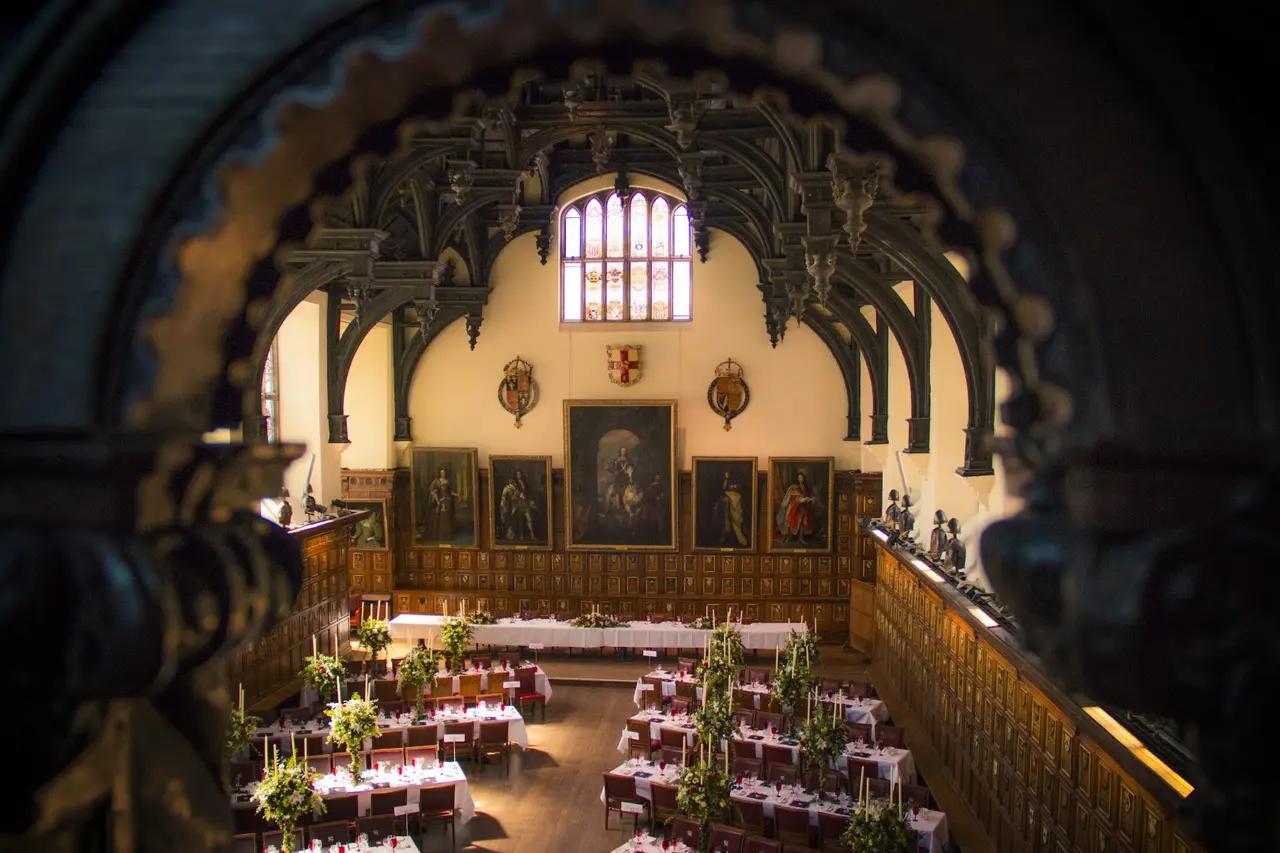
Middle Temple Venue
Holborn · Eat
You’ve seen the big Tudor landmarks, but @livinglondonhistory knows where the real stories hide in London ?? #London #explore #thingstodoinlondon #queenelizabeth #history #londonhistory #travel
- S
St Dunstan-in-the-West
Holborn · Culture
You’ve seen the big Tudor landmarks, but @livinglondonhistory knows where the real stories hide in London ?? #London #explore #thingstodoinlondon #queenelizabeth #history #londonhistory #travel
- M
Morley College London - Waterloo Centre for Adult Education
Culture
Would you want to be college student for over 50 years? ?? Two students here at Morley College, near Waterloo, have been attending courses since the 1970s and are still going strong. Morley College is a wonderful institution in the area and has origins as the project of a brilliant social reformer called Emma Cons, the “woman of infinite resource”. There is a link in my bio should you want to read more. @morley_college #london #londonhistory #livinglondonhistory #southlondon #educationmatters #educationpositive
- I
Imperial College London
Knightsbridge · Culture
If you have ever walked along the Southern edge of Kensington Gardens, you will have not been able to miss The Albert Memorial. An exuberant Victorian display of commemoration, it has got to be the most elaborate memorial, to one man, in all of London. It depicts a 14ft statue of Prince Albert, seated in an ornate canopy, topped by a spire that reaches up to 176ft high. This is then surrounded by an intricate series of nearly 200 allegorical sculptures and statues. Let’s take a closer look at some of those little details, to decode this monumental display. Love And Loss Queen Victoria and Prince Albert were married on the 10th February 1840, in the Chapel Royal of St James’s Palace. queen victoria and prince albert Queen Victoria and Prince Albert in 1854, image from wikimedia commons It was an intense union of passion and deep love. They became inseparable and had nine children together. Prince Albert was involved in various areas of social reform, arts and science. He is probably best known for assisting in conceiving and organising the Great Exhibition in Hyde Park in 1851. The profits from the exhibition then went on to fund the development of a hub for arts, science and education in South Kensington, including the Natural History Museum, Science Museum, Imperial College London and the Royal Albert Hall. This area subsequently became known as �Albertopolis� in his honour. royal albert hall The Royal Albert Hall, opposite The Albert Memorial Albert died on the 14th December 1861, aged 42, from Typhoid. Utterly bereft, Queen Victoria went into mourning and wore black for the rest of her life. Shortly after he died, she commissioned a great monument to be erected in his honour. Design And Construction A competition was held for the design, with seven designs submitted, including a large obelisk and an equestrian statue of Albert. Victoria chose the design submitted by Gothic-Revival architect George Gilbert Scott, who is also best known for designing St Pancras Station and the Midland Grand Hotel and the Foreign and Colonial Office. george gilbert scott George Gilbert Scott, architect of The Albert Memorial, image from wikimedia commons Construction began in 1864, funded by a 50,000 grant from Parliament and public subscriptions. The total cost come to 120,000. The site chosen is at the North pinnacle of �Albertopolis�. If you drew a straight line today, more or less South, from the memorial, you would enter the entranceway of the Royal Albert Hall, through the Royal College of Music, Science Museum, right up to the central door of the Natural History Museum. Queen Victoria unveiled the memorial in 1872, although the statue of Albert was finally �seated� and positioned in 1876. albert memorial history The Statue prince albert statue The 14ft, gilded gold statue was initially designed by Baron Carlo Marochetti. Marochetti died, however, in 1867 and J. H. Foley stepped in to complete the job. Albert is dressed as a Knight of the Garter and he holds in his hand a catalogue of the Great Exhibition. The canopy And Spire albert memorial history Prince Albert is seated inside a gothic-style canopy, topped by a spire. This design was partly based on the Eleanor Crosses, erected in the 13th century by King Edward I on the death of his wife Queen Eleanor of Castile. There is a Victorian replica outside Charing Cross station. The original stood where the Charles I statue is today, by Trafalgar Square and was destroyed in the civil war. charing cross monument Going up the spire are a series of sculptures. Firstly, on the corners are eight allegorical figures representing the useful arts and sciences: chemistry, geometry, geology, astronomy, rhetoric, physiology, medicine and philosophy. the useful arts and sciences Above these are a series of mosaics and between them the words: �QUEEN VICTORIA AND HER PEOPLE. TO THE MEMORY OF ALBERT PRINCE CONSORT. AS A TRIBUTE OF THEIR GRATITUDE. FOR A LIFE DEVOTED TO THE PUBLIC GOOD�. The four larger mosaic triangles or �tympana� represent the four arts: poetry, painting, architecture and sculpture. canopy albert memorial albert memorial mosaic �Poetry� repesented in mosaic albert memorial mosaic �Sculpture� represented in mosaic The smaller set of eight represent those working in the arts. Higher up on the canopy you can see bronze, gilded figures representing the virtues: Faith, Hope, Charity, Humility, Fortitude, Prudence, Justice and Temperance. Above that are eight angels, four in mourning, four in exaltation, topped by an orb and cross. top of the spire The Industrial Arts And Sciences Four large groups of sculptures can be found at the base of the canopy. These represent the industrial arts and sciences: Agriculture, Commerce, Manufacturing and Engineering. manufactures sculpture �Manufactures� commerce sculpture �Commerce� The Frieze Of Parnassus Below them runs the Frieze of Parnassus by Henry Hugh Armstead and John Birnie Phillip. It is named after Mount Parnassus, the favoured resting place of the Muses, goddesses of arts and science in Ancient Greek mythology. frieze of parnassus Many of the figures are labelled with their names above This frieze depicts 169 individual figures over 210 feet of sculpture. Scott described it as �perhaps one of the most laborious works of sculpture ever undertaken�. They depict musicians, poets, artists, architects and sculptors, such as Shakespeare, Chaucer, JMW Turner, Christopher Wren and even Scott himself. Bar Scott, they were all dead at the time of the sculpting. 168 of the figures are men and one, a woman, Nitocris, a female pharaoh of Ancient Egypt. Rather than me trying to zoom in on individual faces, I would recommend you have a look at the London Remembers blog, which documents and records all memorials in London here. The Continents At each corner of the plinth there are sculpture groups representing four continents: Europe, Africa, Asia and America. Britain was approaching the zenith of its empire and the sculptures very much represent a Victorian worldview. They include, as was often the case for the period, the stereotypical and sometimes patronising representation of other peoples and cultures. Europe is by a sculptor called Patrick Macdowell and depicts a Queen, Europa, riding a bull. She is then surrounded by four queens, holding various objects. Britannia for example holds a trident representing naval and maritime power. europe sculpture Asia, by Foley, depicts an Indian woman riding an elephant, with a Chinese potter, Persian poet and Arab merchant. asia sculpture Africa, by William Theed, depicts an Egyptian woman in a headdress riding a camel, surrounded by other figures, including a sphinx and a merchant in a turban. The image most jarring to the modern eye is a woman representing Europe, stood behind the camel, reading from a book to an African tribesman. africa sculpture Finally, America by John Bell, with a native American figure riding a charging bison. Again, allegorical figures surround it, for example a figure representing Canada with an English rose at her breast. america sculpture Underneath The Memorial The whole structure also stands above a series of brick catacombs: a �honeycomb� of 868 brick arches and a foundation of concrete 17 feet thick. Ian Visits was lucky enough to visit back in 2007, after the memorial had undergone a restoration- you can read his blog here. As you have seen, The Albert Memorial is a fascinating, at times bonkers, display of memorialisation and the Victorian world-view. It is a feast for the eyes, that gives us an insight into that period in Britain’s history and is worth a closer look next time you are in the area.
Royal Albert Hall
South Kensington · Culture
If you have ever walked along the Southern edge of Kensington Gardens, you will have not been able to miss The Albert Memorial. An exuberant Victorian display of commemoration, it has got to be the most elaborate memorial, to one man, in all of London. It depicts a 14ft statue of Prince Albert, seated in an ornate canopy, topped by a spire that reaches up to 176ft high. This is then surrounded by an intricate series of nearly 200 allegorical sculptures and statues. Let’s take a closer look at some of those little details, to decode this monumental display. Love And Loss Queen Victoria and Prince Albert were married on the 10th February 1840, in the Chapel Royal of St James’s Palace. queen victoria and prince albert Queen Victoria and Prince Albert in 1854, image from wikimedia commons It was an intense union of passion and deep love. They became inseparable and had nine children together. Prince Albert was involved in various areas of social reform, arts and science. He is probably best known for assisting in conceiving and organising the Great Exhibition in Hyde Park in 1851. The profits from the exhibition then went on to fund the development of a hub for arts, science and education in South Kensington, including the Natural History Museum, Science Museum, Imperial College London and the Royal Albert Hall. This area subsequently became known as �Albertopolis� in his honour. royal albert hall The Royal Albert Hall, opposite The Albert Memorial Albert died on the 14th December 1861, aged 42, from Typhoid. Utterly bereft, Queen Victoria went into mourning and wore black for the rest of her life. Shortly after he died, she commissioned a great monument to be erected in his honour. Design And Construction A competition was held for the design, with seven designs submitted, including a large obelisk and an equestrian statue of Albert. Victoria chose the design submitted by Gothic-Revival architect George Gilbert Scott, who is also best known for designing St Pancras Station and the Midland Grand Hotel and the Foreign and Colonial Office. george gilbert scott George Gilbert Scott, architect of The Albert Memorial, image from wikimedia commons Construction began in 1864, funded by a 50,000 grant from Parliament and public subscriptions. The total cost come to 120,000. The site chosen is at the North pinnacle of �Albertopolis�. If you drew a straight line today, more or less South, from the memorial, you would enter the entranceway of the Royal Albert Hall, through the Royal College of Music, Science Museum, right up to the central door of the Natural History Museum. Queen Victoria unveiled the memorial in 1872, although the statue of Albert was finally �seated� and positioned in 1876. albert memorial history The Statue prince albert statue The 14ft, gilded gold statue was initially designed by Baron Carlo Marochetti. Marochetti died, however, in 1867 and J. H. Foley stepped in to complete the job. Albert is dressed as a Knight of the Garter and he holds in his hand a catalogue of the Great Exhibition. The canopy And Spire albert memorial history Prince Albert is seated inside a gothic-style canopy, topped by a spire. This design was partly based on the Eleanor Crosses, erected in the 13th century by King Edward I on the death of his wife Queen Eleanor of Castile. There is a Victorian replica outside Charing Cross station. The original stood where the Charles I statue is today, by Trafalgar Square and was destroyed in the civil war. charing cross monument Going up the spire are a series of sculptures. Firstly, on the corners are eight allegorical figures representing the useful arts and sciences: chemistry, geometry, geology, astronomy, rhetoric, physiology, medicine and philosophy. the useful arts and sciences Above these are a series of mosaics and between them the words: �QUEEN VICTORIA AND HER PEOPLE. TO THE MEMORY OF ALBERT PRINCE CONSORT. AS A TRIBUTE OF THEIR GRATITUDE. FOR A LIFE DEVOTED TO THE PUBLIC GOOD�. The four larger mosaic triangles or �tympana� represent the four arts: poetry, painting, architecture and sculpture. canopy albert memorial albert memorial mosaic �Poetry� repesented in mosaic albert memorial mosaic �Sculpture� represented in mosaic The smaller set of eight represent those working in the arts. Higher up on the canopy you can see bronze, gilded figures representing the virtues: Faith, Hope, Charity, Humility, Fortitude, Prudence, Justice and Temperance. Above that are eight angels, four in mourning, four in exaltation, topped by an orb and cross. top of the spire The Industrial Arts And Sciences Four large groups of sculptures can be found at the base of the canopy. These represent the industrial arts and sciences: Agriculture, Commerce, Manufacturing and Engineering. manufactures sculpture �Manufactures� commerce sculpture �Commerce� The Frieze Of Parnassus Below them runs the Frieze of Parnassus by Henry Hugh Armstead and John Birnie Phillip. It is named after Mount Parnassus, the favoured resting place of the Muses, goddesses of arts and science in Ancient Greek mythology. frieze of parnassus Many of the figures are labelled with their names above This frieze depicts 169 individual figures over 210 feet of sculpture. Scott described it as �perhaps one of the most laborious works of sculpture ever undertaken�. They depict musicians, poets, artists, architects and sculptors, such as Shakespeare, Chaucer, JMW Turner, Christopher Wren and even Scott himself. Bar Scott, they were all dead at the time of the sculpting. 168 of the figures are men and one, a woman, Nitocris, a female pharaoh of Ancient Egypt. Rather than me trying to zoom in on individual faces, I would recommend you have a look at the London Remembers blog, which documents and records all memorials in London here. The Continents At each corner of the plinth there are sculpture groups representing four continents: Europe, Africa, Asia and America. Britain was approaching the zenith of its empire and the sculptures very much represent a Victorian worldview. They include, as was often the case for the period, the stereotypical and sometimes patronising representation of other peoples and cultures. Europe is by a sculptor called Patrick Macdowell and depicts a Queen, Europa, riding a bull. She is then surrounded by four queens, holding various objects. Britannia for example holds a trident representing naval and maritime power. europe sculpture Asia, by Foley, depicts an Indian woman riding an elephant, with a Chinese potter, Persian poet and Arab merchant. asia sculpture Africa, by William Theed, depicts an Egyptian woman in a headdress riding a camel, surrounded by other figures, including a sphinx and a merchant in a turban. The image most jarring to the modern eye is a woman representing Europe, stood behind the camel, reading from a book to an African tribesman. africa sculpture Finally, America by John Bell, with a native American figure riding a charging bison. Again, allegorical figures surround it, for example a figure representing Canada with an English rose at her breast. america sculpture Underneath The Memorial The whole structure also stands above a series of brick catacombs: a �honeycomb� of 868 brick arches and a foundation of concrete 17 feet thick. Ian Visits was lucky enough to visit back in 2007, after the memorial had undergone a restoration- you can read his blog here. As you have seen, The Albert Memorial is a fascinating, at times bonkers, display of memorialisation and the Victorian world-view. It is a feast for the eyes, that gives us an insight into that period in Britain’s history and is worth a closer look next time you are in the area.
Natural History Museum
South Kensington · Culture
If you have ever walked along the Southern edge of Kensington Gardens, you will have not been able to miss The Albert Memorial. An exuberant Victorian display of commemoration, it has got to be the most elaborate memorial, to one man, in all of London. It depicts a 14ft statue of Prince Albert, seated in an ornate canopy, topped by a spire that reaches up to 176ft high. This is then surrounded by an intricate series of nearly 200 allegorical sculptures and statues. Let’s take a closer look at some of those little details, to decode this monumental display. Love And Loss Queen Victoria and Prince Albert were married on the 10th February 1840, in the Chapel Royal of St James’s Palace. queen victoria and prince albert Queen Victoria and Prince Albert in 1854, image from wikimedia commons It was an intense union of passion and deep love. They became inseparable and had nine children together. Prince Albert was involved in various areas of social reform, arts and science. He is probably best known for assisting in conceiving and organising the Great Exhibition in Hyde Park in 1851. The profits from the exhibition then went on to fund the development of a hub for arts, science and education in South Kensington, including the Natural History Museum, Science Museum, Imperial College London and the Royal Albert Hall. This area subsequently became known as �Albertopolis� in his honour. royal albert hall The Royal Albert Hall, opposite The Albert Memorial Albert died on the 14th December 1861, aged 42, from Typhoid. Utterly bereft, Queen Victoria went into mourning and wore black for the rest of her life. Shortly after he died, she commissioned a great monument to be erected in his honour. Design And Construction A competition was held for the design, with seven designs submitted, including a large obelisk and an equestrian statue of Albert. Victoria chose the design submitted by Gothic-Revival architect George Gilbert Scott, who is also best known for designing St Pancras Station and the Midland Grand Hotel and the Foreign and Colonial Office. george gilbert scott George Gilbert Scott, architect of The Albert Memorial, image from wikimedia commons Construction began in 1864, funded by a 50,000 grant from Parliament and public subscriptions. The total cost come to 120,000. The site chosen is at the North pinnacle of �Albertopolis�. If you drew a straight line today, more or less South, from the memorial, you would enter the entranceway of the Royal Albert Hall, through the Royal College of Music, Science Museum, right up to the central door of the Natural History Museum. Queen Victoria unveiled the memorial in 1872, although the statue of Albert was finally �seated� and positioned in 1876. albert memorial history The Statue prince albert statue The 14ft, gilded gold statue was initially designed by Baron Carlo Marochetti. Marochetti died, however, in 1867 and J. H. Foley stepped in to complete the job. Albert is dressed as a Knight of the Garter and he holds in his hand a catalogue of the Great Exhibition. The canopy And Spire albert memorial history Prince Albert is seated inside a gothic-style canopy, topped by a spire. This design was partly based on the Eleanor Crosses, erected in the 13th century by King Edward I on the death of his wife Queen Eleanor of Castile. There is a Victorian replica outside Charing Cross station. The original stood where the Charles I statue is today, by Trafalgar Square and was destroyed in the civil war. charing cross monument Going up the spire are a series of sculptures. Firstly, on the corners are eight allegorical figures representing the useful arts and sciences: chemistry, geometry, geology, astronomy, rhetoric, physiology, medicine and philosophy. the useful arts and sciences Above these are a series of mosaics and between them the words: �QUEEN VICTORIA AND HER PEOPLE. TO THE MEMORY OF ALBERT PRINCE CONSORT. AS A TRIBUTE OF THEIR GRATITUDE. FOR A LIFE DEVOTED TO THE PUBLIC GOOD�. The four larger mosaic triangles or �tympana� represent the four arts: poetry, painting, architecture and sculpture. canopy albert memorial albert memorial mosaic �Poetry� repesented in mosaic albert memorial mosaic �Sculpture� represented in mosaic The smaller set of eight represent those working in the arts. Higher up on the canopy you can see bronze, gilded figures representing the virtues: Faith, Hope, Charity, Humility, Fortitude, Prudence, Justice and Temperance. Above that are eight angels, four in mourning, four in exaltation, topped by an orb and cross. top of the spire The Industrial Arts And Sciences Four large groups of sculptures can be found at the base of the canopy. These represent the industrial arts and sciences: Agriculture, Commerce, Manufacturing and Engineering. manufactures sculpture �Manufactures� commerce sculpture �Commerce� The Frieze Of Parnassus Below them runs the Frieze of Parnassus by Henry Hugh Armstead and John Birnie Phillip. It is named after Mount Parnassus, the favoured resting place of the Muses, goddesses of arts and science in Ancient Greek mythology. frieze of parnassus Many of the figures are labelled with their names above This frieze depicts 169 individual figures over 210 feet of sculpture. Scott described it as �perhaps one of the most laborious works of sculpture ever undertaken�. They depict musicians, poets, artists, architects and sculptors, such as Shakespeare, Chaucer, JMW Turner, Christopher Wren and even Scott himself. Bar Scott, they were all dead at the time of the sculpting. 168 of the figures are men and one, a woman, Nitocris, a female pharaoh of Ancient Egypt. Rather than me trying to zoom in on individual faces, I would recommend you have a look at the London Remembers blog, which documents and records all memorials in London here. The Continents At each corner of the plinth there are sculpture groups representing four continents: Europe, Africa, Asia and America. Britain was approaching the zenith of its empire and the sculptures very much represent a Victorian worldview. They include, as was often the case for the period, the stereotypical and sometimes patronising representation of other peoples and cultures. Europe is by a sculptor called Patrick Macdowell and depicts a Queen, Europa, riding a bull. She is then surrounded by four queens, holding various objects. Britannia for example holds a trident representing naval and maritime power. europe sculpture Asia, by Foley, depicts an Indian woman riding an elephant, with a Chinese potter, Persian poet and Arab merchant. asia sculpture Africa, by William Theed, depicts an Egyptian woman in a headdress riding a camel, surrounded by other figures, including a sphinx and a merchant in a turban. The image most jarring to the modern eye is a woman representing Europe, stood behind the camel, reading from a book to an African tribesman. africa sculpture Finally, America by John Bell, with a native American figure riding a charging bison. Again, allegorical figures surround it, for example a figure representing Canada with an English rose at her breast. america sculpture Underneath The Memorial The whole structure also stands above a series of brick catacombs: a �honeycomb� of 868 brick arches and a foundation of concrete 17 feet thick. Ian Visits was lucky enough to visit back in 2007, after the memorial had undergone a restoration- you can read his blog here. As you have seen, The Albert Memorial is a fascinating, at times bonkers, display of memorialisation and the Victorian world-view. It is a feast for the eyes, that gives us an insight into that period in Britain’s history and is worth a closer look next time you are in the area.
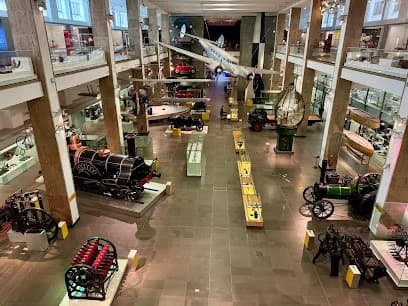
Science Museum
South Kensington · Culture
If you have ever walked along the Southern edge of Kensington Gardens, you will have not been able to miss The Albert Memorial. An exuberant Victorian display of commemoration, it has got to be the most elaborate memorial, to one man, in all of London. It depicts a 14ft statue of Prince Albert, seated in an ornate canopy, topped by a spire that reaches up to 176ft high. This is then surrounded by an intricate series of nearly 200 allegorical sculptures and statues. Let’s take a closer look at some of those little details, to decode this monumental display. Love And Loss Queen Victoria and Prince Albert were married on the 10th February 1840, in the Chapel Royal of St James’s Palace. queen victoria and prince albert Queen Victoria and Prince Albert in 1854, image from wikimedia commons It was an intense union of passion and deep love. They became inseparable and had nine children together. Prince Albert was involved in various areas of social reform, arts and science. He is probably best known for assisting in conceiving and organising the Great Exhibition in Hyde Park in 1851. The profits from the exhibition then went on to fund the development of a hub for arts, science and education in South Kensington, including the Natural History Museum, Science Museum, Imperial College London and the Royal Albert Hall. This area subsequently became known as �Albertopolis� in his honour. royal albert hall The Royal Albert Hall, opposite The Albert Memorial Albert died on the 14th December 1861, aged 42, from Typhoid. Utterly bereft, Queen Victoria went into mourning and wore black for the rest of her life. Shortly after he died, she commissioned a great monument to be erected in his honour. Design And Construction A competition was held for the design, with seven designs submitted, including a large obelisk and an equestrian statue of Albert. Victoria chose the design submitted by Gothic-Revival architect George Gilbert Scott, who is also best known for designing St Pancras Station and the Midland Grand Hotel and the Foreign and Colonial Office. george gilbert scott George Gilbert Scott, architect of The Albert Memorial, image from wikimedia commons Construction began in 1864, funded by a 50,000 grant from Parliament and public subscriptions. The total cost come to 120,000. The site chosen is at the North pinnacle of �Albertopolis�. If you drew a straight line today, more or less South, from the memorial, you would enter the entranceway of the Royal Albert Hall, through the Royal College of Music, Science Museum, right up to the central door of the Natural History Museum. Queen Victoria unveiled the memorial in 1872, although the statue of Albert was finally �seated� and positioned in 1876. albert memorial history The Statue prince albert statue The 14ft, gilded gold statue was initially designed by Baron Carlo Marochetti. Marochetti died, however, in 1867 and J. H. Foley stepped in to complete the job. Albert is dressed as a Knight of the Garter and he holds in his hand a catalogue of the Great Exhibition. The canopy And Spire albert memorial history Prince Albert is seated inside a gothic-style canopy, topped by a spire. This design was partly based on the Eleanor Crosses, erected in the 13th century by King Edward I on the death of his wife Queen Eleanor of Castile. There is a Victorian replica outside Charing Cross station. The original stood where the Charles I statue is today, by Trafalgar Square and was destroyed in the civil war. charing cross monument Going up the spire are a series of sculptures. Firstly, on the corners are eight allegorical figures representing the useful arts and sciences: chemistry, geometry, geology, astronomy, rhetoric, physiology, medicine and philosophy. the useful arts and sciences Above these are a series of mosaics and between them the words: �QUEEN VICTORIA AND HER PEOPLE. TO THE MEMORY OF ALBERT PRINCE CONSORT. AS A TRIBUTE OF THEIR GRATITUDE. FOR A LIFE DEVOTED TO THE PUBLIC GOOD�. The four larger mosaic triangles or �tympana� represent the four arts: poetry, painting, architecture and sculpture. canopy albert memorial albert memorial mosaic �Poetry� repesented in mosaic albert memorial mosaic �Sculpture� represented in mosaic The smaller set of eight represent those working in the arts. Higher up on the canopy you can see bronze, gilded figures representing the virtues: Faith, Hope, Charity, Humility, Fortitude, Prudence, Justice and Temperance. Above that are eight angels, four in mourning, four in exaltation, topped by an orb and cross. top of the spire The Industrial Arts And Sciences Four large groups of sculptures can be found at the base of the canopy. These represent the industrial arts and sciences: Agriculture, Commerce, Manufacturing and Engineering. manufactures sculpture �Manufactures� commerce sculpture �Commerce� The Frieze Of Parnassus Below them runs the Frieze of Parnassus by Henry Hugh Armstead and John Birnie Phillip. It is named after Mount Parnassus, the favoured resting place of the Muses, goddesses of arts and science in Ancient Greek mythology. frieze of parnassus Many of the figures are labelled with their names above This frieze depicts 169 individual figures over 210 feet of sculpture. Scott described it as �perhaps one of the most laborious works of sculpture ever undertaken�. They depict musicians, poets, artists, architects and sculptors, such as Shakespeare, Chaucer, JMW Turner, Christopher Wren and even Scott himself. Bar Scott, they were all dead at the time of the sculpting. 168 of the figures are men and one, a woman, Nitocris, a female pharaoh of Ancient Egypt. Rather than me trying to zoom in on individual faces, I would recommend you have a look at the London Remembers blog, which documents and records all memorials in London here. The Continents At each corner of the plinth there are sculpture groups representing four continents: Europe, Africa, Asia and America. Britain was approaching the zenith of its empire and the sculptures very much represent a Victorian worldview. They include, as was often the case for the period, the stereotypical and sometimes patronising representation of other peoples and cultures. Europe is by a sculptor called Patrick Macdowell and depicts a Queen, Europa, riding a bull. She is then surrounded by four queens, holding various objects. Britannia for example holds a trident representing naval and maritime power. europe sculpture Asia, by Foley, depicts an Indian woman riding an elephant, with a Chinese potter, Persian poet and Arab merchant. asia sculpture Africa, by William Theed, depicts an Egyptian woman in a headdress riding a camel, surrounded by other figures, including a sphinx and a merchant in a turban. The image most jarring to the modern eye is a woman representing Europe, stood behind the camel, reading from a book to an African tribesman. africa sculpture Finally, America by John Bell, with a native American figure riding a charging bison. Again, allegorical figures surround it, for example a figure representing Canada with an English rose at her breast. america sculpture Underneath The Memorial The whole structure also stands above a series of brick catacombs: a �honeycomb� of 868 brick arches and a foundation of concrete 17 feet thick. Ian Visits was lucky enough to visit back in 2007, after the memorial had undergone a restoration- you can read his blog here. As you have seen, The Albert Memorial is a fascinating, at times bonkers, display of memorialisation and the Victorian world-view. It is a feast for the eyes, that gives us an insight into that period in Britain’s history and is worth a closer look next time you are in the area.
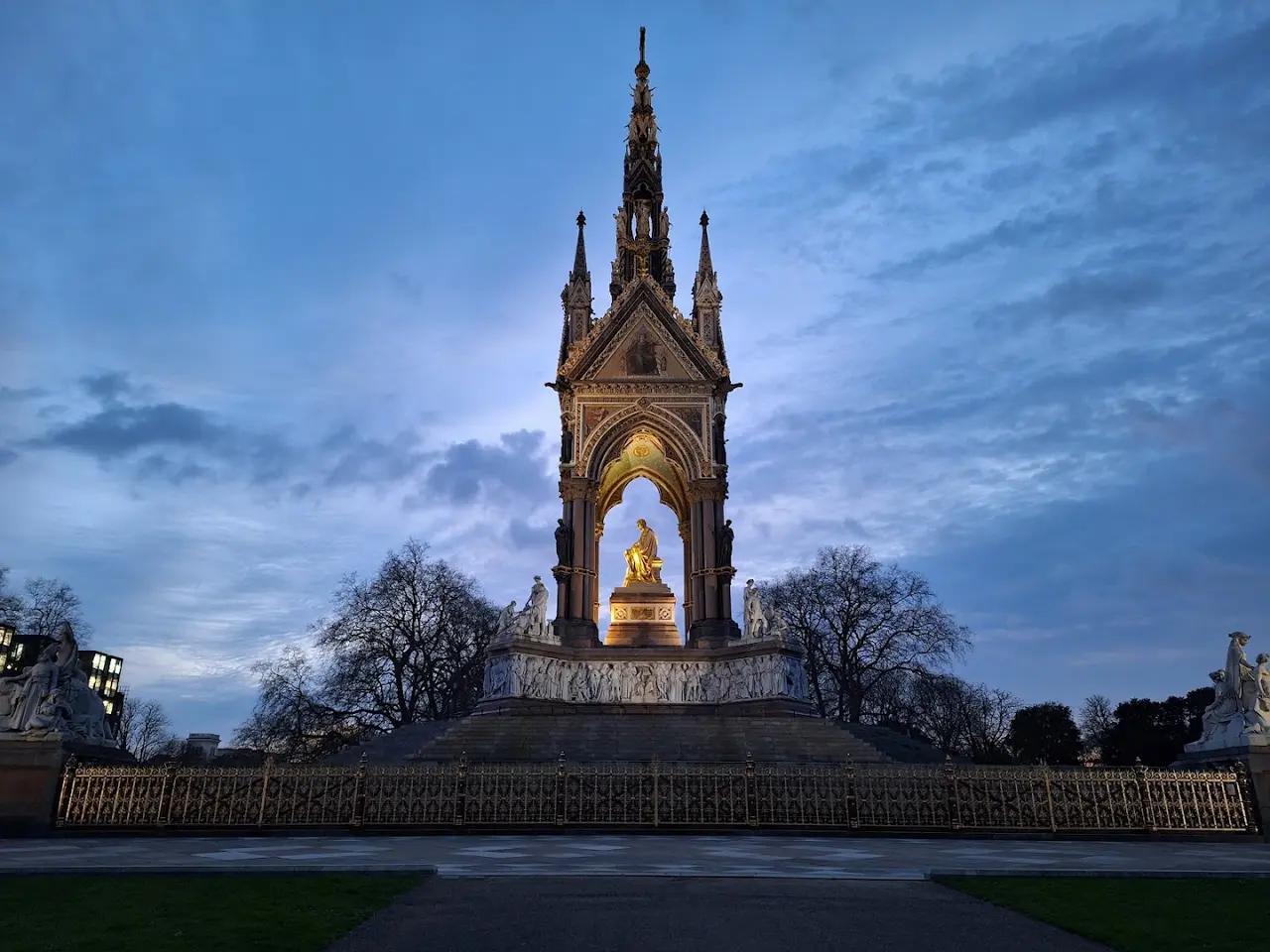
The Albert Memorial
South Kensington · Culture
If you have ever walked along the Southern edge of Kensington Gardens, you will have not been able to miss The Albert Memorial. An exuberant Victorian display of commemoration, it has got to be the most elaborate memorial, to one man, in all of London. It depicts a 14ft statue of Prince Albert, seated in an ornate canopy, topped by a spire that reaches up to 176ft high. This is then surrounded by an intricate series of nearly 200 allegorical sculptures and statues. Let’s take a closer look at some of those little details, to decode this monumental display. Love And Loss Queen Victoria and Prince Albert were married on the 10th February 1840, in the Chapel Royal of St James’s Palace. queen victoria and prince albert Queen Victoria and Prince Albert in 1854, image from wikimedia commons It was an intense union of passion and deep love. They became inseparable and had nine children together. Prince Albert was involved in various areas of social reform, arts and science. He is probably best known for assisting in conceiving and organising the Great Exhibition in Hyde Park in 1851. The profits from the exhibition then went on to fund the development of a hub for arts, science and education in South Kensington, including the Natural History Museum, Science Museum, Imperial College London and the Royal Albert Hall. This area subsequently became known as �Albertopolis� in his honour. royal albert hall The Royal Albert Hall, opposite The Albert Memorial Albert died on the 14th December 1861, aged 42, from Typhoid. Utterly bereft, Queen Victoria went into mourning and wore black for the rest of her life. Shortly after he died, she commissioned a great monument to be erected in his honour. Design And Construction A competition was held for the design, with seven designs submitted, including a large obelisk and an equestrian statue of Albert. Victoria chose the design submitted by Gothic-Revival architect George Gilbert Scott, who is also best known for designing St Pancras Station and the Midland Grand Hotel and the Foreign and Colonial Office. george gilbert scott George Gilbert Scott, architect of The Albert Memorial, image from wikimedia commons Construction began in 1864, funded by a 50,000 grant from Parliament and public subscriptions. The total cost come to 120,000. The site chosen is at the North pinnacle of �Albertopolis�. If you drew a straight line today, more or less South, from the memorial, you would enter the entranceway of the Royal Albert Hall, through the Royal College of Music, Science Museum, right up to the central door of the Natural History Museum. Queen Victoria unveiled the memorial in 1872, although the statue of Albert was finally �seated� and positioned in 1876. albert memorial history The Statue prince albert statue The 14ft, gilded gold statue was initially designed by Baron Carlo Marochetti. Marochetti died, however, in 1867 and J. H. Foley stepped in to complete the job. Albert is dressed as a Knight of the Garter and he holds in his hand a catalogue of the Great Exhibition. The canopy And Spire albert memorial history Prince Albert is seated inside a gothic-style canopy, topped by a spire. This design was partly based on the Eleanor Crosses, erected in the 13th century by King Edward I on the death of his wife Queen Eleanor of Castile. There is a Victorian replica outside Charing Cross station. The original stood where the Charles I statue is today, by Trafalgar Square and was destroyed in the civil war. charing cross monument Going up the spire are a series of sculptures. Firstly, on the corners are eight allegorical figures representing the useful arts and sciences: chemistry, geometry, geology, astronomy, rhetoric, physiology, medicine and philosophy. the useful arts and sciences Above these are a series of mosaics and between them the words: �QUEEN VICTORIA AND HER PEOPLE. TO THE MEMORY OF ALBERT PRINCE CONSORT. AS A TRIBUTE OF THEIR GRATITUDE. FOR A LIFE DEVOTED TO THE PUBLIC GOOD�. The four larger mosaic triangles or �tympana� represent the four arts: poetry, painting, architecture and sculpture. canopy albert memorial albert memorial mosaic �Poetry� repesented in mosaic albert memorial mosaic �Sculpture� represented in mosaic The smaller set of eight represent those working in the arts. Higher up on the canopy you can see bronze, gilded figures representing the virtues: Faith, Hope, Charity, Humility, Fortitude, Prudence, Justice and Temperance. Above that are eight angels, four in mourning, four in exaltation, topped by an orb and cross. top of the spire The Industrial Arts And Sciences Four large groups of sculptures can be found at the base of the canopy. These represent the industrial arts and sciences: Agriculture, Commerce, Manufacturing and Engineering. manufactures sculpture �Manufactures� commerce sculpture �Commerce� The Frieze Of Parnassus Below them runs the Frieze of Parnassus by Henry Hugh Armstead and John Birnie Phillip. It is named after Mount Parnassus, the favoured resting place of the Muses, goddesses of arts and science in Ancient Greek mythology. frieze of parnassus Many of the figures are labelled with their names above This frieze depicts 169 individual figures over 210 feet of sculpture. Scott described it as �perhaps one of the most laborious works of sculpture ever undertaken�. They depict musicians, poets, artists, architects and sculptors, such as Shakespeare, Chaucer, JMW Turner, Christopher Wren and even Scott himself. Bar Scott, they were all dead at the time of the sculpting. 168 of the figures are men and one, a woman, Nitocris, a female pharaoh of Ancient Egypt. Rather than me trying to zoom in on individual faces, I would recommend you have a look at the London Remembers blog, which documents and records all memorials in London here. The Continents At each corner of the plinth there are sculpture groups representing four continents: Europe, Africa, Asia and America. Britain was approaching the zenith of its empire and the sculptures very much represent a Victorian worldview. They include, as was often the case for the period, the stereotypical and sometimes patronising representation of other peoples and cultures. Europe is by a sculptor called Patrick Macdowell and depicts a Queen, Europa, riding a bull. She is then surrounded by four queens, holding various objects. Britannia for example holds a trident representing naval and maritime power. europe sculpture Asia, by Foley, depicts an Indian woman riding an elephant, with a Chinese potter, Persian poet and Arab merchant. asia sculpture Africa, by William Theed, depicts an Egyptian woman in a headdress riding a camel, surrounded by other figures, including a sphinx and a merchant in a turban. The image most jarring to the modern eye is a woman representing Europe, stood behind the camel, reading from a book to an African tribesman. africa sculpture Finally, America by John Bell, with a native American figure riding a charging bison. Again, allegorical figures surround it, for example a figure representing Canada with an English rose at her breast. america sculpture Underneath The Memorial The whole structure also stands above a series of brick catacombs: a �honeycomb� of 868 brick arches and a foundation of concrete 17 feet thick. Ian Visits was lucky enough to visit back in 2007, after the memorial had undergone a restoration- you can read his blog here. As you have seen, The Albert Memorial is a fascinating, at times bonkers, display of memorialisation and the Victorian world-view. It is a feast for the eyes, that gives us an insight into that period in Britain’s history and is worth a closer look next time you are in the area.
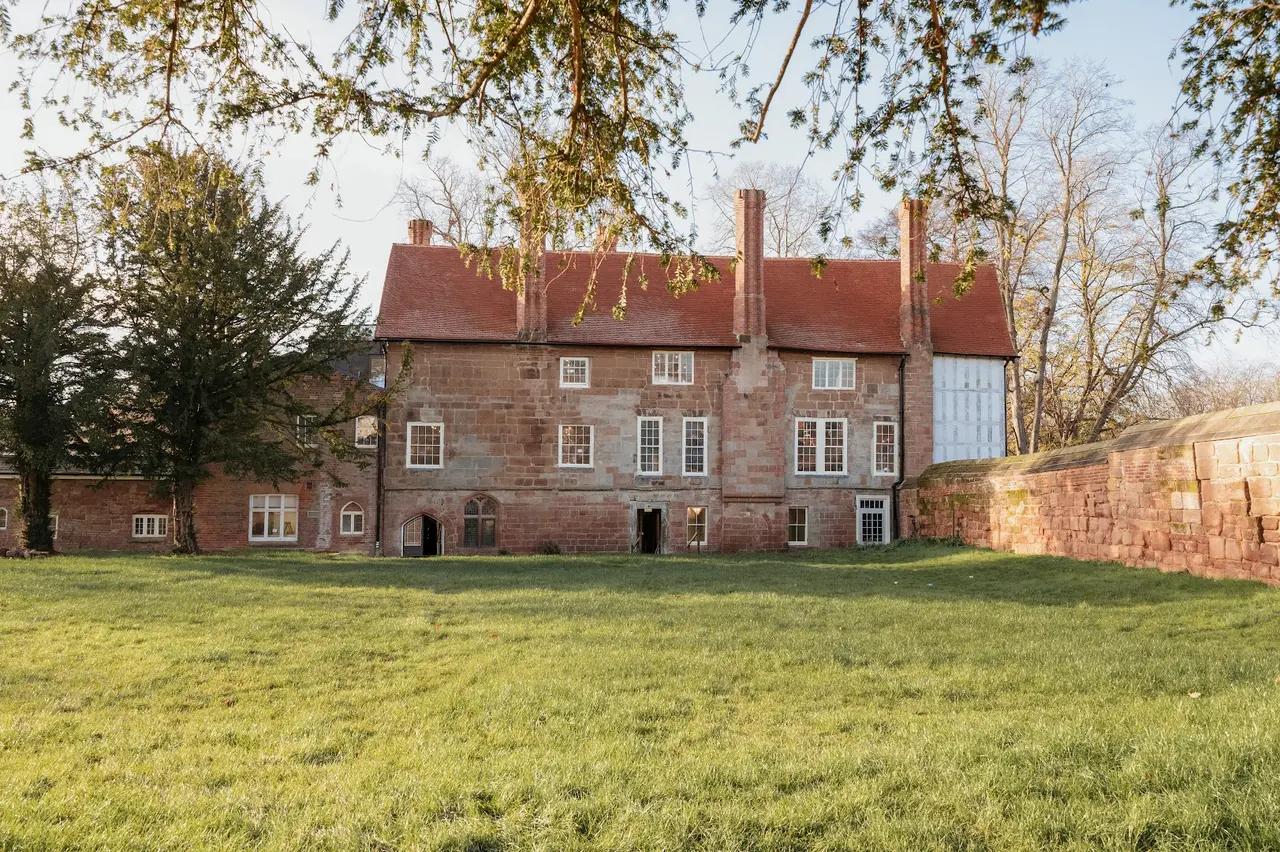
National Trust, Charterhouse, Coventry
Culture
One of the things I love most about London is its green spaces. It is one of the greenest cities in the world, famous for its sweeping parks, but also it has so many smaller, more hidden gardens tucked away in the metropolis. I started seeing these wooden posts dotted around and, my interest piqued, I contacted Pollinating London Together to find out more about what they are up to ?? For more there is a link in my bio to the full blog post covering six gardens in the city. There is also a link to buy my second book London: The Hidden Corners for Curious Wanderers, which includes lots of secret gardens across the city. #london #londonhistory #livinglondonhistory #londontravel #londontrip #cityoflondon #hiddenlondon
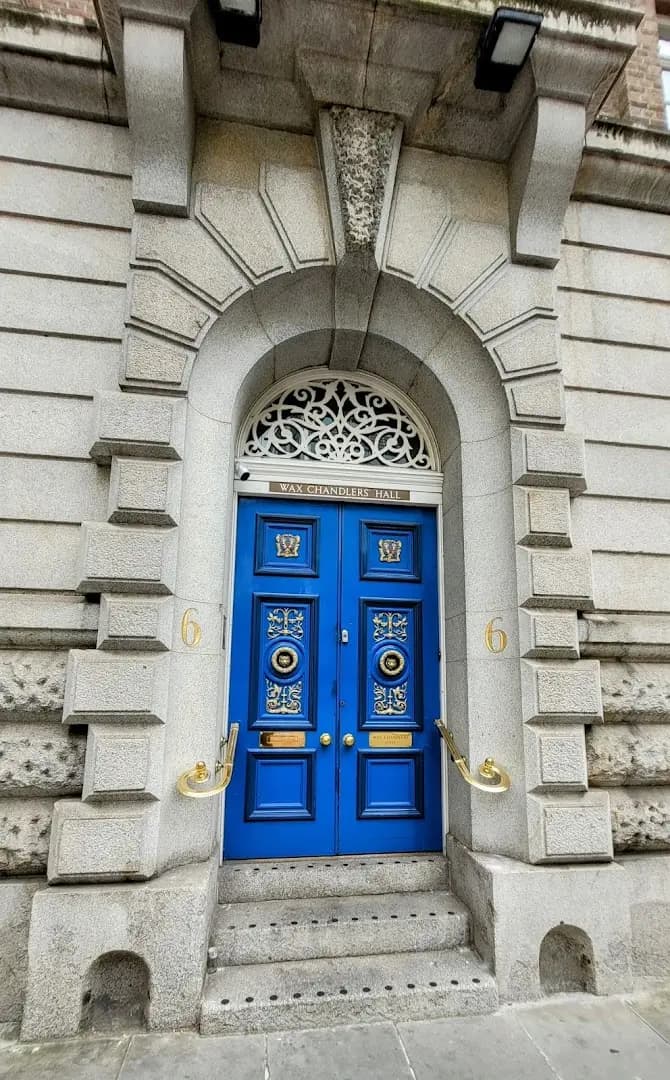
Wax Chandlers' Hall
The City of London · Culture
One of the things I love most about London is its green spaces. It is one of the greenest cities in the world, famous for its sweeping parks, but also it has so many smaller, more hidden gardens tucked away in the metropolis. I started seeing these wooden posts dotted around and, my interest piqued, I contacted Pollinating London Together to find out more about what they are up to ?? For more there is a link in my bio to the full blog post covering six gardens in the city. There is also a link to buy my second book London: The Hidden Corners for Curious Wanderers, which includes lots of secret gardens across the city. #london #londonhistory #livinglondonhistory #londontravel #londontrip #cityoflondon #hiddenlondon
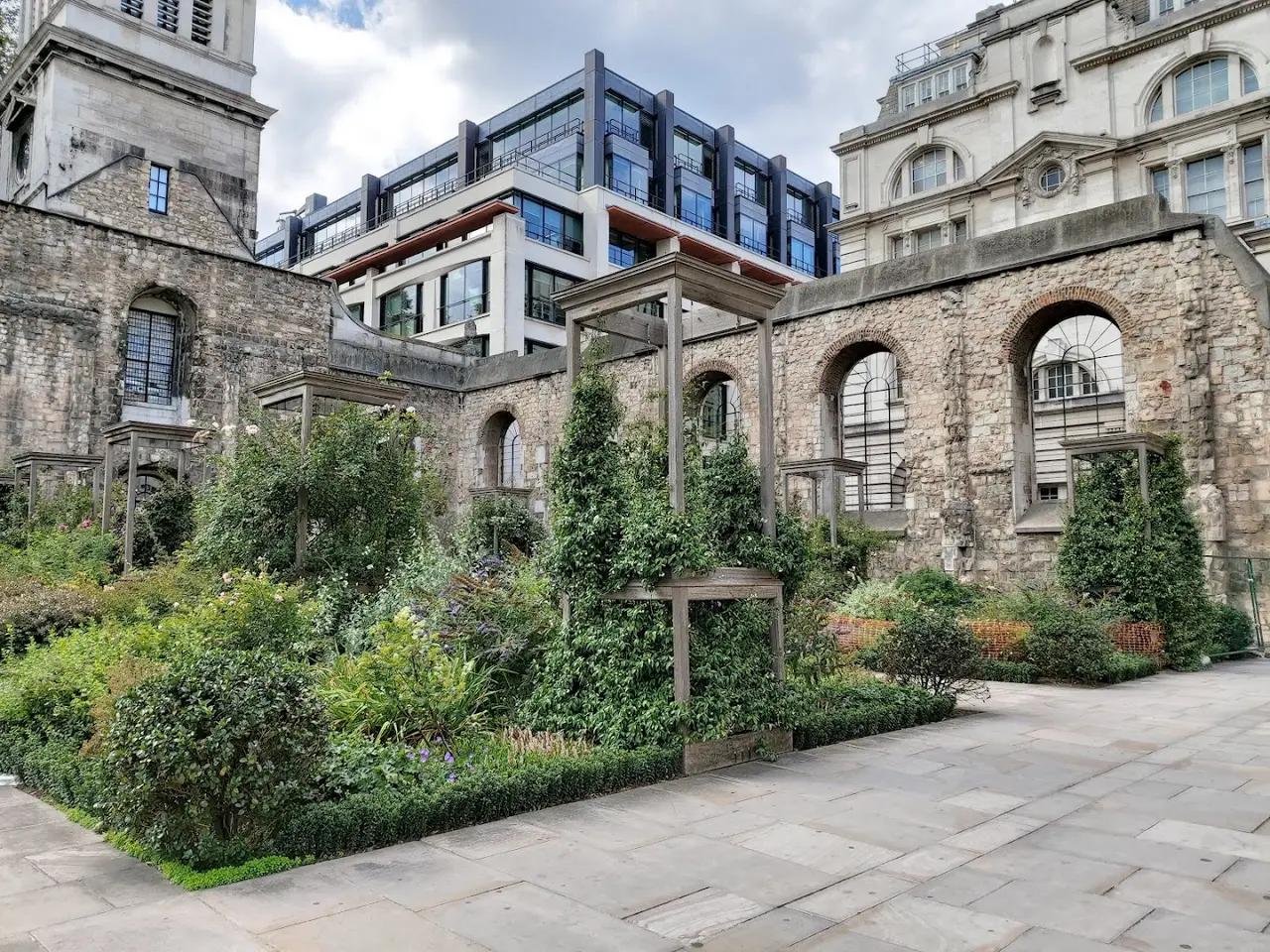
Christchurch Greyfriars Church Garden
The City of London · Culture
One of the things I love most about London is its green spaces. It is one of the greenest cities in the world, famous for its sweeping parks, but also it has so many smaller, more hidden gardens tucked away in the metropolis. I started seeing these wooden posts dotted around and, my interest piqued, I contacted Pollinating London Together to find out more about what they are up to ?? For more there is a link in my bio to the full blog post covering six gardens in the city. There is also a link to buy my second book London: The Hidden Corners for Curious Wanderers, which includes lots of secret gardens across the city. #london #londonhistory #livinglondonhistory #londontravel #londontrip #cityoflondon #hiddenlondon
- G
Great Hall
Culture
The oldest hospital in the UK has opened, for the first time, its Great Hall and painted staircase to the public! After a 10 million restoration project the stunning Great Hall and staircase, painted by none other than William Hogarth, they have fully opened to the public for free. They can be visited on Mondays and Tuesdays from 10am-4pm and the first Sunday of every month. Their free museum all about the history of the hospital has also reopened. I found it genuinely so uplifting to see such a brilliant restoration and so many people in there soaking up these fascinating spaces for the first time. There is a link in my bio to the full blog post, should you like to read more. #london #londonhistory #livinglondonhistory #restorationproject #heritagerestoration #heritage #hiddelondon #freelondon #freethingstodoinlondon
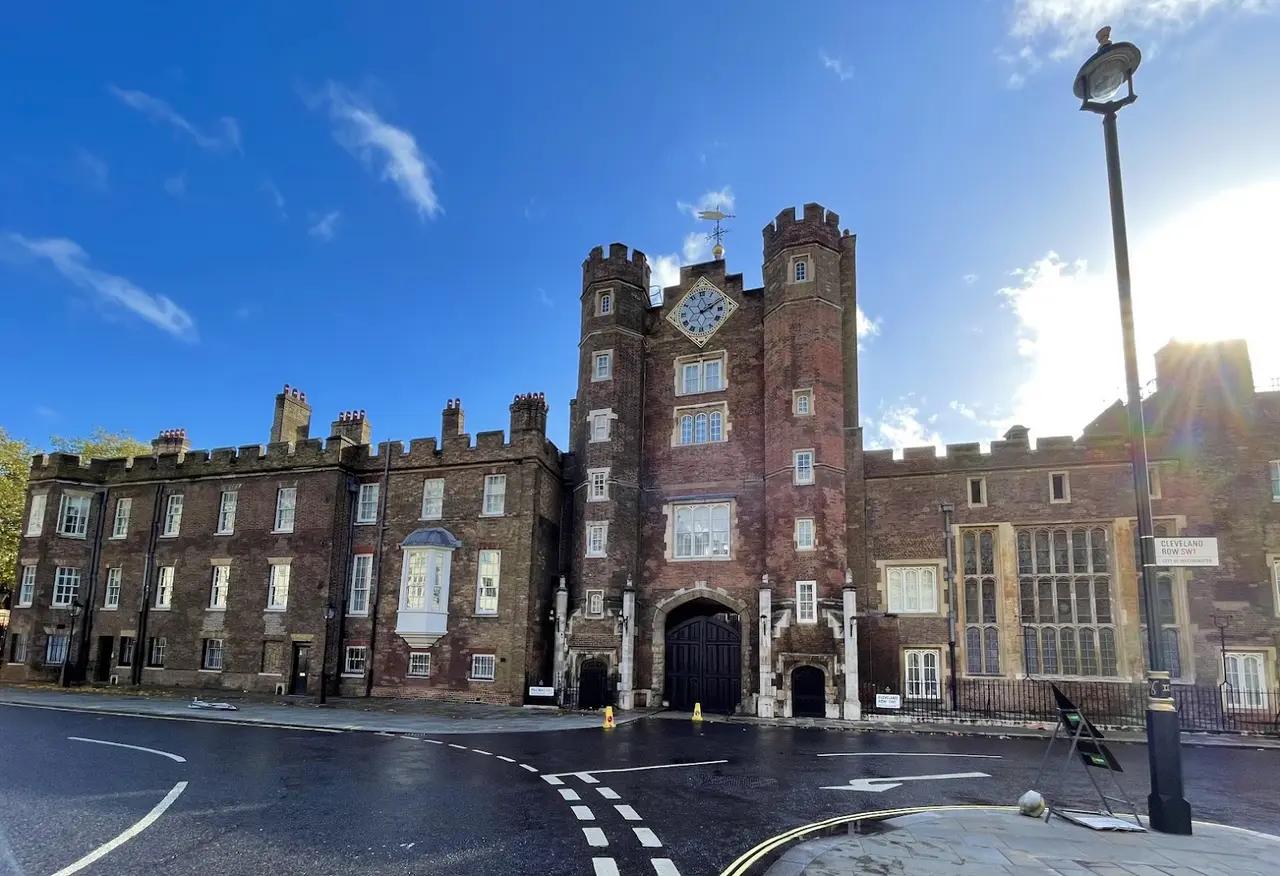
St. James's Palace
Westminster · Culture
The Chapel Royal of St James's Palace is truly steeped in British royal history. Built originally for King Henry VIII in the 1530s, it has seen centuries worth of royal prayers, marriages and baptisms. A royal heart is even possibly buried beneath the altar #london #londonhistory #livinglondonhistory #royalhistory

Vestry Hall
The City of London · Outdoors
A Visit To The Magnificent Shoreditch Town Hall
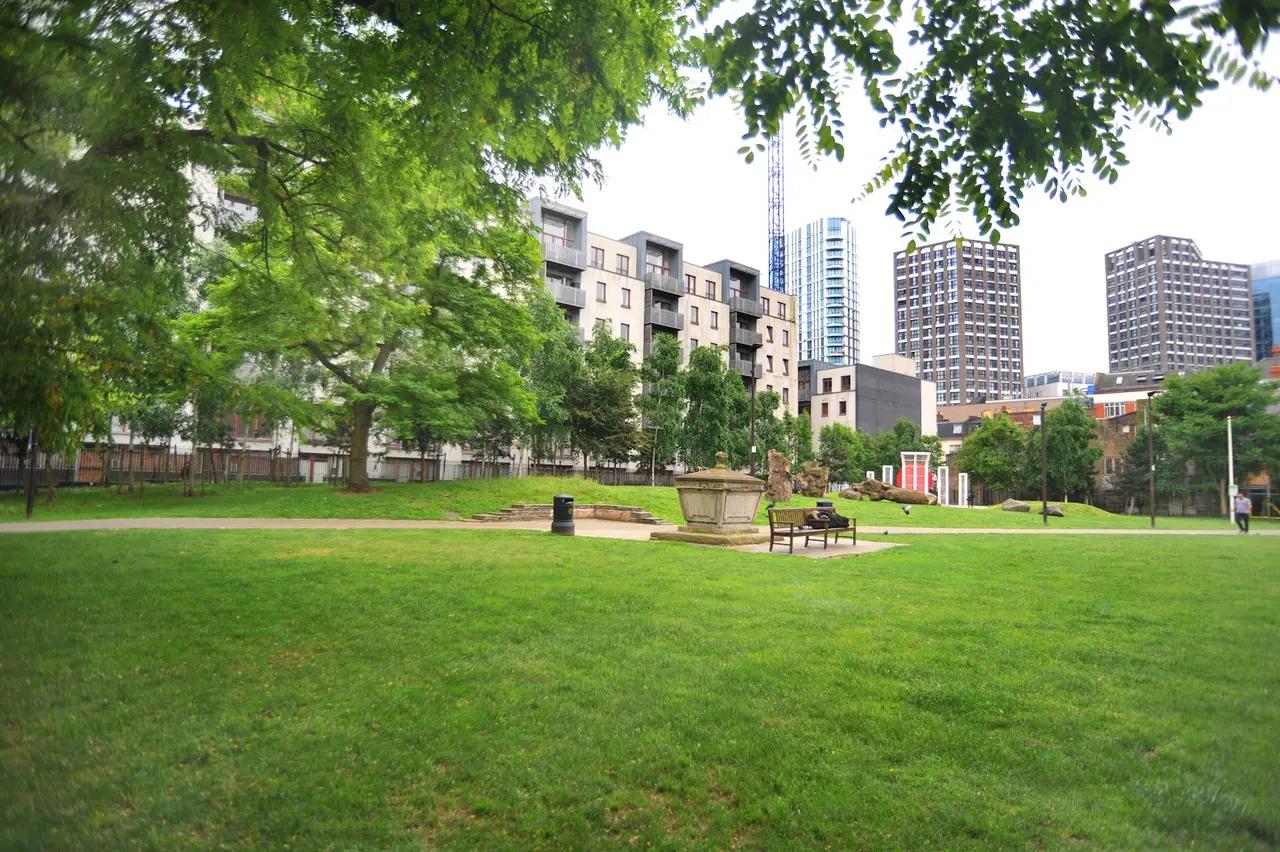
Altab Ali Park
Whitechapel · Outdoors
Why Is Whitechapel Called Whitechapel?
- R
Roman Fort Ruins
The City of London · Outdoors
Six Historic Havens For Wildlife In The City
- B
Barbers' Physic Garden
The City of London · Outdoors
Six Historic Havens For Wildlife In The City
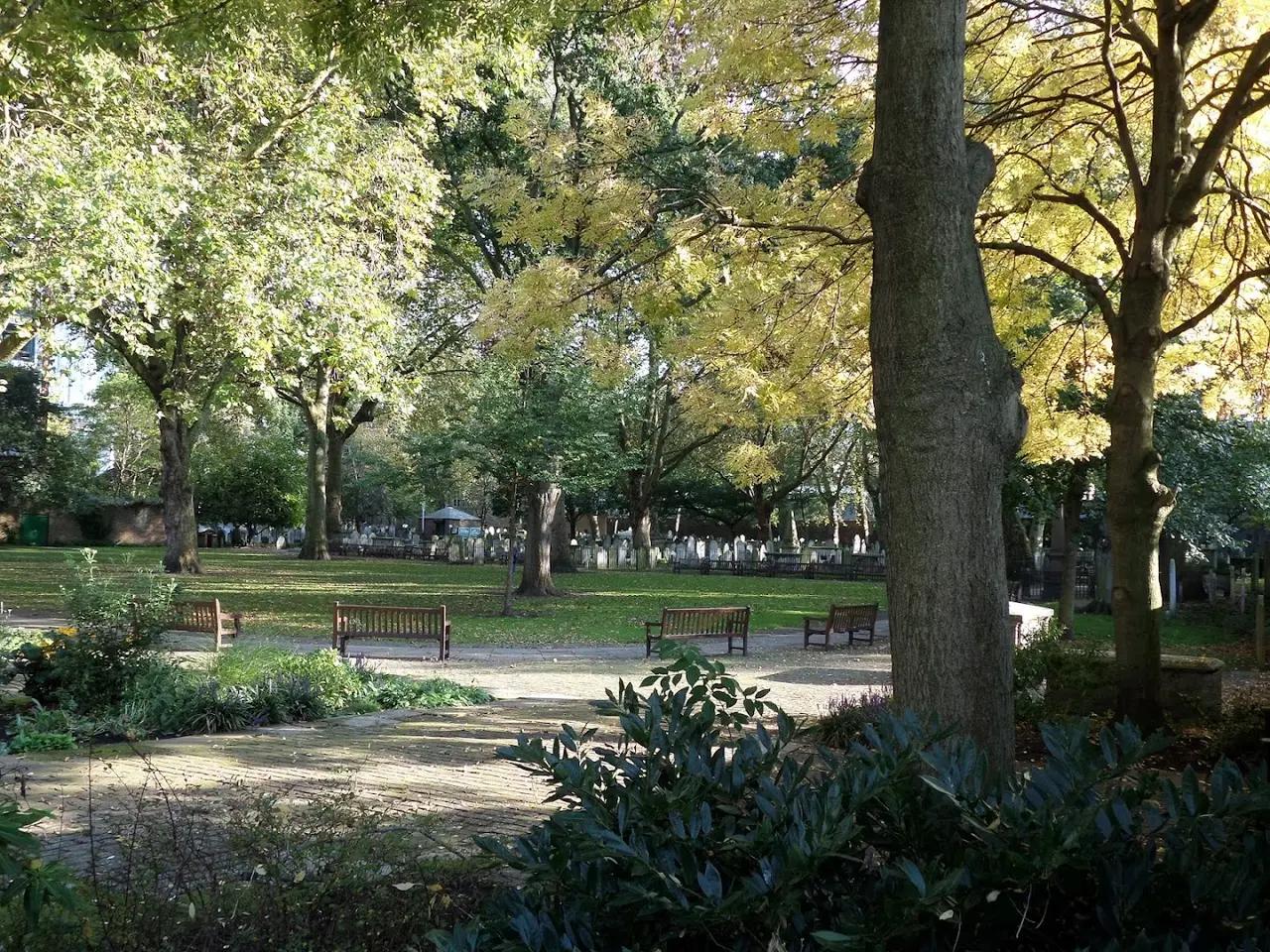
Bunhill Fields Burial Ground
Shoreditch · Outdoors
Six Historic Havens For Wildlife In The City
- S
Smithfield Rotunda Garden
The City of London · Outdoors
Six Historic Havens For Wildlife In The City
- C
Charterhouse Square, Barbican, London, UK
The City of London · Outdoors
Six Historic Havens For Wildlife In The City
- T
The Honourable Society of the Middle Temple
Holborn · Culture
There is a magnificent Tudor hall in central London that most Londoners have never been inside� ?? Temple is one of my favourite areas of London to explore. It has lovely gardens, surviving historic architecture and more. Once the enclave of the Knights Templar, since the 14th century it has been home to two of London’s four Inns of Court, Inner Temple and Middle Temple. The grand centrepiece of Middle Temple is Middle Temple Hall. Finished in 1574 it is known to have been visited by Queen Elizabeth I in 1578 and the first ever recorded public performance of Shakespeare’s Twelfth Night took place here in 1602. There is a link in my bio for the full blog post for more! Thank you to @opencity_uk and @middle_temple for helping to facilitate the visit. #tudorhistory #londonhistory #london #livinglondonhistory #thetudors #elizabethi #londontravel #britishhistory #hiddenlondon
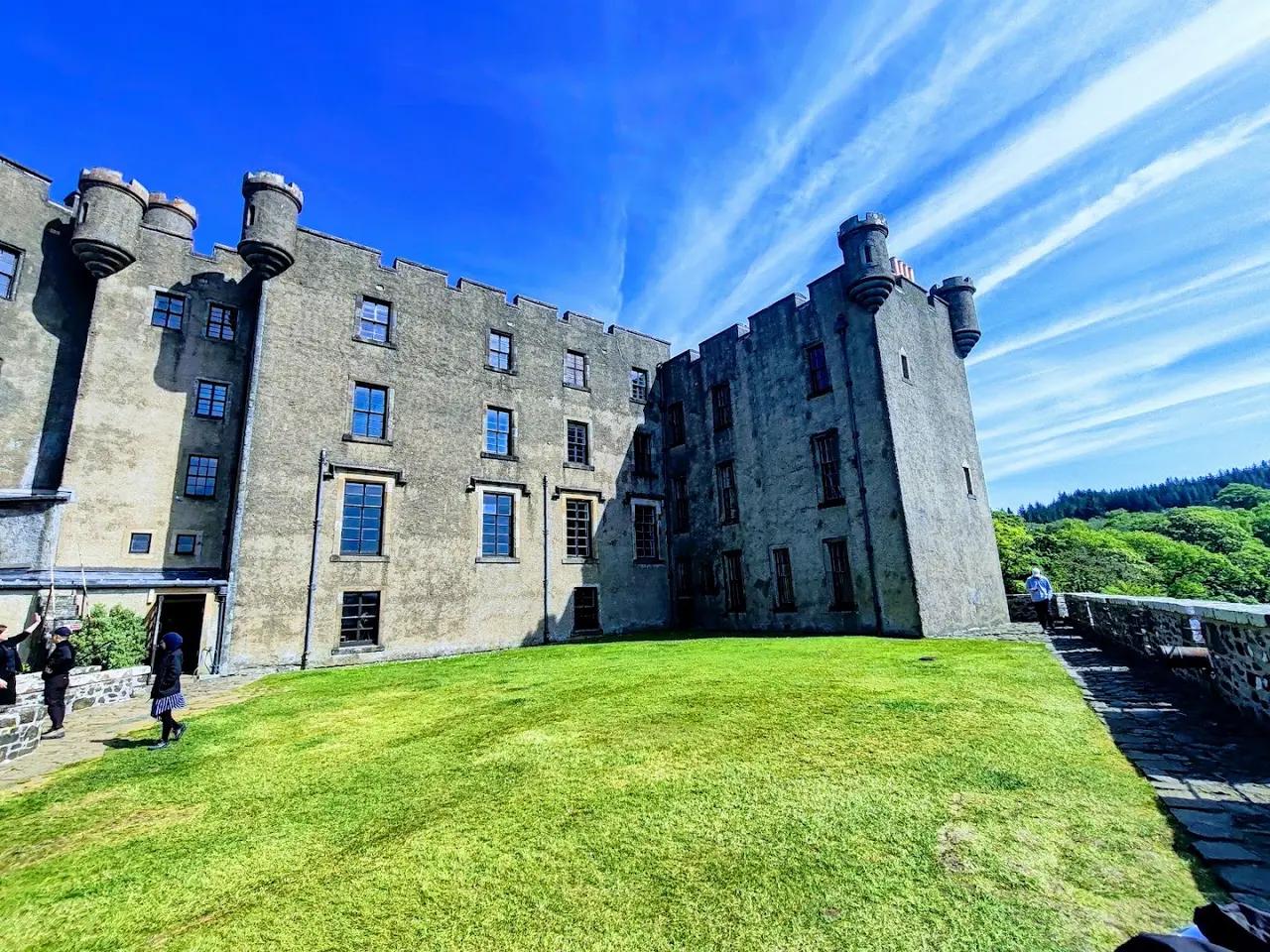
Dunvegan Castle & Gardens
Culture
The oldest continuously inhabited castle in Scotland can be found on the Isle of Skye- I paid it a visit! I recently swapped the streets of London for the beautiful landscapes of Scotland. A small departure from my usual London content, so I hope you enjoy. Dunvegan Castle has been the seat of Clan Macleod since the 13th century and is packed with amazing artefacts from the mystical “fairy flag” to the drinking horn used for hundreds of years for a family tradition. @dunvegancastle @visitscotland @caledoniansleeper @visitskye #scotland #scottishistory #scotlandhighlands #scotlandhistory #isleofskyescotland #castlelovers #castleview
- S
South London
Culture
Morley College: A Hidden Artistic Gem In South London
- R
Roman Bath, Strand Lane, Aldwych, London, UK
Covent Garden · Outdoors
The story behind London’s fake �Roman� bath� ?? Hidden down the quiet backstreet called Strand Lane, just off the Strand in central London, you’ll find the Strand Lane Roman Bath. It is barely ever open, so I was delighted to recently get the opportunity to visit. Thank you to @thecolab.art for the art exhibition and @kings_college_london for helping to facilitate the visit and filming. There’s a full blog post on my website, link in my bio to read! #london #londonhistory #livinglondonhistory #hiddenlondon #londonblogger #secretlondon
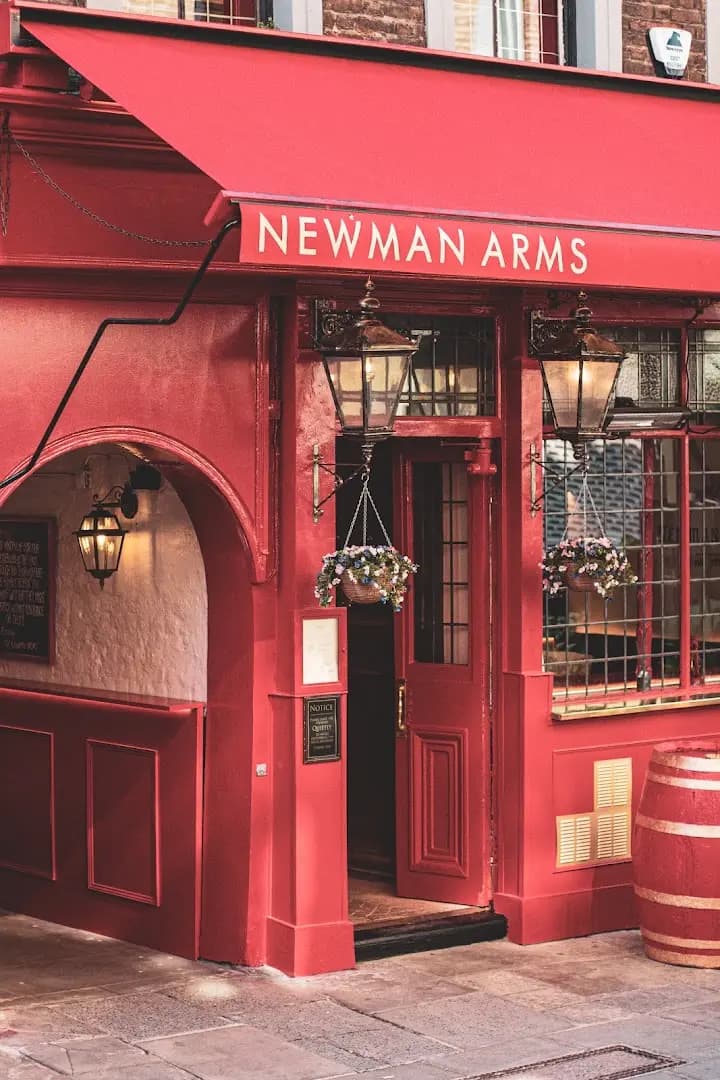
The Newman Arms
Fitzrovia · Drink
What are these curious signs you can see under some windows in London? ?? They say �Ancient Lights� and can be found underneath a window on Rupert Court in Soho, windows on Albemarle Way in Clerkenwell and on Newman Passage in Fitzrovia. They relate to something called the �Right to Light� #london #londonhistory #livinglondonhistory #hiddenlondon #secretlondon #londontravel #londontrip
- R
Rupert Street
Soho · Culture
What are these curious signs you can see under some windows in London? ?? They say �Ancient Lights� and can be found underneath a window on Rupert Court in Soho, windows on Albemarle Way in Clerkenwell and on Newman Passage in Fitzrovia. They relate to something called the �Right to Light� #london #londonhistory #livinglondonhistory #hiddenlondon #secretlondon #londontravel #londontrip
- A
Albemarle Way
Angel · Culture
What are these curious signs you can see under some windows in London? ?? They say �Ancient Lights� and can be found underneath a window on Rupert Court in Soho, windows on Albemarle Way in Clerkenwell and on Newman Passage in Fitzrovia. They relate to something called the �Right to Light� #london #londonhistory #livinglondonhistory #hiddenlondon #secretlondon #londontravel #londontrip
- T
Tower of London
Bermondsey · Culture
The Tower of London has a brand new poppy display to mark the 80th anniversary of the end of World War Two! Thank you @historicroyalpalaces for the wonderful tour around. I have written up a full blog post on the history of the Tower in World War Two (there is a link in my bio if you would like to read it). The display is on until the 11th November and is almost entirely inside the Tower so you’d need to book a ticket to see it. Image credits: Historic Royal Palaces, Yeoman Warder Archives and HRP’s Architectural Drawing Collection (EH/TOL/2848) for the bomb damage map. The poppies are on loan from the Imperial War Museum and the display was designed by Tom Piper ?? #london #londonhistory #ww2history #thetoweroflondon #livinglondonhistory #londontravel #londontrip #worldwar2
- M
Middle Temple Hall London
Holborn · Culture
An Elizabethan Treasure In The Heart Of London: A Visit To Middle Temple Hall
- D
Dinner In The Sky Dubrovnik
Covent Garden · Culture
What links this 18th century church in London with one of the world’s most famous billionaires�? This is St Mary le Strand church. It dates from 1724 and was designed by James Gibbs. I wrote up a full blog post on its history a few months ago (link in bio) but they got back in touch because they discovered an interesting detail about their ceiling� @stmarylestrand @richardbranson @vanessagbranson @holly_branson @bransonsam @virginunite @ofwrens #london #londonhistory #hiddenlondon #londontravel #londonarchitecture #livinglondonhistory
- K
Kimpton Fitzroy London
Holborn · Stay
The Hotel With Links To The Titanic: A Visit To Bloomsbury’s Kimpton Fitzroy London

The Piazza
Covent Garden · Culture
I am delighted to reveal that I have created my first ever self-guided audio tour!?? It is called Spectacle, Sin and Uproar: A Hidden History of Covent Garden. It is a tour I have run many times as a guided tour but now you can listen to it in your own time, at your own pace on the VoiceMap app ?? VoiceMap is GPS triggered so you simply press play, you can put your phone away and I talk you through exactly where to go. I will show you the grand piazza and bustling streets, telling you stories of the old fruit and vegetable market, the area’s notorious nighttime trade and theatrical scandals, as well as exploring the lesser-known backstreets and alleyways of Covent Garden, revealing amazing details and historic survivors ?? There is a link in my bio for to download the app or simply type VoiceMap.me/coventgarden into your browser. #london #londonhistory #livinglondonhistory #coventgarden #londontour #audiotour #selfguidedtour #hiddenlondon #secretlondon
Captain Cook Cruises - Circular Quay
Canary Wharf · Culture
I paid a visit to the UK’s first major exhibition about mudlarking at the Museum of London Docklands! It covers lots of historical treasures found on the foreshore of the Thames, as well as looking at mudlarking as a practice. Doves Type found by @thames_skipper, the medals by Kamil Zawistowski, the sundial found by Peter Olivant and @thehistoryhunter_mudlark, the tobacco pipe bowl found by @thehourofthedog, the sixpence by @carolinenunneleymudlark and the eye by @london.mudlark . ?????? Exhibition is on until the 1st March 2026 and I have a write up of eight of my highlights on my website (link in bio). Thank you @wearelondonmuseum for the invite to look around ?? #london #londonhistory #livinglondonhistory #mudlarking #londonmuseum #mudlark #londonmudlark
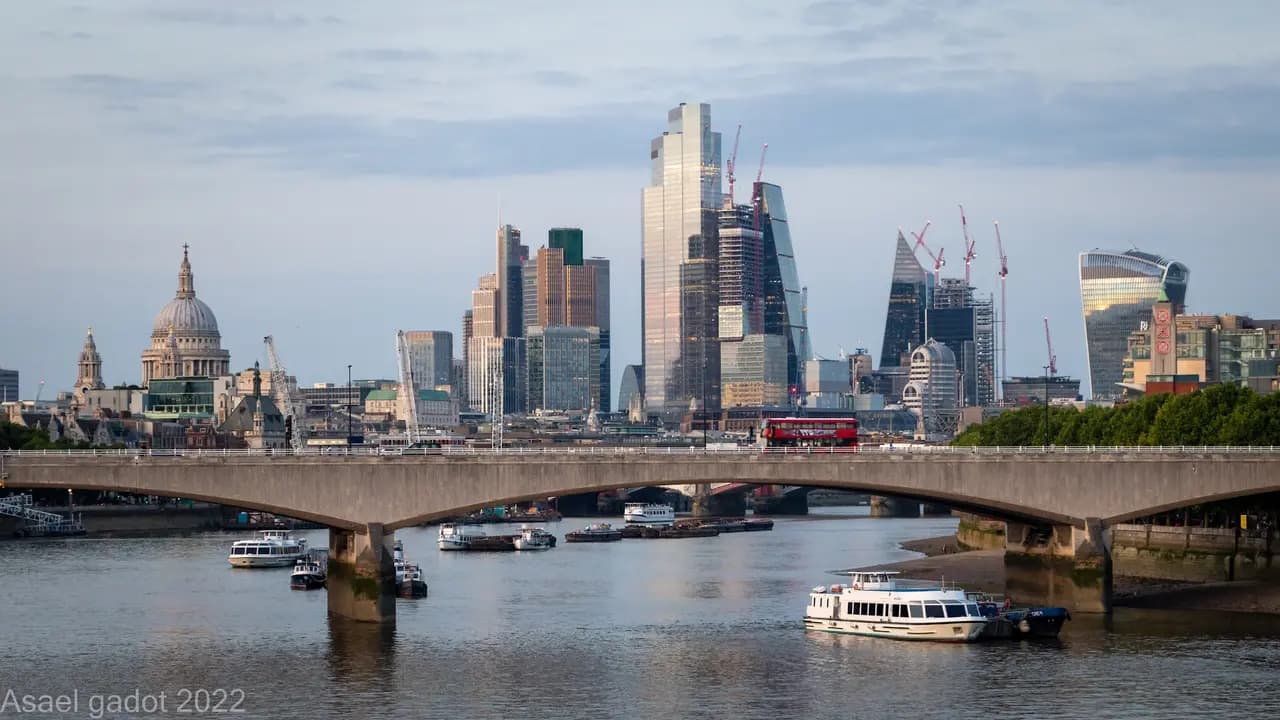
City of London
The City of London · Culture
A selection of photos from a photoshoot I recently had around the City of London! ?? This was for a tour I am going to be leading for @Open City as part of the Open House festival this year. They ran a ballot for tickets and I believe the winners will be announced soon. Thank you to @annarose_mcchesney for the fantastic pics ?? My next set of standard public walking tour dates will be out very soon in my newsletter- there is a link in my bio to sign up. #london #londonhistory #londontravel #cityoflondon #livinglondonhistory #hiddenlondon
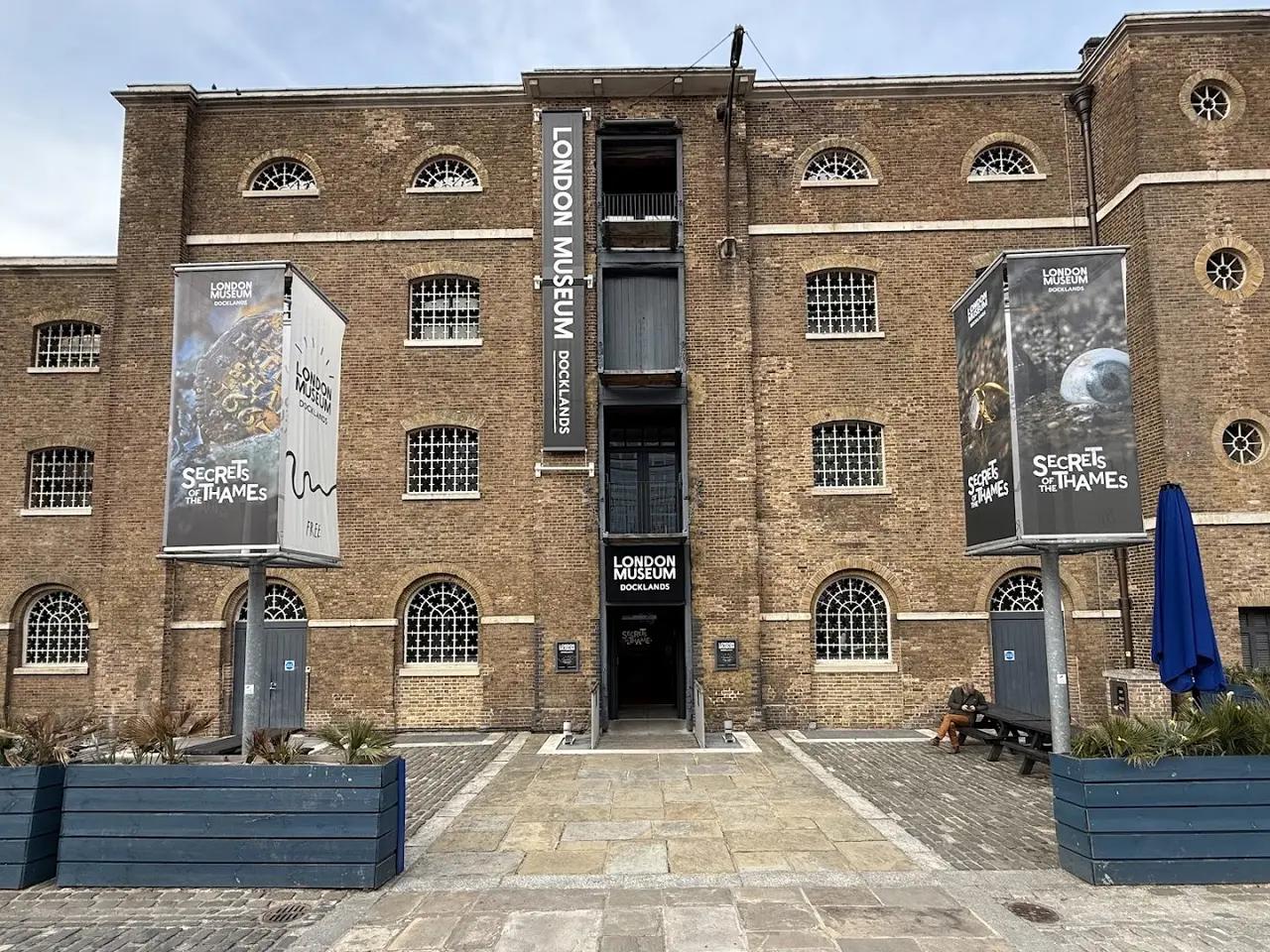
London Museum Docklands
Canary Wharf · Culture
Eight Highlights Of The Secrets Of The Thames Mudlarking Exhibition
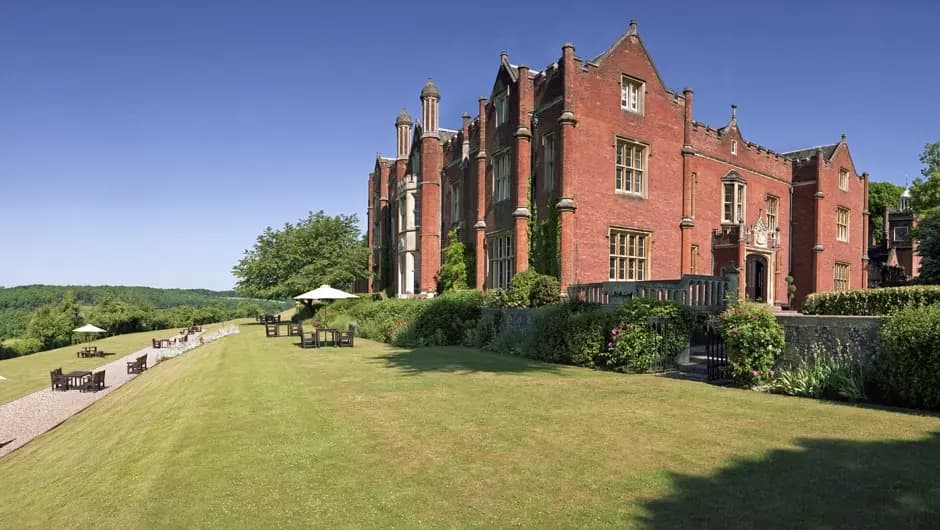
De Vere Latimer Estate
Stay
This old aristocratic mansion, just outside London, once played a vital role in World War Two, kept hidden from the public for many years� ?? Today Latimer House is the De Vere Latimer Estate hotel but in the war was commandeered by the Secret Intelligence Services for a top secret purpose. Thank you @devere_latimerestate for the stay (#gifted)! For anyone who would like the read up more, there is a link in my bio for the full blog post. There is also a fantastic book by @drhelenfry called The Walls Have Ears for an even deeper dive. #london #buckinghamshire #ww2history #livinglondonhistory #londonhistory #ww2 #londontravel #secretlondon #londontrip #daytripsfromlondon #worldwar2
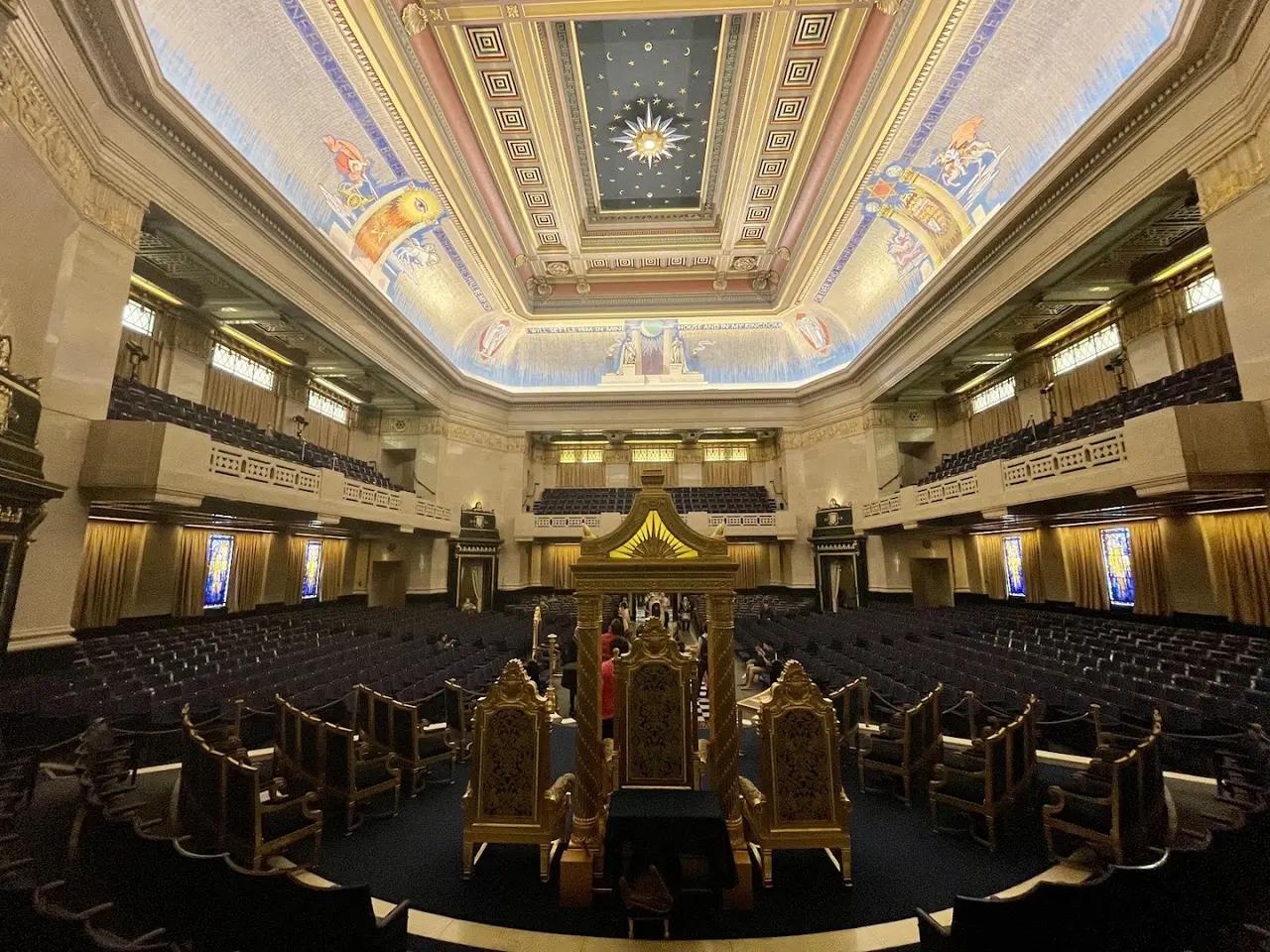
Freemasons Hall, London
Holborn · Culture
A look inside Freemasons� Hall in Covent Garden! It is a truly unique and exuberant Art Deco building as well as having a very interesting history. I have written a full blog post on the building, there is a link in my bio if you would like to read more. #london #londonhistory #livinglondonhistory #londontravel #londonmuseum #freemasons #secretlondon
- 2
23-24 Leinster Gardens
South Kensington · Outdoors
There is something not quite right about this West London street� ?? 23-24 Leinster Gardens have not letterboxes and the windows are all blocked up. To find out why you have to go around the back onto Porchester Terrace. You will see that they are, in fact, just facades and hiding a section of underground railway! #london #londonhistory #livinglondonhistory #westlondon #hiddenlondon #secretlondon #londontravel #londonunderground #trainhistory #tfl #transportforlondon
- P
Porchester Terrace
South Kensington · Outdoors
There is something not quite right about this West London street� ?? 23-24 Leinster Gardens have not letterboxes and the windows are all blocked up. To find out why you have to go around the back onto Porchester Terrace. You will see that they are, in fact, just facades and hiding a section of underground railway! #london #londonhistory #livinglondonhistory #westlondon #hiddenlondon #secretlondon #londontravel #londonunderground #trainhistory #tfl #transportforlondon
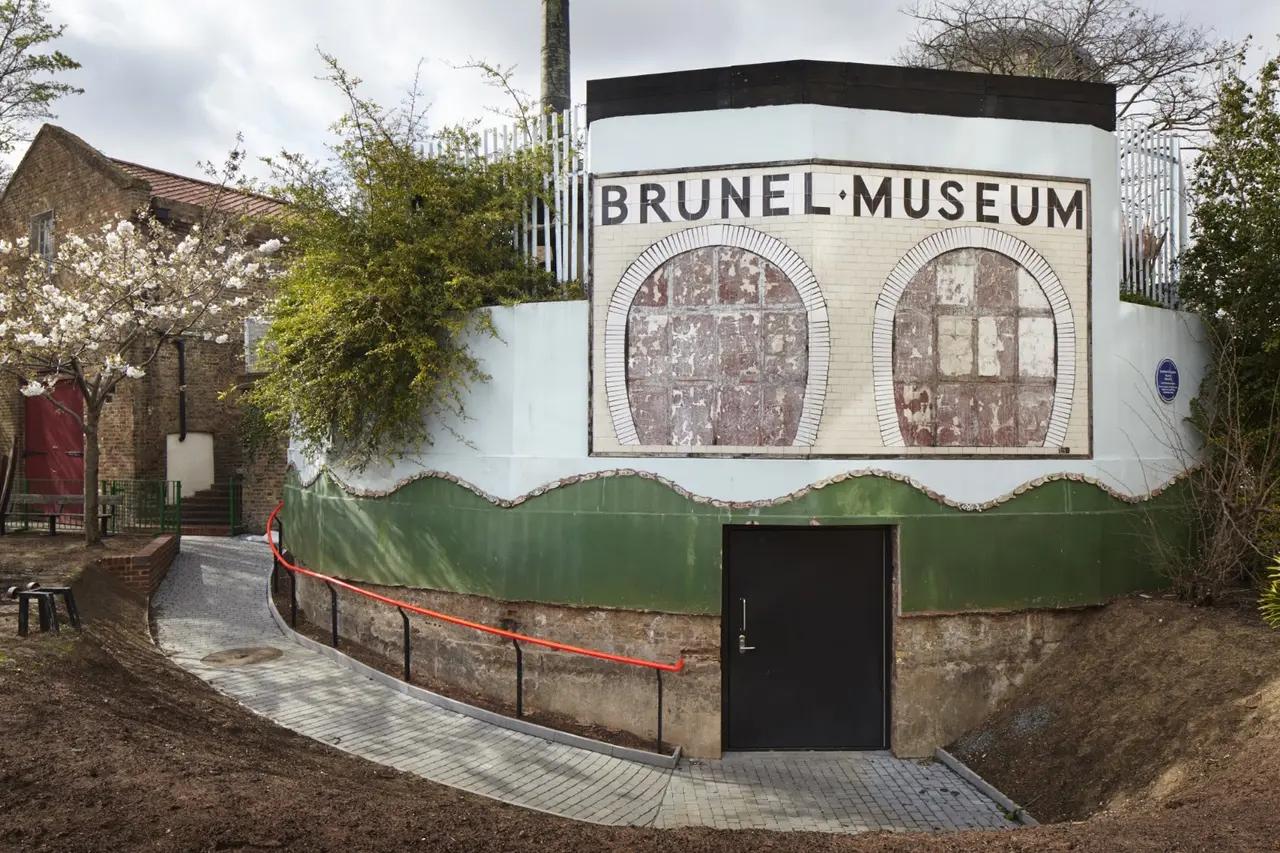
Brunel Museum
Outdoors
The story behind Victorian London’s “Eighth Wonder of the World” London had the first tunnel in the world underneath a navigable river and many pass through it everyday without realising. Designed by Marc Brunel (the father of the much better known Isambard Kingdom Brunel), the Thames Tunnel was constructed from 1825-1843. It had many setbacks but eventually opened as a pedestrian tunnel rather than a tunnel for horse and carriages as had been initially intended. You can learn all about it at the Brunel Museum in Rotherhithe and even go inside the old tunnel shaft! @brunel_museum. I have also written up a full blog post on the history, so for more detail, there is a link in my bio! #london #londonhistory #livinglondonhistory #southlondon #londonmuseum #londonlife #londontravel #thames #thamesriver #engineering
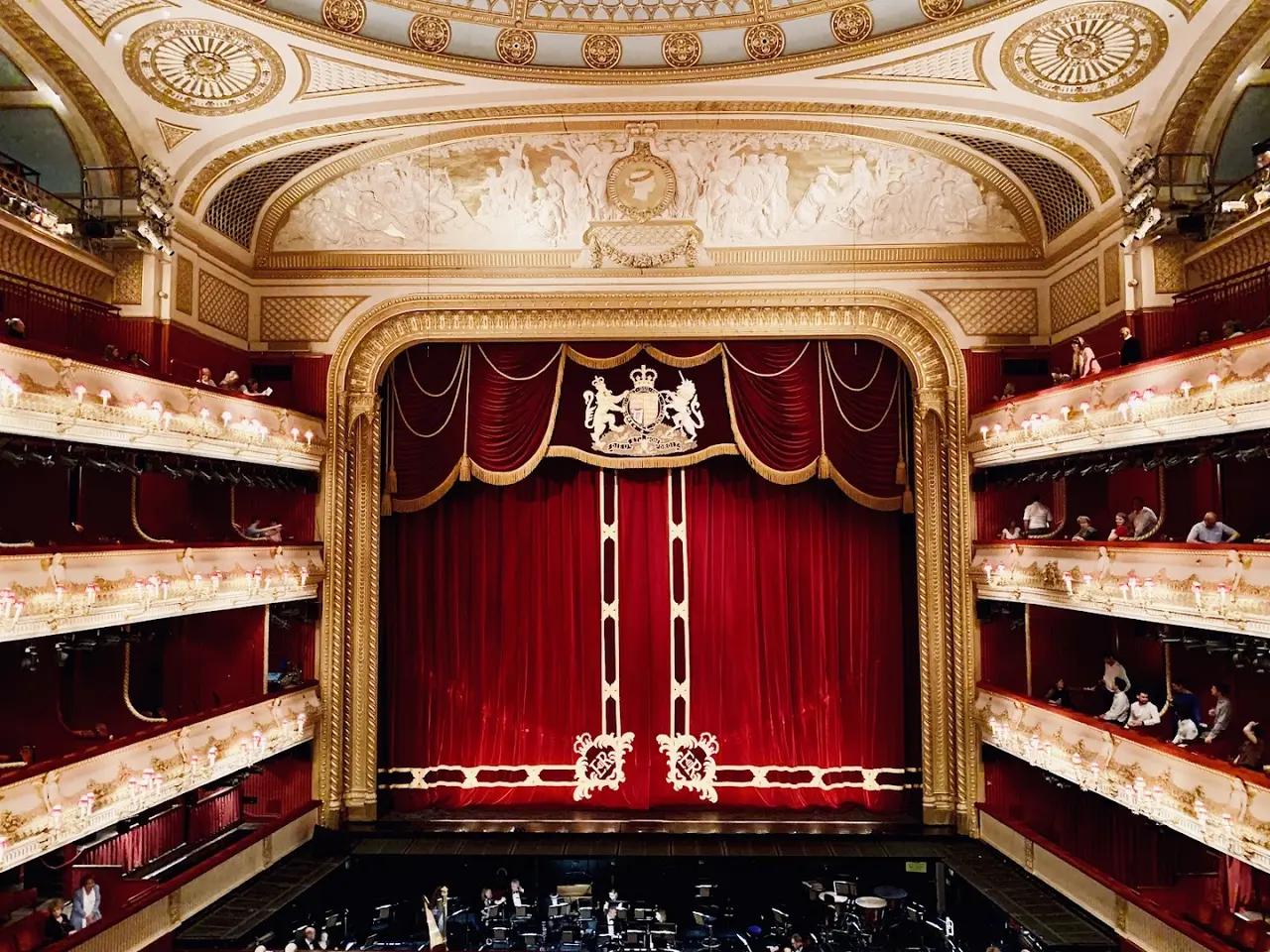
Royal Ballet and Opera
Covent Garden · Culture
Why were there riots at the Royal Opera House in 1809 and what part of the building can you find today in Borough Market? ?? This is the, sometimes, dramatic history of the Royal Opera House! Thank you to the @royalballetandopera for gifting me the tickets to visit ?? There is a link in my bio for the full blog post, with more fun stories, if you would like to read it! #london #londonhistory #livinglondonhistory #londontravel #londontheatre #theatrehistory #theatrelovers #coventgarden #thewestend #westend #opera #london #londonhistory
- t
the royal opera house, Floral Street, London, UK
Covent Garden · Culture
The Dramatic History Of The Royal Opera House
- C
Crystal Palace Subway
Culture
AD I went to see a true hidden historic gem in South London, a spot I have wanted to see for ages: the stunning Crystal Palace Subway! I hopped the on the Southern Railway train from London Bridge to Crystal Palace. It cost just 6.50 with a railcard and I paid through�the app to avoid third party booking fees. I have written up the full history of the places I saw in a blog post, there is a link in my bio to have a read. Thank you very much to the�@crystalpalaceparktrust for giving me the access to film. @southernrailuk #london #southlondon #londonhistory #crystalpalace #secretlondon
- C
Clapham South Deep Level Shelter
Clapham · Culture
What are these odd, round structures you can find across London? ?? They span London from North to South, are nearly always circular, with vents on top and always come in pairs. They are, in fact, fascinating remnants from a World War Two plan to protect London’s populace. I wrote a blog post a few years ago specifically about the history of the Clapham South Deep Level shelter, there is a link in my bio if you would like to read. #london #londonhistory #livinglondonhistory #hiddenlondon #londontravel #westminster #southlondon #clapham #belsizepark #goodge street #stockwell #londontrip @transportforlondon
- W
WaterWorks Centre Nature Reserve & Middlesex Filter Beds
Outdoors
This is the story behind a campaign to turn an underused patch of concrete in East London into a community park ?? The idea for the East London Waterworks Park (@eastlondonwaterworkspark), was conceived in 2019 and they hope the space will include wild swimming, community spaces, a walled garden, cafe, arts studios and a space for wildlife to thrive. The campaign is ongoing, there is a link in my bio for the full blog post if you would like to find out more! #london #londonhistory #eastlondon #eastlondonwaterworkspark #hackney #walthamforest #londontravel #gardens #community #wildswimming
- T
The Crystal Palace, London SE19 1UE, United Kingdom
Outdoors
The Crystal Palace Subway: A True Hidden Gem
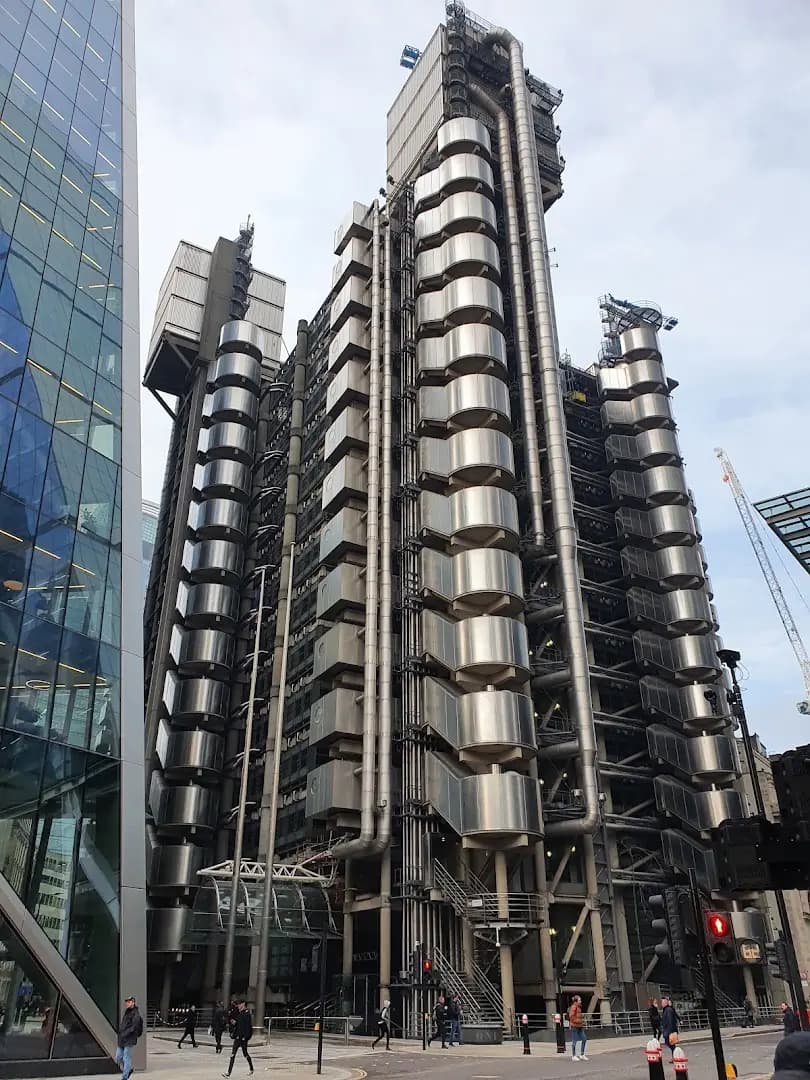
Lloyd's building
The City of London · Culture
A look inside the City of London’s iconic “inside-out building”! The Lloyd’s building was completed in 1986, designed by Richard Rogers and in 2011 became the youngest ever building to be given a Grade I listing. I was lucky enough to be shown around by someone who works there, so I thought it would show you all what I saw. The building is packed with history, including a very grand, whole 18th century room... There’s a link in my bio if you would like a more full history. #london #londonhistory #livinglondonhistory #londontravel #londontrip #hiddenlondon #cityoflondon #architecture #architecturephotography #architecturelovers
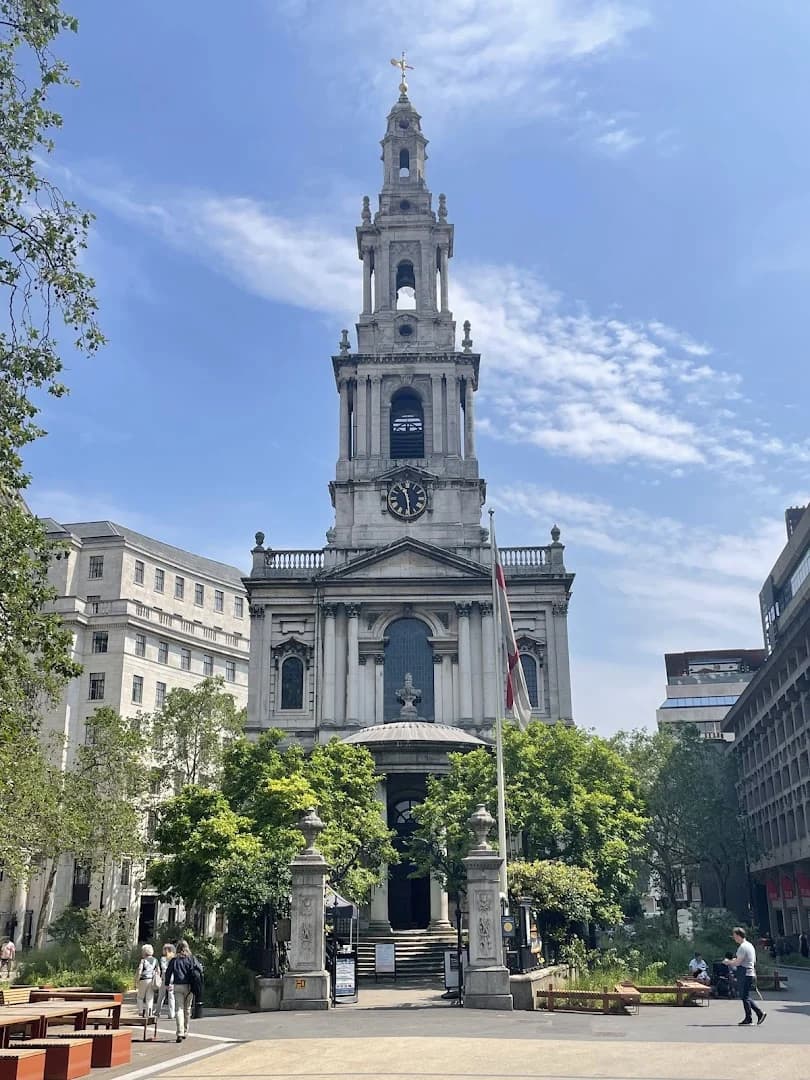
St Mary le Strand Church
Covent Garden · Culture
An overlooked architectural gem in central London! St Mary le Strand (@stmarylestrand) was designed by James Gibbs and completed in 1723. It was his first work after travelling and training in Italy and is heavily inspired by classical architecture. It has a wonderful, decorative ceiling and they are working to make it even more of a community and cultural hub for the area. There is a link in my bio if you would like to read the more full blog post for all the history ?? Have you ever been inside the beautiful St Mary le Strand? #london #londonhistory #livinglondonhistory #churchesofinstagram #hiddenlondon #secretlondon #architecture #architecturelovers
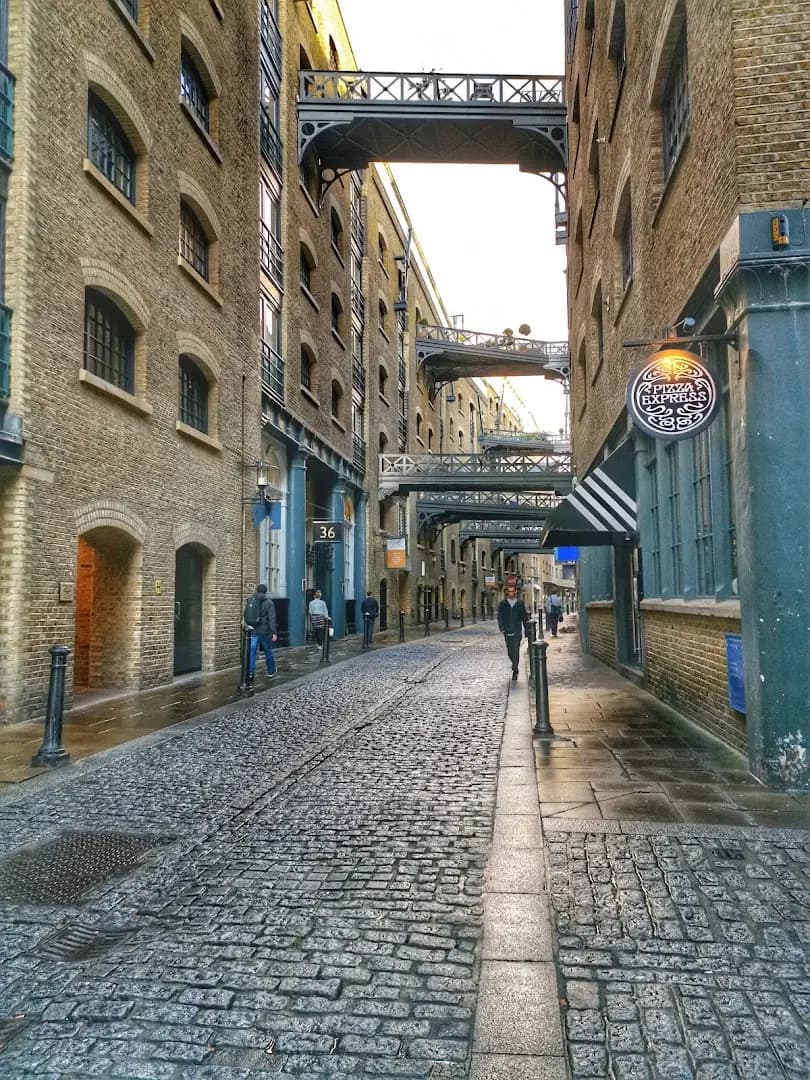
Maggie Blake's Cause
Bermondsey · Outdoors
The story behind an unusual street name, not far from Tower Bridge! Maggie Blake’s Cause can be found on the South side of the river and links Shad Thames to the riverside. This is, by the way, another of the spots in my new book about London’s hidden corners. There is a link in my bio if you did want to buy a copy. #london #londonhistory #livinglondonhistory #southlondon #londontravel #londontrip #hiddenlondon #secretlondon #towerbridge
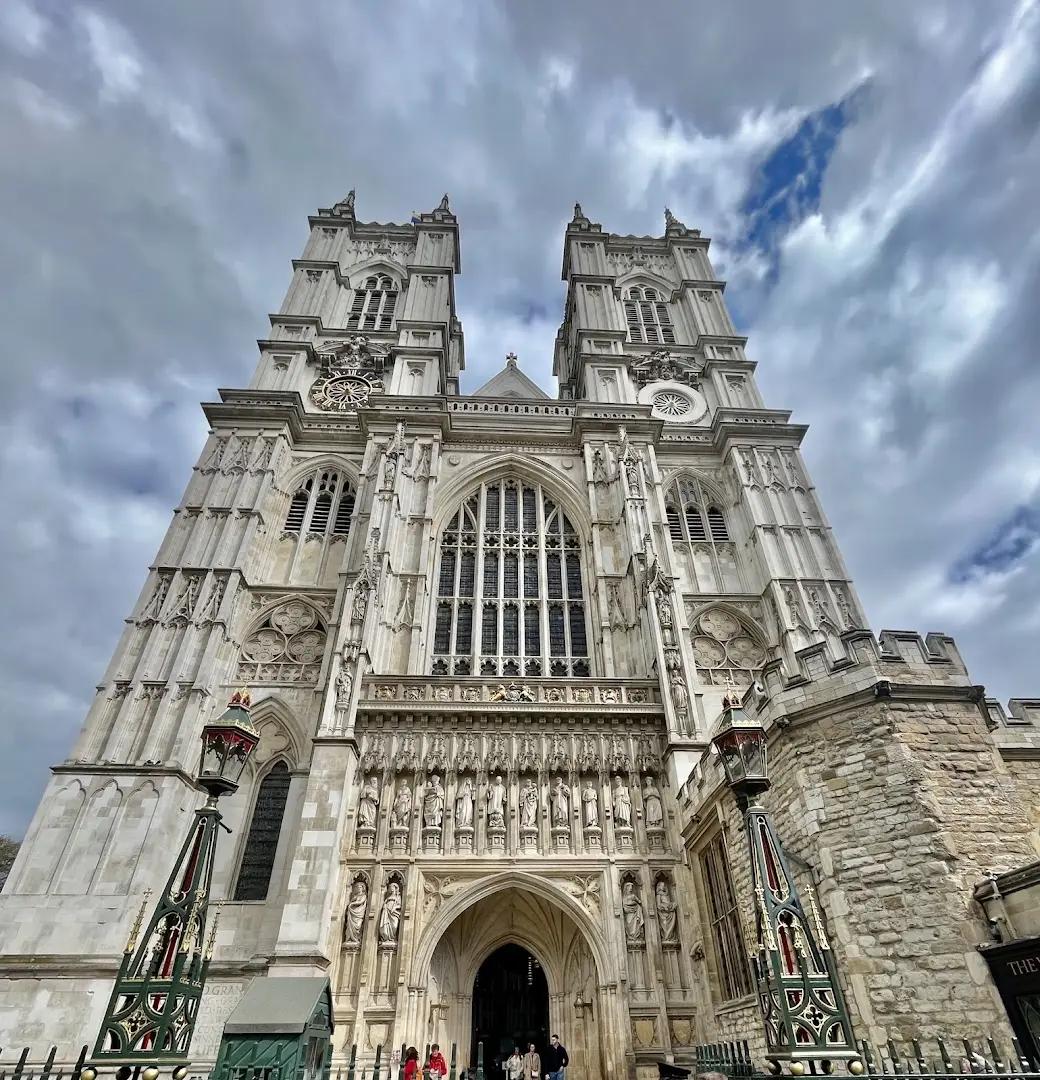
Westminster Abbey
Westminster · Culture
AD Here are four more hidden historic sights that you could tie in with a visit to Westminster Abbey! Make sure to save this video for your next trip to London. If you are travelling to London from abroad, I would highly recommend downloading an eSIM with�@airalo_uk. I have used them a couple of times before on recent trips and it is simple to use, cheap and avoids delays trying to get something sorted at the airport. You just have to download the�Airalo�app, select the country/region you want (there are over 200), the amount of data you would like, activate and you are ready to go. You can use my code HISTORY at the checkout for $3 off your first eSIM! There is a link my bio for more. #london #londonhistory #londontravel #londontrip #hiddenlondon #secretlondon
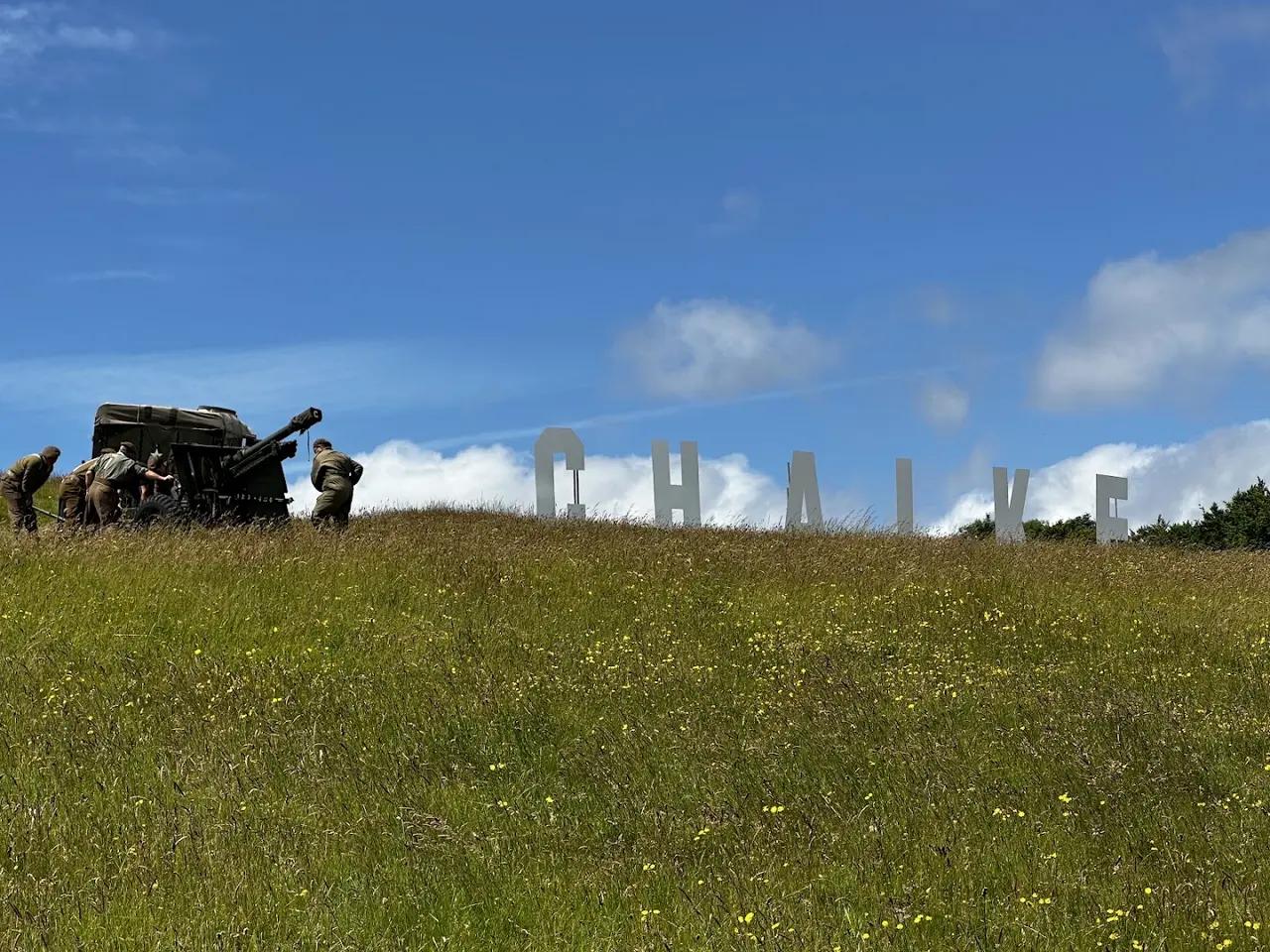
Chalke History Festival
Culture
I went to the Chalke History Festival this year, the UK’s biggest and best history festival! ?? I was part of a panel talk on the Sunday discussing how you can bring heritage to 21st century audiences but went down for a couple of days to enjoy all the festival had to offer: inspiring talks, food, drink (I think I may have overindulged in the house rosé on night one), music, heritage crafts and more. History lovers, make sure to put the festival in your diary for next year. It will be on from the 22nd-28th June 2026. Thank you @chalkehistoryfestival for a wonderful time! #chalkevalley #history #historylovers #heritagebuilding #summerevents #historycomesalive #wiltshire
- S
Shoreditch Town Hall
Shoreditch · Culture
The Kray Twins, Jack the Ripper and the Suffragettes, this is the surprising history of Shoreditch Town Hall! You can read a full history of this magnificent building on the blog (link in my bio). #london #londonhistory #livinglondonhistory #eastlondon #londontravel #londonarchitecture
- O
Old Nichol Street
Shoreditch · Outdoors
Visiting the site of a notorious Victorian London slum! Just off Shoreditch High Street you will find the Boundary Estate. Built from 1894-1900, it was the first council housing estate in the country. It was constructed on the site of the Old Nichol slum, a network of thirty streets, alleyways and courtyards in a small five acre area, home to around 6000 residents. I have written a full blog post of its history, there is a link in my bio for more. #london #londonhistory #victorianhistory #livinglondonhistory #victorianlondon #secretlondon #hiddenlondon #eastlondon #shoreditch #shoreditchhistory
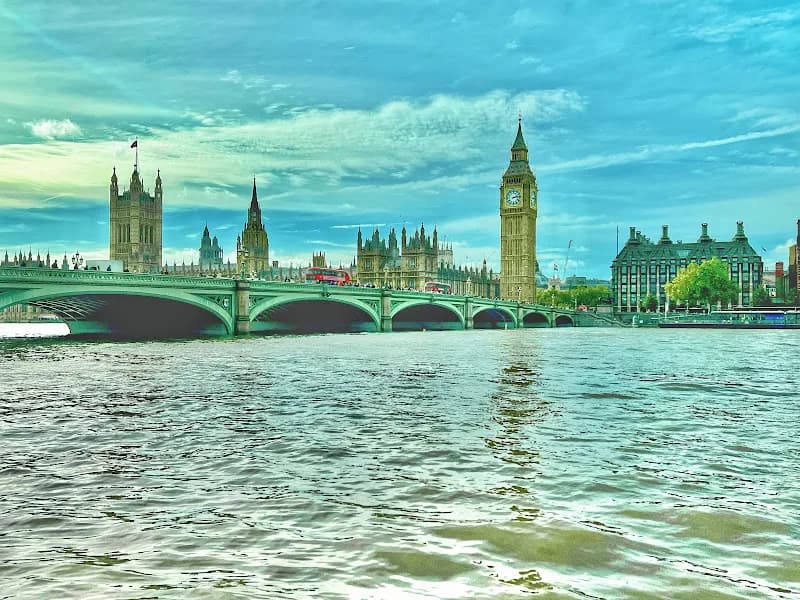
River Thames
Eat
When I went Mudlarking On The Foreshore Of The Thames
- N
NHS Ambulance Service
Culture
Did you know you can see two vintage ambulances outside the London Ambulance Service headquarters in Waterloo? 👀 This year @ldn_ambulance, as we know it today, is celebrating its 60th anniversary so I thought I would look into its history! I have written a full blog post, there is a link in my bio if you would like to read it. Also if you search London Ambulance History you will find the history page on their website with lots more information. #london #londonhistory #livinglondonhistory #hiddenlondon #secretlondon #londontravel #ww2history #victorianhistory #ww1history
- T
The Queen's Chapel, St James's Palace
Westminster · Culture
2025 marks the 400th anniversary of the completion of this beautiful building: The Queen’s Chapel, part of St James’s Palace. Completed in 1625 and designed by Inigo Jones, it was the first building in London to be completed in a classical style of architecture. It has seen royal weddings, events and ceremonies for four centuries now and is still going strong! #london #londonhistory #livinglondonhistory #royalhistory
- A
Arnold Circus
Shoreditch · Outdoors
- O
Old Nichol Street, London E2 7JB, United Kingdom
Shoreditch · Outdoors
Visiting The Site Of One Of Victorian London’s Worst Slums
- C
Cappagh - Lea Bridge Road
Drink
- 4
41 Cloth Fair
The City of London · Culture
There is a fascinating detail to spot in the windows of this old London house� ?? 41-42 Cloth Fair is often said to be the oldest house in the City of London. That is possibly not true, as I explain in the video, but it is an incredible historic survivor pre-dating the Great Fire of London. There are so many historic treasures in this area of London, have you been? #london #londonhistory #livinglondonhistory #smithfield #hiddenlondon #secretlondon #winstonchurchill #queenmother #royalhistory #ww2history #greatfireoflondon
- T
The Hitchcock Gallery
Culture
Admiring The Hitchcock Mosaics At Leytonstone Station Alfred Hitchcock is one of Britain’s most famous film directors, often referred to as the �Master of Suspense�. Did you know though that he has his origins in Leytonstone in East London? There are a few nods to the legendary director to look out for, including a series of brilliant mosaics inside Leytonstone Station. Alfred Hitchcock: Origins In Leytonstone alfred hitchcock Hitchcock in September 1955, image from wikimedia commons Alfred Hitchcock was born on 13th August 1899 at 517 High Road Leytonstone to William Edgar Hitchcock and Emma Jane, above his parents greengrocers shop. Leyton and Leytonstone were still part of Essex at that time, becoming part of London in 1965. alfred hitchcock blue plaque alfred hitchcock blue plaque leytonstone The petrol station on the site today because the house was sadly knocked down in the 1960s the birds mural Opposite you can see this mural from 2014, inspired by his film, The Birds. The concept was by Anna Mill but painted by Mateusz Odrobny Alfred’s father was a strict disciplinarian. He apparently once sent little five year old Alfred to the local police station with a note saying that he had misbehaved. The Sergeant on duty locked Alfred in a cell for a few minutes on the instructions of his father. This then gave him a lifelong fear of enclosed spaces and strong interest in wrongful imprisonment and the justice system. Alfred then went to St. Ignatius College before attending the London County Council School of Marine Engineering and Navigation from 191314. Becoming The Legendary Director In 1916 he started drawing and design classes at the University of London. This was what gained him his route into the film world, because he was employed to design title cards for silent films. He then worked his way up through various positions before directing his first film, the comedy Mrs Peabody in 1922. In 1939, Hitchcock relocated to Hollywood, where he produced his best known films, such as Rear Window (1954), Vertigo (1958), and Psycho (1960). He became known for innovative camera angles, dark humour, and a mastery of suspense. Whilst being celebrated for his skills as a director, his legacy, as many will be aware, is scrutinised, with allegations of predatory, controlling behaviour and, at times, sadistic treatment of the female leads. He was knighted by Queen Elizabeth II in 1980 and died later that year on the 29th April. alfred hitchcock and his family Hitchcock with his family in 1955, top, from left-Patricia Hitchcock O�Connell (daughter) with Terry O�Connell (granddaughter), Joseph O�Connell (son-in-law). Seated, from left-Hitchcock, Mary Alma O�Connell (granddaughter), and wife Alma Reville Hitchcock (wife). Image from wikimedia commons. Leytonstone Station: A Vital War Purpose leytonstone station Before we get into the mosaics, Leytonstone Station has an interesting history. It opened in 1856 as an Eastern Counties Railway stop. During World War Two, part of the tunnel system was used as a public air raid shelter. Remarkably, another 2.5 mile stretch of the tunnels between Leytonstone and Gants Hill was turned into a a secret underground aircraft factory. Following bomb damage to their Ilford factory, the Plessey defence electronics company moved production into the tube tunnels. Up to 4,000 workers, predominantly women, worked 24-hour shifts producing aircraft components, radio equipment, and parts for sites such as Bletchley Park. The facility even featured its own mini railway to shuttle materials. In 1947, the station was incorporated into the London Underground when the Central line was extended. The station was also rebuilt at this time in a post-war Modernist style, by architect Thomas Bilbow. There are a couple of old, surviving advertisement posters in the station to look out for. bearmans poster leytonstone station Bearmans of Leytonstone was a much-loved department store opened by Frank Bearman in 1898, run the family until 1962 and then closed in 1982 and demolished. chapmans poster leytonstone station The Hitchcock Mosaics In 1999, to mark the centenary of Hitchcock’s birth, the London Borough of Waltham Forest commissioned a series of mosaics. Some depict scenes from his most iconic films, including references to his famous cameos and others are nods to his own life. hitchcock mosaics history Unveiled in May 2001, were designed and crafted by the Greenwich Mural Workshop. The installation took seven months to put together, using over 80,000 tiles. There are seventeen in total, below are a selection of some that stood out to me. alfred hitchcock outside his fathers shop A young Alfred Hitchcock on a horse outside his father’s greengrocers shop, roughly 1906 alfred hitchcock in skin games Alfred Hitchcock depicted directing in The Skin Game (1931). Here he directs some of his well-known stars such as Margaret Lockwood, Ingrid Bergman and Cyril Richard. number 17 A scene from Number 17 (1932), two thieves played attempt a getaway on a stolen train the birds mosaic One of the most iconic scenes from a Hitchcock film, Melanie Daniels, played by Tippi Hedren, is attacked by a flock of crows in The Birds suspicion mosaic Johnnie Aysgarth, played by Cary Grant, brings his wife a drink in Suspicion (1941) the skin game mosaic A scene from The Skin Game (1931) strangers on a train Strangers On A Train (1951), a psychotic Bruno, played by Robert Walker, suggests exchanging murder victims with Guy, played by Farley Granger, a stranger on the same train. rebecca mosaic Rebecca (1940). Joan Fontaine as Mrs De Winter struggles to escape the memory of her husband’s first wife, Rebecca. Also in the background, you can see St John’s Church, Leytonstone, as it was in Hitchcock’s childhood. the wrong man mosaic The Wrong Man (1956). Henry Fonda plays musician Christopher Emmanuel Ballestrero who is mistakenly identified by the police as a robber. Hitchcock features, depicted in red, breaking the fourth wall and narrating the prologue. Thank you for reading, more below!
- S
St John's Gate
The City of London · Culture
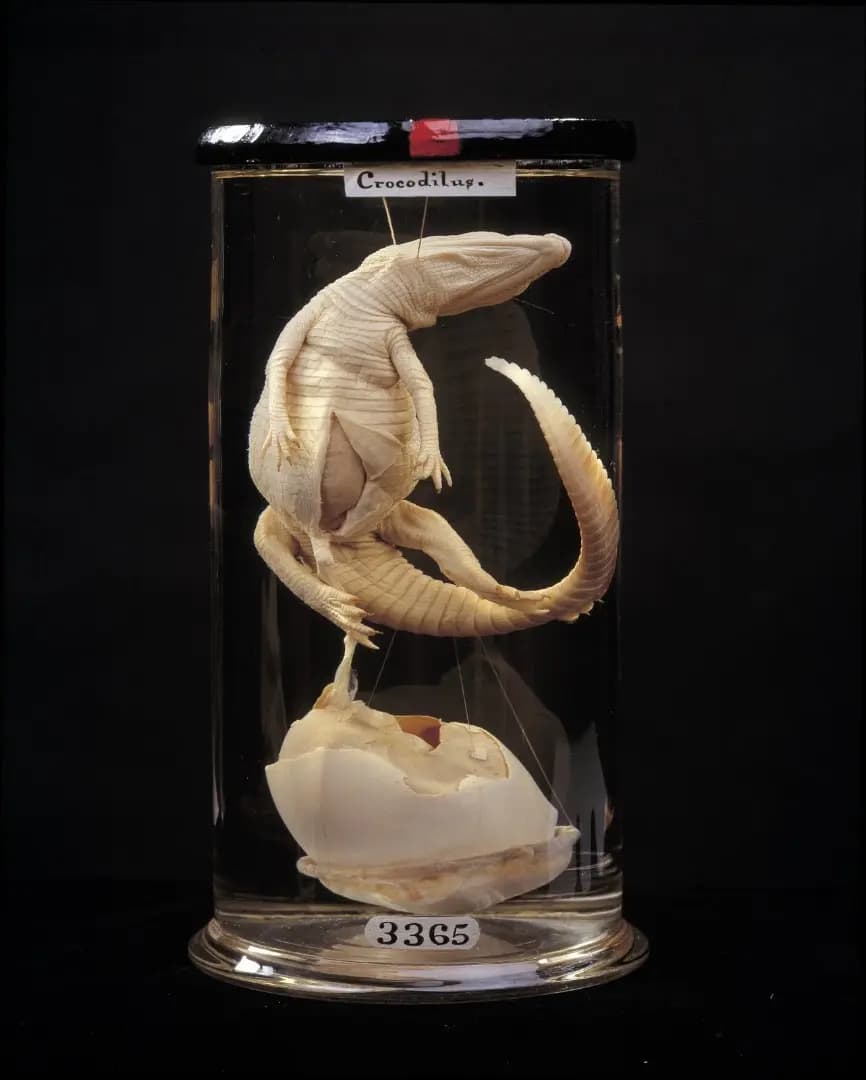
Hunterian Museum
Holborn · Culture
Is this London's most weird and wonderful museum? On Lincoln's Inn Fields you will find the Royal College of Surgeons, tucked inside of which is the Hunterian Museum @hunterianmuseum. It was established initially from the collection of 18th century surgeon John Hunter but has been added to over the centuries. It features all sorts of oddities and curiosities from the worlds of medicine, anatomy and natural history. I have written a full blog post on its history if you are interested. There is a link in my bio! #london #londonhistory #livinglondonhistory #hiddenlondon #londonmuseum #darkacademiaaesthetic #darkacademiavibes #secretlondon #weirdandwonderful #londontravel #londontravel #thingstodoinlondon
- S
Stoke Newington Town Hall & Assembly Hall
Culture
- H
HMS WELLINGTON
Holborn · Culture
- L
London Leather, Hide & Wool Exchange
Bermondsey · Culture

Barking Abbey Ruins
Culture
- Q
Queen Elizabeth's Hunting Lodge
Culture
- C
Chingford Train Station
Culture
- K
King's Oak Hotel
Stay
- G
Grimston's Oak
Outdoors
- H
Holy Innocents Church
Culture
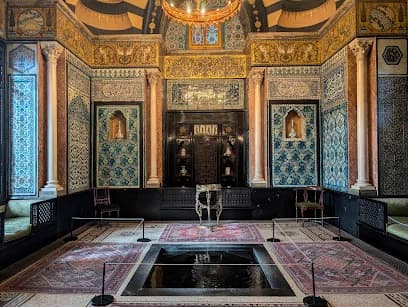
Leighton House
South Kensington · Culture
- N
National Trust - Bluecoat School
Westminster · Culture
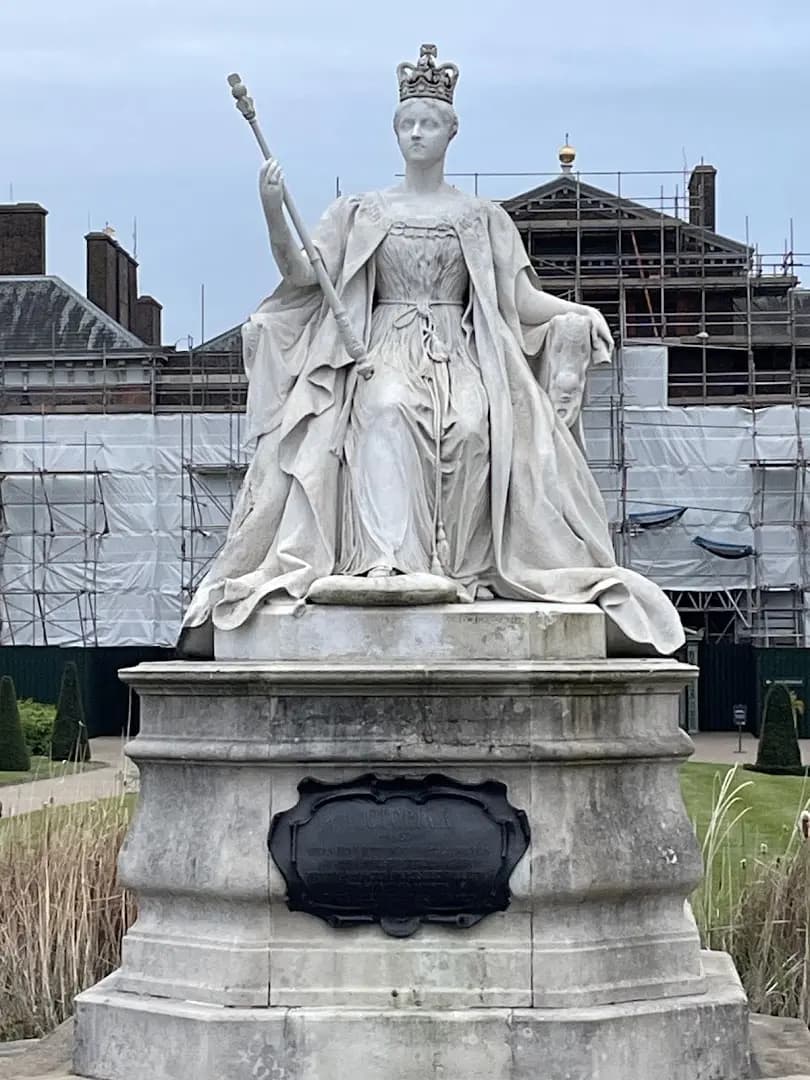
Queen Victoria Statue
South Kensington · Culture
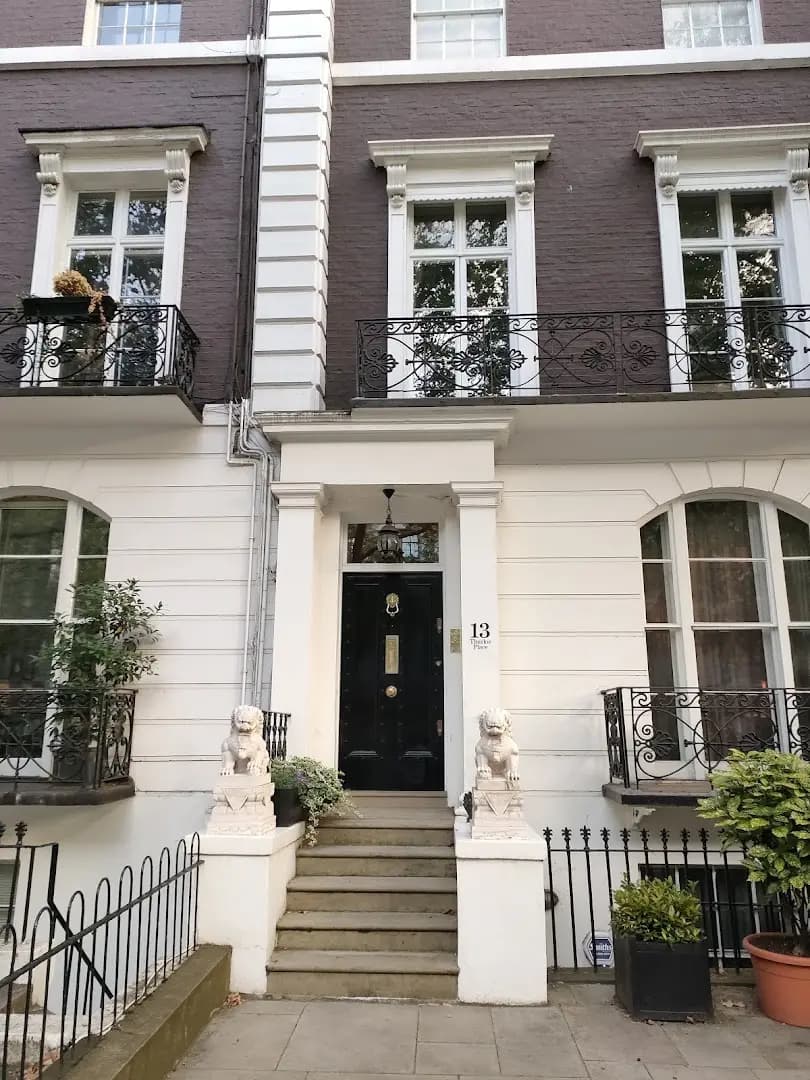
Thurloe Place Cabmen's Shelter
Knightsbridge · Culture
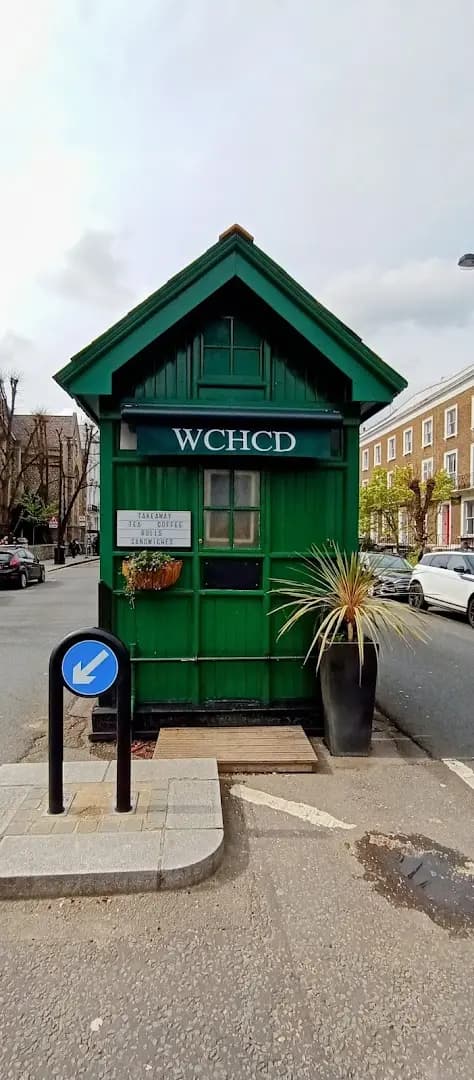
Ye Olde Green Hut
Notting Hill · Culture
- I
Italian Fountain
Outdoors
- G
Green Hut - Temple Place
Covent Garden · Culture
- T
Temple Place Cabmen's Shelter
Covent Garden · Culture
- S
St. George's Square Cabmen's Shelter
Westminster · Culture
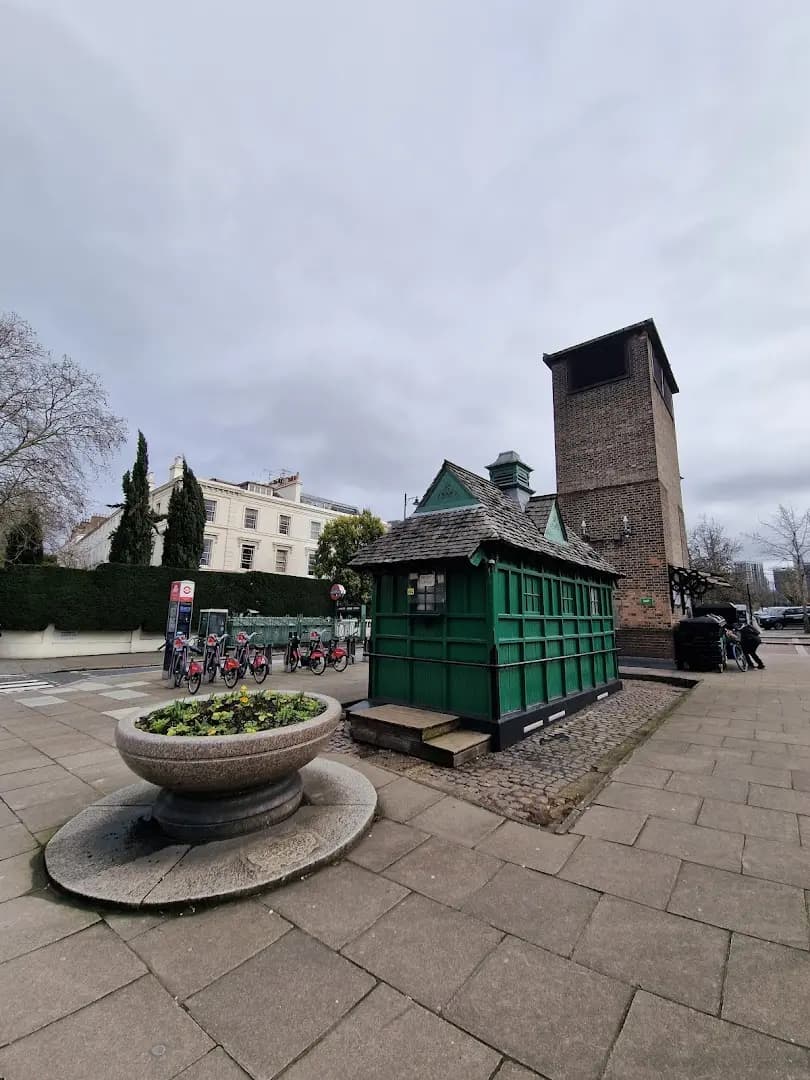
Warwick Avenue Cabmen's Shelter
Culture
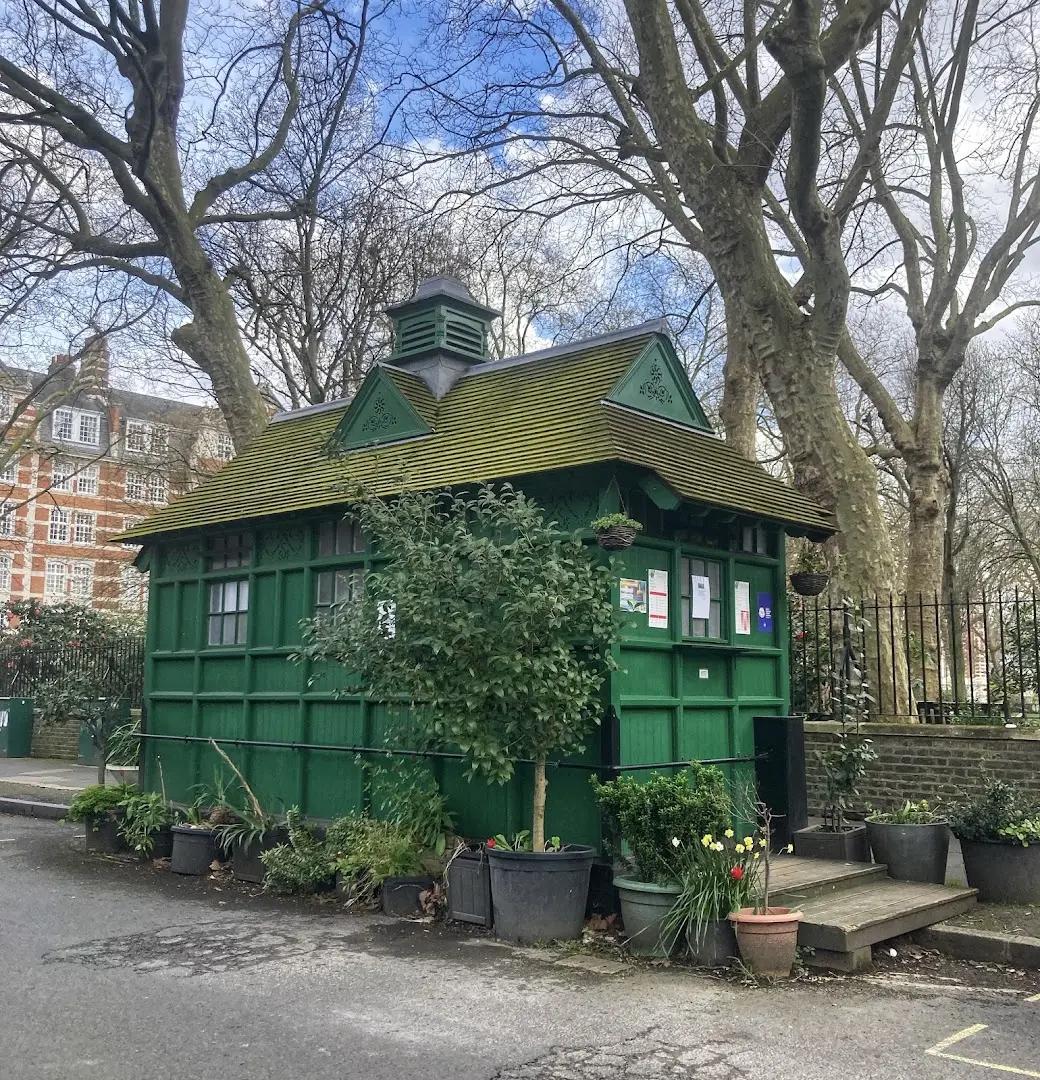
Wellington Place Cabmen’s Shelter
Culture
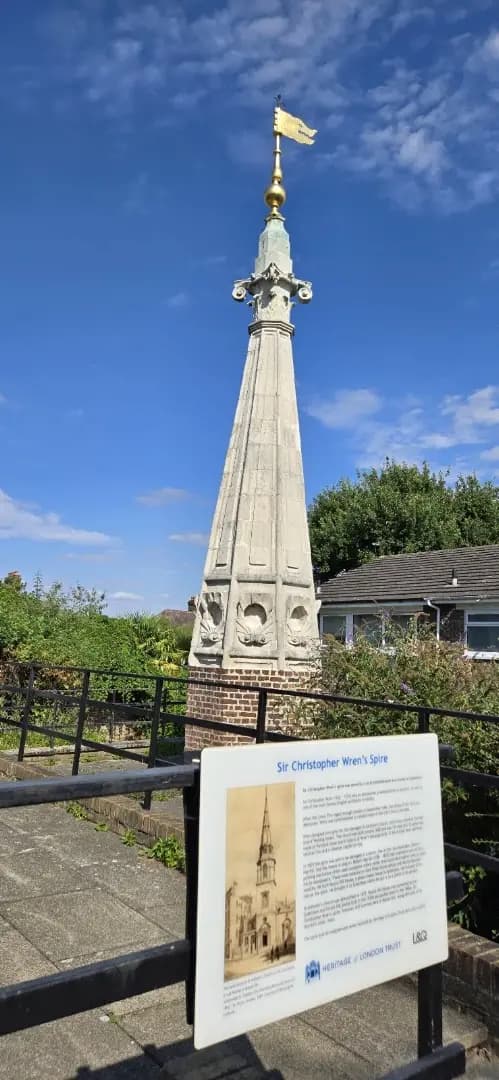
St Antholin's Church Spire
Culture
- I
Isle of Dogs Pumping Station
Canary Wharf · Culture
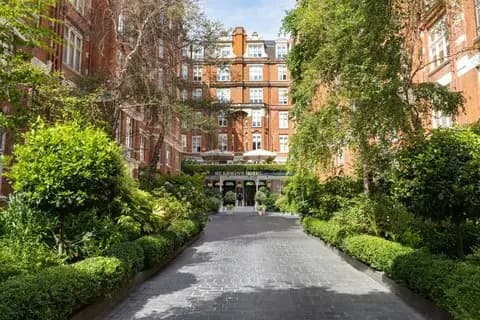
St. Ermin's Hotel, Autograph Collection
Westminster · Stay
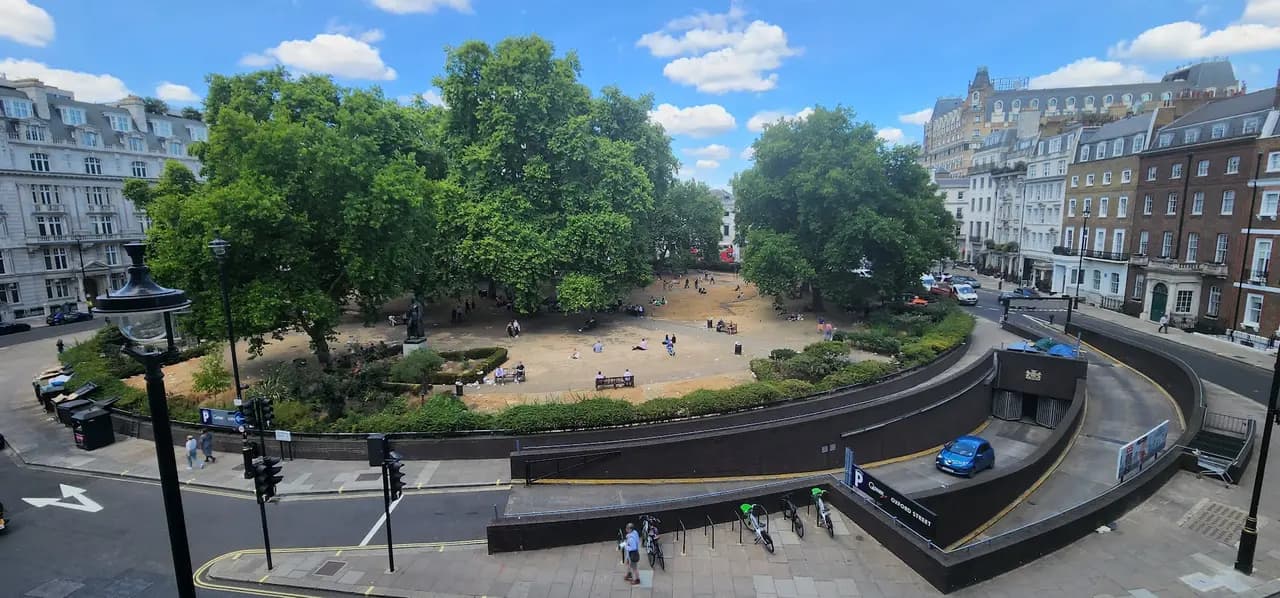
Cavendish Square
Marylebone · Outdoors
- P
Peerless St
Shoreditch · Outdoors
- J
J. M. W. Turner Blue Plaque
Richmond · Culture
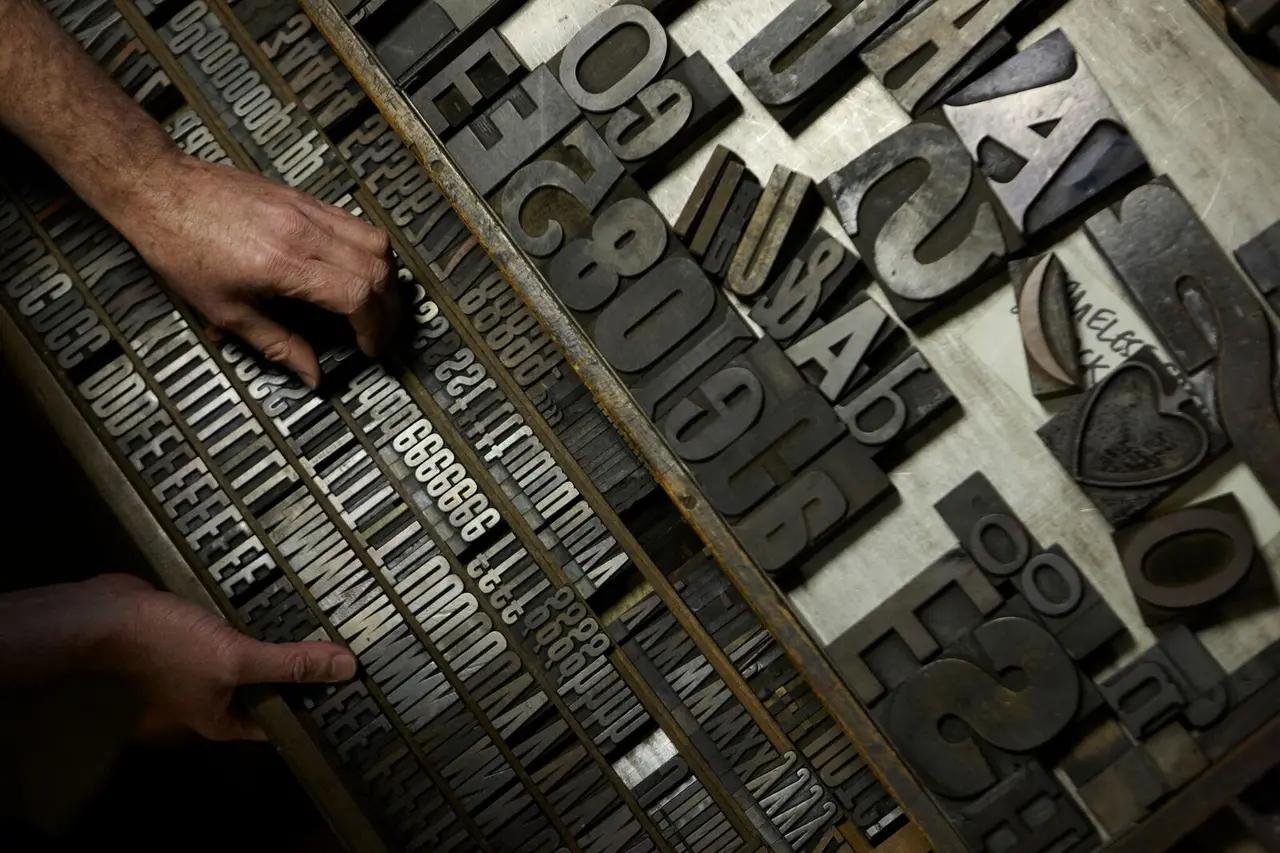
St Bride Foundation
The City of London · Culture
- S
St Pancras Station
Angel · Culture
- G
Gasholder Park
Camden · Outdoors
- V
Victorian Waterpoint
Camden · Culture
- 1
1 Granary Square
Camden · Outdoors
- C
Coal Office Restaurant
Camden · Eat
- G
German Gymnasium
Angel · Eat
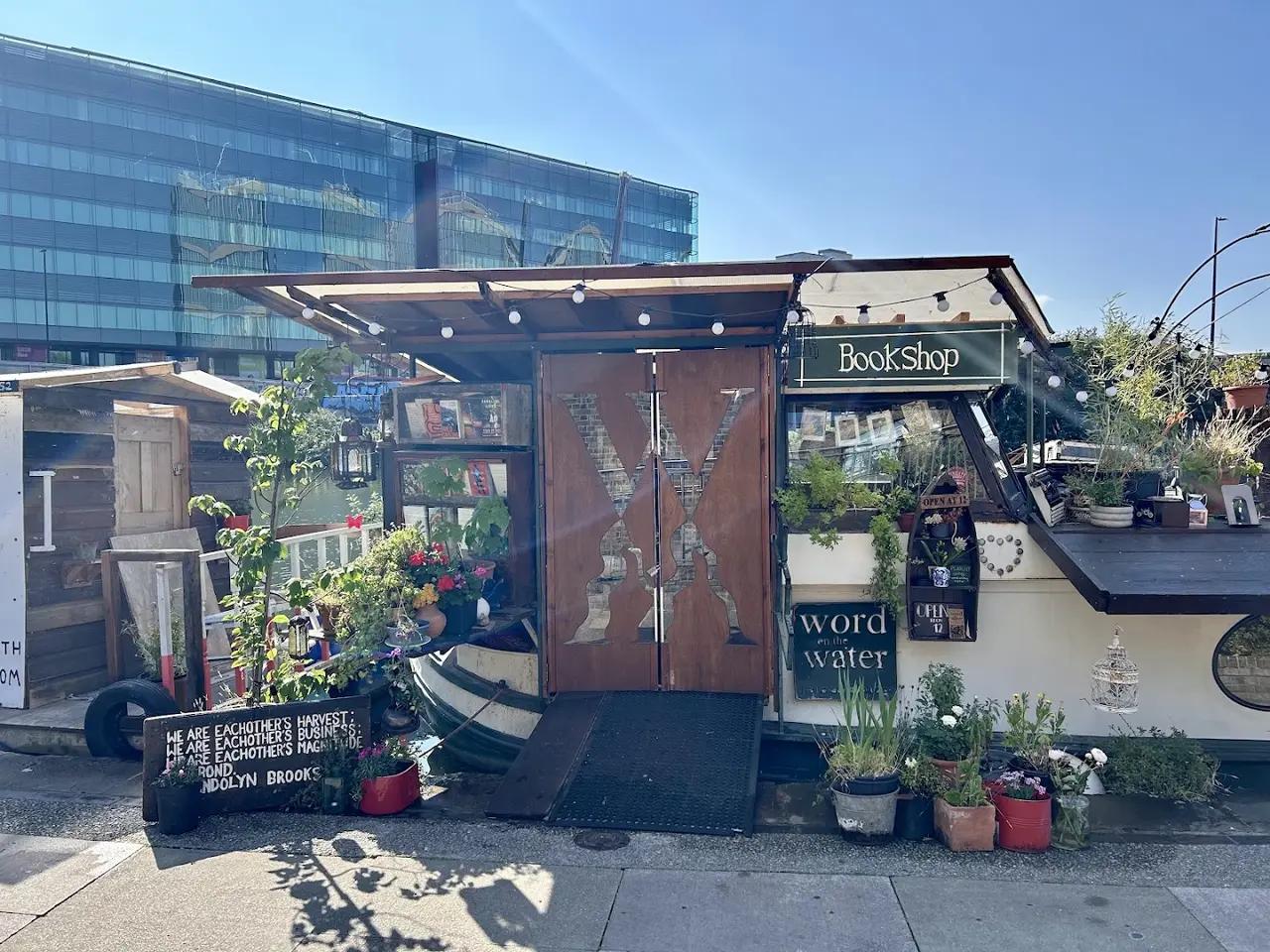
Word On The Water - The London Bookbarge
Angel · Shop
- S
St Pancras Lock
Camden · Outdoors
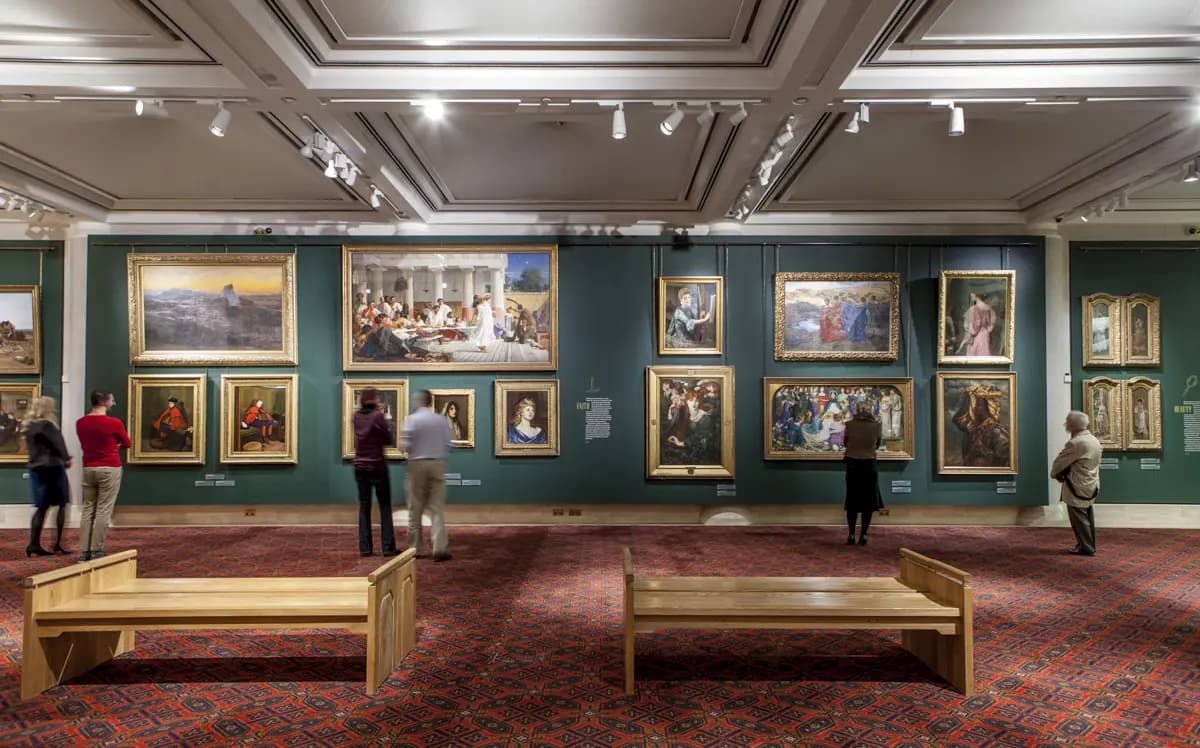
Guildhall Art Gallery
The City of London · Culture
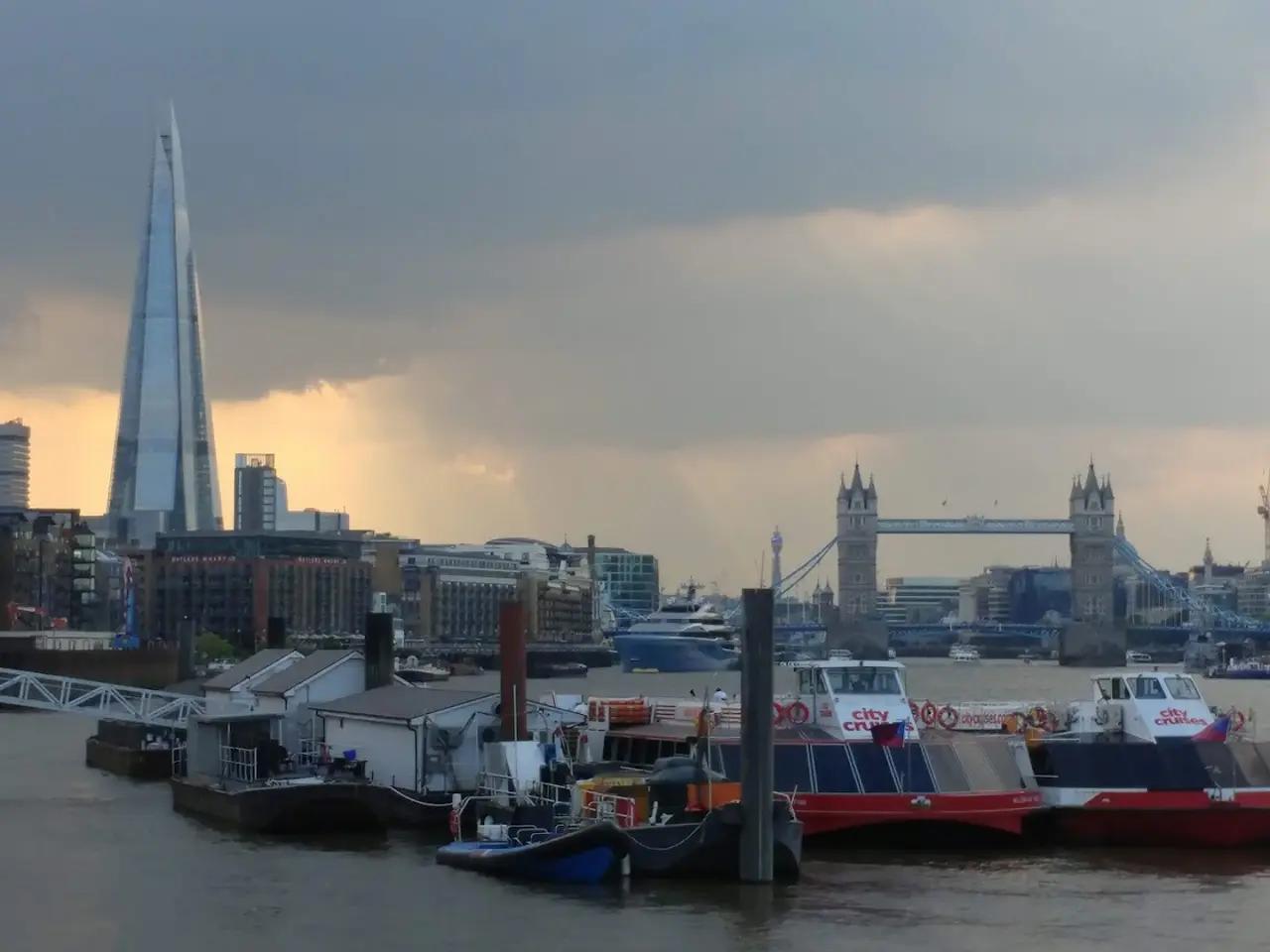
Bermondsey Wall E
Bermondsey · Culture
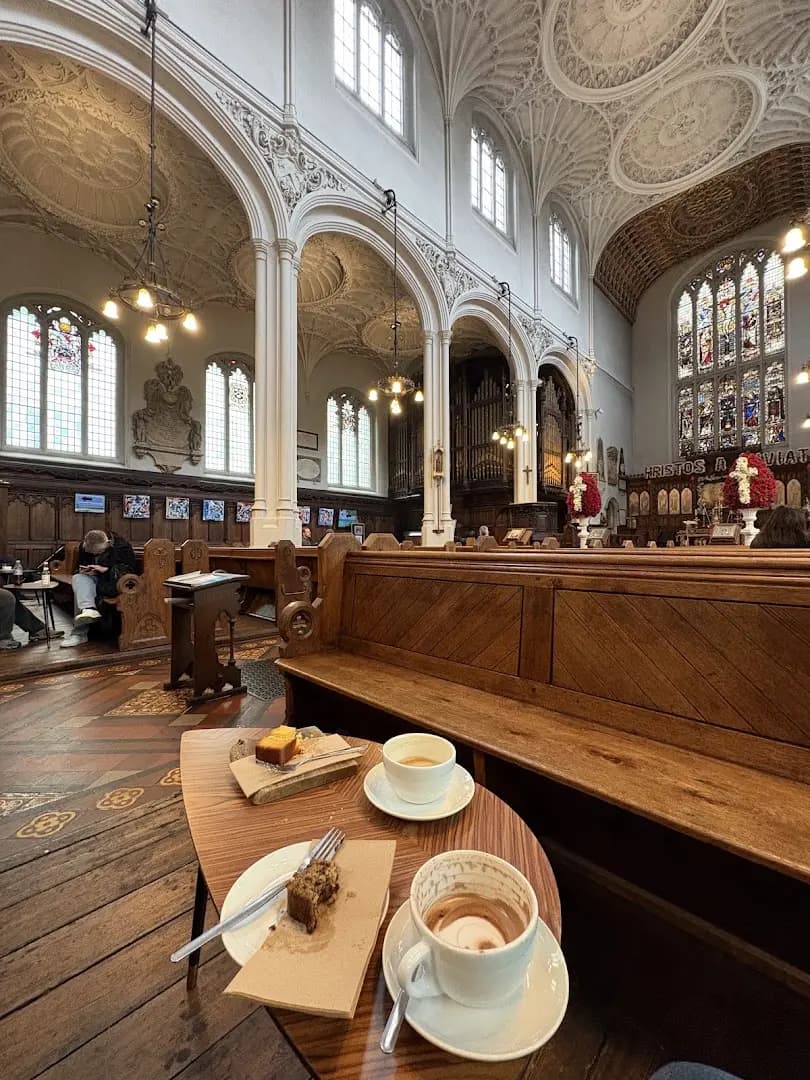
Host Café
The City of London · Eat
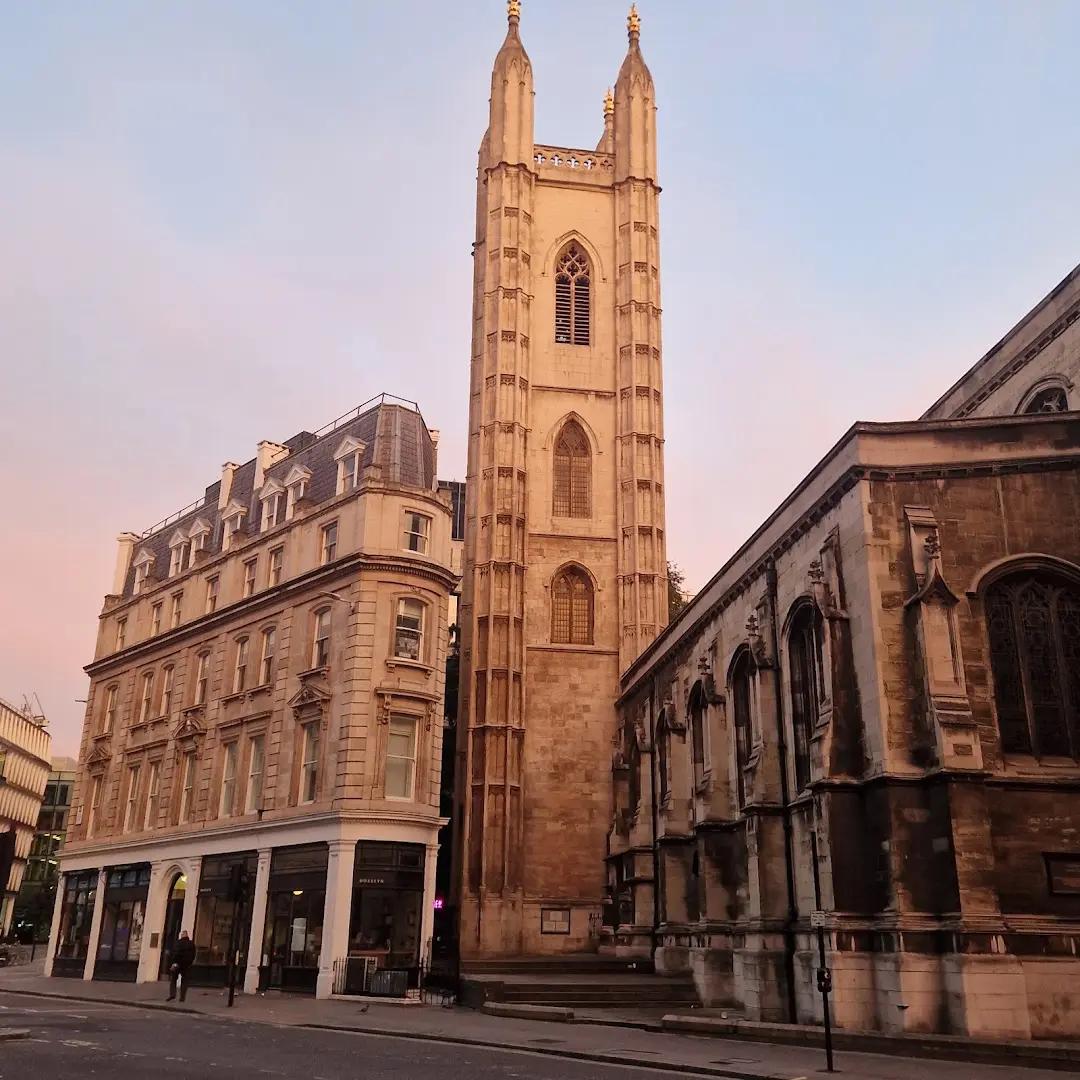
St Mary Aldermary
The City of London · Culture
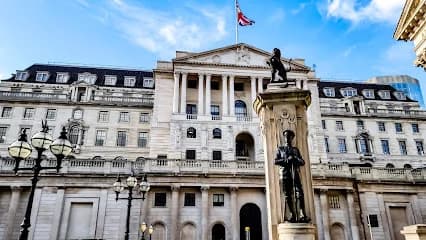
Bank of England Museum
The City of London · Culture
- F
Friends of Kingswood House
Culture
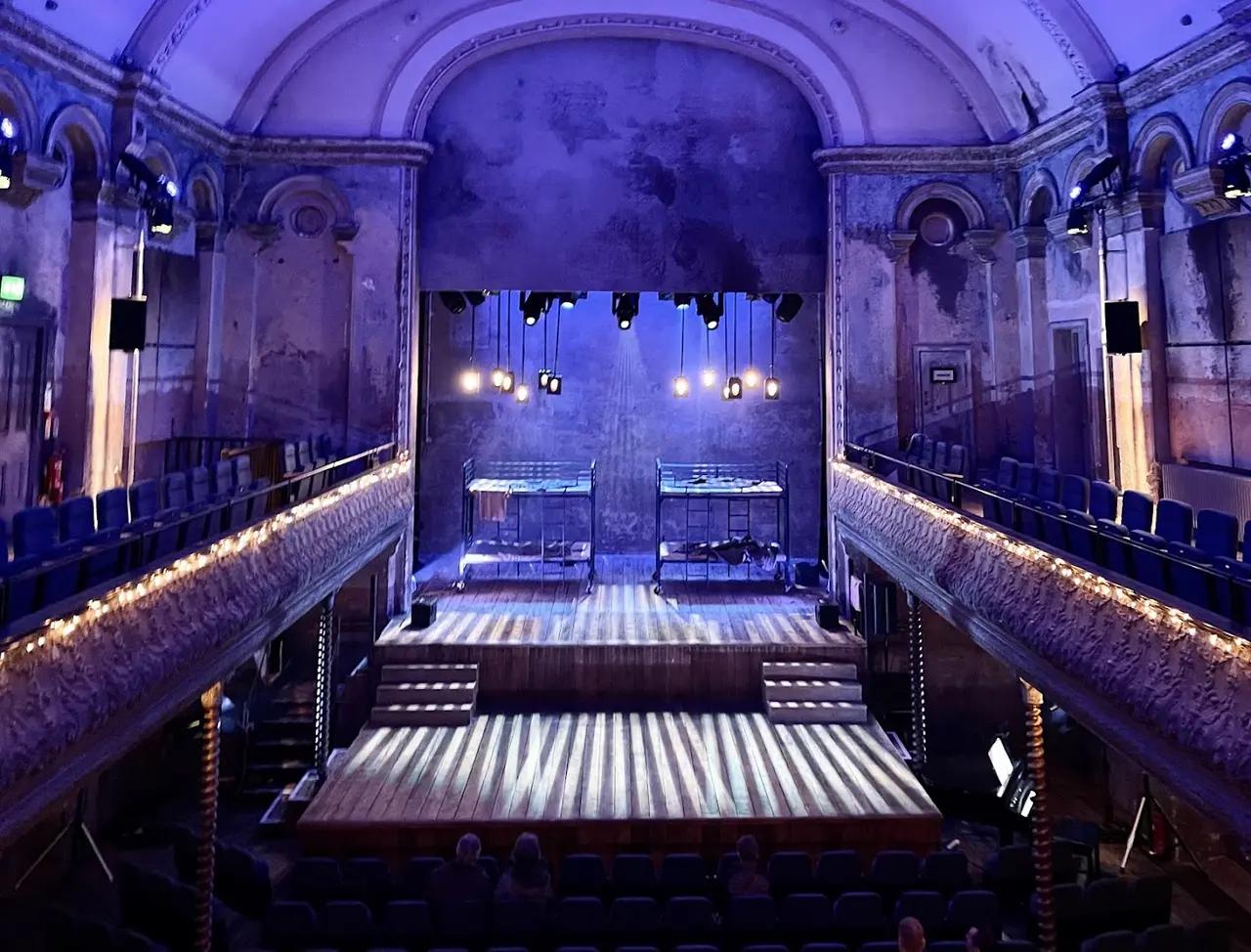
Wilton's Music Hall
Whitechapel · Culture
- T
Tower Hill
The City of London · Culture
Just outside Tower Hill Station there is an artwork with a sneaky political message hidden in it… 👀 #london #londonhistory #livinglondonhistory #towerhill #cityoflondon #toweroflondon #londontravel #londontrip #hiddenlondon #secretlondon #margaretthatcher #londonart #londonsculpture
- G
Gatehouse Lincoln's Inn
Holborn · Culture
- G
Gutter Ln
The City of London · Culture
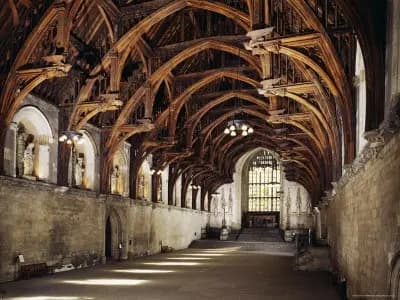
Westminster Hall
Westminster · Culture
- M
Mincing Ln.
The City of London · Culture
- L
Leather Ln
Holborn · Eat
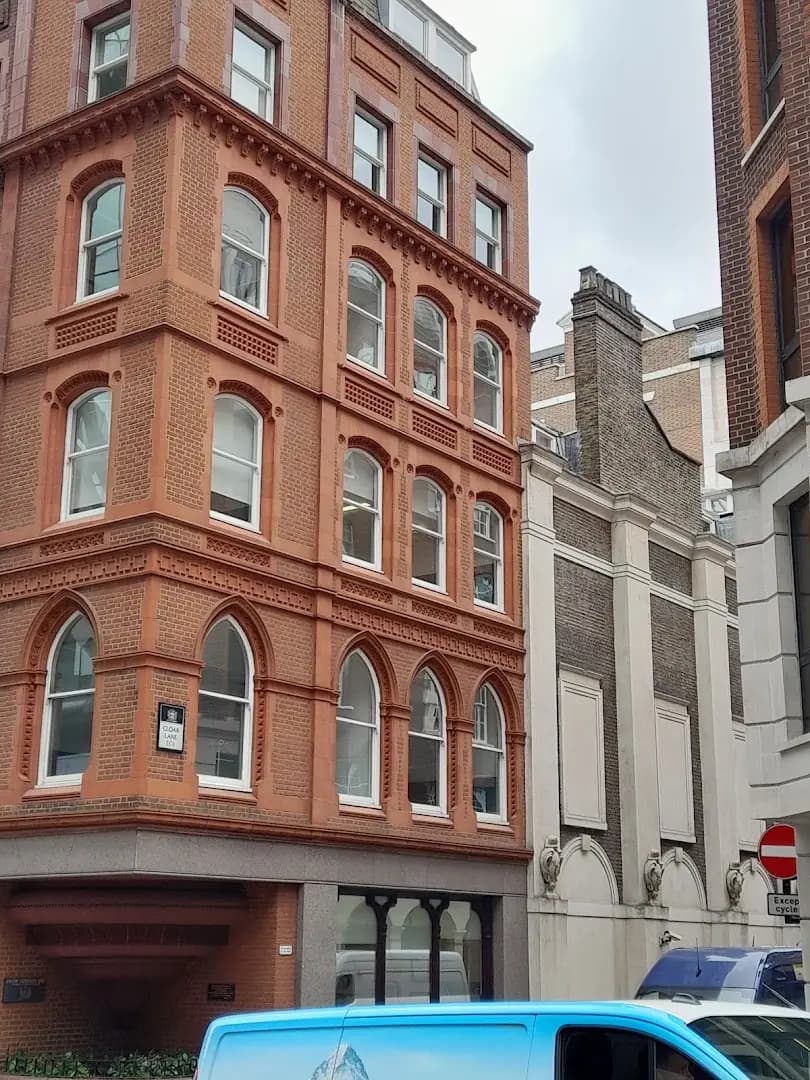
Cloak Ln
The City of London · Culture
- S
Shoe Ln
Holborn · Culture
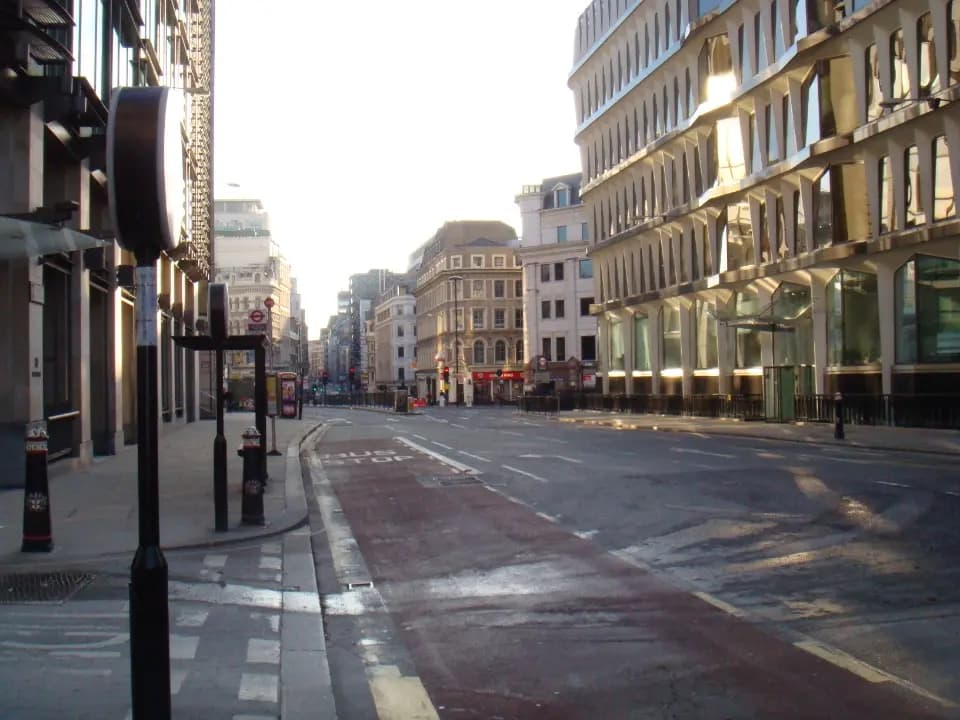
Cannon St
The City of London · Culture
- L
Little Britain
The City of London · Culture
- T
Trump St
The City of London · Culture
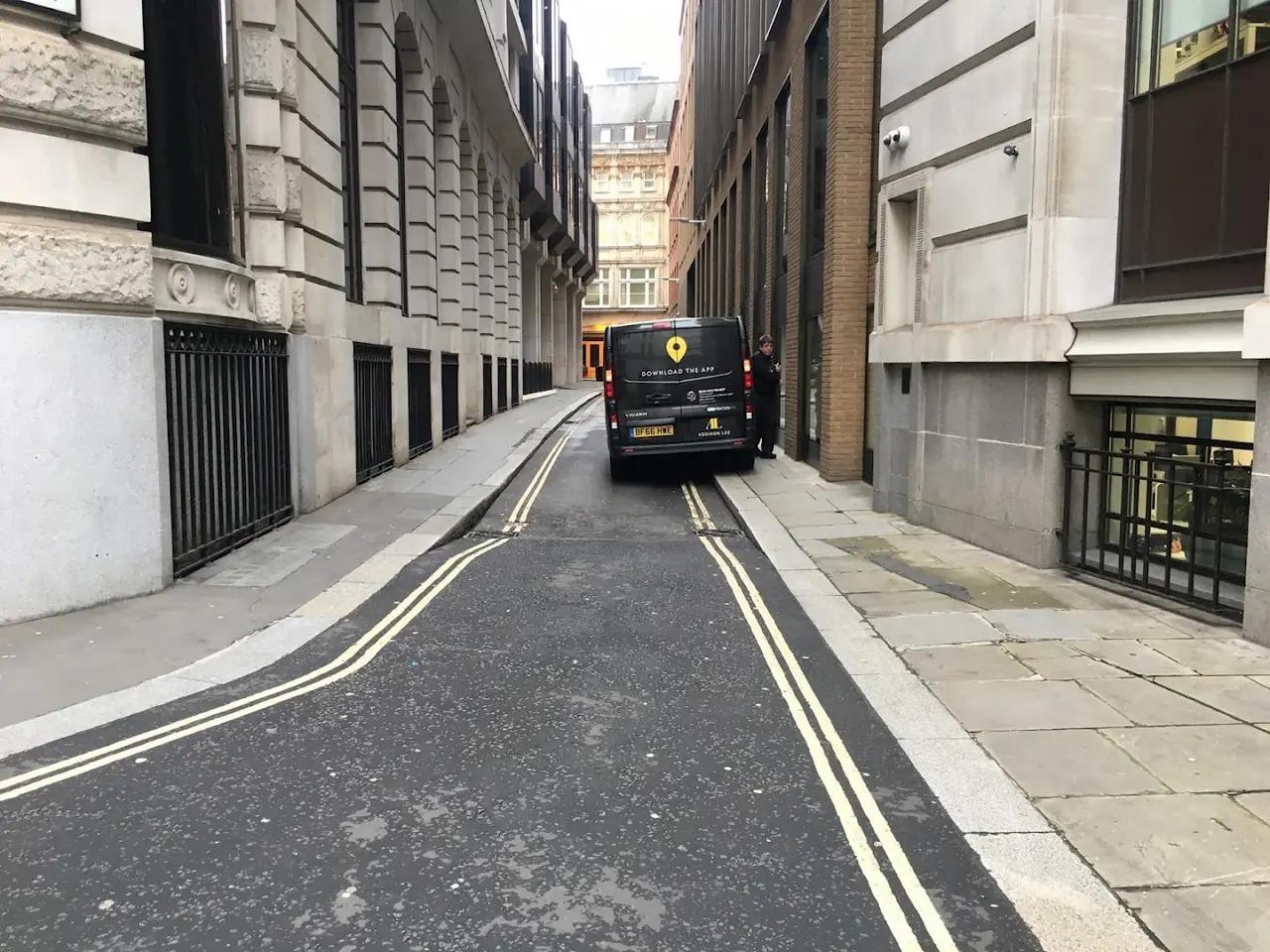
Sherborne Ln
The City of London · Culture
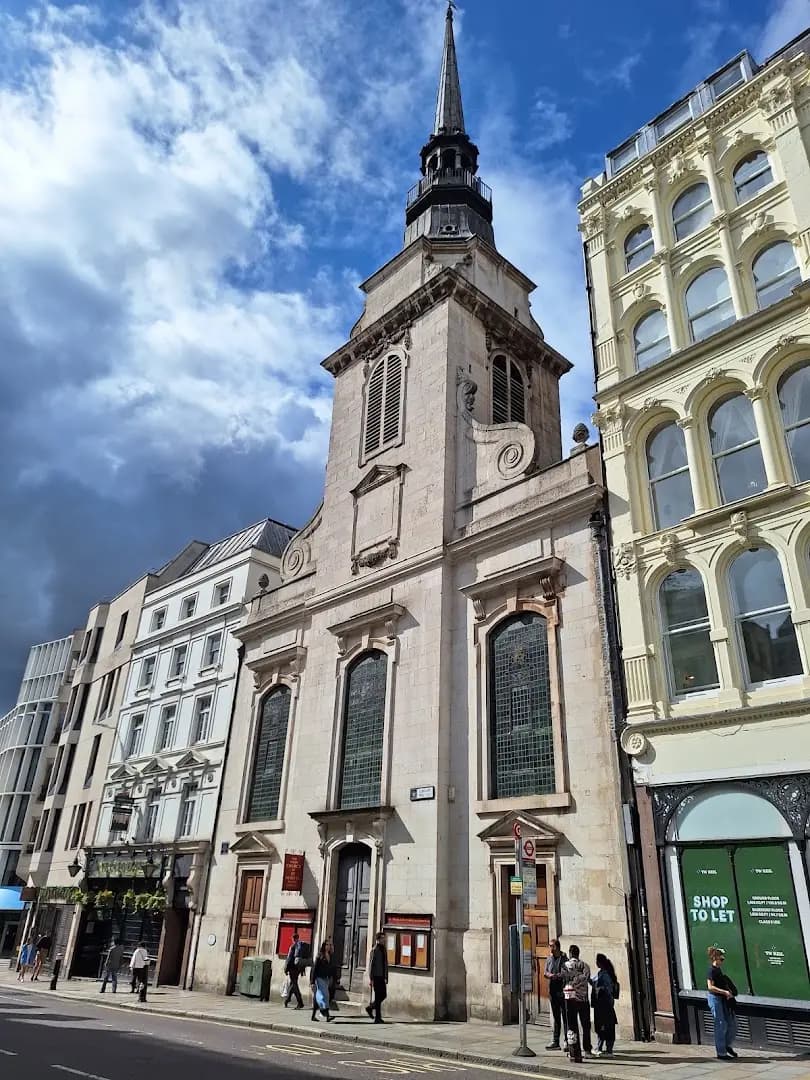
St Martin Ludgate
The City of London · Culture
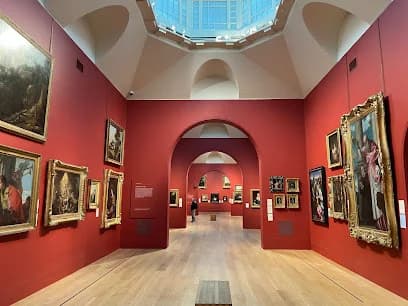
Dulwich Picture Gallery
Culture
- C
Cable Street Mural
Whitechapel · Culture
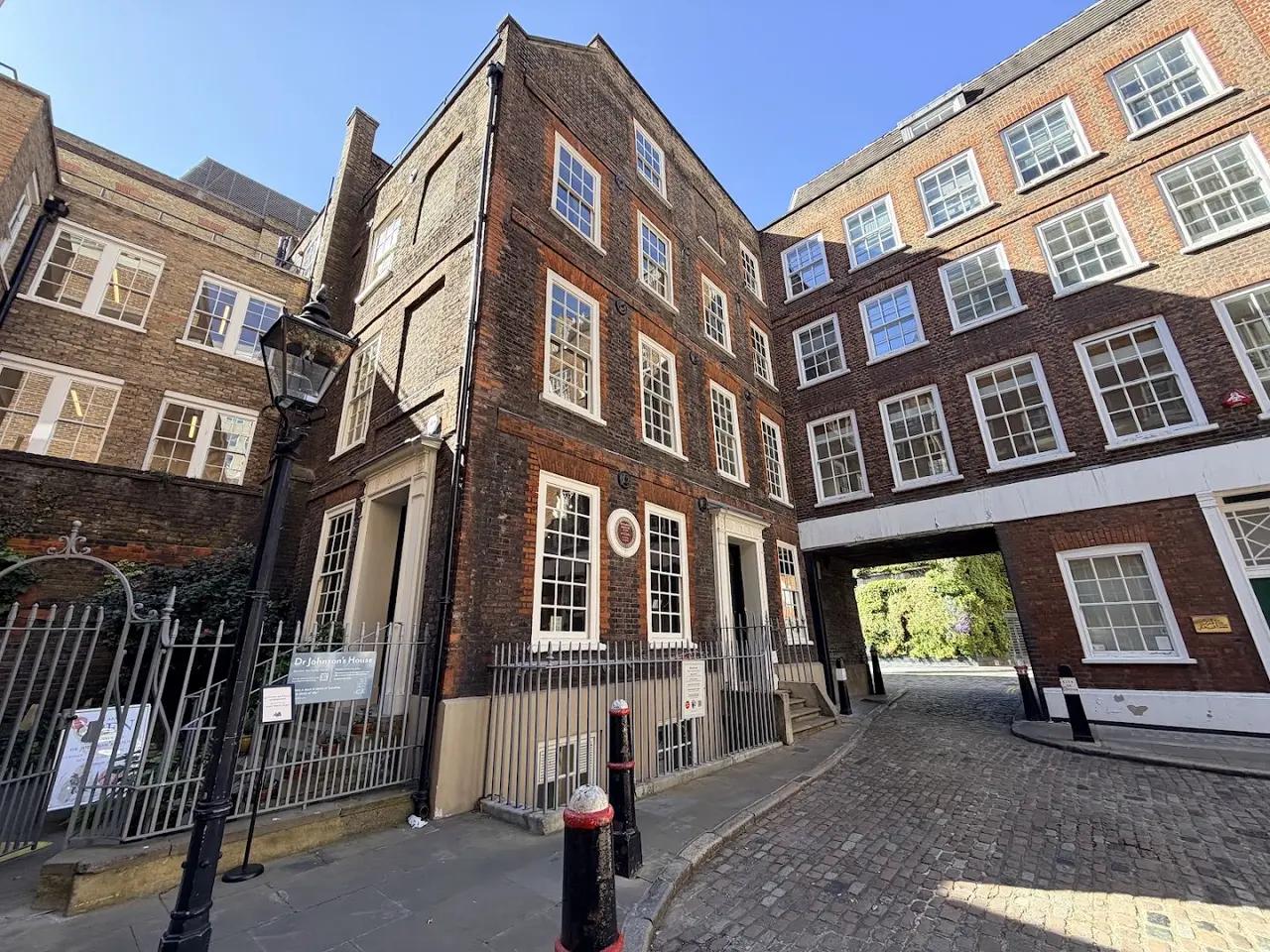
Dr Johnson's House
Holborn · Culture
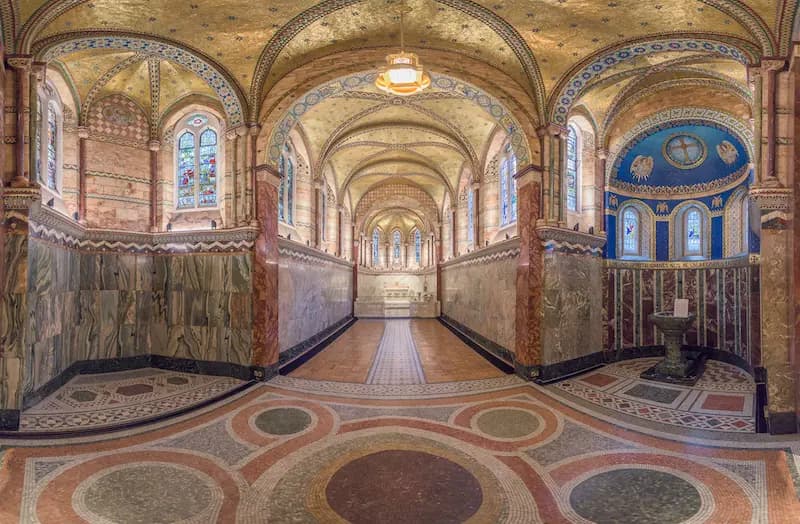
Fitzrovia Chapel
Fitzrovia · Culture
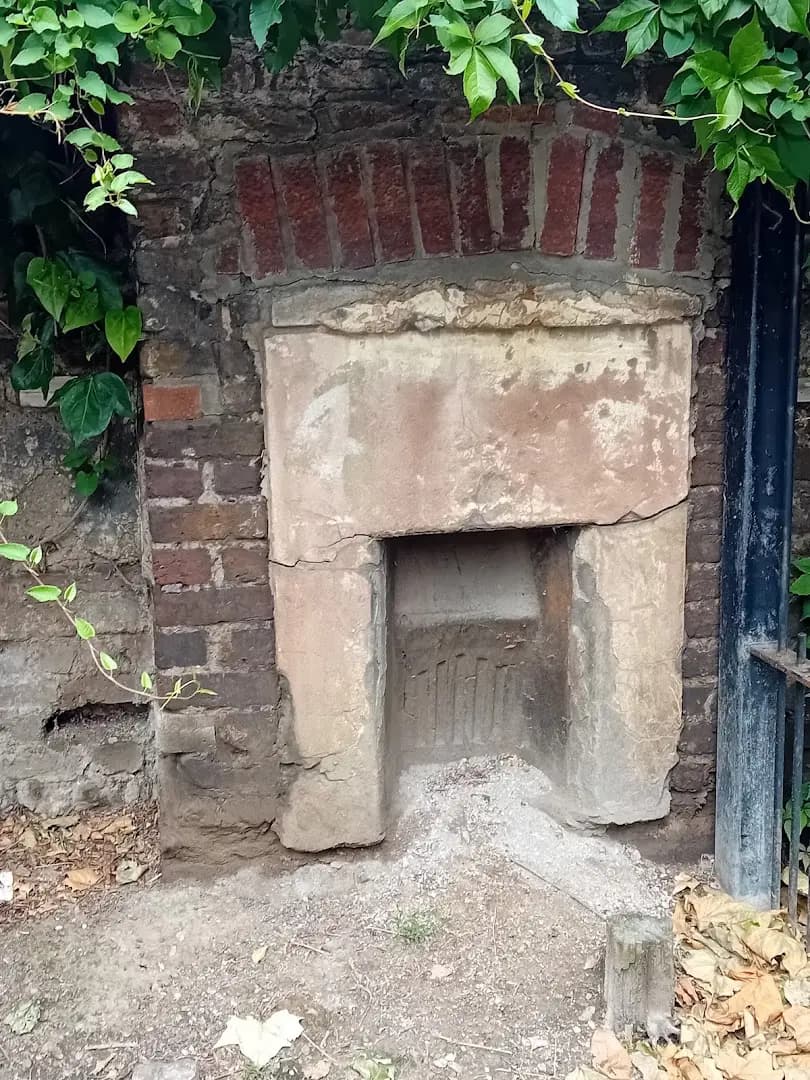
Vincent Street Fireplace
Westminster · Culture
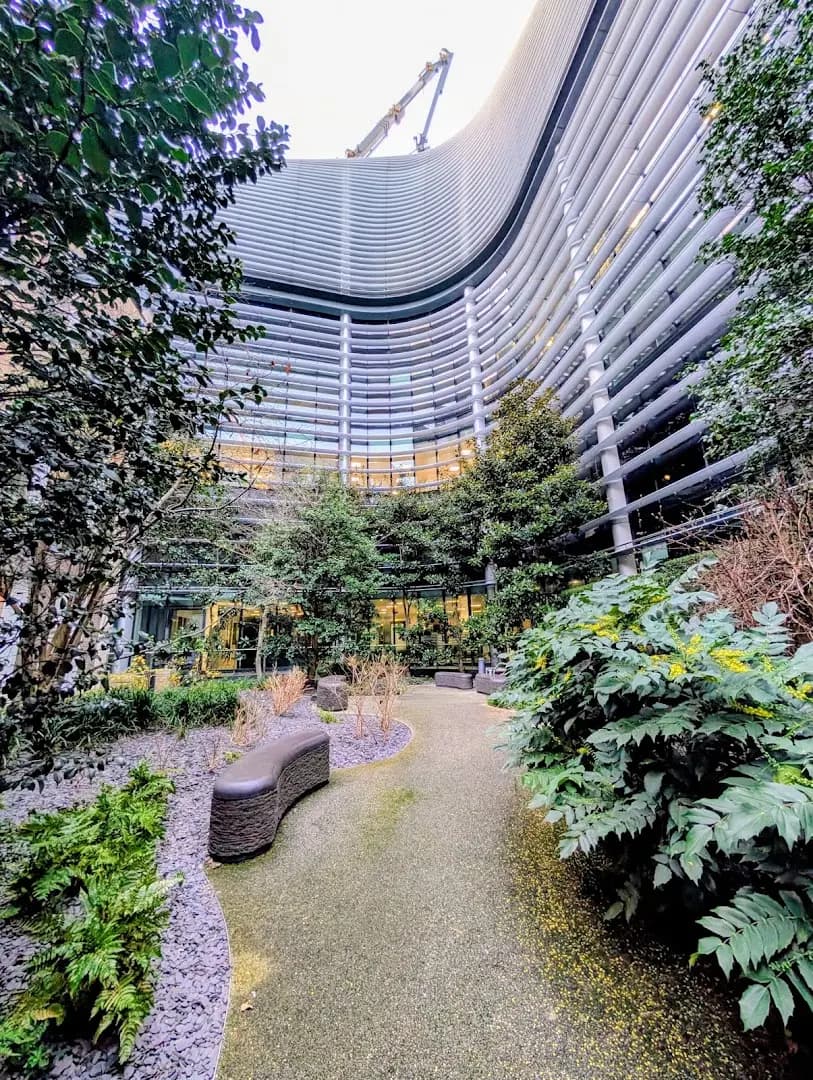
St Swithin's Church Garden
The City of London · Outdoors
- L
London's Roman Amphitheatre
The City of London · Culture
- I
Ironmongers' Hall
The City of London · Culture
- B
Brewers' Hall
The City of London · Culture
- C
Coopers' Hall
Shoreditch · Culture
- P
Plaisterers' Hall
The City of London · Culture
- S
St Olave Silver Street
The City of London · Culture
- O
Old Hall
Holborn · Culture
- L
Lincoln’s Inn Chapel
Holborn · Culture
- S
Stone Buildings
Holborn · Culture
- F
Foreign, Commonwealth & Development Office
Westminster · Culture
- T
The Cornhill Water Pump
The City of London · Culture

Chartered Accountants Hall
The City of London · Culture
- G
Goldsmiths' Hall
The City of London · Culture
- E
Egyptian Avenue
Highgate · Culture
- Q
Queenhithe Mosaic
The City of London · Culture
- N
National Trust - Sutton House and Breaker's Yard
Hackney · Culture
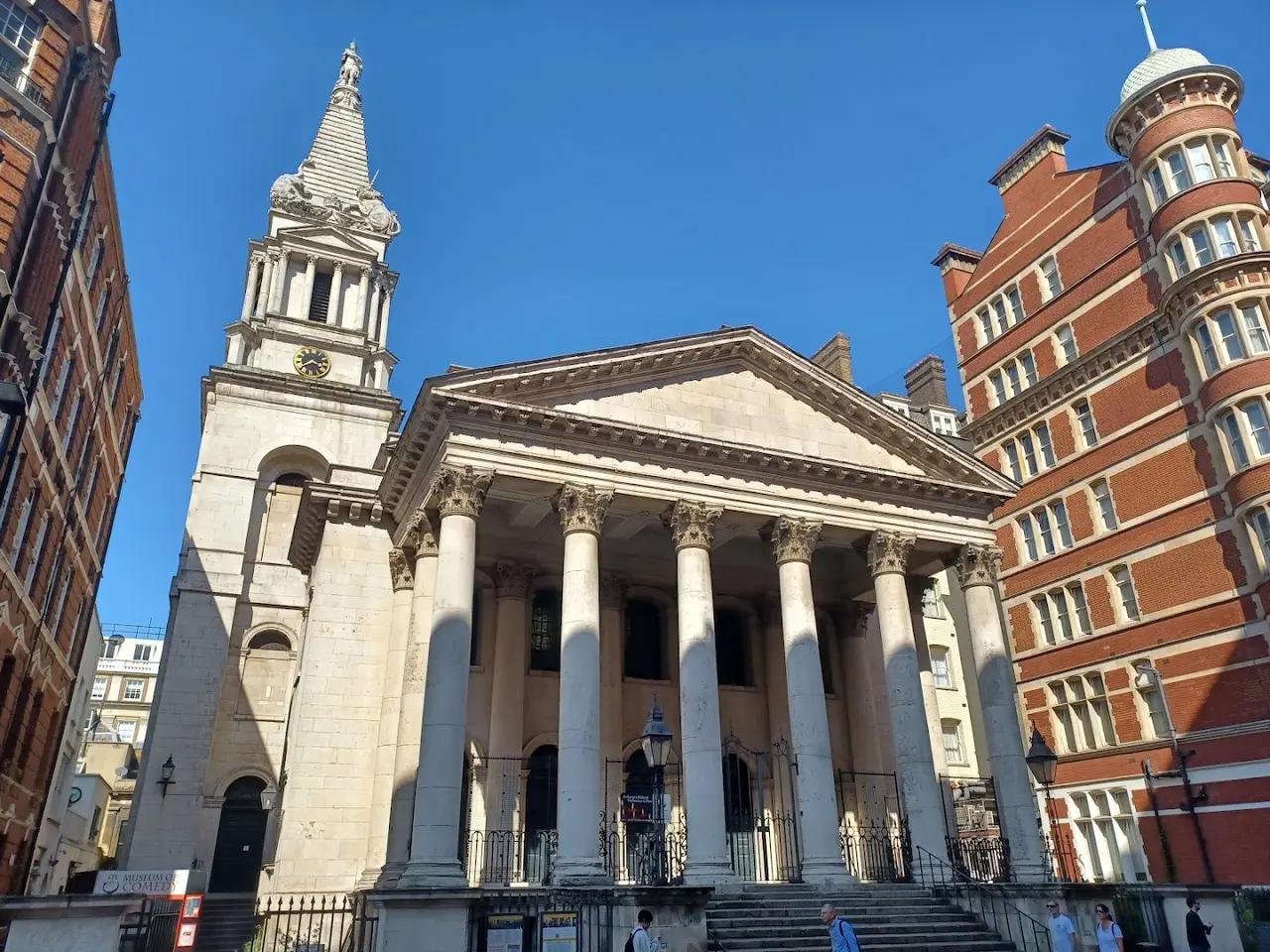
St George's Bloomsbury
Holborn · Culture
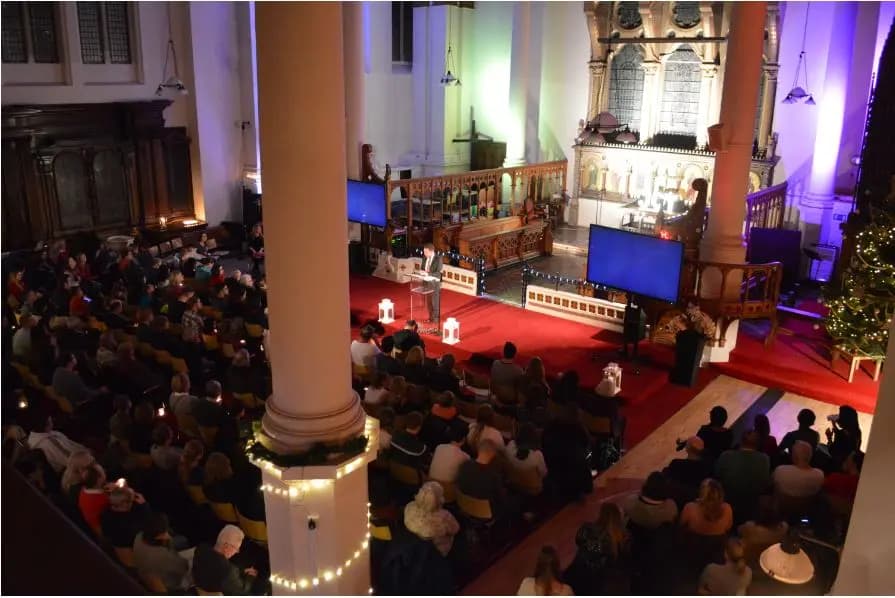
St George the Martyr Church
Holborn · Culture
- S
St. George's Gardens
Holborn · Outdoors
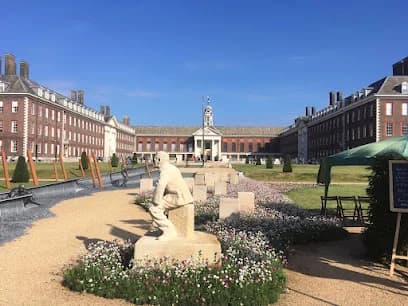
Royal Hospital Chelsea
Sloane Square · Culture
- S
Staple Inn
Holborn · Outdoors
What has this building seen over the centuries? A survivor of bombs, fire and development, in Holborn you can find a brilliant remnant of Tudor period. Staple Inn started life as a wool market, with the current building having been constructed in 1585 as an 'Inn of Chancery', a place for law students to stay, learn and work. The facade is the only in tact bit left from the 16th century as the Tudor hall behind was destroyed by a V1 flying bomb in 1944, although some of the original timbers were used in the reconstruction. . . . . . #london #londonhistory #livinglondonhistory #tudorhistory #thetudors #tudorarchitecture #tudorlondon #londontravel #londontrip #holborn #cityoflondon #secretlondon
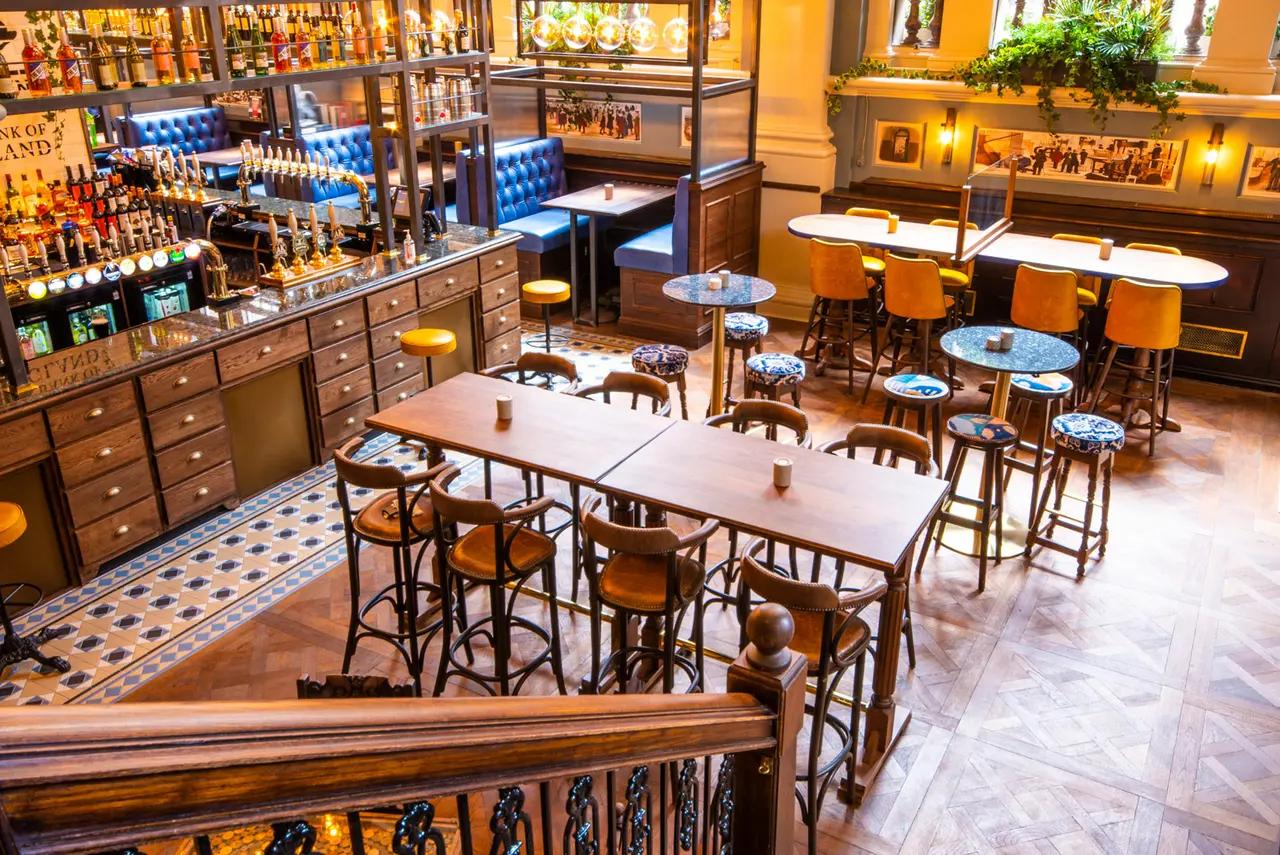
Old Bank of England
Holborn · Drink
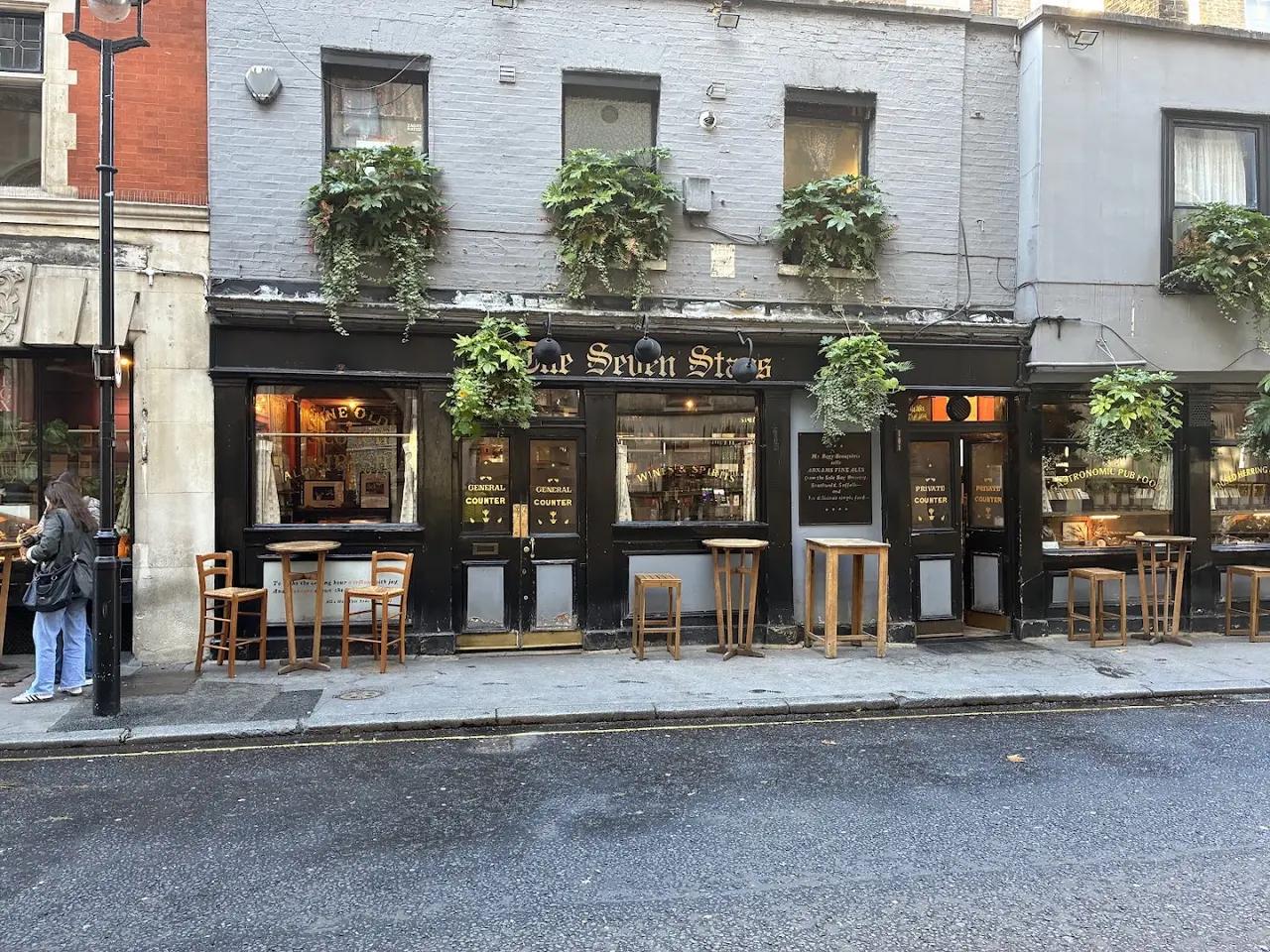
The Seven Stars
Holborn · Drink
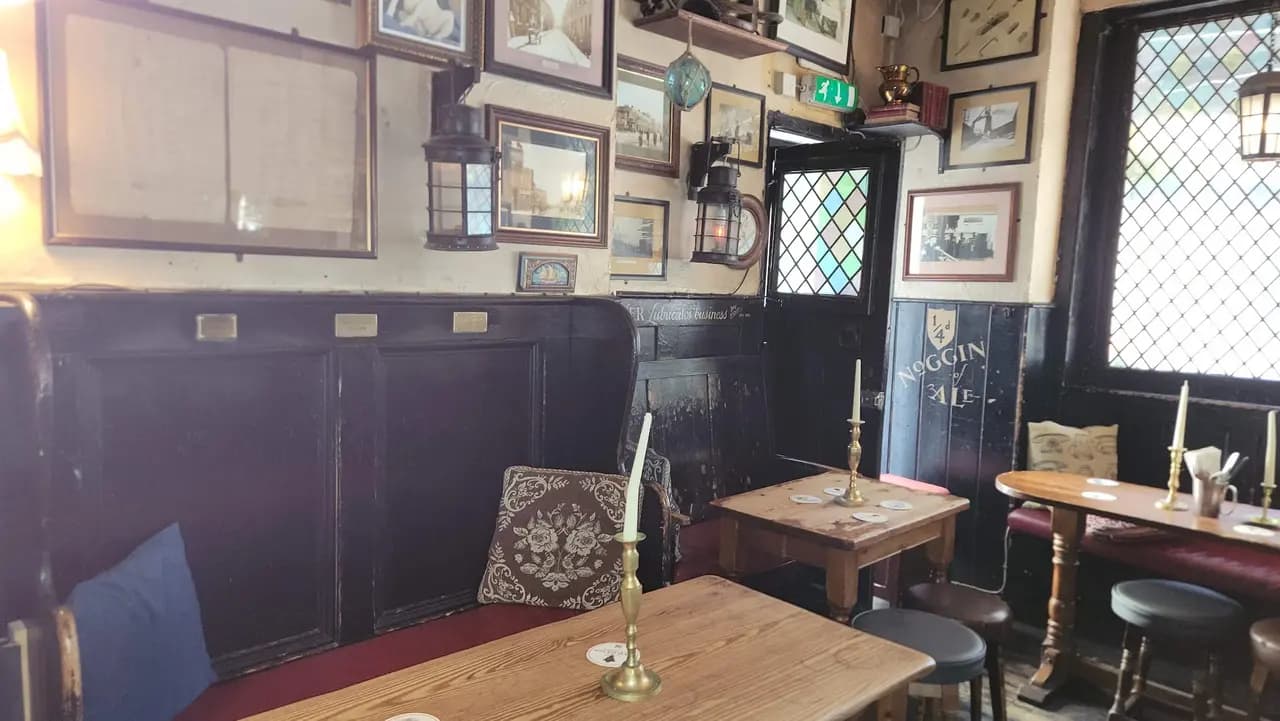
The Mayflower
Drink
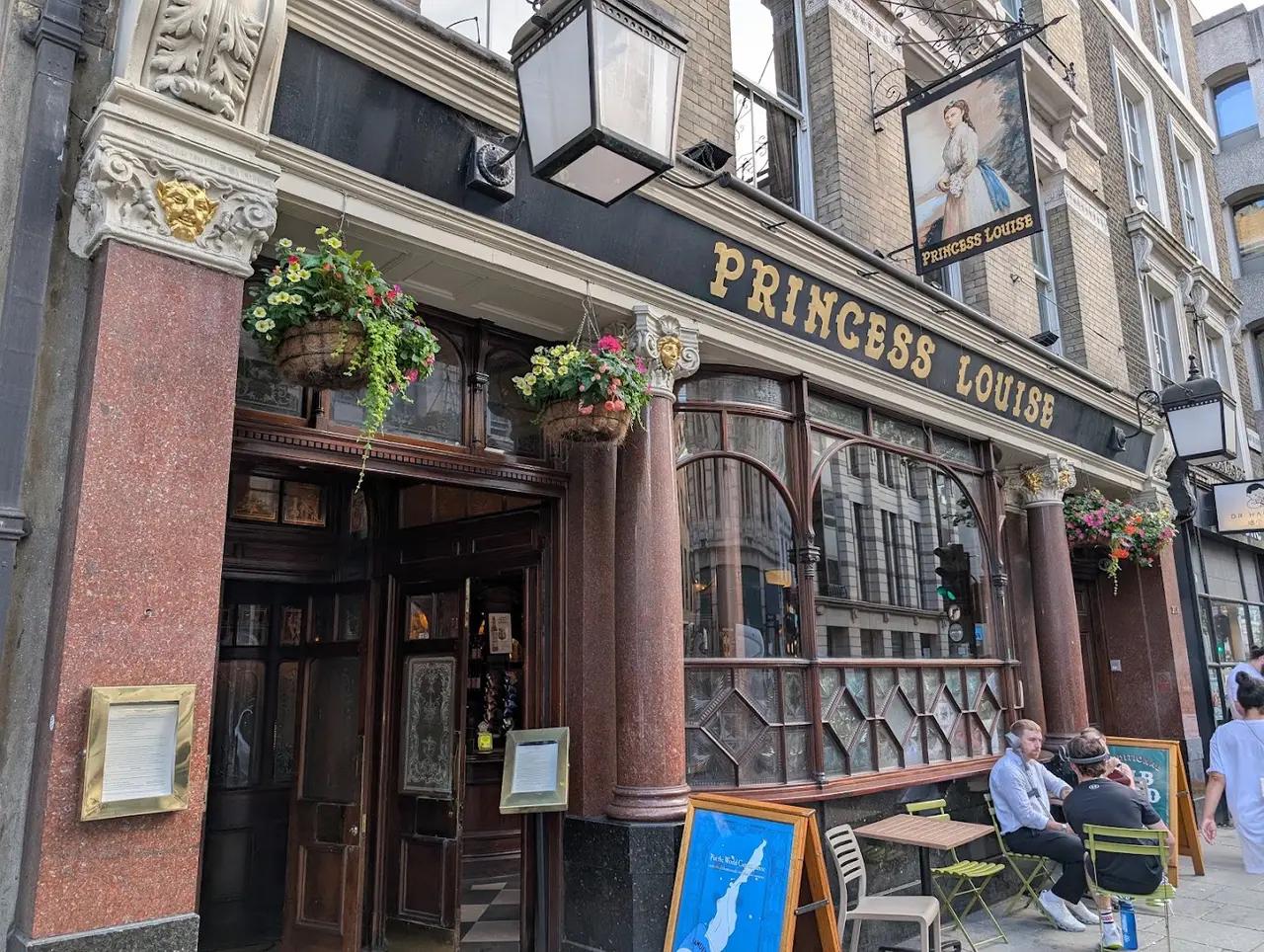
Princess Louise
Holborn · Drink
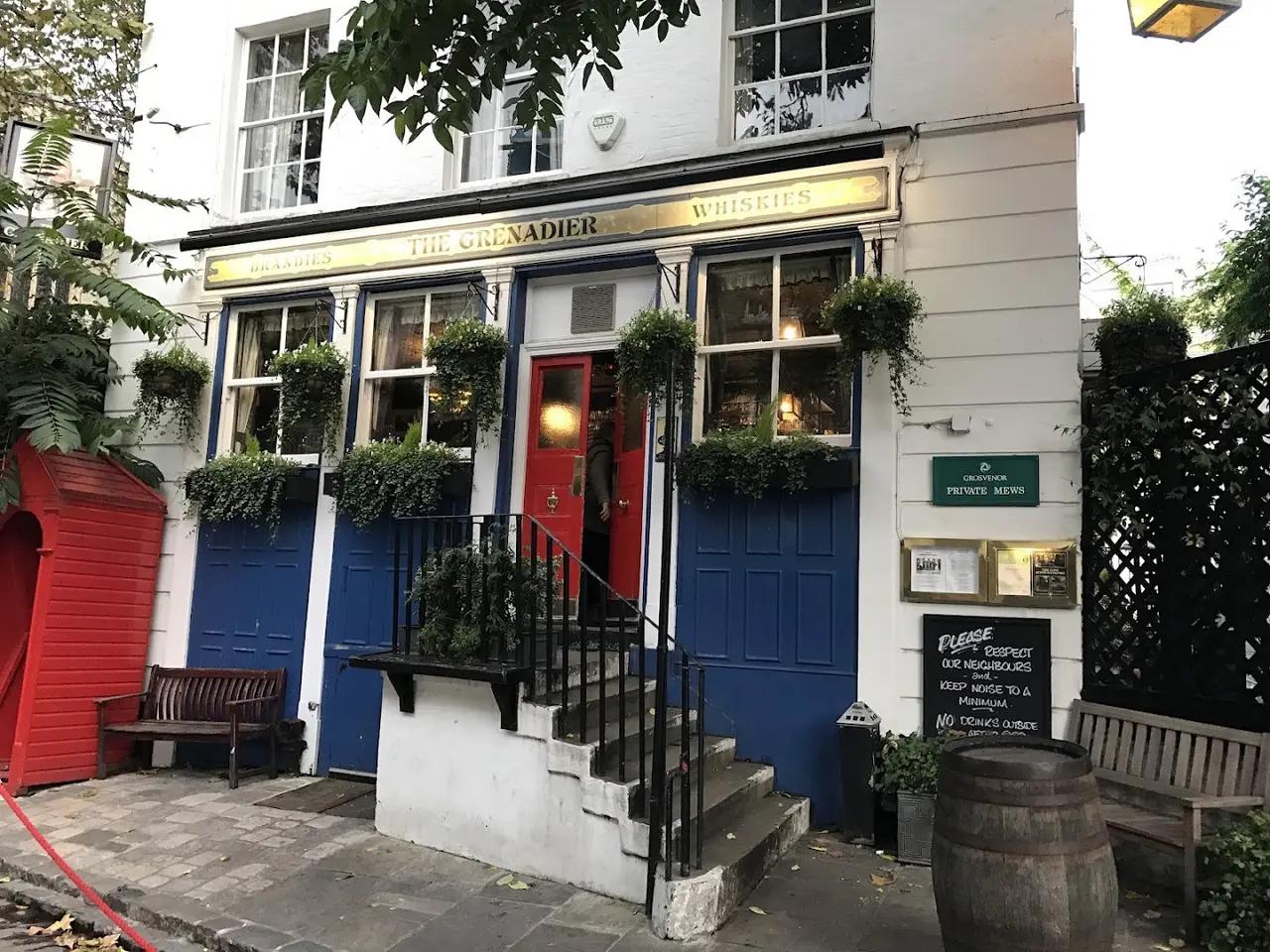
The Grenadier
Knightsbridge · Drink
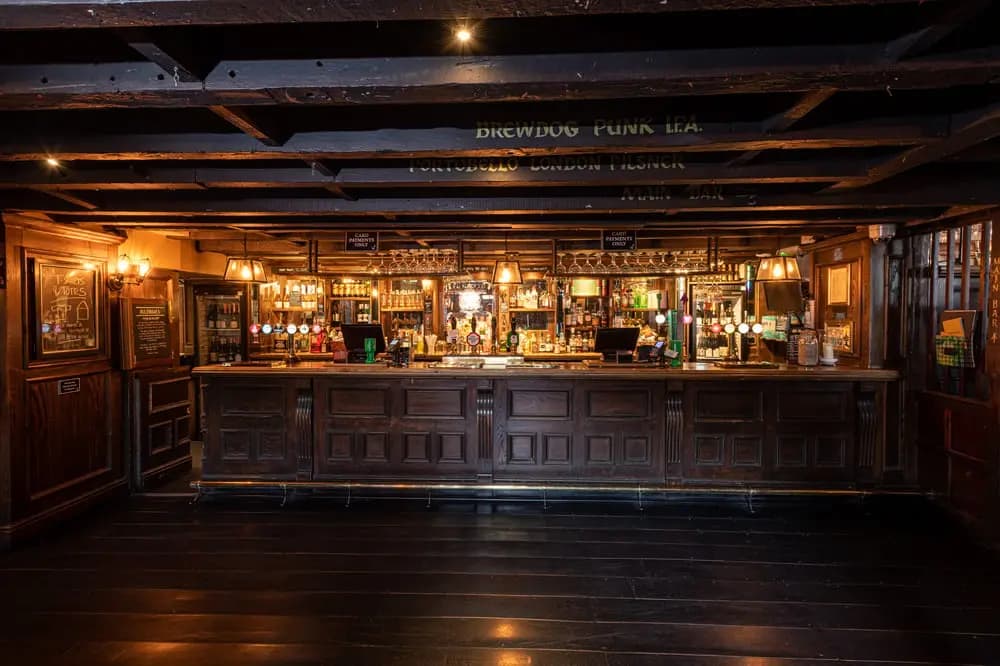
Anchor Bankside
The City of London · Drink
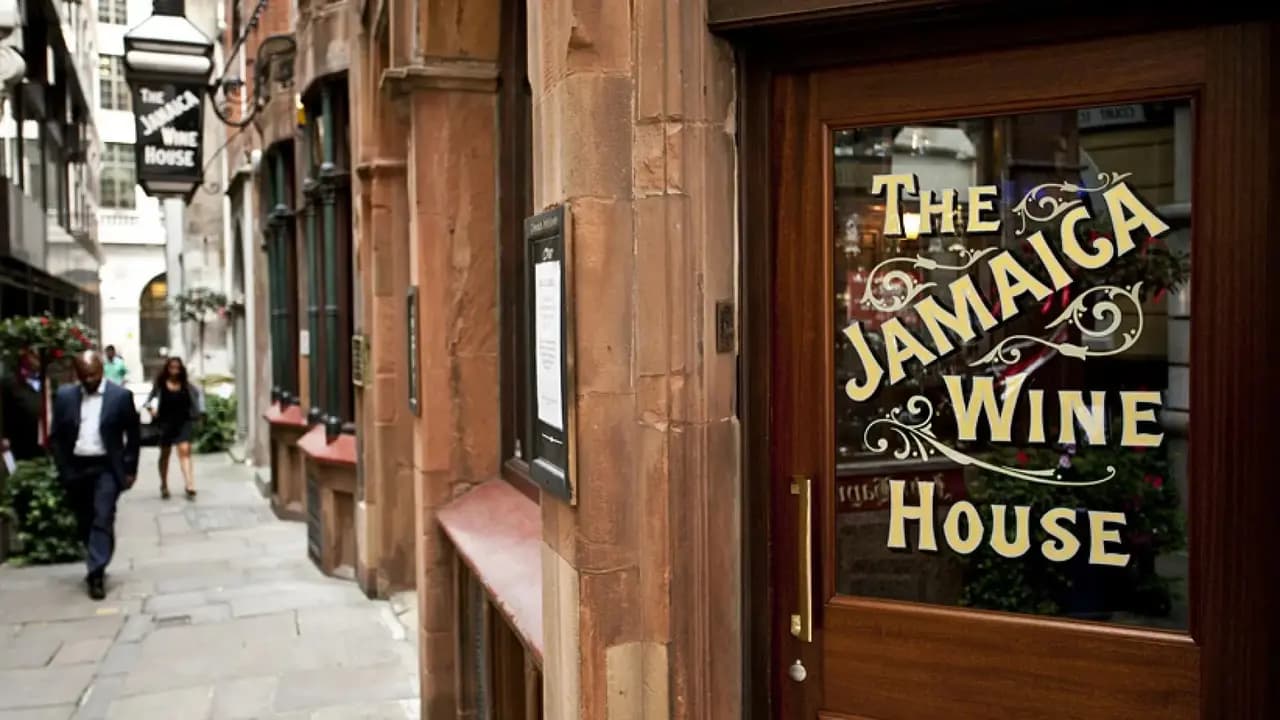
Jamaica Wine House
The City of London · Drink
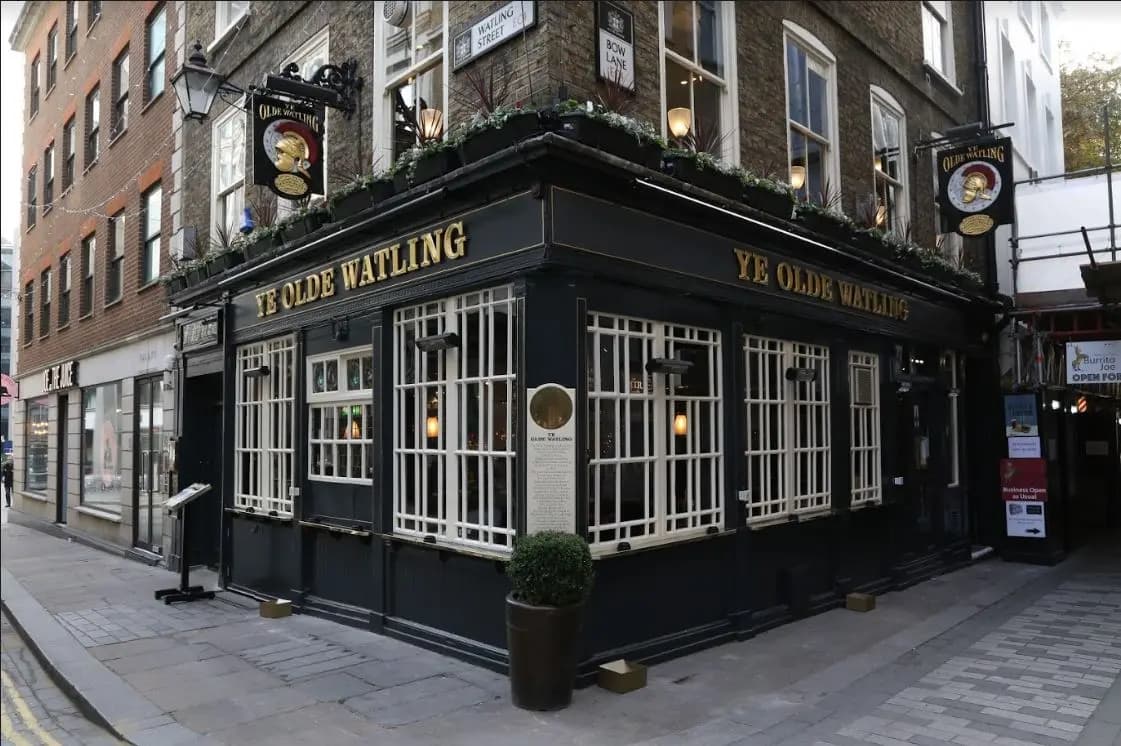
Ye Olde Watling
The City of London · Drink
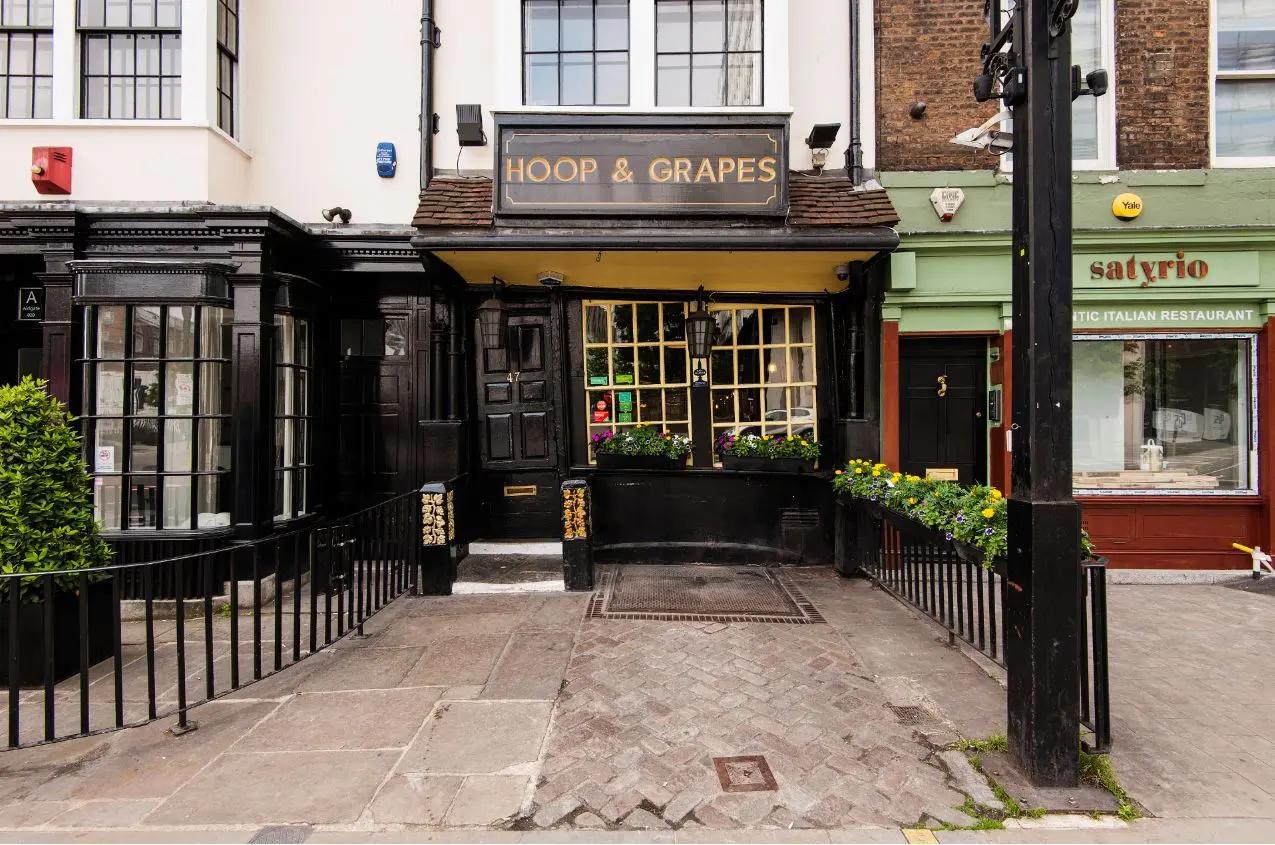
The Hoop and Grapes
Whitechapel · Drink
- H
Hanseatic Walk
The City of London · Outdoors
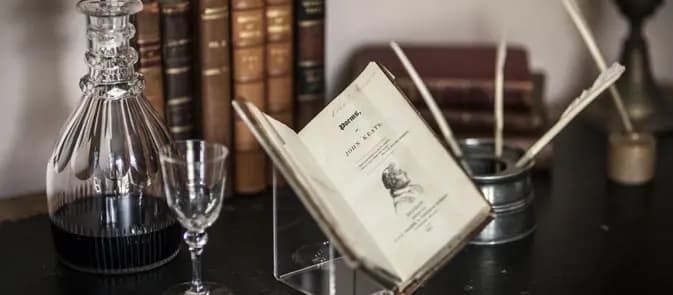
Keats House
Hampstead · Culture
- F
Fen Court Garden
The City of London · Outdoors
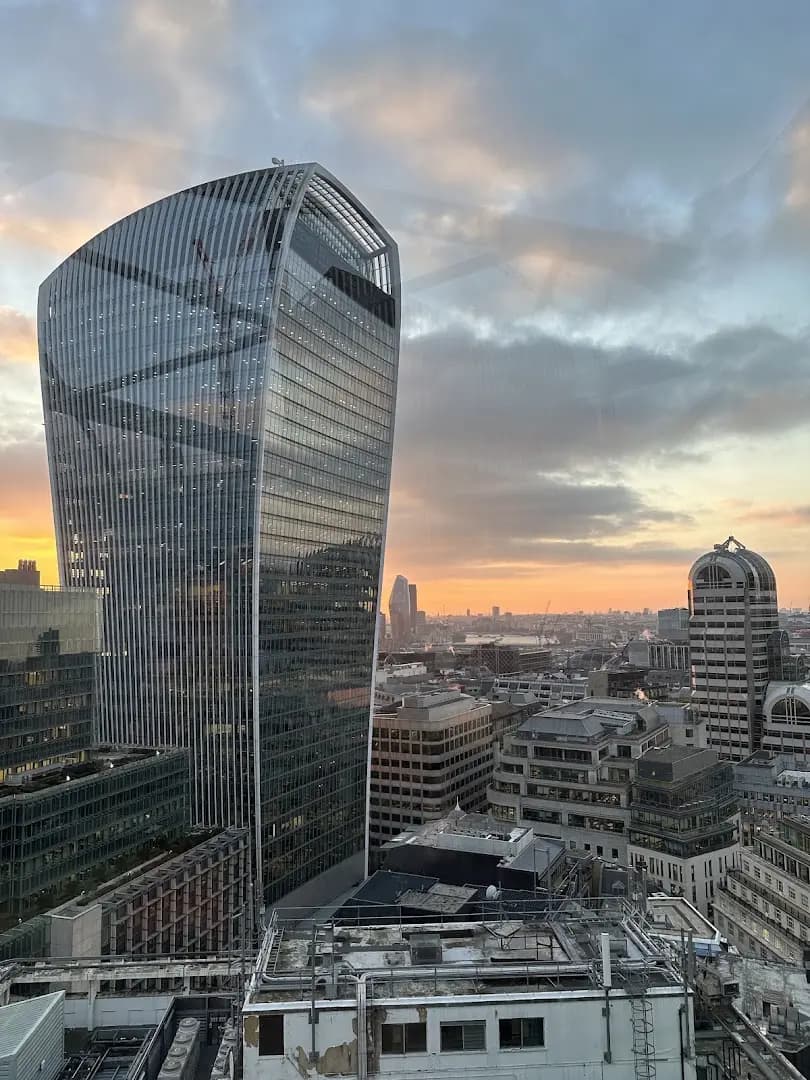
Fen Court
The City of London · Outdoors
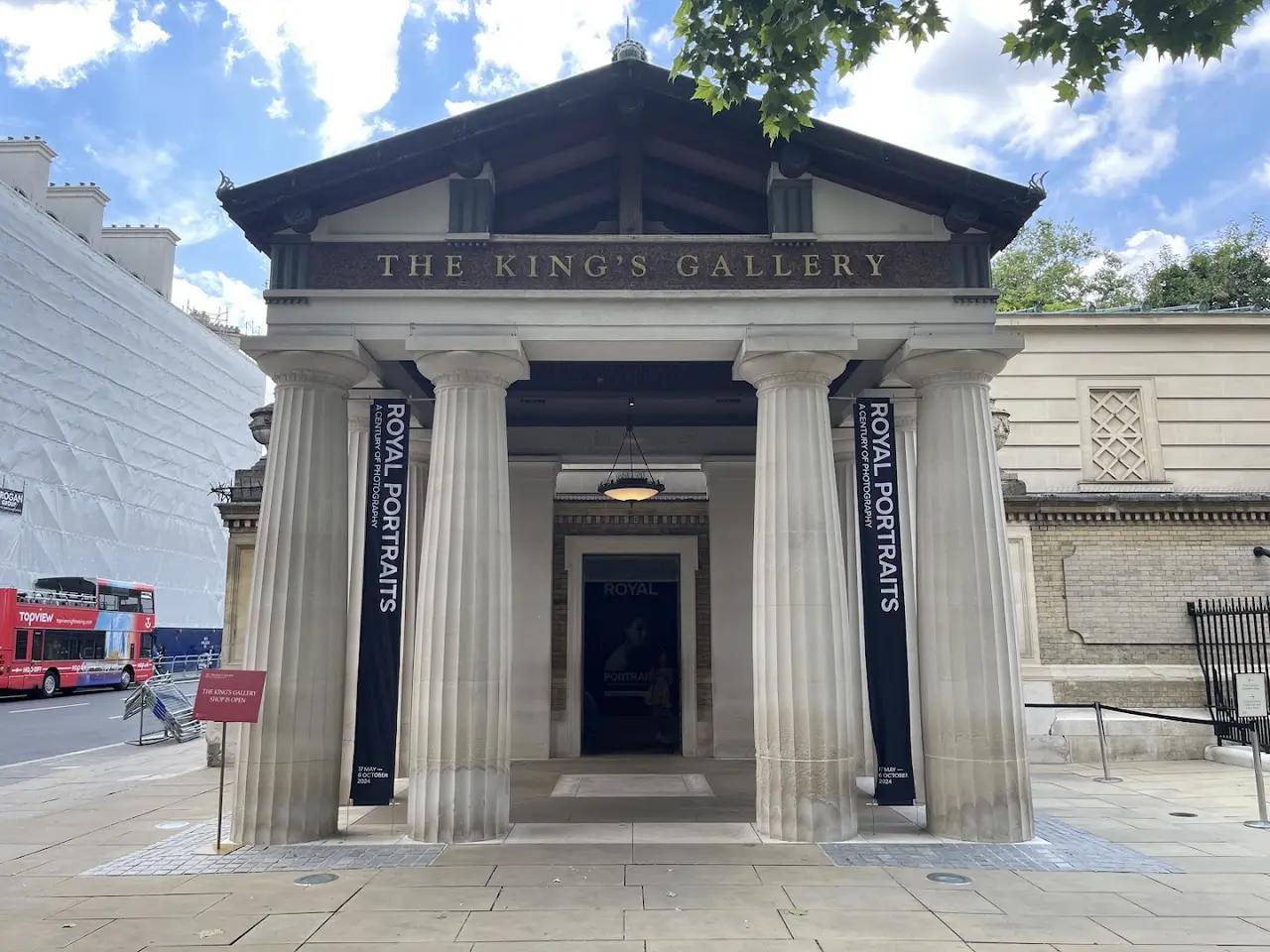
The King's Gallery, Buckingham Palace
Victoria · Culture
- L
Lewes Priory
Culture
- A
Anne of Cleves House Museum
Culture
- S
Southover Grange Gardens
Outdoors
- L
Lewes Castle & Museum
Culture
- B
Bull House
Culture
- P
Pipe Psge
Culture
- R
Rights of Man
Drink
- W
White Hart Hotel
Drink
- L
Lewes War Memorial
Culture
- L
Lewes
Outdoors
- N
Needlemakers
Shop
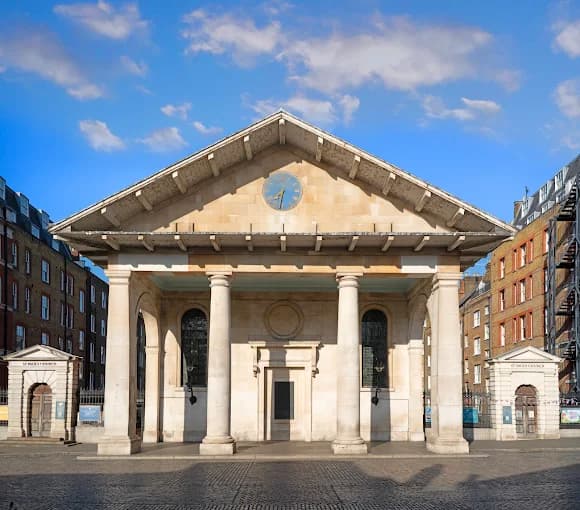
St Paul’s Church Covent Garden
Covent Garden · Culture
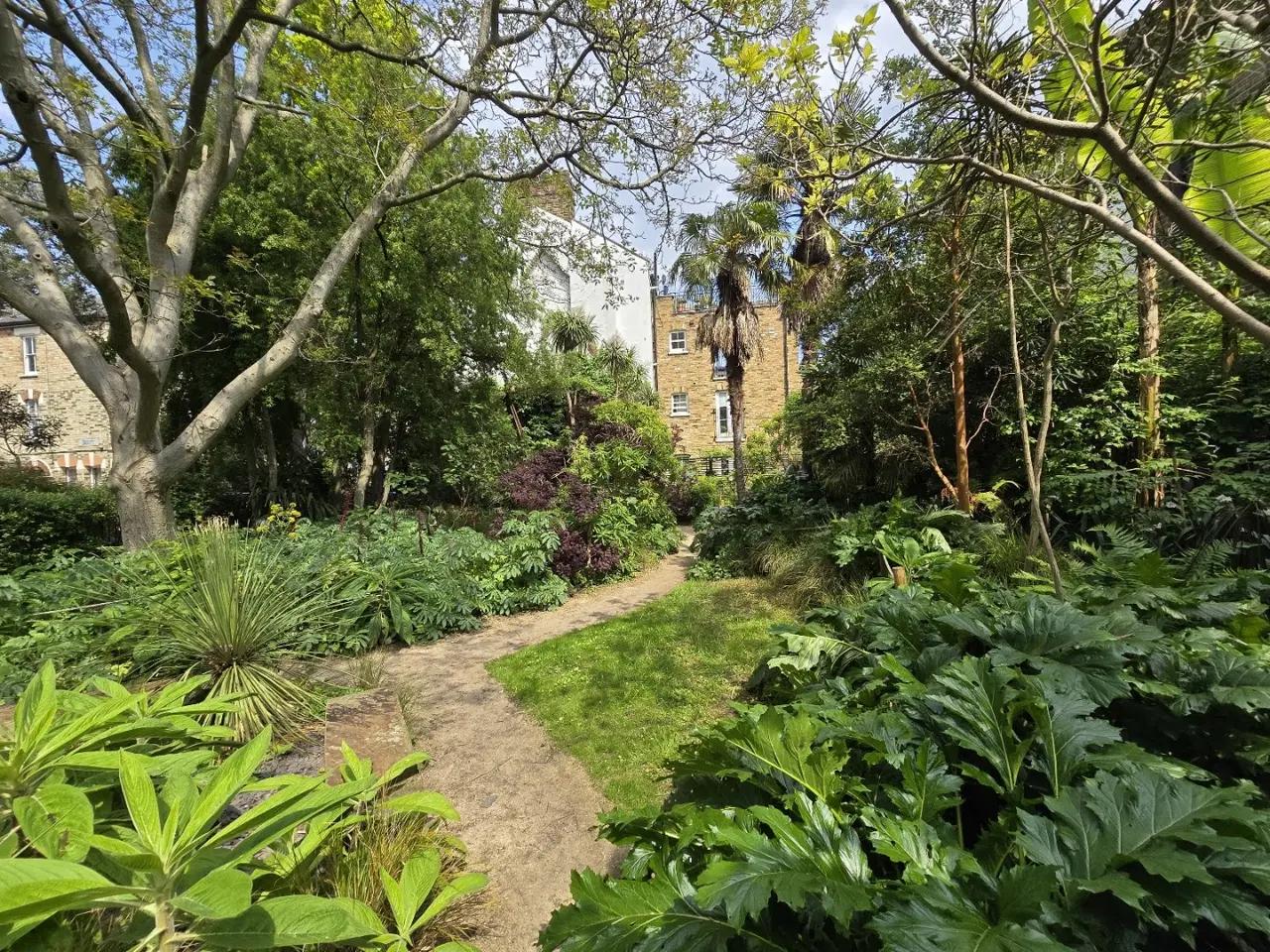
Bonnington Square Pleasure Garden
Outdoors
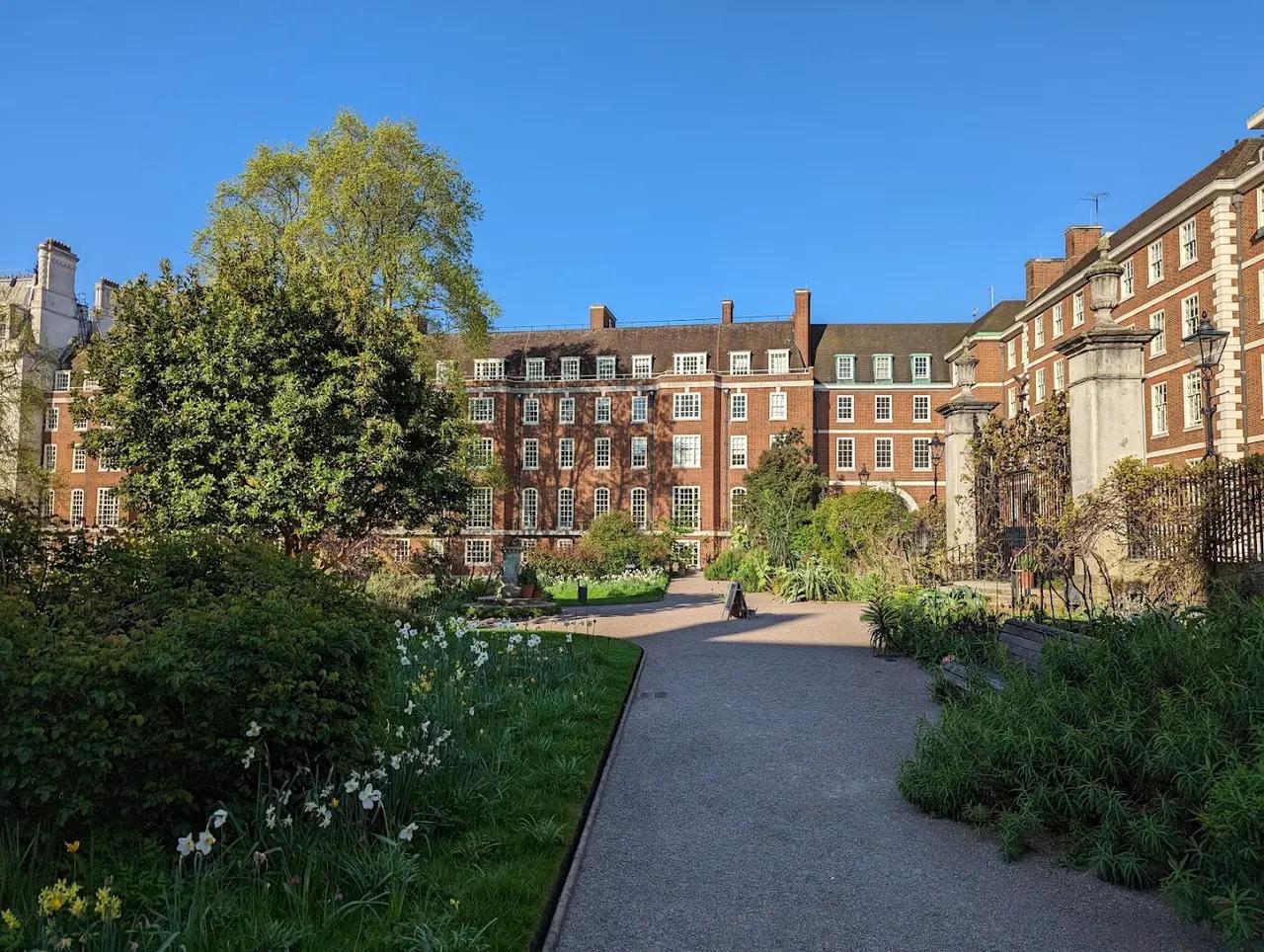
Inner Temple Garden
Holborn · Culture
- E
East Hill Cliff Railway
Activities
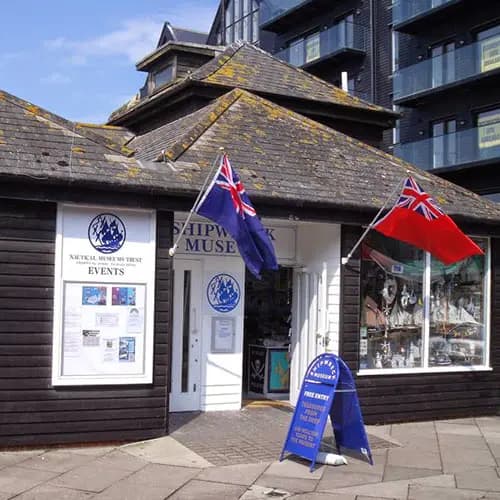
Shipwreck Museum
Culture
- H
Hastings Museum & Art Gallery
Culture
- H
Hastings Castle
Culture
- A
All Saints' St
Outdoors
- C
Church Psge
Culture
- C
Cobourg Pl
Outdoors
- M
Mother of Cloudesley Shovell white plaque
Culture
- 9
92 All Saints' St
Outdoors
- Y
Ye Olde Pumphouse
Drink
- 1
135 All Saints' St
Outdoors
- T
The Stag Inn
Drink
- S
Sinnock Sq
Outdoors
- A
A G Hendy & Co
Shop
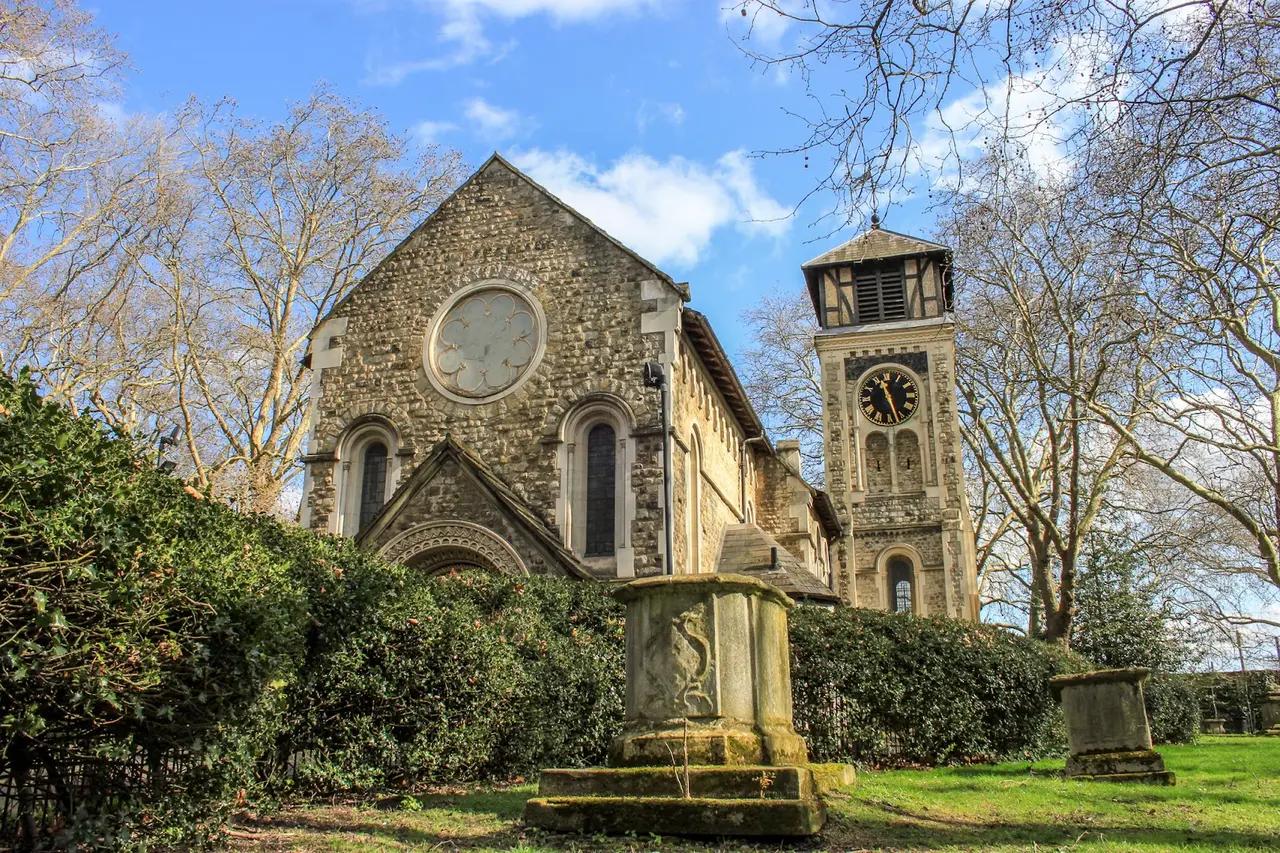
St Pancras Old Church
Camden · Culture
- I
IMPRINT Church London: St Mary Woolnoth
The City of London · Culture
- C
Catherine Griffiths Ct
Angel · Outdoors
- J
Jack Cornwell St
Outdoors
- B
Baylis Rd
Outdoors
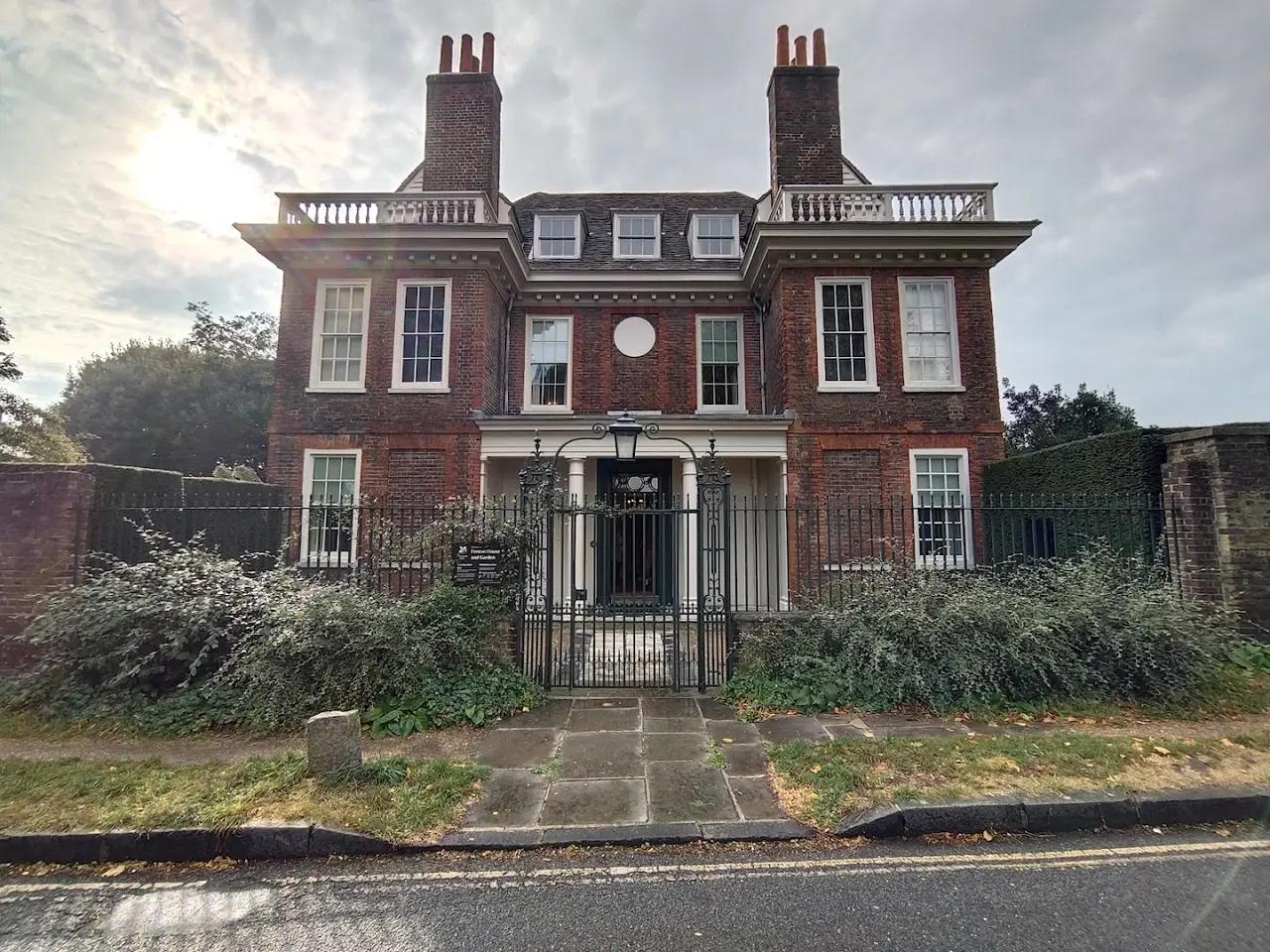
National Trust - Fenton House and Garden
Hampstead · Culture
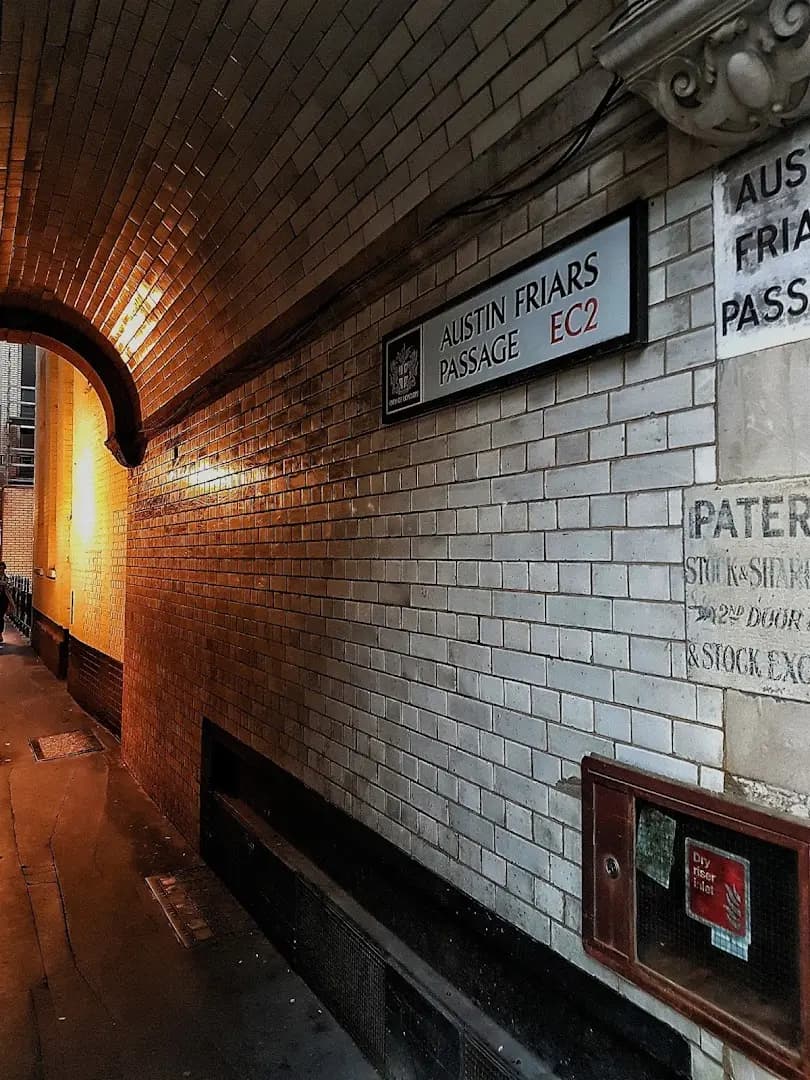
Austin Friars
The City of London · Culture
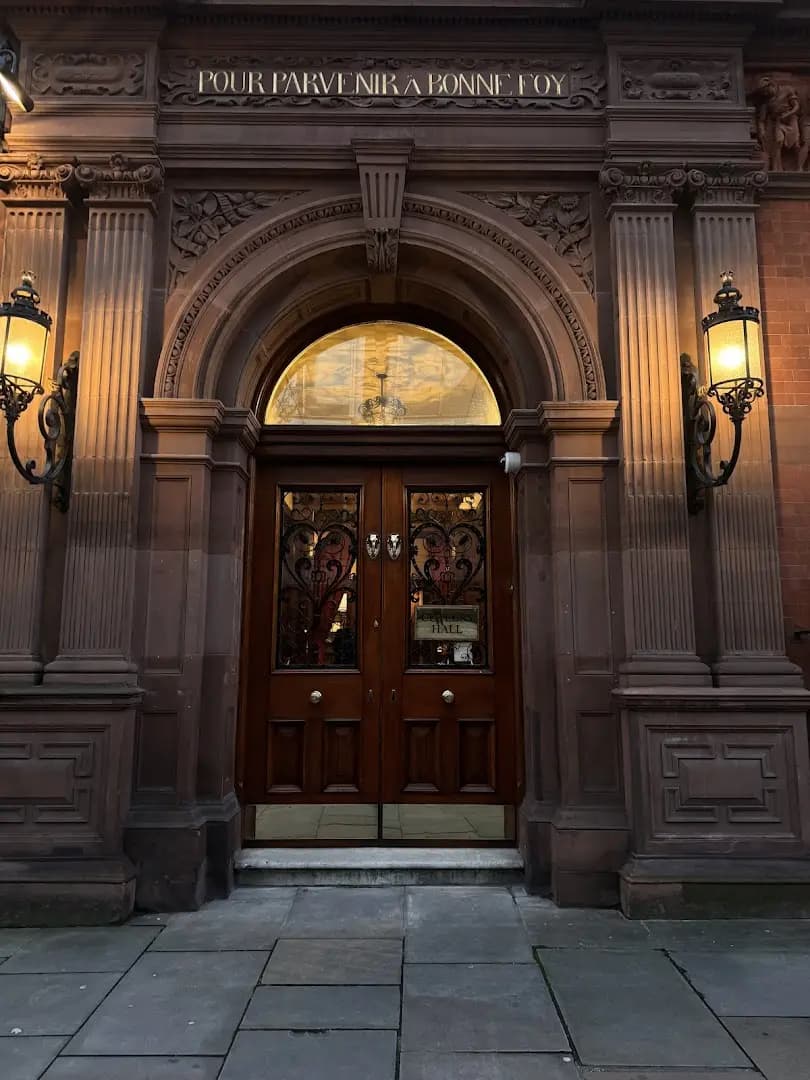
Cutlers' Hall
The City of London · Culture
- T
The Worshipful Company Of Cutlers
The City of London · Culture

20 Grosvenor Sq
Mayfair · Culture

31 St James's Square
Soho · Culture
- U
USAAF Memorial
Culture
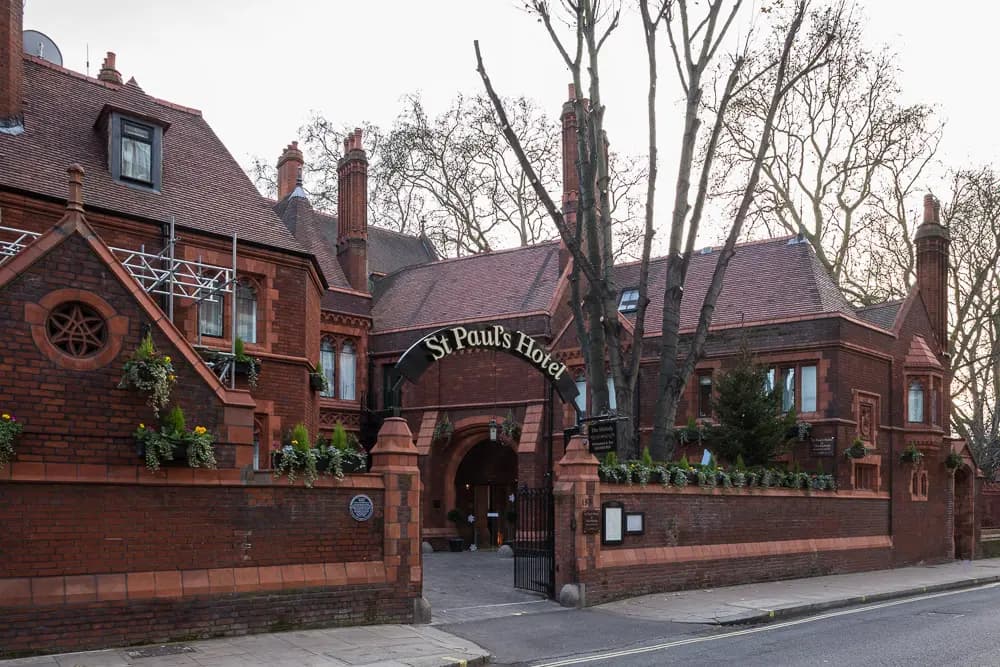
St Paul's Hotel
Stay
- O
Old War Office Building
Covent Garden · Culture
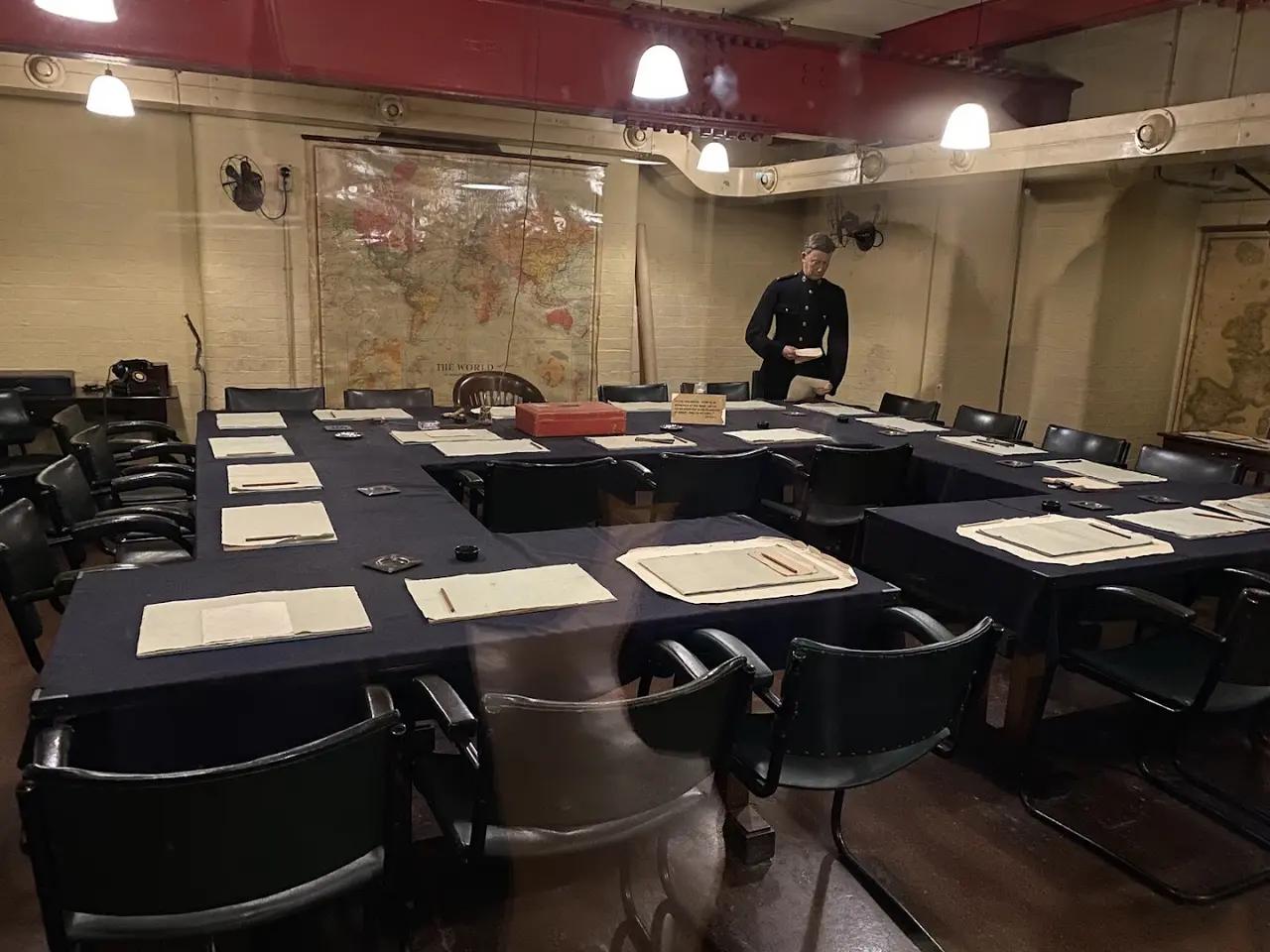
Churchill War Rooms
Westminster · Culture
- H
HMS Belfast
Bermondsey · Culture
- M
Museum of Homelessness
Culture
- 1
13 Princelet St
Shoreditch · Culture
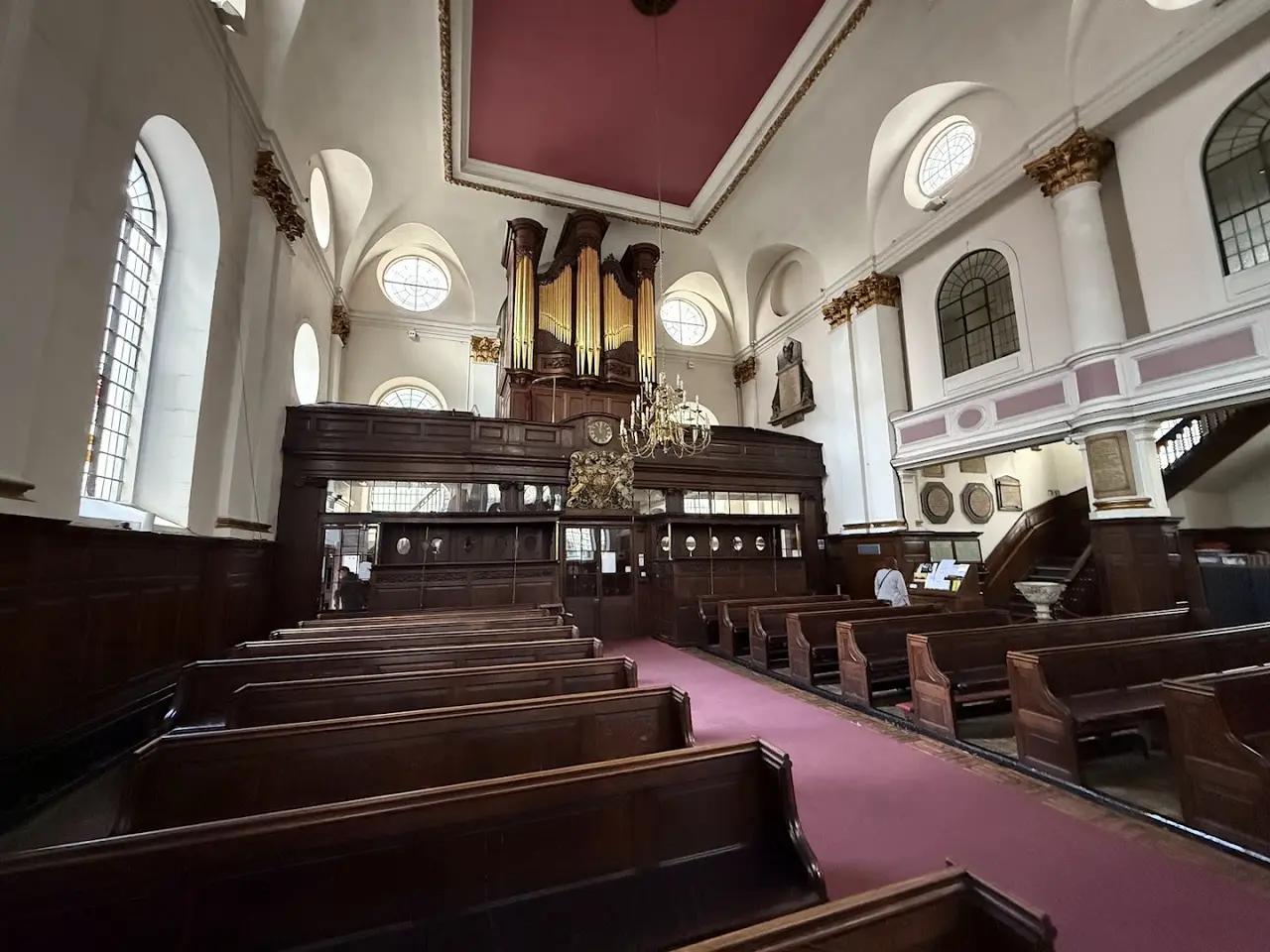
St Margaret Pattens Eastcheap
The City of London · Culture
- R
Rye House Gatehouse
Culture
- S
St Alphage Gardens
The City of London · Outdoors
Roman and medieval ruins in the City of London! As well as the ruins of St Alphage church you'll also find a fascinating section of the old city wall. It is the only surviving stretch with medieval, brick crenellations. These were added in 1477 by King Edward IV during the Wars of the Roses. The diamond pattern on the bricks is known as 'diapering'. This probably comes from the ancient Greek 'diaspros' meaning 'across white' and referred initially just to the geometric pattern. It later became associated with the same pattern in the weave of linen or cotton. This was the material used to create 'diapers' for babies. For more on this amazing pocket of history, there's a link in my bio for the full blog post. . . . . #london #londonhistory #livinglondonhistory #romanhistory #medievalhistory #hiddenlondon #secretlondon
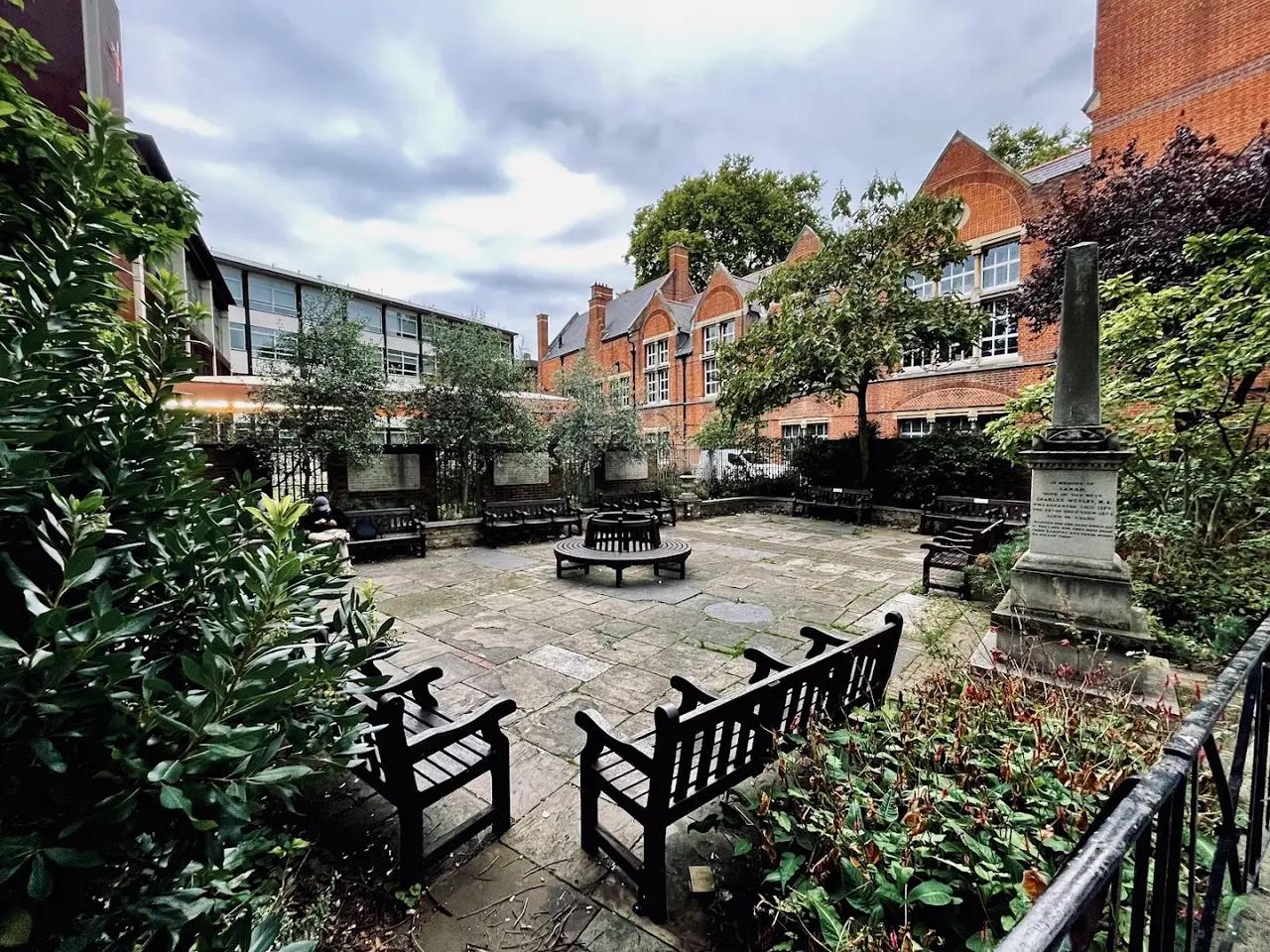
Garden of Rest
Marylebone · Outdoors
- V
Vicars' Close
Culture
In Wells, in Somerset, you will find the oldest medieval street in the UK and possibly even Europe… Vicars' Close dates from 1348 and was built for the 'Vicars Choral', the group who served the adjacent Wells Cathedral and sang in the choir. They have recently launched a project called Vicars' Close: A Medieval Street Singing Through the Centuries to conserve and celebrate the street. As part of that they hope to open up never before seen spaces to the public. . . . . . #medievalhistory #wells #somerset #westcountry #wellshistory #somersethistory #london
- A
All Hallows, Twickenham
Culture
- T
The British Academy
Soho · Culture
- S
St John Priory Church
Angel · Culture
Inside one of the oldest surviving medieval crypts in London you'll find an unsettling effigy… The crypt of St John's Priory Church dates from the 12th century. The church was one the priory church for the Clerkenwell Priory, the English headquarters of the Knights Hospitaller. The crypt can be visited on a tour with the Museum of the Order of St John, based inside the nearby St John's Gate. . . . . . #london #londonhistory #livinglondonhistory #hiddenlondon #clerkenwell #islington #londonmuseum #secretlondon #londontravel
- H
Holborn Viaduct
The City of London · Culture
- G
Garth House
Culture
- C
Chichester Cathedral
Culture
- B
Bishop's Palace Garden
Outdoors
- T
The Novium Museum
Culture
- P
Priory Park
Outdoors
- C
Chichester Cross
Culture
- S
St. Olave's church
Culture
- T
The Roman Wall
Culture
- T
The Guildhall, Priory Park
Culture
- F
Fishbourne Roman Palace
Culture
Onion Garden
Westminster · Outdoors

Spencer House
Mayfair · Culture
- S
Salters' Garden
The City of London · Outdoors
- O
Oxo Tower
Covent Garden · Culture
Bernie Spain Gardens
Covent Garden · Outdoors
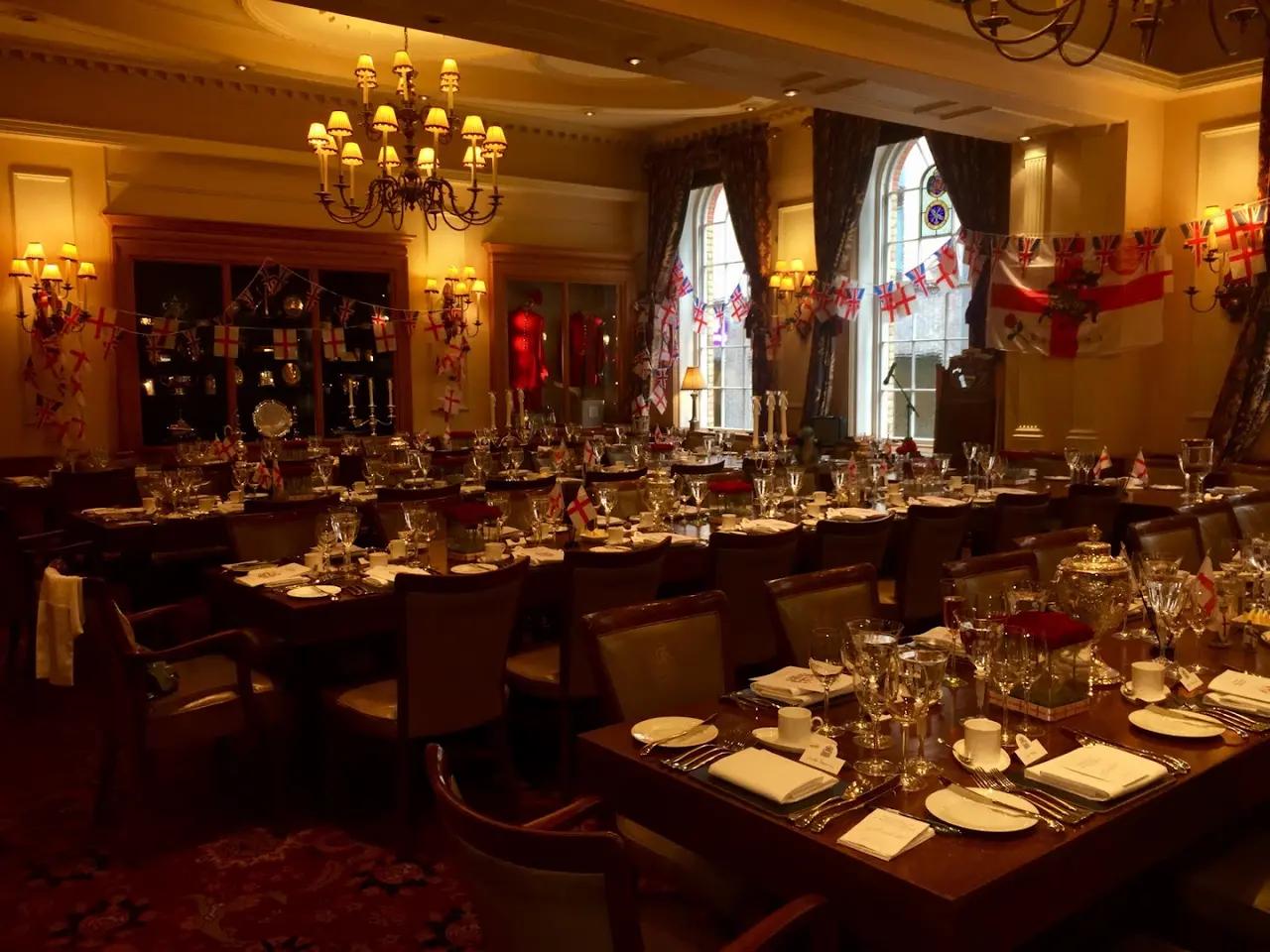
Watermen's Hall, Company of Watermen and Lightermen
The City of London · Culture
- C
Carlton House Terrace
Soho · Culture
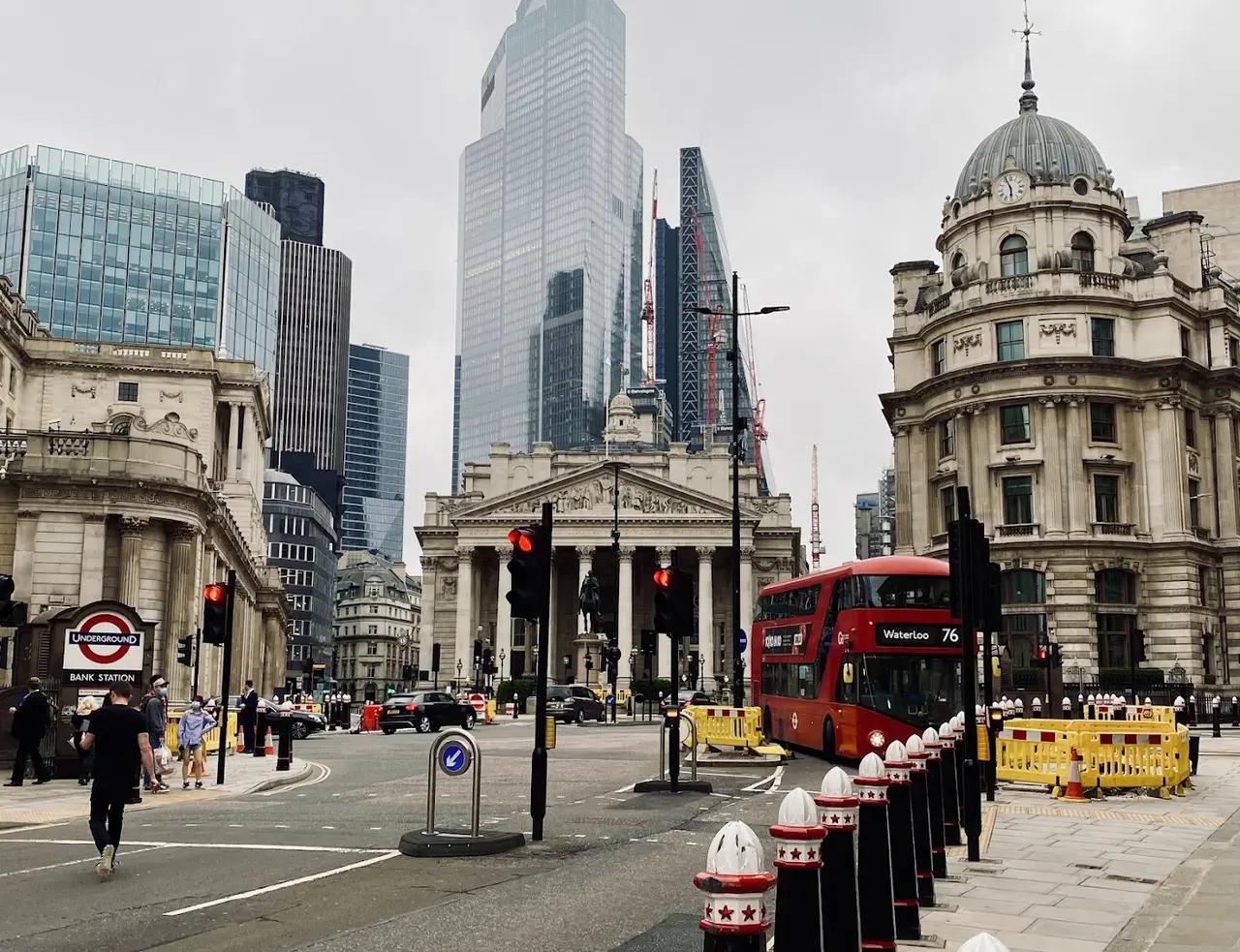
Bank Station
The City of London · Culture
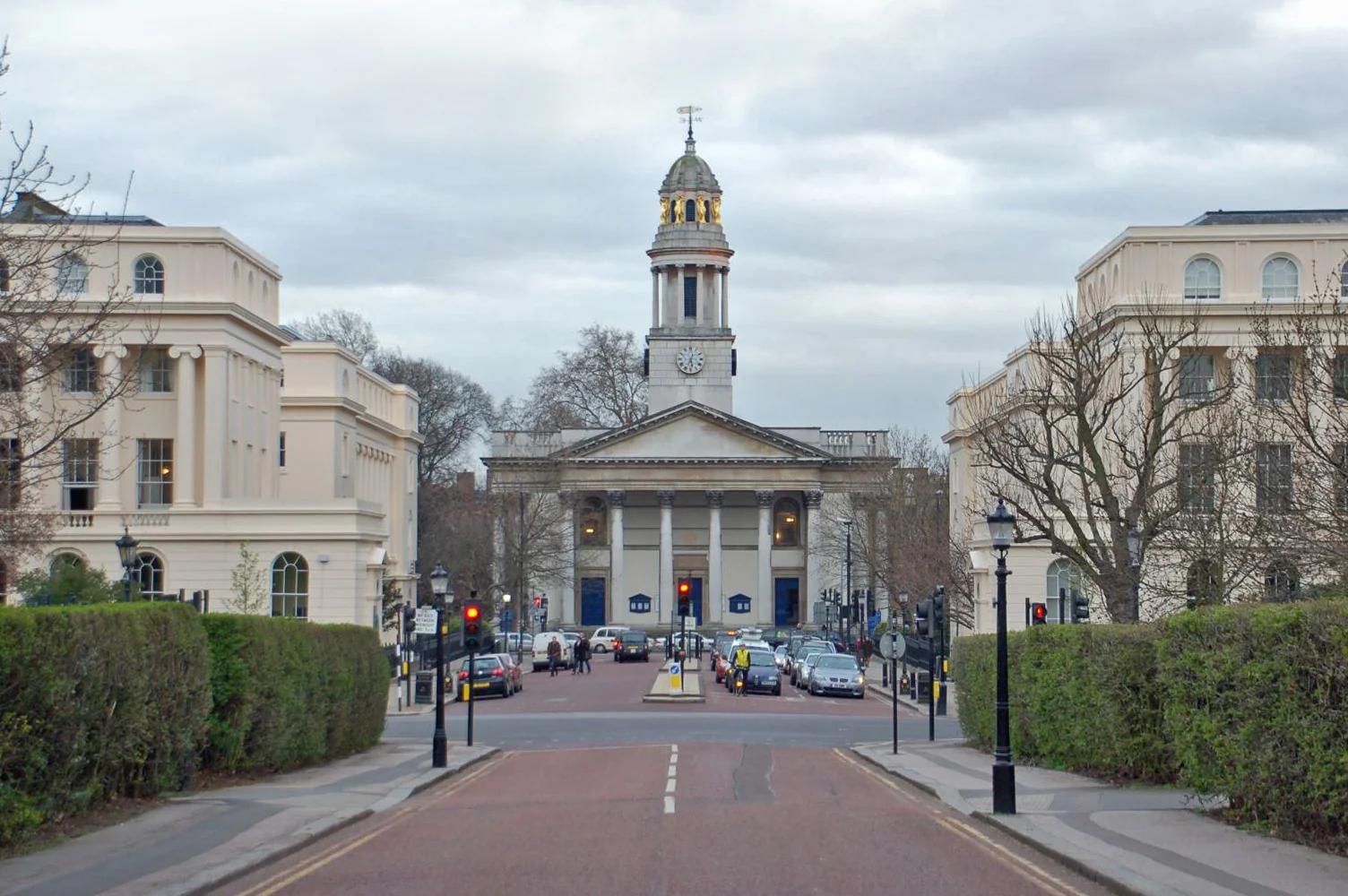
St Marylebone Parish Church
Marylebone · Culture
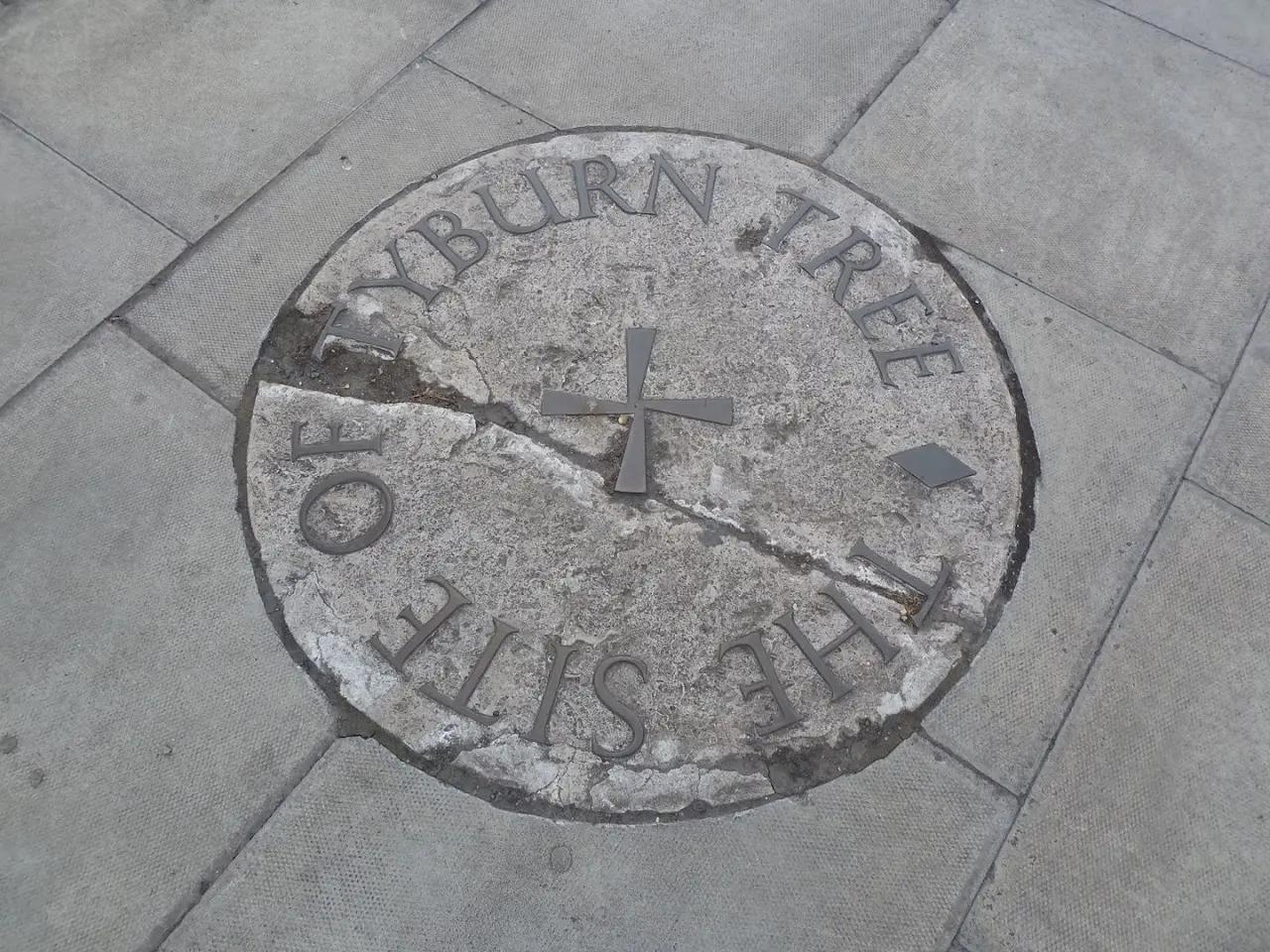
Site of Tyburn Tree plaque
Marylebone · Culture
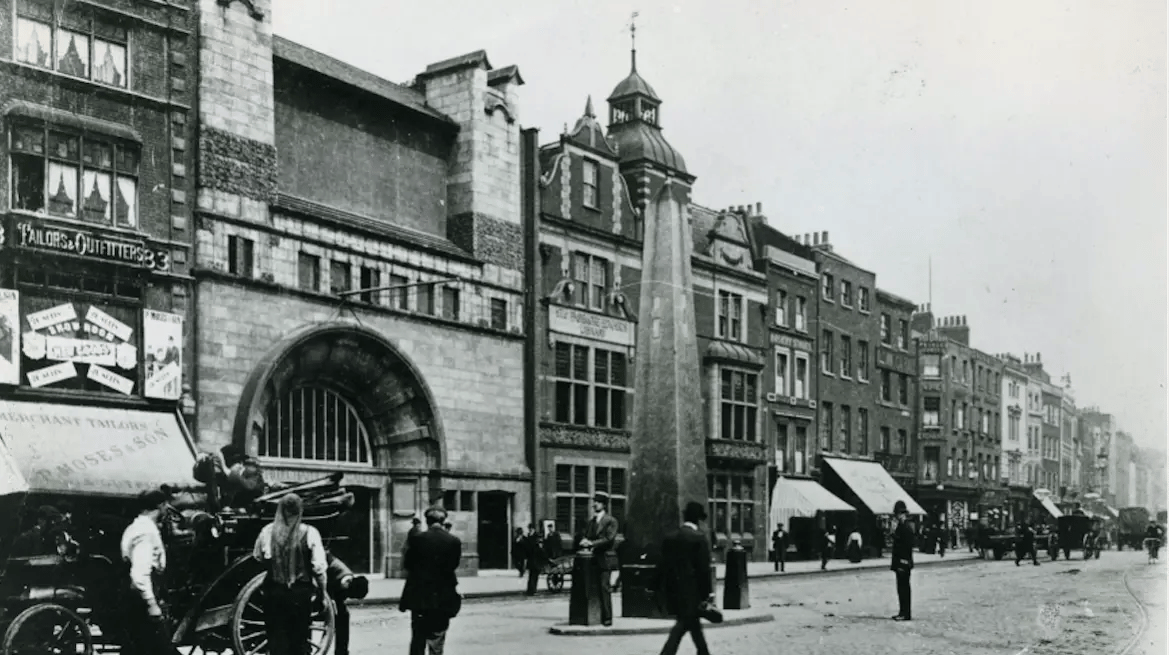
Whitechapel
Whitechapel · Drink
Why Is Whitechapel Called Whitechapel?
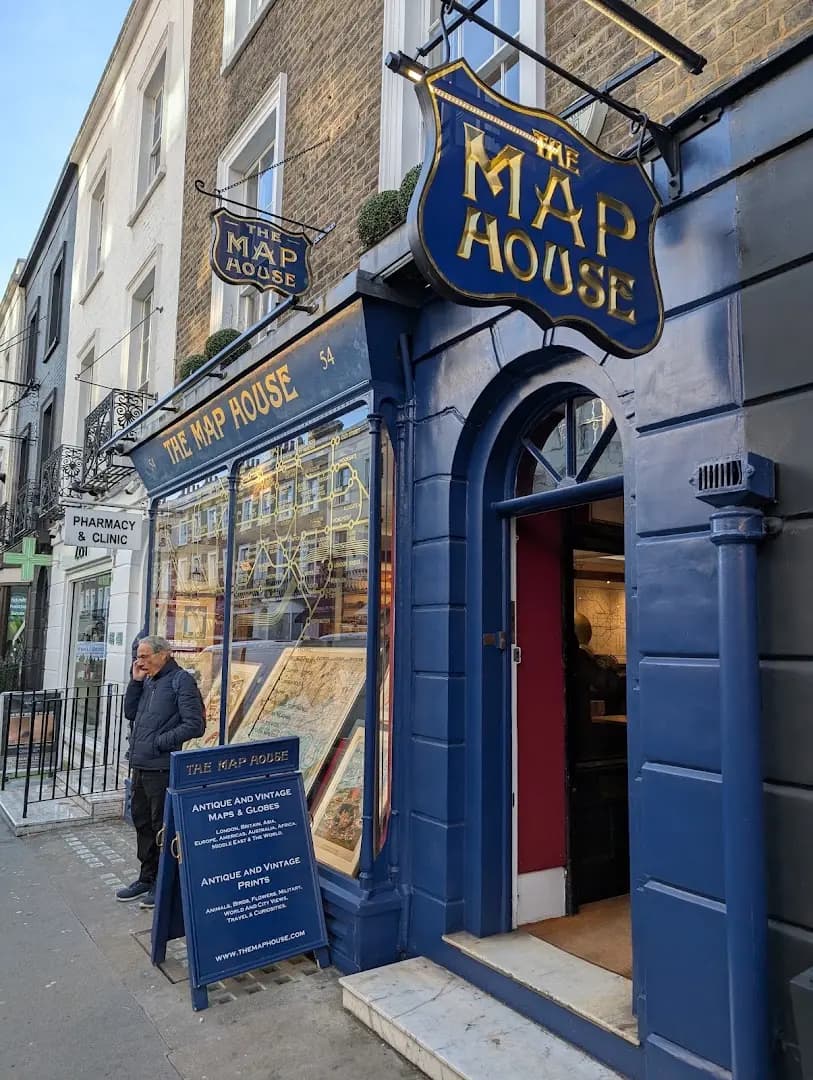
The Map House
Knightsbridge · Shop
- H
Huguenot Museum
Culture
- T
The George Vaults
Drink
- G
Guildhall Museum
Culture
- E
Eastgate House
Culture
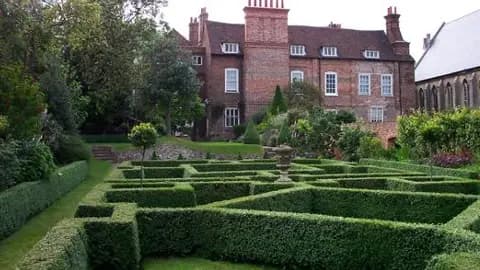
Restoration House
Culture
- S
Submarine U-475 Black Widow
Culture
- D
Dickens House Wine Emporium
Shop
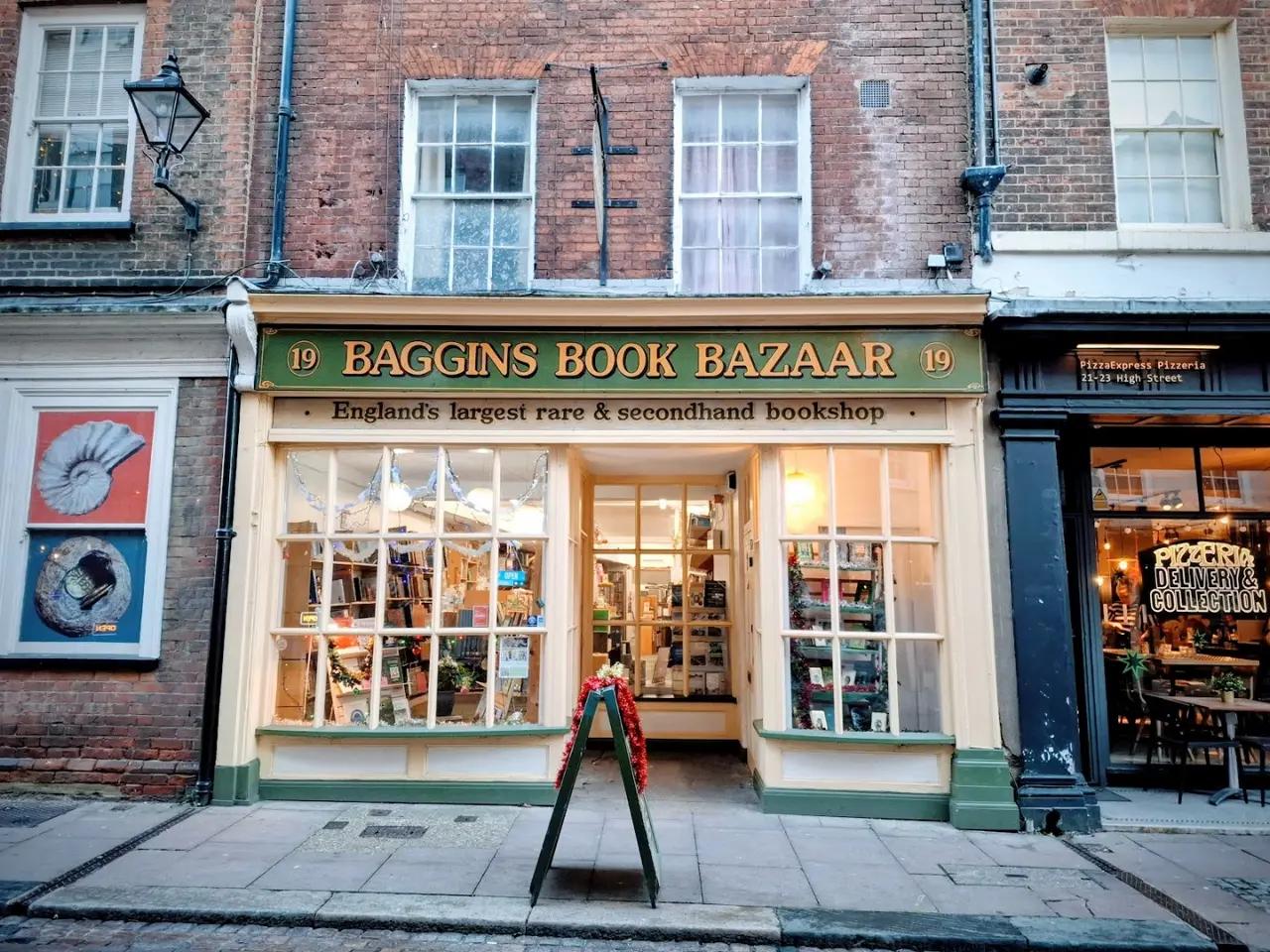
Baggins Book Bazaar
Shop
- L
La Providence, French Hospital
Culture
- 8
86 Corporation St
Culture
- R
Rochester Castle
Culture
- 7
78 Bishopsgate
The City of London · Culture
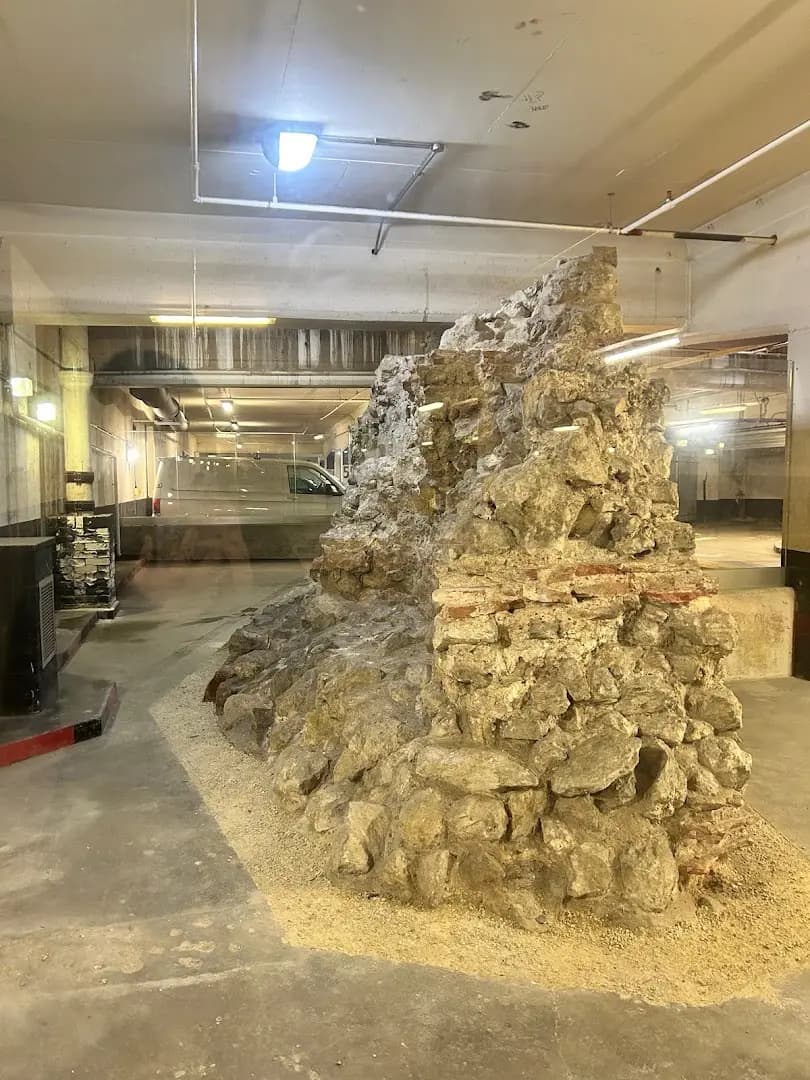
London Wall car park
The City of London · Culture
Grays Antiques
Mayfair · Shop
Guy's Hospital
Bermondsey · Culture
- T
The Clapham Orangery
Clapham · Eat
- R
Regent's Park
Marylebone · Outdoors
Chelsea Physic Garden
Chelsea · Outdoors
I paid a visit to a beautiful hidden gem: London's oldest botanic garden. 🌳 The Chelsea Physic Garden was established in 1673 by the Worshipful Company of Apothecaries. It was used to train apothecaries and to grow plants from around the world. Today there are over 5000 species of plants here and it can be visited! There is a link in my bio for the full blog post. And you can follow @chelsea_physic_garden. . . . . . #london #livinglondonhistory #londonhistory #chelsea #gardenlove #gardendesign #londontravel #londontrip #hiddenlondon #secretlondon #westlondon
- S
St John's Gate
The City of London · Culture
The magnificent St John's Gate in Clerkenwell. Dating from 1504, it was constructed as the Southern entranceway to the Clerkenwell Priory. The Clerkenwell Priory was the English headquarters of the Knights Hospitaller. After the priory was dissolved by King Henry VIII in 1540, the gate went through various purposes. It was a coffeehouse, a tavern and in the 1870s it was acquired by the revived Order of St John, best known for setting up the St John Ambulance. They have a free museum inside and also run brilliant tours @museumstjohn . . . . . #london #londonhistory #livinglondonhistory #islington #clerkenwell #crusades #tudor #tudorhistory #henryviii #stjohnambulance #londontrip #londontravel #londonmuseum
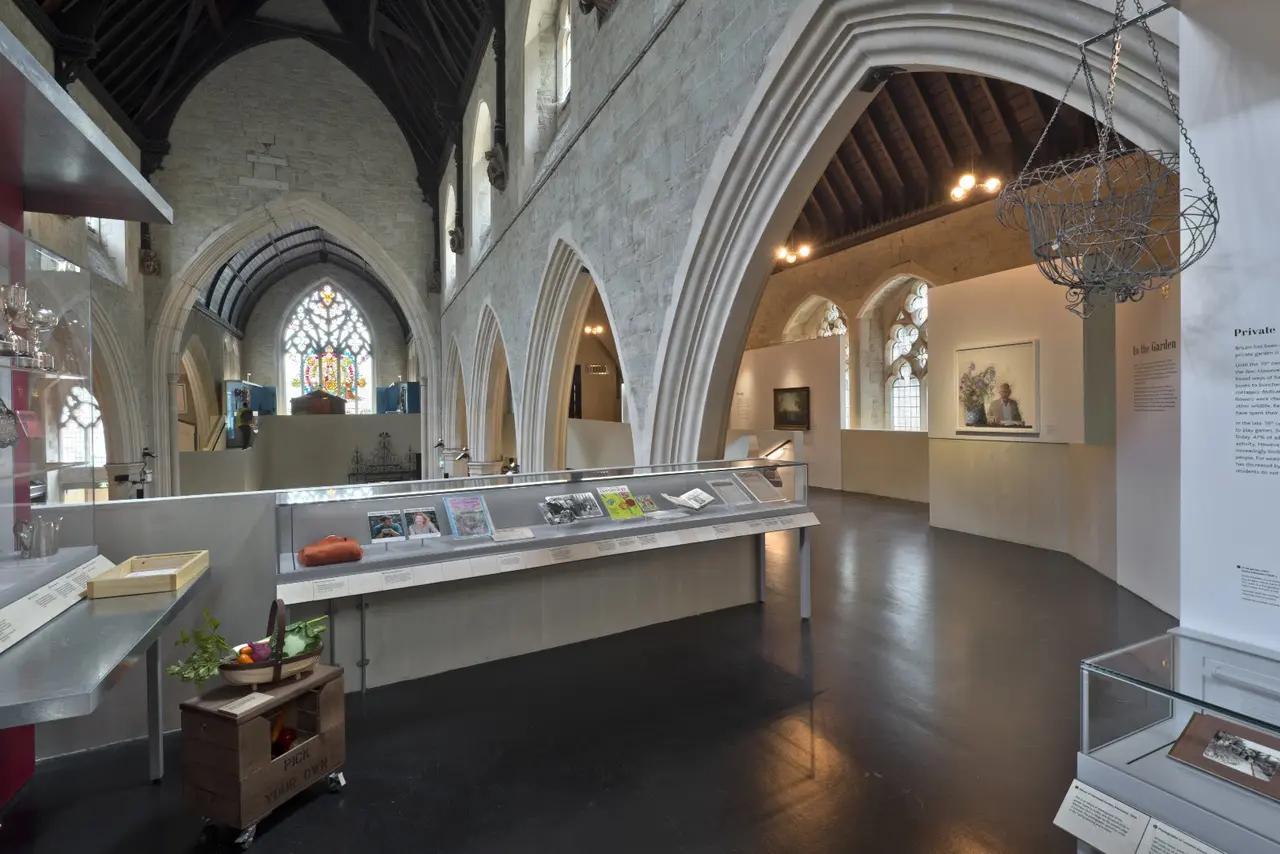
Garden Museum
Westminster · Culture
There is a lesser-known spot where you can get an incredible view of the Houses of Parliament, Lambeth Palace and the Thames… The Garden Museum can be found just South of Lambeth Bridge and is one of London's brilliant smaller, quirkier museums. You can climb their 14th century church tower to get amazing views from the viewing platform at the top. They also put on regular exhibitions, for example at the moment they have an exhibition on all about the Lost Gardens of London, on until the 2nd March. There is a link in my bio for my blog post all about it and some of my highlights. @gardenmuseum . . . . #london #londonhistory #livinglondonhistory #lambeth #westminster #londonmuseum #hiddenlondon #secretlondon #londonview #londonviews #housesofparliament #thames #londontravel
- N
Newman's Ct
The City of London · Culture
Off the North side of Cornhill you will find a gloomy courtyard called Newman's Court, thought to be the most likely location of Scrooge's Counting House in Charles Dickens' A Christmas Carol… Best explored in the evening for a true Dickensian atmosphere. . . . . . #london #londonhistory #livinglondonhistory #dickens #chsrlesdickens #achristmascarol #cityoflondon #christmashistory #secretlondon #hiddenlondon #londontravel
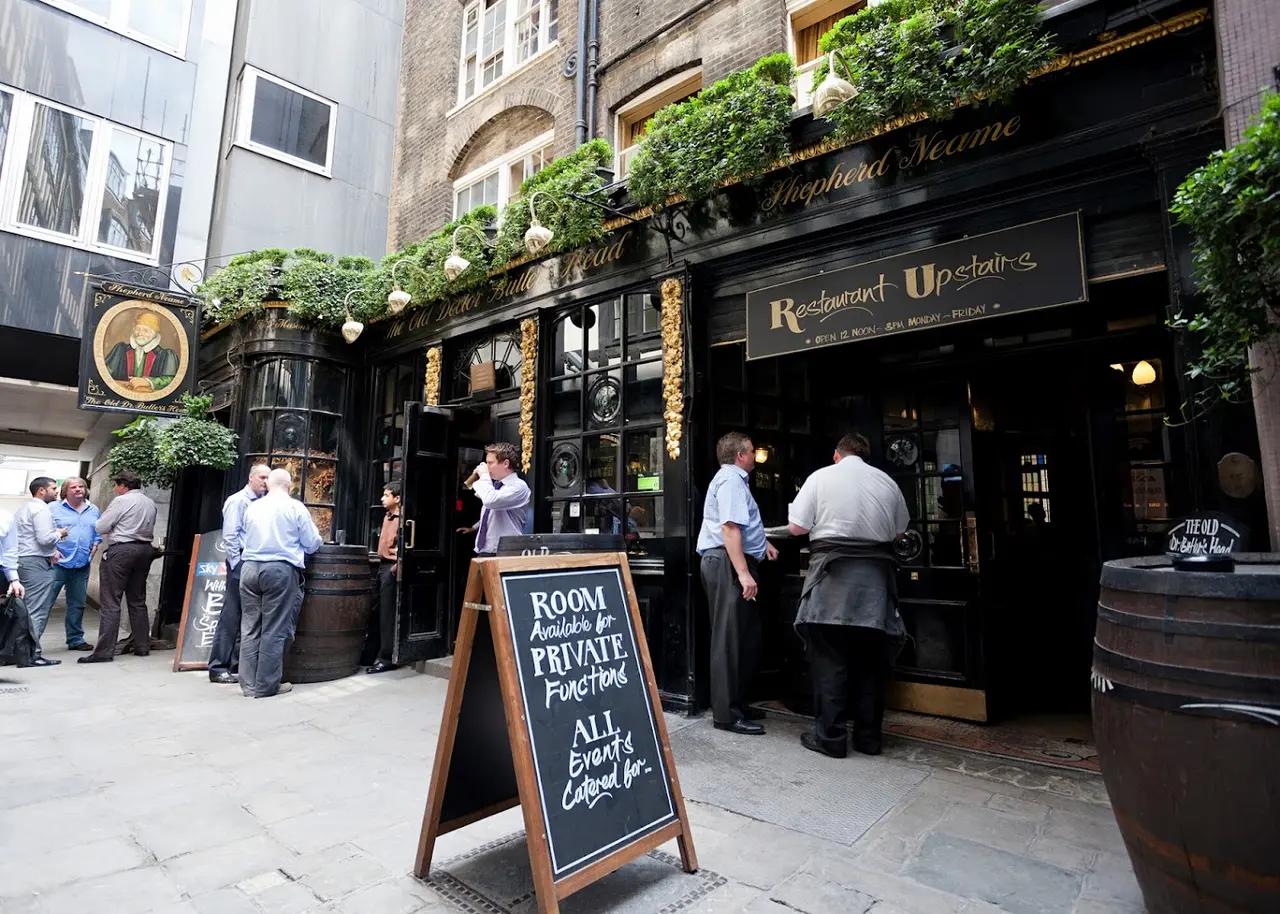
Old Doctor Butler's Head
The City of London · Drink
My top ten historic pubs in London! 🍻 Let me know in the comments if there are any you think I have missed... The most iconic: The George Inn The most atmospheric: Ye Olde Cheshire Cheese The most myth-laden: The Spaniard's Inn The most hidden: Ye Olde Mitre The most decorative: The Blackfriar The best survivor: The Grapes The best riverside views: The Prospect of Whitby The best origin story: The Old Doctor Butler's Head The oldest?: The Seven Stars in Holborn The cosiest: The Dove, Hammersmith For the full story behind all of these fascinating pubs and a map of their locations (so that you can go on an epic pub crawl), there is a link in my bio. . . . . #london #londonhistory #livinglondonhistory #londonpubs #historicpub #southwark #cityoflondon #limehouse #hammersmith #wapping #secretlondon #londontravel
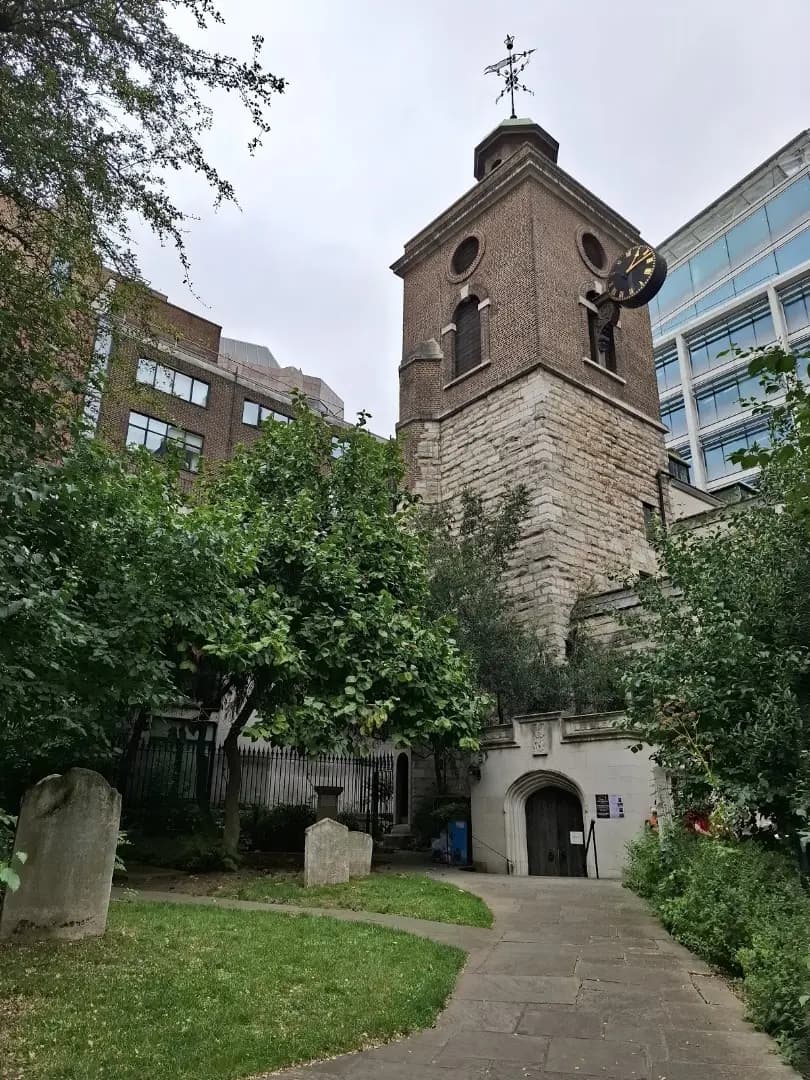
St Olave, Hart Street, Churchyard
The City of London · Culture
My top ten historic churches in London! 🎚 Let me know in the comments if there are any you think I have missed... 1. St Bartholomew the Great in Smithfield 2. Temple Church just off Fleet Street 3. All Hallows by the Tower in the City 4. St Etheldreda's in Holborn 5. St Stephen Walbrook in the City 6. St Bride's Fleet Street 7. St Pancras Old Church, King's Cross 8. St Magnus the Martyr in the City 9. The Savoy Chapel, just off Strand 10. St Olave Hart Street in the City For the story behind all of these, there is a link in my bio for my blog post! . . . #london #londonhistory #londontravel #livinglondonhistory #londonchurch #smithfield #cityoflondon #kingscross #holborn #churchesofinstagram #hiddenlondon #secretlondon
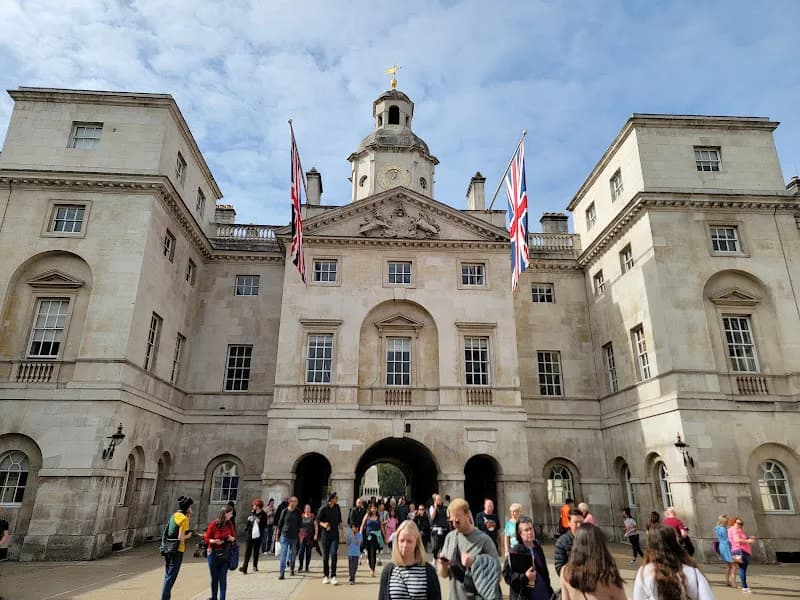
The Household Cavalry Museum
Covent Garden · Culture
I went on a visit to the Household Cavalry Museum to look behind the scenes at Horse Guards Parade! Thank you @householdcavalrymuseum for a great morning. . . . . . #london #londonhistory #livinglondonhistory #horseguards #changingoftheguard #westminster #whitehall #ukhistory #britishhistory #britishmonarchy #londonmuseum #museum
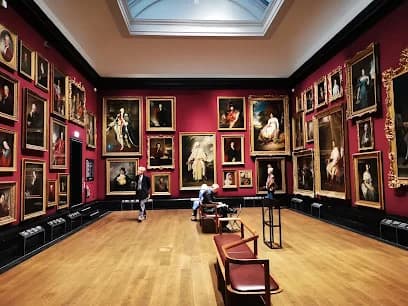
National Portrait Gallery
Covent Garden · Culture
The famous portrait commissioned to try and make Henry VIII fall in love with Anne of Cleves. The marriage had been arranged to help forge an alliance between Henry and the Protestants of Western Germany. Unfortunately Henry felt the portrait had misrepresented her and he claimed to have been unable to consummate their marriage. It was designed as a miniature so that Henry could carry it with him. A larger half-length portrait was also painted by Holbein. Six Lives, looking at how the six wives of Henry have been represented and remembered over the centuries, is on at the National Portrait Gallery until the 8th September. @nationalportraitgallery . . . . . #london #londonhistory #livinglondonhistory #tudor #tudorstyle #henryviii #kinghenryviii #anneofcleves #tudorhistory #artexhibition #londonart #londongalleries
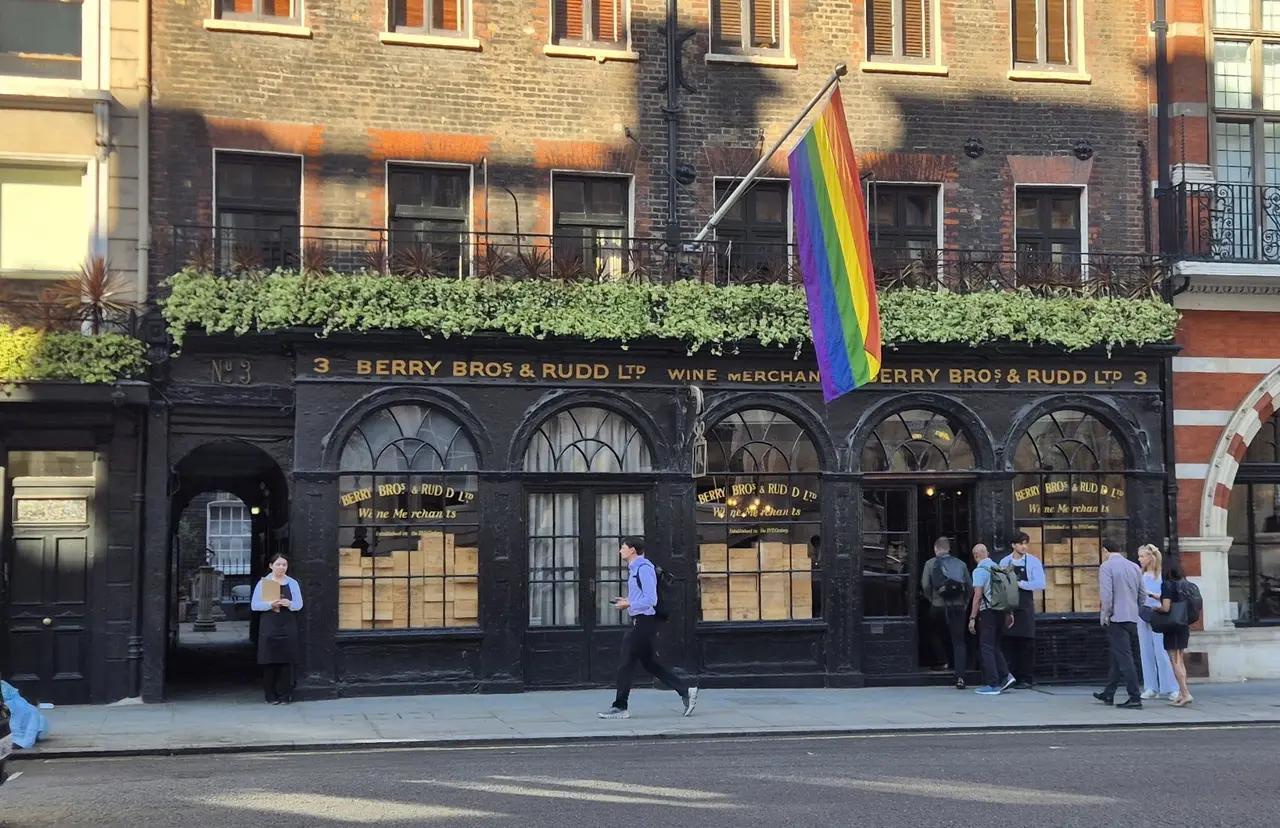
Berry Bros. & Rudd Wine Shop
Soho · Drink
Britain's oldest wine merchant! Berry Bros & Rudd in St James's 🍷 It was established in 1698 by a lady known as the Widow Bourne as a grocers shop and originally predominantly sold coffee (the sign of a coffee mill still hangs outside today). From the 19th century the business started to focus more on selling wine and spirits. The current building dates from the 1730s and today their cellars contain over 4000 bottles of wine. They still have their large original set of weighing scales in the shop. In the 18th century it became fashionable to know your weight. Many famous figures over the years therefore weighed themselves on the scales here including the Duke of Wellington, William Pitt the Younger and Laurence Olivier. Cheers! 🥂 . . . . . . #london #londonhistory #livinglondonhistory #westminster #stjameslondon #wine #facadelovers #architecturephotography #georgianhistory
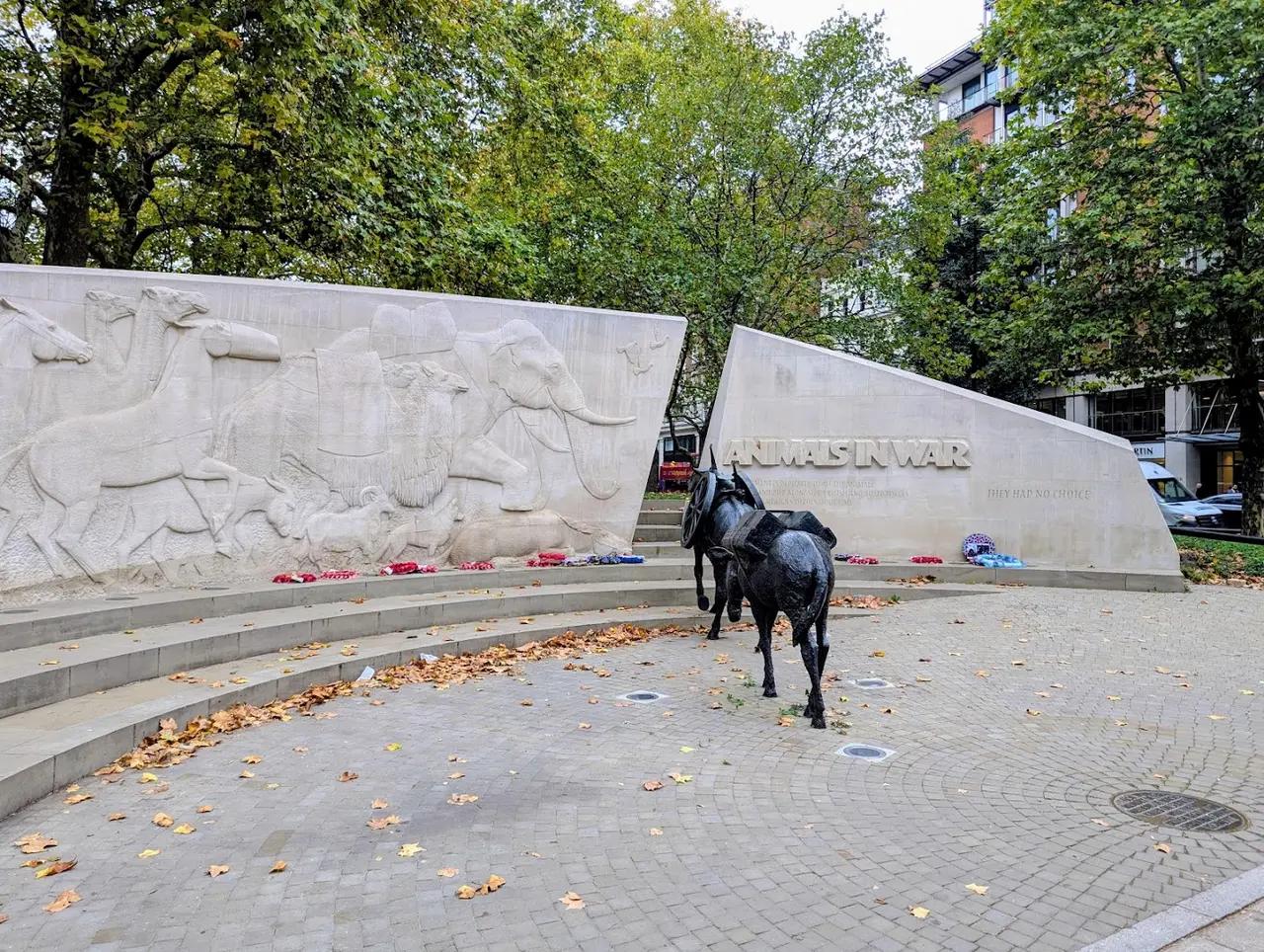
Animals In War Memorial
Mayfair · Culture
Right next to Hyde Park, missed by many, is one of London's most heart-wrenching memorials. The Animals in War memorial was put up in 2004 and remembers the horses, dogs, elephants, camels, pigeons and even glow worms who were forced to give their lives for human warfare. Next time you are in the area, it is worth checking it out! . . . . . #london #londonhistory #livinglondonhistory #ww2history #ww1history #warhistory #statues #hiddenlondon #secretlondon
- F
Fort Hommet
Culture
|AD| I went on a fascinating trip to the Islands of Guernsey! Here are some of the historic highlights that I saw... The Channel Islands were the only British territory occupied during World War Two and this year on the 9th May Guernsey are celebrating the 80th anniversary of their Liberation Day, so there will be numerous celebratory events taking place. I have written up a full blog post with more details, links and a map. There is a link in my bio to read! Thank you so much to @visitguernsey for inviting me to have a look round these beautiful islands. Thank you also to @ogh_guernsey for the wonderful stay, @jackiewardtourguide for the brilliant tour and @festung_guernsey for showing me around the German Underground Hospital and all the fantastic work they do to keep Guernsey's history alive. #guernsey #ww2history #thatislandlife #libday80
- T
The Rockmount - Randalls
Eat
|AD| I went on a fascinating trip to the Islands of Guernsey! Here are some of the historic highlights that I saw... The Channel Islands were the only British territory occupied during World War Two and this year on the 9th May Guernsey are celebrating the 80th anniversary of their Liberation Day, so there will be numerous celebratory events taking place. I have written up a full blog post with more details, links and a map. There is a link in my bio to read! Thank you so much to @visitguernsey for inviting me to have a look round these beautiful islands. Thank you also to @ogh_guernsey for the wonderful stay, @jackiewardtourguide for the brilliant tour and @festung_guernsey for showing me around the German Underground Hospital and all the fantastic work they do to keep Guernsey's history alive. #guernsey #ww2history #thatislandlife #libday80
- T
The Old Government House Hotel & Spa
Stay
|AD| I went on a fascinating trip to the Islands of Guernsey! Here are some of the historic highlights that I saw... The Channel Islands were the only British territory occupied during World War Two and this year on the 9th May Guernsey are celebrating the 80th anniversary of their Liberation Day, so there will be numerous celebratory events taking place. I have written up a full blog post with more details, links and a map. There is a link in my bio to read! Thank you so much to @visitguernsey for inviting me to have a look round these beautiful islands. Thank you also to @ogh_guernsey for the wonderful stay, @jackiewardtourguide for the brilliant tour and @festung_guernsey for showing me around the German Underground Hospital and all the fantastic work they do to keep Guernsey's history alive. #guernsey #ww2history #thatislandlife #libday80
- L
Le Nautique Restaurant
Eat
|AD| I went on a fascinating trip to the Islands of Guernsey! Here are some of the historic highlights that I saw... The Channel Islands were the only British territory occupied during World War Two and this year on the 9th May Guernsey are celebrating the 80th anniversary of their Liberation Day, so there will be numerous celebratory events taking place. I have written up a full blog post with more details, links and a map. There is a link in my bio to read! Thank you so much to @visitguernsey for inviting me to have a look round these beautiful islands. Thank you also to @ogh_guernsey for the wonderful stay, @jackiewardtourguide for the brilliant tour and @festung_guernsey for showing me around the German Underground Hospital and all the fantastic work they do to keep Guernsey's history alive. #guernsey #ww2history #thatislandlife #libday80
- C
Copenhagen Bar and Grill
Eat
|AD| I went on a fascinating trip to the Islands of Guernsey! Here are some of the historic highlights that I saw... The Channel Islands were the only British territory occupied during World War Two and this year on the 9th May Guernsey are celebrating the 80th anniversary of their Liberation Day, so there will be numerous celebratory events taking place. I have written up a full blog post with more details, links and a map. There is a link in my bio to read! Thank you so much to @visitguernsey for inviting me to have a look round these beautiful islands. Thank you also to @ogh_guernsey for the wonderful stay, @jackiewardtourguide for the brilliant tour and @festung_guernsey for showing me around the German Underground Hospital and all the fantastic work they do to keep Guernsey's history alive. #guernsey #ww2history #thatislandlife #libday80
- G
German Underground Hospital
Culture
|AD| I went on a fascinating trip to the Islands of Guernsey! Here are some of the historic highlights that I saw... The Channel Islands were the only British territory occupied during World War Two and this year on the 9th May Guernsey are celebrating the 80th anniversary of their Liberation Day, so there will be numerous celebratory events taking place. I have written up a full blog post with more details, links and a map. There is a link in my bio to read! Thank you so much to @visitguernsey for inviting me to have a look round these beautiful islands. Thank you also to @ogh_guernsey for the wonderful stay, @jackiewardtourguide for the brilliant tour and @festung_guernsey for showing me around the German Underground Hospital and all the fantastic work they do to keep Guernsey's history alive. #guernsey #ww2history #thatislandlife #libday80
- T
The Little Chapel
Culture
|AD| I went on a fascinating trip to the Islands of Guernsey! Here are some of the historic highlights that I saw... The Channel Islands were the only British territory occupied during World War Two and this year on the 9th May Guernsey are celebrating the 80th anniversary of their Liberation Day, so there will be numerous celebratory events taking place. I have written up a full blog post with more details, links and a map. There is a link in my bio to read! Thank you so much to @visitguernsey for inviting me to have a look round these beautiful islands. Thank you also to @ogh_guernsey for the wonderful stay, @jackiewardtourguide for the brilliant tour and @festung_guernsey for showing me around the German Underground Hospital and all the fantastic work they do to keep Guernsey's history alive. #guernsey #ww2history #thatislandlife #libday80
- G
German Occupation Museum
Culture
|AD| I went on a fascinating trip to the Islands of Guernsey! Here are some of the historic highlights that I saw... The Channel Islands were the only British territory occupied during World War Two and this year on the 9th May Guernsey are celebrating the 80th anniversary of their Liberation Day, so there will be numerous celebratory events taking place. I have written up a full blog post with more details, links and a map. There is a link in my bio to read! Thank you so much to @visitguernsey for inviting me to have a look round these beautiful islands. Thank you also to @ogh_guernsey for the wonderful stay, @jackiewardtourguide for the brilliant tour and @festung_guernsey for showing me around the German Underground Hospital and all the fantastic work they do to keep Guernsey's history alive. #guernsey #ww2history #thatislandlife #libday80
- O
Observation Tower MP4 L'Angle
Culture
|AD| I went on a fascinating trip to the Islands of Guernsey! Here are some of the historic highlights that I saw... The Channel Islands were the only British territory occupied during World War Two and this year on the 9th May Guernsey are celebrating the 80th anniversary of their Liberation Day, so there will be numerous celebratory events taking place. I have written up a full blog post with more details, links and a map. There is a link in my bio to read! Thank you so much to @visitguernsey for inviting me to have a look round these beautiful islands. Thank you also to @ogh_guernsey for the wonderful stay, @jackiewardtourguide for the brilliant tour and @festung_guernsey for showing me around the German Underground Hospital and all the fantastic work they do to keep Guernsey's history alive. #guernsey #ww2history #thatislandlife #libday80
- B
Bunker
Culture
|AD| I went on a fascinating trip to the Islands of Guernsey! Here are some of the historic highlights that I saw... The Channel Islands were the only British territory occupied during World War Two and this year on the 9th May Guernsey are celebrating the 80th anniversary of their Liberation Day, so there will be numerous celebratory events taking place. I have written up a full blog post with more details, links and a map. There is a link in my bio to read! Thank you so much to @visitguernsey for inviting me to have a look round these beautiful islands. Thank you also to @ogh_guernsey for the wonderful stay, @jackiewardtourguide for the brilliant tour and @festung_guernsey for showing me around the German Underground Hospital and all the fantastic work they do to keep Guernsey's history alive. #guernsey #ww2history #thatislandlife #libday80
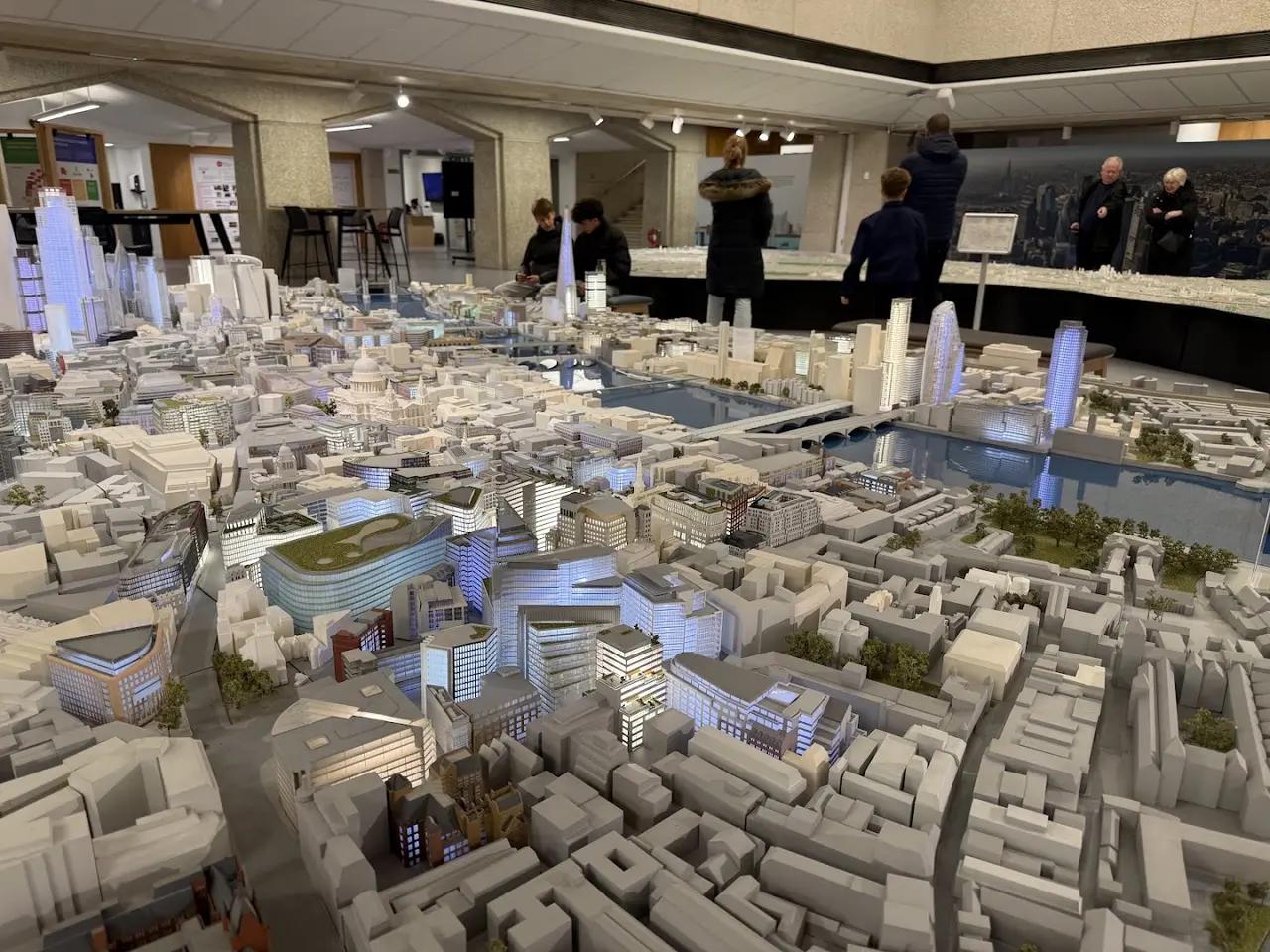
NLA - The London Centre
The City of London · Culture
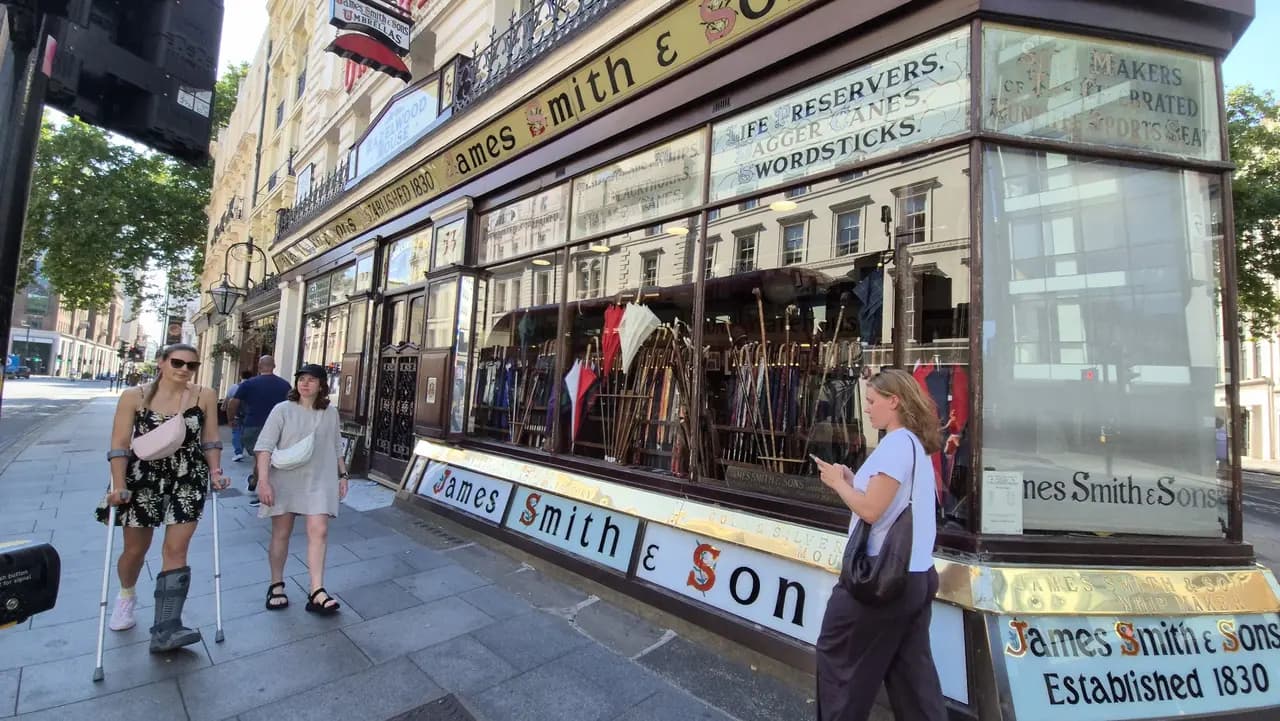
James Smith & Sons
Holborn · Shop
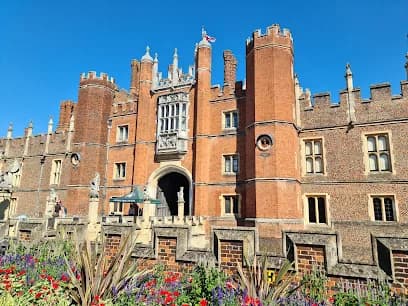
Hampton Court Palace
Culture
The largest grapevine in the world can be found at Hampton Court Palace! It was planted in 1788 by gardener Capability Brown and in 2005 was given the Guinness World record. 🌱 🍇 . . . . #london #londonhistory #livinglondonhistory #hamptoncourt #tudors #hiddenlondon #secretlondon #londontravel #londontrip #westlondon #guinnessworldrecord
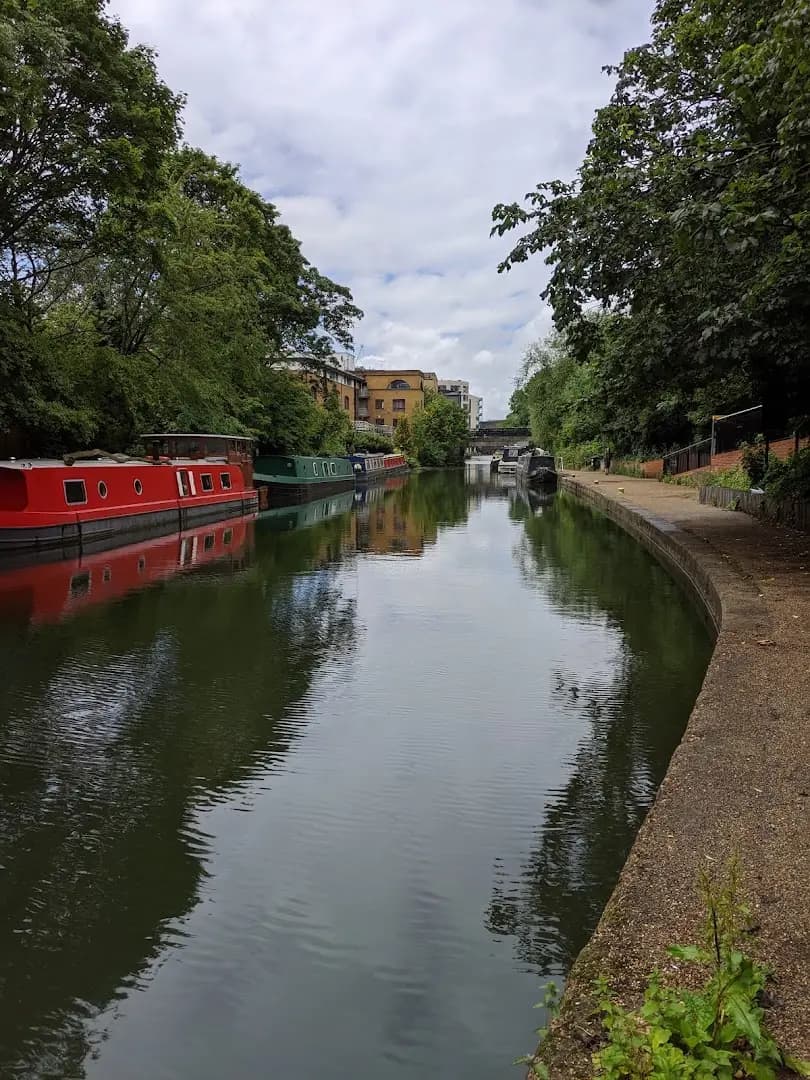
Regent's Canal
Angel · Outdoors
- C
Caledonian Park Clock Tower
Islington · Culture
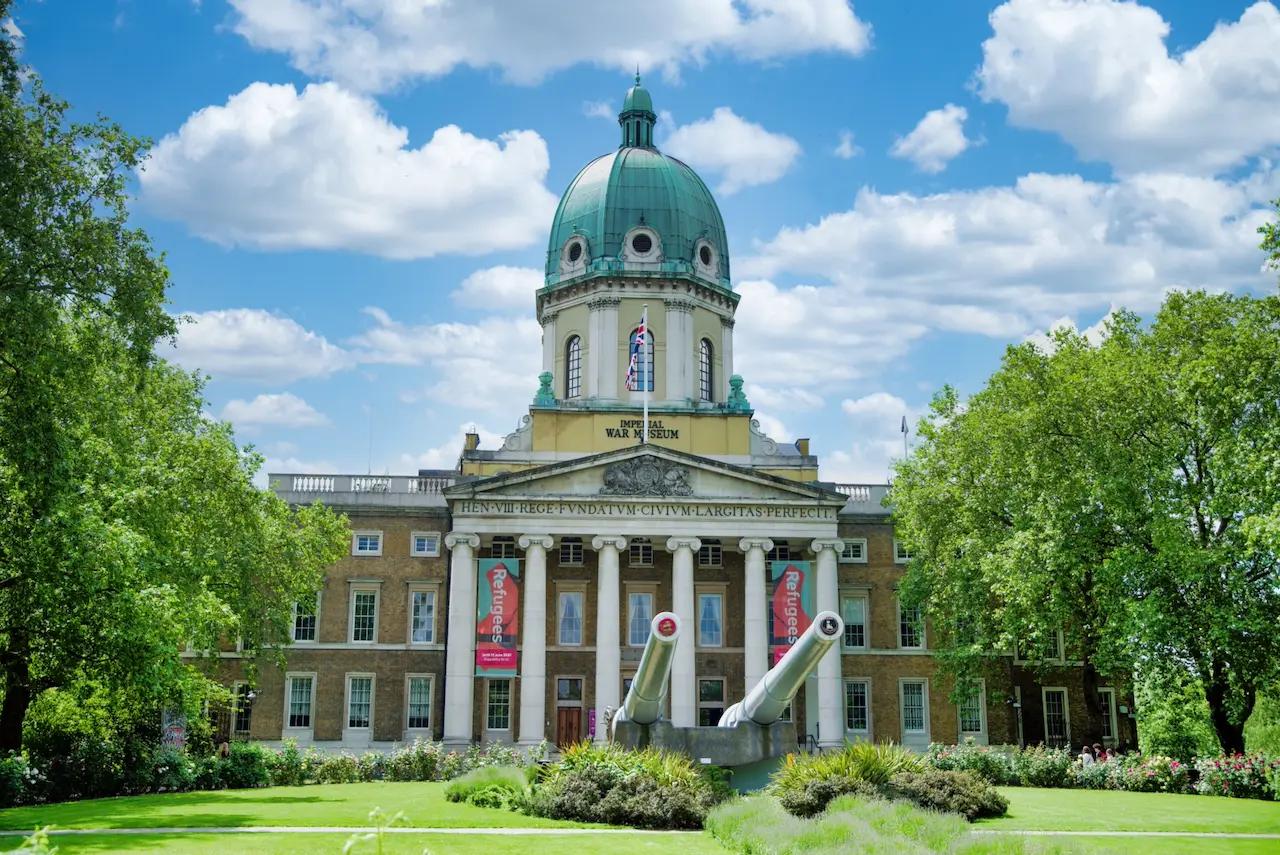
Imperial War Museum
Culture
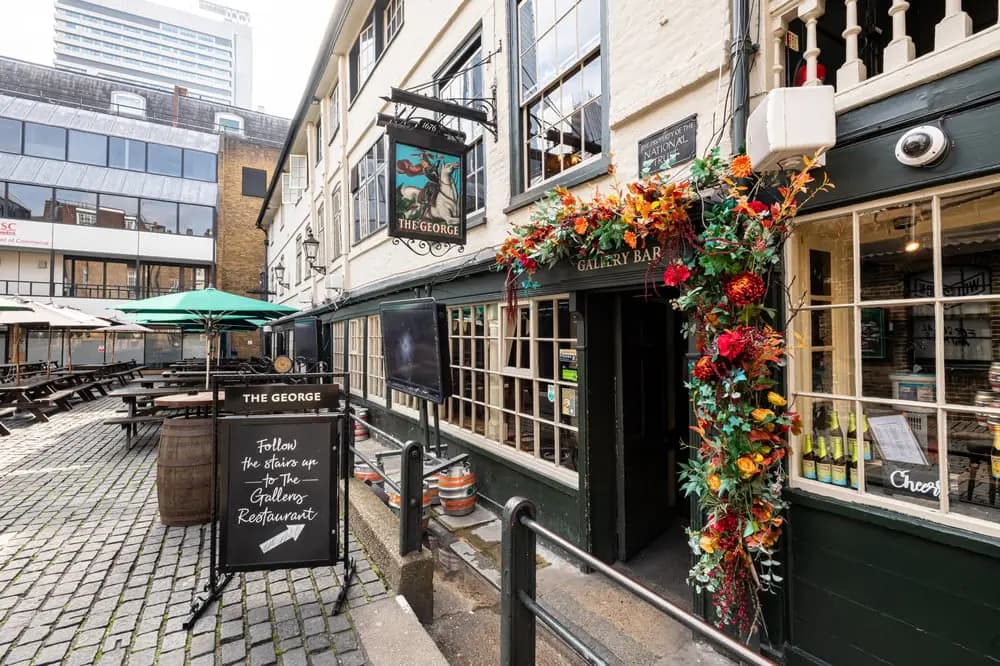
George
The City of London · Drink
- T
The Spaniards Inn
Drink
- Y
Ye Olde Mitre, Holborn
Holborn · Drink

The Blackfriar
The City of London · Drink
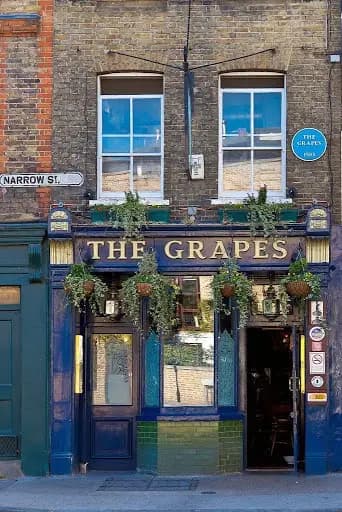
The Grapes
Canary Wharf · Drink
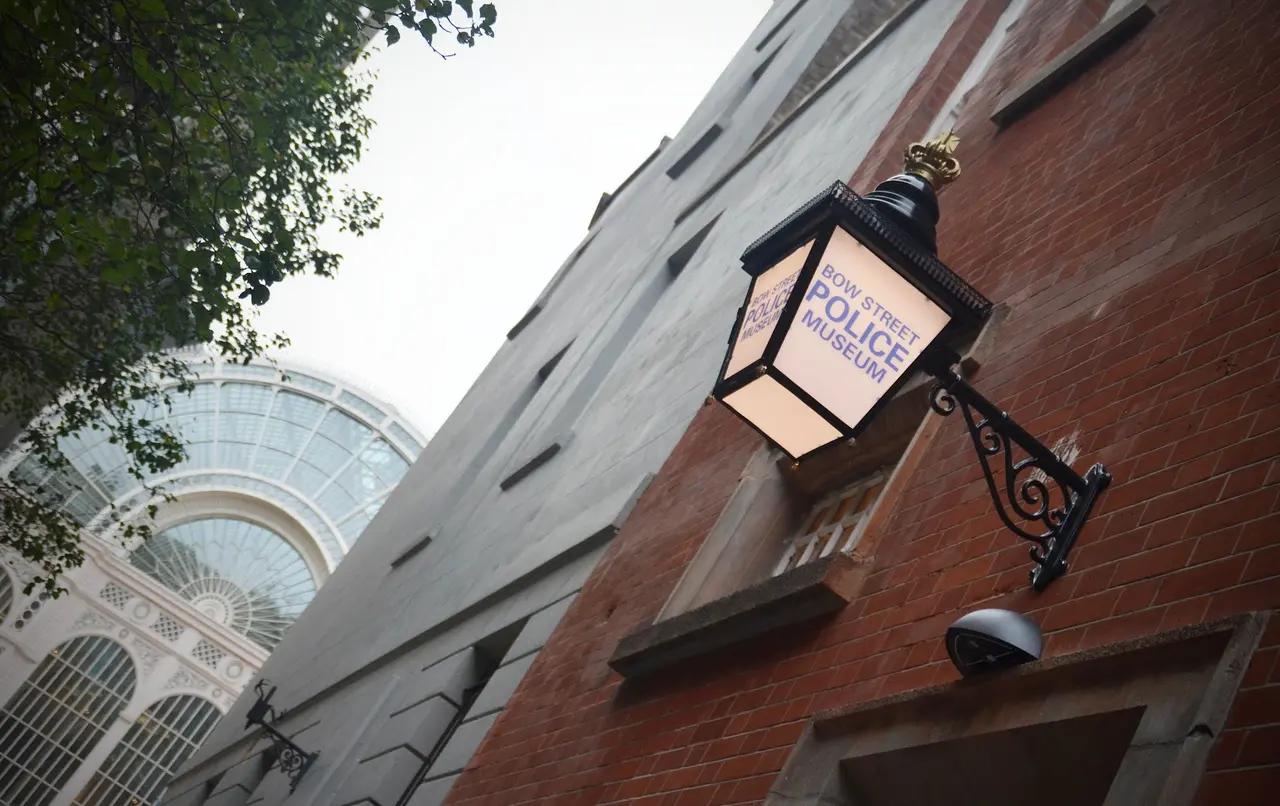
Bow Street Museum of Crime and Justice
Covent Garden · Culture
- 6
60 Holborn Viaduct
The City of London · Culture
St. Pancras London, Autograph Collection
Fitzrovia · Culture
- C
City Bridge Foundation at guildhall west wing
The City of London · Culture
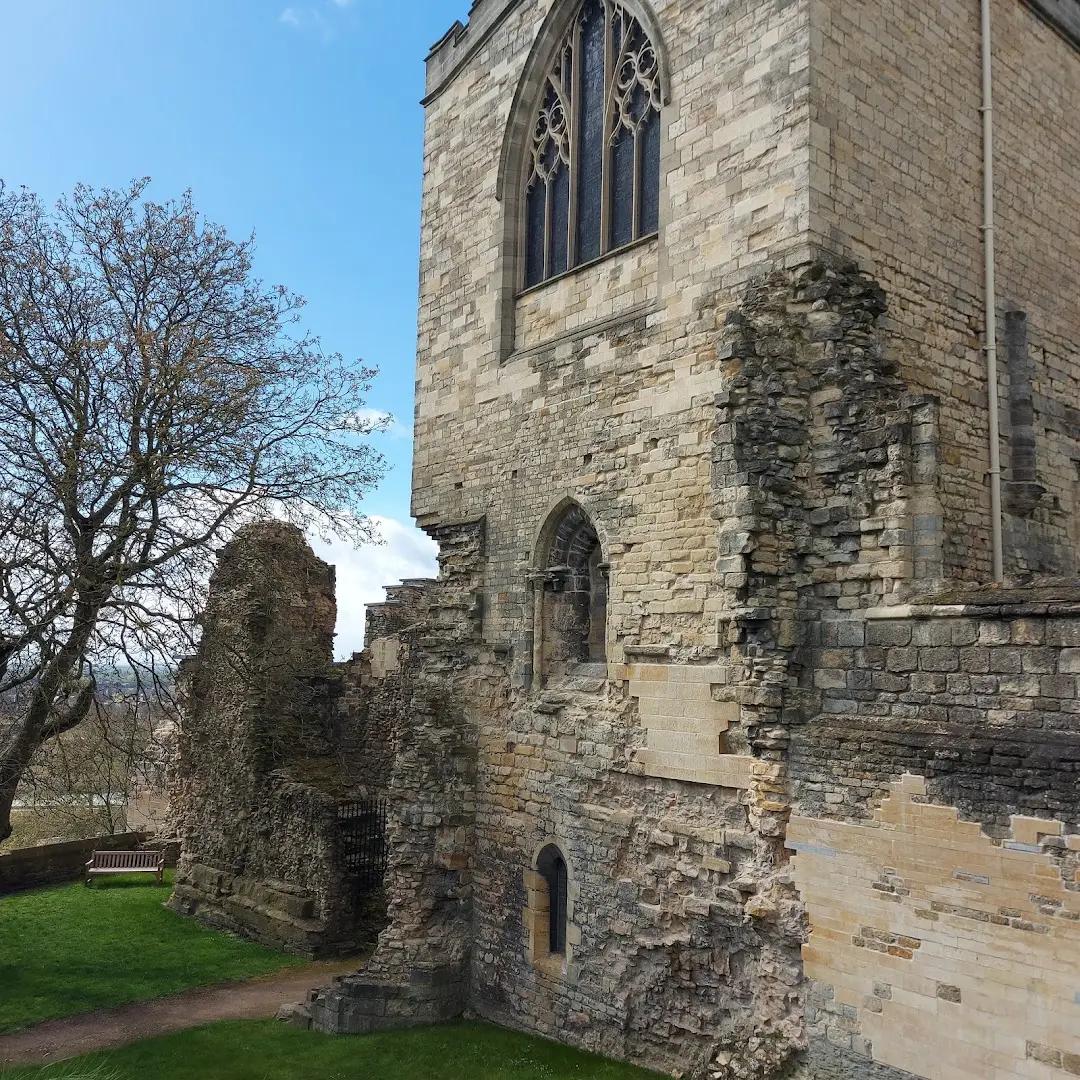
Lincoln Medieval Bishops' Palace
Culture
- L
Lewes Town Council
Culture
- L
Last Wooden Block Pavement in London
Shoreditch · Culture
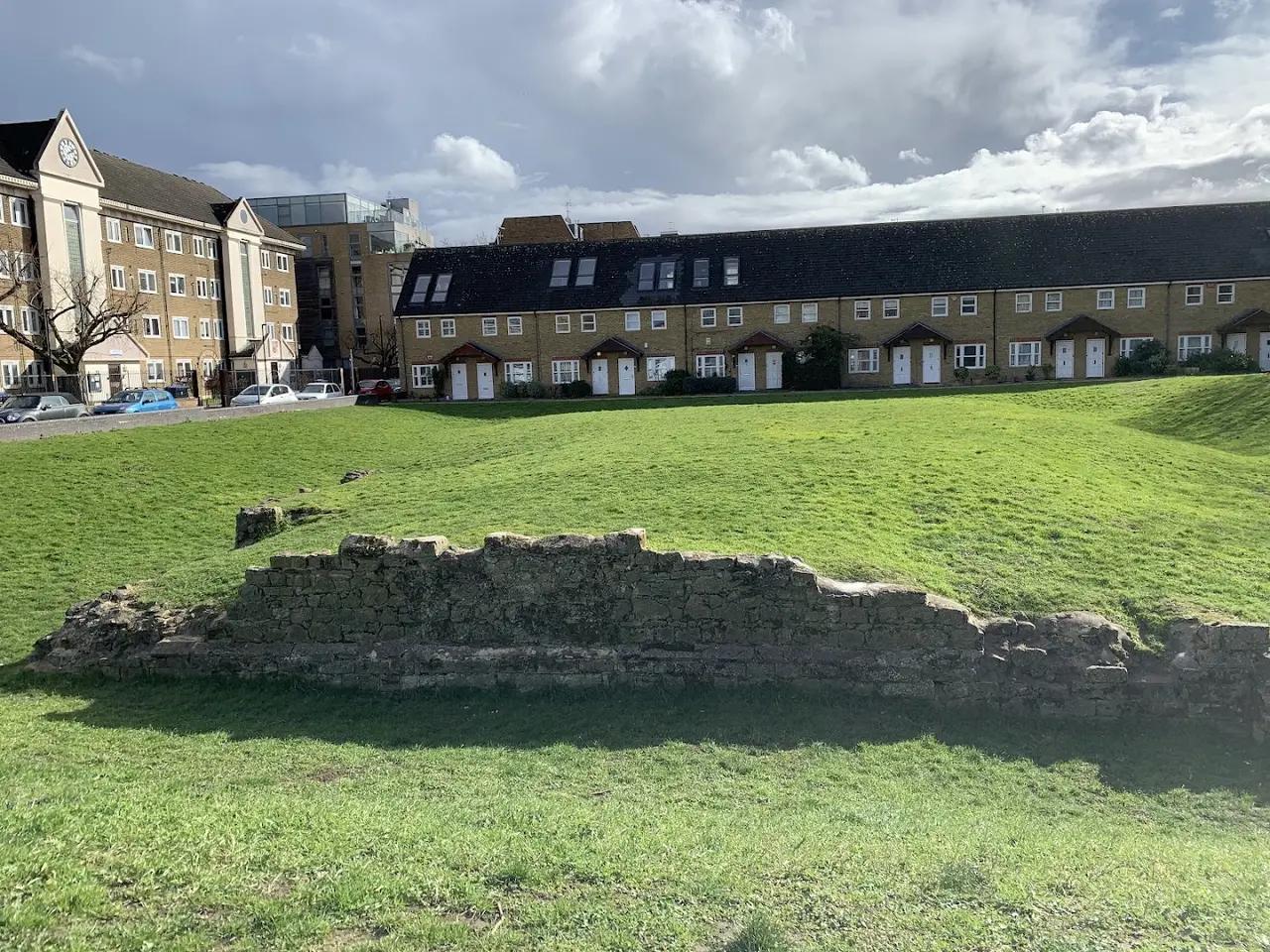
King Edward Ⅲ Manor House
Bermondsey · Culture
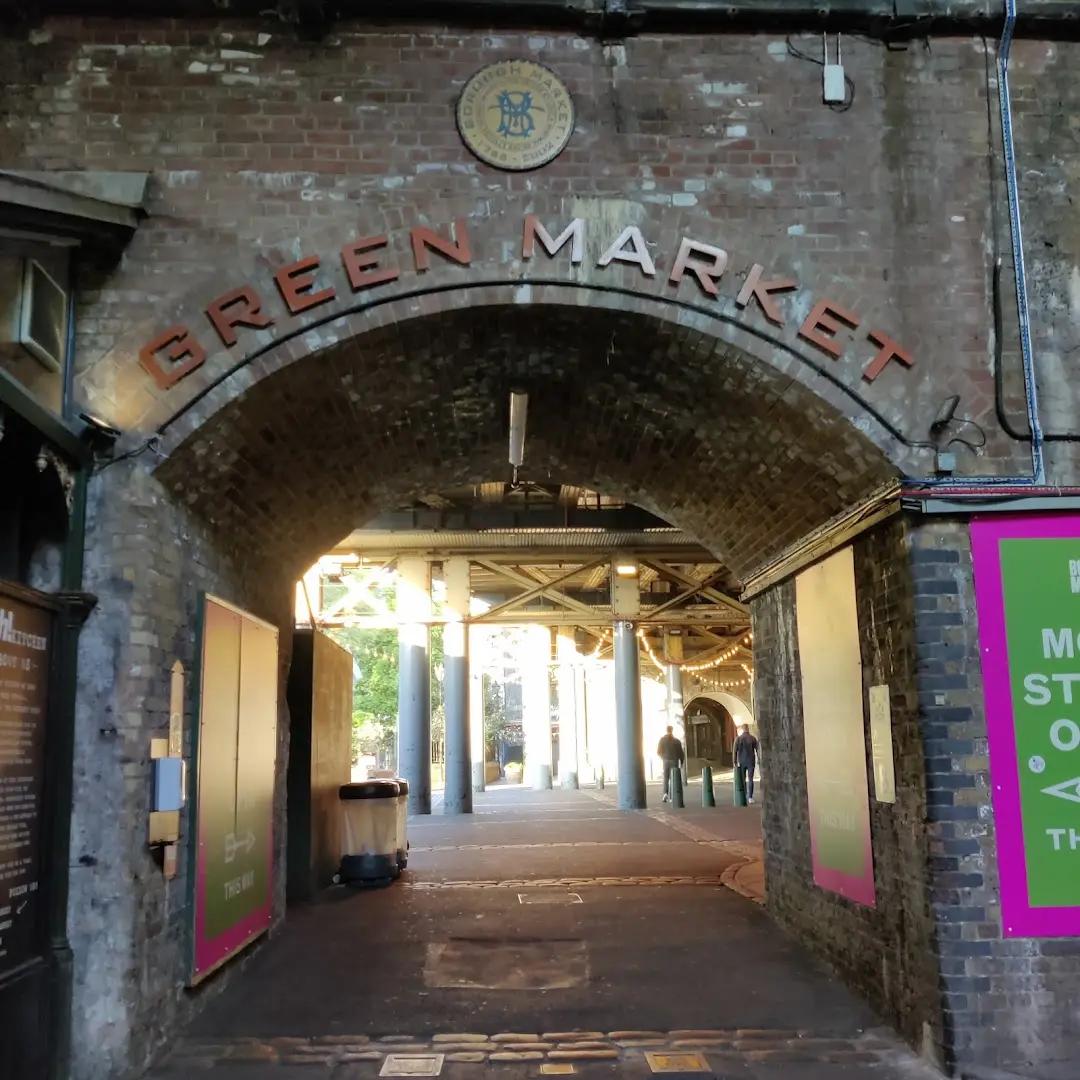
Salter Rd
Canary Wharf · Outdoors
- J
John Archer Way
Culture
- H
Hastings Fishermen's Museum
Culture
- H
Hastings
Outdoors
- H
Hastings Pier
Culture
- E
Ely Pl
Holborn · Culture
Tucked down a well-preserved 18th century street in Holborn you will find a medieval treasure… Ely Place was laid out on the site of Ely Palace, what had once been the London home of the powerful Bishops of Ely. When the palace was knocked down in the 1770s, only the chapel was kept: St Etheldreda's. It is London's oldest Catholic Church or perhaps the more wordy, 'oldest church building that is Catholic', because there are churches in London that were Catholic before St Etheldreda's. It reverted to be a Catholic Church in 1873 when it was purchased by the priest William Lockhart who had converted from Protestantism to Catholicism. You really feel like you are winding back the clock when entering St Etheldreda's. I have written a full blog post on its history (there is a link in my bio to have a read). #london #londonhistory #livinglondonhistory #holborn #catholicchurch #londonchurches #hiddenlondon #secretlondon #londonhiddengems
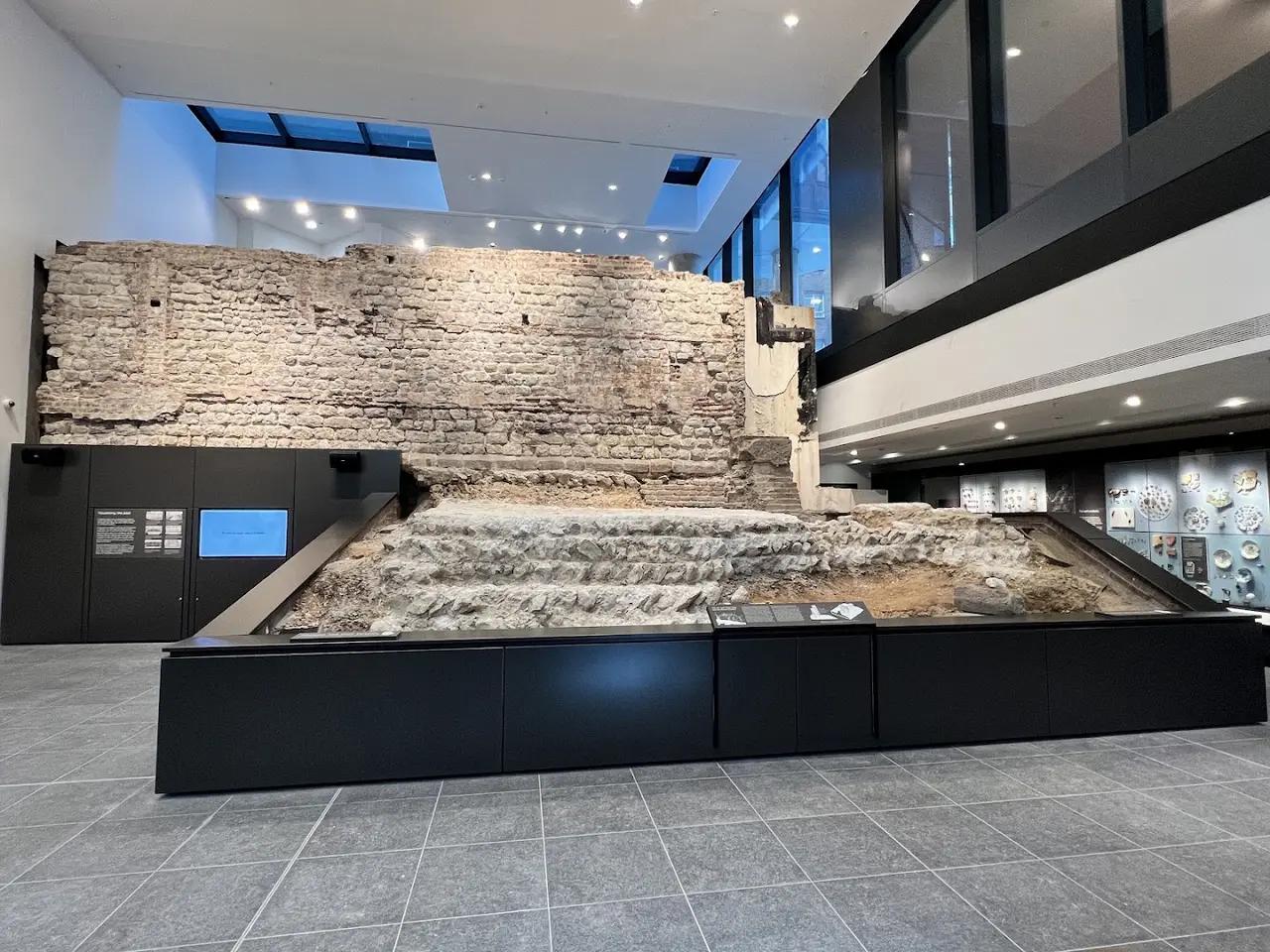
City Wall at Vine Street
The City of London · Culture
- B
Birchin Ln
The City of London · Culture
One of the narrowest alleyways in the City of London, with links to Charles Dickens… 👀 Bengal Court is one of the 150 entries in my new book London: The Hidden Corners for Curious Wanderers, out this week! There is a link in my bio to buy your copy. #london #londonhistory #londonbook #britishhistory #charlesdickens #livinglondonhistory #alleyways #londontravel #londonpub #londontrip
- C
Castle Cornet
Culture
- H
Hauteville House
Culture
- P
Priaulx Library
Culture
- O
Oldest tree in City of London
The City of London · Outdoors
- S
St Peter-upon-Cornhill Church
The City of London · Culture
On Cornhill in the City of London you will find a lesson, perhaps, in not getting in the wrong side of your neighbours… 👀 This is the story behind the so called 'Cornhill Devils'. #london #londonhistory #livinglondonhistory #cityoflondon #secretlondon #hiddenlondon #churchesoflondon #londontravel
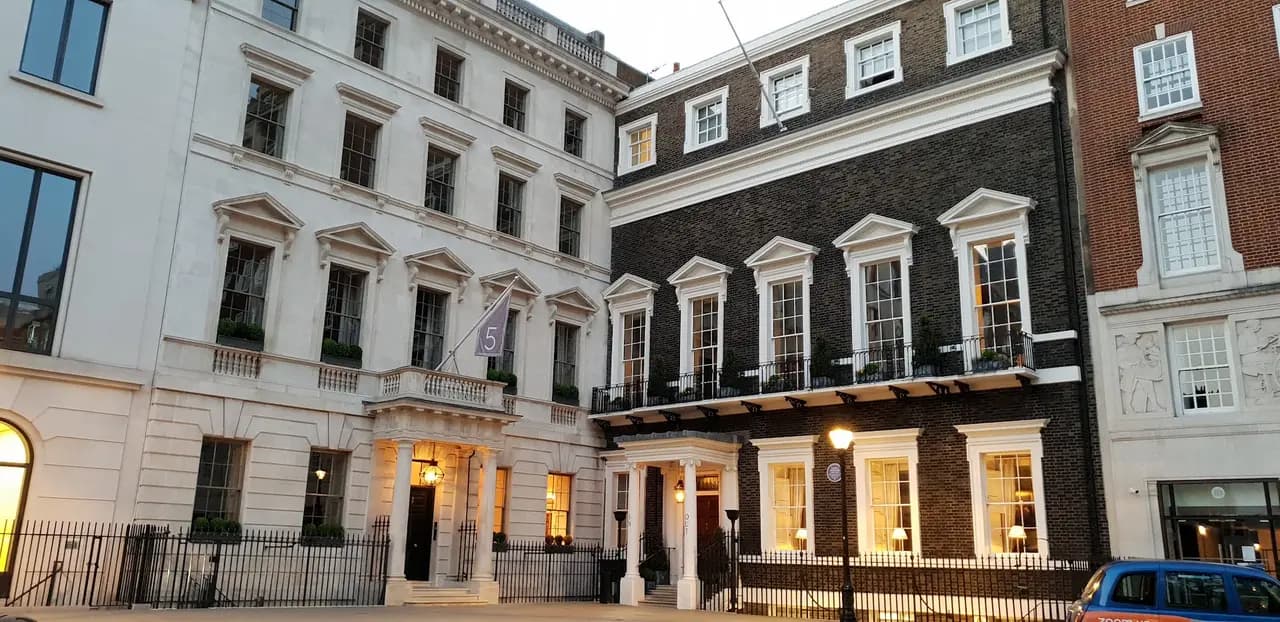
St James's Square Garden
Soho · Outdoors
Britain's oldest cheese shop, the oldest blue plaque in the country and the smallest square in London can all be found in... St James's! It is a truly extraordinary area of London with lots of fascinating historical sights to see. I saw St James's Palace, St James's Square, Jermyn Street with its shop such as Paxton and Whitfield and Floris, St James's Park, 1 King Street and the plaque to Napoleon III, Lock and Co Hatters, Berry Bros and Rudd, Pickering Place, Blue Ball Yard and The American Bar at The Stafford Hotel. There are many more sights and shops as well to discover. @stjameslondon, @thestaffordlondon #london #londonhistory #livinglondonhistory #londontravel #hiddenlondon #londonshops
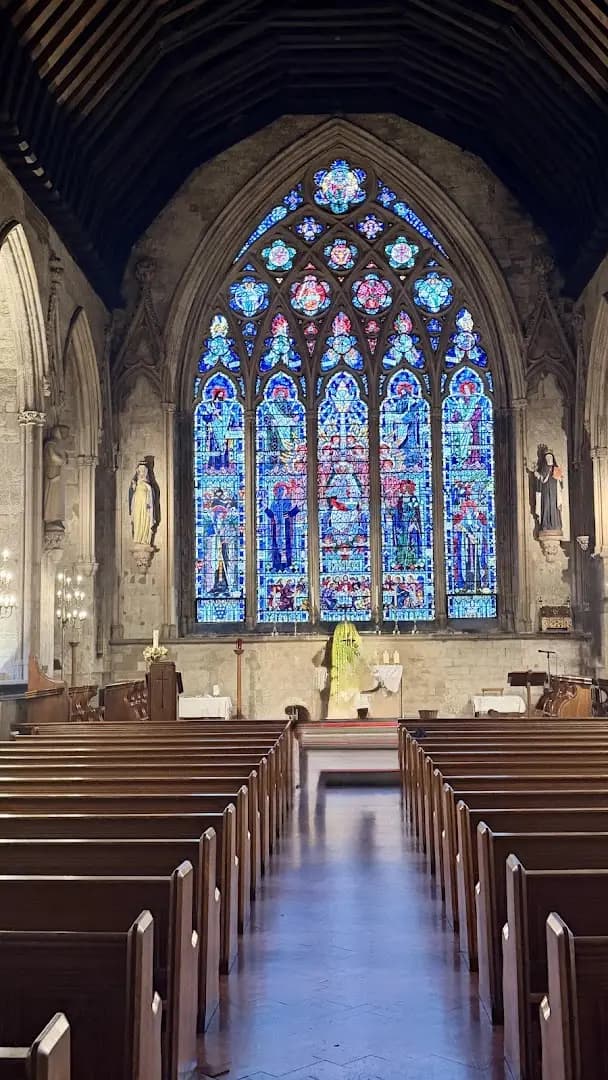
St. Etheldreda's RC Church, Farringdon
Holborn · Culture
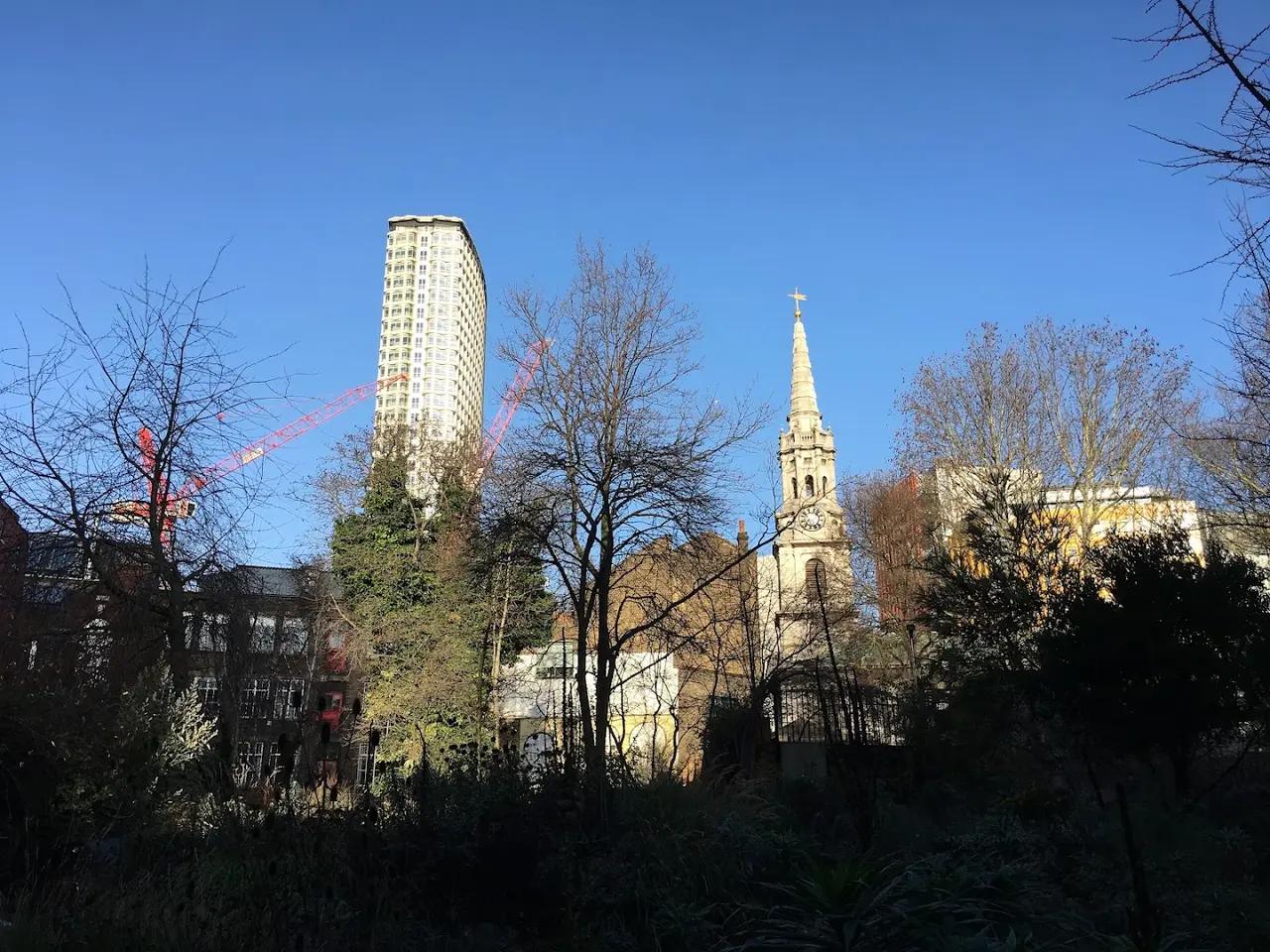
The Phoenix Garden
Soho · Outdoors
Not far from Covent Garden and Seven Dials you will find a hidden oasis… 🌱 The Phoenix Garden is one of the many little green spaces I highlight and champion in my new book, London: The Hidden Corners for Curious Wanderers! There is a link in my bio to buy your copy. #london #londonhistory #livinglondonhistory #londontravel #hiddenlondon #ww2history #secretlondon #londongarden #gardensoflondon
- W
Westminster Bridge House
Culture
The Necropolis railway! 💀 It shut due to lower than expected profits and because it sustained a lot of damage in WW2. Parts of the track still survive at the Brookwood end of the line. . . . . . . . . . . #london #londonhistory #historiclondon #southlondon #waterloo #explorelondon #victorianlondon #victorianhistory #jacktheripper #spooky #hiddenlondon #secretlondon #cemetery #londonarchitecture #historylovers #londonsbest #londonwalks #visitlondon #itssolondon #londonbylondoners #historyfacts
- 4
4 Vale of Health
Hampstead · Culture
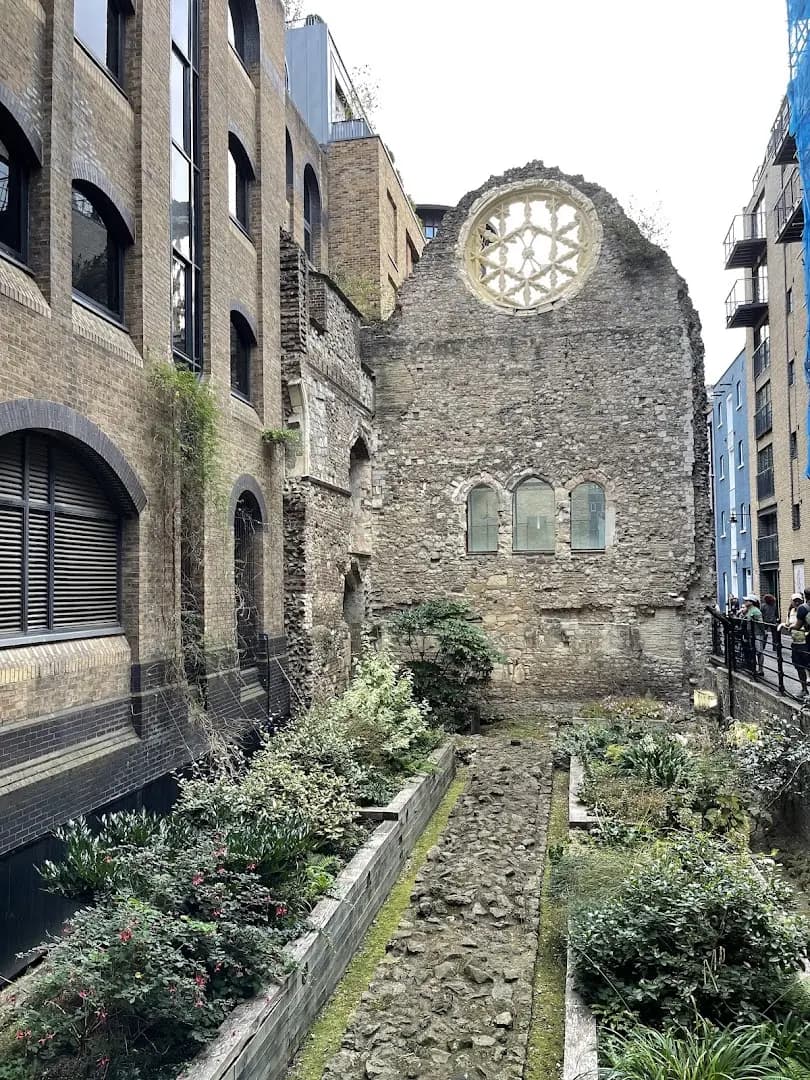
Winchester Palace
The City of London · Culture
|AD| I have partnered with Historic England to show you some of the fascinating, quirky, historic spots in London they have been supporting! If walls could talk... 👁 The sprawling Winchester Palace complex would have once had two courtyards, its own prison, butchery, tennis court and bowling alley! The Great Hall would have been richly decorated and grand events were hosted here, for example the marriage of James I of Scotland and Jean Beaufort in 1424. 👰 Today the Grade II listed 'scheduled ancient monument' is managed by @englishheritage. A Culture Recovery Fund grant distributed by @historicengland, has meant that maintenance works have been able to take place including crucial masonry stabilisation, to help preserve this unique piece of London heritage for future generations. 🙌 . . . . . . #hereforculture #livinglondonhistory #london #medievalhistory #londonhistory #britishhistory #hiddengem #hiddenlondon #secretlondon #lovelondon #historyfacts #londontrip #londontravel #explorelondon #londonwalks #historiclondon #londonbylondoners
- A
Angel Place
Bermondsey · Outdoors
- W
Wine Office Ct
Holborn · Culture
- B
Bengal Ct
The City of London · Culture
- P
Pelican Stairs
Whitechapel · Culture
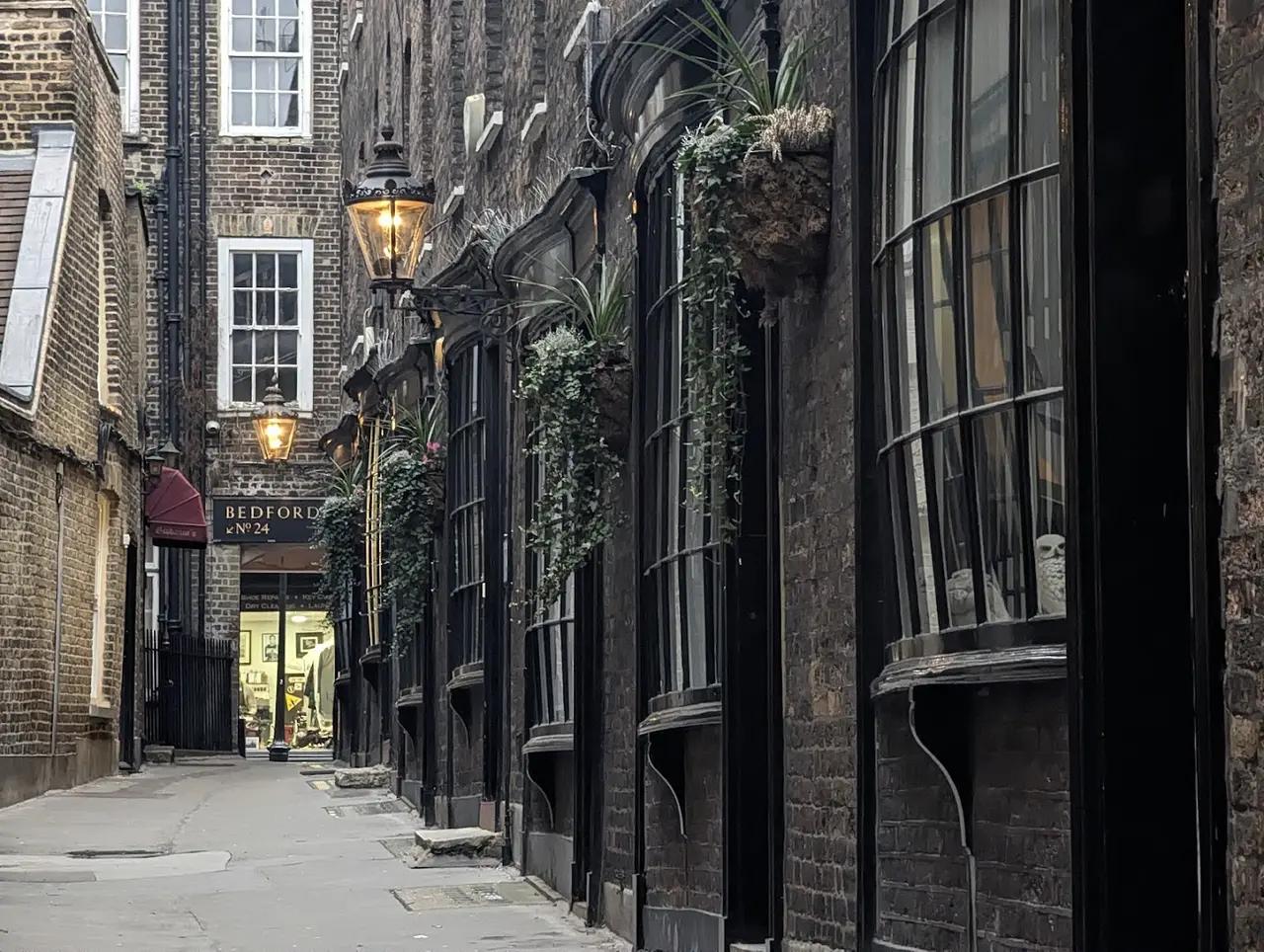
Goodwin's Ct
Covent Garden · Culture
- A
Artillery Psge
Shoreditch · Culture
- M
Magpie Alley
Holborn · Culture
- S
St Michael's Alley
The City of London · Culture
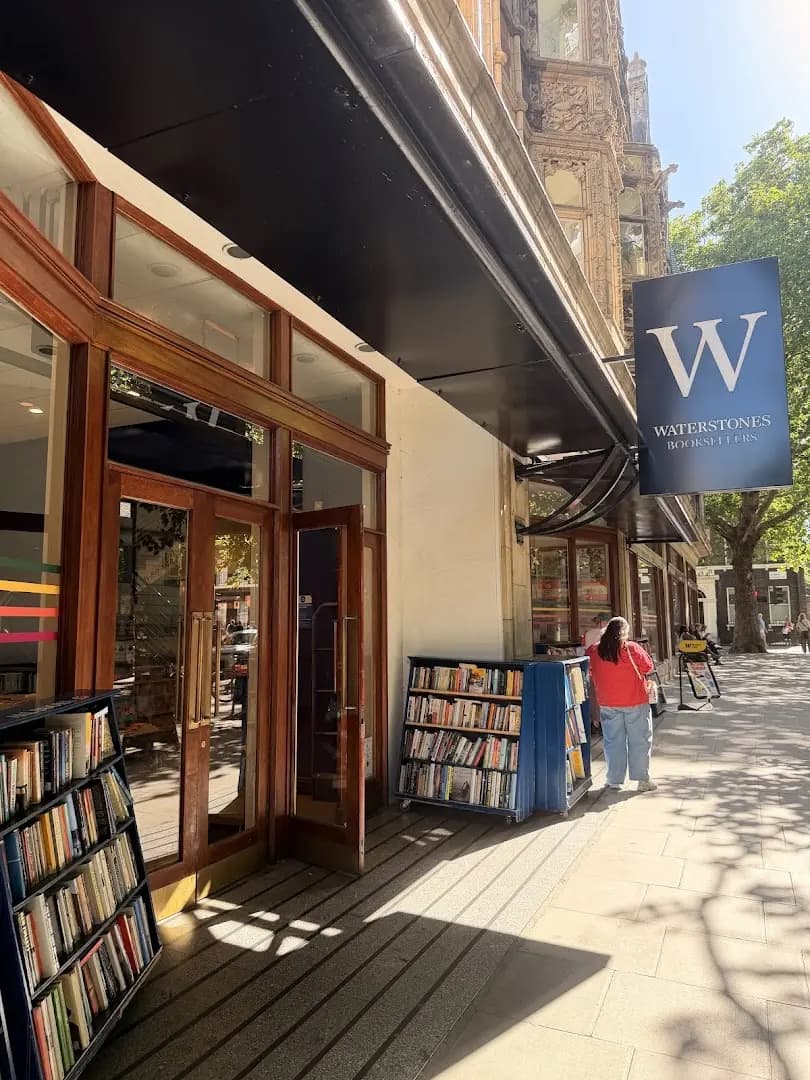
Waterstones
Soho · Shop
I had SUCH a great time at the launch last night for London: The Hidden Corners for Curious Wanderers! Thank you to @piccadillywaterstones for hosting and thank you to everyone that came along 🙌 As the book is officially out tomorrow (Thursday 17th), today is the last opportunity to get a discounted copy of the book through the Waterstones website with their code HIDDENCORNERS25. There is a link in my bio to buy a copy. Thanks to @photobya4 for the lovely pics.
- S
Sham Bridge
Highgate · Outdoors
- K
Kenwood House
Highgate · Culture
- S
Stone of Free Speech
Highgate · Culture
- P
Parliament Hill Viewpoint
Hampstead · Outdoors
- H
Hampstead Heath Tumulus
Hampstead · Outdoors
- V
Viaduct Bridge
Hampstead · Culture
- T
The Hill Garden and Pergola
Hampstead · Outdoors
- J
John Linnell and William Blake Blue Plaque
Culture
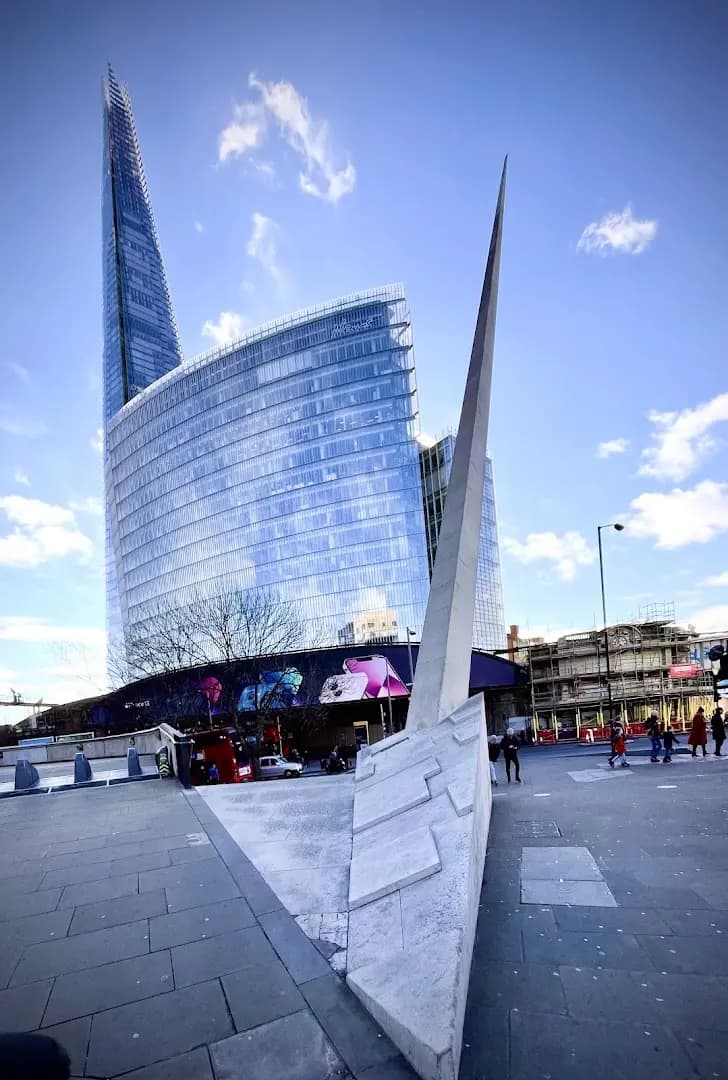
Southwark Gateway Needle
The City of London · Culture
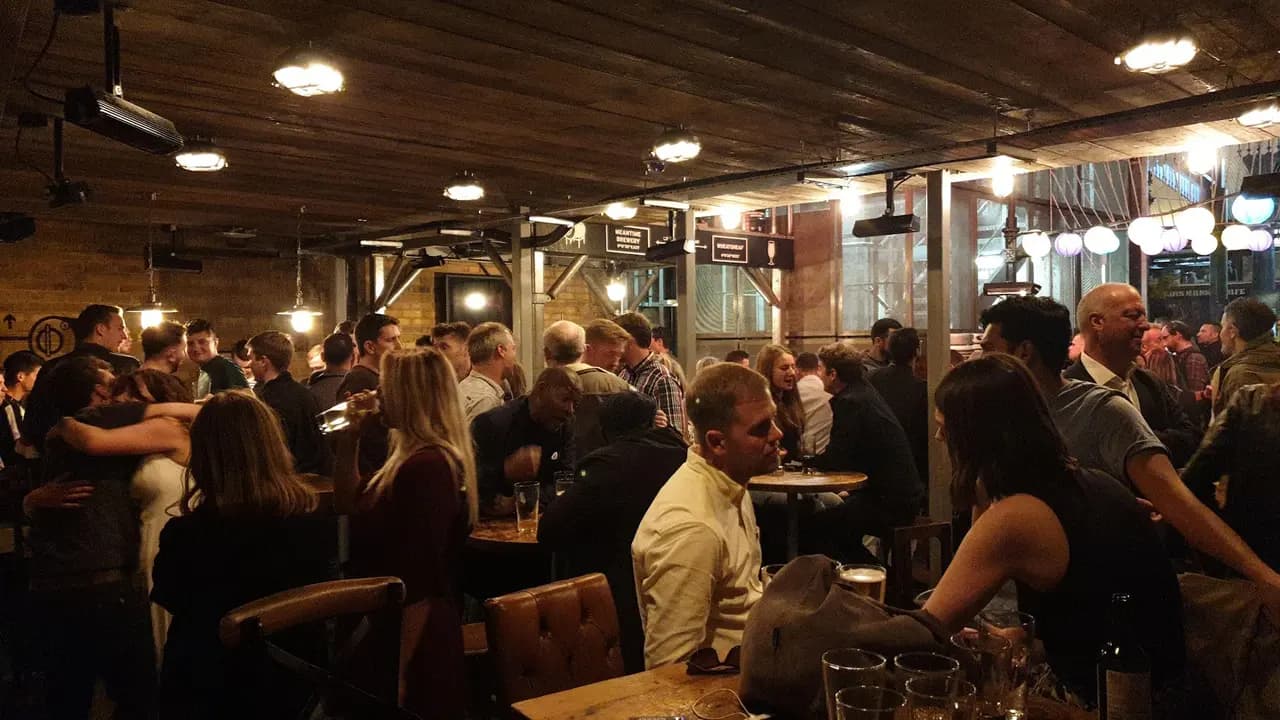
The Wheatsheaf
The City of London · Drink
The London pub that has had its head lopped off! It can be found on Stoney Street in Borough Market… Does anyone have a favourite pub to go to in this area? 🍻 #london #londonhistory #londonpub #southlondon #boroughmarket #londontravel
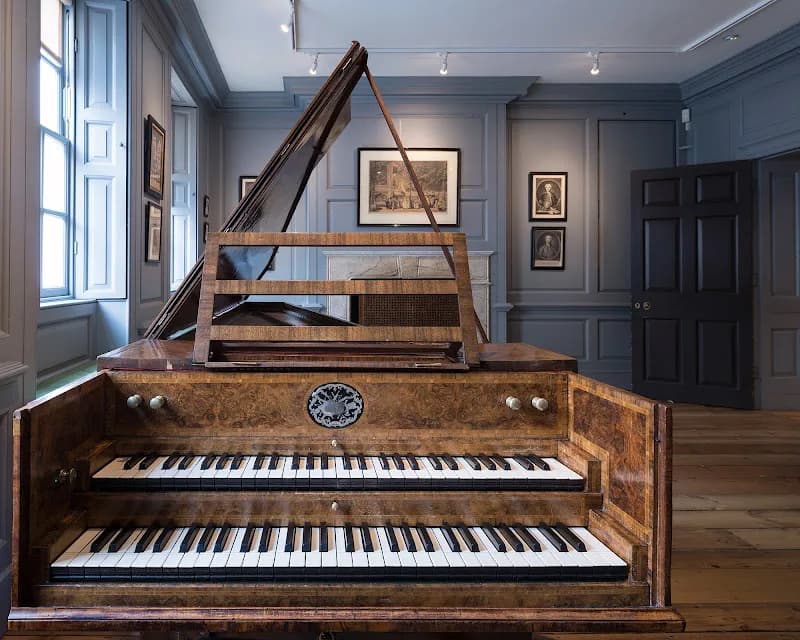
Handel Hendrix House
Mayfair · Culture
In Mayfair there is a museum born from a remarkable historical coincidence: the Handel Hendrix House 🎶 George Frideric Handel lived at number 25 Brook Street from 1723-1759 and Jimi Hendrix, just under 250 years later lived at number 23 Brook Street from July 1968-1969. The museum is open from Wednesday-Sunday 10am-5pm and is well worth a visit. I have written a full blog post on its history, there is a link in my bio to read that. #london #londonhistory #livinglondonhistory #londontravel #mayfair #londonmuseum #musichistory #museumsoftheworld
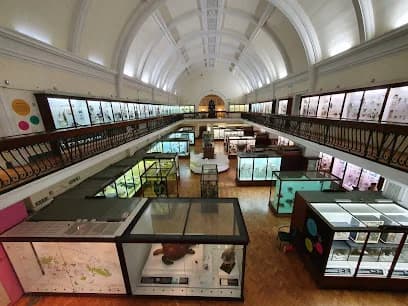
Horniman Museum and Gardens
Culture
- H
Havelock Walk
Shop
- F
Forest Hill Pools
Activities
- F
Forest Hill
Outdoors
- C
Cleopatra's Needle
Covent Garden · Culture
The oldest man-made object on the streets of London is this: Cleopatra's Needle. It is an Ancient Egyptian obelisk, raised in Heliopolis in around 1450BC. It was presented to Britain by the then ruler of Egypt, a man called Muhammad Ali, who was Balkan-born viceroy of Egypt on behalf of the Ottoman Empire. There is a detail at the base of the Needle that many miss… #london #londonhistory #livinglondonhistory
Embankment Place Cabmen's Shelter
Covent Garden · Culture
Three of London's thirteen surviving green Cabmen's shelters. (Grosvenor Gardens, Northumberland Avenue and Russell Square). They were installed from the 1870s to provide a place for Victorian cabbies to shelter from adverse weather conditions, but also to have a hot drink and some food. The shelters would usually have metal bars around the sides to tie a horse to. They were designed to be the same width as a horse and cart, so could be positioned by the side of the road out the way. Between 1875-1914 61 shelters were installed across London but there are only 13 left. Lots were lost in the world wars, as well as road widening schemes and vandalism. Pretty much all of those 13 are still cabbie's shelters, the inside strictly for cabbies, but most provide hot drinks and food to the public from the hatch. Link in my bio for the full blog post with a map of their locations. They are also one of the details I highlight in my first book! #london #londonhistory #livinglondonhistory #hiddenlondon #londontravel #londontrip #victorianlondon #historylovers
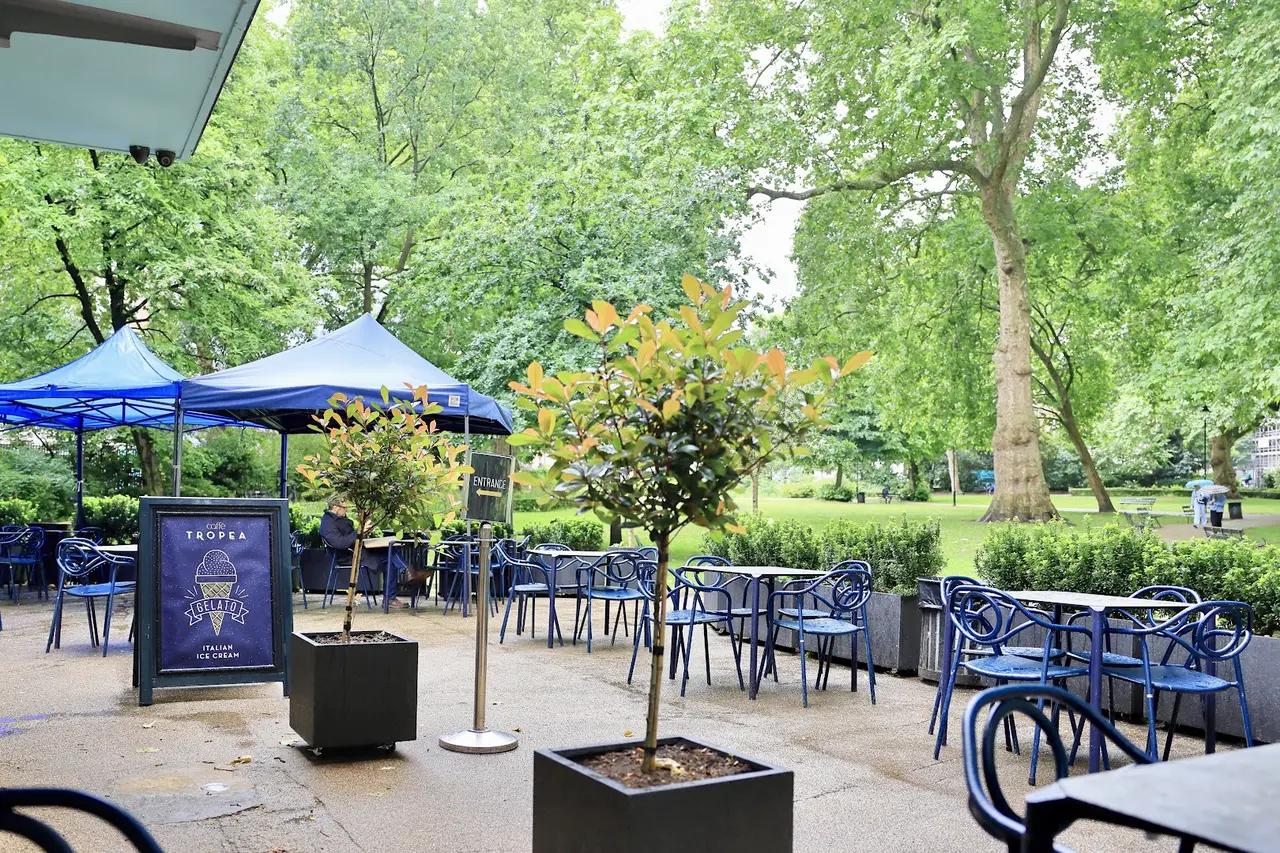
Russell Square Cabmen's Shelter
Holborn · Culture
Three of London’s thirteen surviving green Cabmen’s shelters. (Grosvenor Gardens, Northumberland Avenue and Russell Square). They were installed from the 1870s to provide a place for Victorian cabbies to shelter from adverse weather conditions, but also to have a hot drink and some food. The shelters would usually have metal bars around the sides to tie a horse to. They were designed to be the same width as a horse and cart, so could be positioned by the side of the road out the way. Between 1875-1914 61 shelters were installed across London but there are only 13 left. Lots were lost in the world wars, as well as road widening schemes and vandalism. Pretty much all of those 13 are still cabbie’s shelters, the inside strictly for cabbies, but most provide hot drinks and food to the public from the hatch. Link in my bio for the full blog post with a map of their locations. They are also one of the details I highlight in my first book! #london #londonhistory #livinglondonhistory #hiddenlondon #londontravel #londontrip #victorianlondon #historylovers
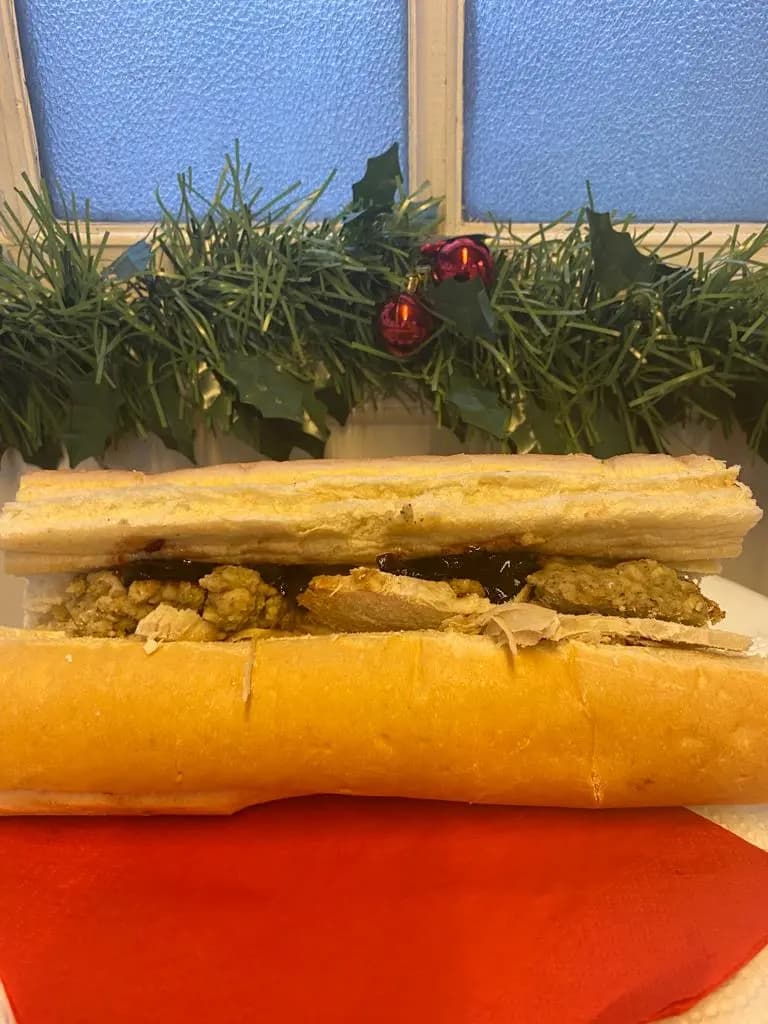
Grosvenor Gardens Cabmen’s Shelter
Victoria · Culture
Three of London’s thirteen surviving green Cabmen’s shelters. (Grosvenor Gardens, Northumberland Avenue and Russell Square). They were installed from the 1870s to provide a place for Victorian cabbies to shelter from adverse weather conditions, but also to have a hot drink and some food. The shelters would usually have metal bars around the sides to tie a horse to. They were designed to be the same width as a horse and cart, so could be positioned by the side of the road out the way. Between 1875-1914 61 shelters were installed across London but there are only 13 left. Lots were lost in the world wars, as well as road widening schemes and vandalism. Pretty much all of those 13 are still cabbie’s shelters, the inside strictly for cabbies, but most provide hot drinks and food to the public from the hatch. Link in my bio for the full blog post with a map of their locations. They are also one of the details I highlight in my first book! #london #londonhistory #livinglondonhistory #hiddenlondon #londontravel #londontrip #victorianlondon #historylovers
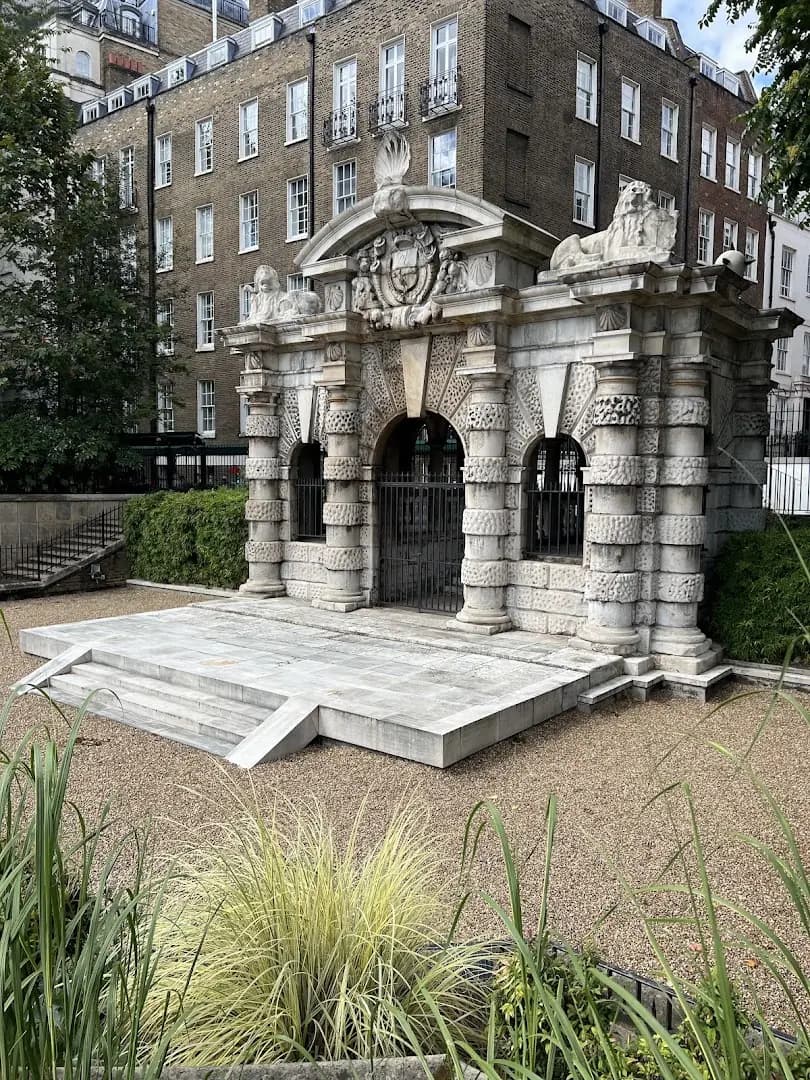
York Watergate
Covent Garden · Culture
Walking through Victoria Embankment Gardens you will see this unusual structure… Rather at odds with its surroundings today, it is called the York Watergate and has a fascinating story to tell. . . . #london #londonhistory #livinglondonhistory #victorianhistory #hiddenlondon #secretlondon #londontravel #charingcross #cityofwestminster
- C
Christ Church & Upton Chapel
Culture
Just outside Lambeth North tube station is a gothic revival church tower. Look closely for a detail that hints to its history… 👀 Have you ever spotted it and what do you think of the post-war concrete detail? #london #londonhistory #livinglondonhistory #usahistory #victorianarchitecture #southlondon #hiddenlondon
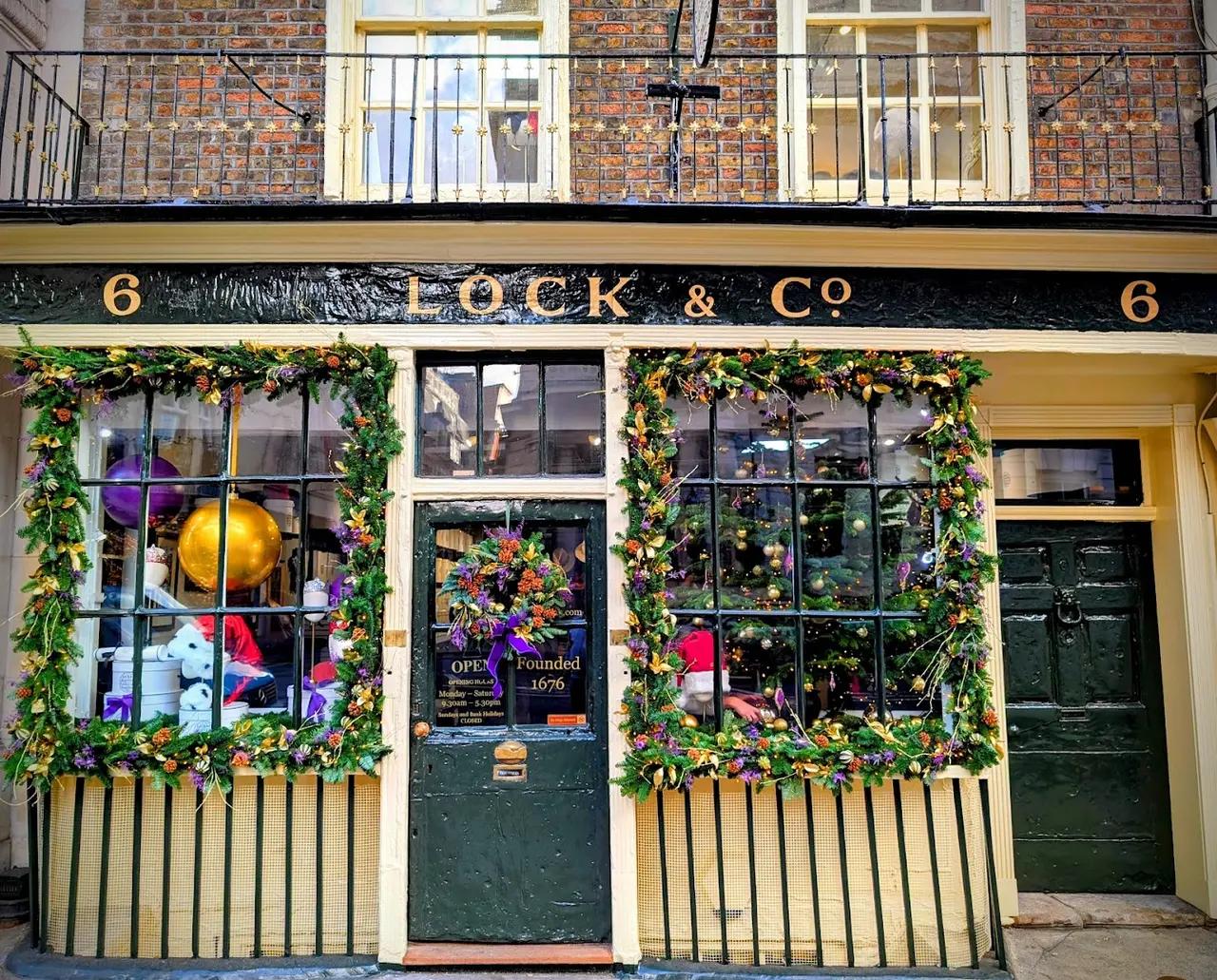
Lock & Co. Hatters
Soho · Shop
A visit to London's oldest shop! Lock and Co Hatters were established on St James's Street in 1676 and is still run by descendants of the same family today. They invented the bowler hat and have had many famous customers over the years including Princess Diana, Charlie Chaplin, FDR, Jackie Onassis, Jackie Chan and many more. EDIT: 'Coke' is pronounced 'Cook'. For the full history behind this wonderful slice of living history, there is a link in my bio for the longer blog post. . . . . #london #londonhistory #livinglondonhistory #stjamesstreet #londonshop #londonfashion #cityofwestminster
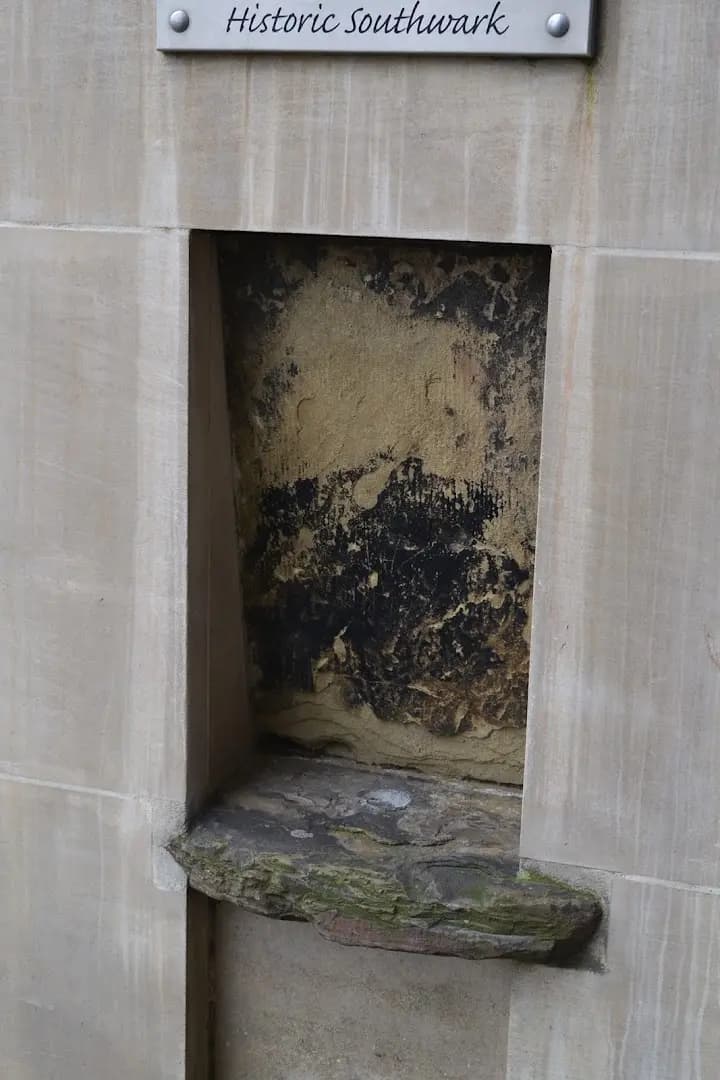
The Ferryman's Seat
The City of London · Culture
Down a little side street on the South bank of the river is a lovely historic detail that lots of people miss: the 'Ferryman's Seat'. This is the story behind it! #london #londonhistory #livinglondonhistory #southbank #bankside #globetheatre #southwark #tudorlondon #tudorhistory #londonbridge
- A
All Hallows by Tower Church
The City of London · Culture
A nod to one of London's lost rivers in the City of London. The installation can be found at either end of Bloomberg Arcade. The amazing model of Roman London, shown in the video, can be seen in the crypt of All Hallows by the Tower church. @cristinaiglesiasestudio . . . . . #london #lostrivers #lostriver #walbrook #livinglondonhistory #londonhistory #londontravel #hiddenlondon #secretlondon #art #cityart #streetsoflondon #londonart
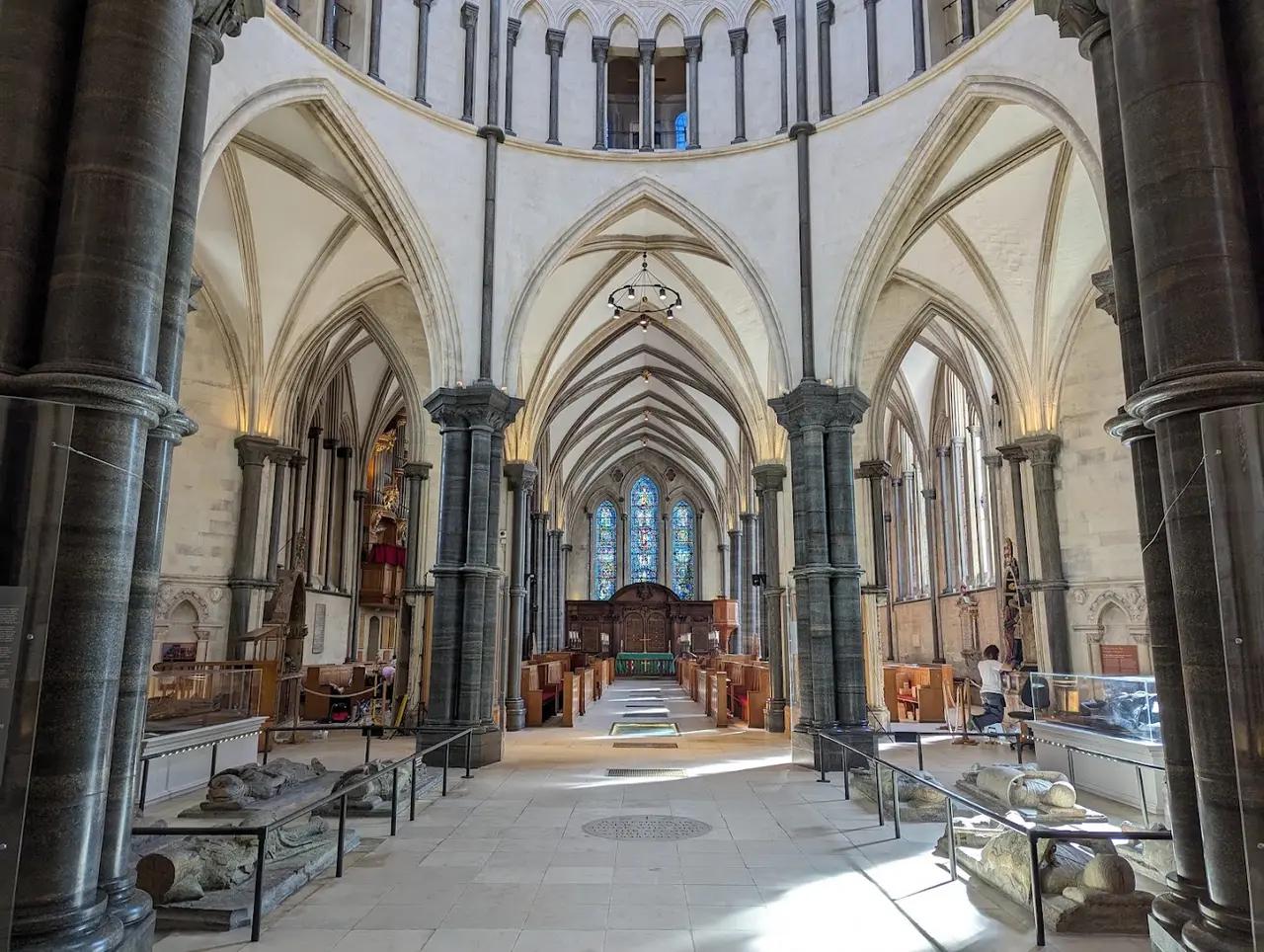
Temple Church
Holborn · Culture
The story of Temple Church, one of London's most historic and beautiful churches! #london #londonhistory #livinglondonhistory #temple #innsofcourt #knightstemplar #medievalhistory #churcharchitecture #churchphotography #churchhistory #churchesofinstagram #churchesofengland
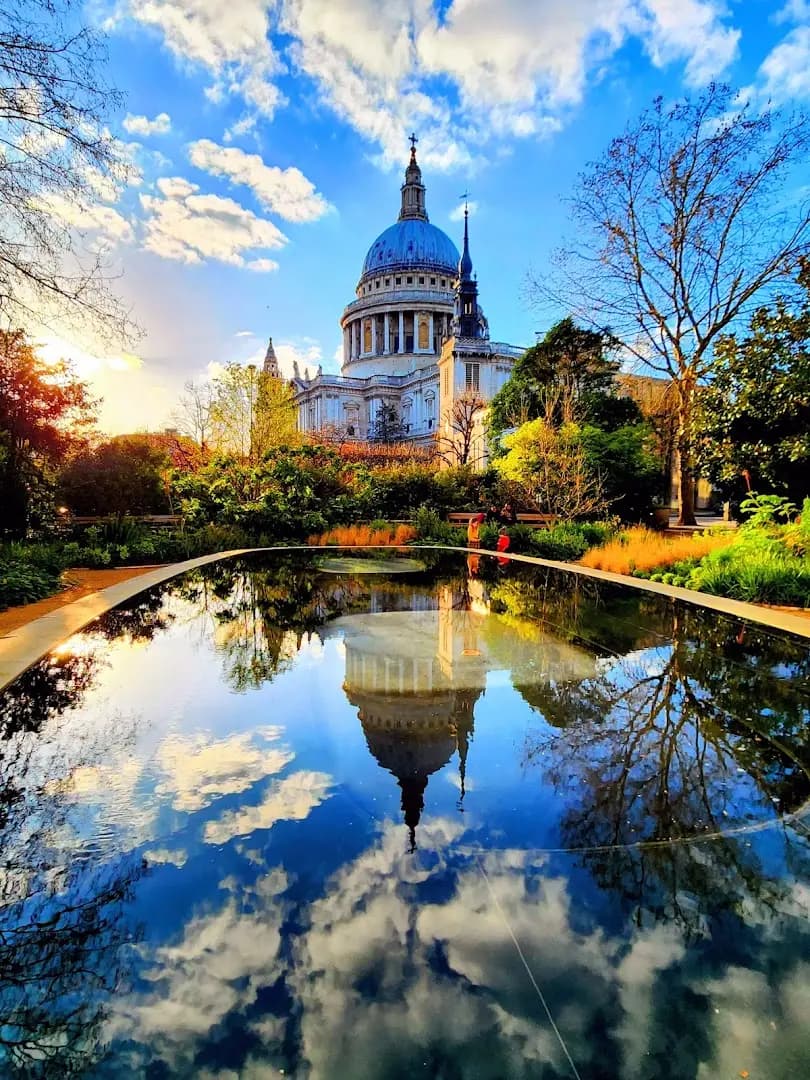
Reflection Garden
The City of London · Outdoors
For those wondering, the Titanic weighed just over 52,000 tons. 🤯 . . . . . . . #london #londonhistory #stpaulscathedral #cityoflondon #livinglondonhistory #stpauls #cathedral #londonphoto #londonphotography #funfact #historyfacts #hiddenlondon #secretlondon #explorelondon #londonwalks #lovelondon #londontravel #londontrip #wren #wren300 #londonarchitecture #architecturephotography #architecturephotography
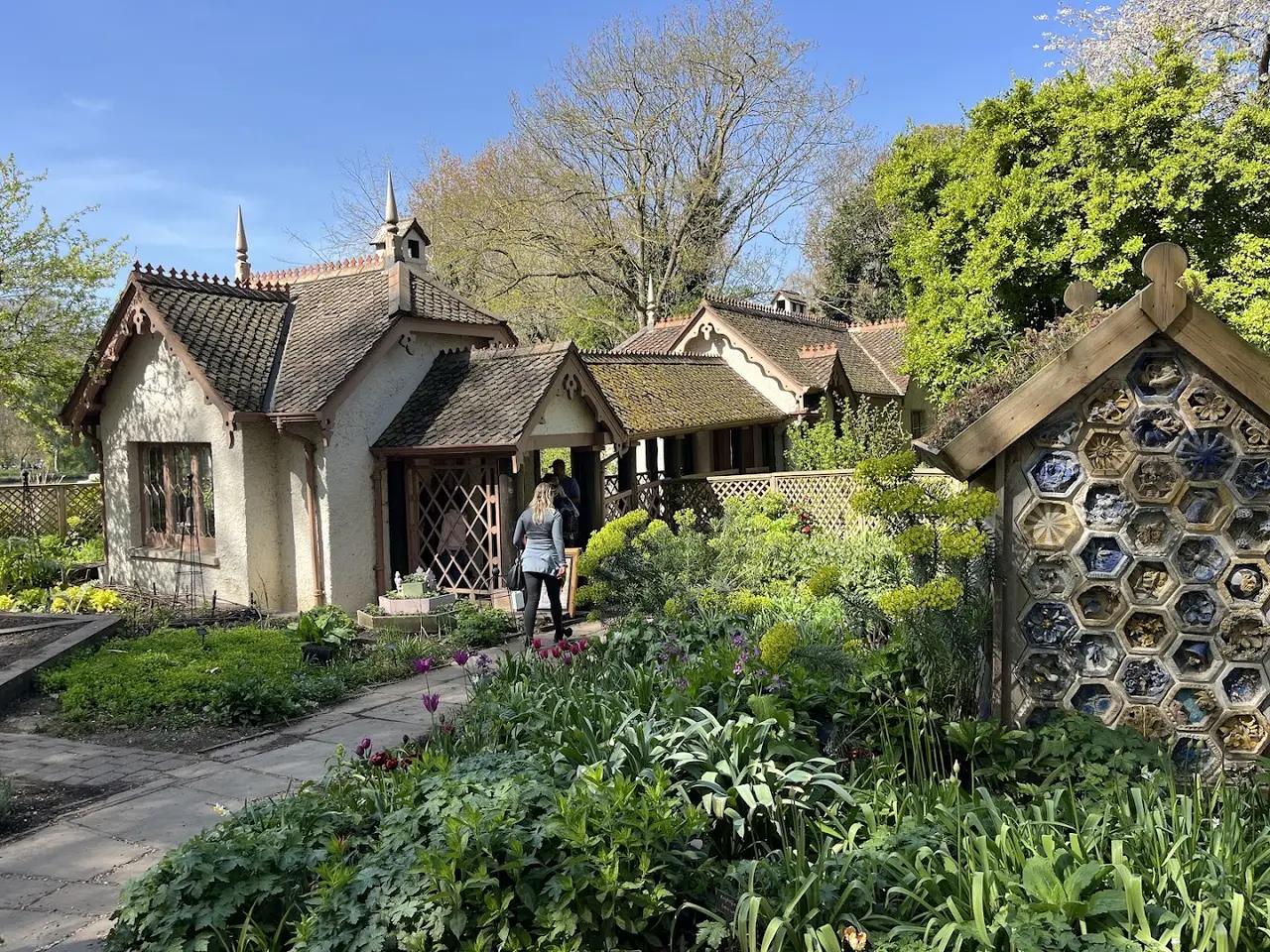
Duck Island Cottage
Westminster · Outdoors
Not a bad location to have your house eh! 🦢 . . . . . . . #london #londonhistory #history #hiddenlondion #secretlondon #livinglondonhistory #explorelondon #londontrip #londontravel #londonlife #londonpark #londonparks @theroyalparks #london🇬🇧 #londoncity #beautifullondon
- 1
121 Westminster Bridge Rd
Culture
The Necropolis railway! 💀 It shut due to lower than expected profits and because it sustained a lot of damage in WW2. Parts of the track still survive at the Brookwood end of the line. . . . . . . . . . . #london #londonhistory #historiclondon #southlondon #waterloo #explorelondon #victorianlondon #victorianhistory #jacktheripper #spooky #hiddenlondon #secretlondon #cemetery #londonarchitecture #historylovers #londonsbest #londonwalks #visitlondon #itssolondon #londonbylondoners #historyfacts
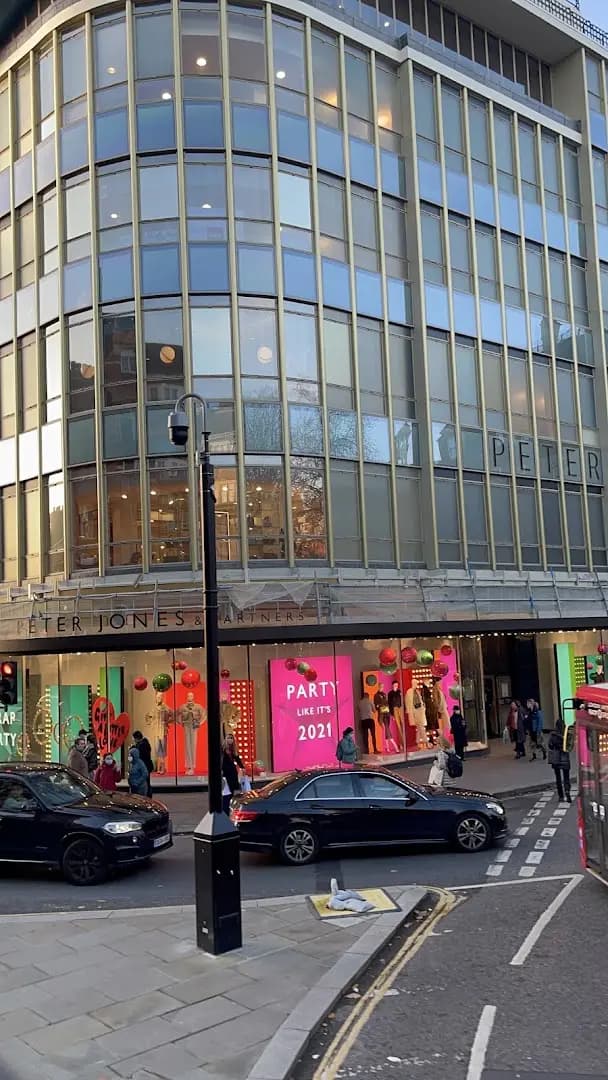
Sloane Square Station
Sloane Square · Culture
History hiding in plain sight at Sloane Square Station! 👀 It also happens to be one of the oddities I highlight in my bestselling book London: A Guide for Curious Wanderers- link in bio to buy. 😊 . . . . . . #london #londonhistory #livinglondonhistory #lostriver #sloanesquare #chelsea #westlondon #hiddenlondon #secretlondon #londonlife #thames

FT Forums
The City of London · Culture
A surprising face near St Paul's! 👀 . . . #london #hiddenlondon #secretlondon #livinglondonhistory #stpaulscathedral #cityoflondon #ww2 #ww2history #churchill #winstonchurchill
- C
Children of the Kindertransport
Shoreditch · Culture
Two train stations, one in London, and one in Berlin share some incredible history 🚂 In 1938 & '39 the Kindertransport rescued Jewish children from Nazi Germany 🌍 Children were brought to the UK from all over the German 'Reich', which by this point included Austria and large parts of Czechoslovakia 🚆 Trains with blacked-out windows from Hamburg, Prague, Vienna, Düsseldorf, Frankfurt, Berlin and many other cities carried children through Germany to the Netherlands 🚢 There, they boarded ferries that would take them to the UK, before being taken by train to London Liverpool Street 🇬🇧 On arrival they would disembark - many of them speaking no English at all - to be picked up by their new foster parents ⚫️ Many of them would go on to spend their whole lives in the UK without ever hearing from or seeing their parents again ++++++ Special thanks to Die Geschichtmacher Podcast for covering this story recently
- E
Equestrian Statue of King Charles I
Covent Garden · Culture
A lucky statue and a forward thinking goldsmith! 💪 . . . . . . . #london #londonhistory #livinglondonhistory #charlesi #stuarthistory #statue #londonlife #trafalgarsquare #lovelondon #hiddenlondon #secretlondon #explorelondon #londontravel #londontrip #discoverlondon #visitlondon #story
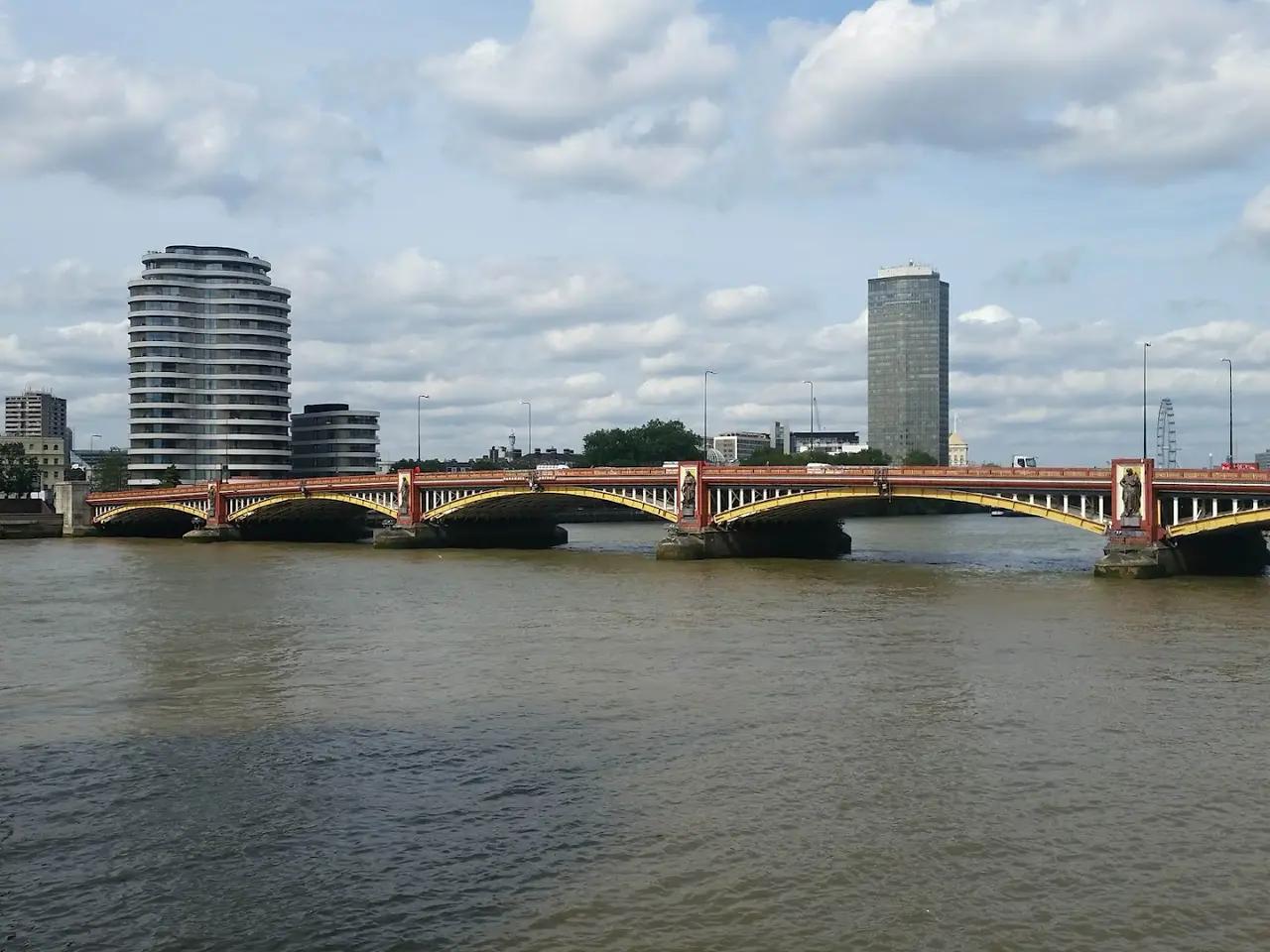
Vauxhall Bridge
Westminster · Culture
Bonus points for spotting the fishing cormorant 😁 Literally thousands of people travel past this little treasure everyday and have no idea. 👀 The figures were designed by F W Pomeroy and Alfred Drury. The full eight are: Architecture, Agriculture, Pottery, Engineering, Education, Fine Arts and Local Government. . . . . . . #londonhistory #historiclondon #hiddengems #funfacts #london #londonbylondoners #becauseimalondoner #stpaulscathedral #britishhistory #bridgesofinstagram #explorelondon #londonwalks #hiddenlondon #secretlondon #londontravel #londontrip #visitlondon #itssolondon #londonblogger #historylovers #historynerd #timeoutlondon
- T
Tabard St
Bermondsey · Culture
As well as nearly 200 historic details to spot around London the book also has four self-guided walks (including one that goes to see some stretcher fences) and plenty of fun facts!! There is a link in my bio to get your copy 👉 @livinglondonhistory . . . . . . . #london #londonhistory #livinglondonhistory #ww2 #ww2stretcher #ww2history #theblitz #warhistory #war #explorelondon #southlondon #hiddenlondon #secretlondon #londontravel #londontrip

67 Hopton St
The City of London · Culture
A stubborn little survivor just off the South Bank! 💪 . . . . . . #london #londonhistory #livinglondonhistory #hiddenlondon #secretlondon #southbank #southlondon #hiddenhistory #architecture #londonarchitecture
- F
Former Aldwych Tube Station
Holborn · Culture
- K
Kings Arms
Greenwich · Drink
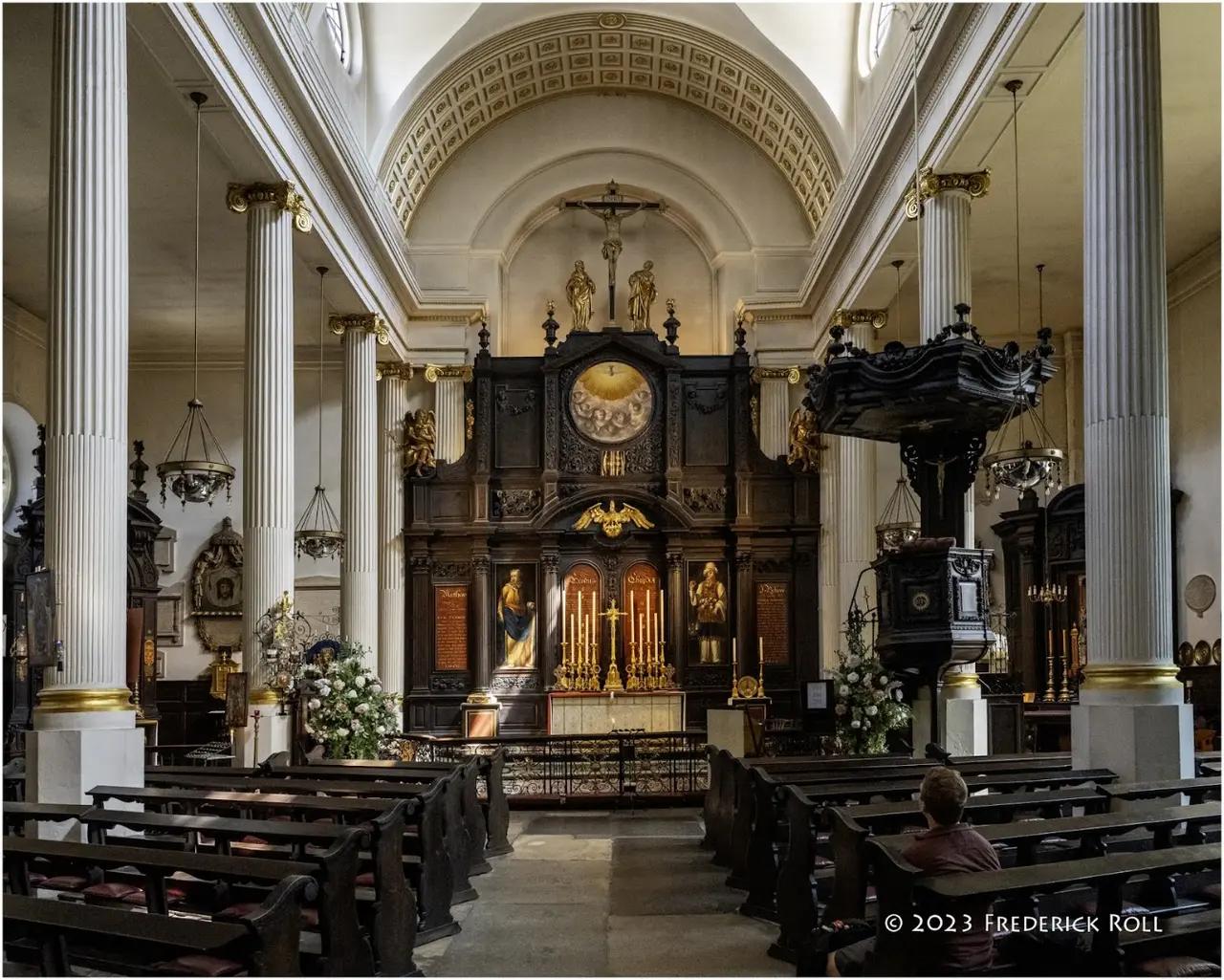
Church of Saint Magnus-the-Martyr
The City of London · Culture
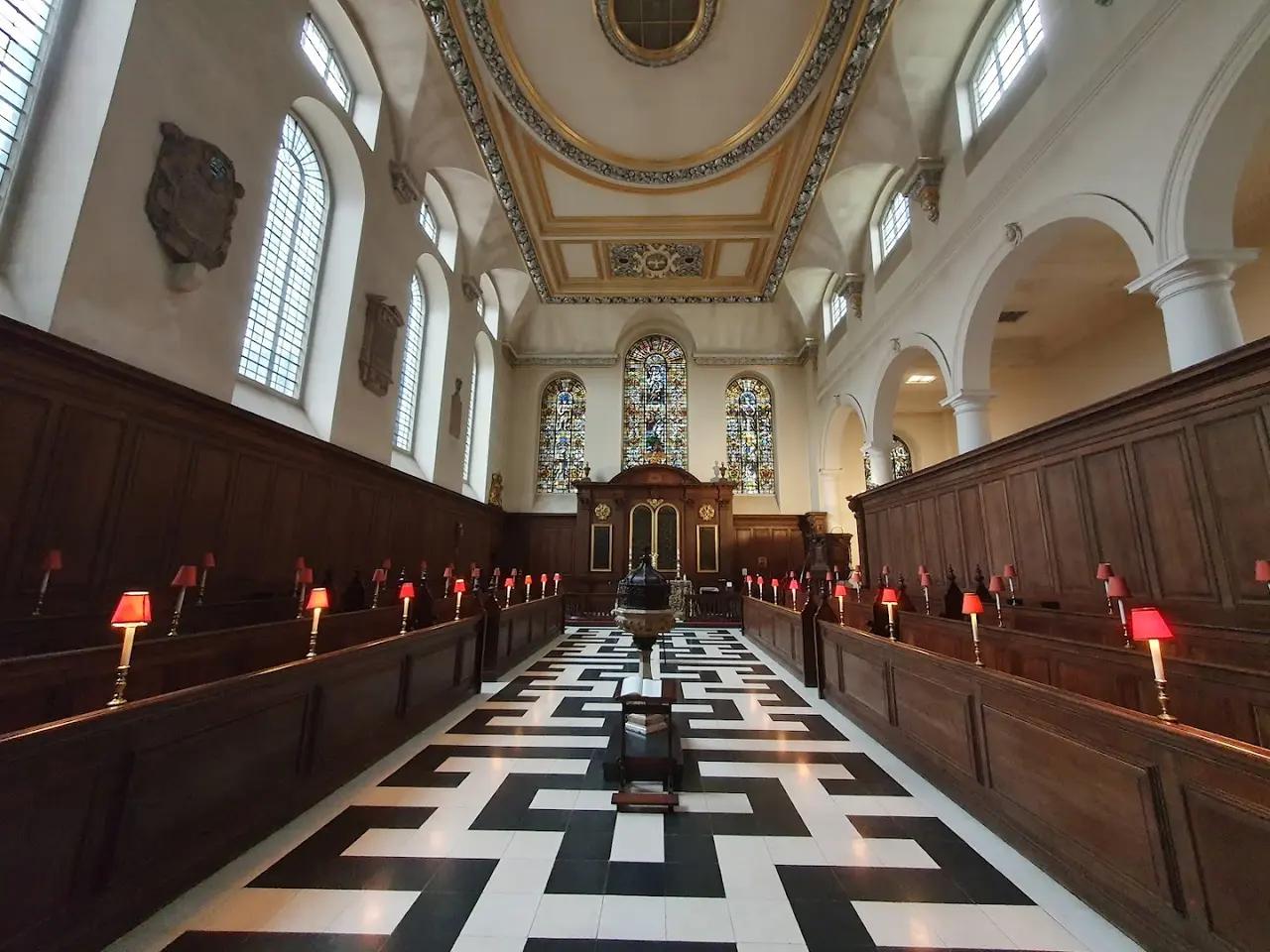
St Vedast alias Foster
The City of London · Culture
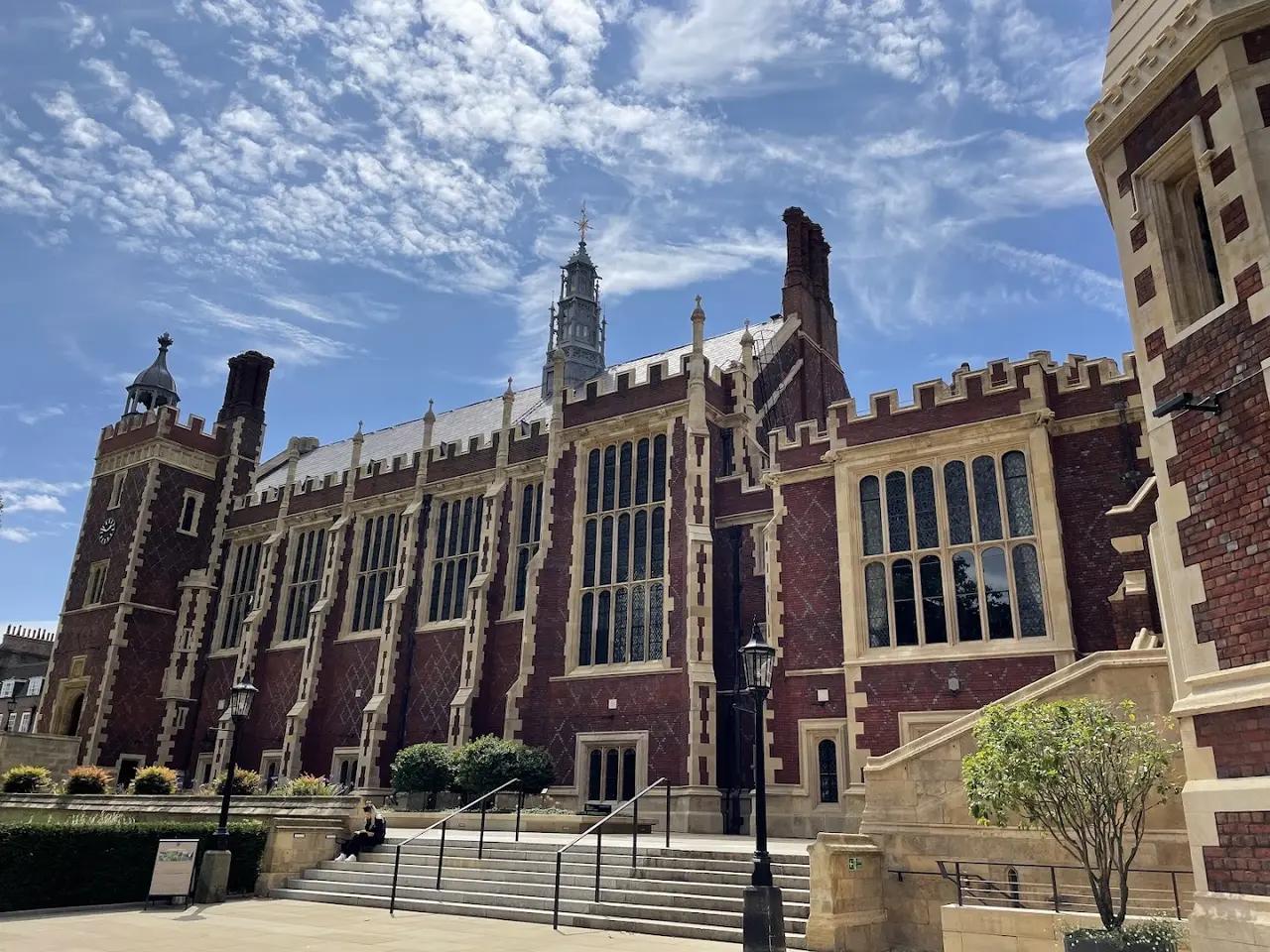
The Honourable Society of Lincoln's Inn
Holborn · Culture
- S
St Ethelburga's Centre for Reconciliation and Peace Venue
The City of London · Culture
- P
Passing Alley
The City of London · Outdoors
- 4
44-46 Brushfield St
Shoreditch · Culture
- 3
3 Fournier St
Shoreditch · Culture
- T
The Nags Head
Covent Garden · Drink

43 King St
Covent Garden · Culture
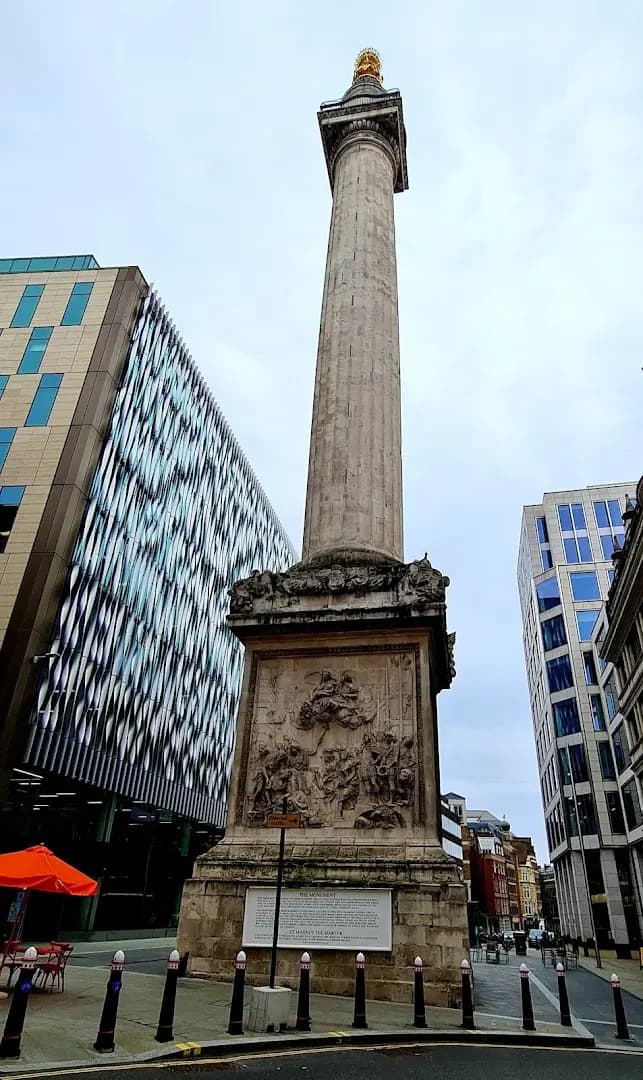
Pudding Ln
The City of London · Culture
- T
The Ancient House
Culture
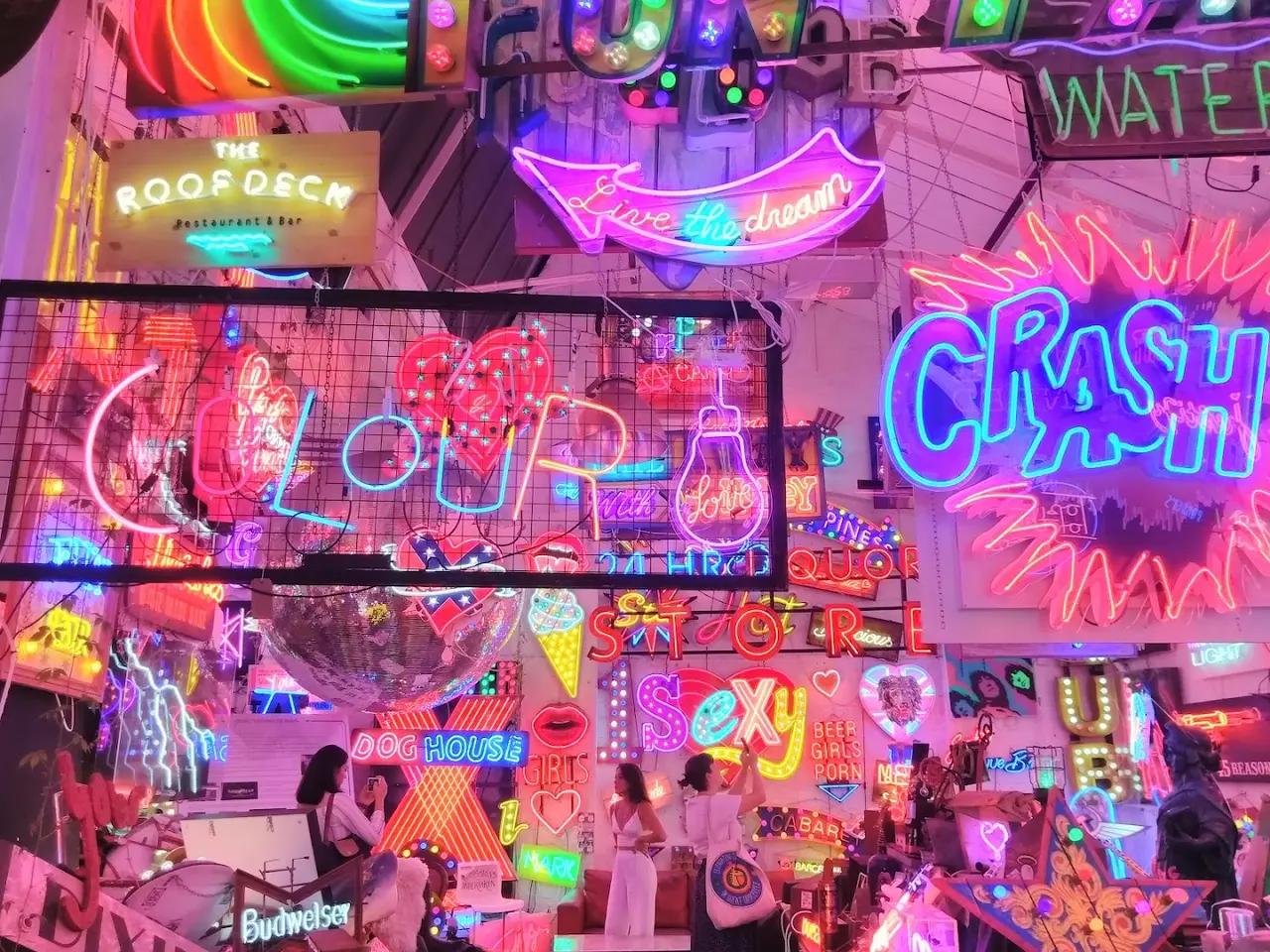
God's Own Junkyard
Culture
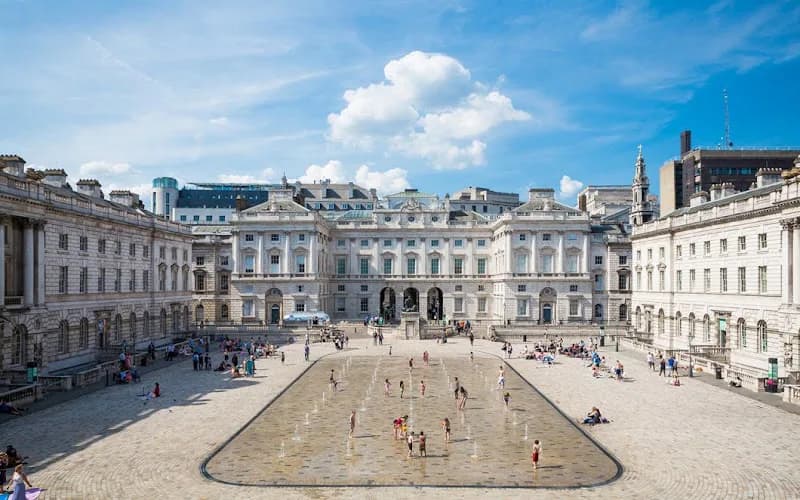
Somerset House
Covent Garden · Culture
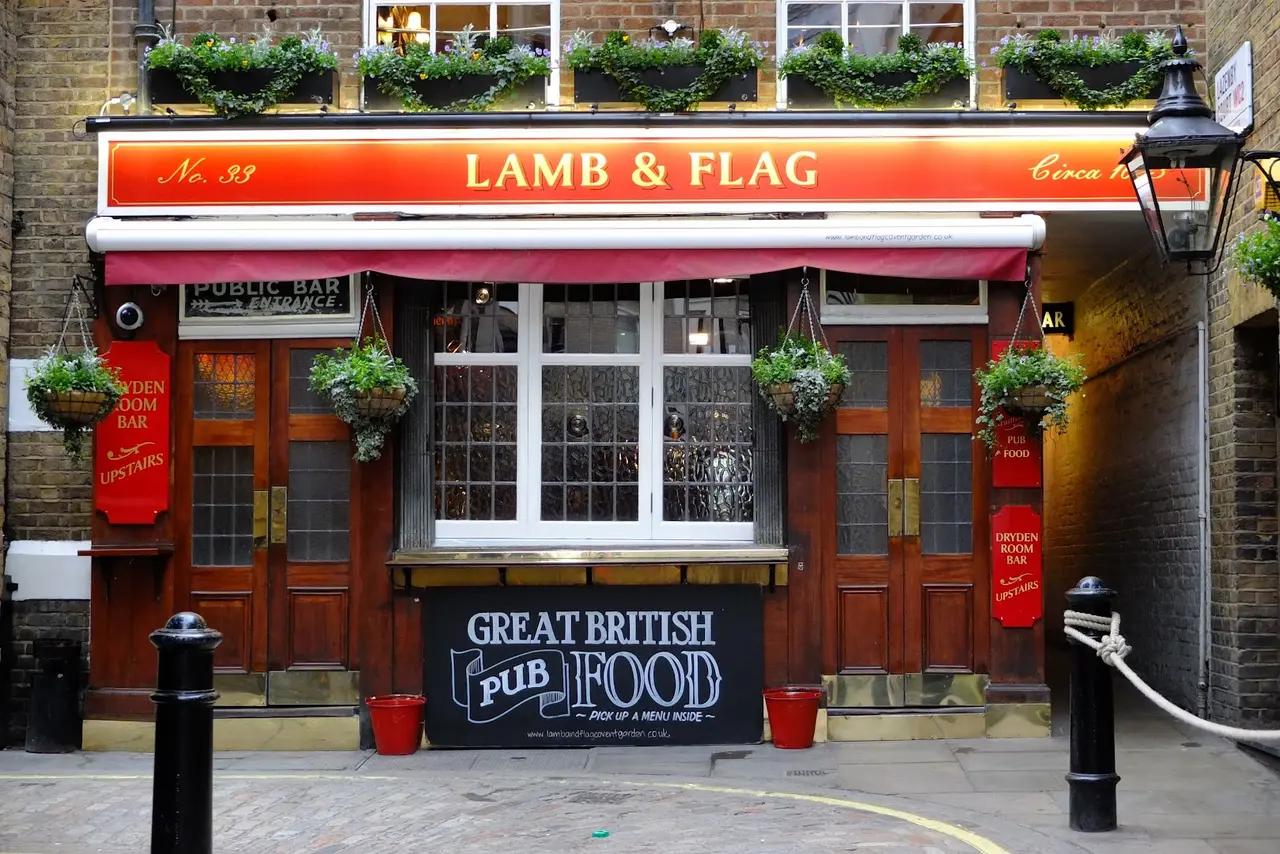
The Lamb & Flag, Covent Garden
Covent Garden · Drink
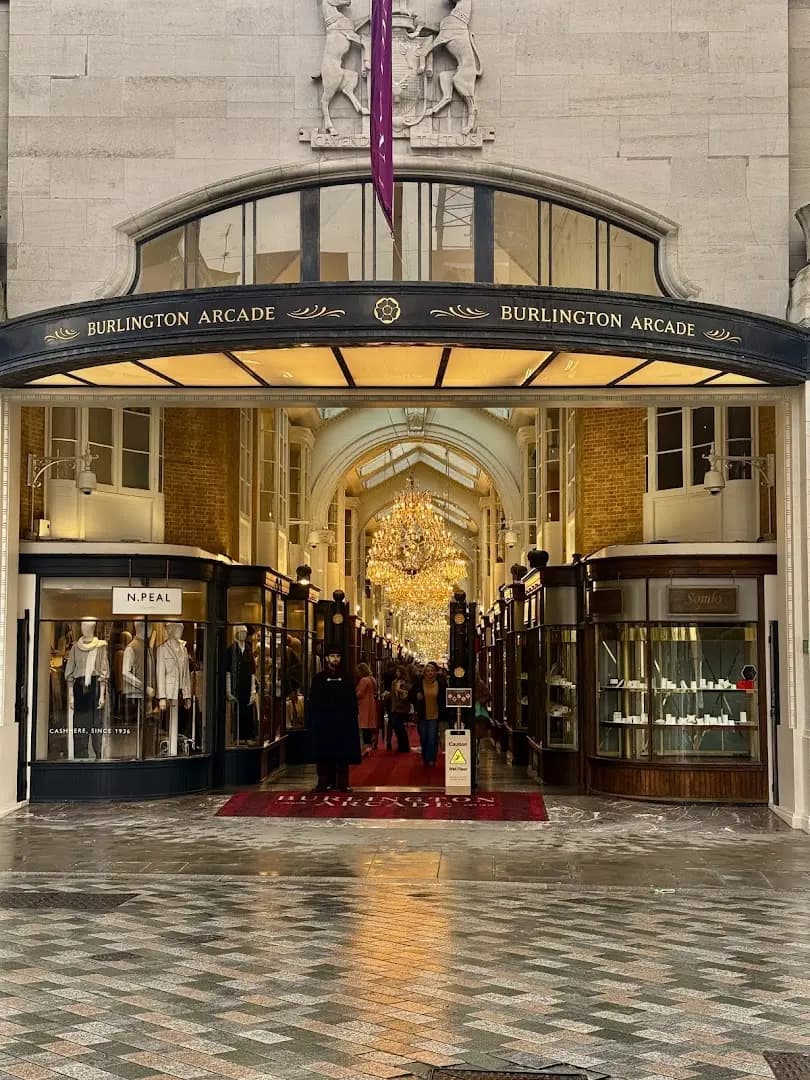
Burlington Arcade
Soho · Outdoors
- L
Little Green St
Culture
- P
Pickering Pl
Soho · Culture
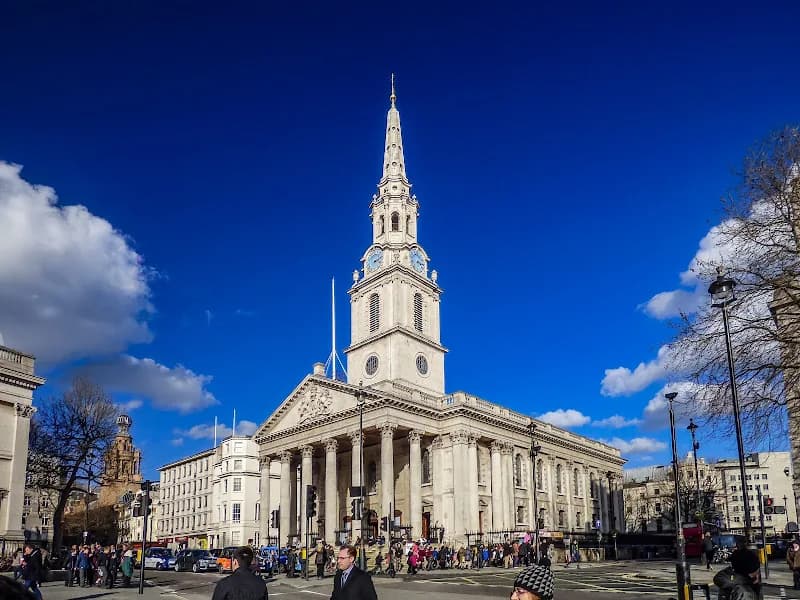
St Martin-in-the-Fields Church, London
Covent Garden · Culture
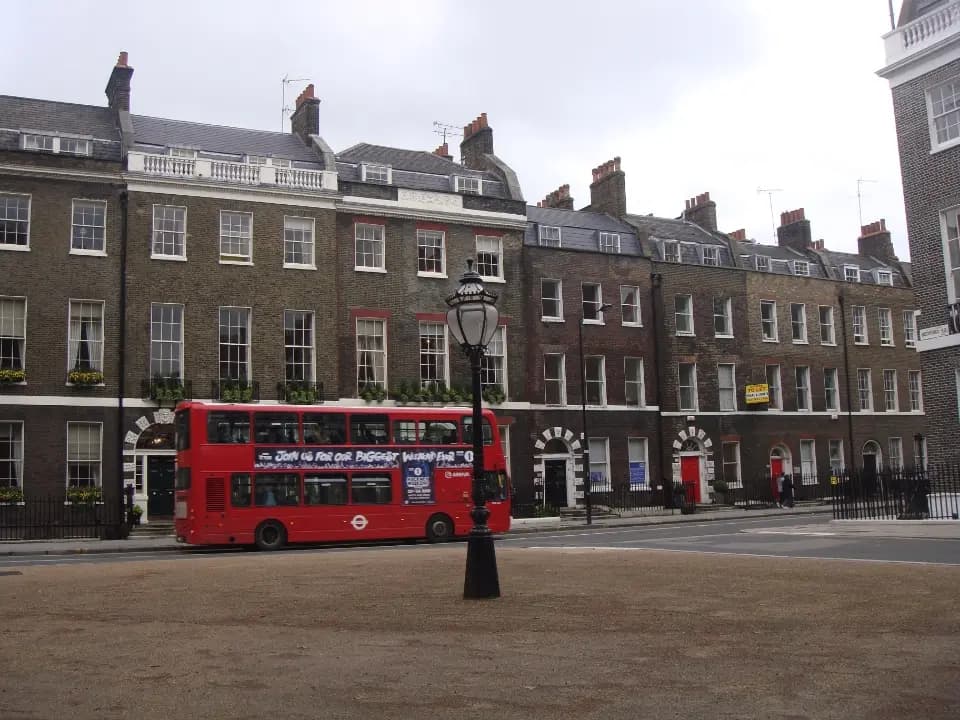
Bedford Square
Soho · Outdoors
- F
Fournier St
Shoreditch · Culture
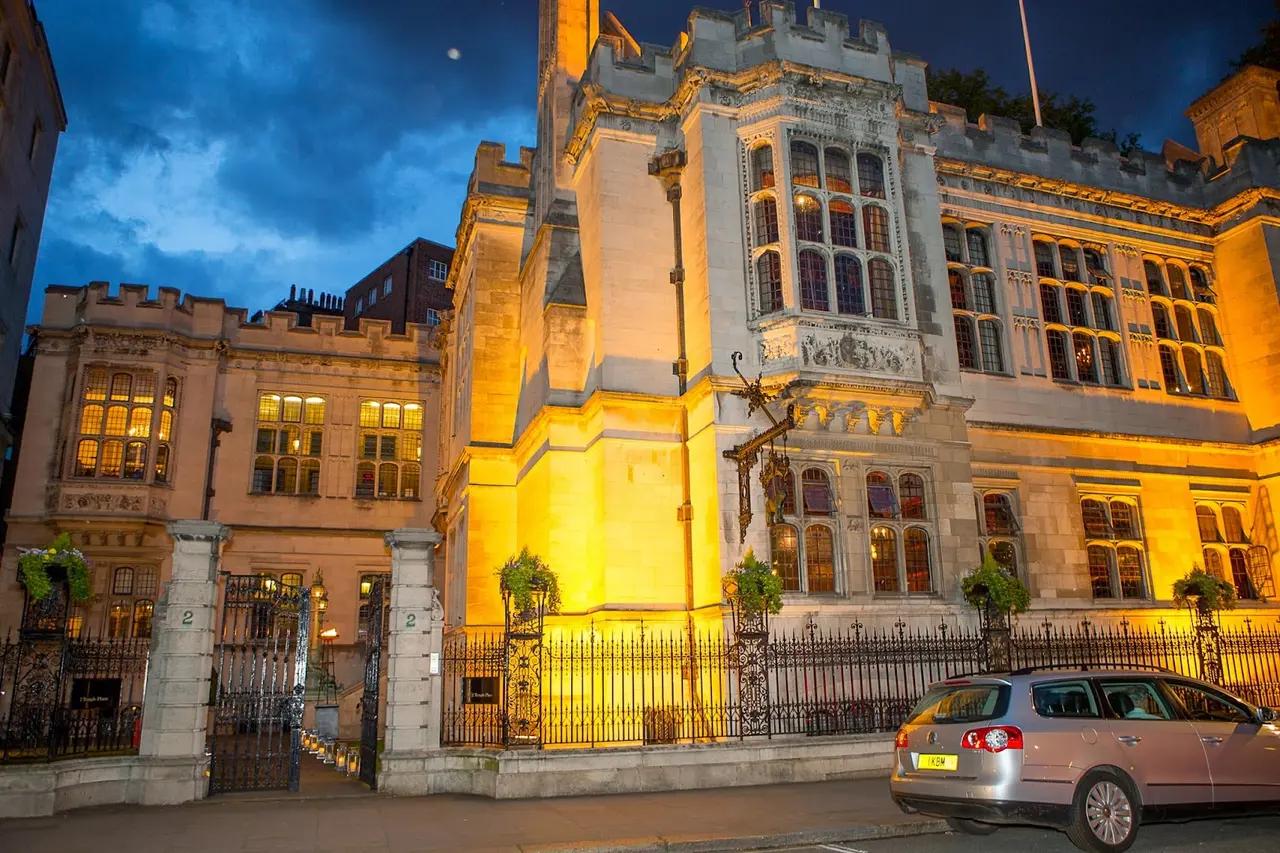
Two Temple Place
Holborn · Culture
- U
Upstairs at the Gatehouse
Highgate · Activities
- T
The Grove
Stay
- L
Lauderdale House
Highgate · Culture
- W
Waterlow Park
Highgate · Outdoors
- W
Whittington Stone
Highgate · Culture
- T
The Highgate Literary and Scientific Institution
Highgate · Culture
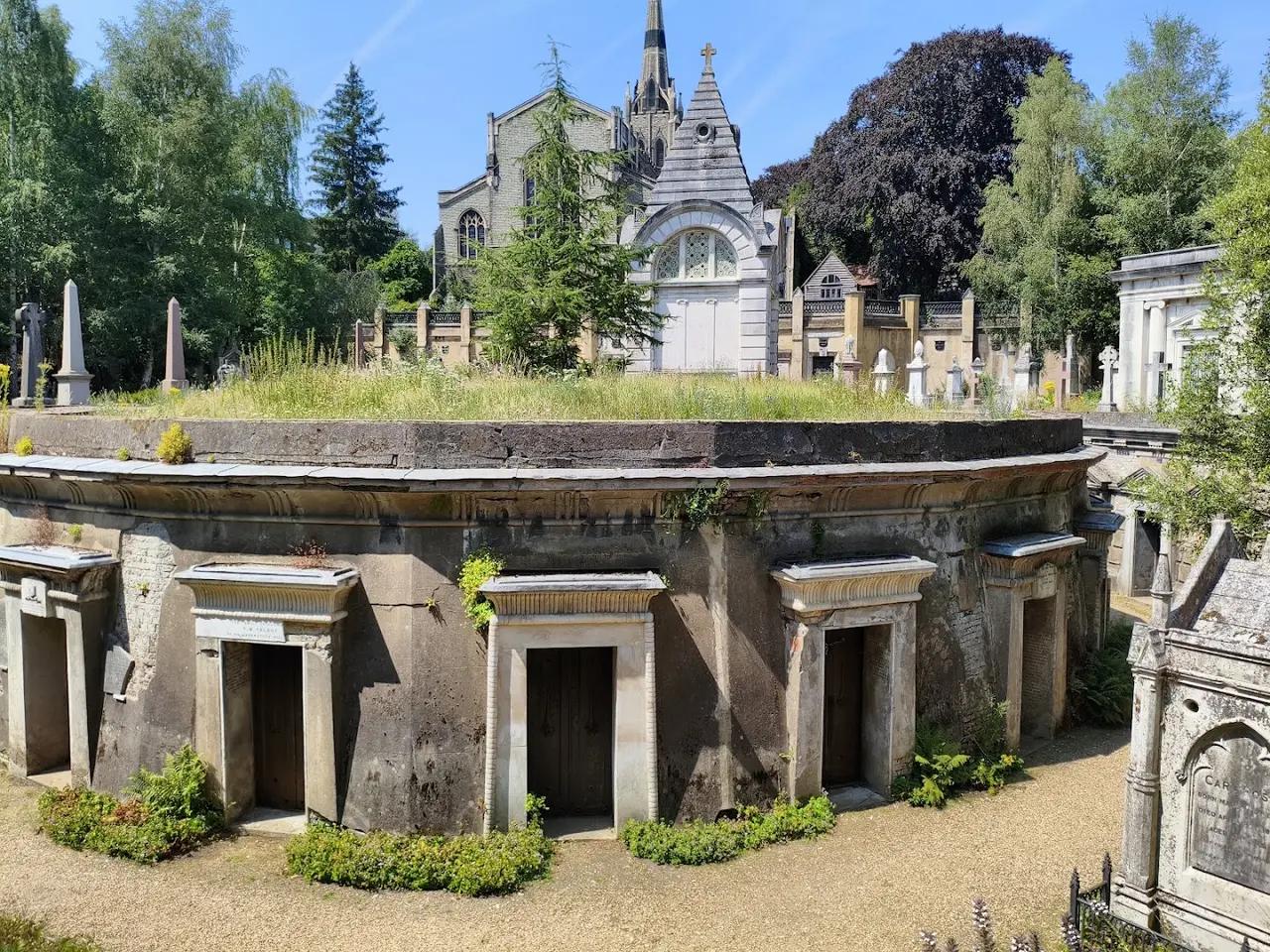
Highgate Cemetery
Highgate · Culture
- S
St Michael's Church, Highgate
Highgate · Culture
The Flask, Highgate
Highgate · Drink
- H
Highgate School
Highgate · Culture
- P
Pond Square
Highgate · Outdoors
- 4
44 Highgate High St
Highgate · Culture
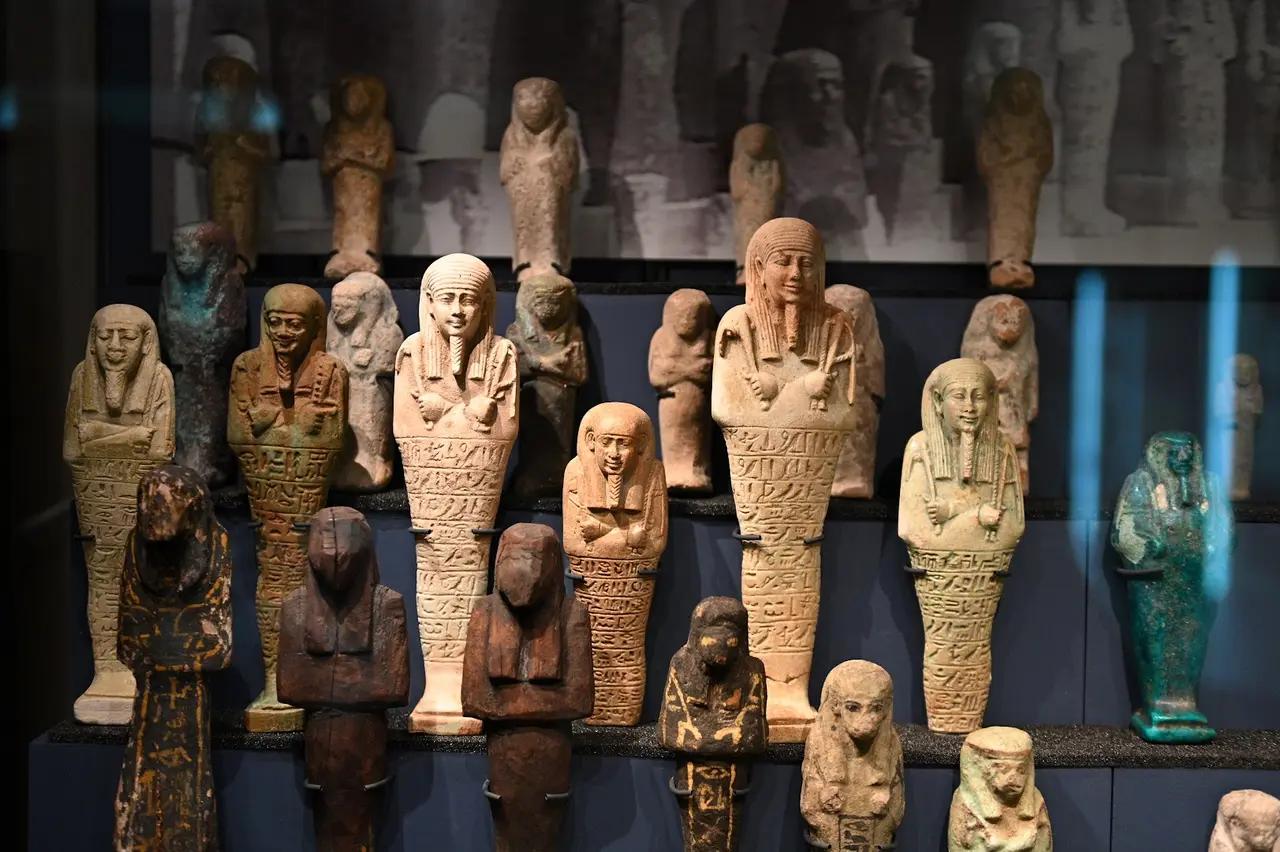
Petrie Museum of Egyptian Archaeology
Fitzrovia · Culture
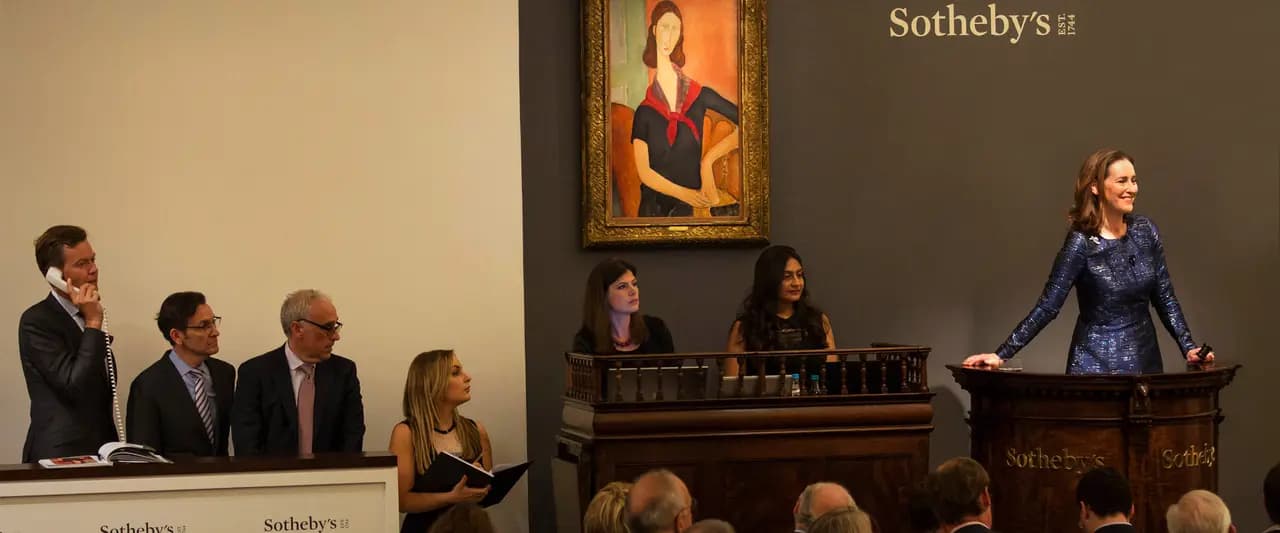
Sotheby's London
Mayfair · Shop
- R
Richmond Ave
Angel · Outdoors
- C
Carreras Cigarette Factory
Camden · Culture
- S
St Pancras Gardens
Camden · Outdoors
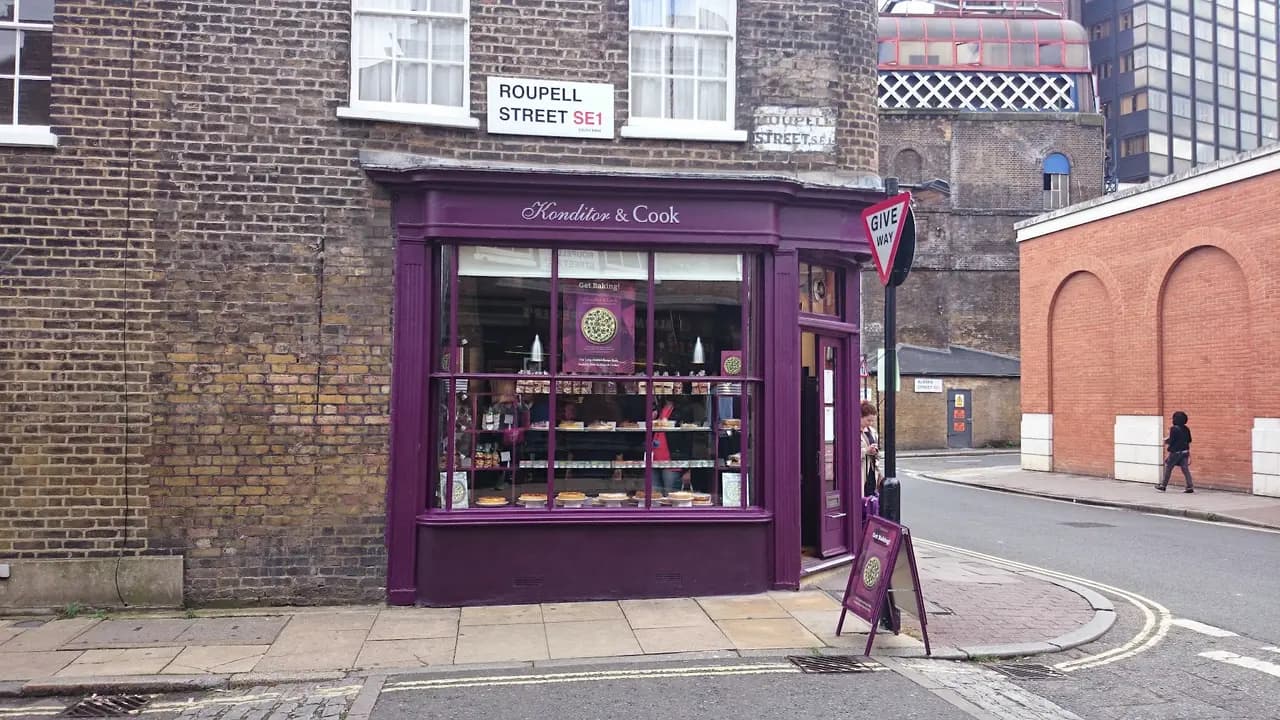
Roupell St
Covent Garden · Culture
- R
Rising Sun
The City of London · Drink
- C
Crossbones Graveyard & Garden of Remembrance
The City of London · Culture
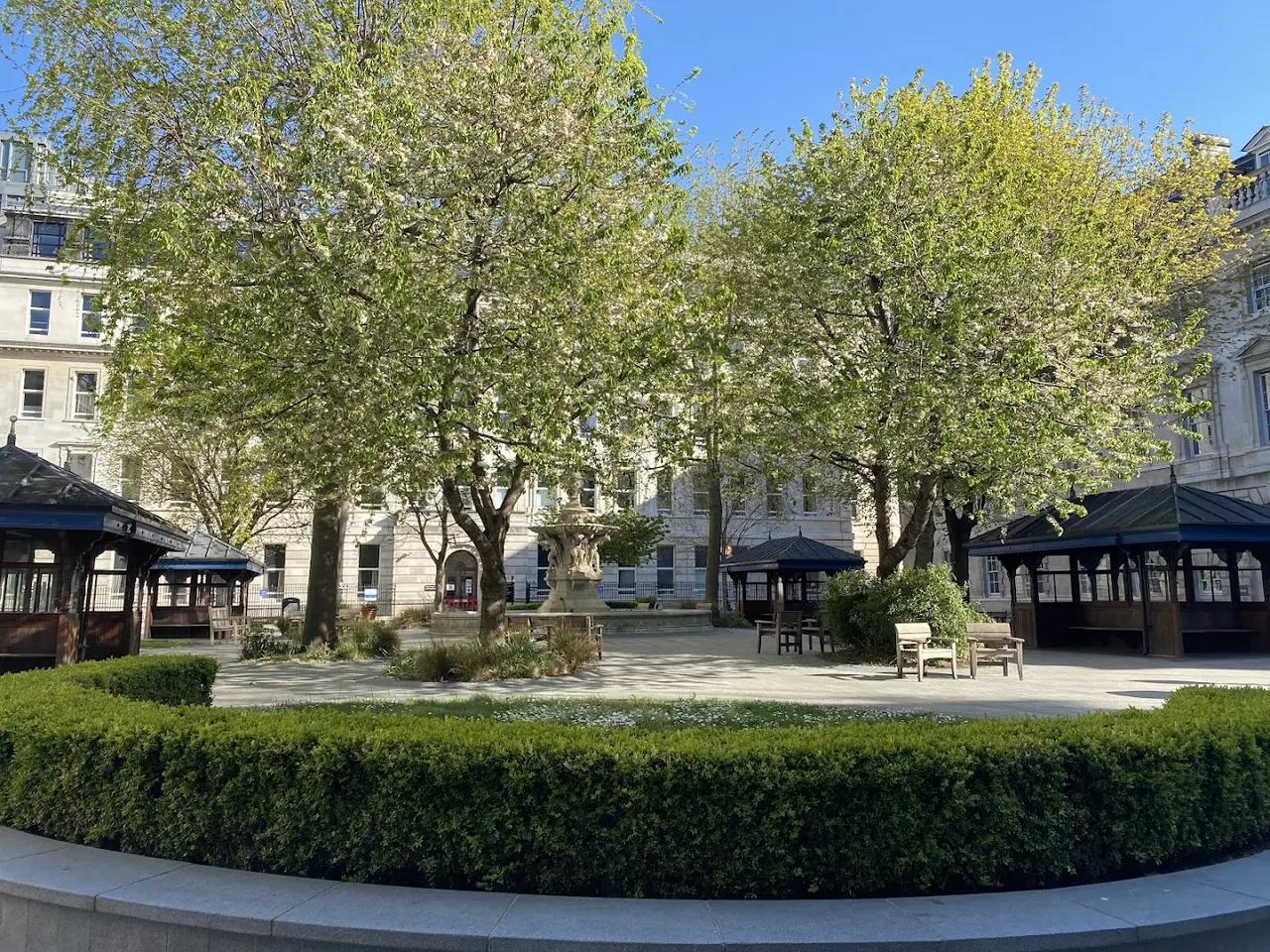
St Bartholomew's Hospital
The City of London · Culture
- G
Golden Boy of Pye Corner
The City of London · Culture
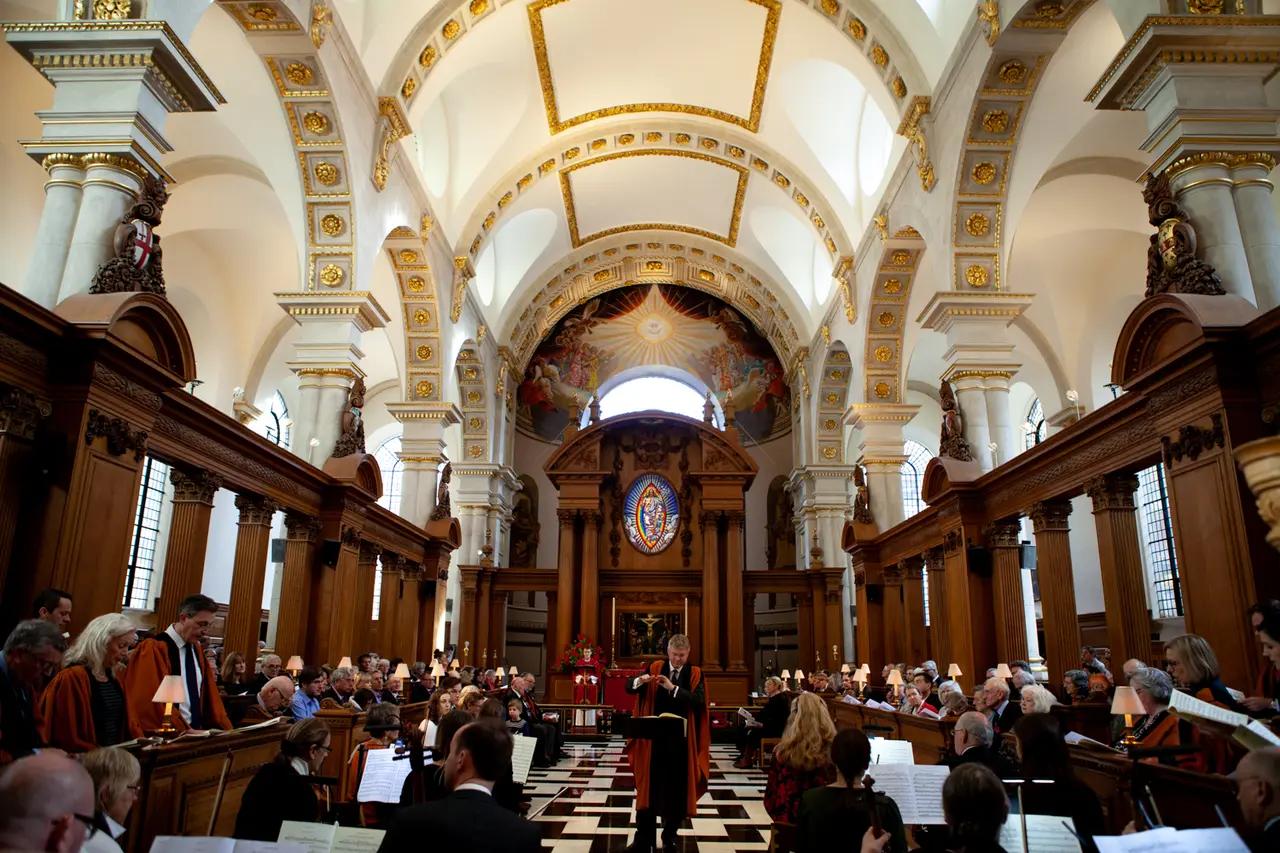
St Bride's Church
The City of London · Culture
- S
St John-at-Hampstead Church
Hampstead · Culture
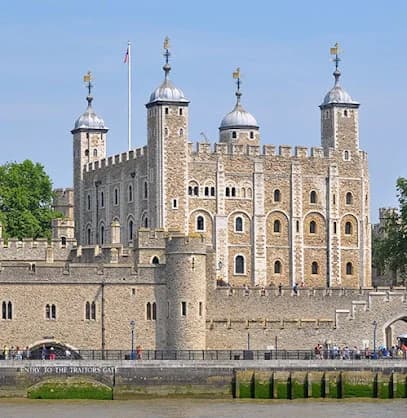
Tower of London
Bermondsey · Culture
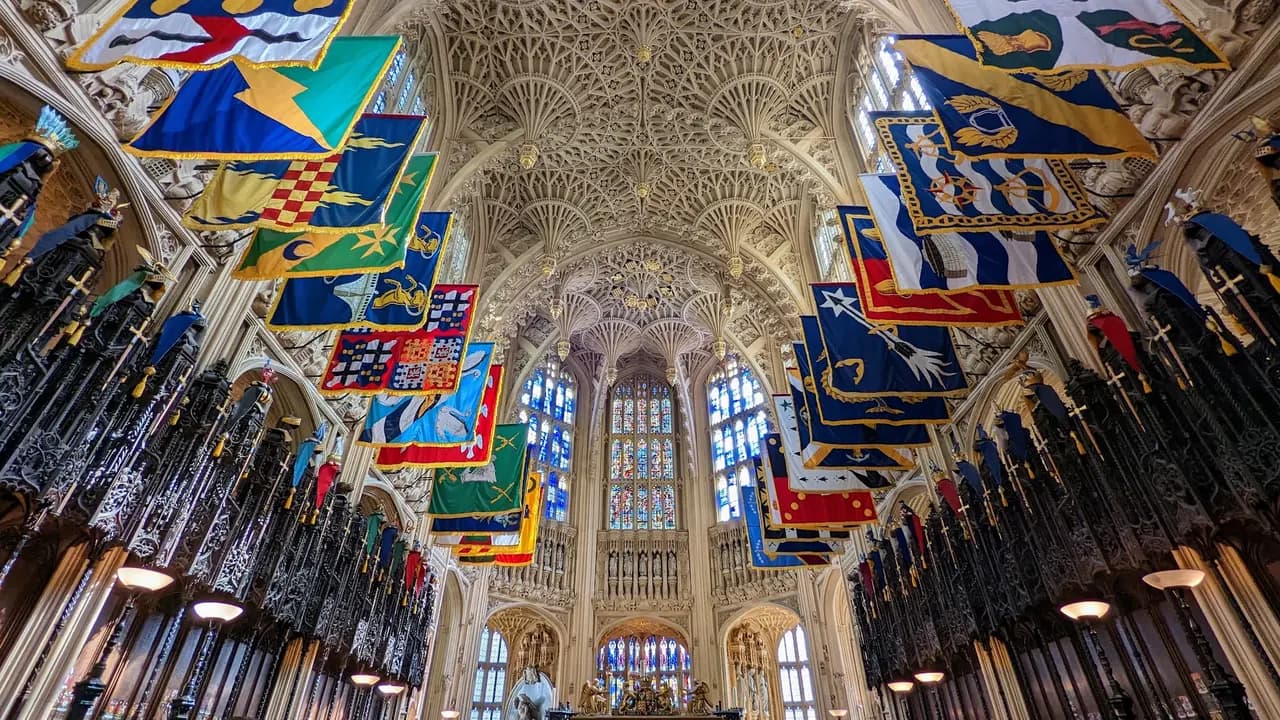
Lady Chapel
Westminster · Culture
- K
King Henry VIII
The City of London · Culture
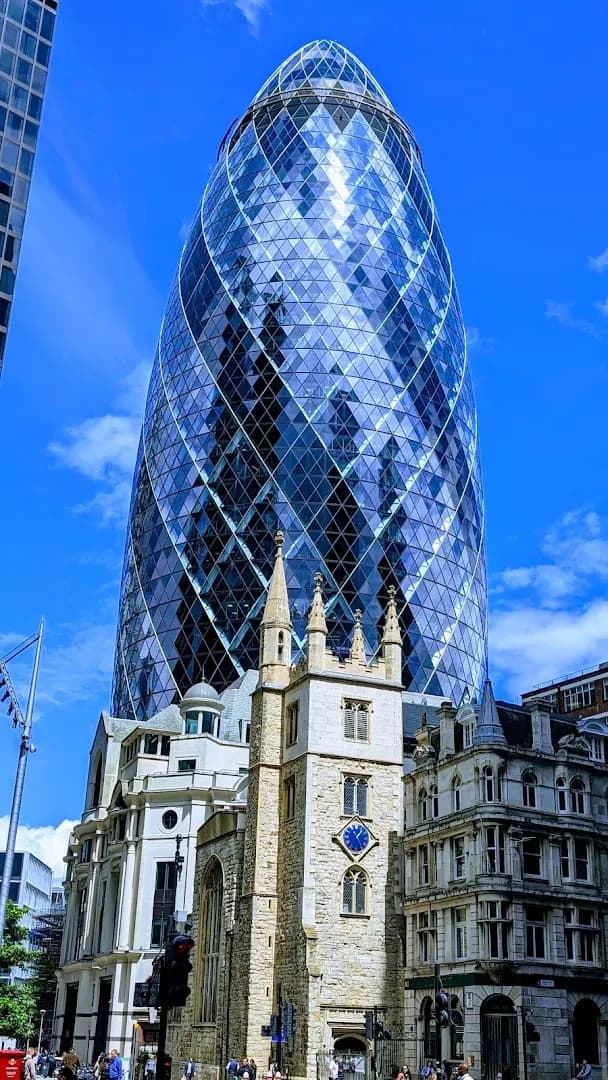
St Andrew Undershaft Church
The City of London · Culture
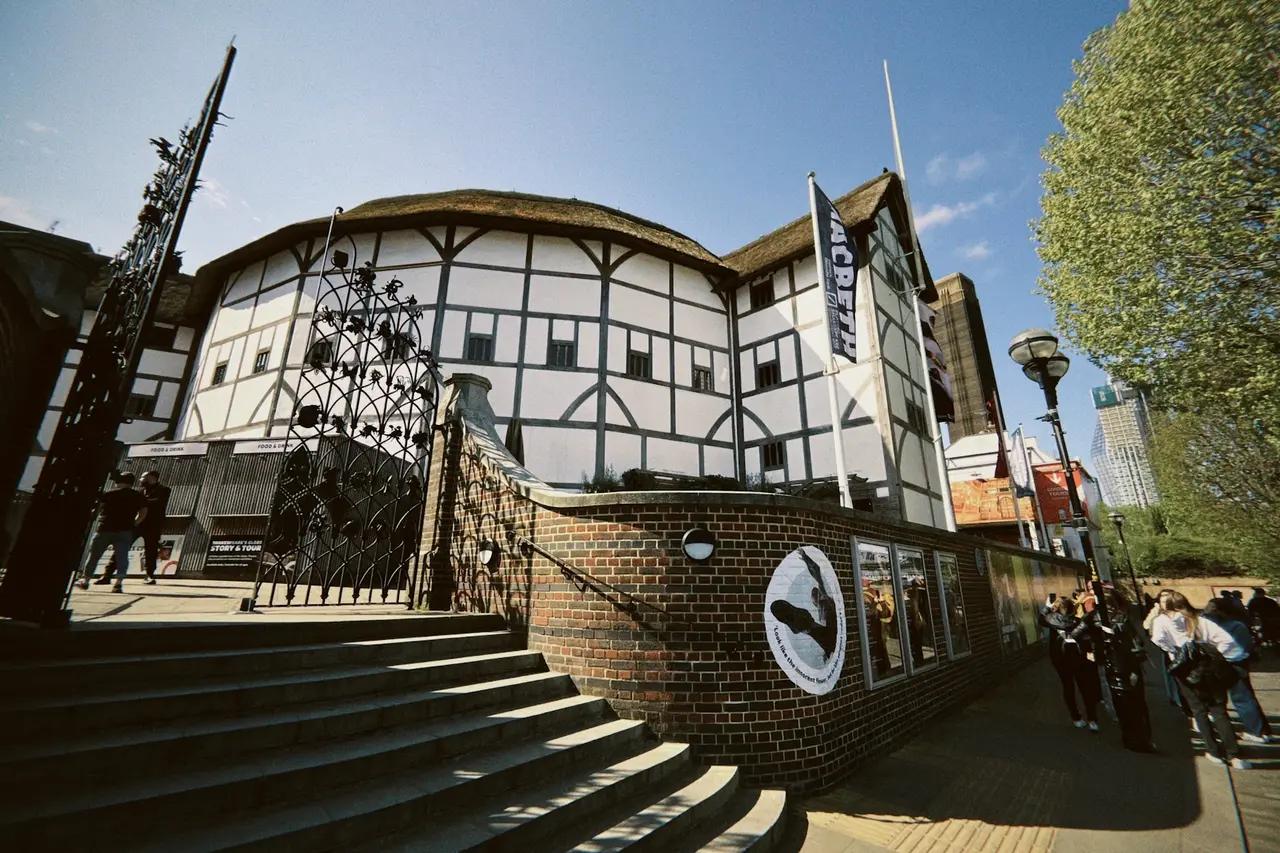
Shakespeare's Globe
The City of London · Culture
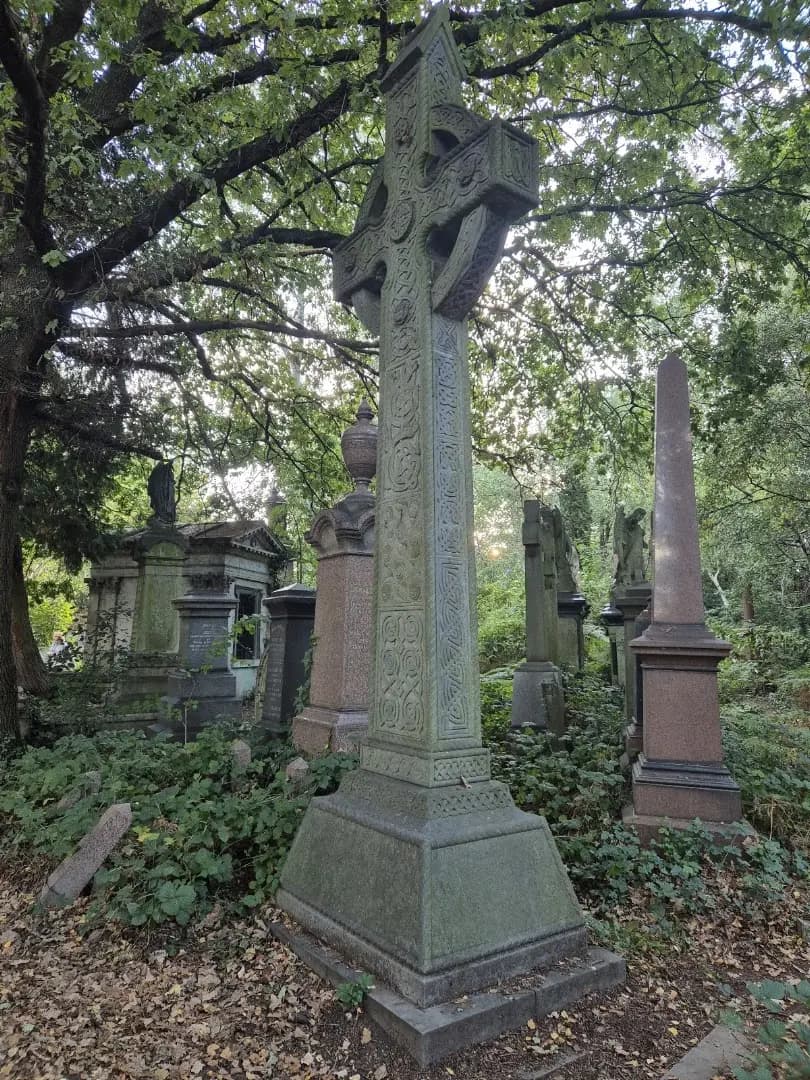
Abney Park Cemetery Trust
Culture
- T
The Engine House Café, London Wildlife Trust
Eat
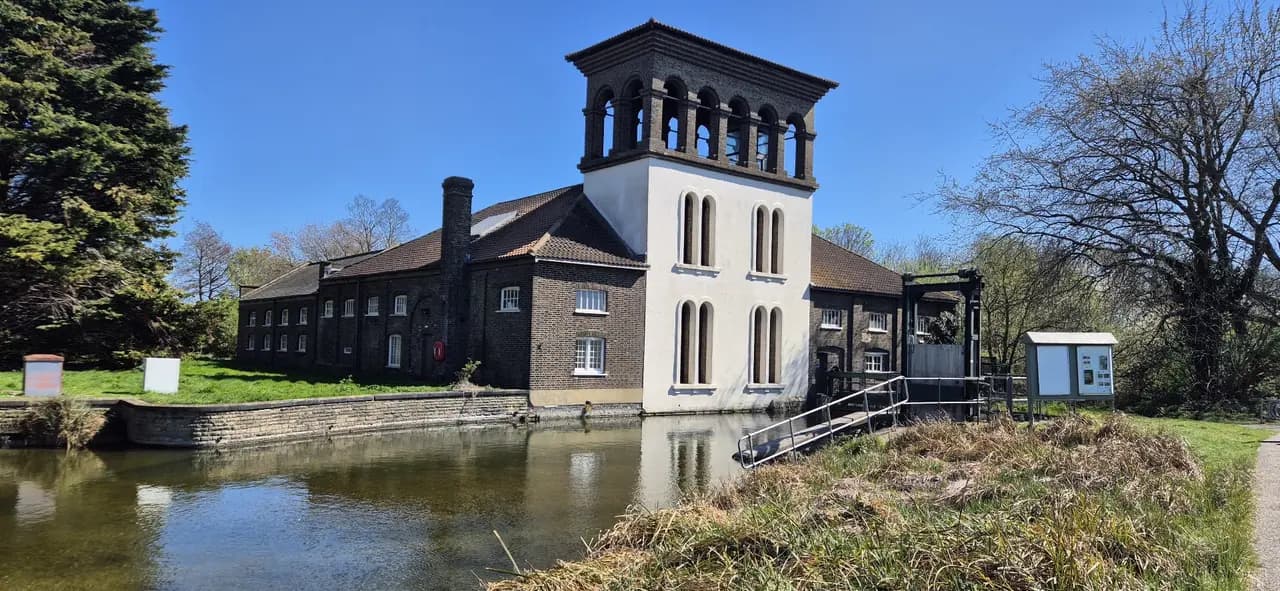
Walthamstow Wetlands, London Wildlife Trust
Outdoors
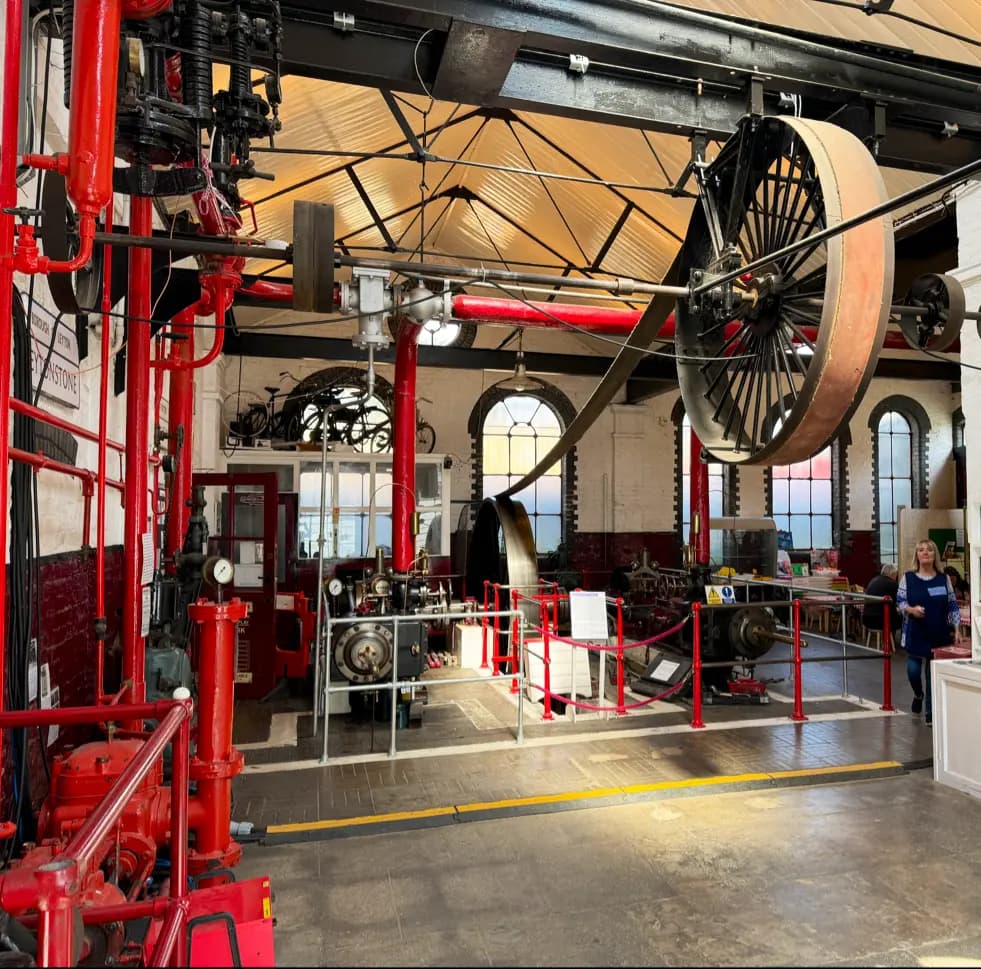
Walthamstow Pumphouse Museum
Culture
- W
Walthamstow (Queens Road) Cemetery
Culture
- L
Lighthouse Methodist Church, Walthamstow
Culture
- S
St Mary's Church Walthamstow
Culture
- S
Squires Almshouses
Culture
- V
Vestry House Museum
Culture
- V
Vinegar Alley
Outdoors
- T
Town Hall
Culture
- W
William Morris Gallery
Culture
- I
Islington & St Pancras Cemetery
Culture
- S
Salisbury Ct
Holborn · Culture
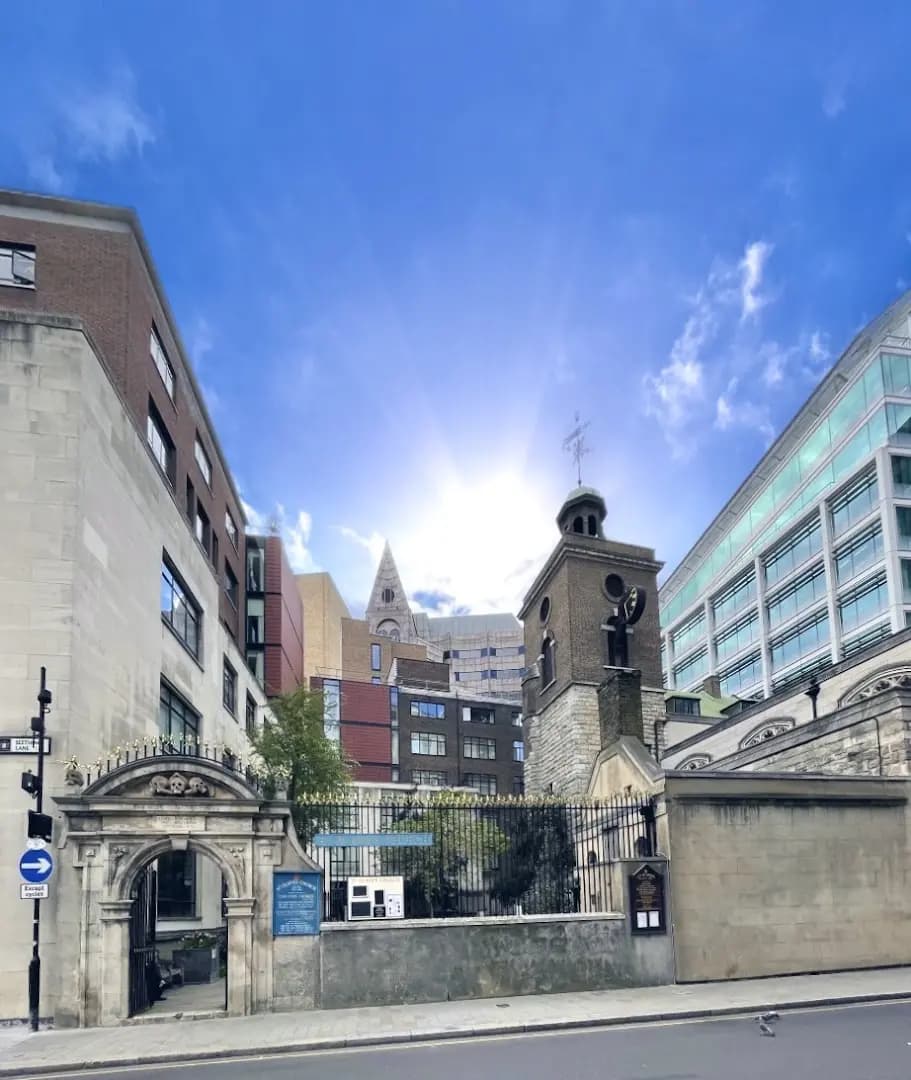
Seething Ln
The City of London · Culture
- P
Panyer Alley
The City of London · Culture
- Y
Ye Olde Cheshire Cheese
Holborn · Drink
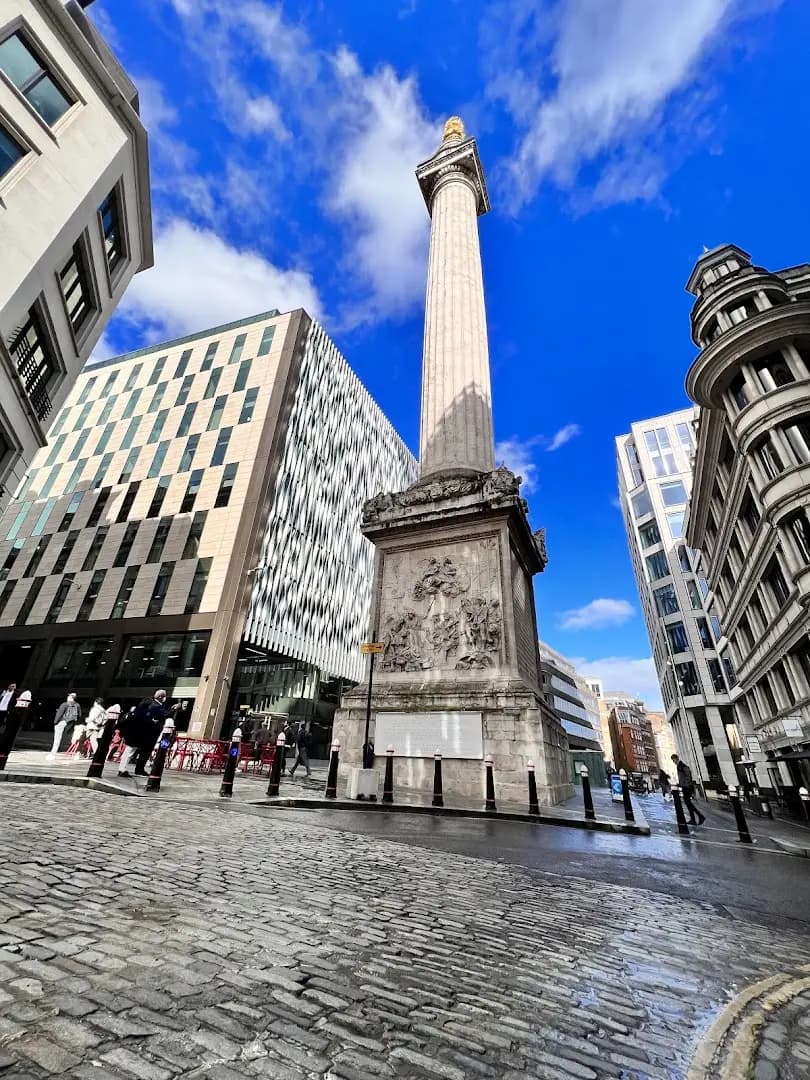
Monument to the Great Fire of London
The City of London · Culture
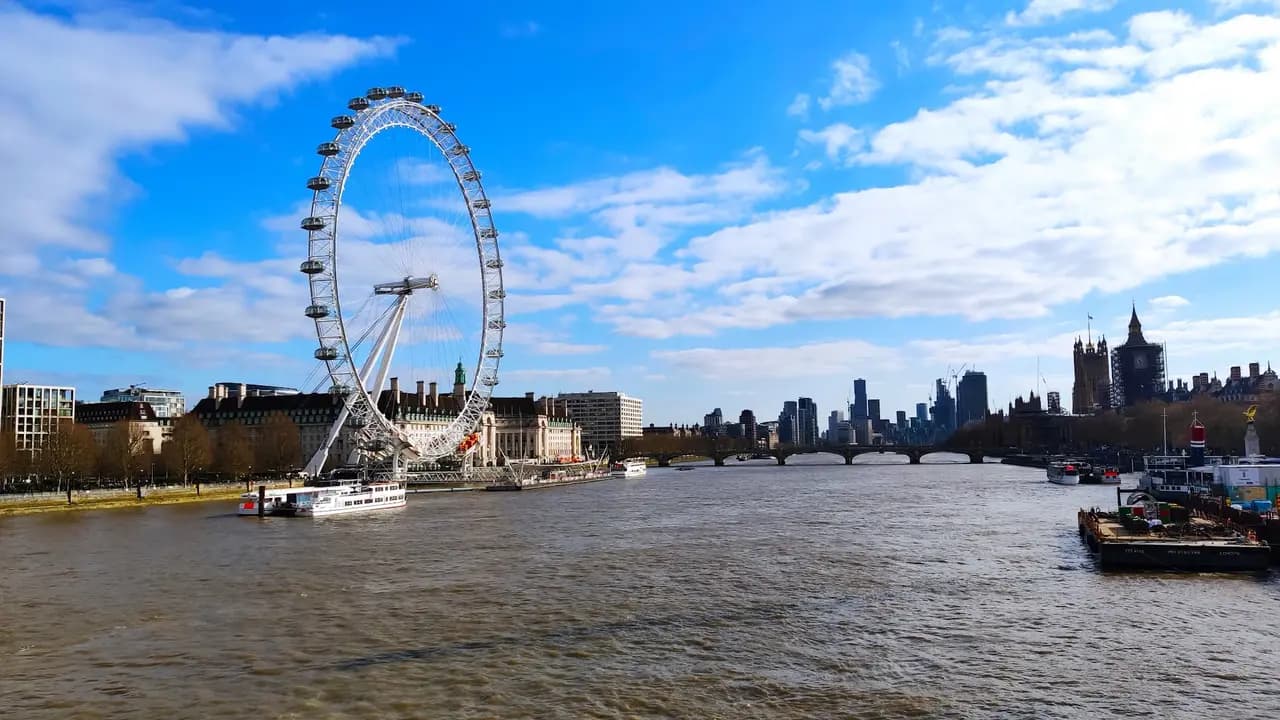
Victoria Embankment
Covent Garden · Outdoors
- M
Myddelton Passage
Angel · Outdoors
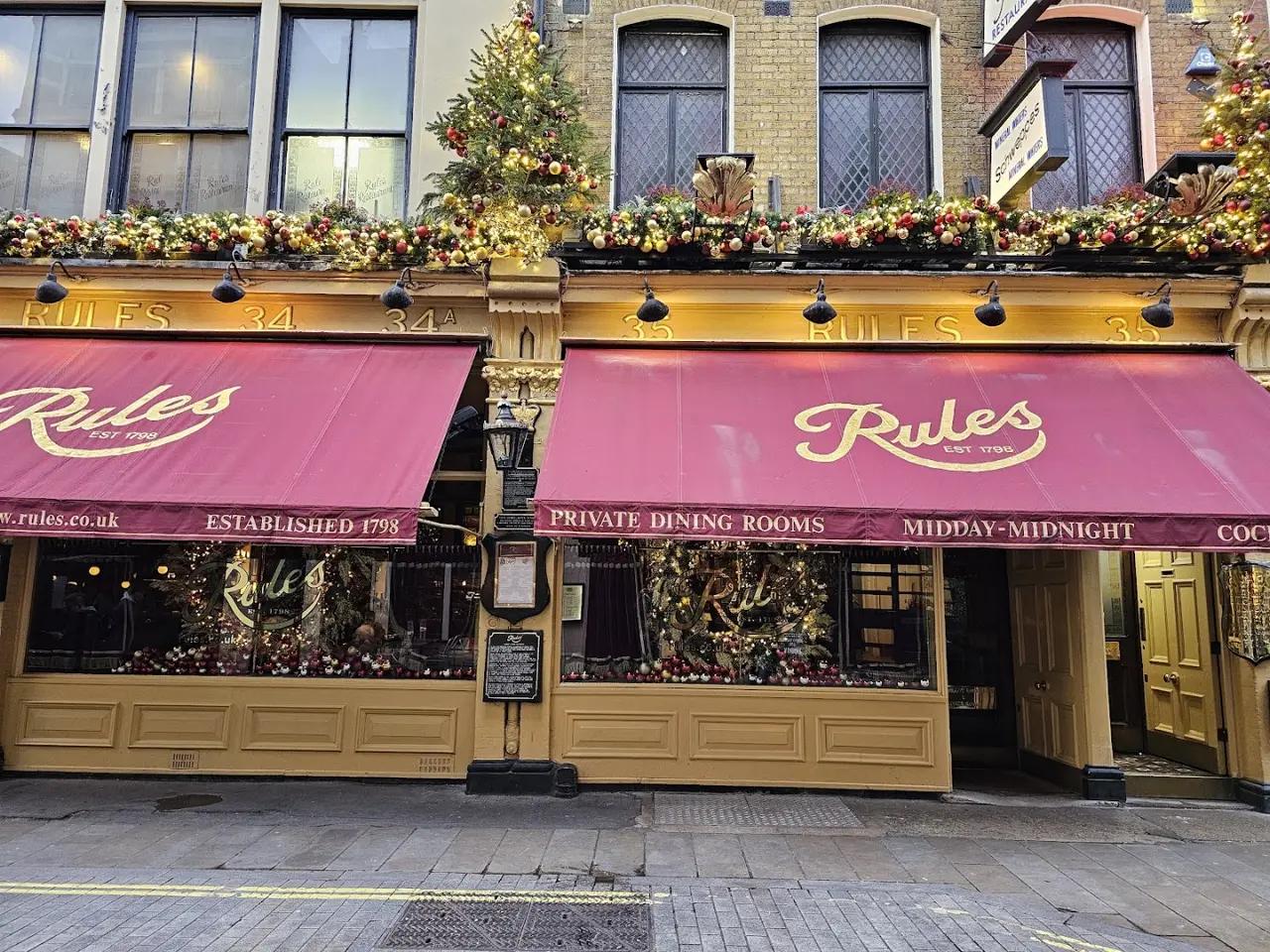
Rules
Covent Garden · Drink
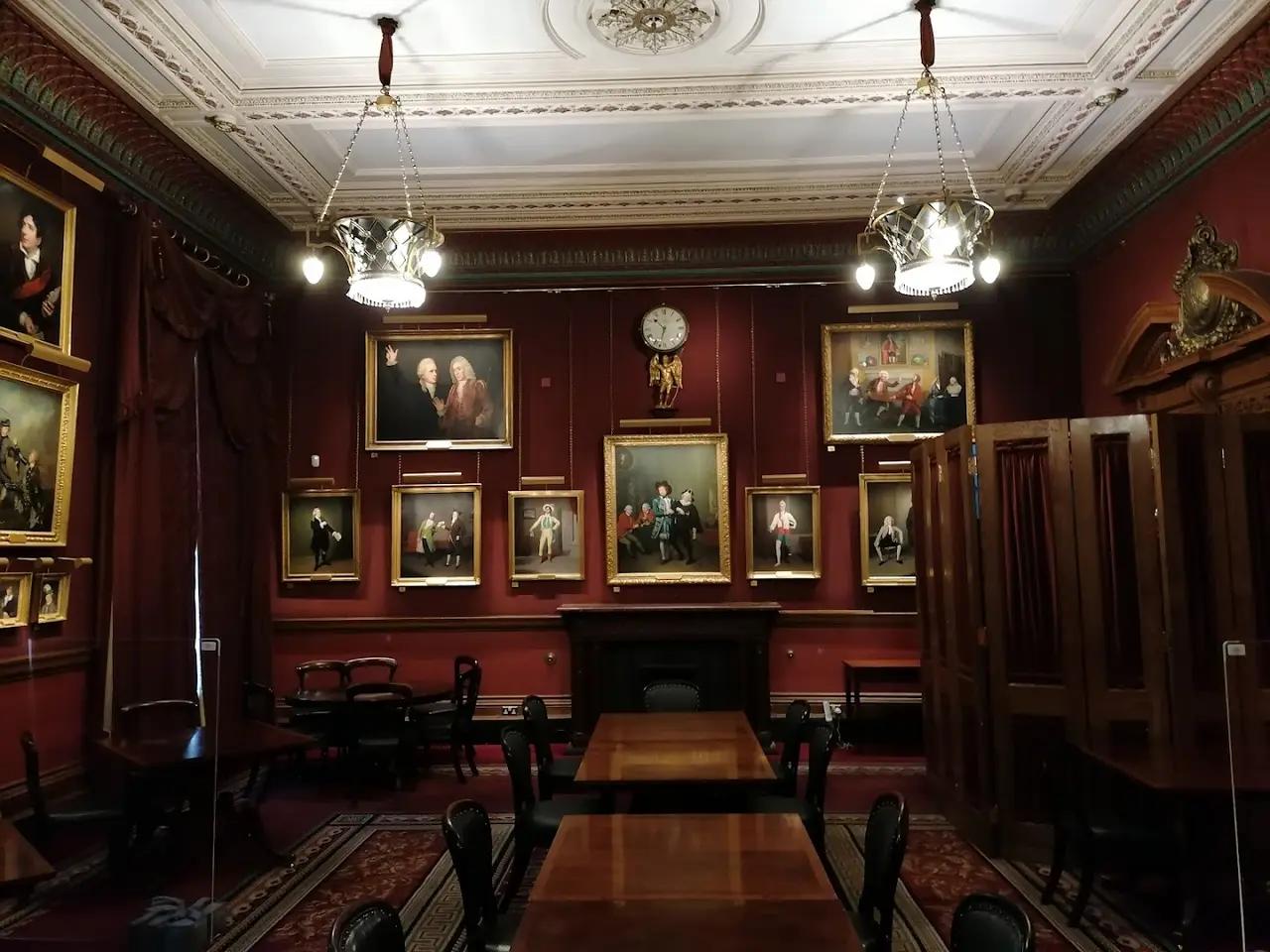
Garrick Club
Covent Garden · Culture
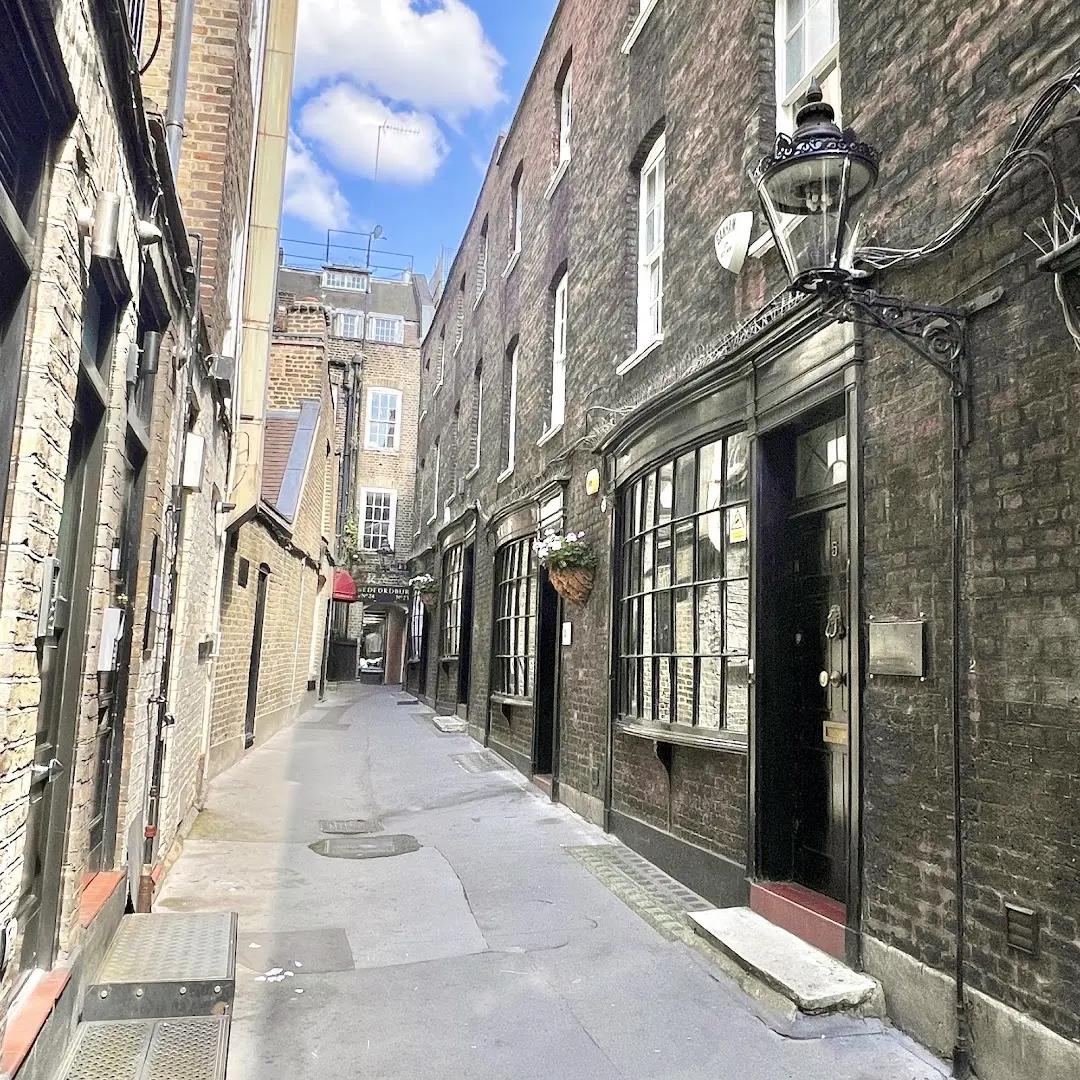
Goodwin’s Court
Covent Garden · Culture
- B
Bow Street Tavern
Covent Garden · Drink
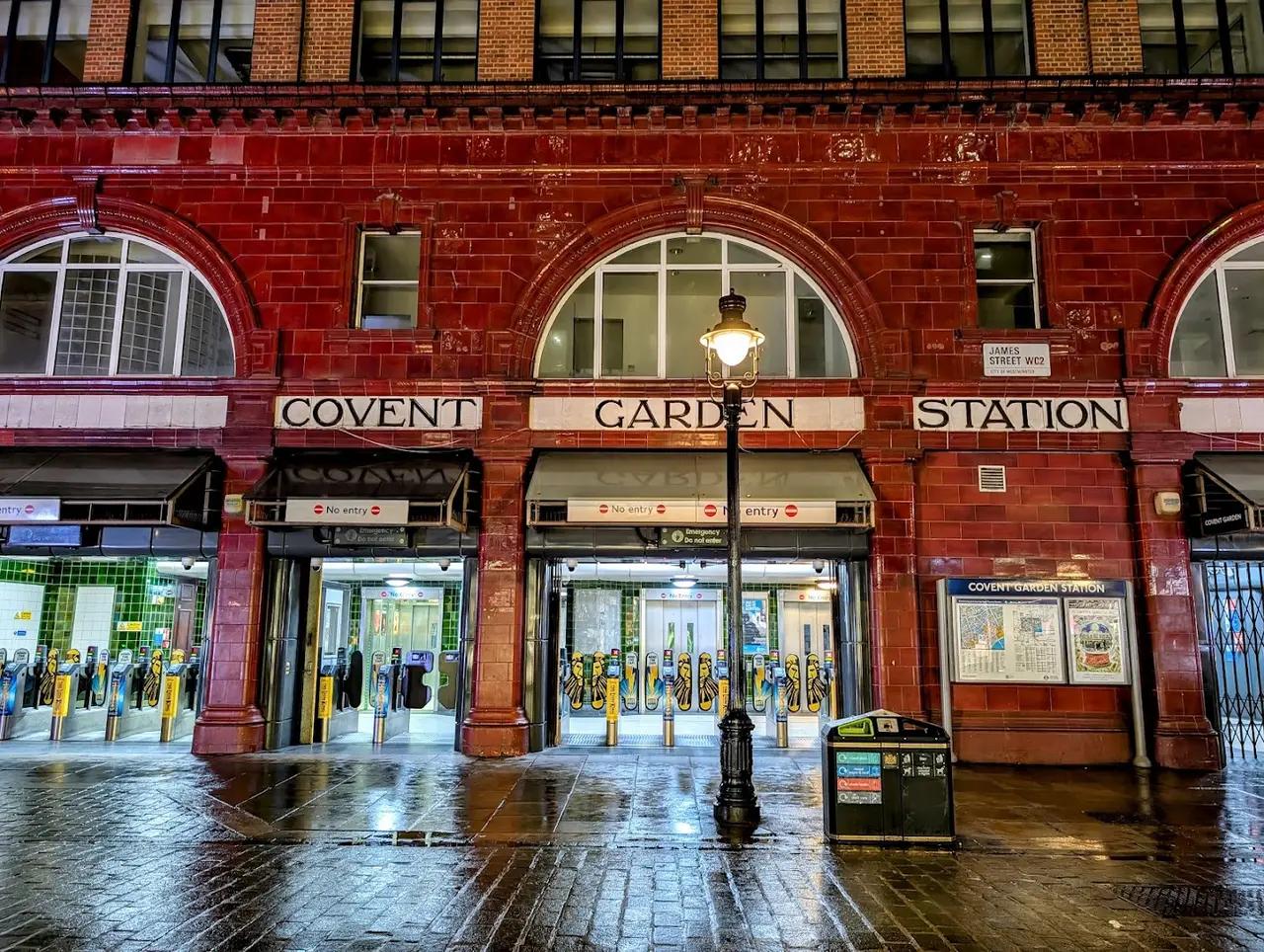
Covent Garden
Covent Garden · Culture
- B
Bonnington Square
Outdoors
- 4
40 Brushfield St
Shoreditch · Culture
- D
David Kira
Shoreditch · Culture
- 4
46 Crispin St
Shoreditch · Culture
- S
Sandy's Row synagogue
Shoreditch · Culture
- 1
112 Commercial St
Shoreditch · Eat
- 2
22 Princelet St
Shoreditch · Culture
- T
The English Restaurant
Shoreditch · Eat
- T
The Victorian Bath House
The City of London · Culture
- N
Noble St
The City of London · Culture
- L
London Museum Spaces
The City of London · Culture
- S
St Giles Cripplegate
The City of London · Culture
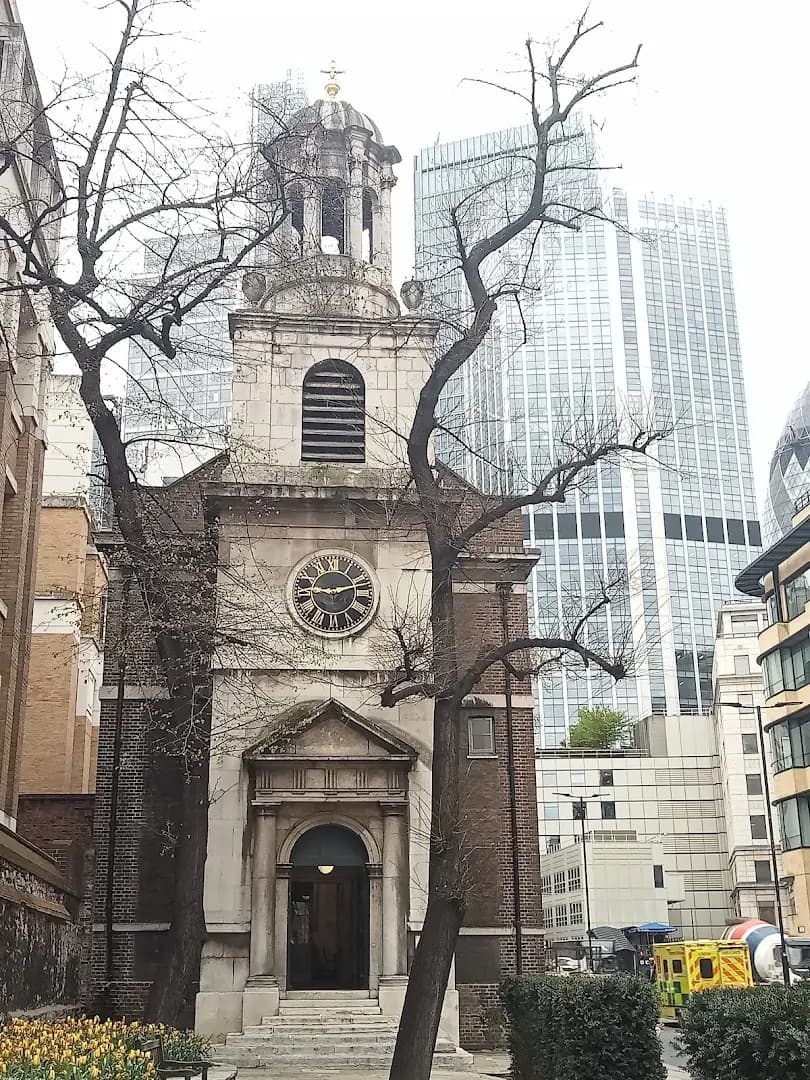
All Hallows-On-The Wall
The City of London · Culture

Westminster Bridge
Westminster · Outdoors
- S
St Pancras Church Chichester
Culture
- T
The Dickens Inn
Bermondsey · Drink
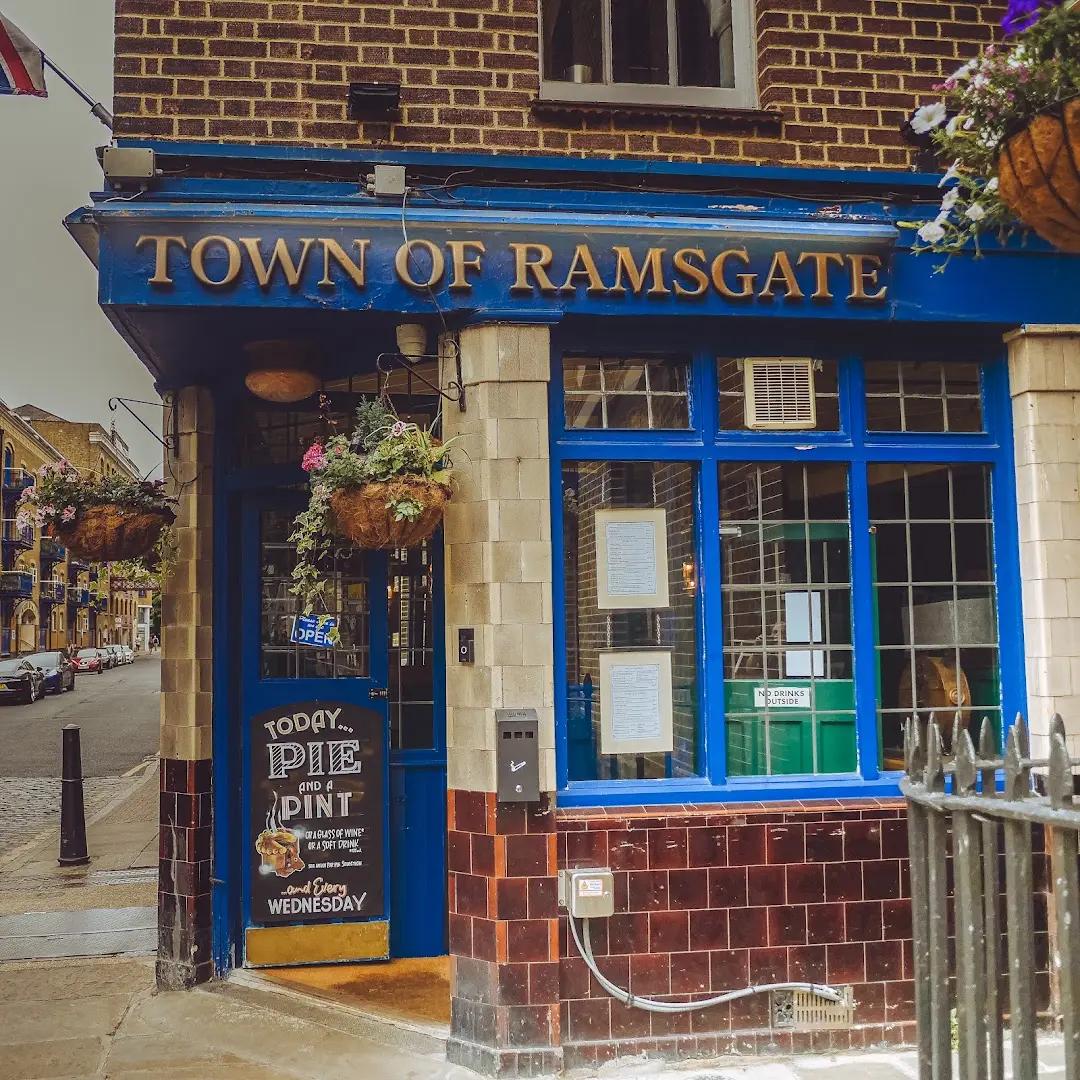
Town of Ramsgate
Bermondsey · Drink
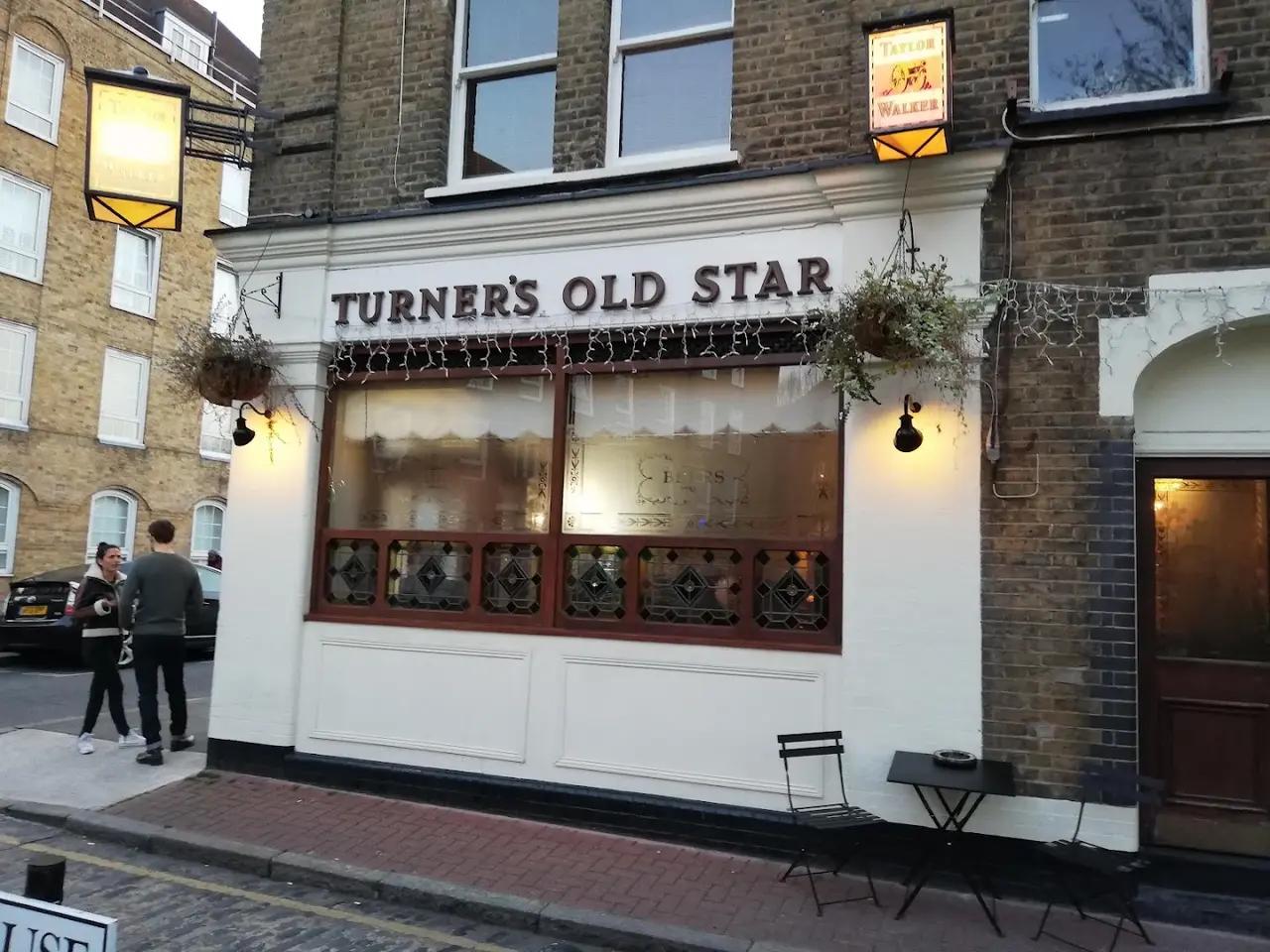
Turner's Old Star
Whitechapel · Drink
- B
Bistro Bardot (The Turk's Head)
Bermondsey · Drink
- T
The Captain Kidd
Bermondsey · Drink
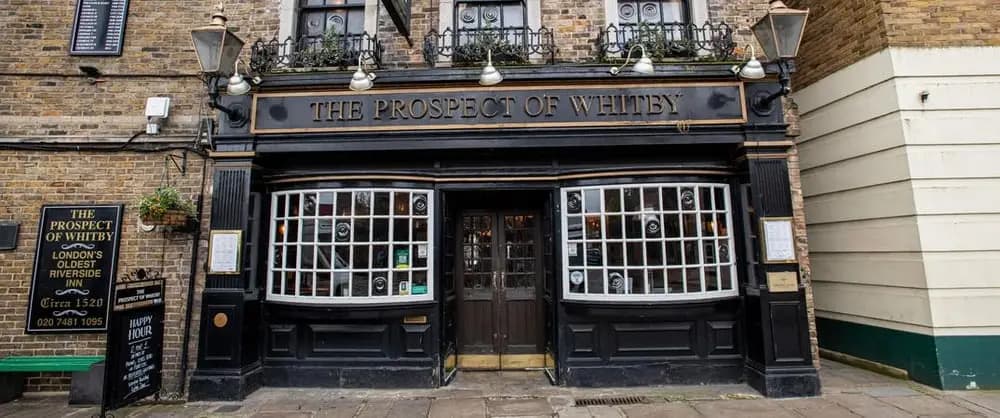
Prospect of Whitby
Whitechapel · Drink

Prince Philip House
Soho · Culture
- G
Grotto Passage
Marylebone · Culture
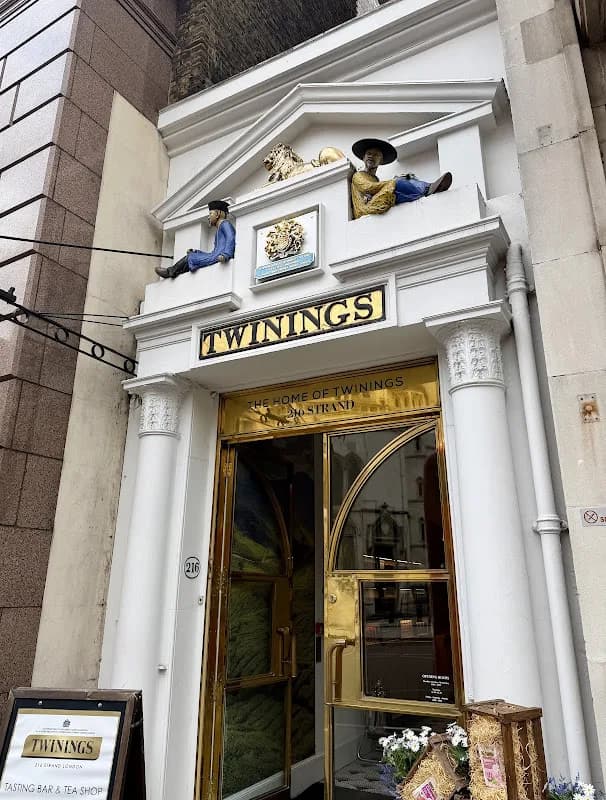
Twinings - The Strand
Holborn · Drink
- H
Hawley Cres
Camden · Outdoors
- B
Barnsbury Wood Local Nature Reserve
Islington · Outdoors
- C
Charterhouse Square
The City of London · Culture
- B
Bleeding Heart Yard
Holborn · Culture
- T
Turnagain Ln
The City of London · Culture
- T
Tweezer's Alley
Holborn · Culture
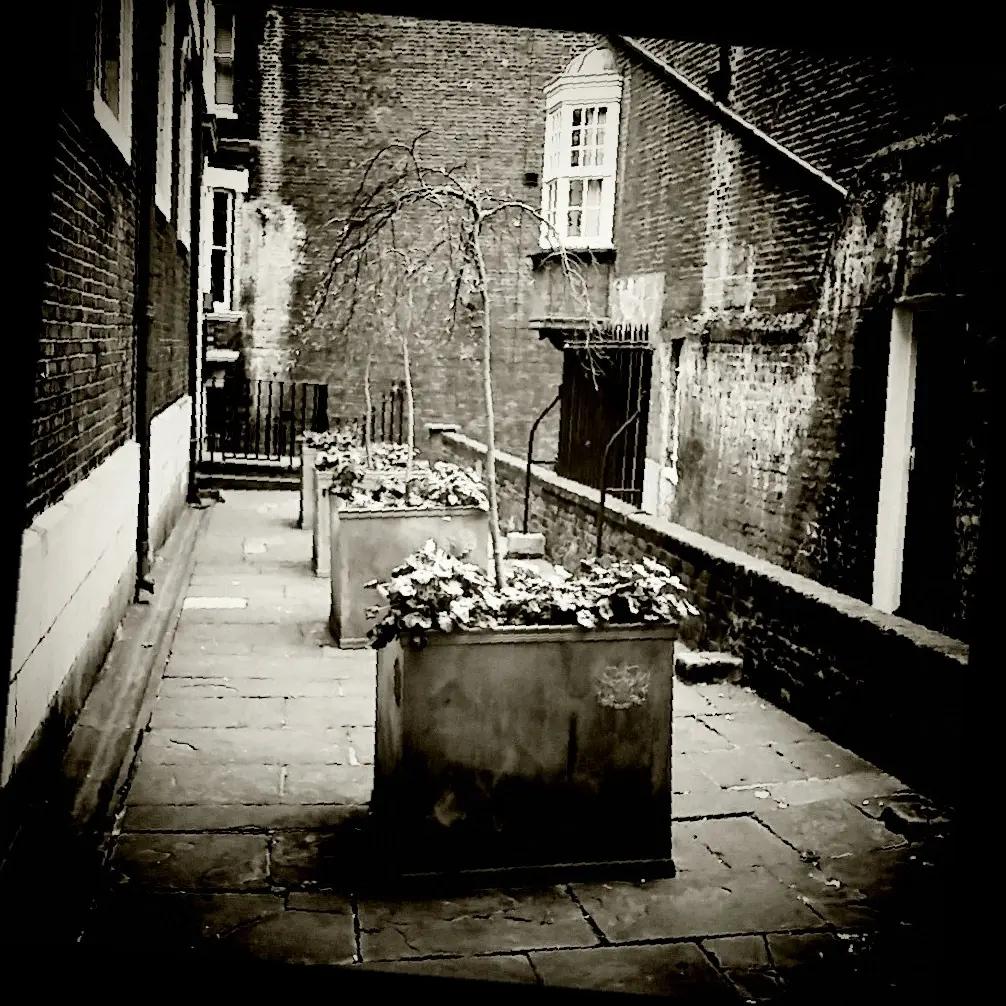
Wardrobe Pl
The City of London · Culture
- F
Frying Pan Alley
Shoreditch · Culture
- B
Bear Gdns
The City of London · Culture
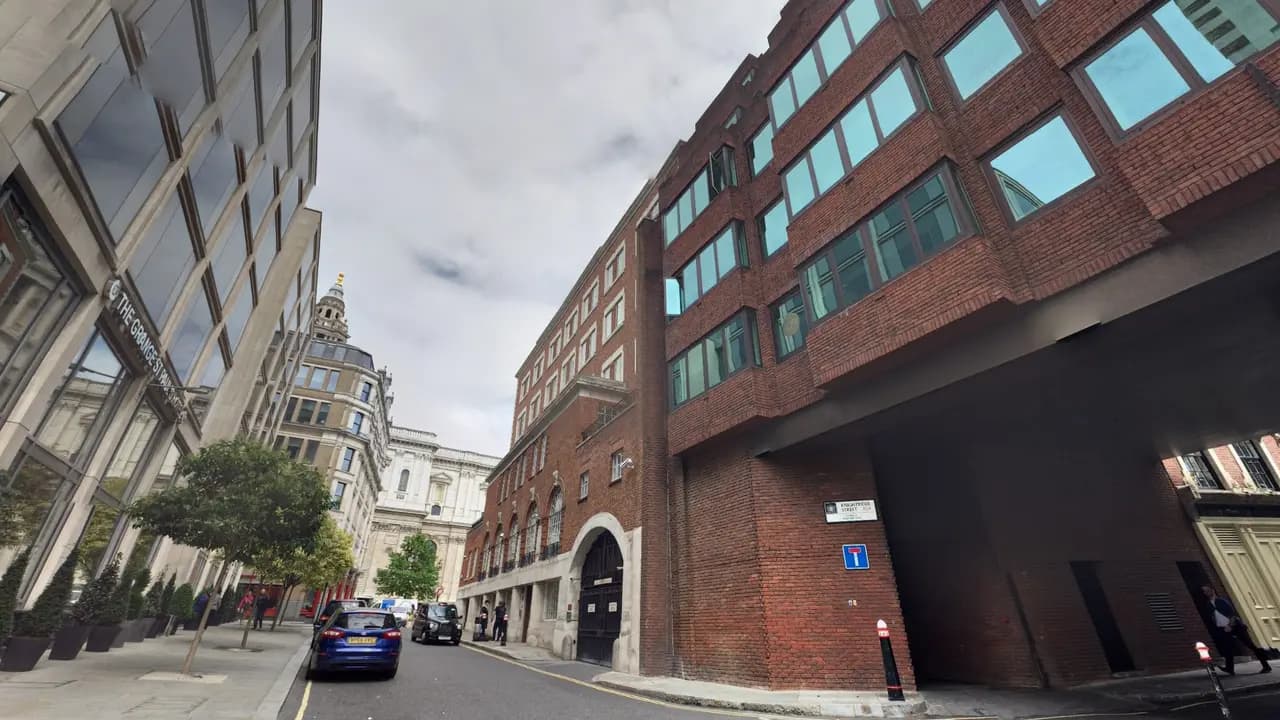
Knightrider St
The City of London · Culture
- N
Neckinger
Bermondsey · Culture
- H
Hanging Sword Alley
Holborn · Culture
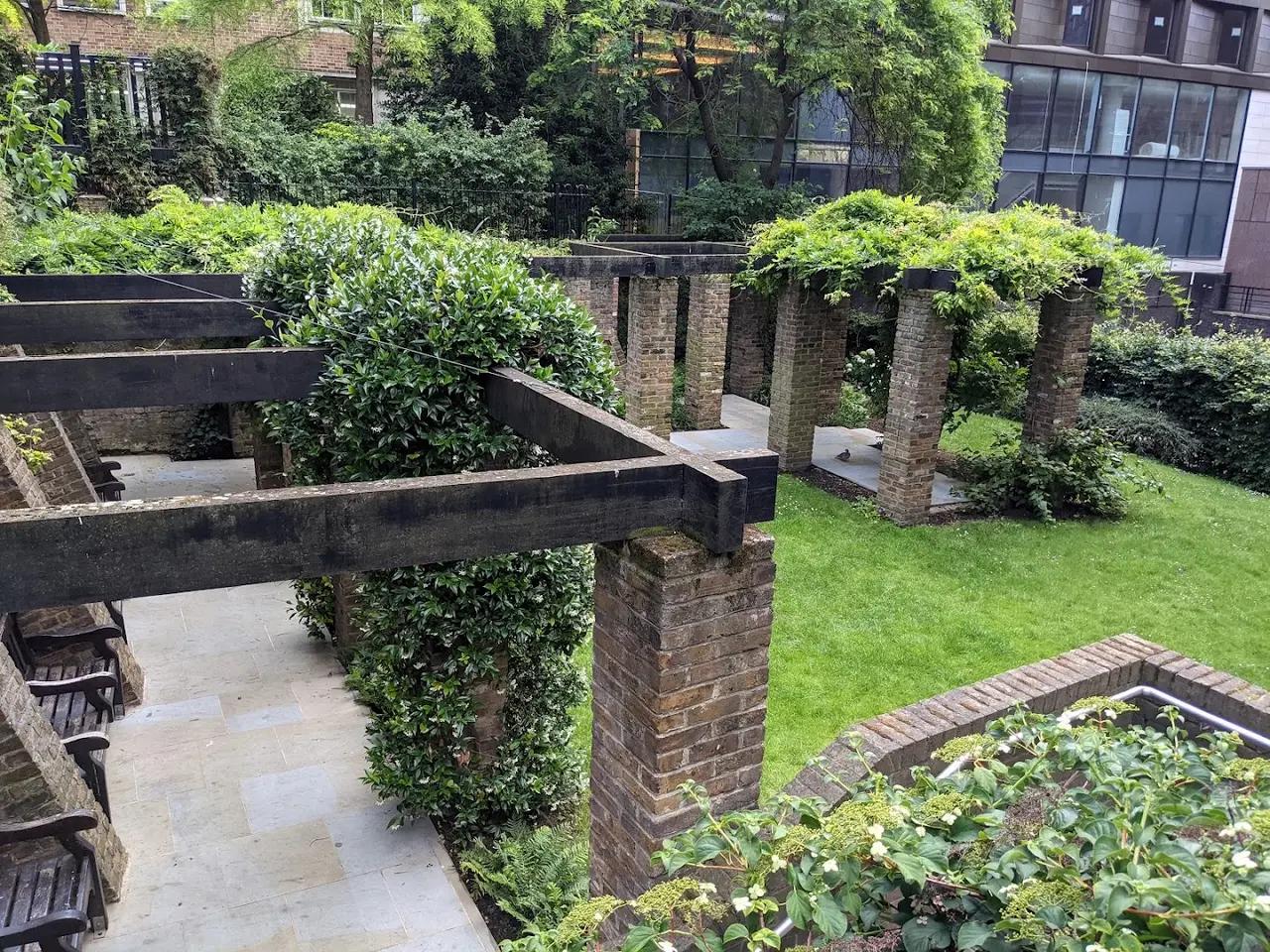
Cleary Garden
The City of London · Outdoors
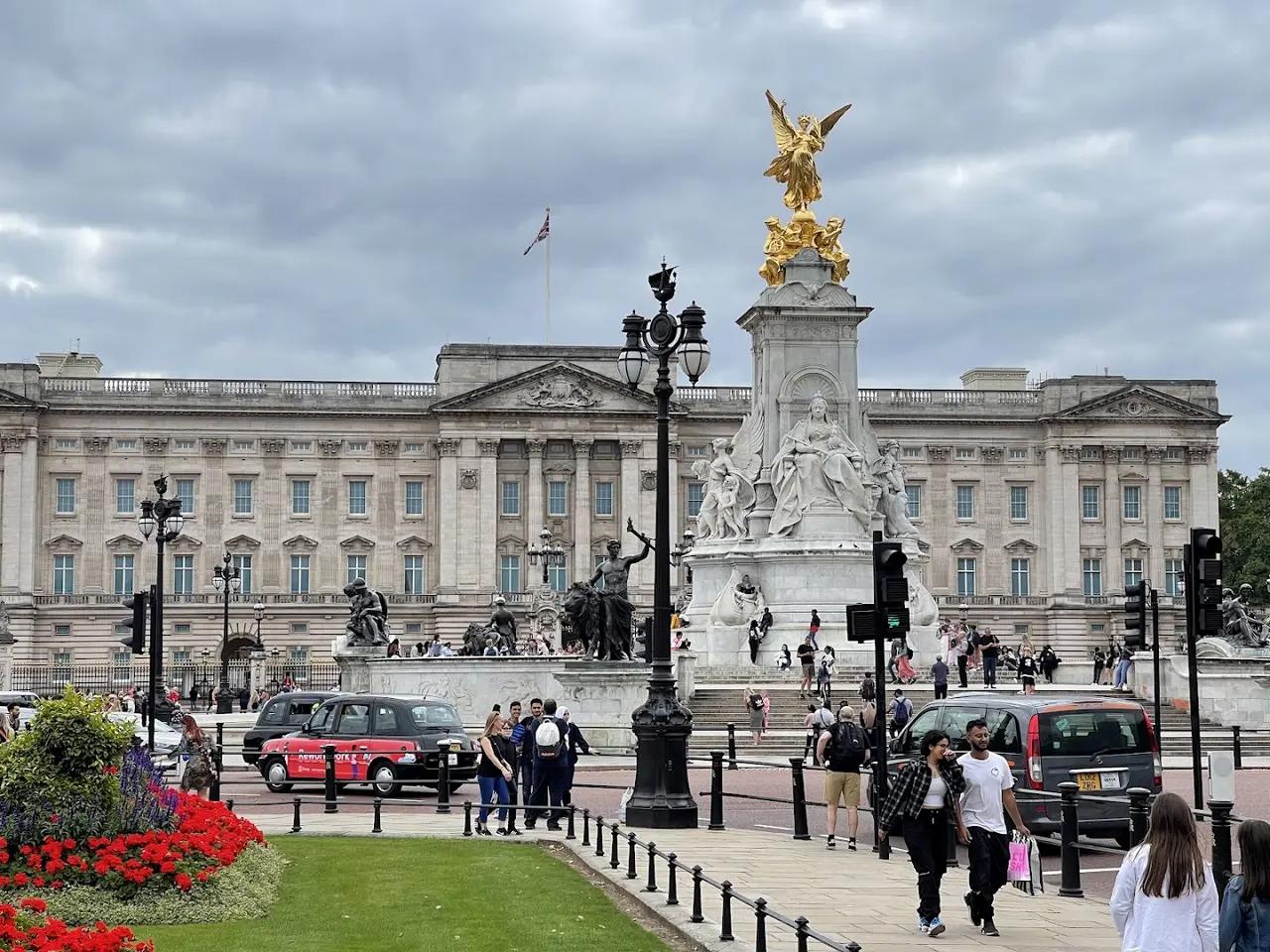
Buckingham Palace
Victoria · Culture
- T
The Mercers' Company
The City of London · Culture
- K
Keystone Cres
Angel · Outdoors
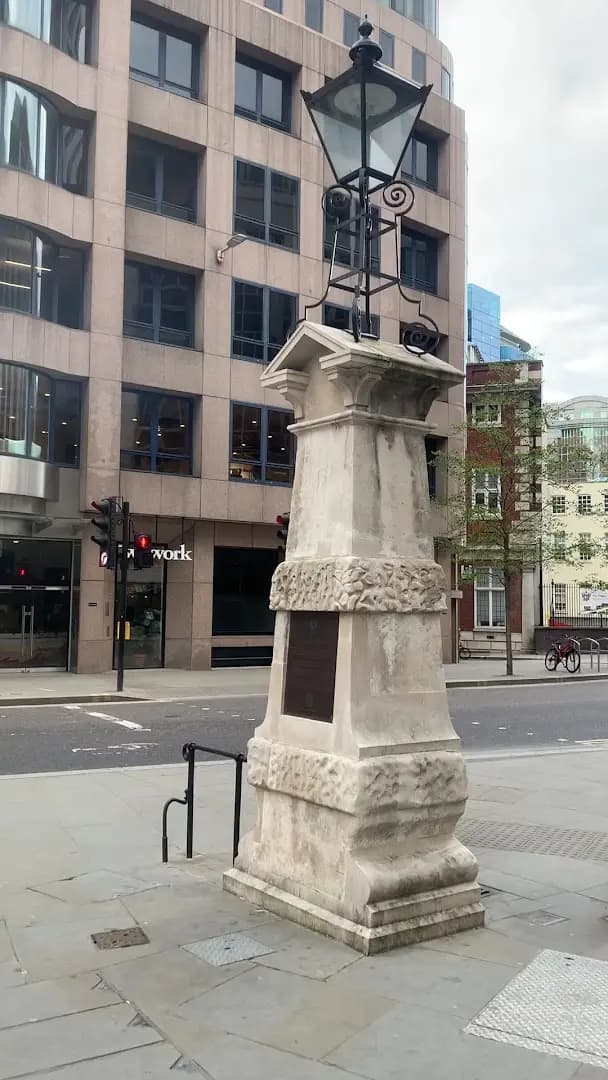
Aldgate Pump
The City of London · Culture
- T
The School of Historical Dress
Culture

Elizabeth Baxter Health Centre
Activities
- Q
Queen Caroline's Bath
Greenwich · Culture
- C
Camley Street Natural Park, London Wildlife Trust
Camden · Outdoors
Little Venice
Activities
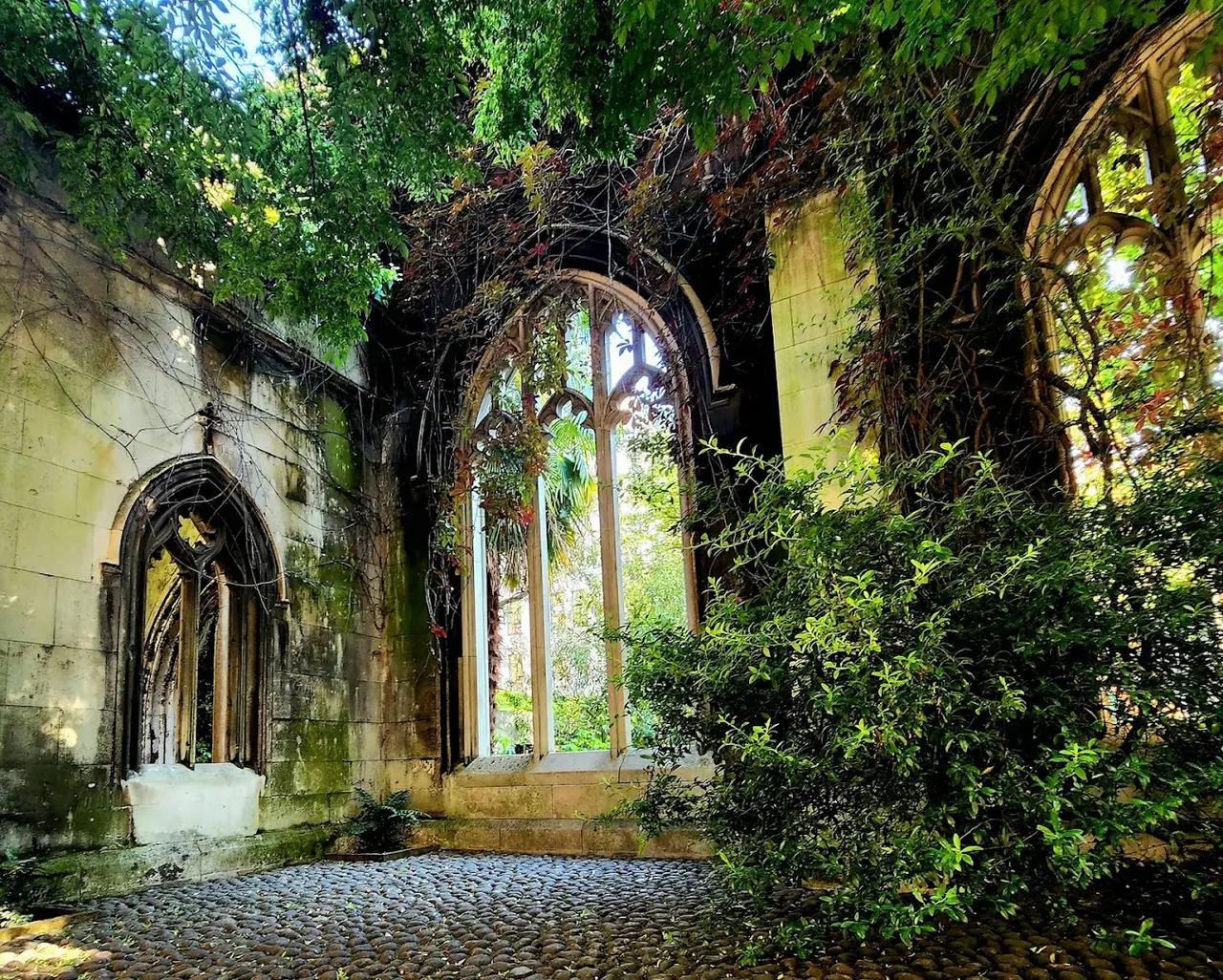
St Dunstan in the East Church Garden
The City of London · Outdoors
- C
Charing Cross
Covent Garden · Culture
The fascinating story behind the medieval-looking monument outside Charing Cross Station… It is a replica of the original Charing Cross, one of twelve Eleanor Crosses that King Edward I erected after his wife Eleanor of Castile died in 1290. Most, including the one in London, was destroyed in the 17th century by the Parliamentarians. This one is a Victorian replica from 1865, designed by Edward Middleton Barry, who also designed the station. . . . . . . #london #londonhistory #livinglondonhistory #londontravel #cityofwestminster #trafalgarsquare #charingcross #medievalhistory #hiddenlondon #secretlondon
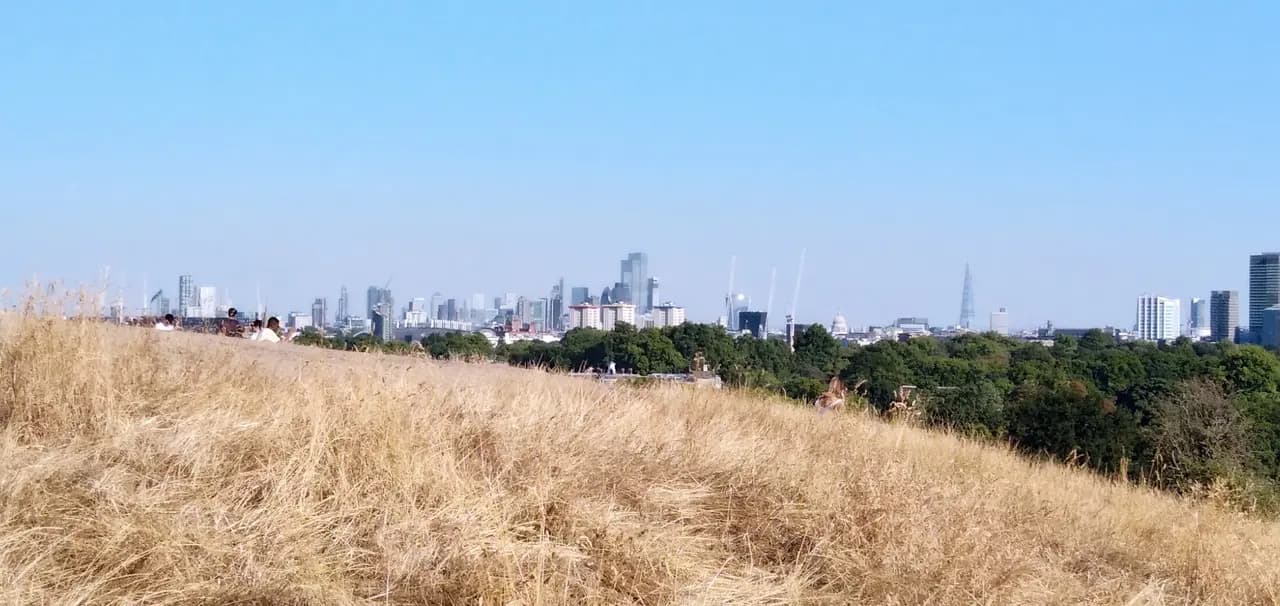
Primrose Hill
Camden · Outdoors
- I
Isabella Plantation (Broomfield Hill Gate)
Outdoors
- L
London Bridge Stone Alcoves
Culture
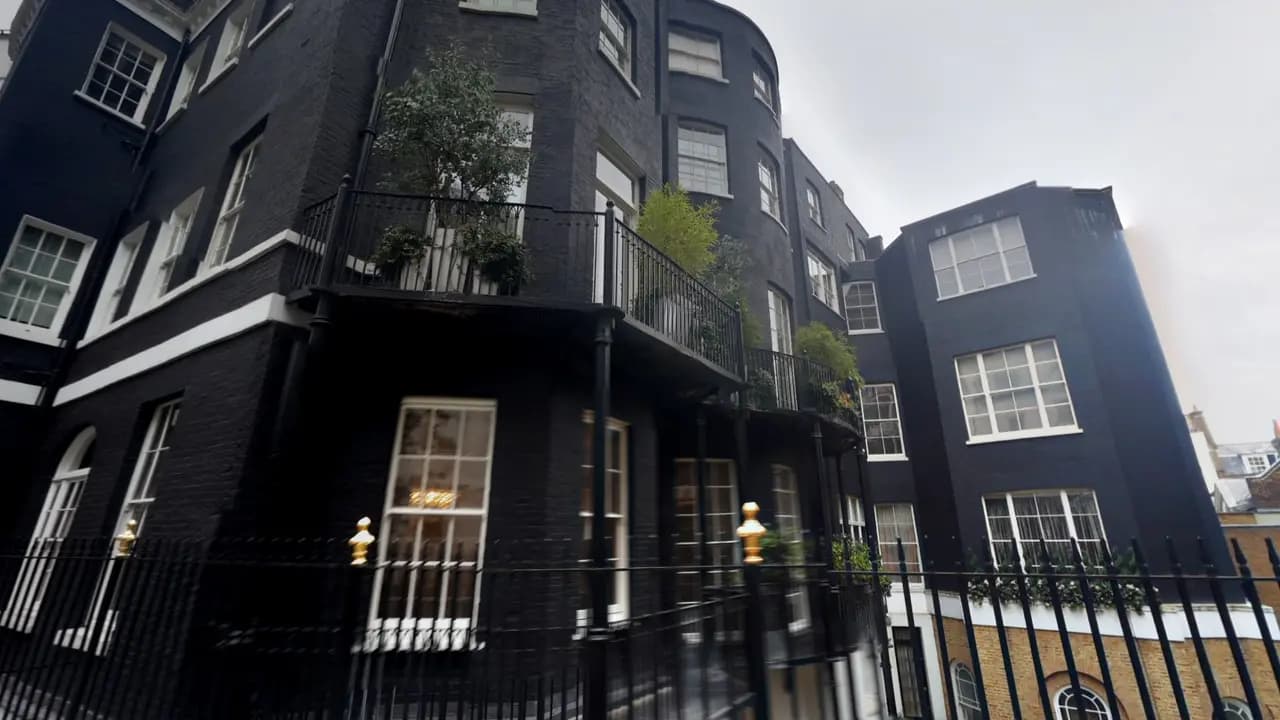
Curzon Square
Mayfair · Outdoors
Red Cross Garden
The City of London · Outdoors
- J
Joseph Grimaldi Park
Angel · Outdoors
- F
French Protestant Church of London
Soho · Culture
- B
Bow Church
Culture
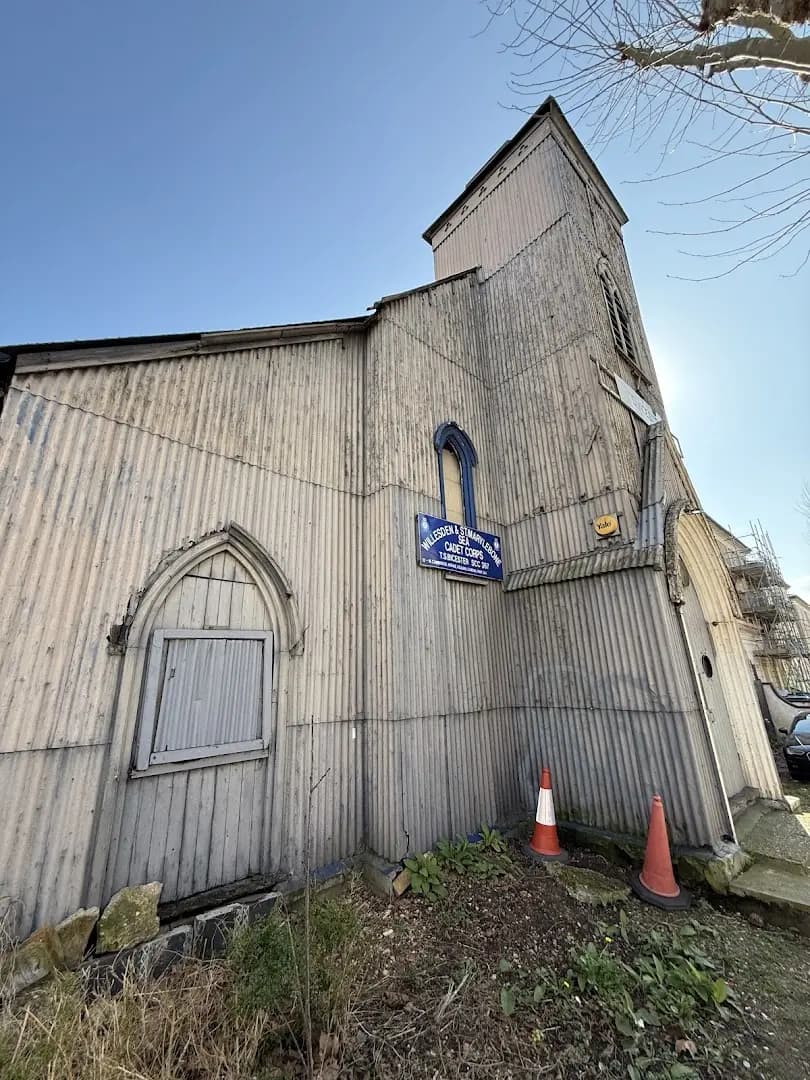
The Tin Tabernacle
Culture
- C
Crystal Palace Dinosaurs
Culture
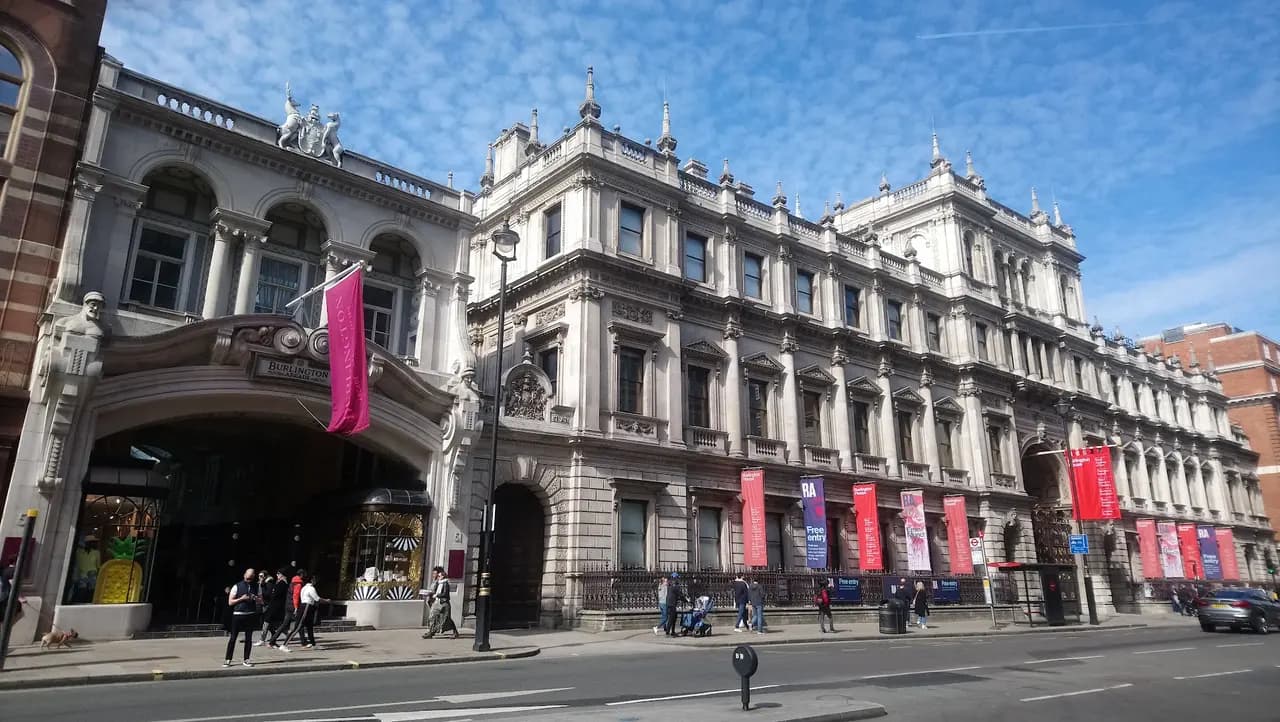
Burlington House
Soho · Culture
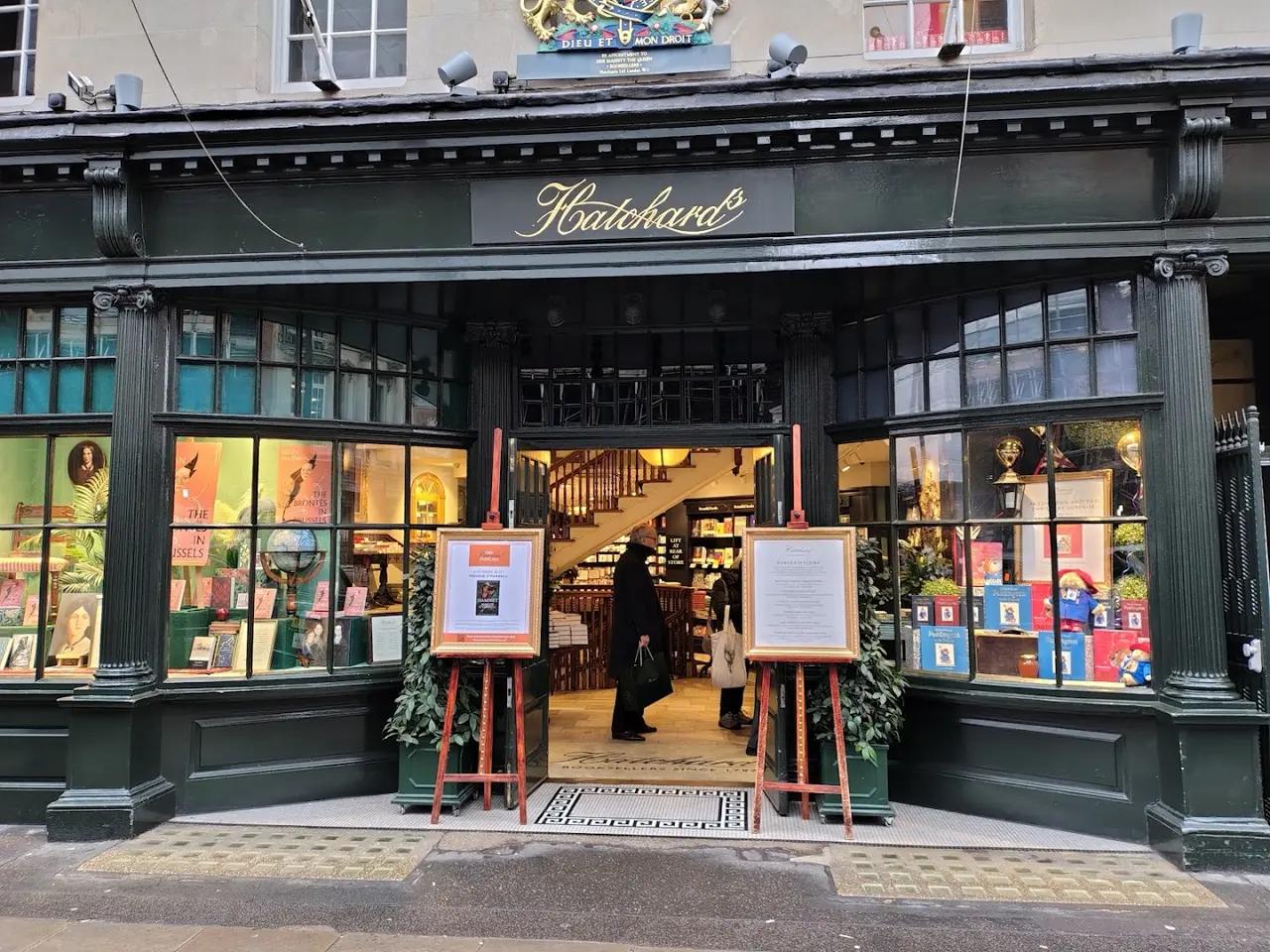
Hatchards
Soho · Shop
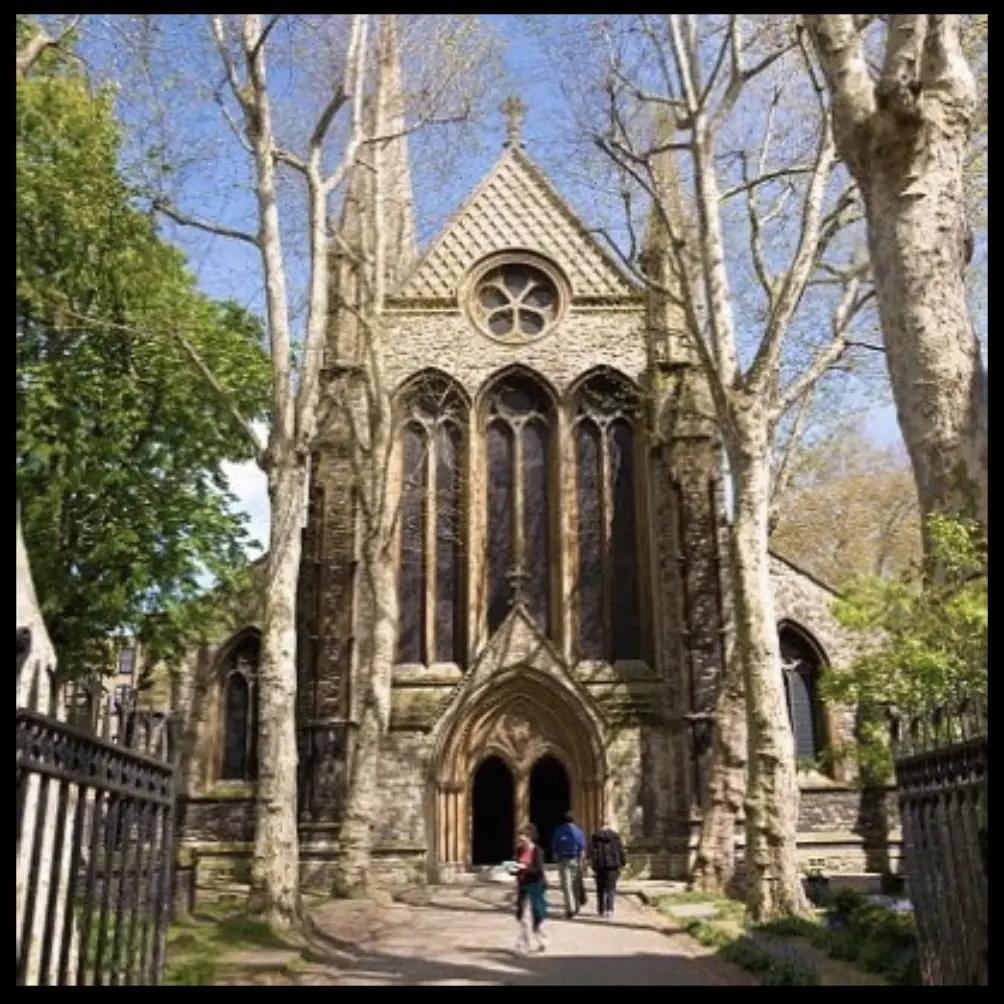
St Mary Abbots Church
South Kensington · Culture
- S
Shepherdess Walk
Angel · Outdoors
- S
St Paul’s, Bow Common
Canary Wharf · Culture
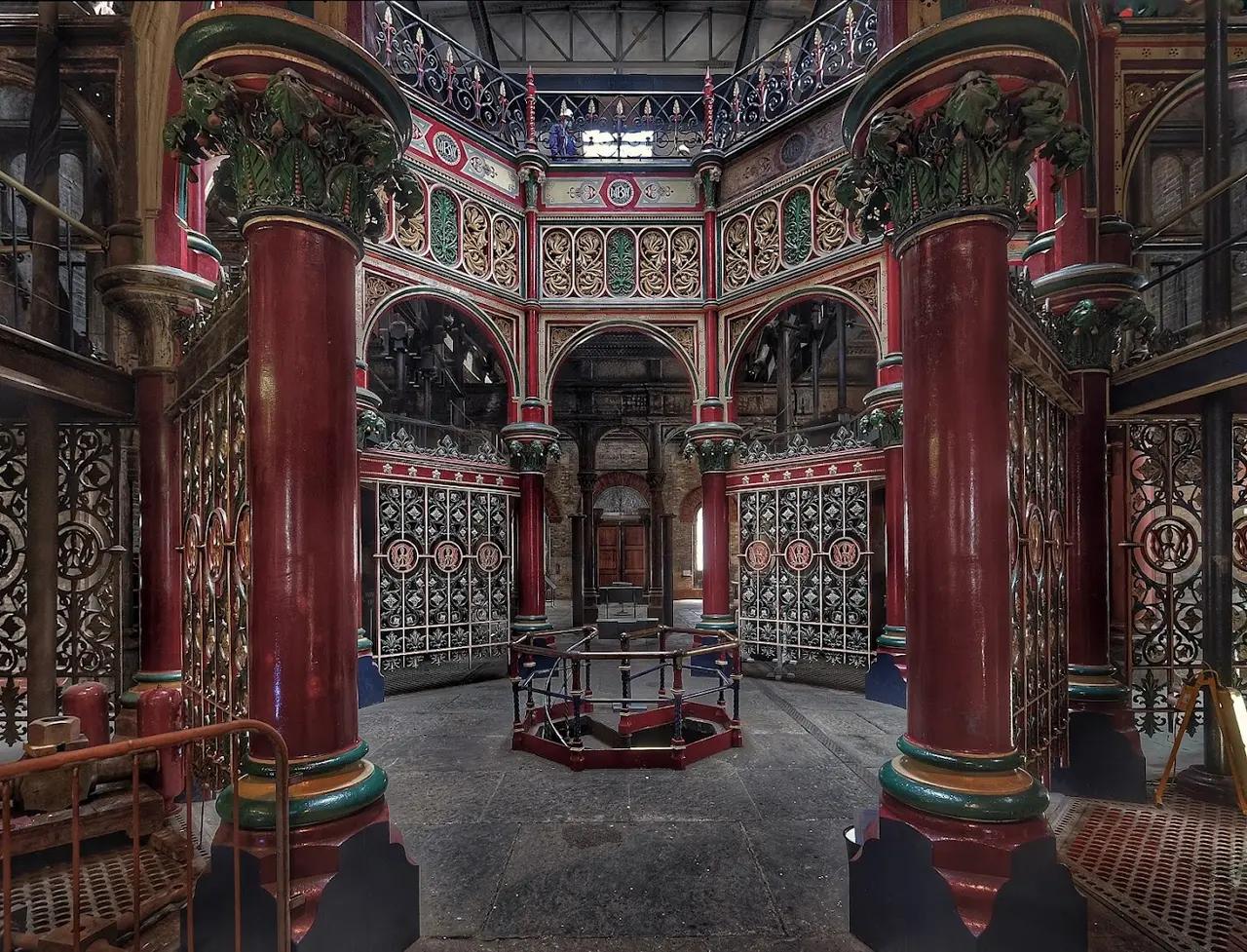
Crossness Pumping Station
Culture
- A
Angel Pl.
Bermondsey · Outdoors
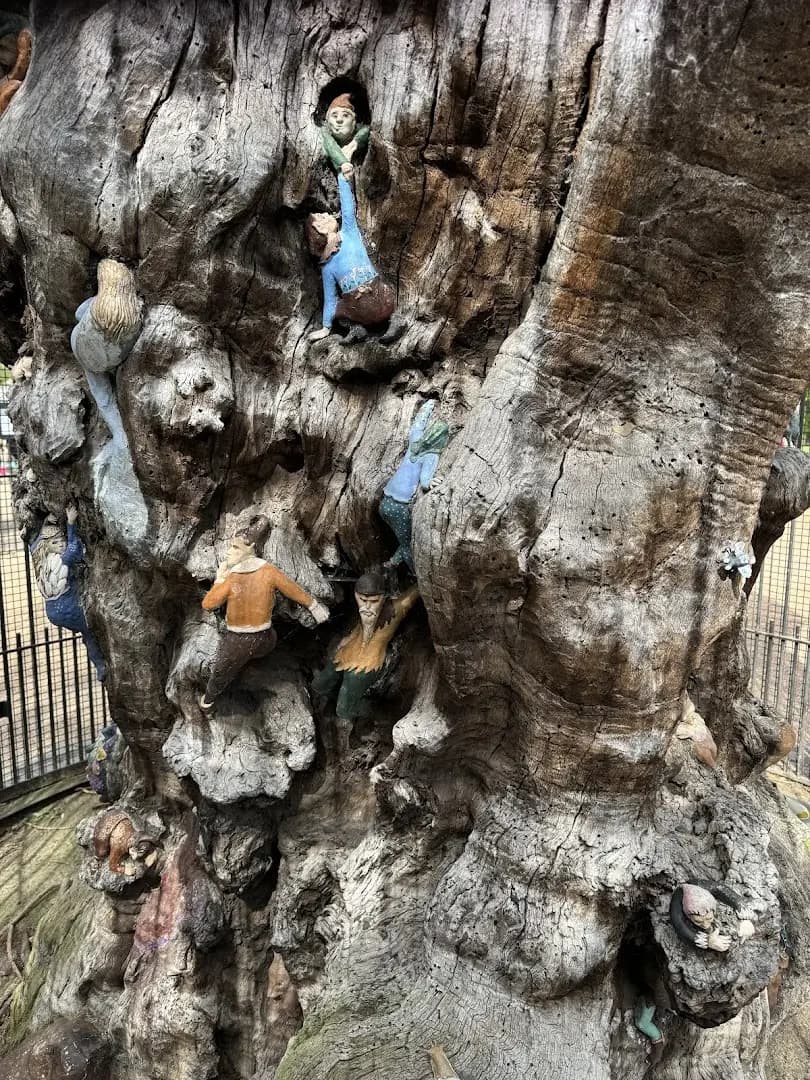
Elfin Oak
South Kensington · Culture
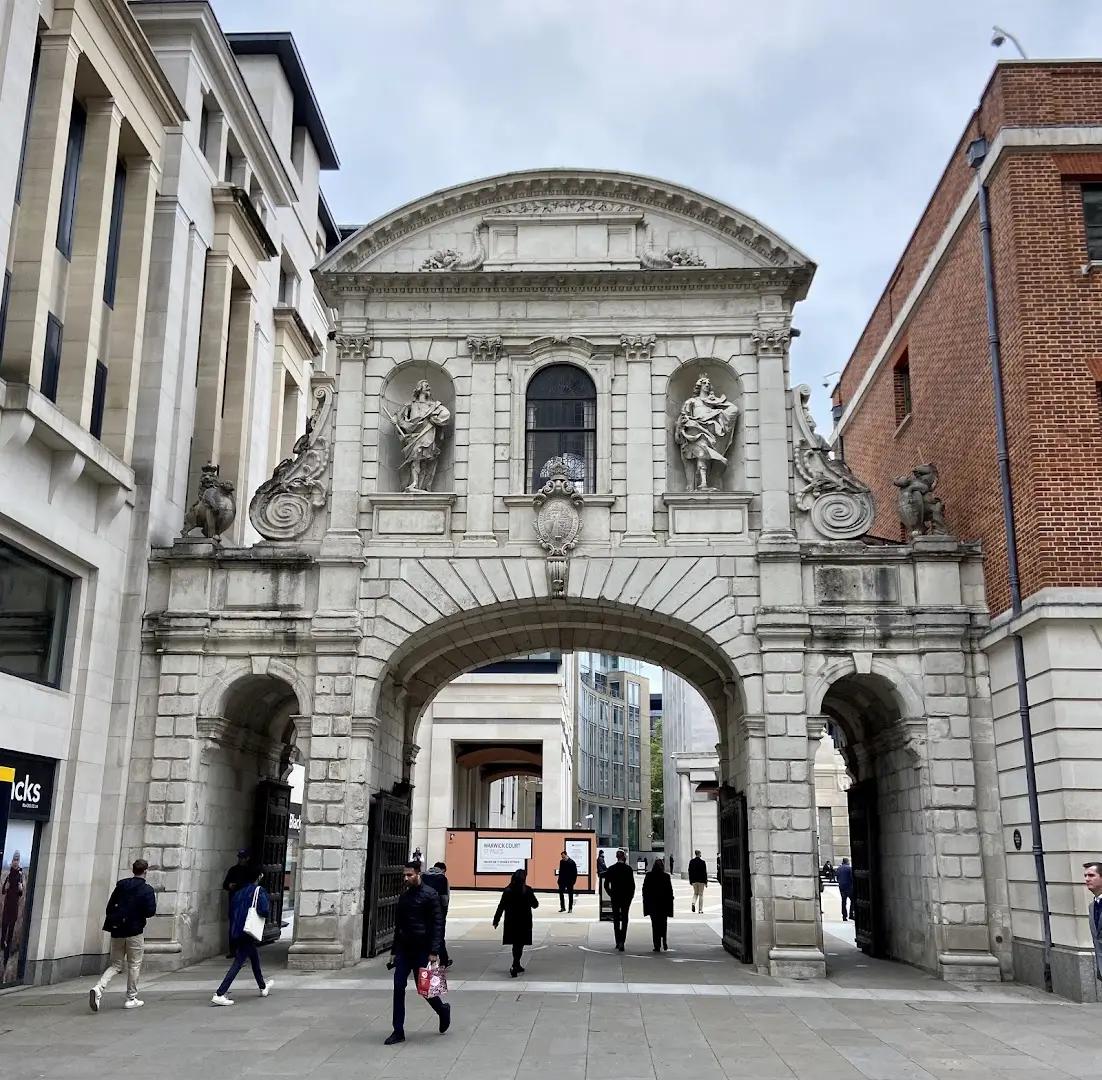
Temple Bar London
The City of London · Drink
- H
Hampstead High St
Hampstead · Shop
- 1
11 Cannon Ln
Hampstead · Culture
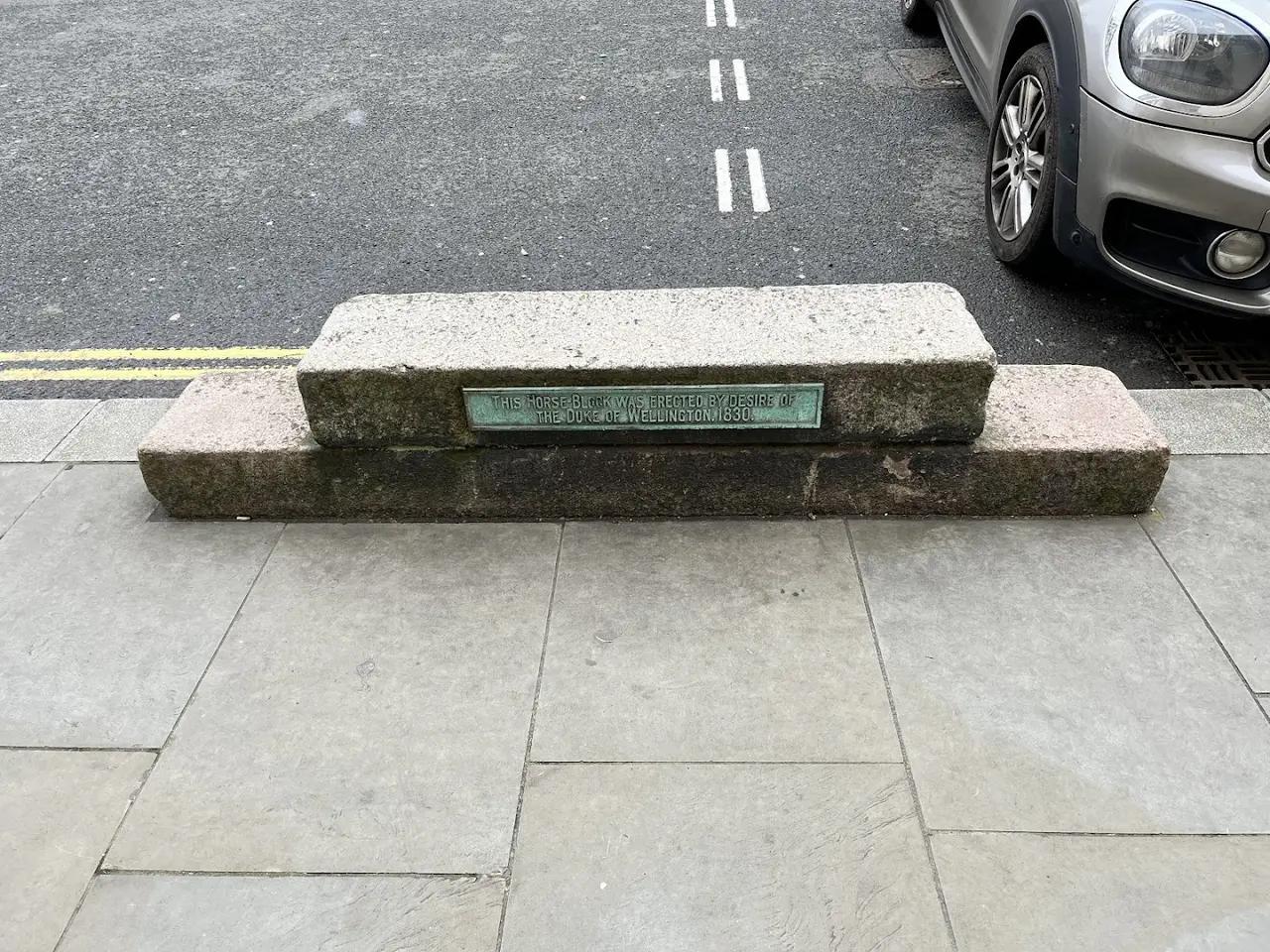
The Duke of Wellington’s mounting block
Soho · Culture
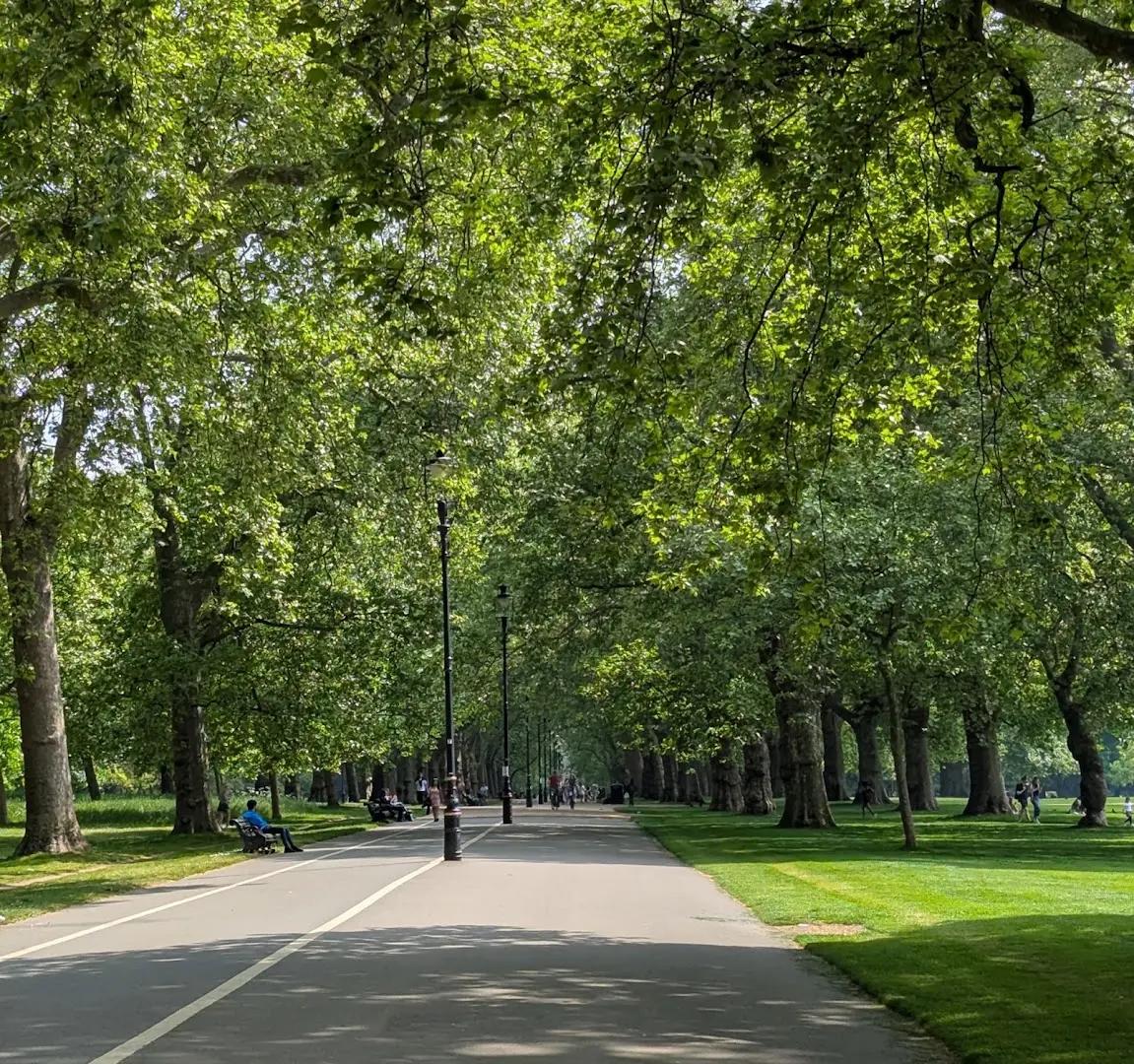
Hyde Park
Knightsbridge · Outdoors
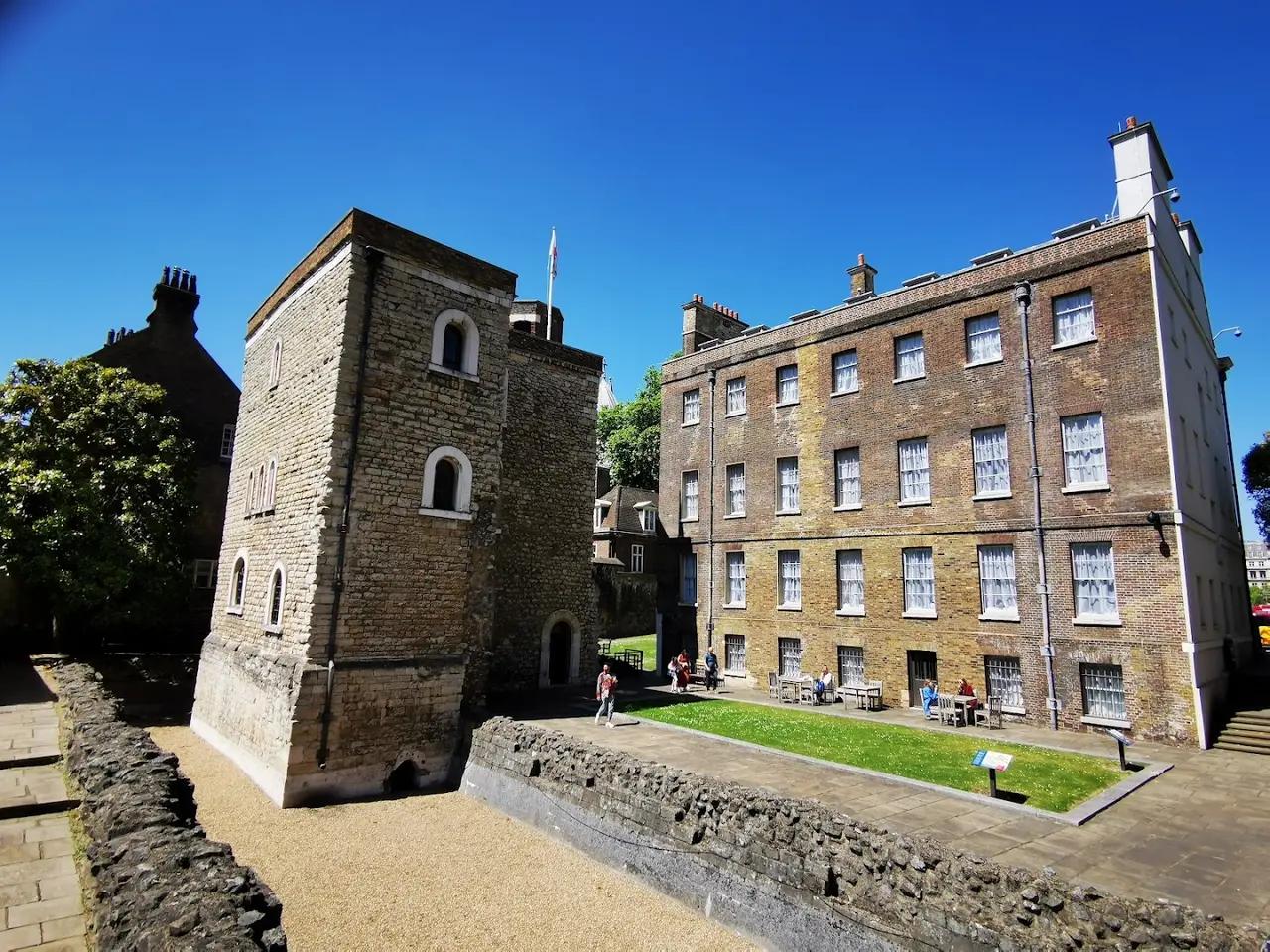
Jewel Tower
Westminster · Culture
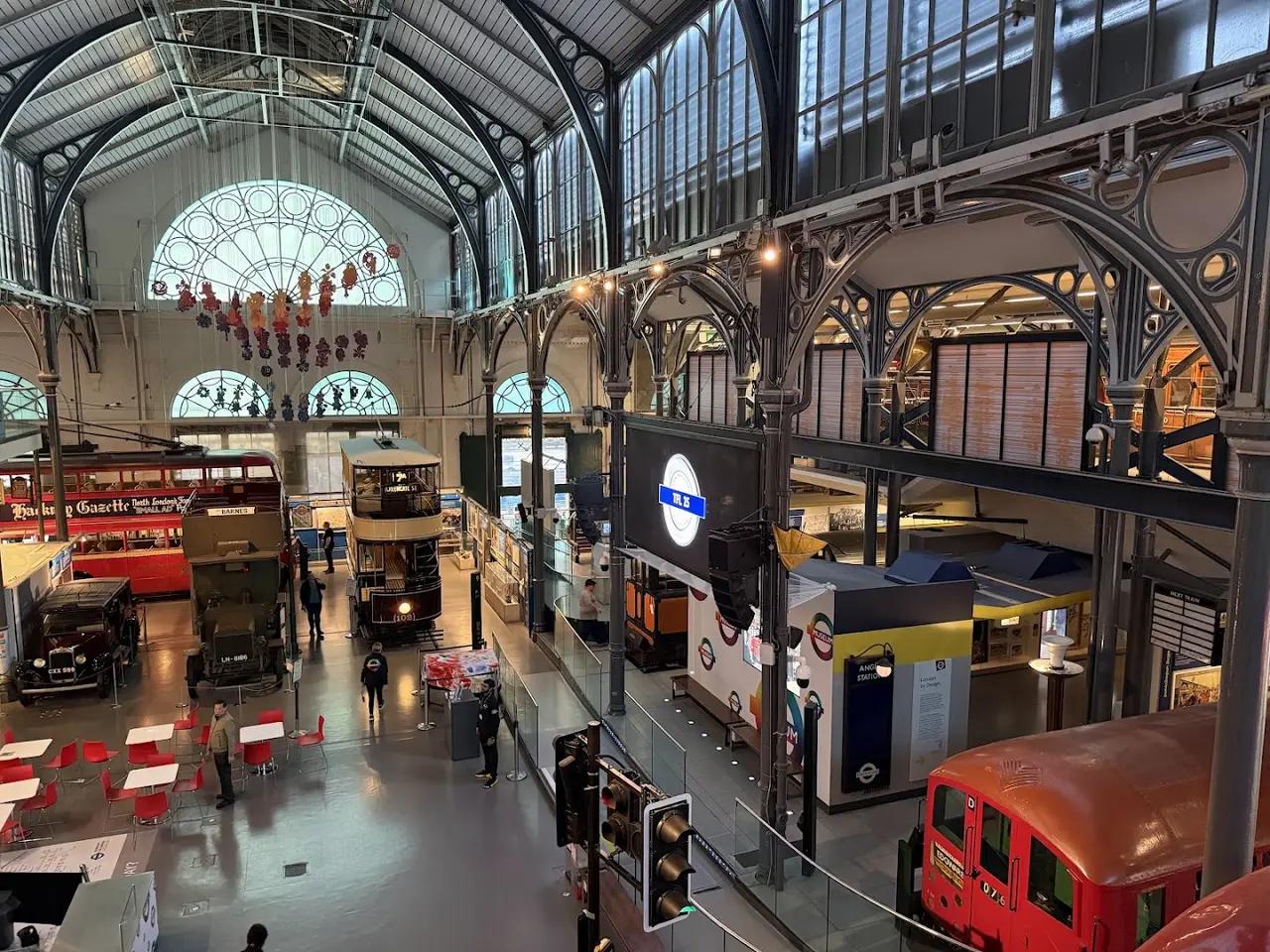
London Transport Museum
Covent Garden · Culture
- O
Omnibus Theatre
Clapham · Culture
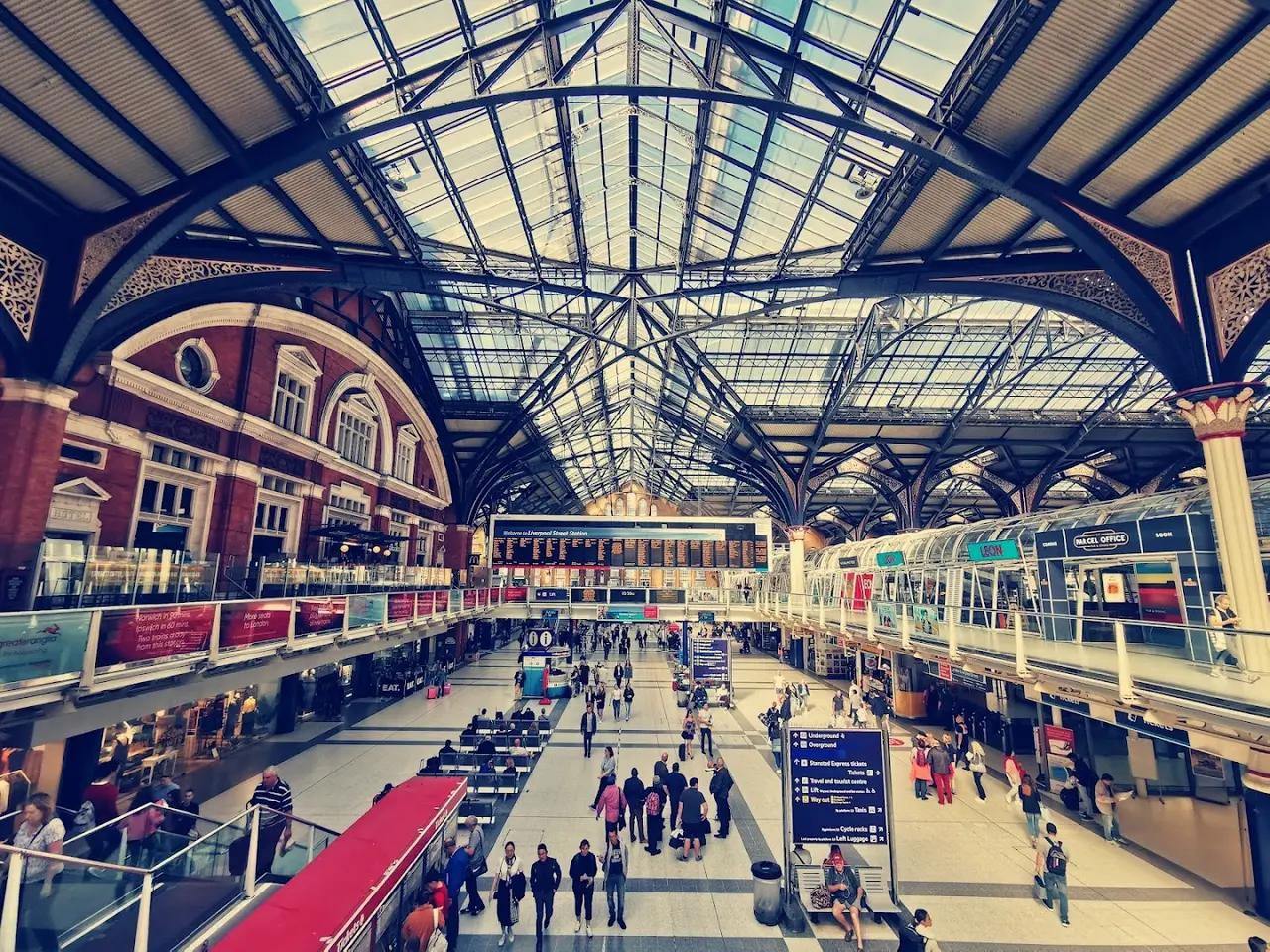
Liverpool Street
Shoreditch · Culture
- S
St Helen's Church, Bishopsgate
The City of London · Culture
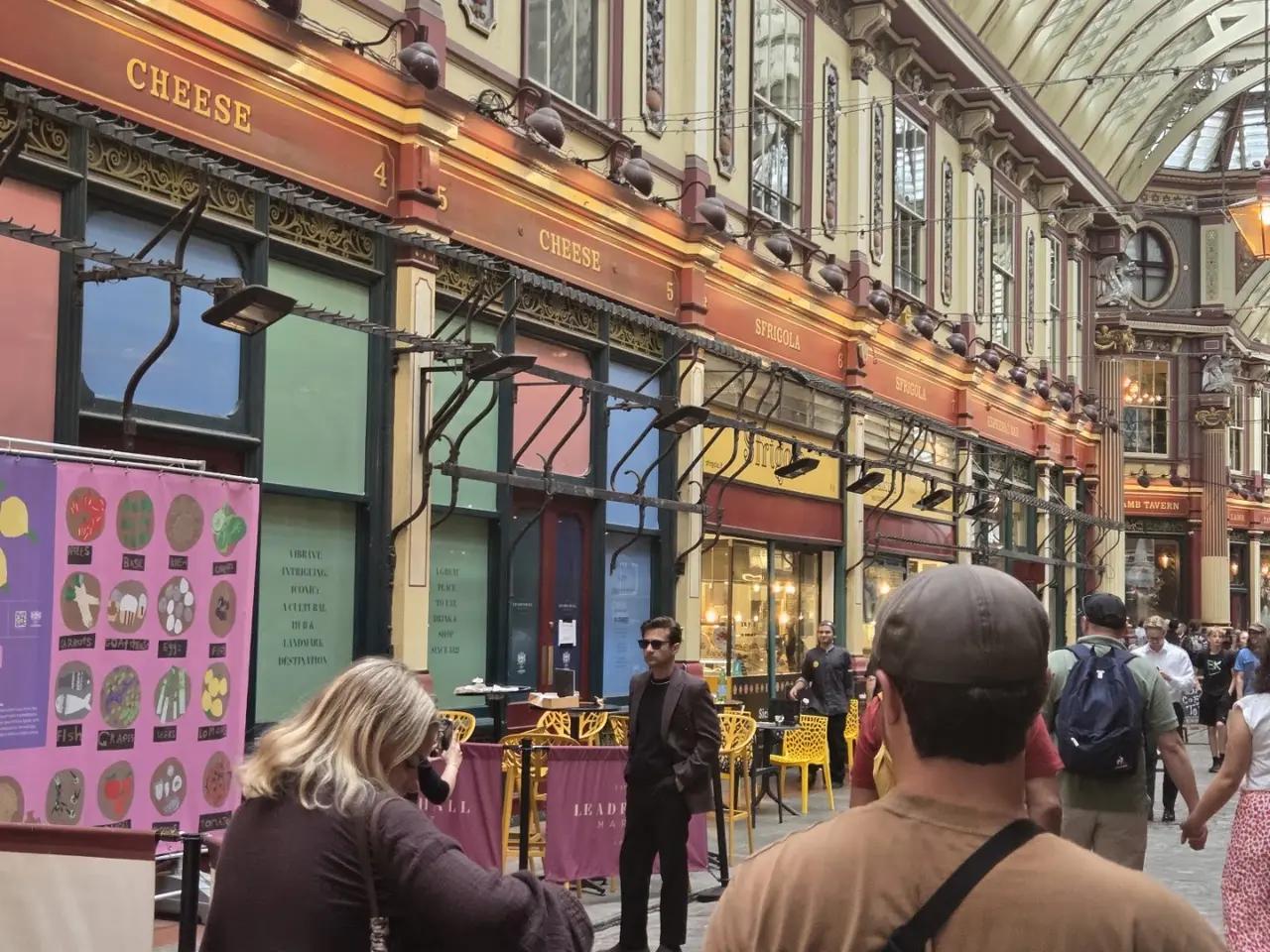
Leadenhall Market
The City of London · Shop
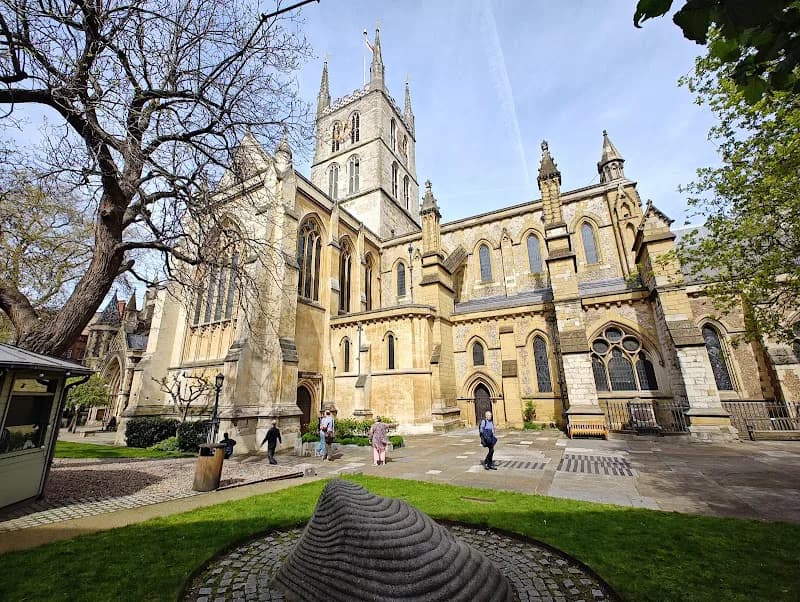
Southwark Cathedral
The City of London · Culture
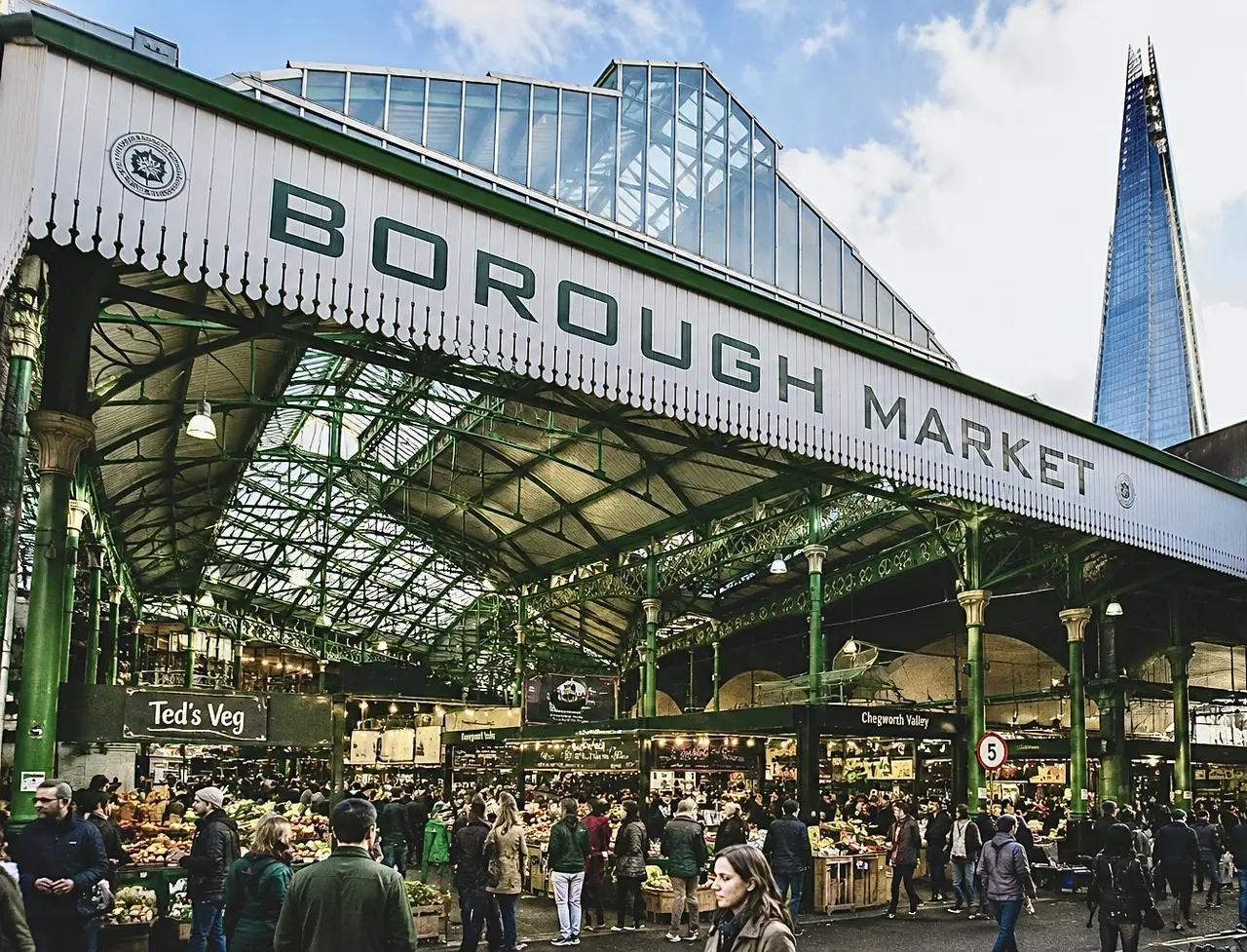
Borough Market
The City of London · Eat
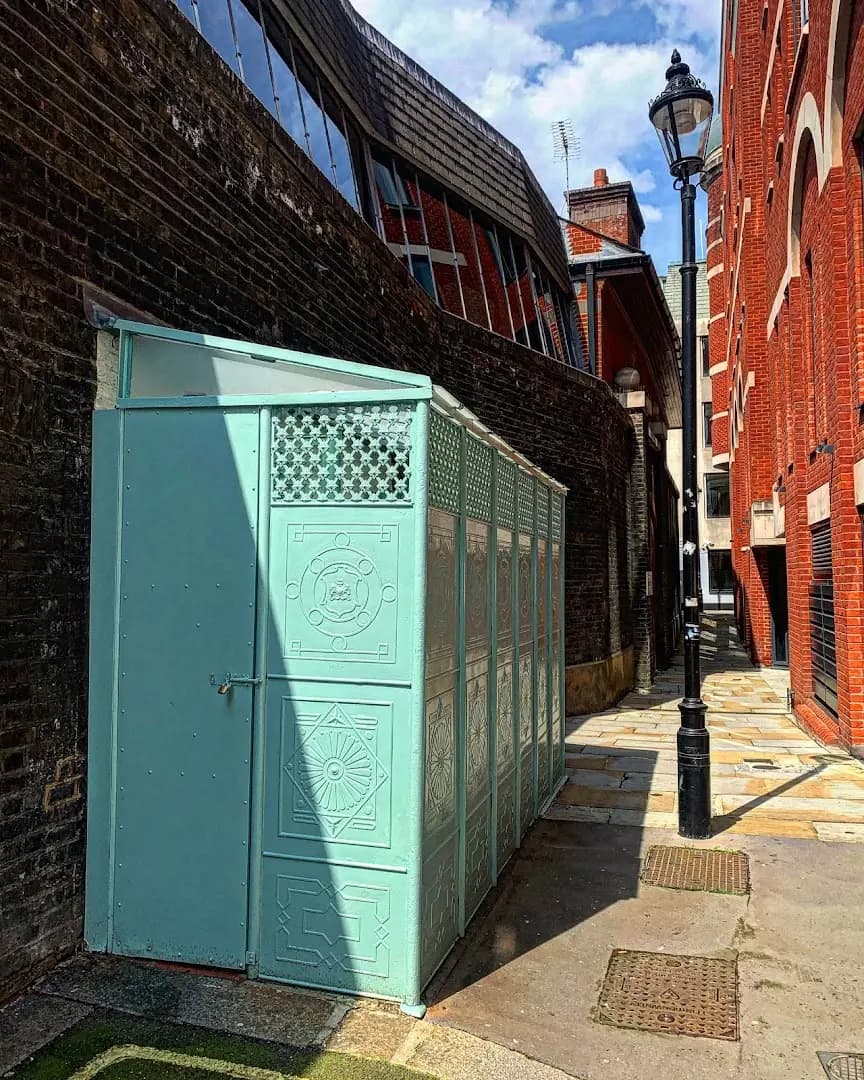
Star Yard
Holborn · Culture
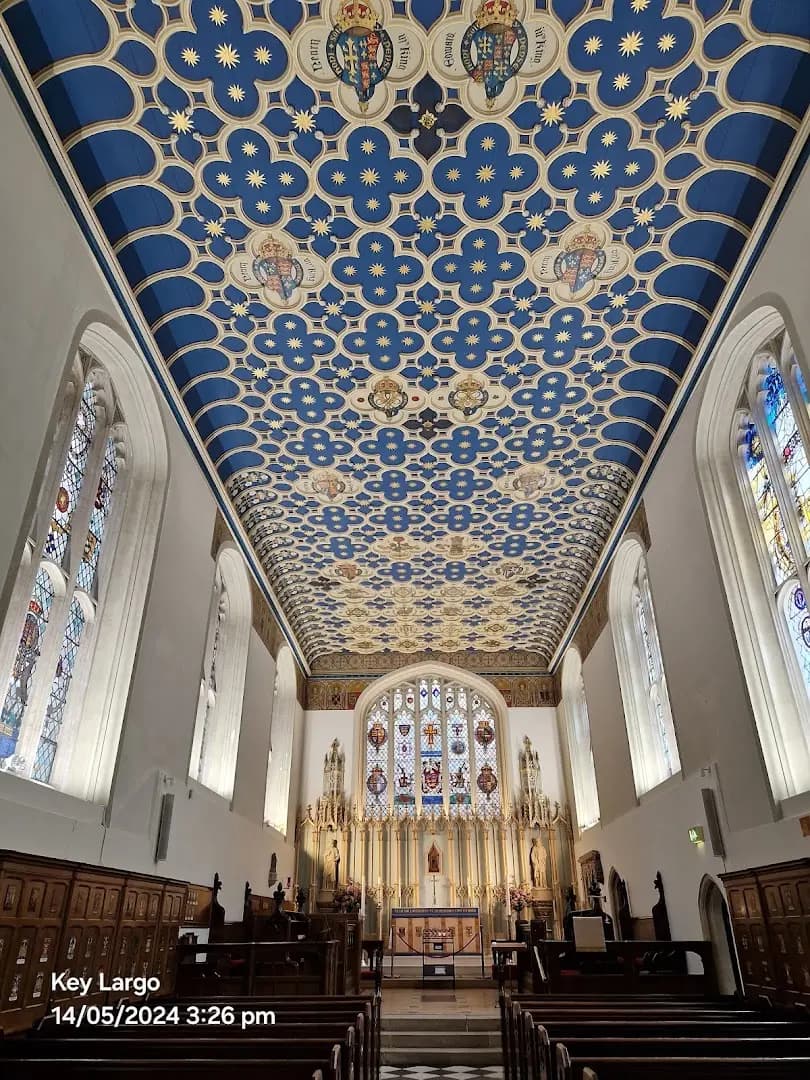
The King’s Chapel of the Savoy
Covent Garden · Culture
- 1
1 Edward Square
Angel · Outdoors
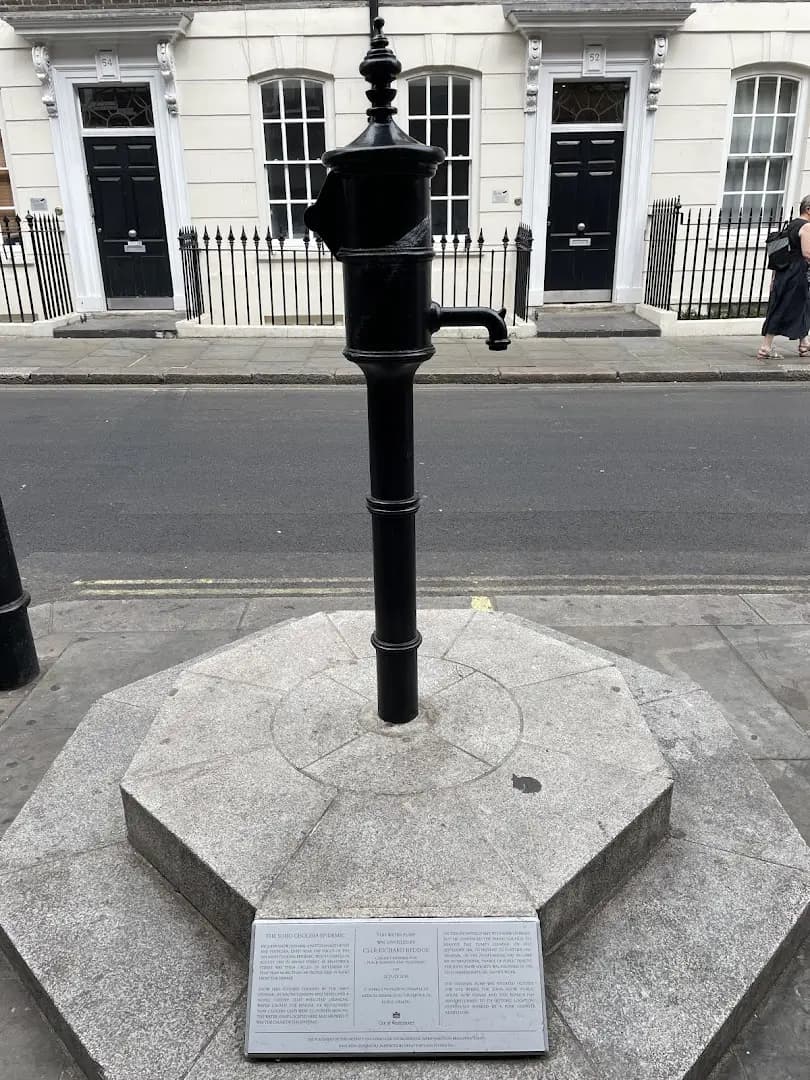
Dr John Snow plaque
Soho · Culture
- C
Cornerstone
Bermondsey · Eat
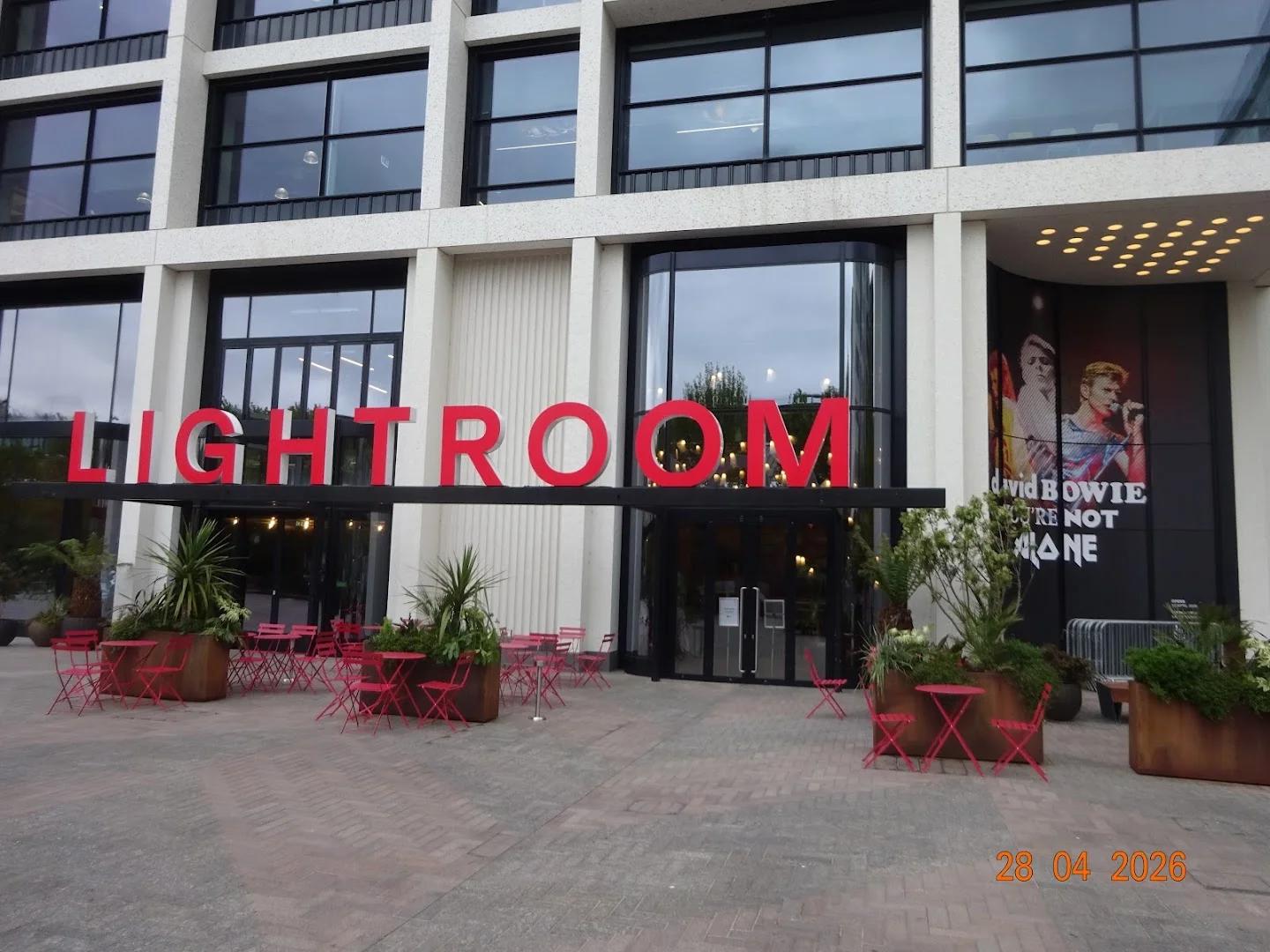
Coal Drops Yard
Camden · Shop
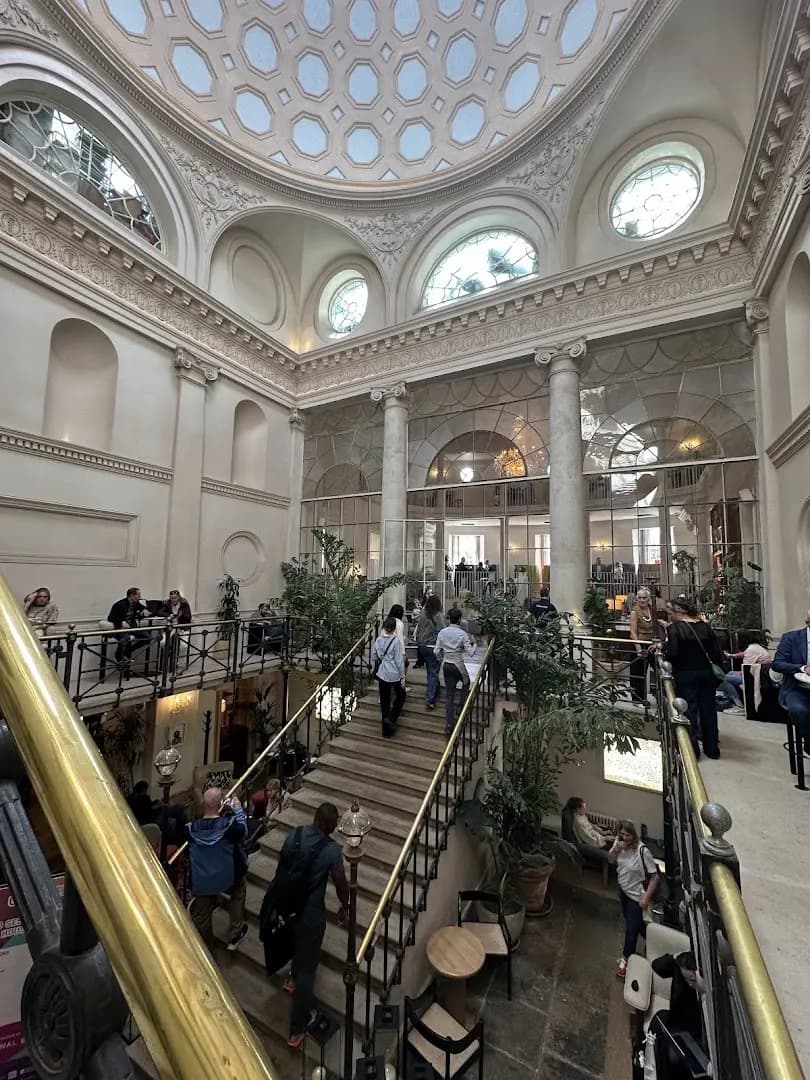
Old Sessions House
Holborn · Outdoors
Have You Heard Of The Clerkenwell 'Catacombs'? Unbeknownst to many, hidden beneath Clerkenwell, is an eerie historic survivor: the Clerkenwell 'catacombs'. They are the only surviving fragment of a much larger Victorian prison complex that once dominated this area of the city.
- S
St Michael's Alley
The City of London · Culture
Who doesn’t love a good atmospheric, historic London alleyway? ?? This is St Michael’s Alley, found amongst the tangle of alleyways between Cornhill and Lombard Street in the City of London. It is one of my top eight historic London alleyways, there is a link in my bio for the full blog post. Down St Michael’s Alley you will find the Jamaica Winehouse. It is a decorative late-19th century pub, made, unusually for London, from a red sandstone. If you were to transport yourself back to 1652 however, you would be standing in front of London’s first coffeehouse. It was established by a man of Greek ethnicity called Pasquaa Rosee. He was the manservant of Daniel Edwards, a merchant in the Levant Company, trading out of Turkey and the Middle East. Coffeehouses became incredibly popular and by 1663 there were 83 coffeehouses in London. ?? Coffeehouses became crucial social hubs, where, powered on caffeine, patrons would socialise, exchange news and carry out business deals, amongst much else. The coffeehouse here later became known as the Jamaica Coffeehouse because of its association with traders in the West Indies; the sugar, slave and tobacco trades, meeting here to carry out business deals. #london #londonhistory #livinglondonhistory #londonalleyway #cityoflondon #londontravel #londontrip #hiddenlondon #secretlondon
- G
Grosvenor Gardens
Victoria · Culture
Three of London’s thirteen surviving green Cabmen’s shelters. (Grosvenor Gardens, Northumberland Avenue and Russell Square). They were installed from the 1870s to provide a place for Victorian cabbies to shelter from adverse weather conditions, but also to have a hot drink and some food. The shelters would usually have metal bars around the sides to tie a horse to. They were designed to be the same width as a horse and cart, so could be positioned by the side of the road out the way. Between 1875-1914 61 shelters were installed across London but there are only 13 left. Lots were lost in the world wars, as well as road widening schemes and vandalism. Pretty much all of those 13 are still cabbie’s shelters, the inside strictly for cabbies, but most provide hot drinks and food to the public from the hatch. Link in my bio for the full blog post with a map of their locations. They are also one of the details I highlight in my first book! #london #londonhistory #livinglondonhistory #hiddenlondon #londontravel #londontrip #victorianlondon #historylovers
- T
The Crypt Museum & Undercroft
The City of London · Culture
Minutes from the Tower of London, unbeknown to most visitors, is a wonderful free underground museum� Go into the undercroft of All Hallows by the Tower church and you will find their crypt museum. Down there is a section of Roman flooring, Saxon stonework, paintings, medieval artefacts and a brilliant model of Roman London from the 1960s. Most of the layers of history were revealed by the bombs of the Blitz and protected during the post-war restoration. . . . . . #london #londonhistory #livinglondonhistory #hiddenlondon #secretlondon #ww2history #theblitz #romanhistory #romanlondon #cityoflondon #toweroflondon #churchesofinstagram #londonmuseum #londontravel
- L
Leadenhall Market
The City of London · Shop
Ho ho ho! I thought I would put together a little compilation of some of my favourite Christmas decorations this year, at historic locations�??any you think I’ve missed? 1. Leadenhall Market- designed by Sir Horace Jones in 1881 2. Annabel’s- a member’s club set up in 1963, today housed in a Grade I listed Georgian townhouse on Berkeley Square 3. Dior store on New Bond Street. New Bond Street was laid out in 1720 by Sir Thomas Bond 4. Royal Exchange- built in 1843 and designed by Sir William Tite, modelled on the Pantheon in Rome 5. The tree outside the Connaught hotel, originally opened in 1815. The tree this year was designed by Conrad Shawcross and has 90 bespoke lanterns on it. 6. One of the windows at Selfridges, established in 1909 by Harry Gordon Selfridge 7. The Ever After Garden at Grosvenor Square. Grosvenor Square was laid out in the 1720s and is at the heart of the Grosvenor Estate. The Ever After Garden has over 30,000 illuminated roses, raising money for the Royal Marsden Cancer Charity 8. Regent Street, laid out in 1825 by John Nash. It was the first street to have Christmas lights and this year is celebrating the 70th anniversary of doing so, starting back in 1954. . . . . . . #london #londonhistory #livinglondonhistory #londonchristmas #christmaslights #mayfair #bondstreet #leadenhallmarket #cityoflondon #regentstreet #londontravel
- 5
57 Holborn Viaduct
Holborn · Culture
Did you know the world’s first coal-fired power station was in Holborn? ?? The Edison Electric Light Station was established at 57 Holborn Viaduct in 1882 and ran into 1886. The Viaduct, which had opened in 1869, was picked because it had culverts running through it, meaning that the streets did not have to be dug up for cables. The building was sadly lost in the Blitz and the large modern office block, 60 Holborn Viaduct, occupies the site today. There is a link in my bio for the full history. . . . . #london #londonhistory #hiddenlondon #edison #secretlondon #coal #coalpowerplant #fossilfuels #industrialrevolution #holborn
- C
Chichester
Culture
AD| Join me on a fascinating day trip to Chichester! It is super easy to get to with @southernrailuk from London Victoria and cheap tickets can be booked in advance. It is a great place to soak up some culture and unwind on a small budget @experiencewestsussex I have written up the full route and other places I visited on my blog! You can find a link in my bio to read. . . . . #SouthernRail #chichester #london #romanhistory #livinglondonhistory #romanruins #romans #daytrip #londondaytrip #londontravel #londontrip
- T
Tower Subway Tunnel
Bermondsey · Culture
Missed by thousands, right by the Tower of London is the entrance to a forgotten tunnel! Have you seen it? ?? . . . . . #london #londonhistory #livinglondonhistory #toweroflondon #cityoflondon #secrettunnel #towerbridge #londontravel #londontrip #hiddenlondon #secretlondon
- T
The Tipperary Pub
Holborn · Drink
Great to see The Tipperary back open on Fleet Street after it shut during the pandemic! ???? It was originally The Boar’s Head built in 1605. It was rebuilt after the Great Fire and today has an early 20th century frontage. It became an Irish pub in the 19th century when it was processed by JG Mooney and Co. In 2022, local residents submitted an application for it to be registered as an Asset of Community Value. It was approved by the City of London meaning that, for at least five years, it cannot be sold without giving the local community a chance to bid. . . . . . #london #londonhistory #pub #londonpub #livinglondonhistory #fleetstreet #cityoflondon #londonfacade #facadelovers #publove #londontravel #londontrip
- L
Lewes
Culture
There is so much history in Lewes, it is so easy to get to from London with @southernrailuk and is perfect for a day trip! For my full route and all the history, there is a link in my bio for my blog post.?? #ad #london #lewes #londondaytrip #londontravel #history #southernrailway
- G
Gilt Of Cain
The City of London · Culture
A powerful and thought-provoking sculpture on the slave trade and its abolition in 1807. The City of London made a lot of its wealth in the 17th and 18th centuries from the sugar and slave trades and then played a role in its abolition in the early 19th century. I have written up the history in a full blog post which you can read by clicking the link in my bio! Poem by @sissaylemn . . . . #london #londonhistory #livinglondonhistory #slavetrade #britishempire #cityoflondon #historylovers #sculpture
- H
Holly Village
Highgate · Culture
The mysterious, ornate gothic entrance to Holly Village in Highgate. Completed in 1865, Holly Village contains 12 Grade II listed cottages, around a central green. They were designed by H A Darbishire on the orders of Baroness Burdett Coutts, probably the second richest woman in Victorian England behind the Queen herself. She had inherited the Coutts banking fortune in 1837 and she became a great philanthropist. Holly Village was largely intended to improve the landscape around her estate, the nearby Holly Lodge Estate. . . . . . . #london #londonhistory #livinglondonhistory #gothic #victorian #victorianarchitecture #architecture #londonarchitecture #gothicarchitecture #hiddenlondon #secretlondon #londontravel #highgate #northlondon
- C
Christchurch Gardens
Westminster · Culture
|AD| You never quite know what hidden stories you will uncover when you scratch below the surface in London� Use the code LIVINGLONDON1 at checkout and get the first three months of History Hit at just 1 per month. There’s a link in my bio for the subscribe page! @historyhit #london #londonhistory #historyhit #historydocumentary #historylovers #georgianhistory #georgians
- B
Barbican
The City of London · Outdoors
5 quirky details to spot at the Barbican! It is a building complex constructed on a World War Two bombsite containing 2000 flats, arts centre, library, multiple schools and more. . . . . . #london #londonhistory #livinglondonhistory #thebarbican #thebarbicancentre #barbicanconservatory #hiddenlondon #secretlondon #architecture #architecturelovers #modernism #postwararchitecture
- O
Ostler's Hut
Holborn · Culture
Is the ostler’s hut the smallest listed building in London? What do you reckon? ?? . . . . . . #london #londonhistory #livinglondonhistory #explorelondon #lincolnsinn #holborn #hiddenlondon #secretlondon #victorian #architecture
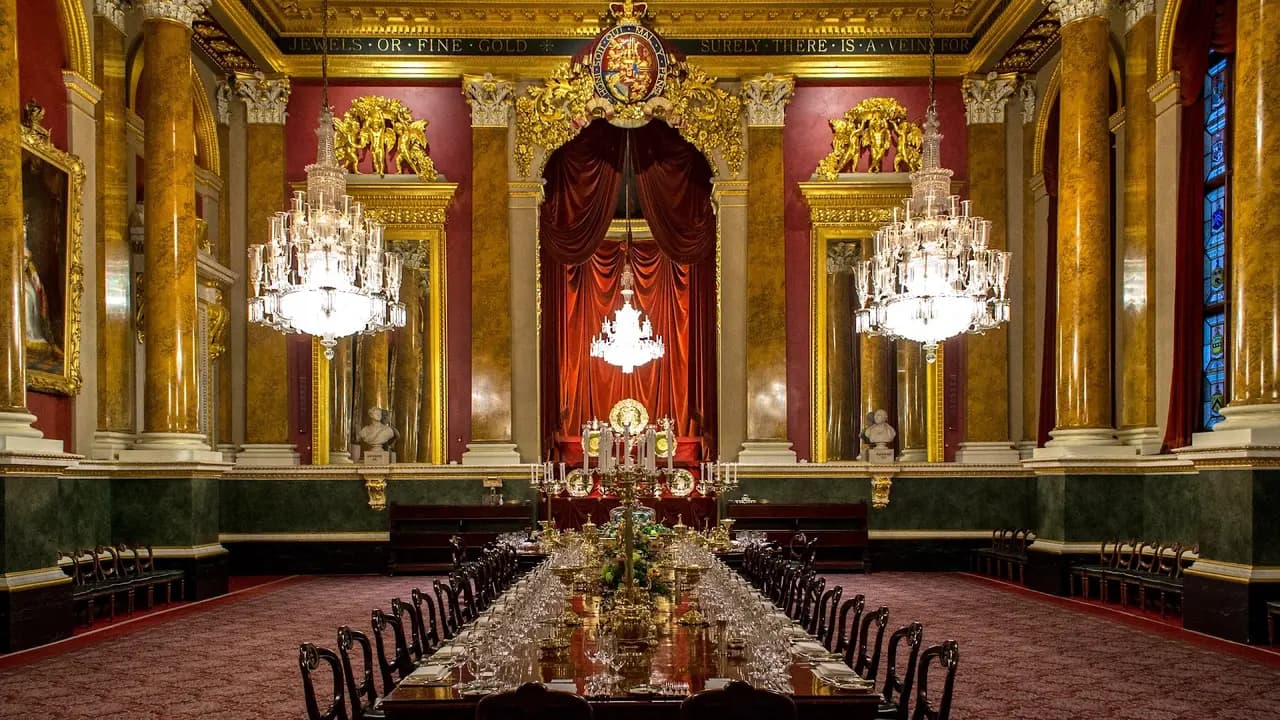
The Goldsmiths' Company
The City of London · Culture
Magnificent! For more of the history there is a link in my bio to this week’s new blog post! @thegoldsmithscompany . . . . . . #london #londonhistory #livinglondonhistory #goldsmiths #gold #hiddengem #cityoflondon #londonlife #londonarchitecture #architecturelovers #liverycompany #londontravel #hiddenlondon #secretlondon
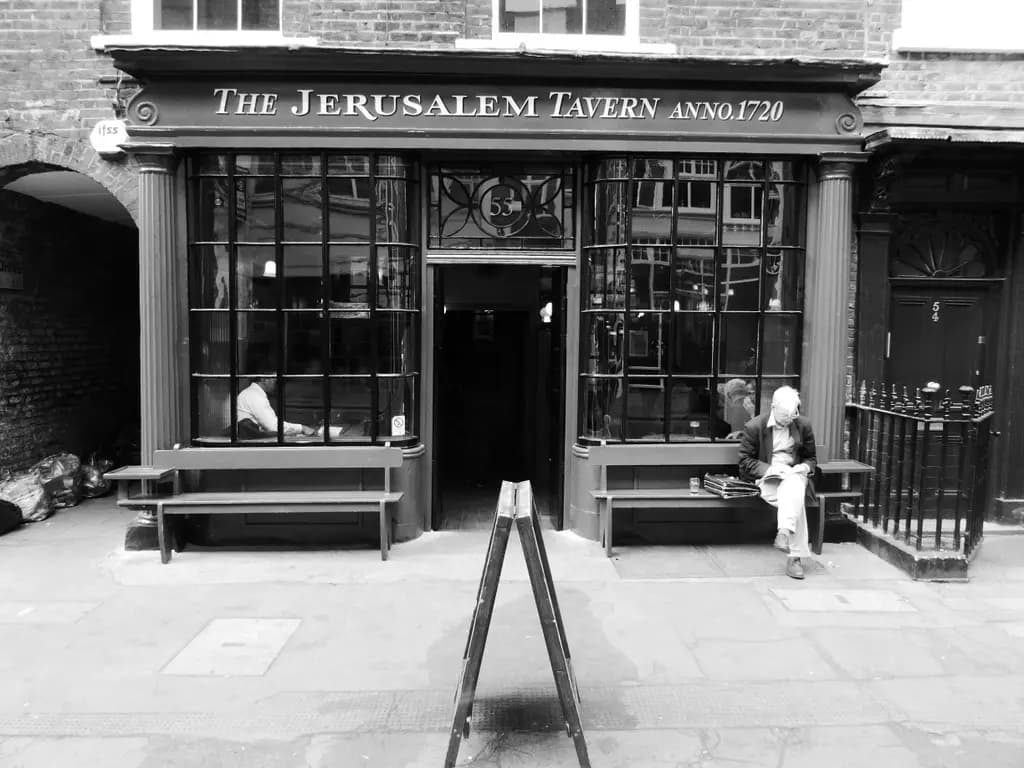
The Holy Tavern
Holborn · Culture
The fantastic Holy Tavern in Clerkenwell (previously the Jerusalem Tavern) has only actually been a pub since the 1990s. The building dates from 1720, built in the old grounds of the Clerkenwell Priory, once the London home of the Knights Hospitaller. ?? Over the years it has been a watch-makers, a publishers and an architects, before being converted into a pub in 1996. . . . . . #london #londonhistory #livinglondonhistory #pub #pubsoflondon #londonpubs #londonpub #crusades #oldpubs #londontravel #hiddenlondon #explorelondon_official
- L
Lincoln's Inn Fields
Holborn · Culture
One of the most beautiful, hidden historic gems in London and you’ll usually be the only person there! For the full history of the Inn and all its secrets, there is a link in my bio. . . . . . . #london #londonhistory #lincolnsinn #holborn #livinglondonhistory #londontravel #londontrip #hiddenlondon #secretlondon #explorelondon #hiddengem #architecture #londonarchitecture @lincolnsinn
- C
Corpus Christi Catholic Church
Covent Garden · Culture
The sunlight streaming into the interior of Corpus Christi Catholic Church on Maiden Lane in Covent Garden. It was built in 1874 and due to restrictions on the height the floor level inside is 3ft below the level of the street outside. Go down the steps into the nave from the generally pretty busy and bustling Covent Garden and you will feel like you’ve stepped into another world. . . . . . . . . #london #londonhistory #livinglondonhistory #church #coventgarden #hiddenlondon #churchhistory #secretlondon #londontravel #londontrip #explorelondon #architecture #lovelondon
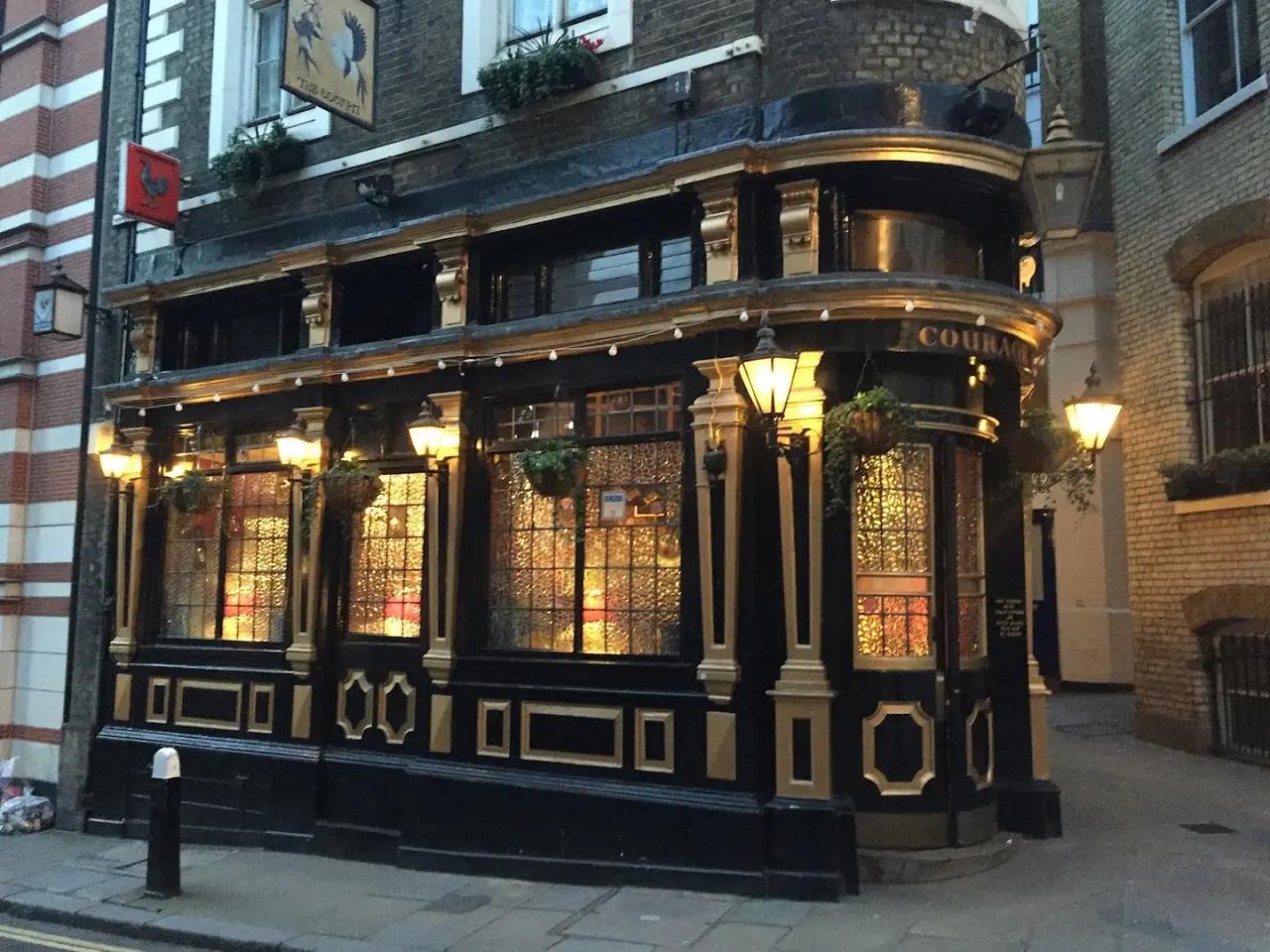
The Cockpit
The City of London · Drink
The Cockpit pub in the City was built in the 1860s but has been the site of a pub possibly as far back as the 16th century. ?? As the name suggests the pub here was once a notorious spot for the bloody and violent sport of cock-fighting. Patrons would drink and gamble on the cock-fights. ?? This area was also the site of the Blackfriars Gatehouse, purchased in 1613 by William Shakespeare to live in, just a few years before he died in 1616. The Globe Theatre had burnt down in 1613 and all operations were moved to Blackfriars, hence why he wanted to lived in the area. ?? . . . . . . . #london #londonhistory #livinglondonhistory #shakespeare #tudorhistory #pub #londonpub #pubhistory #cityoflondon #explorelondon #hiddenlondon #secretlondon #londontravel #londontrip #londonlife #lovelondon
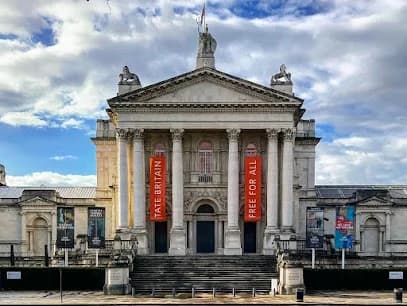
Tate Britain
Westminster · Culture
A reminder of the Blitz in Pimlico! More photos of the Tate through its history including of WW2 can be found here ?? https://www.tate.org.uk/archivejourneys/historyhtml/timeline.htm . . . . . . #london #londonhistory #livinglondonhistory #tate #tatebritain #ww2 #blitz #warhistory #westlondon #pimlico #hiddenlondon #secretlondon #explorelondon #londonmuseums #museum #artgallery #worldwartwo
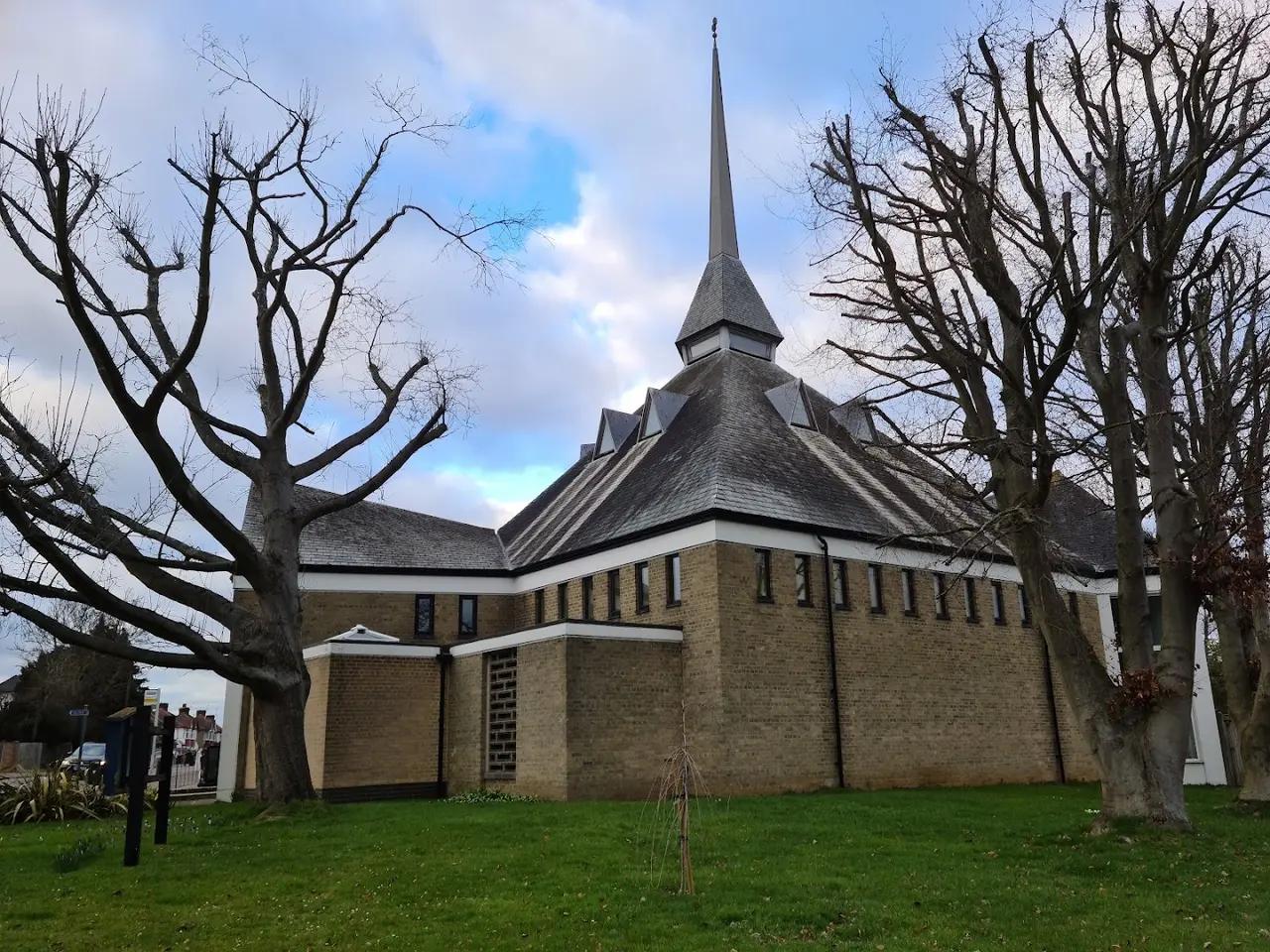
St Bartholomew Church
Culture
I hope Rahere can one day find his foot! ???? . . . . . . . . . #london #londonhistory #livinglondonhistory #londonwalks #londonchurch #londonghost #ghost #ghoststory #heritage #architecture #londonarchitecture #hiddenlondon #secretlondon #londonmystery #mystery
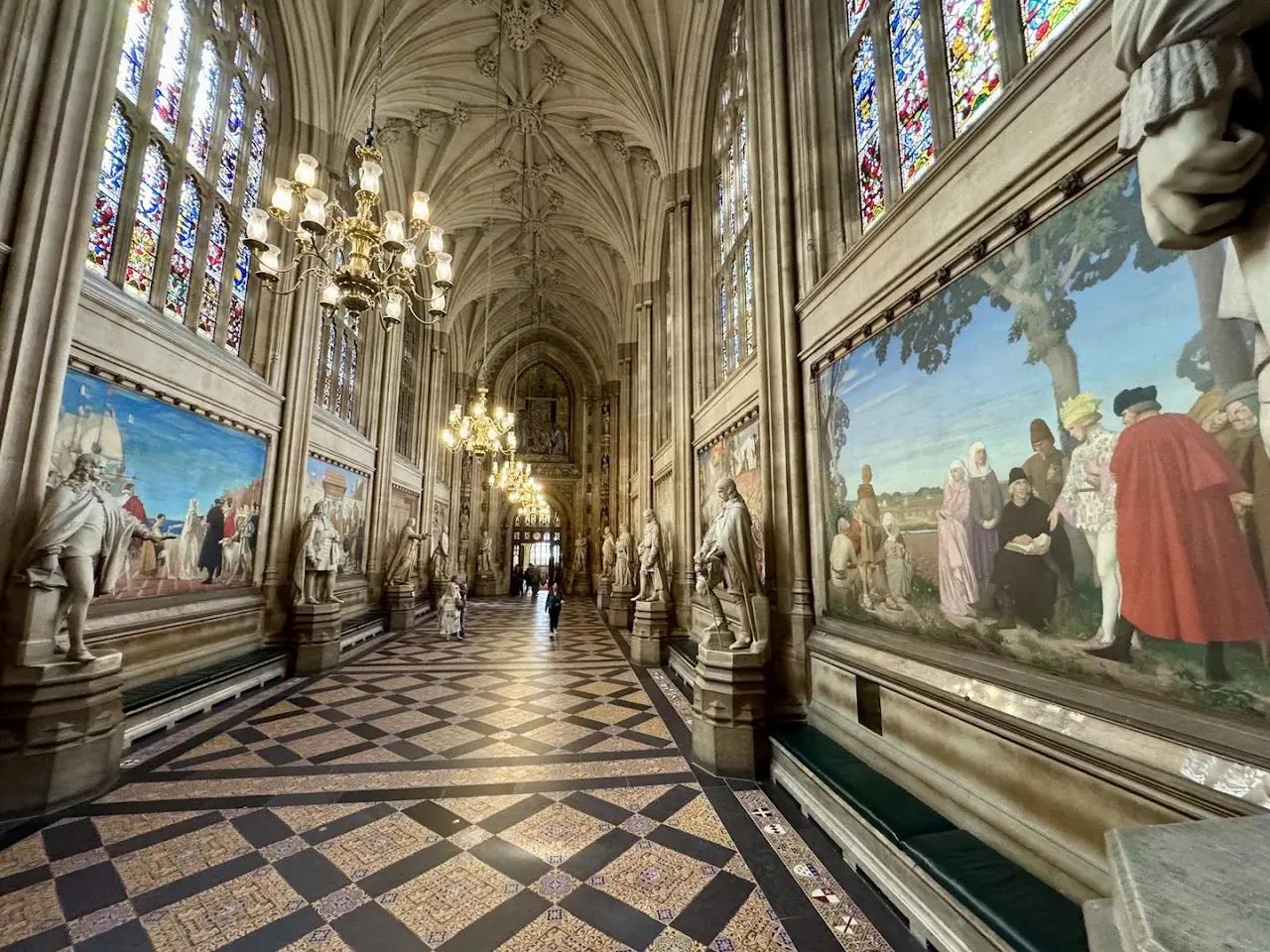
St. Stephen's Hall
Westminster · Culture
The breathtaking St Stephen’s Hall in the Palace of Westminster. It is the link really between Westminster Hall and Parliament. It was designed as a “National Valhalla” with statues of famous parliamentarians including Pitt the Elder, Charles James Fox and Robert Walpole. It also has paintings of events from the country’s history. The hall dates from the rebuilding of the Palace by Charles Barry and Augustus Pugin after the terrible fire in 1834. The dimensions closely match that of the royal chapel of St Stephen’s that once stood on the site, which from 1548 was the debating chamber of the House of Commons. The hall was used again by the Commons from 1945-50 when the Commons was being rebuilt after Blitz bomb damage. . . . . . . . #london #londonhistory #livinglondonhistory #parliament #ukparliament #britishhistory #englishhistory #housesofparliament #westminster #explorelondon #londonarchitecture #londontravel #londontrip
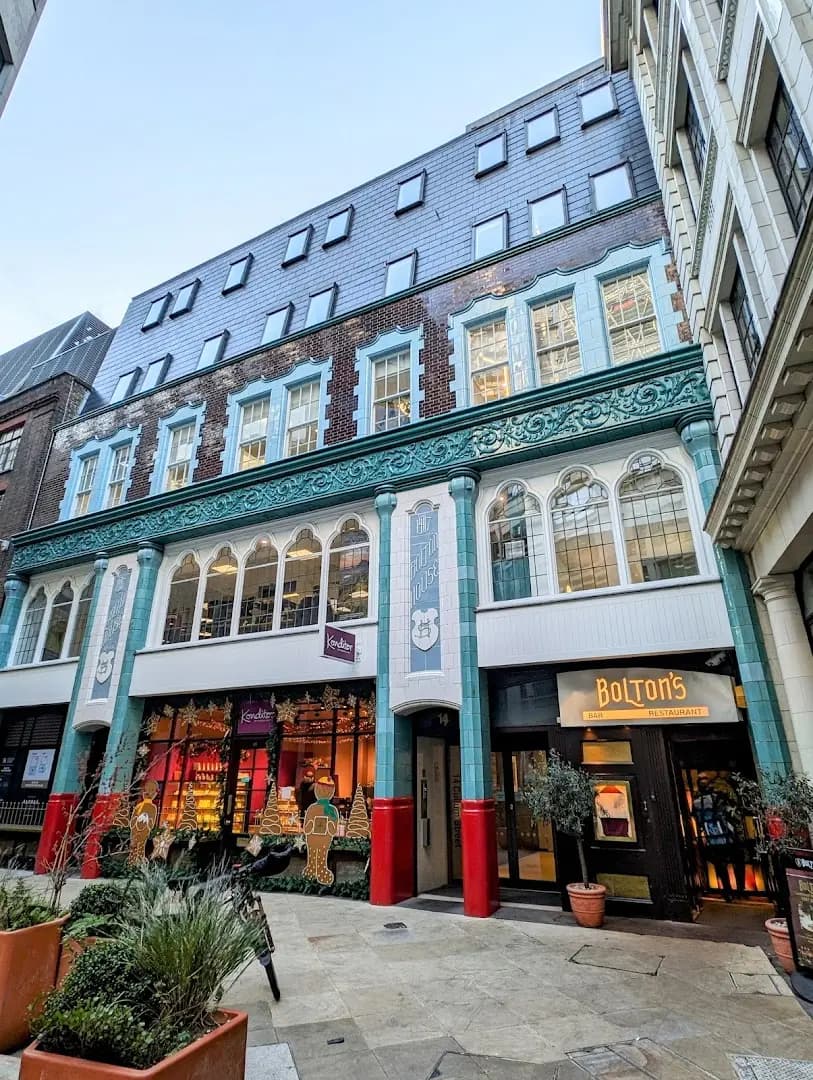
Bolton House
The City of London · Culture
There are so many architectural styles to be found in London, but one that is pretty difficult to find is art nouveau! This is rare a bit of art nouveau on Cullum Street, just round the corner from Leadenhall Market. Bolton House was built in 1907 just a few years before the short lived fashion for art nouveau died out. Designed by architect A. I. Selby, it has these lovely blue and white faience (a glazed non-clay ceramic material) facade with Moorish influences seen in arched windows. . . . . . . . #london #livinglondonhistory #londonhistory #cityoflondon #artnouveau #londonarchitecture #architecturelovers #architecture #facade #facadelovers #londonstreets #eastlondon #explorelondon #hiddenlondon
- K
Kingswood House
Culture
Had you heard of Kingswood House before or been here? There is loads more to the history of the building such as a flying Russian prince who took up residence and its time as a convalescent hospital for Canadian soldiers. There’s a link in my bio to the full blog post! . . . . . . #london #londonhistory #livinglondonhistory #southlondon #dulwich #explorelondon #londonarchitecture #heritage #artscentre #community #bovril #hiddenlondon #secretlondon #britishhistory
- P
Paul Hamlyn Hall
Covent Garden · Culture
This is the stunning Floral Hall on Bow Street with its intricate iron and glass facade (now formally known as the Paul Hamlyn Hall). Swipe left for possibly even more breathtaking view from the inside. ?? It was constructed in 1860 by the Royal Opera House next door, designed by architect Edward Middleton Barry, son of Charles Barry who was responsible for the Houses of Parliament in the early 19th century. It acted as a concert hall and occasional ice rink until 1887 when it became part of the fruit and flower market of Covent Garden. ?? In 1977 it was reacquired by the Royal Opera House to store scenery and in the late 1990s incorporated into the rest of the theatre. They lifted the whole structure up to slot the modern section in underneath. It is also a stop on my Covent Garden tour! ?? . . . . . . . . #london #londonhistory #livinglondonhistory #explorelondon #coventgarden #londontravel #londontrip #londonarchitecture #architecture #facadelovers #facade #facades #historylovers #victorian #victorianarchitecture #londonlife @ROH_London
- T
The Artillery Arms, EC1
Shoreditch · Drink
This is the Artillery Arms, a Victorian pub by Bunhill Fields Burial Ground. Constructed in the 1850�s, it was once known as the Blue Anchor and was apparently a popular venue for �rat-baiting�! The proprietor, Jemmy Shaw, would gather hundreds of rats to pit against a dog at the pub. Customers would then bet on how many rats the dog could maul and how quickly. It became a popular activity after the introduction of the Cruelty to Animals Act of 1835 which banned cock-fighting, bull-baiting etc but made no mention of rats� Dogs would often be specifically trained for this gruesome and violent purpose. One particular toy terrier called Tiny the Wonder, owned by Jemmy Shaw the proprietor, was a star at the Blue Anchor and could kill 200 rats in under an hour. Swipe left for an image of Tiny at work. . . . . . . . . #london #londonhistory #livinglondonhistory #explorelondon #londonpub #londonpubs #pub #britishhistory #gruesomehistory #victorianhistory #victorians #secretlondon #hiddenlondon #londontravel #londontrip #londonlife #historylovers #historynerd #londonarchitecture
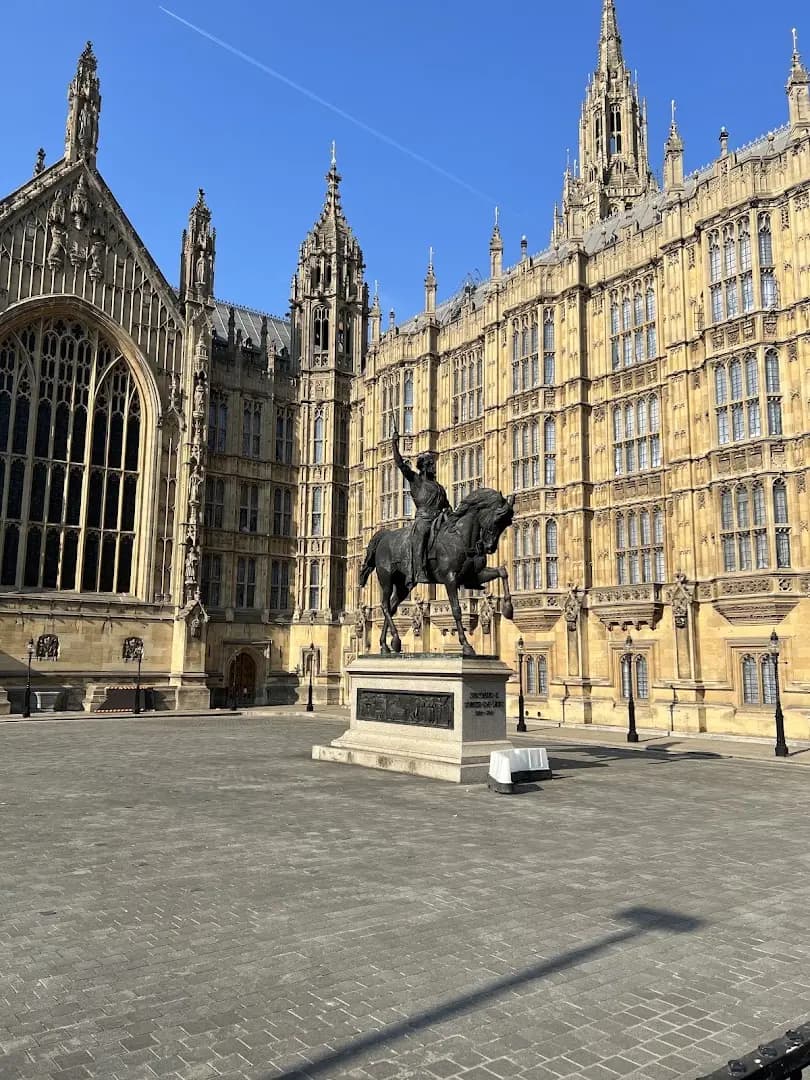
Old Palace Yard
Westminster · Culture
Old Palace Yard a few days ago on a crisp and bright afternoon. In the middle there is a statue of King George V, the Queen’s grandfather, who reigned from 1910-1936. In the background is the exquisite Lady Chapel or Henry VII Chapel of Westminster Abbey. Finished in 1516, it was constructed, as the name suggests, on the orders of King Henry VII as part of attempting to secure and glorify the Tudor dynasty. All the Tudor monarchs, bar King Henry VIII, are buried in this section of the Abbey. ?? Old Palace Yard, directly in front of the Palace of Westminster was also a high profile site of execution. Probably most notably it witnessed the hanging, drawing and quartering of Guy Fawkes and 3 of his fellow conspirators in 1606 following the failed Gunpowder plot of the previous year. ?? . . . . . . . #london #londonhistory #livinglondonhistory #westminster #houseofparliament #tudor #tudors #tudorhistory #englishhistory #britishhistory #guyfawkes #explorelondon #londontravel #londontrip #westminsterabbey #londonlife
- Q
Queen Charlotte's Cottage
Richmond · Culture
Hidden inside Kew Gardens is this 18th century cottage. Called Queen Charlotte’s Cottage, it was constructed for King George III and his wife Charlotte. They used it as a country retreat: a resting spot for tea and refreshments during walks in the gardens. They wanted to feel as if they had escaped to a remote countryside village. At the rear it had a paddock and in the 1790�s the first ever kangaroos in England were brought here and bred. By the early 19th century there were 18 kangaroos. ?? . . . . . . . . #london #londonhistory #livinglondonhistory #kewgardens #kew #georgianhistory #georgianarchitecture #explorelondon #secretlondon #hiddenlondon #londontravel #londontrip #lovelondon #londonlife #londonarchitecture @kewgardens
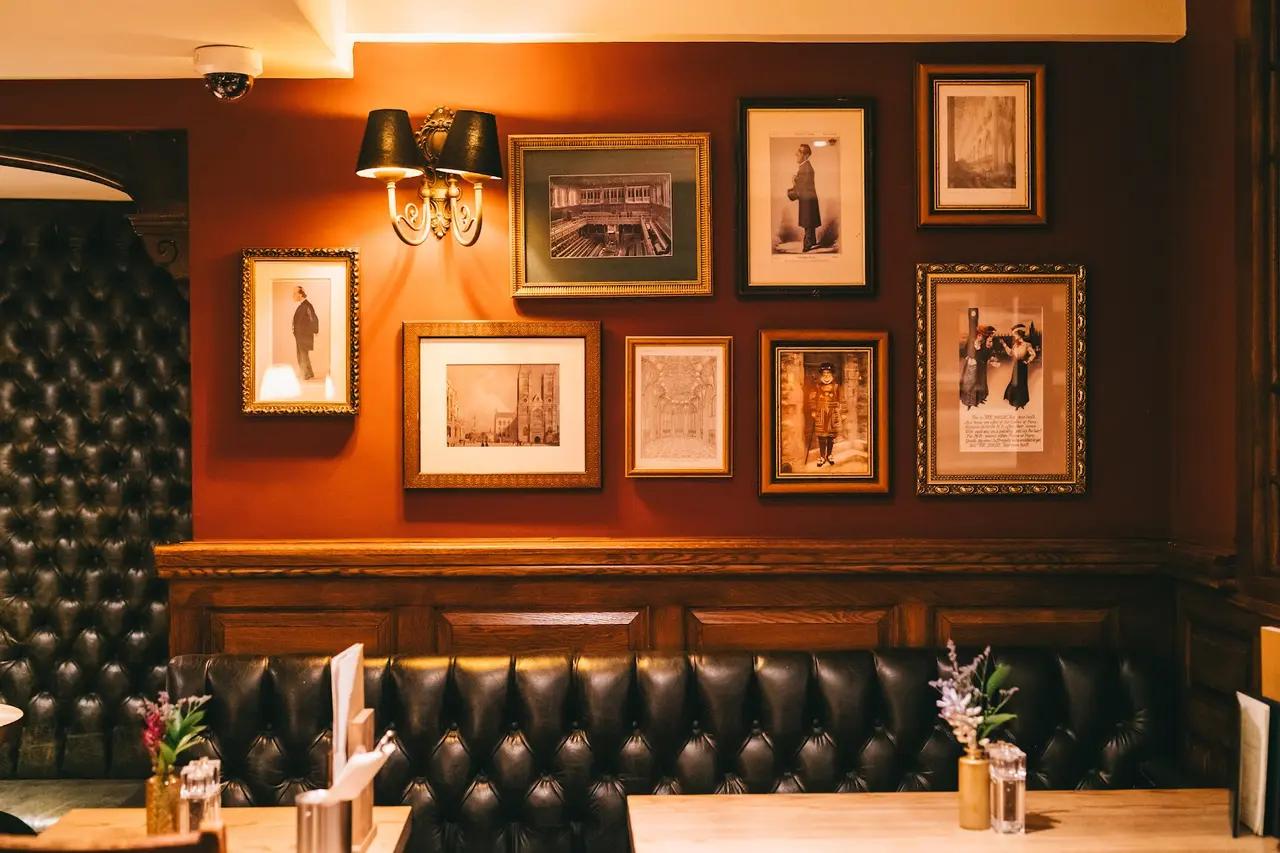
The Red Lion, Parliament Street
Westminster · Drink
A view of some of the amazing Victorian architecture along Parliament Street in Westminster. The tall, narrow building on the right is the Red Lion pub. It is said there has been a pub on this site since the 15th century, with the current building dating from the 1890�s. ?? Being so close to Parliament and Downing Street it has always been a popular spot for politicians. It has a division bell inside to alert MPs inside that they must get over to the Palace of Westminster to vote. It is said to have been visited by most post-war PMs including Attlee, Churchill and Heath. ??? In 1997 it was at the centre of a scandal. Charlie Whelan, the then press advisor to Chancellor of the Exchequer Gordon Brown, briefed (or let slip to) journalists in the Red Lion, that Britain would not be joining the Euro, without the permission of the then PM Tony Blair. ?? . . . . . . . #london #londonhistory #livinglondonhistory #explorelondon #londonpub #westminster #cityofwestminster #secretlondon #walklondon #pub #pubsoflondon #parliament #whitehall #londontravel #londontrip #britishhistory #victorian #victorianarchitecture #londonarchitecture
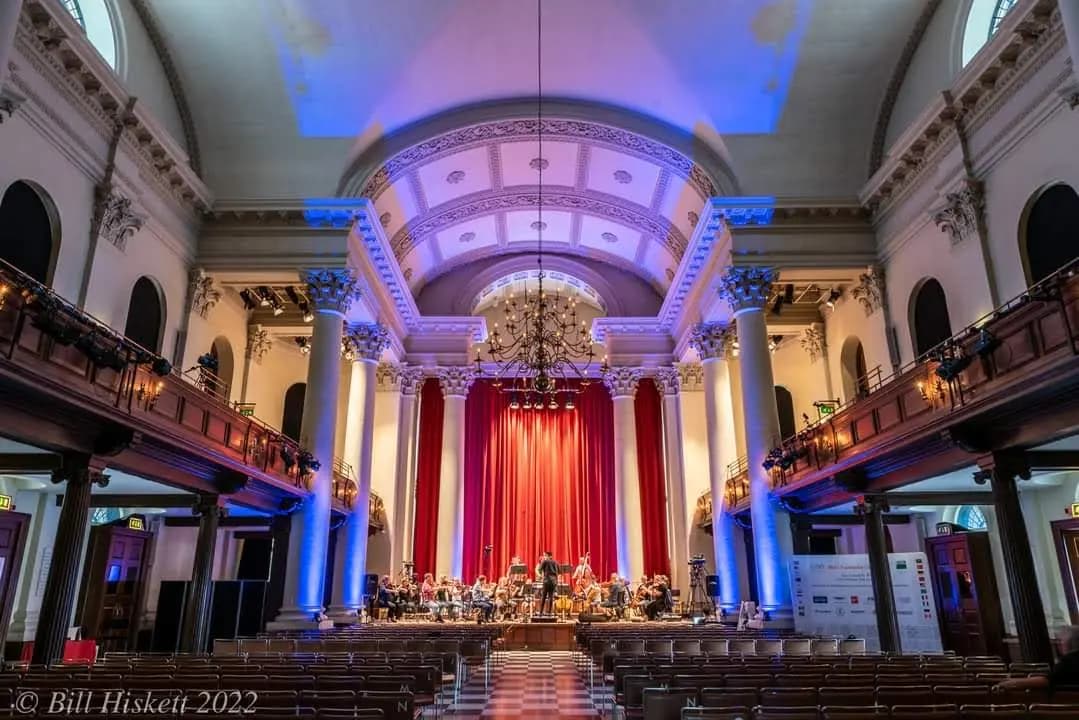
Sinfonia Smith Square
Westminster · Culture
The view from the portico of St John’s Smith Square looking down Lord North Street in Westminster on a drizzly afternoon. Lord North Street was laid out in the 1720�s. It was originally called North Street but it was renamed in the 1930�s, after the 18th century prime minister, to make it sound grander and to distinguish it from other North Streets in London. Harold Wilson lived at number 5 in the 1970�s during his second term in office and Anthony Eden lived at number 2 in the 1920�s. St John’s Smith Square was originally built in 1728 but had to be restored after being gutted during the Blitz. It is now a classical music venue. Explore this area with me on my Westminster’s Backstreets: Saints and Scoundrels walking tour! Link in bio for my guided walks page. . . . . . . . . #london #londonhistory #livinglondonhistory #westminster #londonlife #blackcab #blacktaxi #londoncab #londontaxi #londontravel #londontrip #rain #londonrain #secretlondon #hiddenlondon #londonarchitecture #architecturephotography #historylovers #lovelondon
- L
Little Green Street
Culture
It’s feels like a little time capsule! Has anyone got another favourite well preserved historic London street they like to wander down? . . . . . . . . #london #londonhistory #livinglondonhistory #streetsoflondon #northlondon #kentishtown #highgate #londonarchitecture #architecturelovers #explorelondon #hiddenlondon #secretlondon #londontravel #londontrip
- A
Acton Fire Station
Culture
This unusual building is the old Acton Fire Station. It was constructed in 1899, designed by the council surveyor at the time D J Ebbetts. ?? It was built to house the council’s two new fire engines and the tower operated as both a look out and apparently for drying their hoses! The building was later extended for an ambulance and mortuary. It was replaced by a new station in Gunnersbury Lane in 1939. The old fire station is now occupied by a church. . . . . . . . #london #londonhistory #livinglondonhistory #hiddenlondon #acton #westlondon #secretlondon #londonarchitecture #firestation #architecturelovers #architecture #explorelondon #architecturedesign
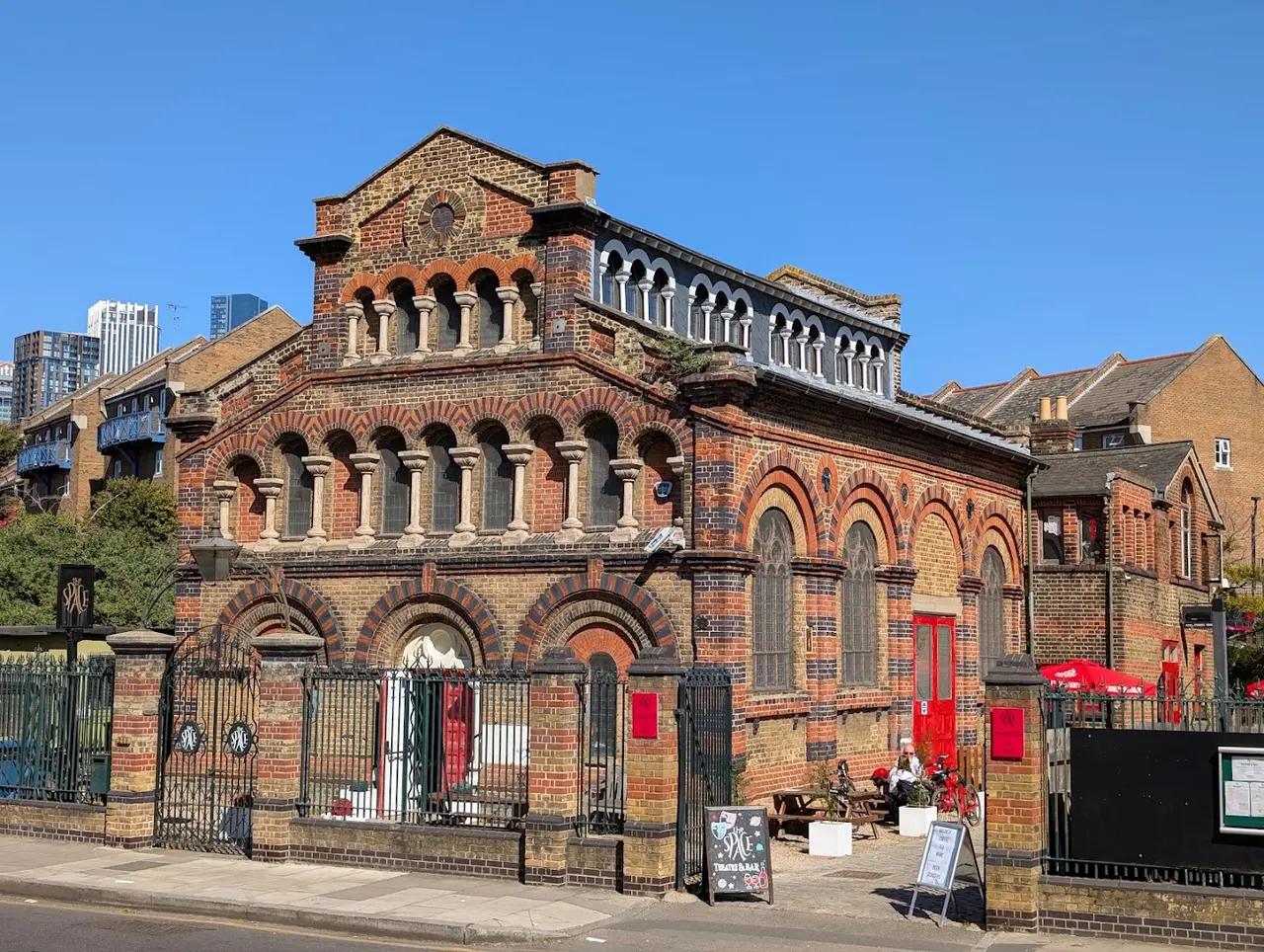
The Space
Greenwich · Activities
This little architectural gem is The Space on the Isle of Dogs. It was constructed in 1859 as St Paul’s Presbyterian Church for the Scottish migrants who were working at the shipyards in the area, designed by Thomas Knightley. ?? It was deconsecrated in 1972 after the docks along this stretch of the river started shutting. In the 1980�s it was acquired by the St Paul’s Art Trust and today it is a theatre and events space. ?? Its chief patron is Sir Ian McKellen and particularly supports new artists looking to put on their first show. @thespacetheatre . . . . . . #london #londonhistory #livinglondonhistory #explorelondon #isleofdogs #millwall #londonarchitecture #victorianarchitecture #victorian #ianmckellen #theatre #londontheatre #architecturelovers #architecture #churchesofinstagram #secretlondon #hiddenlondon #eastlondon #historylovers
- Y
York House Gardens
Culture
A dramatic set of statues with an equally dramatic story behind them! For the full history, there’s a link in my bio for the blog post. . . . . . . #london #londonhistory #livinglondonhistory #history #twickenham #statues #ancientgreece #story #explorelondon #hiddenlondon #secretlondon #historylovers #londontravel #lovelondon #londonwalks
- C
Conway Street
Fitzrovia · Outdoors
On the corner of Conway St and Warren St in Fitzrovia you can find this particularly lovely old shop front with a ghost sign for J Evans, a Welsh Dairy Farmer. The building itself is Georgian, built in 1793 and the Grade II listed shopfront dates from 1916. The Welsh population of London historically have had strong links with the dairy industry. From the 11th to the late 19th century great herds of cattle would be driven from Welsh pastures to London for sale. ?? It was not uncommon for Welsh people then to move from Central Wales to London to set up an inner city dairy. Today it is a cafe called Fitzroy Dairy. . . . . . . . . #london #londonhistory #history #livinglondonhistory #londonlife #fitzrovia #ghostsign #hiddenlondon #secretlondon #explorelondon #londontravel #facadelovers #facade #londonarchitecture #londonphoto
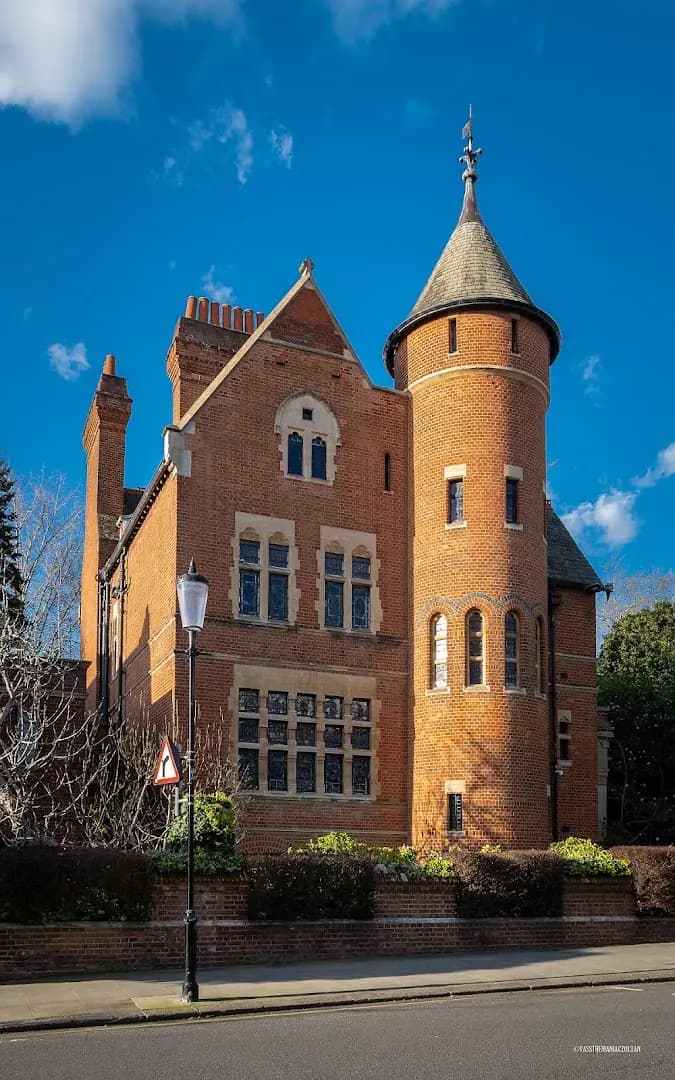
The Tower House
South Kensington · Culture
There are plenty of amazing buildings in Kensington and Holland Park areas. The Grade I listed Tower House on Melbury Road always stands out however. ?? It was built in 1881 by the gothic-revival architect and designer William Burges as his home. Over the years it has been inhabited by many famous names. The poet and champion of Victorian architecture John Betjeman lived here briefly in 1962. The actor Richard Harris bought the lease in 1969 for 75k. Harris restored the house using Burges original designs. Led Zepellin’s Jimmy Page bought the house in 1972, apparently outbidding Bowie, and still lives there to this day. ?? He has ongoing spats with his neighbour Robbie Williams, who lives at Woodland House next door. One particularly fiery argument erupted when Robbie wanted to extend into the basement of his house and Page was very concerned this would damage the foundations of his house! . . . . . . . . #london #londonhistory #history #hiddenlondon #secretlondon #livinglondonhistory #kensington #westlondon #hollandpark #explorelondon #londontravel #londonarchitecture #architecturephotography #victorianarchitecture #architecture #jimmypage #londonhouse
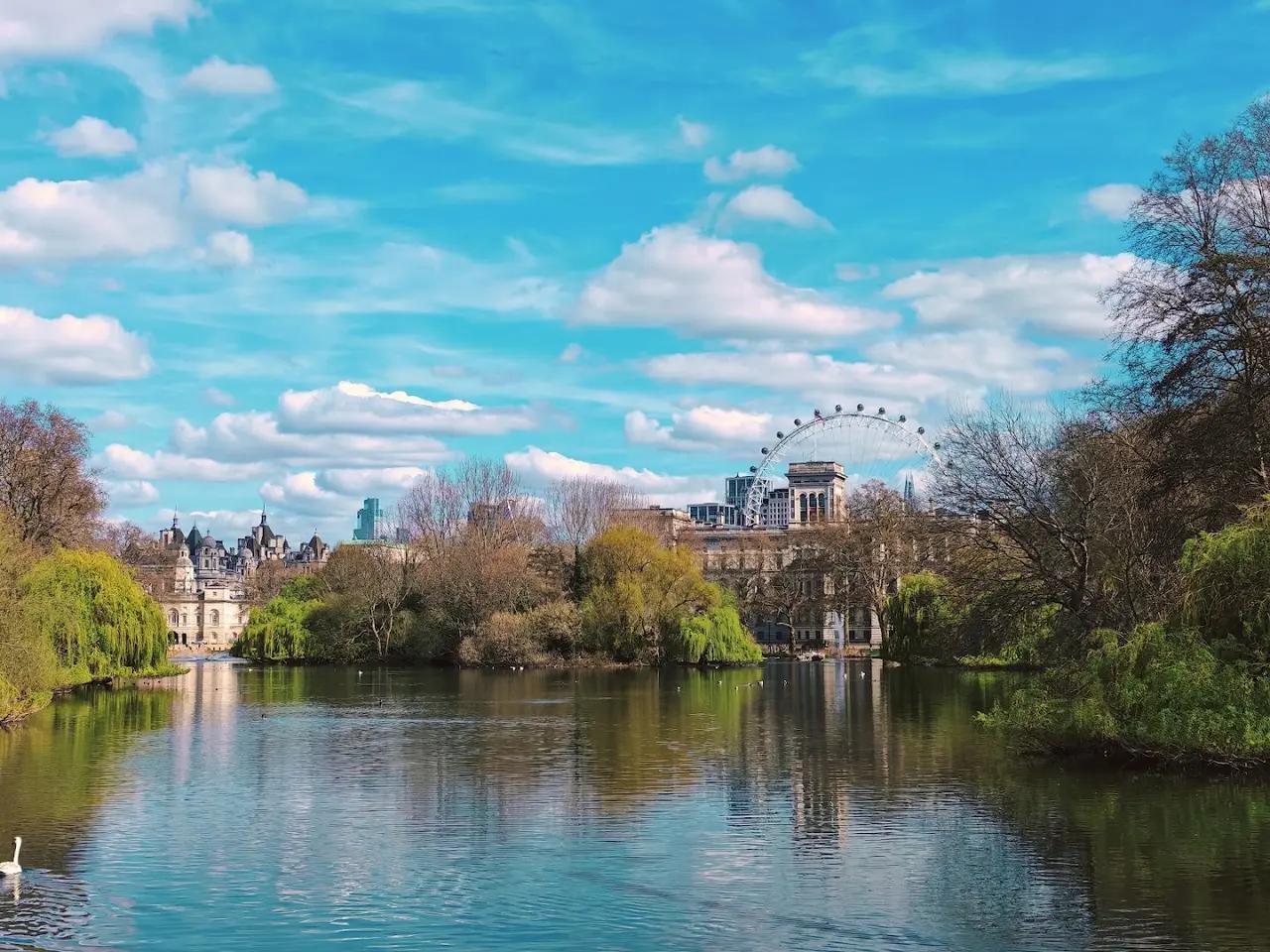
St James's Park
Westminster · Outdoors
Not a bad location to have your house eh! ?? . . . . . . . #london #londonhistory #history #hiddenlondion #secretlondon #livinglondonhistory #explorelondon #londontrip #londontravel #londonlife #londonpark #londonparks @theroyalparks #london???? #londoncity #beautifullondon
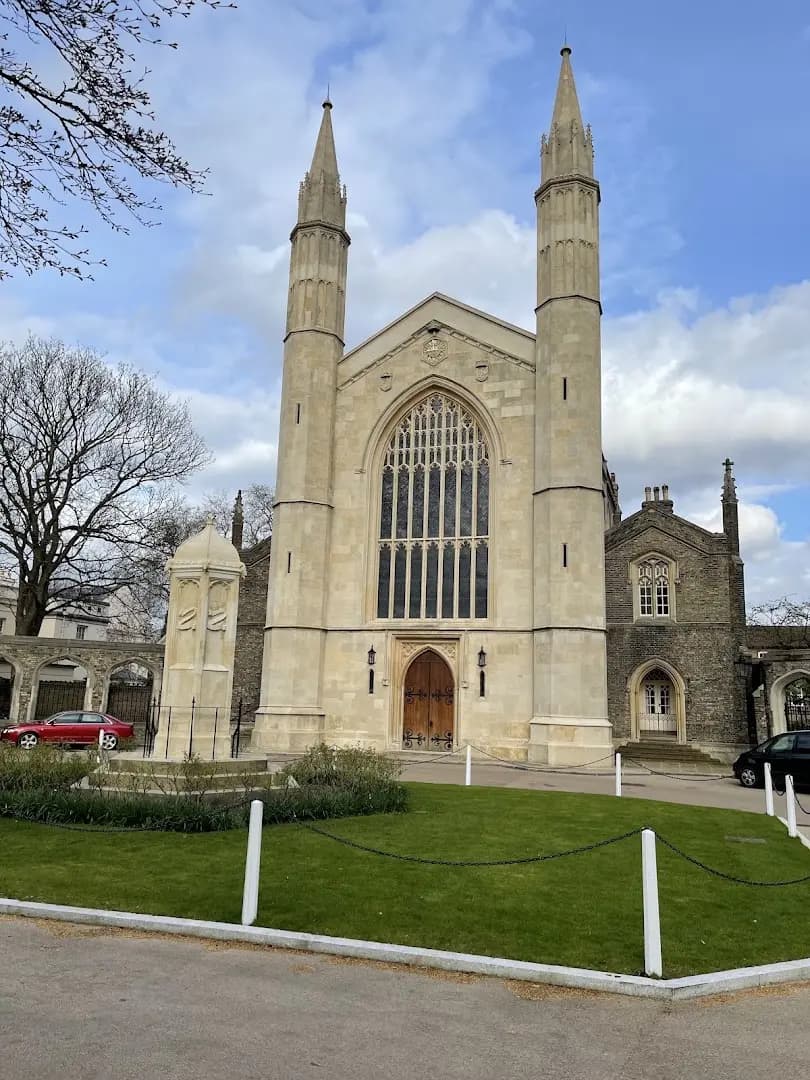
St Katharine’s Danish Church in London
Camden · Culture
Whenever I walk through Regent’s Park, I nearly always make sure to pop over to see the lovely St Katharine’s Church, or “The Danish Church” situated in the North East corner. ?? Dating from 1826 it was designed by Ambrose Poynter in this beautiful neo-gothic style. It was originally built to house the Royal Foundation of St Katharine. They are a religious charity established as a church and monastic hospital in 1147. They were previously based where St Katharine’s Docks now are next to the Tower of London, before the docks were constructed in 1828. The Danish community of London have used the church since 1952. . . . . . . . #london #livinglondonhistory #londonhistory #history #church #churchesofinstagram #architecture #londonarchitecture #londontravel #londontrip #londonlife #explorelondon #regentspark #northlondon #hiddenlondon #secretlondon
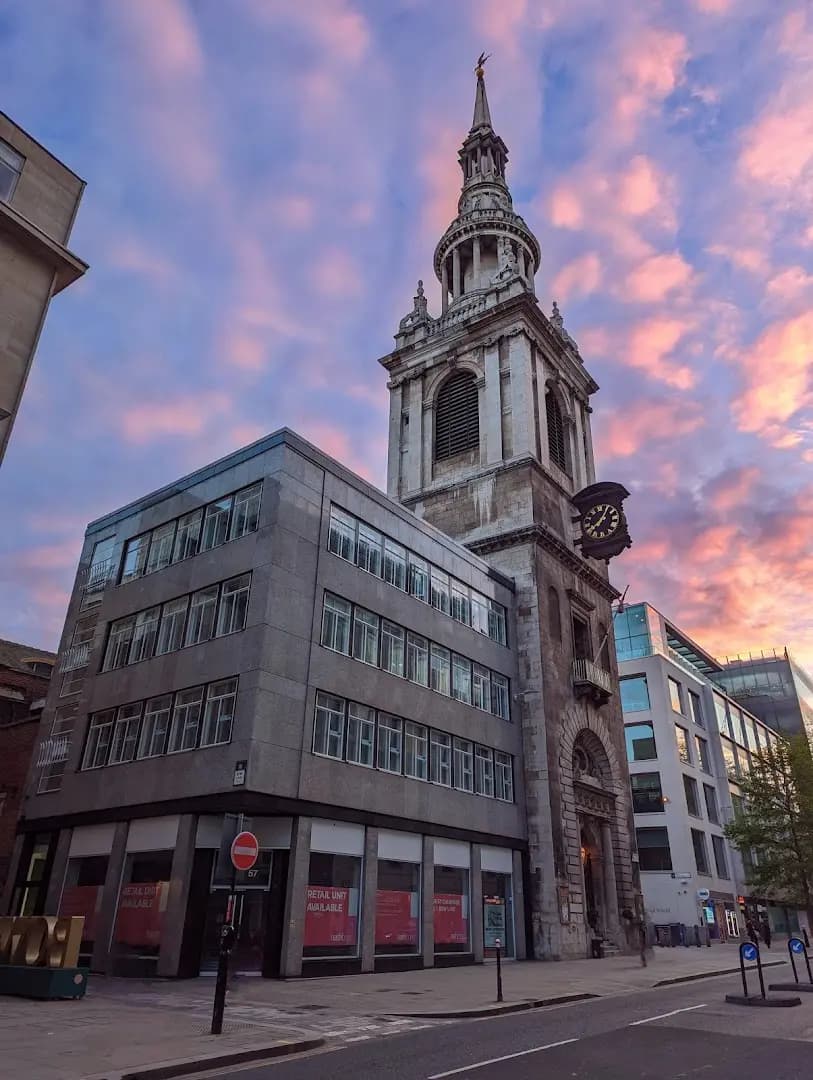
St Mary-le-Bow Church
The City of London · Culture
The interior of the stunning St Mary-le-Bow church rebuilt after the Great Fire of London by Sir Christopher Wren. It was one of the first to be rebuilt after the fire due to its significance to Londoners and Wren’s most expensive church, excluding St Paul’s. ?? The name is thought to come from arches or �bows� in the surviving Norman crypt. An ancient ecclesiastical court was held in the church called the �Court of Arches�, abolished in 1847. It is commonly said that if you are born within earshot of the Bow Bells you can consider yourself a true cockney! ?? . . . . . . #london #londonhistory #livinglondonhistory #cityoflondon #church #churchesofinstagram #bowbells #cockney #explorelondon #hiddenlondon #secretlondon #londontrip #londontravel
Stoke Newington
Culture
As you can probably tell I’m experimenting with a slightly different style of video! The aim is to potentially create some longer videos like this for you in the future. Filming/editing by the brilliant ?? @damipetrucci For the full story behind the town hall there’s a link in my bio to the blog post ?? . . . . . . #london #londonhistory #livinglondonhistory #history #stokenewington #northlondon #eastlondon #hackney #explorelondon #ww2 #ww2history #historylovers #secretlondon #hiddenlondon #lovelondon #historylovers #theblitz
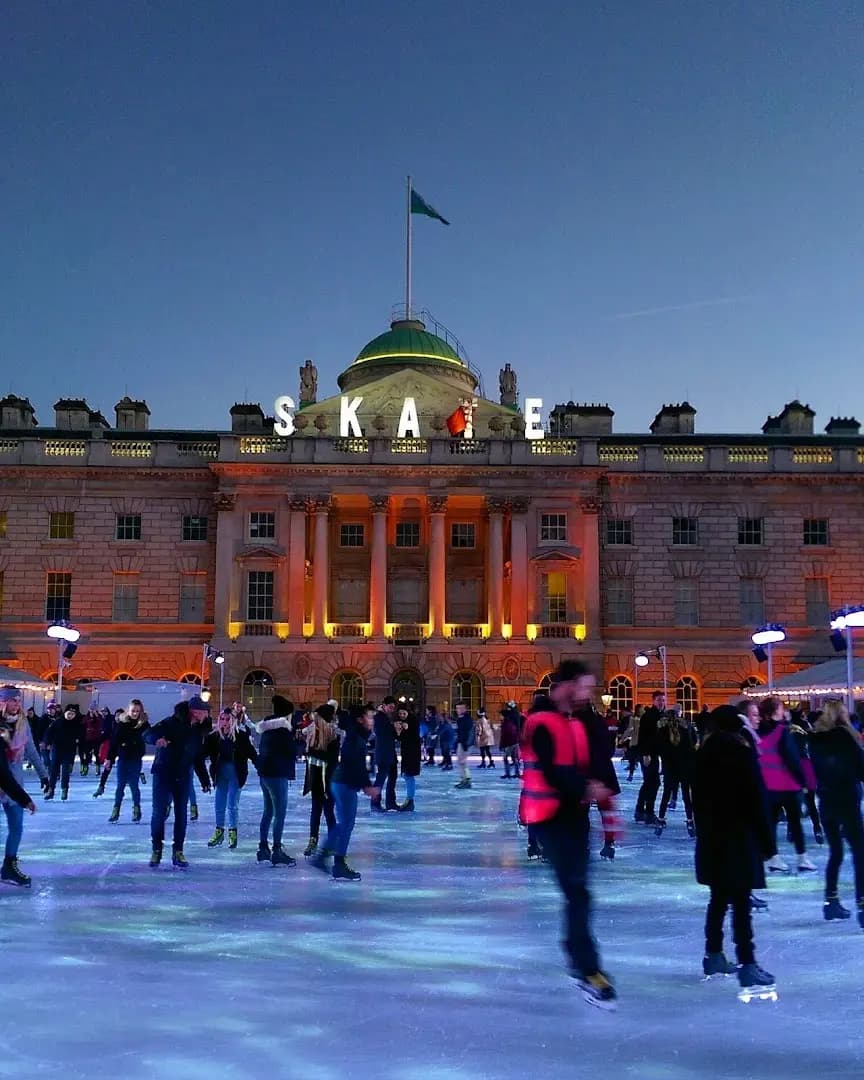
Somerset House
Covent Garden · Culture
A shot of the incredibly atmospheric �lightwells� below the main courtyard of Somerset House. The first Somerset House was built in the 1550�s by Edward Seymour, Duke of Somerset, Lord Protector of the young King Edward VI. ?? In the early 18th century, the riverside palace was falling into disrepair and the government wanted a new grand, neo-classical public building to house many of their growing departments. The new Somerset House was constructed in 1776, designed by the King’s architect William Chambers. What was once a garden gently sloping down to the river in the Tudor palace became a flat terrace in the Georgian building. This created a lower level walkway around three sides of the famous courtyard. Known as the �lightwells� due to, as the name suggests, the wells of light that are created down here, the space was used predominantly for storage of coal and other goods in the alcoves under the courtyard. I was able to explore this area on the @somersethouse �Historical Highlights� tour. Highly recommended! Tours take place on Saturdays and Tuesdays at 12:00, 14:00 and 15:30. . . . . . . . . #london #londonhistory #londonarchitecture #architecture #livinglondonhistory #history #somersethouse #hiddenlondon #secretlondon #georgianarchitecture #lovelondon #explorelondon #historylovers #londontours #londontrip #londontravel #londonlife #georgianhistory #tudorhistory #hiddengems #englishhistory #britishhistory #heritage
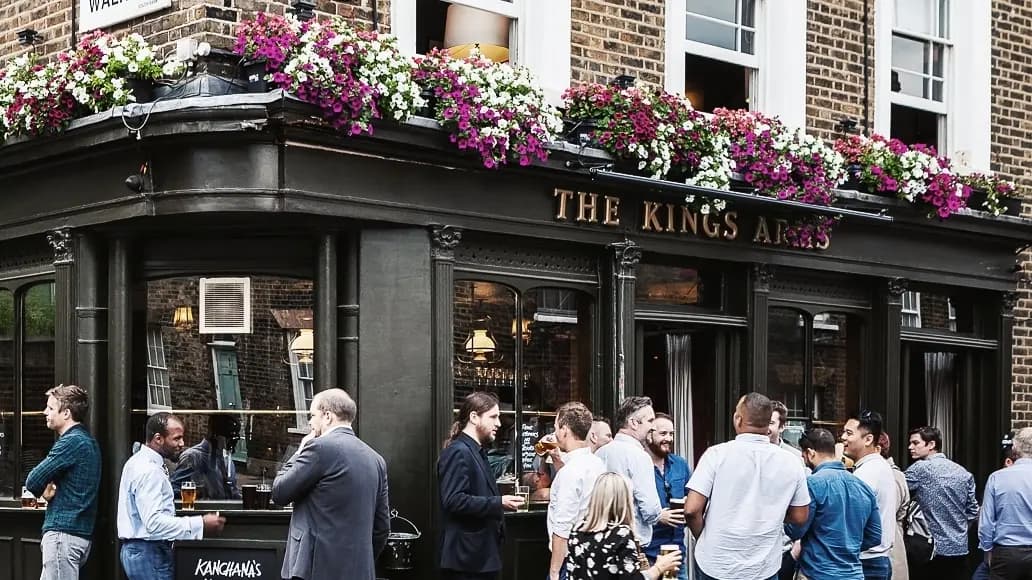
The Kings Arms
Covent Garden · Drink
|AD| A beautiful historic pub in the heart of Greenwich ??. For more there is a link in my bio for the full blog post! @greeneking_official @kingsarmsse10 . . . . . . #london #londonhistory #livinglondonhistory #pubsofinstagram #pub #greenwich #southlondon #eastlondon #pubgarden #britishhistory #lovelondon #hiddenlondon #londonlife #explorelondon #londontravel #londontrip #ad
Thornton House
Culture
Hidden inside the Notre Dame council estate in Clapham you will find something extremely surprising. ?? As is teleported straight out of the 18th century, this was once the orangery of a Georgian manor house. Constructed in 1793 it was built as the centrepiece in the grounds of Thornton House. Thornton House was built on the South side of Clapham Common by merchant Robert Thornton and the orangery would have been part greenhouse, part impressive entertainment venue. Thornton House was demolished in the 1940�s and after the war the Notre Dame council estate was built in the old grounds. The orangery is the only remaining reminder and today sits incongruously amongst the 1950�s blocks, forgotten and slightly neglected. For the full blog post on this fascinating oddity, there is a link in my bio! . . . . . . . #london #londonhistory #livinglondonhistory #georgianhistory #georgian #explorelondon #hiddenlondon #secretlondon #londonwalks #clapham #southlondon #londontrip #history #historylovers #historygeek
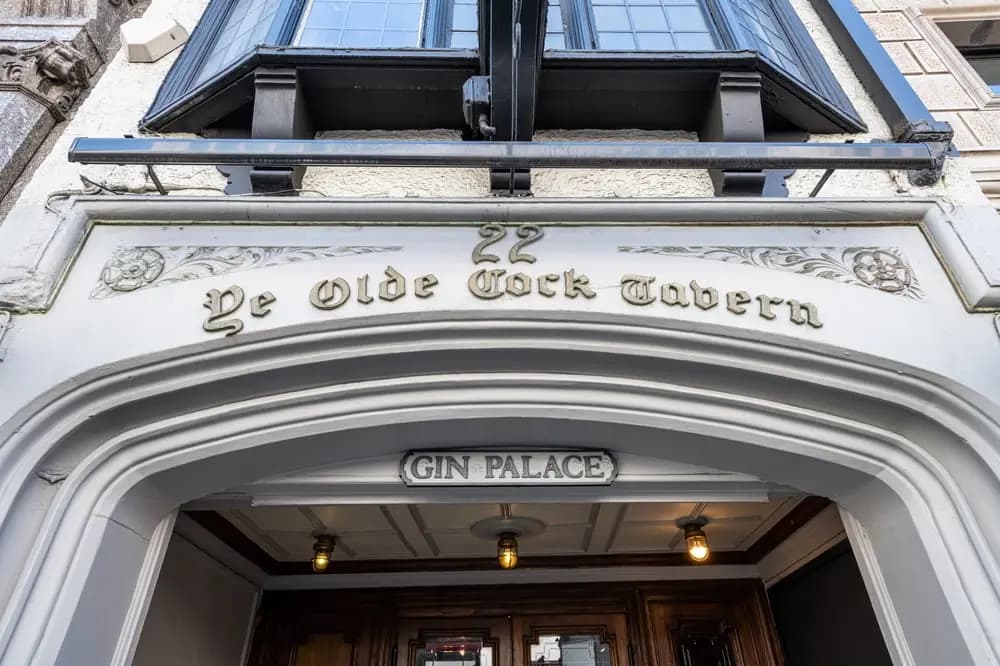
Ye Olde Cock Tavern
Holborn · Drink
Said to be the narrowest pub in London (I haven’t got my tape measure out- let me know if you can think of any other contenders!), this is Ye Olde Cock Tavern on Fleet Street. ?? It is thought to have originally been situated on the other side of the road, potentially as far back as the 16th century. It then moved to its current site in 1887 and significantly restored in the 1990�s after a fire. Drinking alum are said to include Samuel Pepys, Dickens (the man apparently drank in every pub in Victorian London) and Alfred Tennyson. ?? Going back to the 17th century when this area was becoming a commercial artery through the city, lined with shops, coffeehouses and taverns, a frontage onto the road itself was very expensive. Therefore buildings were generally very narrow and some of the plots have remained the same since. . . . . . . . #london #londonhistory #pubsofinstagram #pub #victorianhistory #victorian #explorelondon #visitlondon #hiddenlondon #secretlondon #londonlife #londontravel #londontrip #fleetstreet #cityoflondon #lovelondon #history #dickens #victorianpub #londonarchitecture #facadelovers