
For creators
Short form gets you seen. Long form gets you known.
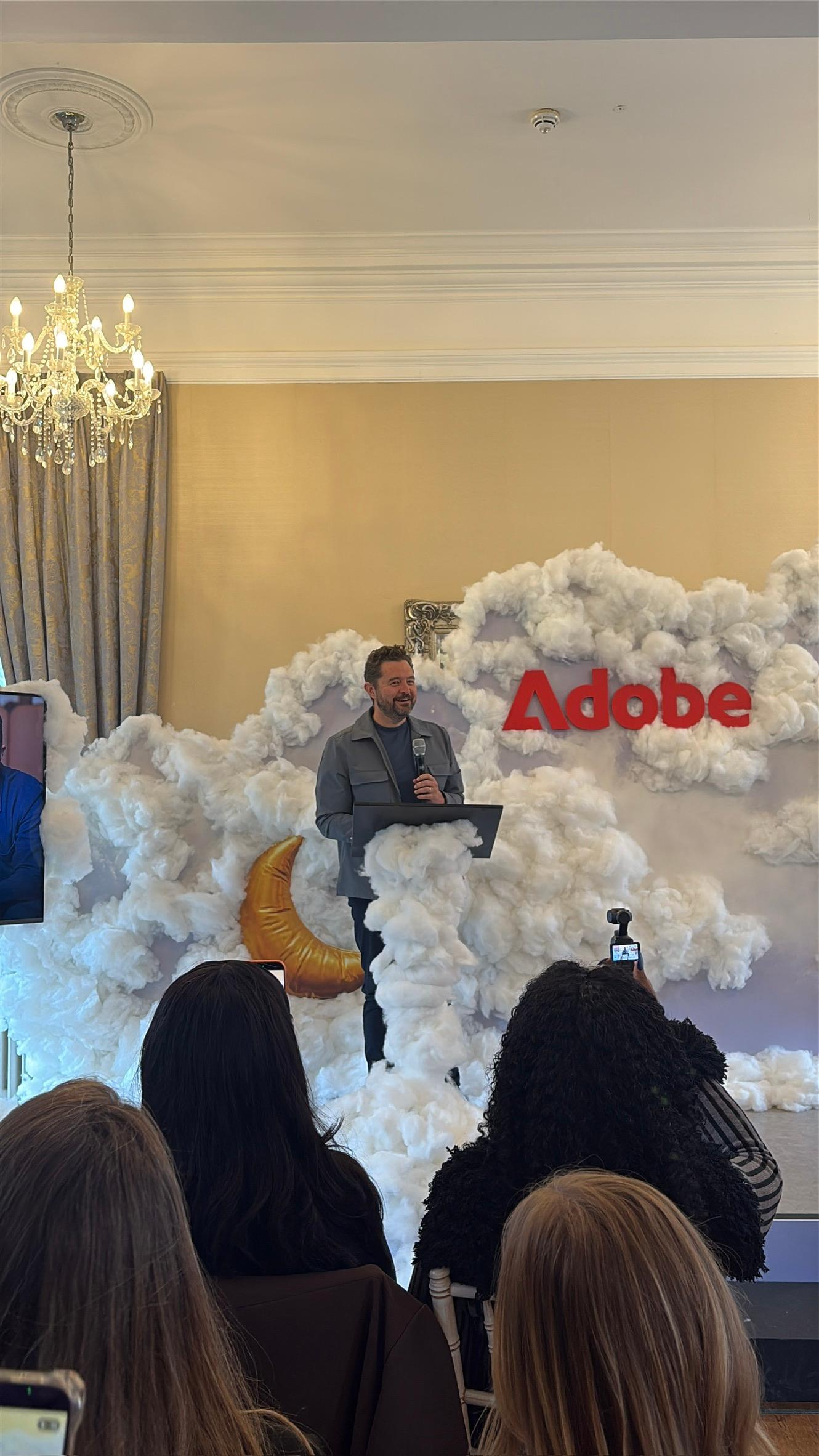
I spent a morning at the Creator Leaders Retreat listening to Daniel Priestley and Simon Squibb talk about what is actually changing for creators. Most of it was not about making better content. It was about what you own at the end of it.
TLDR
- Short form is for attention. It is the best distribution ever built and it is not a relationship.
- Long form is what makes someone feel they know you. There is no shortcut to the hours.
- Own the relationship with your audience, or you have traffic rather than an audience.
- Collect leads. Without a lead form, nothing else in this list can pay you.
- Collaborate. There is no such thing as a solopreneur.
Lesson one
Short form has exploded. It still cannot make someone feel they know you.
The number that stuck with me: the average person is getting through around 100 short videos a day. That is not a guess, it is what the data says. It is also not a niche behaviour any more, it is what a phone is for, and it has made all of us more addicted to content than we were two years ago.
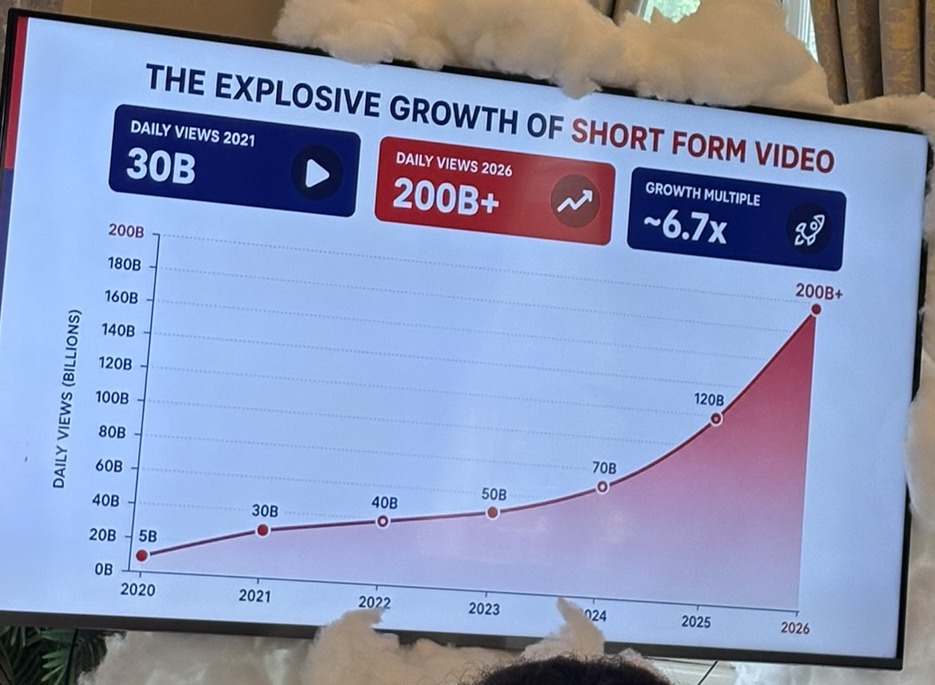
The curve is the same story at the other end of the telescope. Daily views of short form video have gone from 5 billion in 2020 to over 200 billion, and almost all of that came in the last two years of it. Attention has not been created, it has been redistributed, and this is where it went.
Here is the catch. Short form is the best distribution machine anyone has ever built, and it is almost useless for building a relationship. Or rather, it can do it, but it takes an extraordinarily long time. A hundred videos a day means nobody is sitting with any single one of them.
The threshold he put on it: someone needs roughly two to seven hours with you before a real parasocial relationship forms. Before they feel like they know you. Think about how many fifteen second clips that is, and how unlikely it is that the same person sees all of them.
He pointed out the same maths shows up in film. Actors tend to become properly famous around their fourth big movie, not their first. Four films is somewhere between six and eight hours of your face. That is the number again.
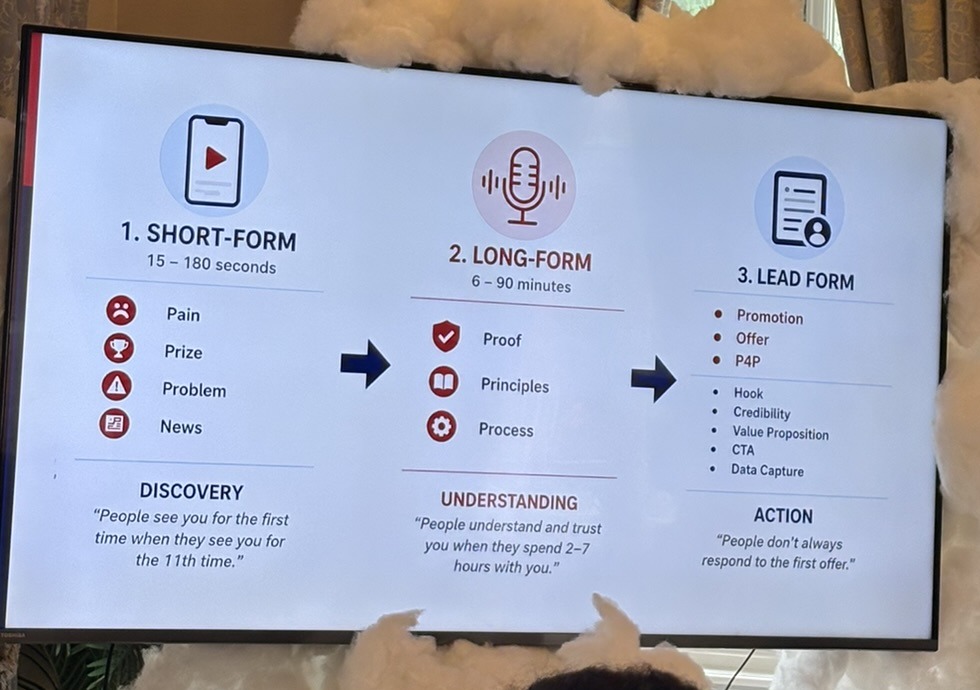
This was the slide he kept coming back to, and it is the clearest thing I took away. Three formats, and each one has a job the other two cannot do.
- Short form, 15 to 180 seconds. The job is discovery.
- You are working with pain, prize, problem or news. His line on it: people see you for the first time when they see you for the eleventh time.
- Long form, 6 to 90 minutes. The job is understanding.
- Proof, principles, process. This is where the two to seven hours get banked.
- Lead form. The job is action.
- A hook, some credibility, what they get, an ask, and the bit everyone forgets, actually capturing the data. His note underneath: people do not always respond to the first offer, which is the whole argument for being able to reach them again.
The bit that made the room go quiet
Daniel gave two examples of what long form actually does, and they landed better than any statistic.
The first was about being recognised. When he is out with Simon Squibb and somebody clocks Simon, it is warm but it is fairly shallow. A photo, a nice word, done. He has watched the same thing happen with Steven Bartlett and it is a different event entirely. People are emotional. They talk to him like they already know him, because in a sense they do. They have sat with him for tens of hours. That is what hundreds of hours of podcast does that no volume of clips can replicate.
The second was simpler. Read someone's book and you finish it feeling connected to the author, even though they have no idea you exist. Writing is long form too. Same mechanism.
The conclusion is not "stop making Reels". Short form is how anybody finds you at all. It is that you should stop expecting it to do a job it cannot do. Use short form to get attention. Use something longer to turn that attention into a relationship.
Short form is for attention. Long form is for trust.
He gave the room a prompt for measuring this on yourself, which is a more uncomfortable exercise than it sounds: how many hours of you can someone actually find?
Lesson two
Own your audience, then build an ecosystem on top of it.
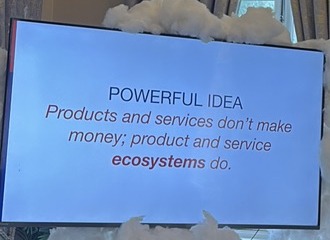
Owning your intellectual capital matters more now than it did, and every creator operating at the top of this does it. Not just a product. A whole ecosystem of products and services that fit together, so different people can buy in at different levels.
But there is a step before any of that, and it is the step almost everyone is missing.
A lead form is not optional any more.
Daniel was blunt about it. In an age where an algorithm decides who sees you, a lead form is the only thing that gives you a direct line to your own audience. It is the difference between renting attention and owning a relationship.
Simon Squibb said a version of the same thing from a different angle: you have to become a database. Jordan put it another way again, that you have to think of yourself as a media company.
Three people, three phrasings, one point. The asset is the list, not the follower count.
The example Daniel used to show where this can go was Esther Perel. She gives an enormous amount of her content away for nothing, because the content is not the business. As Daniel described it, the business is a small number of high ticket relationship counselling clients, around twenty of them, at roughly a quarter of a million dollars a year each. Some of them fly her out and take their sessions on a private jet between cities.
Millions of followers, twenty clients. The followers are how the twenty find her. Get the order right and the free content stops looking like generosity and starts looking like strategy.
The ladder he draws for it
Daniel calls this the ascending transaction model, and it is the shape underneath every ecosystem he talked about. You start by giving something away to capture attention, and the price of that gift is data capture. Then a low cost product for prospects, which buys you a sales conversation, which leads to the core business. Service comes after that, and then the expensive products that only existing clients ever buy.
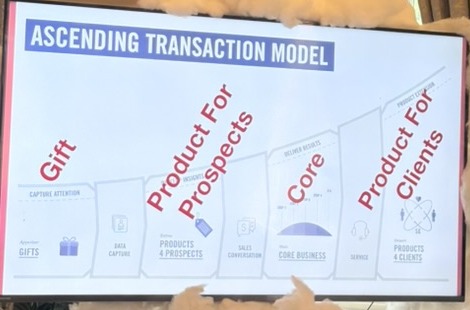
The reason the top of that ladder matters is the other slide he showed. Split any audience by what they are willing to spend and you get roughly 90 percent at the bottom, 9 percent in the middle and 1 percent at the top. But the money does not split the same way. That bottom 90 percent is about 40 percent of the budget. The 9 percent above them is 45 percent. The 1 percent at the very top is the remaining 15.
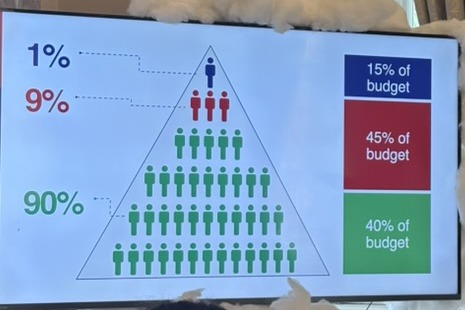
Ten percent of your audience is carrying 60 percent of what your audience is prepared to spend. If you only ever sell one thing at one price, you are choosing which slice of that to collect and throwing the rest away. This is why he keeps saying ecosystem rather than product.
What this looks like for a food or city creator
You are probably not selling counselling. The shape still works. Start collecting leads now, before you know what you are going to sell. Then build things your specific audience actually wants, priced for the different kinds of people in it. Someone who wants your list of the best places to eat in Hackney and someone who wants you to plan their anniversary weekend are not the same customer, and should not be offered the same thing.
Three of the four prompts he handed out are for exactly this problem: naming the IP you already have, working out what someone has to believe before they buy, and getting specific about who you are actually for.
We wrote more about the structure of that in Own Your Audience, including why a signature offer beats a menu of options.
Lesson three
Nobody good is doing this alone.
The thing I did not expect to hear was how ordinary the mechanism is. Daniel, Simon Squibb, Steven Bartlett, Dan Murray and a handful of others grew across multiple platforms partly because they set up a WhatsApp group and used it. Encouragement, introductions, telling each other what was working that week. That is it.
Daniel's line on it was that there is no such thing as a solopreneur. If you are on your own you are not an entrepreneur yet, you are self employed. The job is to find collaborators.
He made the point with some rough arithmetic. What you can do by yourself in two days, 170 people working together get through in a year. But because those 170 are specialised, the real output is not 170 times bigger, it is far more than that. Specialisation compounds in a way that effort on its own does not.
Every creator has something worth trading. An audience in a city someone else wants to break into. A skill at editing. A relationship with a venue. Collaboration is the cheapest growth lever available and most people are too proud or too busy to pull it.
Other things worth writing down
The rest of my notes.
We are moving into the semantic graph
Daniel thinks this is a genuine shift in how humanity organises information, not a product cycle. Discovery stops being a list of links and becomes a machine that understands meaning. Whether that is overstated or not, it changes who gets found and how.
An app store for algorithms is coming
The idea that you will choose your feed the way you choose an app. If that happens, the creators who already have a direct relationship with their audience are the ones who survive the reshuffle.
Fewer views, better engagement
Reach is flattening while the quality of engagement goes up. Reading a falling view count as failure is going to make people quit right before it starts working.
Your IP is already in your baggage
Look for your intellectual property in what has already happened to you. Map your high points and your low points, then look for the trend and the theme underneath. Do not only look forward. The material is behind you. There is a prompt for this one.
What would your Netflix show be called?
A better question than it sounds. If you cannot name your book or your series, you have not worked out what you are actually about, which means your audience has not either.
Give them a reason to come with you
Two questions Daniel kept returning to. Why would anyone go on a journey with you, and what problem do you solve for them? Your goal is to help someone cross a chasm in their own head. Feed them the thing they are missing.
LinkedIn is the underpriced room
It is not full of talented creators. It is full of a high value audience that almost nobody is serving properly. That gap is not going to stay open.
There is something about this island
A small country that keeps producing people who go and take over the world. Said fondly, and worth remembering if you are building from here.
So what
What I would do on Monday morning.
- 01
Work out where your leads currently go. If the honest answer is nowhere, that is the only job on the list.
- 02
Pick one long form thing and start it badly. A newsletter, a podcast, a proper written guide. Badly and weekly beats brilliant and never.
- 03
Write down the trend in your own story. High points, low points, what connects them. That is the title of your show. His first prompt does the interviewing for you.
- 04
Message two creators you respect and offer them something before you ask for anything.
He also handed out four prompts.
For finding your signature IP, listing what someone has to believe before they buy, pinning down your ideal customer, and auditing how much of you exists online. Typed out so you can copy them.
Get the four promptsThe talk was part of the Creator Leaders Retreat, powered by Adobe, run by Creator Leaders. Every other session is written up in the full retreat notes.
Lets Discover
Your map is the lead form.
Everything above says the same thing: collect the relationship or you do not have one. A Lets Discover map turns the followers who already trust your recommendations into an audience you can reach directly.